
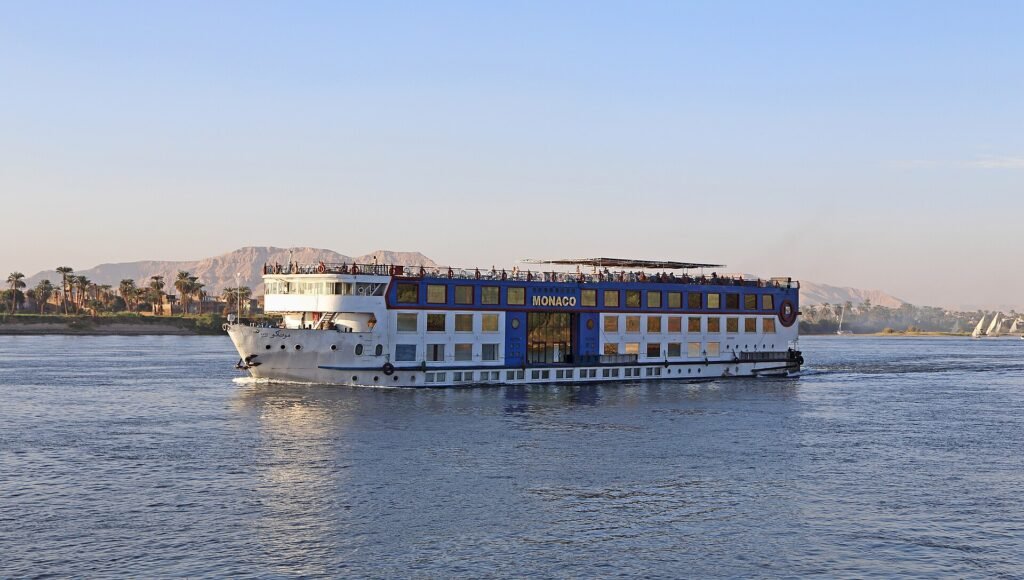
Explora runs the route in both directions as a private program: Luxor to Aswan over 5 days and Aswan to Luxor over 5 days. Same eight ticketed monuments, same four nights aboard, opposite order. Both start from US$755 per person, double occupancy, and both include every gate fee, a licensed Egyptologist guide who works with your party alone rather than with a coach group, and the Abu Simbel excursion.
This page covers what the sailing actually involves: how to choose a direction, every monument and what it costs at the gate, the ship categories, an hour by hour of a day on board, what is included and what is not, the practical things nobody mentions about cabins and money and connectivity, and the questions travelers ask most before they book.
Three things travelers expect that a Nile cruise does not do
Three assumptions carried over from ocean cruising cause problems in Egypt, so they are worth clearing up before anything else.
Full board is not an all inclusive resort plan. Full board on a Nile ship means breakfast, lunch and dinner are covered. Drinks are not. Sodas, beer, wine, bottled water and the coffee on the sundeck all go on a cabin tab that you settle before you step off. Budget for it the way you would at a hotel, not the way you would at a beach resort.
The ship is your hotel, not the attraction. Almost all of the sightseeing happens off the boat, on foot, in the sun, with a guide. The ships are comfortable, and the sundeck is genuinely one of the better places in Egypt to watch an afternoon go by, but nobody remembers a Nile cruise for the pool. They remember standing under the hypostyle hall at Karnak at seven in the morning, before the coaches arrive.
Your flight to Egypt is a separate purchase. Explora does not sell, book, quote or coordinate international airfare, on this program or on any other program on this site. You buy your own ticket. Domestic Egyptian flights are a different question, and the answer depends on the product. On the two cruises here, the Cairo to Luxor and Aswan to Cairo sectors are not included, though they can be quoted separately if you ask. On the longer combined programs, such as the 7-day classic tour and the 10-day Cairo, Luxor and Aswan itinerary, the domestic sectors are built into the price and ticketed for you.
Luxor to Aswan or Aswan to Luxor: which direction should you sail
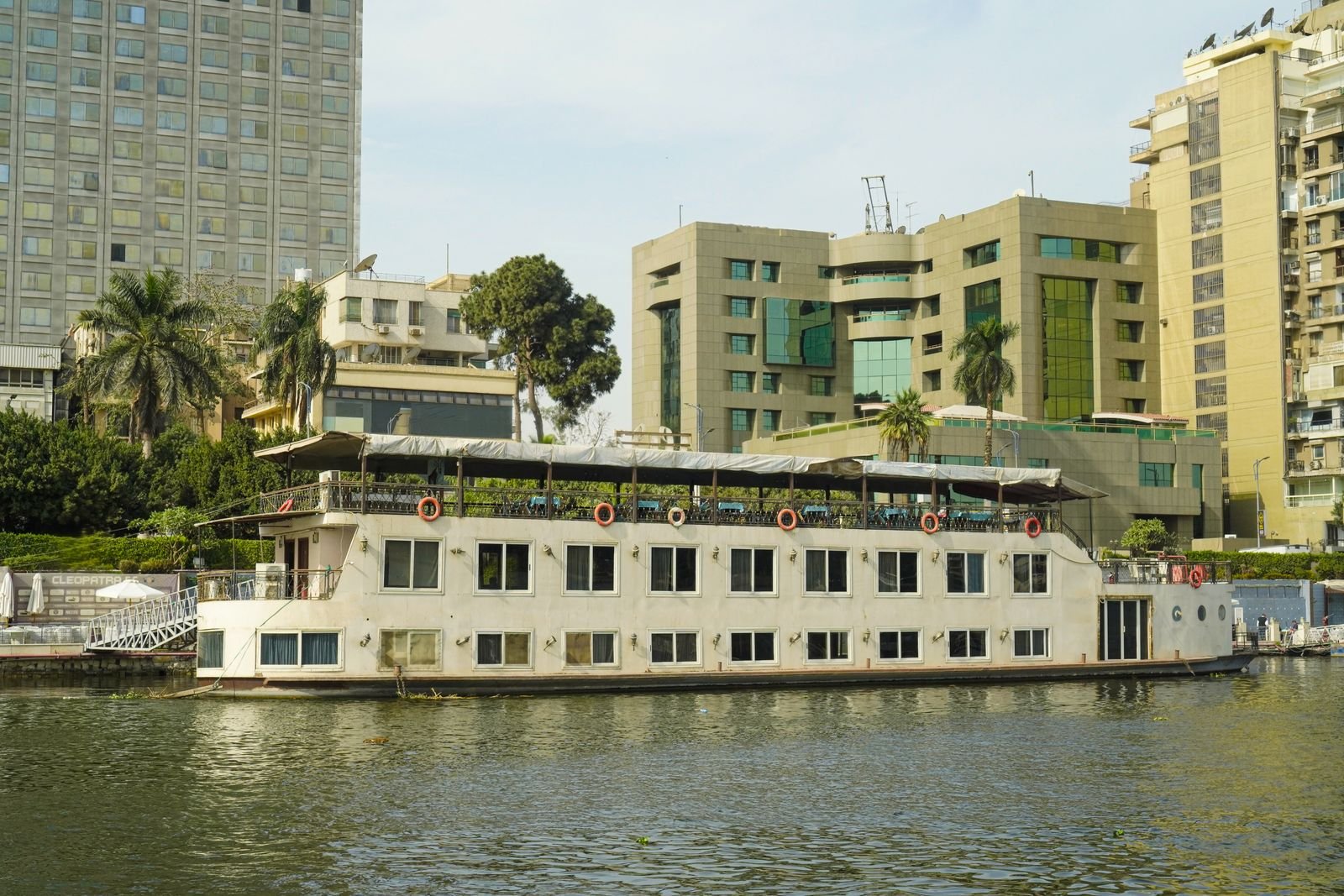
You see the same monuments either way. What changes is pacing, arrival logistics, and where the hardest day lands.
Sailing south from Luxor means going upriver, against the current. It also means your first full day is the West Bank, the most physically demanding morning of the trip, done while you are freshest. Abu Simbel falls on the last day, so the trip finishes on its biggest single monument. Sailing north from Aswan puts Philae and the Nubian village on day one, Abu Simbel on day two, gets the long desert drive out of the way early, and leaves Karnak and Luxor Temple as the closing act.
There is one practical tiebreaker most people miss: pick the direction that matches where you are going next. If Cairo follows the river, ending in Luxor is usually the smoother connection. If you are heading to the Red Sea, ending in Luxor also works, since the road to Hurghada runs from there. If you want a slow extra day or two in Nubia, ending in Aswan makes more sense.
| Luxor to Aswan | Aswan to Luxor | |
|---|---|---|
| Length | 5 days, 4 nights | 5 days, 4 nights |
| Rate | From US$755 per person, double occupancy | From US$755 per person, double occupancy |
| Direction of travel | Upriver, southbound | Downriver, northbound |
| Day 1 | Karnak and Luxor Temple, board at Luxor | Philae and the Nubian village, board at Aswan |
| Day 2 | West Bank: Valley of the Kings, Hatshepsut, Colossi of Memnon | Abu Simbel, then sailing toward Kom Ombo |
| Hardest day | Day 2, the West Bank | Day 2, the Abu Simbel road run |
| Abu Simbel falls on | Day 5, the final morning | Day 2, early |
| Finishes with | Abu Simbel, then Aswan departure | Karnak and Luxor Temple, then Luxor departure |
| Esna Lock transit | Yes, one night southbound | Yes, one night northbound |
| Best if | You are leaving from Aswan or adding time in Nubia | You are continuing to Cairo or the Red Sea |
| Book it | Luxor to Aswan, 5 days | Aswan to Luxor, 5 days |
If you genuinely cannot decide, sail Luxor to Aswan. The upstream direction is the classic one, the West Bank lands while your legs are fresh, and finishing at Abu Simbel is hard to beat.
What a day on a Nile cruise actually looks like
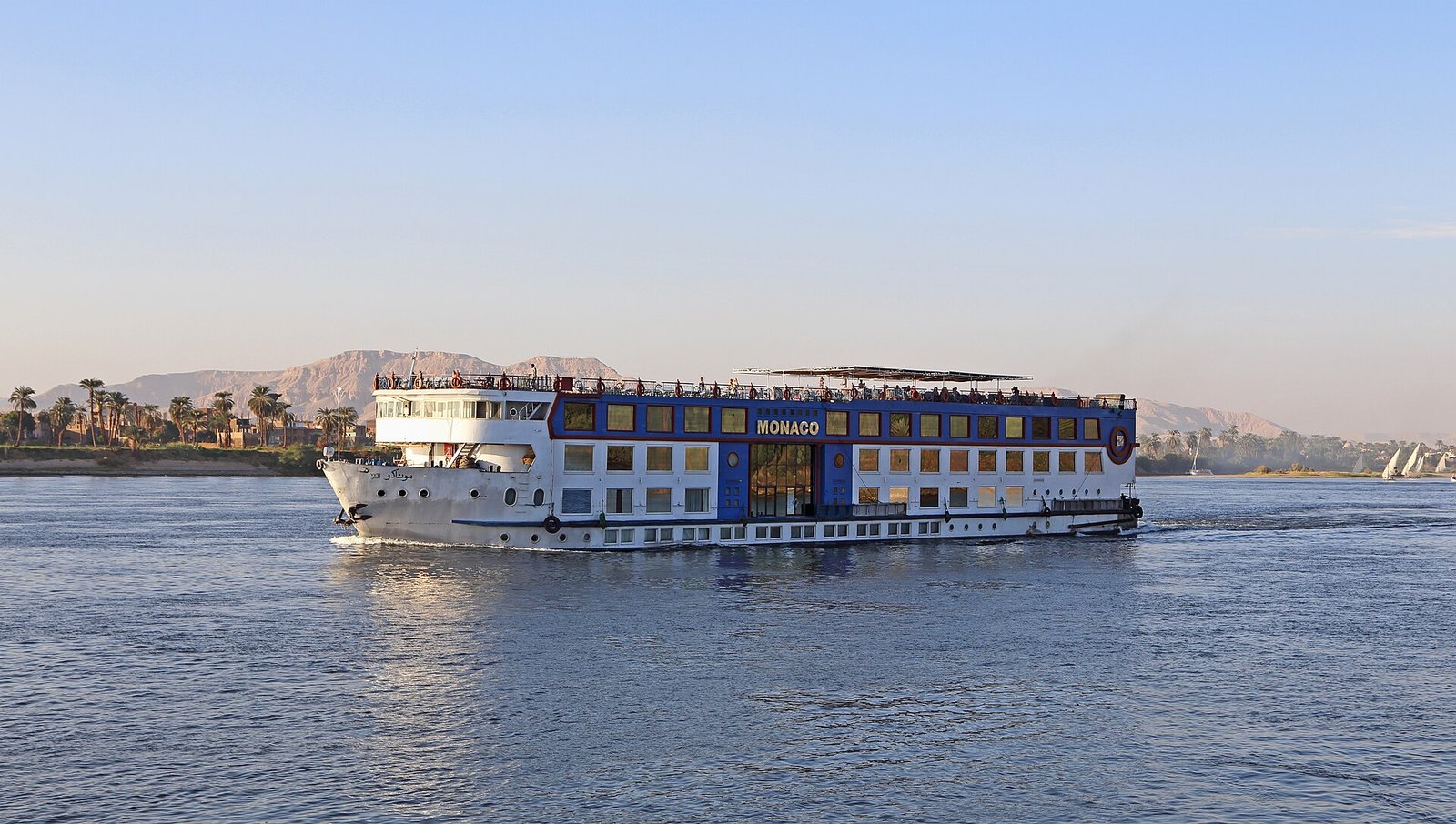
The rhythm is consistent, and it starts earlier than most people expect. Monuments are visited in the cool hours, because by eleven in the morning in Upper Egypt the stone is radiating heat back at you and the tour coaches have arrived. Here is a representative full day.
Around 6:00 am. Wake-up call on excursion mornings. On the two heaviest days, the West Bank and Abu Simbel, it is earlier still, and the ship's kitchen puts out coffee and a light spread before you leave.
6:30 to 7:00 am. Breakfast, or a boxed breakfast if the departure is before dawn.
7:00 to 11:30 am. The guided excursion. Two to four hours on your feet depending on the site. Your guide is a licensed Egyptologist working with your party only, which in practice means you set the pace, you stop where you want, and you can ask the awkward questions instead of listening to a script aimed at forty people.
Around 1:00 pm. Back aboard for lunch, usually a buffet. The ship casts off during or shortly after the meal.
Afternoon. Sailing. This is the part travelers underrate before they go and rank first afterward. Sugarcane, palm groves, water buffalo in the shallows, kids waving from the bank, the occasional shaduf still in use. The sundeck is the right place to be.
Around 4:00 pm. Afternoon tea. Standard on nearly every ship.
Around 7:30 pm. Dinner. A buffet with an international spread and, most nights, a rotating Egyptian section: koshari, tagines, mahshi, local desserts.
Evening. Many ships schedule something after dinner, commonly a Nubian music set or a galabeya night. It is optional, and it is easy to skip in favor of the deck.
One night the ship queues for the Esna Lock, about 35 miles, some 56 kilometers, south of Luxor, where a barrage creates a water level difference of roughly 25 feet, about 7.5 meters. Ships wait their turn, rise or drop inside the chamber, and continue. It usually happens late, and it is worth staying up for once.
The eight ticketed monuments, plus the one free stop
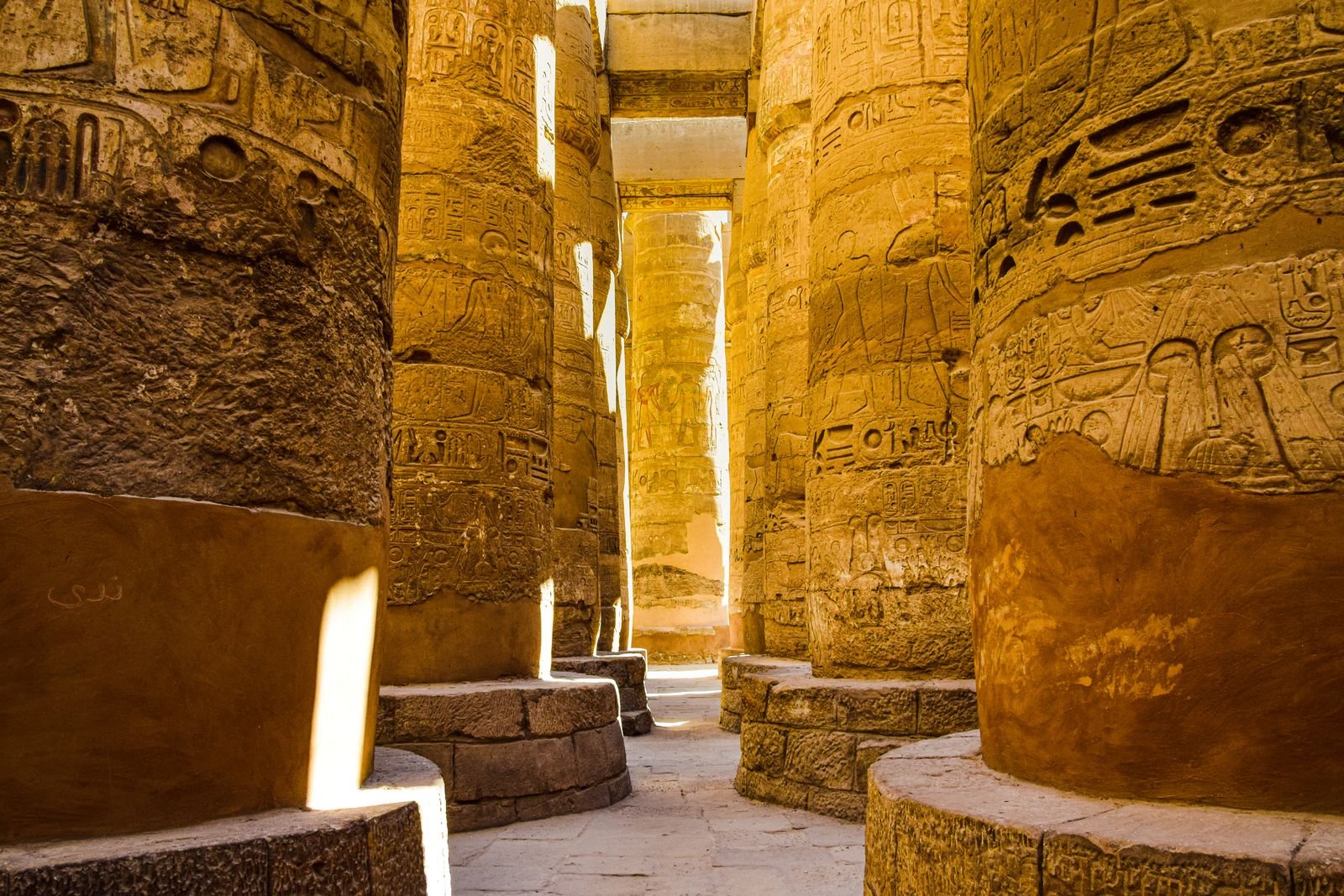
Every entrance below is prepaid and included on both cruise programs. The figures are the 2026 published gate fees in Egyptian pounds, listed so you can see exactly what is covered rather than take it on faith. At the 2026 reference rate of 49.79 EGP to the dollar, the eight tickets come to 4,662 EGP, roughly US$94 per person. The Colossi of Memnon are a roadside stop with no ticket, which is why the count is eight tickets across nine stops.
Karnak Temple, Luxor
Luxor Temple
Valley of the Kings
Temple of Hatshepsut, Deir el-Bahari
Colossi of Memnon
Temple of Horus, Edfu
Temple of Kom Ombo
Temple of Philae, Aswan
Abu Simbel
If Abu Simbel is the piece you care most about and you are not sailing, it also runs as a standalone day trip from Aswan from US$120 per person, double occupancy, or as a 2-day version with an overnight in Abu Simbel town from US$239 per person, double occupancy, which adds the sound and light show and lets you see the temples again at first light without doing the round trip in a single day. Both of those are road-based programs.
The Nubian village and the felucca
Both cruise programs include a motorboat visit to a Nubian village on the Aswan side. Nubian culture is distinct from the rest of Egypt: its own language, its own building tradition, houses painted in saturated blues and ochres. It is also a community displaced by the dam, which gives the visit a different weight once you have seen Philae and understood what the reservoir covered. Carry small notes if you plan to buy anything, and ask before photographing people.
A sunset felucca sail around Elephantine Island is a common optional add-on in Aswan. It is quoted separately and is worth asking about when you send your dates, particularly if you are ending in Aswan and have a free evening.
Ship categories: what your money changes
The route does not change with the ship. The cabin, the food and the deck space do. Every category below sails the same river to the same eight ticketed monuments.
| Category | Cabin | Food and facilities | Best for |
|---|---|---|---|
| Standard, four-star | Exterior double cabin, private bathroom, air conditioning | Buffet dining, pool, sundeck | Travelers who would rather spend on the guide and the sites than on the room |
| Superior, five-star | Larger cabin, panoramic window | Stronger kitchen, larger sundeck, more public space | Most first-time visitors, and the most common upgrade |
| Luxury, five-star deluxe | Suites | A la carte restaurant, spa, boutique-hotel service levels | Travelers who want the ship itself to be part of the trip |
| Dahabiya | 6 to 12 cabins in total | Sail powered, no pool, no entertainment program | Small parties who want quiet and will pay a large premium for it |
Both Explora cruise programs are quoted on the four-star category at the headline rate, from US$755 per person, double occupancy. Superior and luxury ships, peak weeks and single occupancy are quoted individually, because the same route on a better ship in late December is a different number from the same route on a standard ship in June. Dahabiyas sit higher again and have very limited availability, so they are always priced case by case.
A word on dahabiyas, since they get romanticized online. They are wonderful and they are slow. Because they sail rather than motor, they cannot always hold a fixed schedule, and they moor at smaller places the big ships pass. That is the appeal and also the constraint. If your Egypt trip is tightly connected to onward travel, a motor ship is the safer instrument.
What private means here, and what it does not
Private on these programs means your guide, your vehicle and your driver belong to your party alone. You are not merged into a coach group of thirty people, you are not waiting for stragglers, and you decide when you have had enough of a site.
The ship itself is shared. You eat in a dining room with other passengers, and the sundeck is common space. That is true of every motor ship on the river, whoever sells it. Nobody charters a whole vessel for two people. If total privacy matters that much, a dahabiya is the format that gets closest, and it is priced accordingly.
What is included on both Nile cruise programs
- Four nights aboard the ship in an exterior double cabin with private bathroom and air conditioning
- Full board from lunch on day 1 through breakfast on day 5: breakfast, lunch and dinner every day aboard
- All eight monument entrance fees, prepaid, totaling 4,662 EGP, approximately US$94 per person
- A licensed English-speaking Egyptologist guide, private to your party at every site, never a shared coach group
- The Abu Simbel excursion: private vehicle, driver, both temple entries and guiding
- Motorboat transfer to the island temple of Philae
- Motorboat visit to the Nubian village
- All private ground transfers, including airport or railway station to the ship and back
- Port and mooring charges
- Bottled water during road transfers
- WhatsApp support in English from the Egypt office for the whole trip
What is not included
- International flights to and from Egypt. Explora does not sell, book, coordinate or quote international airfare under any circumstances. Buy your own ticket, and buy it before you lock dates with us if your leave is inflexible.
- Domestic Egyptian flights. Cairo to Luxor and Aswan to Cairo are not included on either cruise. They can be quoted separately on request. They are only built into the price on the longer combined programs.
- The Egypt e-Visa. 30 USD single entry, 65 USD multiple entry, paid by you.
- Drinks aboard. Soft drinks, alcohol, bottled water and coffee on the ship are charged to your cabin and settled at the end.
- Special-ticket tombs. Tutankhamun and Seti I sit outside the general Valley of the Kings ticket, and the tomb of Nefertari, which is over in the Valley of the Queens, is a separate ticket again. Extra cost in each case, paid at the ticket office.
- The hot air balloon over the West Bank. An optional flight at dawn, arranged locally and quoted separately.
- The sunset felucca in Aswan. Optional, quoted separately.
- Tips for the guide, driver and ship crew. Customary in Egypt and entirely at your discretion.
- Travel insurance. Not included and strongly recommended.
- Photography permits at the sites that charge for them, personal spending and souvenirs.
When to sail
October through April is the main season. Daytime highs sit in a comfortable range for walking around open-air monuments, often in the seventies and low eighties Fahrenheit, roughly 21 to 29 Celsius, in midwinter, the light is good, and evenings on deck are pleasant rather than cold. Bring a layer anyway: a January morning in Luxor at 6:00 am is genuinely cool, and the desert road to Abu Simbel before sunrise is colder than anyone packs for. This is also when rates are highest and when the popular weeks fill first, so plan two to three months out if you want a specific ship class over Christmas, New Year or Easter.
May through September is hot in Upper Egypt, and Aswan in July regularly runs past 105 Fahrenheit, above 40 Celsius. Two things make it workable anyway. Excursions shift earlier, so you are back aboard in air conditioning before the worst of the afternoon, and the sites are markedly emptier. Rates are lower across every category. If you handle heat well and want Karnak without a crowd, summer is a defensible choice rather than a mistake, as long as you drink far more water than feels necessary.
Whichever months you are looking at, send the dates before you buy airfare. Availability on a specific ship class moves faster than most people expect, and Egyptian school holidays fill the river with domestic travelers too.
Cabins, connectivity, money and packing
These questions come up on WhatsApp almost every week, so here are the answers in one place.
Cabins. Standard cabins are exterior, with a window rather than a balcony, twin beds that can usually be pushed together, a private bathroom with a shower, and air conditioning you control yourself. Windows do not open on most ships. Lower deck cabins sit closer to the waterline and to the engine, upper deck cabins are quieter, and if you are sensitive to engine noise it is worth saying so when you request dates, so the request goes in early rather than at check-in.
Power. Egypt runs on 220 volts with the round two-pin European plug. Devices with dual-voltage chargers, which covers most phones and laptops, need a plug adapter only. Anything single-voltage needs a converter. Ships have a limited number of outlets per cabin, so a small multi-port charger earns its space in the bag.
Wi-Fi. Onboard Wi-Fi exists on most ships and is unreliable between towns, because it runs on the same cell network you are sailing past. If you need to be reachable, an Egyptian eSIM or a local SIM bought on arrival is far better than relying on the ship. Coverage along the Luxor to Aswan corridor is decent in the towns and patchy on the desert road to Abu Simbel.
Money. The currency is the Egyptian pound. Cards work in hotels, on ships and at larger restaurants; they do not work reliably at village stalls, roadside stops or with carriage drivers. ATMs in Luxor and Aswan dispense pounds and are the sensible way to get cash. Small denominations matter more than the total, because most of what you actually need cash for is small.
Packing that matters. Closed walking shoes with grip, because tomb ramps are steep and dusty. A wide-brim hat. Sunscreen stronger than you use at home. A refillable bottle. A scarf or light long sleeves, useful against the sun and appropriate for mosque visits. A flashlight or your phone light for tomb interiors, and a small kit with rehydration salts. Laundry service is available aboard, which means you can pack for four days rather than for the whole trip.
How much walking is really involved
More than most people plan for. Karnak alone is around two hours on uneven ground. The Valley of the Kings means walking between tomb entrances in open sun, then descending long steep ramps into each one, then climbing back out. Hatshepsut has a long exposed approach and terrace stairs. None of it is technical, and all of it is cumulative, which is the part that catches people out.
On mobility, be direct with us before you book. Ships have stairs between decks and most do not have elevators. Gangways at some moorings are steep, and when several ships tie up side by side you cross through the others to reach the bank. Some sites can be shortened or swapped, others cannot. A private guide gives you far more room to adapt a morning than a group tour does, but the physical layout of the sites is what it is, and it is better to plan around it in advance than to discover it on the West Bank at 8:00 am.
Fitting the cruise into a longer Egypt trip
Very few US travelers fly to Egypt for the river alone. The cruise is usually the middle section of a longer route that starts in Cairo, and it slots into every combined program on this site.
The 7-day classic Egypt tour from US$1,348 per person, double occupancy, pairs Cairo with three nights sailing Aswan to Luxor, with the Cairo to Aswan domestic sector included and ticketed. The 8-day version from US$1,451 per person, double occupancy, adds Abu Simbel and the Saladin Citadel with the Muhammad Ali Mosque, and covers both domestic sectors, Cairo to Aswan and Luxor to Cairo.
For the fullest version of the river, the 10-day Cairo, Luxor and Aswan itinerary from US$1,897 per person, double occupancy, is the one that carries four nights aboard rather than three, plus Saqqara and the Step Pyramid of Djoser, with the Cairo to Luxor and Aswan to Cairo sectors included. And the 12-day grand tour from US$2,196 per person, double occupancy, keeps the three-night sailing, includes the Cairo to Aswan sector, and finishes with three unstructured nights on the Red Sea at Hurghada, which is the right shape if you want the trip to end slowly.
On the Cairo side, the monuments you will be adding have their own published 2026 gate fees: the Giza plateau is 700 EGP, the Egyptian Museum at Tahrir is 550 EGP, and Saqqara is 600 EGP. Going inside the Great Pyramid is a separate 1,000 EGP ticket that is not part of any standard program and is bought on the day if you want it.
If you would rather not sleep on a boat
Some travelers do not want four nights in a cabin, and there is a clean overland alternative that covers most of the same ground. The Aswan and Luxor overland tour from US$520 per person, double occupancy, runs the same corridor by private vehicle over 5 days: two nights in Aswan with Philae and the High Dam, Abu Simbel on day two, the drive north through Kom Ombo and Edfu, then two nights in Luxor for Karnak, Luxor Temple and the West Bank. Hotels instead of a cabin, and you keep the freedom to shift the day's timing.
If you only have a short window, the 2-day Luxor tour from US$288 per person, double occupancy, compresses Karnak, Luxor Temple, the Valley of the Kings, Hatshepsut and the Colossi of Memnon into 48 hours with a hotel night in between. It is the efficient way to see the West Bank when the river is not in the plan at all. Neither of these two programs includes domestic flights either, and that stays true of everything outside the multi-day combined tours.
Dahabiya Nile cruise: the river under sail, privately
If a small sailing boat appeals more than a large ship, see our dahabiya Nile cruise. There are three 5-star boats with full board, the Iris dahabiya, the Akhenaton dahabiya and the Per-ba dahabiya, on two routes: Aswan to Luxor in 3 nights, departing on Fridays, and Luxor to Aswan in 4 or 7 nights, departing on Mondays.
Guides to choosing and planning your Nile cruise
If you are still comparing, each of these guides answers one question in depth, from the type of boat to the time of year, always on the Luxor to Aswan stretch of the river.
Boat and format
- 4-star vs 5-star Nile cruise: what really changes
- Nile cruise boats and how to choose one
- How to choose a Nile cruise
- Luxury Nile cruise: boutique ships and suites
- Dahabiya Nile cruise: three sailing boats compared
- What several days on a dahabiya are like
- What an all inclusive Nile cruise really includes
- A cheap Nile cruise: where you save and where you pay
- What moves the price of a Nile cruise
Length and route
- 3 night cruise from Aswan to Luxor, day by day
- 7 day Nile cruise itinerary
- Sail from Luxor or from Aswan?
- Lake Nasser cruise to Abu Simbel
- Combining Cairo with the cruise
- Joining the cruise from Hurghada
- Nile cruise or land tour between Luxor and Aswan?
- Every excursion on the cruise, included and optional
- Felucca sunset sail in Aswan
When and who with
Frequently asked questions
How many nights is a Nile cruise between Luxor and Aswan?
Does the cruise price include flights?
Are the monument entrance fees really included?
What does a Nile cruise cost?
Which direction is better, Luxor to Aswan or Aswan to Luxor?
Do I need a visa, and how much is it?
Are drinks included on board?
What is the Esna Lock and will we go through it?
Which three tombs will we see in the Valley of the Kings?
Is a Nile cruise good for kids?
Is it safe, and does it work for solo travelers?
Can I add Cairo, or the Red Sea, to a cruise?
How far ahead should I book?
How long is a Nile river cruise?
Our Nile river cruises run four nights, five days, in either direction between Luxor and Aswan, with the same temple stops. Shorter three-night sailings exist from Aswan to Luxor, seven-night itineraries add Dendera and Abydos north of Luxor, and Lake Nasser cruises run separately between Aswan and Abu Simbel.
Get a quote for your dates
There is no checkout on this site and no fixed departure calendar. Every Nile cruise is quoted for your dates, your party size and the ship category you want, by the team that runs the trip on the ground in Egypt rather than by a reseller. Explora holds 12 verified reviews at a 5.0 average, written about the agency and about our guide Shady Said.
Message +20 1032295513 on WhatsApp with three things: your approximate travel dates, how many are traveling, and whether you want Luxor to Aswan or Aswan to Luxor. If you are not sure yet whether the river should be four nights on its own or three nights inside a larger route, say so and we will lay both out against your dates. You can also send the enquiry form on this page and we will reply on WhatsApp or by email, whichever you prefer.
Ask anything before you commit. Questions about a specific ship, dietary requirements, mobility, cabin configuration, or how a domestic sector would connect to the day you land are all better asked now than discovered later.
Keep exploring
To finish planning your trip to Egypt
- ▸Cairo in 2 days works when you split the city by traffic, not by monument
- ▸Movies About Egypt and Documentaries to Watch Before You Go
- ▸Quad Bike Safari in Egypt: Hurghada, Sharm and Giza Guide
- ▸Valley of the Kings: Tickets, Tombs and How to Visit in 2026
- ▸Egypt in 5 Days: Two Itineraries That Actually Fit
- ▸Egypt in January: Cold Dawns, Coptic Christmas, Clear Skies
- ▸Solar Eclipse Egypt 2027: Luxor, the Path and How to See It
- ▸See all our Egypt tours