A dahabiya experience is the Nile at walking pace, and this is what each day on board feels like
A dahabiya experience is the Nile at walking pace, and this is what each day on board feels like
A dahabiya experience is four to six nights on a wooden sailboat with six to ten cabins, sailing the Nile between Esna and Aswan by day and tying up to a riverbank or an island at night. There is no engine under your bed, no announcement over a speaker, no buffet line. Two lateen sails do the work when the wind blows and a small tug takes over when it does not. You visit Edfu and Kom Ombo like everyone else, then stop at Gebel el Silsila, El Kab and river islands where the big ships cannot moor. A crew of eight to twelve cooks, sails and looks after you. It is slow on purpose, and that slowness is the whole point.
The boat you are living on for a week
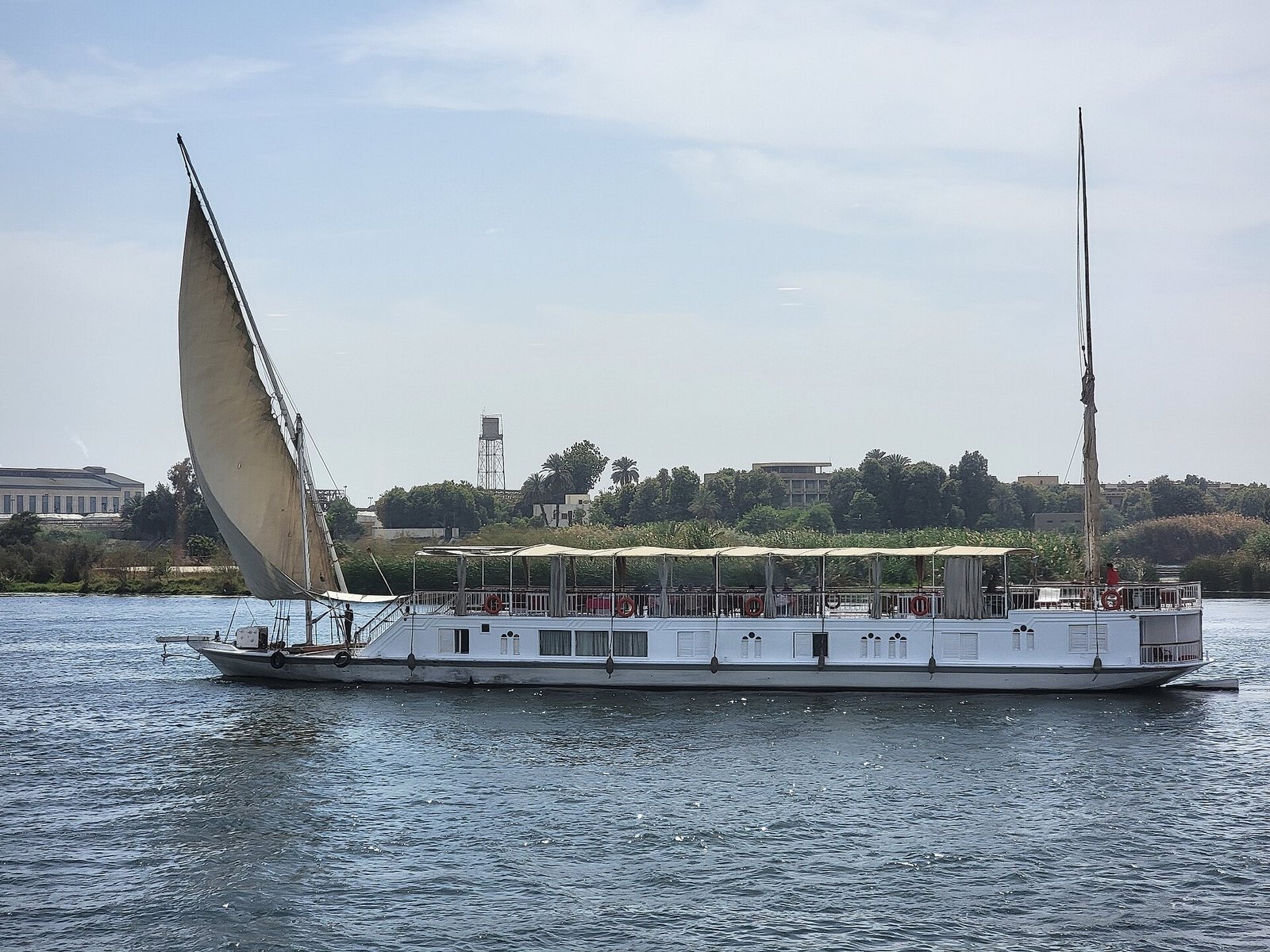
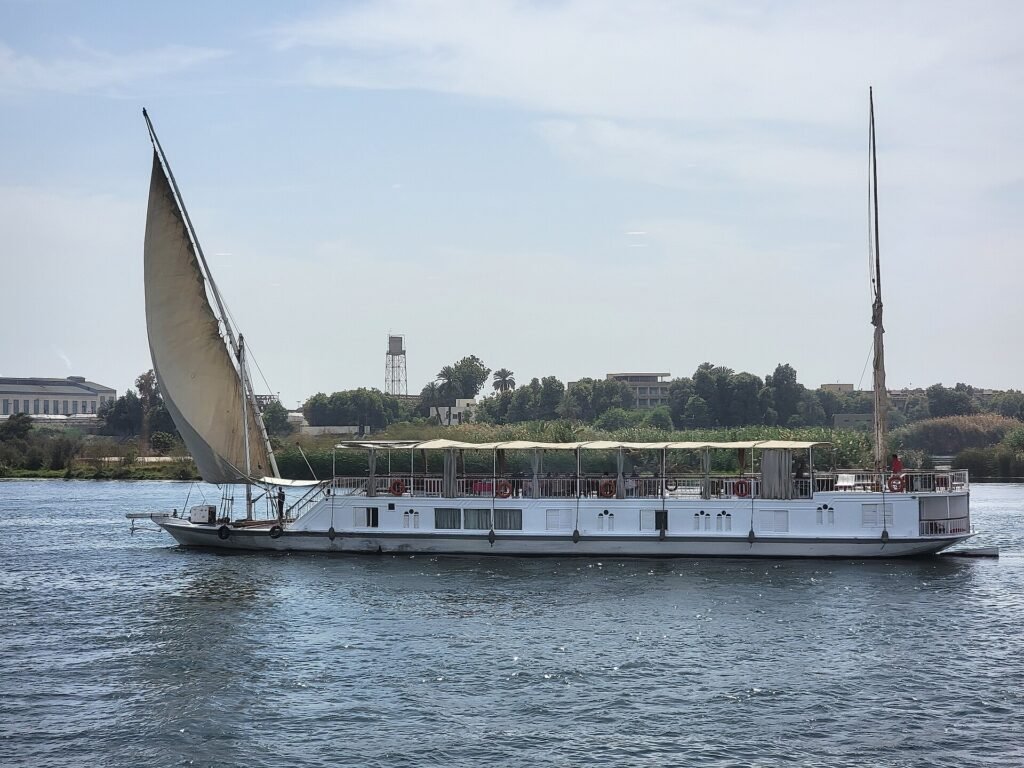
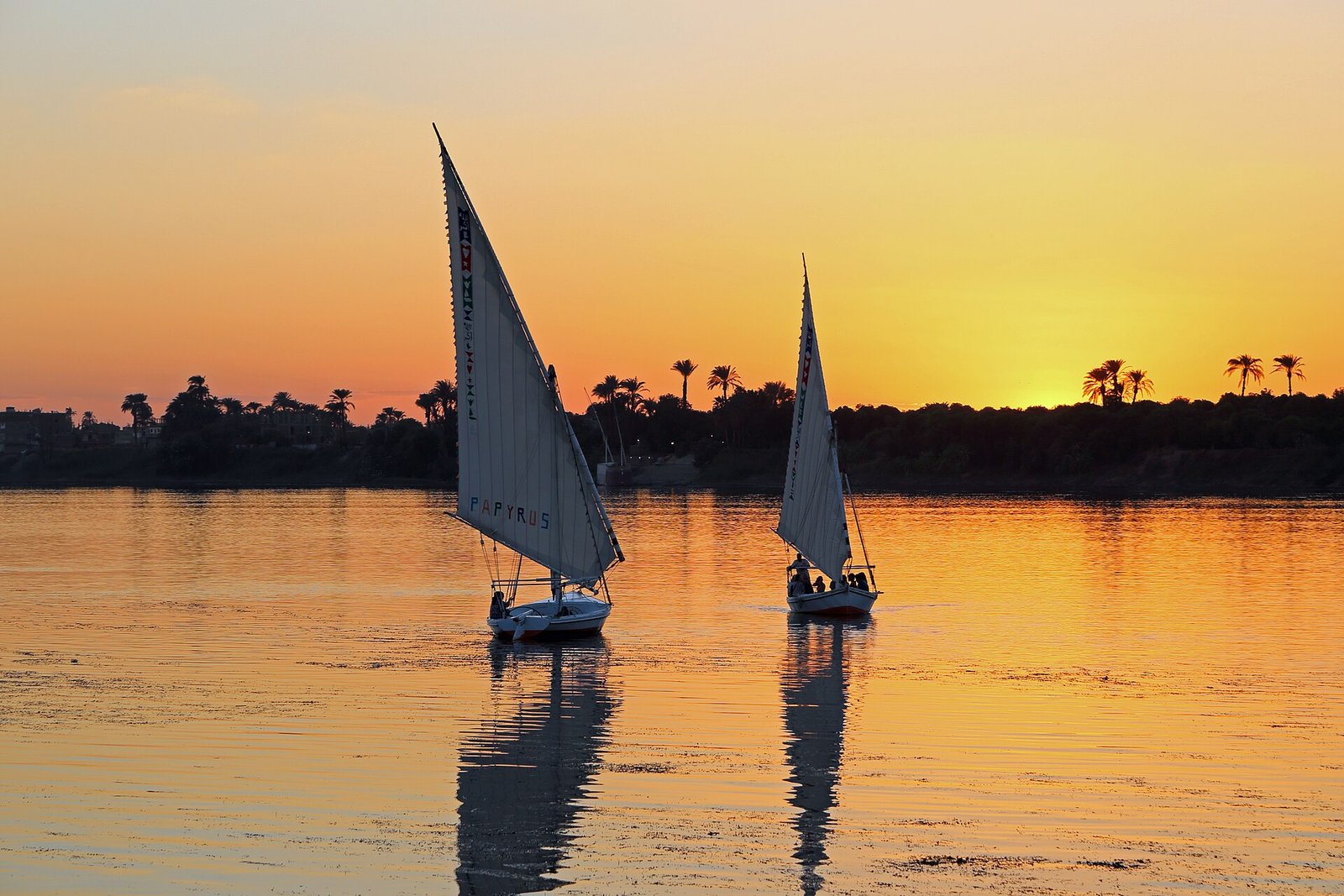
A dahabiya is a long, shallow-draft wooden sailboat with two masts and two triangular lateen sails, a small one at the bow and a large one at the stern. It is the shape Victorian travelers rented in the 1870s, rebuilt with modern plumbing, air conditioning and a proper galley. Most boats we use are 130 to 165 feet long, which sounds big until one ties up beside a cruise ship.
There are six to ten cabins along one corridor, each with a private bathroom, a real window or French doors rather than a porthole, and a bed fixed to the hull. Think boutique-hotel room, not suite: wardrobe space is limited, the shower is compact, and the walls are wood, so you hear your neighbor's door.
The upper deck is where you spend most waking hours. It is shaded by a canvas awning and furnished with cushioned benches, loungers and a long dining table. There is a small salon below for the hottest hour, and no pool, gym, elevator or shop.
The sails are real and they are used. When the north wind blows, which is most days in the cooler months, the crew hauls them up and the boat heels gently and moves at the pace of a fast walk. When the wind drops, a small motorized tug ties on at the bow and pulls. From the dining table it is a distant putter, and you will be glad of it on a still afternoon.
How a day on a dahabiya actually runs
The honest way to explain a dahabiya is to walk through one ordinary day, because it looks nothing like a day on a 150-cabin ship.
- Early morning. You wake tied to a bank, not moving. Coffee is on deck, and the first thing you see is a farmer walking a buffalo along the levee. Breakfast is eggs to order, fresh bread, white cheese, fruit and honey.
- Mid-morning. If there is a temple within reach, you go now, before the coaches from the big ships arrive, often straight from the gangplank to the gate with your guide.
- Late morning. Lines off, sails up if the wind allows. This is the stretch people remember: water slapping the hull, palms and mudbrick villages sliding past.
- Lunch. Served on deck while sailing or after tying up at a sandbank.
- Afternoon. The boat moors at an island or a quiet bank. You swim off the side if the captain says the current is safe, walk into a village, read, or do nothing and feel fine about it.
- Sunset and evening. Tea on deck as the light goes orange. Dinner after dark, often by lantern, then a sky with no light pollution.
Repeat that four or five times with different scenery and you have the trip. The boat covers roughly 30 to 40 miles a day, which is why a route a ship sails overnight takes a dahabiya most of a week.
Where a dahabiya moors that the big ships cannot reach
A conventional cruiser needs a deep berth and a concrete quay, which limits it to four or five stops, each shared with every other ship on the same timetable. A dahabiya draws a few feet of water and ties to a stake hammered into the bank.
Gebel el Silsila
Between Edfu and Kom Ombo the cliffs squeeze the river to its narrowest point, and both banks are cut with the sandstone quarries that supplied Karnak and most of the temples you will see. You walk through corridors of chisel-marked rock into the small rock-cut shrine of Horemheb and a row of chapels facing the water. A dahabiya ties up directly below. Big ships pass it at night.
El Kab
On the east bank between Esna and Edfu, El Kab is ancient Nekheb, home of the vulture goddess Nekhbet. Its mudbrick walls still stand higher than a house, and a hillside of rock tombs belongs to the officials who fought the wars that founded the New Kingdom, including Ahmose, son of Ebana, whose first-person war record is quoted in every history book. You will likely have the site to yourselves.
Besaw island and the sandbanks
Besaw is one of several farmed river islands where dahabiyas tie up for lunch or the night. Goats graze under date palms, children row out in wooden boats to say hello. There is nothing to see in the guidebook sense, which is exactly why it is on the route. Other afternoons the captain simply picks a clean sandbank for tea.
Add the villages. Walking past the mosque and the bakery with your guide, and being invited in for tea, happens naturally when ten of you step off a wooden boat.
Meals cooked on board and the crew who cook them
Every dahabiya has a chef and a galley, and on most boats the chef buys fresh produce at a village market as you go. The menu changes with what was available that morning: Nile perch one night, chicken tagine the next, stuffed vine leaves, okra stew, flatbread baked in a clay oven on deck. Dinner is a proper three-course meal at a set table. Vegetarian and other requests are easy if we know in advance, because the chef is cooking for ten people, not three hundred.
Water, tea, coffee and juices are always available, and wine and beer are usually stocked.
The crew is the second half of the experience. A typical boat carries eight to twelve people: a captain, two or three sailors, a chef and assistant, a waiter, a housekeeper, and an Egyptologist guide who travels with you the whole way. You learn their names on day one. The sailors show you how the sail is rigged and the captain explains why he chose one bank over another for the night. Tips are pooled at the end and shared; ask us what is customary.
Sunsets, nights and the absence of a schedule
On a large ship the day is governed by a printed program: wake-up call, coach at 7:00, lunch seating, folklore show. On a dahabiya it is governed by the wind, the light and what the group feels like doing. The guide suggests a plan at breakfast, and it bends if someone wants an extra hour at the quarry.
Sunset is the one fixed ritual. An hour before dark the boat is tied up, the crew brings tea, and everyone drifts to the western rail. The sun drops behind the escarpment, the palms turn black, the water goes copper and then gray, and the call to prayer carries from a village you cannot see. It does not get old.
Nights are still and dark. On most boats the generator goes quiet late in the evening, which can mean the cabin air conditioning cycles off in the cooler months. Mobile signal comes and goes and many boats have no reliable wifi. If you need to be online for work during the sailing days, this is the wrong boat and we will say so.
Who a dahabiya suits, and who will miss the big ship
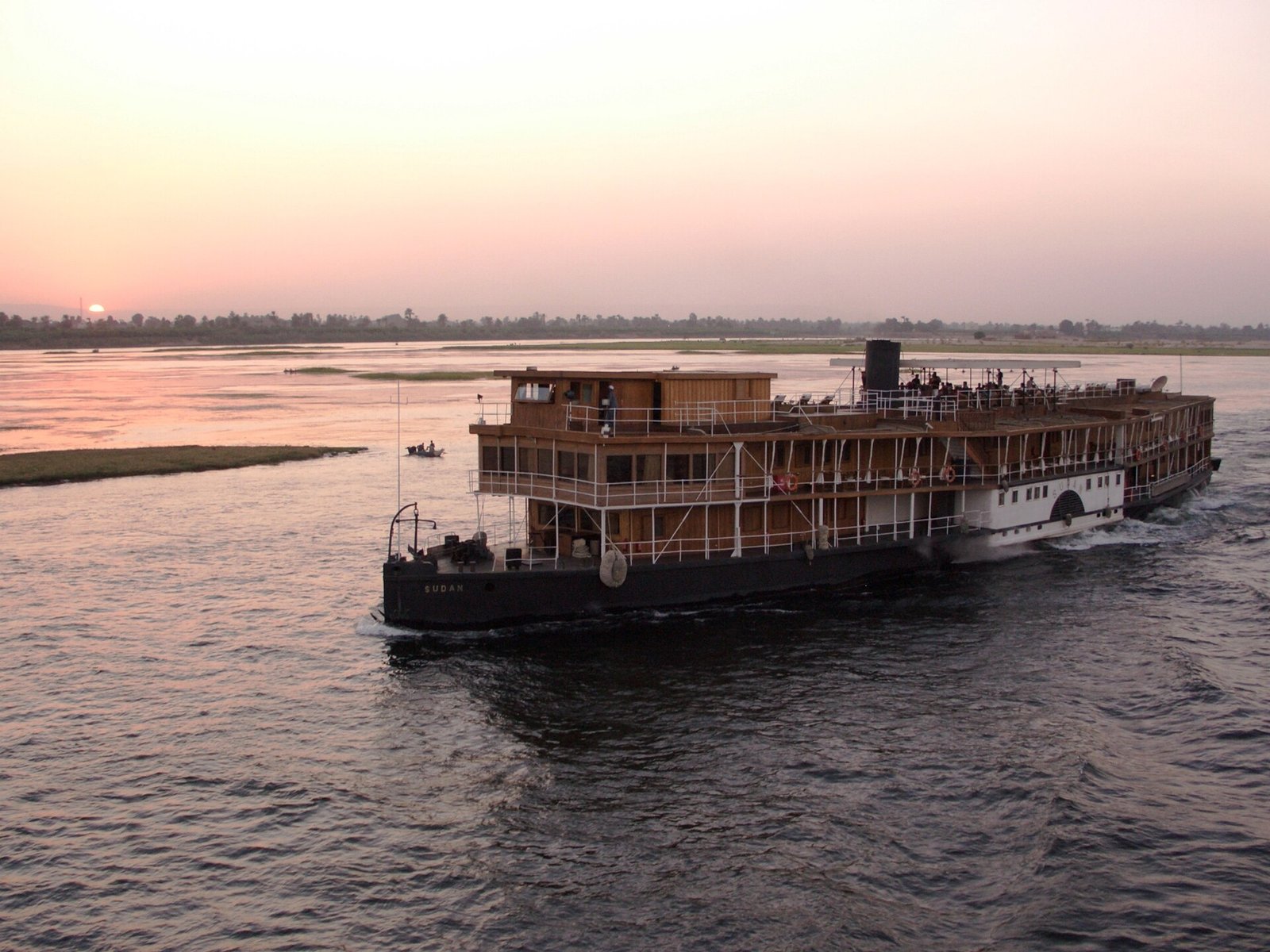
We sell both kinds of boat, so we have no reason to push one. The dahabiya is a superb trip for the right traveler and a frustrating one for the wrong traveler.
| You will love the dahabiya if | You will be happier on a conventional ship if |
|---|---|
| You want quiet, scenery and time on deck more than activities | You want a pool, a spa, a lounge with live music and evening shows |
| You travel as a couple, a family or friends who enjoy each other's company | You prefer anonymity and a large dining room where you keep to yourselves |
| You have done a classic Nile cruise, or you can give the river five nights | You have three nights and want every major temple covered efficiently |
| You are comfortable being offline for stretches of the day | You need stable internet for work or for the kids |
Families with children from about eight upward do very well, because there is real free time to swim and explore. Travelers with limited mobility should know there is no elevator, the gangplank is often steep and the banks are uneven. On a shared sailing you dine with the same group every night.
If you are still choosing between boat types, our dahabiya Nile cruise comparison sets them side by side, and the guide to Nile cruise boat types covers the whole range.
What to pack for a dahabiya
Our checklist for what to pack for a Nile cruise applies, with a few things that matter more on a sailboat.
- A soft-sided bag. Cabins have little floor space and no room under the bed for a hard suitcase.
- Layers. Deck can be 85 F (29 C) in the afternoon and 60 F (16 C) after dark in November. A fleece for evenings from November to February.
- Wide-brimmed hat, sunglasses and high-factor sunscreen. You are outside most of the day and the river reflects the light.
- Swimwear and a quick-dry towel for the afternoon swim off a sandbank.
- Closed shoes with grip for the gangplank, the quarry and the tombs, plus sandals for on board.
- Modest cover-ups for village walks: shoulders and knees covered.
- Books and a downloaded playlist. There is no television.
- Cash in small bills for village purchases and the crew tip at the end.
Laundry is not a service on most boats, so pack for the full sailing. Sockets are the European two-pin type, so bring an adapter.
Seasons: when the sailing is at its best
A dahabiya is an outdoor experience, so the season matters more than on a ship with a climate-controlled lounge. The sweet spot runs from October to April.
- October and November. Days around 85 to 95 F (29 to 35 C), pleasant evenings, steady north wind. Probably the best balance of sailing and comfort.
- December to February. Days of 70 to 78 F (21 to 26 C), evenings down to 50 F (10 C). Perfect deck weather by day; bring the jacket. The busiest period, and boats fill months ahead.
- March and April. Warming fast, with occasional dusty khamsin winds that can keep you off deck for an afternoon. Good wind, fewer crowds.
- May to September. Highs regularly over 100 F (38 C). Some boats stop sailing; others run early temple visits and long siestas in the cabin. A big ship with an indoor lounge is more comfortable in this heat.
Direction matters too. The prevailing wind blows from the north, so a boat sailing south from Esna toward Aswan has the wind behind it and the sails do most of the work. Sailing north from Aswan, the current carries you and the tug helps more often. If seeing the sails full matters to you, ask for a southbound sailing. Our page on Luxor to Aswan or Aswan to Luxor covers the trade-offs.
Combining the dahabiya with Luxor and Aswan
Almost every dahabiya sailing starts or ends at Esna, a short drive south of Luxor, because large ships can queue for hours at the Esna lock and a dahabiya avoids it by boarding below. So Luxor and Aswan are done on land, before and after, and the boat covers the stretch between. A typical shape for a US traveler:
- Cairo, two or three nights. Pyramids, the Grand Egyptian Museum, Islamic and Coptic Cairo.
- Fly Cairo to Luxor. About an hour; see our notes on domestic flights in Egypt.
- Luxor, two nights on land. Karnak and Luxor temples, then the Valley of the Kings and Hatshepsut on the west bank.
- Drive to Esna, board, four or five nights. El Kab, Edfu temple, Gebel el Silsila, Kom Ombo temple, islands and villages, arriving Aswan.
- Aswan, one or two nights. Philae, a Nubian village, and the day trip to Abu Simbel.
- Fly Aswan to Cairo for your last night, or continue to the Red Sea.
That is a 10 to 12 night trip. With less time, shorten Cairo and take a four-night sailing. With more, add a Red Sea beach at the end.
How Explora Egipto books a dahabiya for you
We are a local agency in Egypt with our own guides and vehicles, and we have sailed on the boats we recommend.
- You tell us your dates, your group and what you care about. Sails or comfort first, private or shared, children or not, dietary needs.
- We check the boats that fit. There are far fewer dahabiya cabins on the Nile than ship cabins, and in winter they go early: six months ahead is comfortable, three is tight.
- We send you the quote. One document with the boat, cabin category, dates, direction and the land days in Luxor, Aswan and Cairo, everything included listed line by line. Ask us for the quote.
- We hold the cabins while you decide, then confirm and assign your guide and driver.
Two choices to make early. Private charter or shared: with eight to ten people you take the whole boat; with two or four you join a scheduled departure. And which boat, because the word dahabiya is used loosely: we will tell you how many cabins it has, how much it truly sails and whether the air conditioning runs all night. For the conventional ships we also use, start with our Nile cruise page.
Frequently asked questions
What is a dahabiya cruise like compared with a regular Nile cruise?
Quieter, slower and far more personal. A regular ship carries a few hundred passengers, sails at night and stops at four or five busy quays. A dahabiya carries twelve to twenty guests, sails by day under canvas or behind a tug, and ties up at islands, quarries and villages. You see Edfu and Kom Ombo plus small sites the ships skip.
How many nights does a dahabiya sailing take?
Most sailings are four or five nights between Esna and Aswan, and a few boats offer six or seven with extra stops. The boat moves only by day, so the distance a ship does in two nights takes most of a week. Add Luxor, Aswan and Cairo and a full trip is ten to twelve nights.
Does a dahabiya really sail, or is it towed?
Both, and any honest operator will say so. When the north wind blows, the crew raises the two lateen sails and the boat moves under sail, usually southbound. When the wind drops or the schedule is tight, a small tug ties on and pulls. Southbound from Esna you see more sailing. Ask us how much a specific boat sails.
Is a dahabiya good for families with children?
Yes, from about eight years old. Children get real free time to swim off a sandbank, walk into villages and watch the sailors work, and temple visits are spread over the days rather than stacked. Cabins are small, so a family of four usually takes two. There is no kids' club and no pool, and younger children need watching on open decks.
Are the cabins air-conditioned and is there wifi?
Every dahabiya we use has air conditioning in the cabins, but on many boats it runs off a generator that may be switched off late at night in the cooler months for quiet. Wifi is unreliable at best and mobile signal drops between towns. If you need a guaranteed connection, a conventional ship is the better choice.
Can we charter the whole dahabiya for our group?
Yes, and it is the best way to do it. With eight to ten people you fill most boats, the itinerary becomes yours to shape with the captain and guide, and meals, swims and temple visits run on your clock. Families and milestone celebrations do this often. Send us your group size and dates and we will tell you which boats are free.
Sail the Nile the way travelers did before there were engines
Tell us your dates, who is coming and whether you want the sails full or the comfort first, and we come back with the boat, the cabins held, the stops at Gebel el Silsila and El Kab built in, and Luxor, Aswan and Cairo arranged around it. One quote, one local team in Egypt.