A night beside the colossi of Ramesses II
This trip is for you if you want Abu Simbel without the six-hour round trip crammed into a single day. You sleep in Abu Simbel, see the evening sound and light show, and walk into the temples the next morning rested rather than wrecked.
Almost everyone visits these temples the hard way. A minibus leaves Aswan before dawn, drives three hours across the Nubian desert, gives you two hours at the site, then drives three hours back. You see Abu Simbel, technically. This program does the opposite: you leave Aswan in the afternoon, check into a hotel minutes from the temple enclosure, watch the facades light up after dark, and give the site a proper morning before turning north.
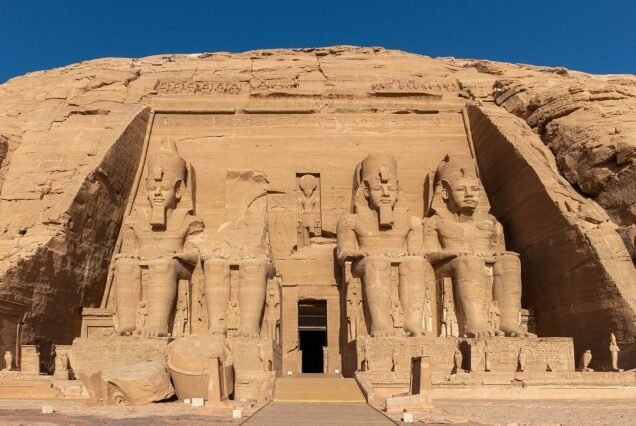
Ramesses II had both temples cut straight into a sandstone cliff more than 3,200 years ago. In the 1960s, with the reservoir behind the new dam rising toward them, engineers working under UNESCO sawed them into more than a thousand blocks and rebuilt them on higher ground. You can still find the seams. Your guide will show you where.
Day two picks up Philae Temple, the island sanctuary of Isis outside Aswan, and the High Dam that made the rescue necessary in the first place. If your schedule is tight, the one-day Abu Simbel excursion gets you back to Aswan the same evening. If you can spare the night, this is the version worth doing.
Duration: 2 days and 1 night. Day one starts in the afternoon in Aswan. Day two ends back in Aswan at roughly 3 p.m.
Route: Aswan to Abu Simbel by private air-conditioned vehicle, about 175 miles (280 km) of desert highway, roughly three hours each way. Overnight at Hotel City First. Back to Aswan the next morning, then Philae Temple by motorboat and the High Dam viewpoint over Lake Nasser.
Sites: the Great Temple of Ramesses II, the Temple of Nefertari and Hathor, the Abu Simbel sound and light show, Philae Temple and the High Dam.
Guiding: private, with a licensed Egyptian guide who works in English. No headsets, no audio app, no group of forty.
What separates this from the standard day trip is the night, and three things follow from it. The sound and light show only runs after dark, by which time the convoys that drove down that morning are long gone. The Great Temple faces east, so the early light lands directly on the four colossi, which is the difference between a photograph and a snapshot. And you reach the temples having slept ten minutes away rather than having been awake since three.
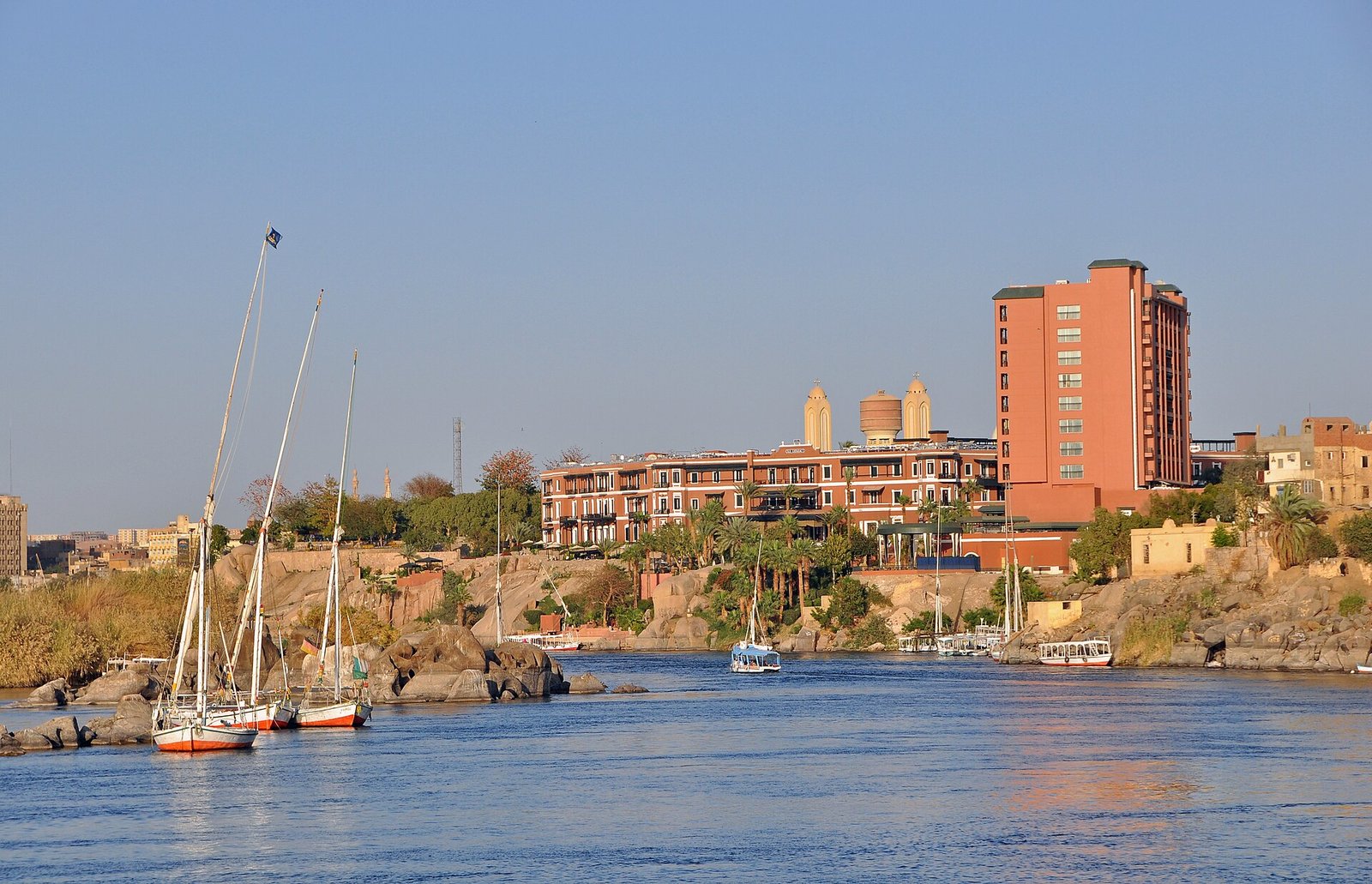
Aswan is a good place to build this around. It is the calmest of Egypt's southern cities, spread along a stretch of river full of granite boulders and sailboats. Because the program starts and ends there, it sits neatly on either side of a Nile cruise from Aswan to Luxor or the land-based Aswan and Luxor itinerary.
Your driver collects you in Aswan in the afternoon. We confirm the exact pickup time the day before, because it depends on where you are staying and on what time the show runs that season. From there it is a straight run south on the desert highway: about three hours, almost no traffic, and a landscape that empties into flat sand and low rock until Lake Nasser appears on your right. Water is in the vehicle, and there is a rest stop halfway if you want one.
You check in at Hotel City First, in the small town that grew up around the temples. It is a simple, comfortable place, and its whole advantage is the distance: minutes from the enclosure gate instead of three hours. Dinner is available at the hotel if you want it, paid directly.
After dark you go to the sound and light show. The two temple facades become the screen, and the narration runs through Ramesses II, his campaigns, and Nefertari, the wife he built the second temple for. The enclosure at night, with the rock lit and the lake behind it, is worth the ticket even if you tune the narration out. You are back at the hotel ten minutes later.
Meals: none included today beyond the water in the vehicle. Overnight: Hotel City First, Abu Simbel.
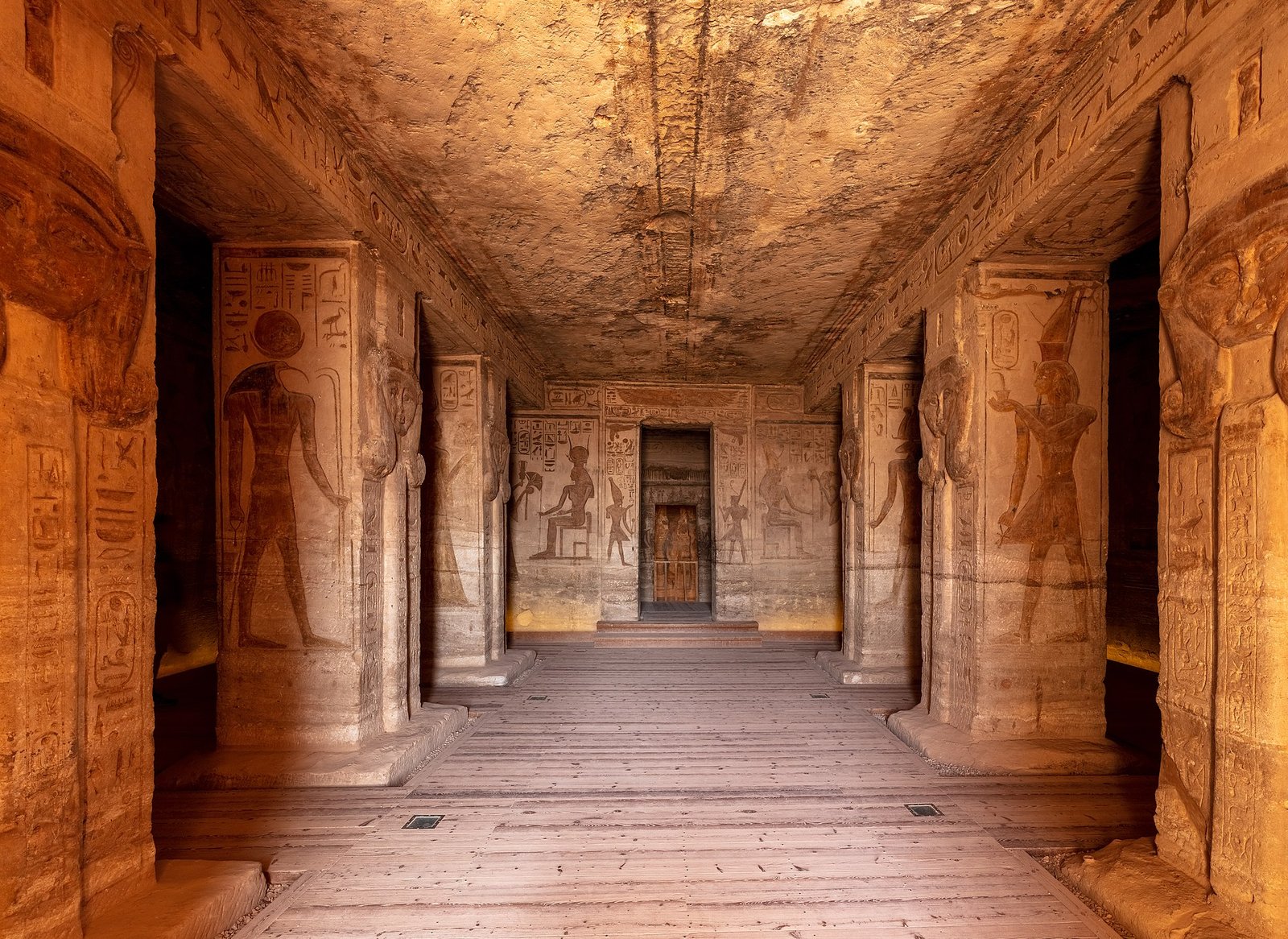
Breakfast at 8:00. At 8:30 you meet your guide and walk into the enclosure. The Great Temple comes first: four seated colossi of Ramesses II, each about 66 feet (20 m) tall, one broken at the shoulder since antiquity and left that way when the temple was moved. Inside, a hall of Osiride pillars runs back into the cliff toward the sanctuary, where four statues sit in the dark, three of them gods and the fourth Ramesses himself, promoted.
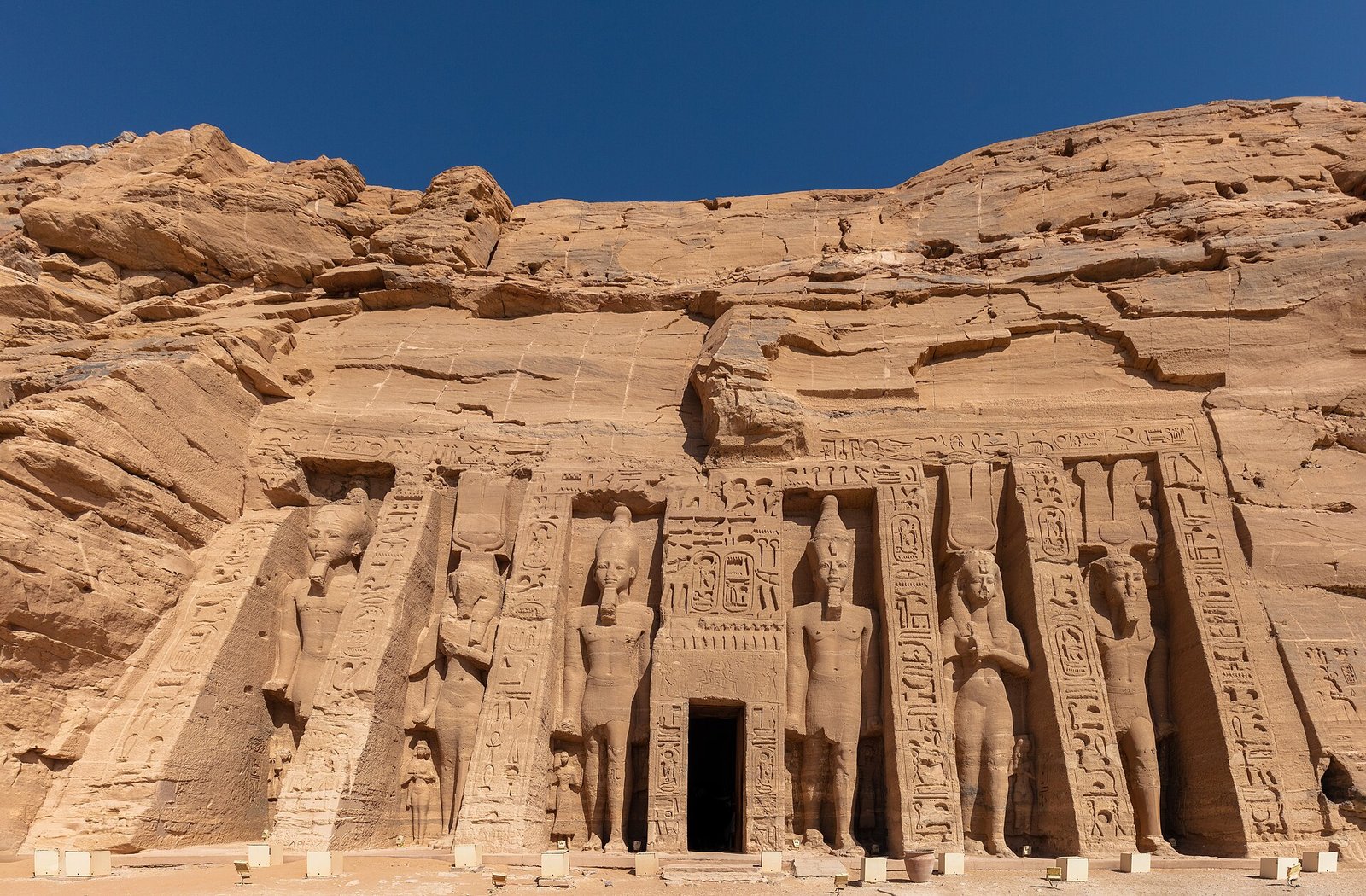
Then the smaller temple next door, built for Nefertari and dedicated to Hathor. It is the one most day-trippers rush, and it is the better of the two for carving. Six standing figures on the facade, with the queen shown at the same scale as the king, which almost never happens in Egyptian art. Inside, the columns are topped with Hathor's face and the reliefs still hold color in places.
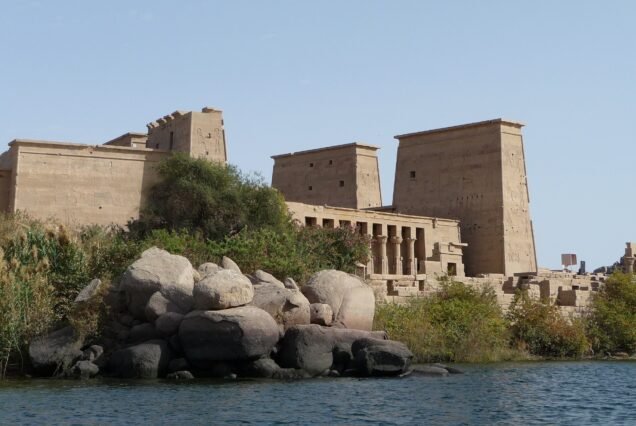
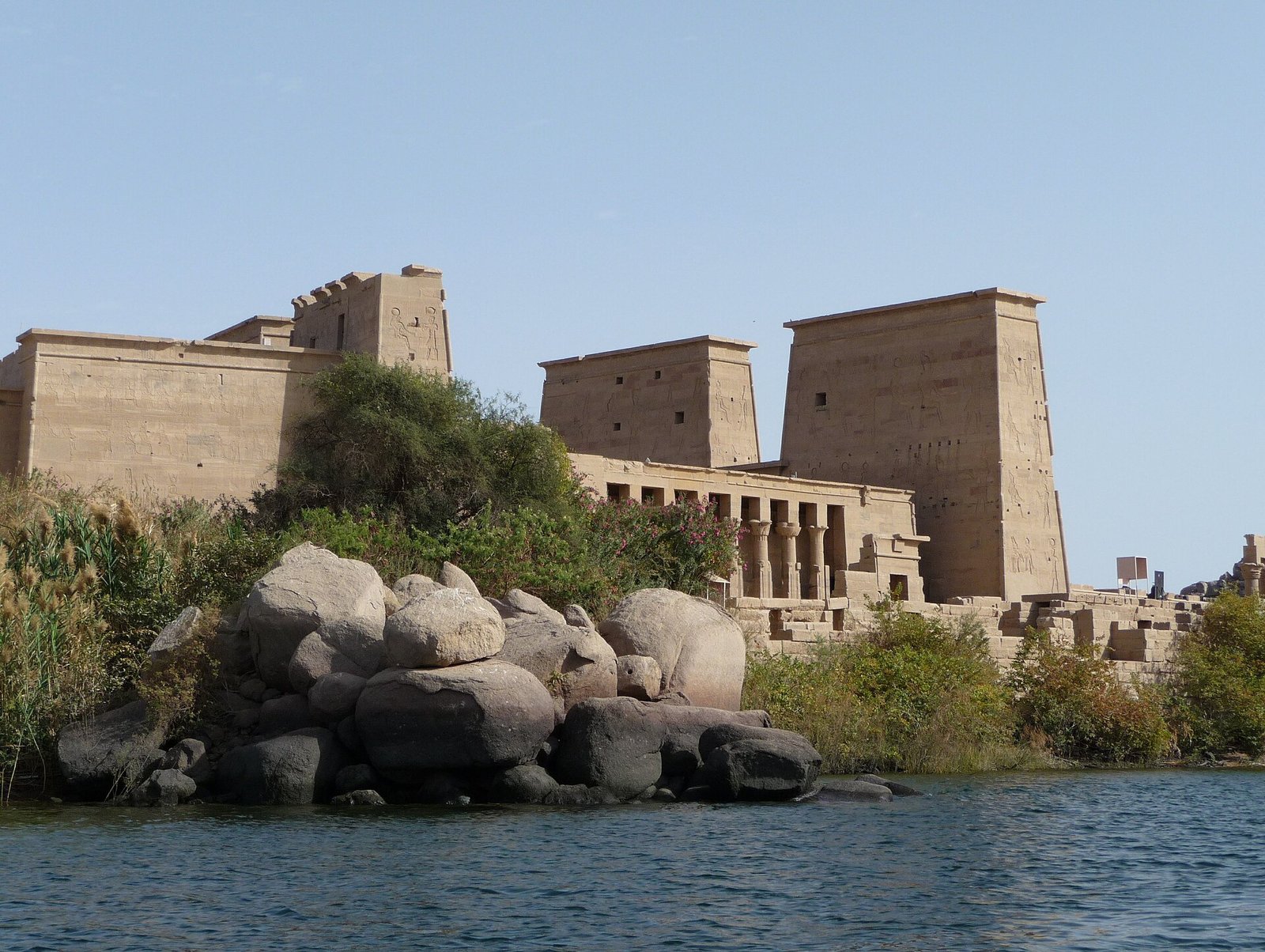
Around 11:00 you start north. Back at Aswan a motorboat takes you across to the island where Philae Temple stands, the sanctuary of Isis, worked on by Ptolemies and Roman emperors and moved block by block when the dam went up. The approach by water is the best part, with the temple rising straight out of the lake ahead of you.
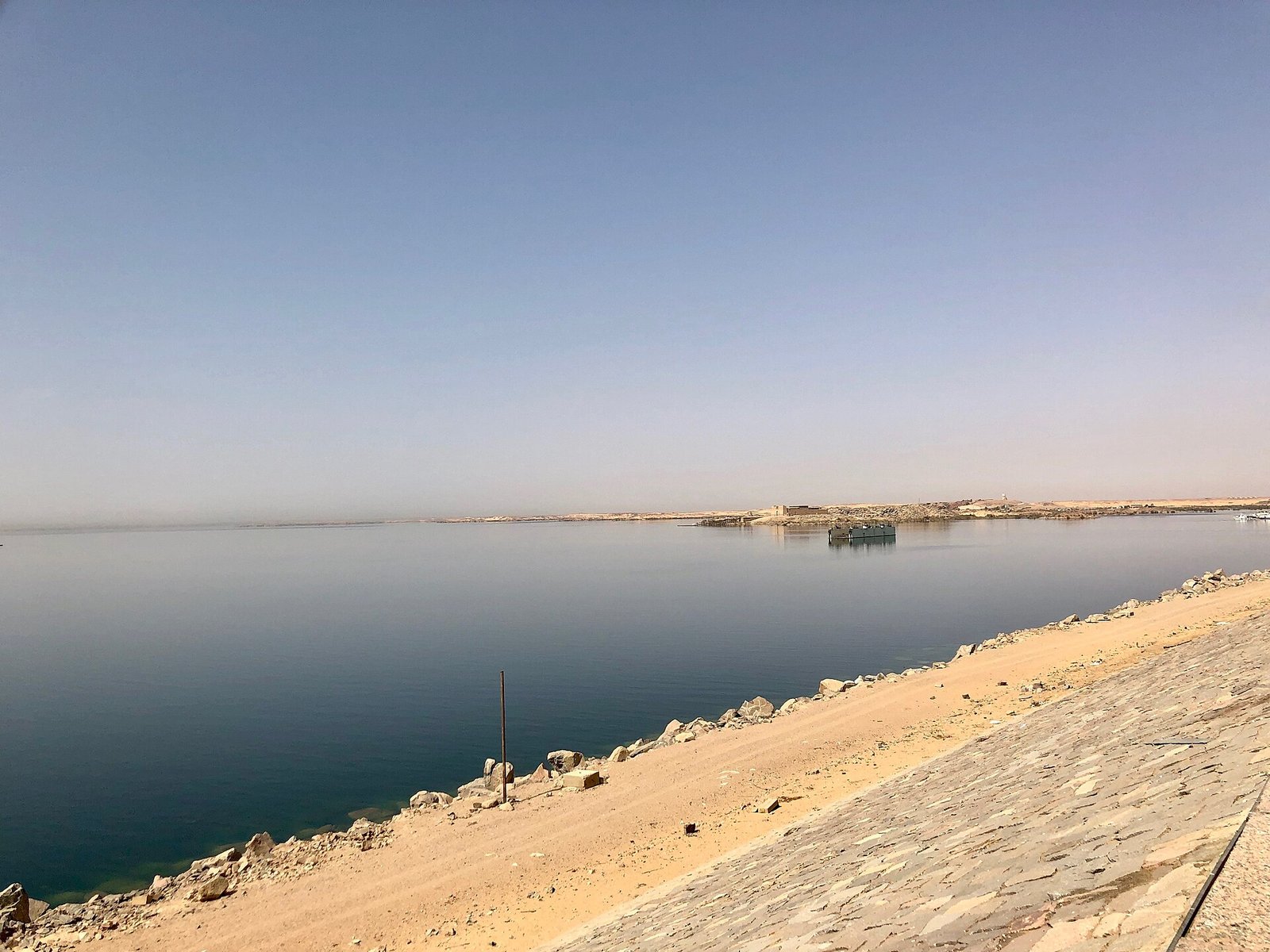
The program closes at the High Dam, on the viewpoint that looks over Lake Nasser on one side and the Nile on the other. It is the reason Philae and Abu Simbel both had to be lifted, and standing on it makes the scale of that rescue obvious. You are back in Aswan at roughly 3 p.m., which leaves the evening free and works with a cruise boarding or a later departure.
Meals: breakfast. Overnight: not included, you are back in Aswan.
Want it in writing?
Day by day, hotels, what is included and the price for your dates. We send it on WhatsApp in a few minutes.
If you are not sure which side of the line something falls on, ask us on WhatsApp before you book and we will tell you plainly. Nothing on the included list is collected from you again at a hotel desk or a ticket window.
Egypt publishes its gate fees on the official ministry ticketing platform, in Egyptian pounds, and they change. Here is what the tickets on this program cost per person at the published 2026 rates, so you can see exactly what you are not paying at the window.
| Abu Simbel temples, both buildings, per person | 822 EGP |
| Philae Temple, Aswan, per person | 550 EGP |
| Total already paid on your behalf | 1,372 EGP |
Roughly 28 USD per person at 1 USD = 49.79 EGP, the rate used when these figures were checked in August 2026. The pound moves, so treat the dollar figure as an approximation and the pound figure as the real one. Fees are published by the Ministry of Tourism and Antiquities and can change without notice.
Two entries sit outside that table. The sound and light show ticket and High Dam access are both included in your price, but neither is a monument gate fee on the ministry list, so we do not print a figure we cannot source. Nothing here is collected from you at a ticket office.
This matters more than it sounds. Abu Simbel is one of the most expensive gates in the country, ahead of Karnak at 600 EGP and the Valley of the Kings at 750 EGP for three tombs. On a two-day program the entries are a real share of what you pay, and an operator that leaves them out is not actually cheaper.
One habit worth carrying through the rest of your trip: ask any operator whether the gate fees are inside the number they quoted you, and ask which gates. In Egypt the phrase "entrance fees not included" can quietly add a three-figure dollar sum across a two-week itinerary, and it is almost always buried under the price rather than next to it.
From US$239 per person, double occupancy
Per person sharing a twin or double room. Every monument entry listed on this page is already inside that figure. Never a per-group price dressed up as a per-person one.
Entries includedPrivate guideNothing to pay today
The rate starts at US$239 per person in a double room and climbs with the season and with hotel availability in Abu Simbel, reaching around US$380 per person on peak dates such as December and the Easter period. Those are the two ends of the range, not a bait number and a mystery.
What moves the price, in order: the season, how many of you there are, whether you need a single room, and how far ahead you book, since Abu Simbel has few hotel rooms and they fill. Two people traveling together pay less per head than one person alone, because the vehicle and the guide cost the same either way. Four or six bring the per-person figure down again.
You pay nothing on this page. Send us your dates on WhatsApp, we come back with a final figure and availability, normally the same day, and you confirm with a deposit rather than the full amount up front.
Check the live wording yourself on the travel advice your own government publishes for Egypt before you commit, because a security situation is not something anyone should print as a permanent fact on a sales page. Advice on Egypt is usually written region by region rather than for the country as a whole, so read which areas it names.
What we can tell you is geography. Nothing on this itinerary goes near the Sinai Peninsula, which sits on the far side of the country from Aswan. This program stays in the deep south, on a single well-maintained highway with police checkpoints that carries tour vehicles, buses and local traffic every day. Your driver runs it constantly, and our office is on WhatsApp throughout.
It is not. This program starts and ends in Aswan and contains no flights of any kind. The international flight into Egypt is never something we sell, book, quote or coordinate, and that stays with you or your own agent. The domestic Cairo to Aswan sector, about an hour and a half in the air, is also outside this two-day program, and plenty of travelers take the overnight sleeper train instead. If you want the internal flying handled inside a single price, the 8-day Egypt itinerary and the 10-day itinerary include their domestic sectors as standard.
Abu Simbel has a small airport and short flights from Aswan exist, but they are not part of this program and we do not include them. Those schedules are built around same-day visitors, so they pull you back to Aswan in the early afternoon, which is exactly the night you came here to keep. The drive runs on your timetable rather than an airline's, and a private vehicle stops when you want it to.
Most visitors to Egypt need one. The Egyptian e-Visa costs 30 USD single entry and 65 USD multiple entry, applied for at visa2egypt.gov.eg, the government portal. Older figures still circulate on travel forums, and embassy pages quote their own consular service, which is a separate product with its own fee. Plan against the e-Visa numbers above.
If you take the visa on arrival at the airport instead, the fee must be paid in US dollars in cash. Carry crisp, unmarked bills, since worn notes and older series are routinely refused. Either way, the visa is yours to arrange and is not in our price.
The ticket is included. The show runs after dark, projected onto the two rock-cut facades, with narration on Ramesses II and Nefertari through multilingual headsets, and it lasts under an hour. Times shift by season and are set by the site, so we confirm the evening's timing with you rather than printing a clock time that would be wrong half the year. It is a produced spectacle rather than a lecture. What makes it worth the evening is standing in front of a 3,200-year-old cliff facade at night with Lake Nasser black behind it.
October through April is the comfortable window down here. Aswan and Abu Simbel are genuinely hot from May to September, regularly above 38 C (100 F), and the temple enclosure has almost no shade. Winter days are warm and bright, winter nights cool enough to want a jacket at the show.
February 22 and October 22 are the solar alignment dates, when sunrise light runs the length of the Great Temple and reaches the statues in the sanctuary. Hotel space in Abu Simbel is scarce around them, so ask early and expect peak pricing.
The walking is moderate and mostly flat: a curving path around the artificial hill to the facades, level ground between the two temples, even floors inside. Philae adds a short step on and off the boat and some uneven stone. The High Dam is a viewpoint you walk onto from the vehicle. The harder part is the two three-hour drives, which is exactly why an older traveler is usually better served by this overnight version than by the same ground squeezed into one pre-dawn day trip. Tell us in advance about any mobility limits so we can be honest about each site.
There is no mosque on this itinerary, so nothing here requires a head covering, and you do not need one on the street in Aswan or Abu Simbel either. Light cotton or linen, long and loose rather than short and tight, is cooler than shorts and draws less attention. Shoulders and knees covered is a sensible default for everyone at the temples. Bring closed shoes for sand and stone, a brimmed hat, sunglasses and real sunscreen, plus a light jacket from November to February for the open-air show.
Tipping is normal in Egypt and nothing is ever added to your bill by us. In order of priority: your guide first, then your driver, then smaller amounts for hotel staff and the boatman at Philae. Restroom attendants expect a small note, and there will be one at Abu Simbel. Egyptian pounds work better than dollars for the small stuff, because a 10 or 20 pound note is the right size and a 1 dollar bill is awkward to change. Draw pounds from an ATM in Aswan and keep small notes in a separate pocket.
Do not drink the tap water, and brush your teeth with bottled water too. Bottled water is in the vehicle on both driving days. Skip ice in places you do not know, raw salad, and unpeeled fruit; hot food served hot is the safe end of the spectrum. Two things travelers wish they had packed: tissues and hand sanitizer, because restrooms at Abu Simbel and Philae are functional but not reliably stocked. Bring whatever stomach remedy you use at home rather than hunting for your brand in a pharmacy down here.
Yes, and buy it before you leave. We do not sell insurance, earn nothing from it, and have not built it into this price. Check what your own health cover actually does outside your country: many domestic plans and public health schemes give you little or no coverage abroad, and a lot of travelers only find that out after something has gone wrong. Look for medical treatment abroad, medical evacuation and trip cancellation. Evacuation coverage counts for more in the deep south than it would in Cairo, simply because the serious hospitals are further away.
The published rate is per person based on two people sharing, which is the industry standard. On your own you have the room to yourself, so there is a single-room difference, and we quote it as an actual number for your dates rather than burying it in a footnote. The vehicle and the guide are private either way, so a solo traveler still gets a genuinely private trip, and solo travelers, women included, do this route regularly. Ask and we will send the solo figure and the shared figure side by side.
That is how most people use it. Because it opens and closes in Aswan, it drops in cleanly before or after a river sailing or a land itinerary through Upper Egypt. Send us the dates you already hold and we will tell you which end it fits, rather than selling you a program that collides with a boarding time.
We are based in Egypt. There is no head office in another country adding a margin to an itinerary an Egyptian company will operate anyway. Book a two-day Abu Simbel program through a large international brand and an Egyptian operator is usually the one who actually meets you at your hotel, drives the desert road, holds the hotel room and walks you through the enclosure. We are that layer, without the one stacked above it.
On this particular trip that has practical consequences. Abu Simbel is a small town with a short list of hotels, so the room is arranged directly rather than through a third party who may or may not have confirmed it. Show times move with the season, and an office in Aswan hears about a change the same afternoon instead of a week later. If your train runs late or your plans shift, one WhatsApp message reaches a person who can move a driver, in Egyptian working hours, in the same country as the vehicle.
Our guides are licensed by the Ministry of Tourism and Antiquities, which in Egypt means a real qualification rather than a badge bought at the gate. On this program the guide works with you in English at Abu Simbel, Philae and the High Dam. You are not handed to a coach with forty people and a headset.
The reviews published on this site are about the agency and about the guides who work with us. They are not attached to a single tour, we do not print a star rating on a product page, and we have never written one ourselves. If you want to hear from someone who has traveled with us before you decide, ask on WhatsApp and we will point you at what actually exists rather than a number invented for a page.
Two things you will not see us claim. We are not regulated as a travel company outside Egypt, and no Egyptian operator can hold the financial protection schemes that sellers in some other countries advertise, so we do not display badges we are not entitled to. And we do not touch international flights at all: not selling them, not booking them, not quoting them. Your flight is your own arrangement, and everything on this page starts the moment you are in Aswan.
Very few people fly to Egypt for Abu Simbel alone, and this program is designed to slot into a bigger route rather than stand on its own. The usual shape is Cairo first for the Giza plateau and the Egyptian Museum, then south to Luxor and Aswan for the temples, with these two days added at the Aswan end.
If you are sailing, the cleanest fit is to run these two days before you board. A Nile cruise from Aswan to Luxor boards in Aswan, so you finish at the High Dam around 3 p.m. and step onto the boat the same evening or the next morning. If your boat runs the other way and disembarks you in Aswan, the program works just as well on the back end.
Travelers who would rather sleep in hotels than on a boat usually pair it with the land-based Aswan and Luxor itinerary, which covers the same monuments on the road. And if you decide you do not want the night after all, the Abu Simbel day trip from Aswan is the compressed version, out and back in a single long day.
For a first visit to Egypt with everything joined up, including the domestic flying between Cairo and the south, look at the 8-day Egypt itinerary. Tell us on WhatsApp what you have already booked, and we will tell you honestly whether these two days fit or whether something else serves you better.
Send your travel dates, how many people are traveling, and whether you need one room or two. We reply with a final per-person figure, the room we would hold in Abu Simbel and the pickup time in Aswan, normally the same day. There is nothing to pay on this page, and a message is not a booking.
Write to us on WhatsApp on +20 103 229 5513, or send the same details through the enquiry form below and we will answer by email instead. Either way you are writing to our office in Egypt, not to a call center in another time zone.
Tell us the essentials in 30 seconds. When you send it, WhatsApp opens with your message already written and someone from our team takes it from there.
A real person from our team replies, not a bot, almost always the same day. A quote is free and commits you to nothing.
We use your details only to prepare your quote. We do not share your information or send you advertising.