The whole of ancient Egypt, from the pyramids to Abu Simbel
This is the right trip for you if you want the whole of ancient Egypt in one pass and you would rather not repack every night. Ten days, nine nights, one plan: Cairo, a four-night Nile cruise, Aswan, Abu Simbel.
Most first-time visitors try to solve Egypt as a puzzle of connections: Cairo to Luxor, Luxor to Aswan, Aswan to Abu Simbel and back, each leg separated by long desert road or a domestic flight nobody explains. This itinerary already solves it. You fly Cairo to Luxor, sail the stretch between Luxor and Aswan instead of driving it, reach Abu Simbel by road the way local operators do, and fly back to Cairo for a last day at Saqqara. Sixteen sites and temples, and no morning wondering how you get to the next one.
It suits travelers who have one long-haul trip in them this year and want it to count: couples, parents with grown children, retirees who want a real Egyptologist rather than a recording, and solo travelers who would rather not negotiate Egyptian domestic logistics alone. It is private, with no fixed departure date. You pick the dates and we build the ten days around them.
Ten days and nine nights: four in Cairo, four aboard a Nile cruise boat, one in a hotel in Aswan. The route runs Cairo, Luxor, Edfu, Kom Ombo, Aswan, Abu Simbel and back: the full north-to-south arc of ancient Egypt, not a Cairo trip with a temple bolted on.
Three things separate it from the standard ten-day product. The cruise runs four nights rather than three, which buys an unhurried Valley of the Kings morning. Abu Simbel gets its own day with a hotel night in Aswan afterward, not a six-hour round trip stacked on top of a flight. And we publish what every monument gate costs, further down this page.
One planning note that matters whatever route you fly: nothing is scheduled on day 1. However long your flight to Cairo runs and however many time zones it crosses, arrival day is deliberately empty so Giza is not spent half-asleep.
Our representative meets you inside the terminal at Cairo airport, before immigration, holding your name, and handles the entry formalities and the visa desk if you skipped the e-Visa. Then a private transfer to your hotel. Nothing is scheduled after that, on purpose: you have just come off a long flight, probably across several time zones, and sleep beats a first evening out.
Meals: none scheduled. Night: hotel in Cairo.
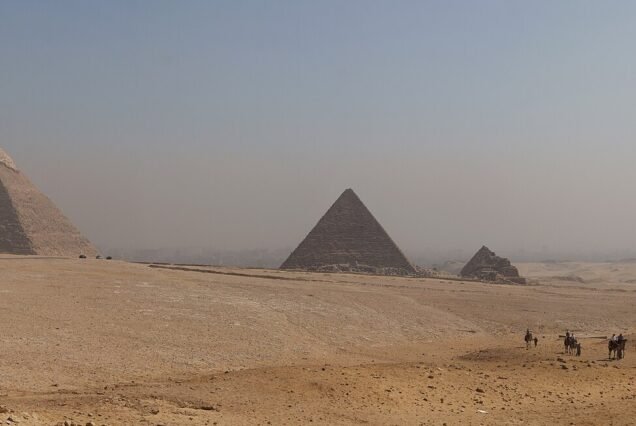
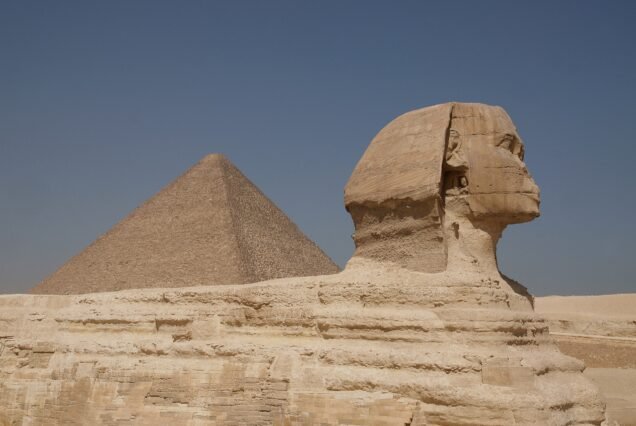
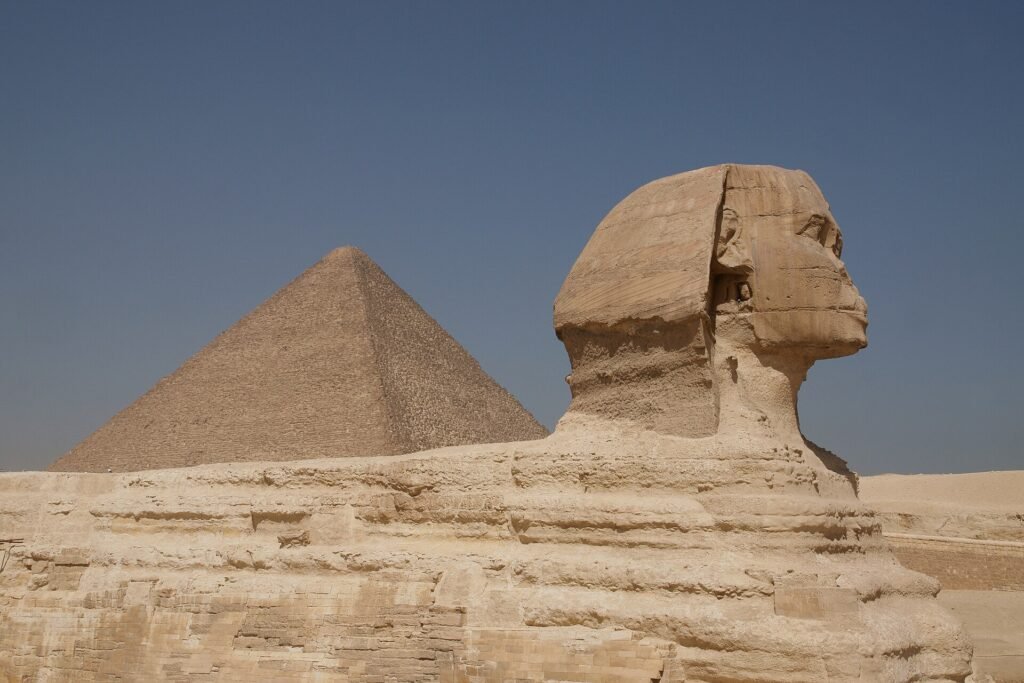
Onto the plateau in the morning, while the light is low and the heat has not arrived. Khufu, Khafre and Menkaure at close range, the Great Sphinx, and the Valley Temple where pharaohs were prepared for burial. There is a panoramic stop for the classic three-pyramid photograph, an optional camel ride, and a guide who keeps answering as long as you keep asking.
Meals: breakfast. Night: hotel in Cairo.
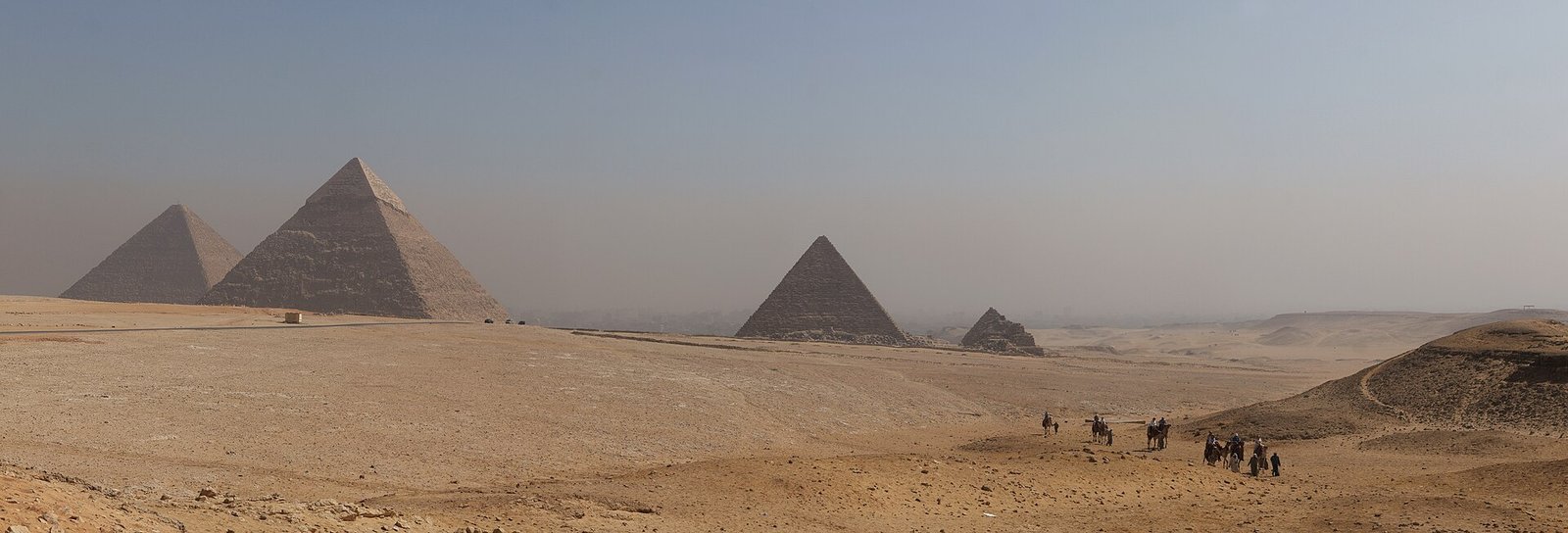
Museums and alleyways. First the Grand Egyptian Museum, where the colossal statue of Ramesses II stands in the atrium, then the Egyptian Museum on Tahrir Square, which holds much of the Tutankhamun material. In the afternoon the Citadel of Saladin and the Mosque of Muhammad Ali, then Khan El Khalili, where nobody expects you to pay the first number you hear.
Meals: breakfast. Night: hotel in Cairo.
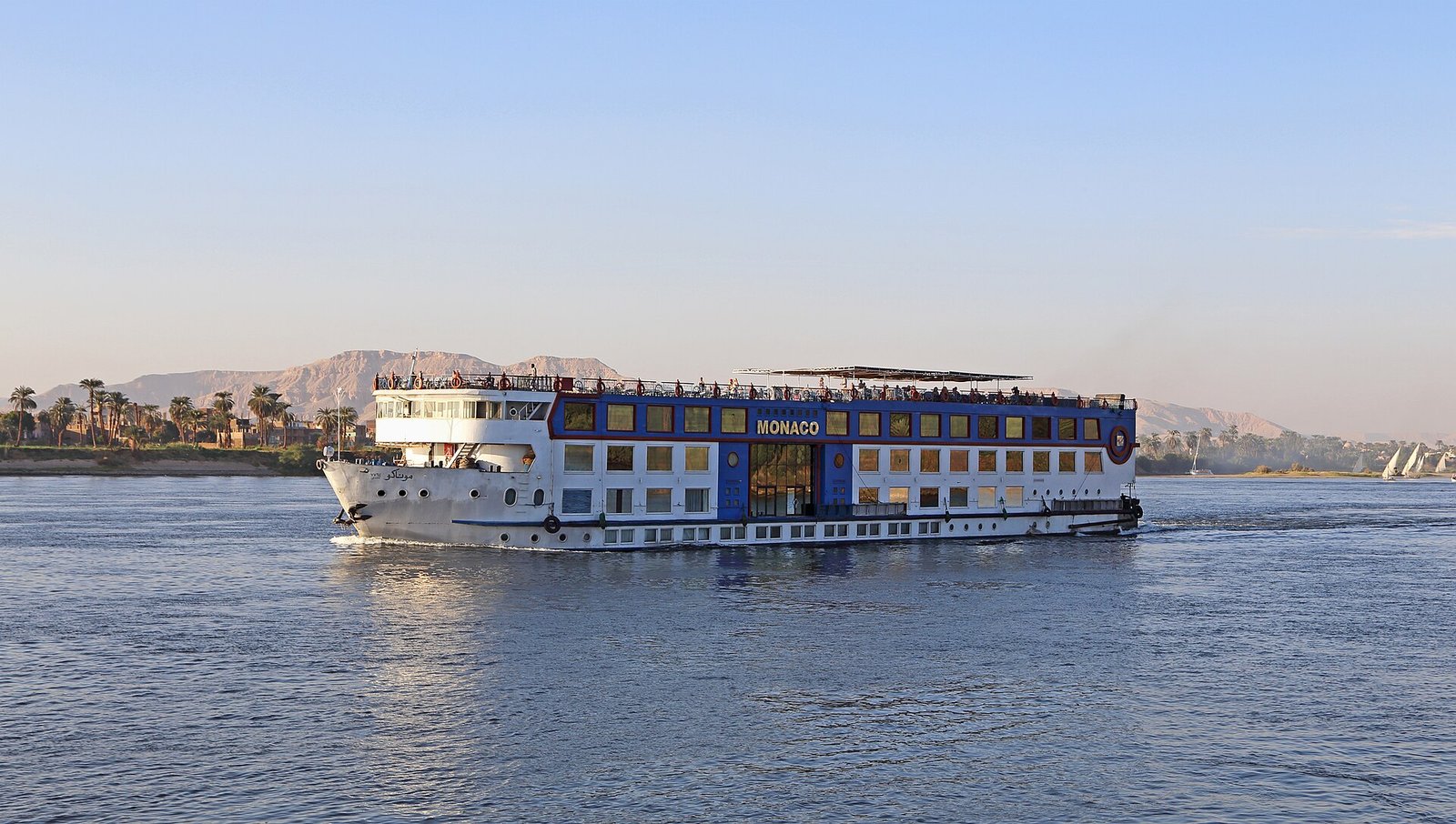
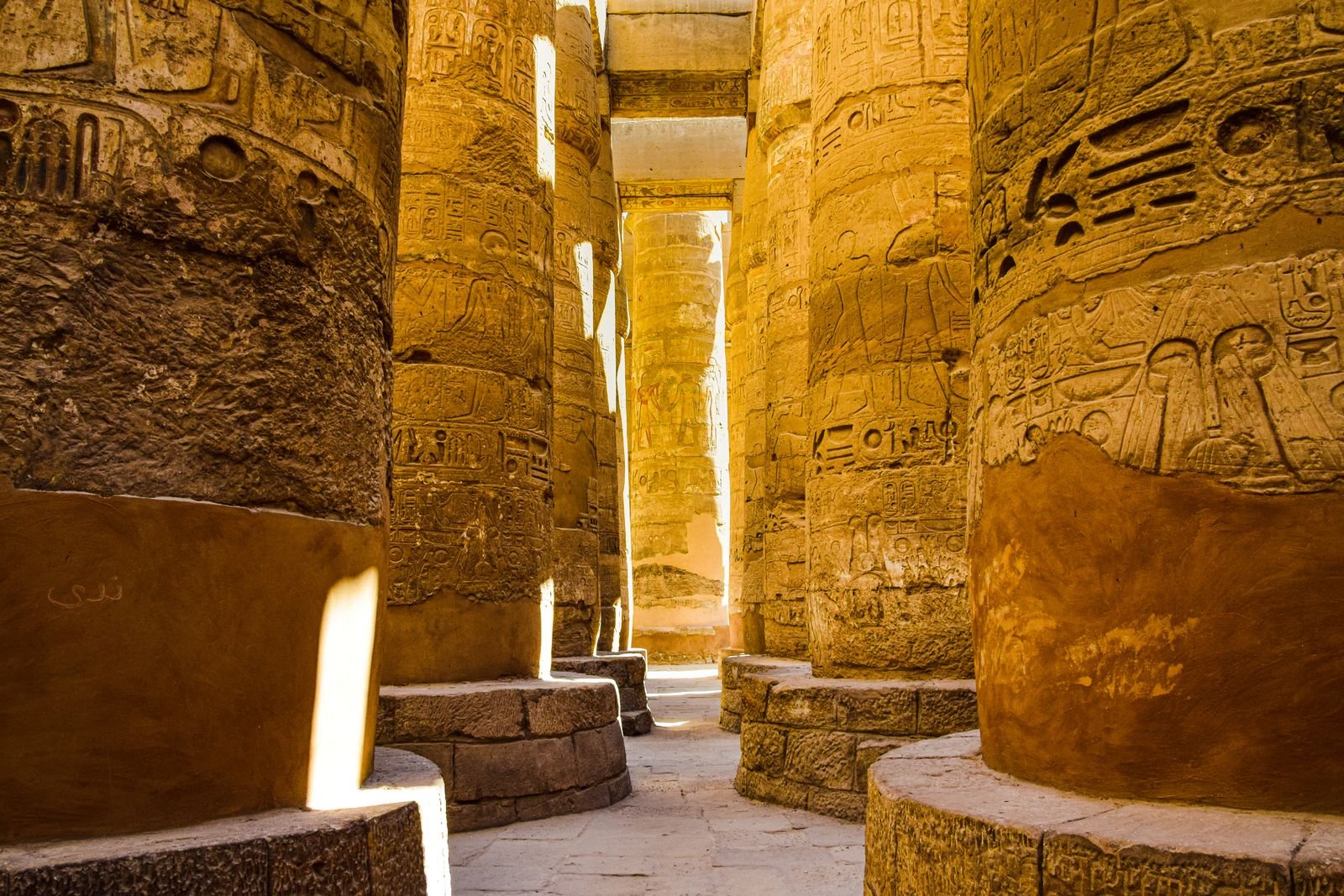
A short domestic flight to Luxor, then straight to the boat that is your hotel for the next four nights. The afternoon belongs to the east bank: Luxor Temple, then Karnak, both dedicated to Amun-Ra, with the avenue of sphinxes and the hypostyle hall of 134 columns. If the river is the part you want, we sell it alone as a five-day Nile cruise from Luxor to Aswan, which excludes internal flights.
Meals: breakfast at the hotel, lunch and dinner on board. Night: Nile cruise.
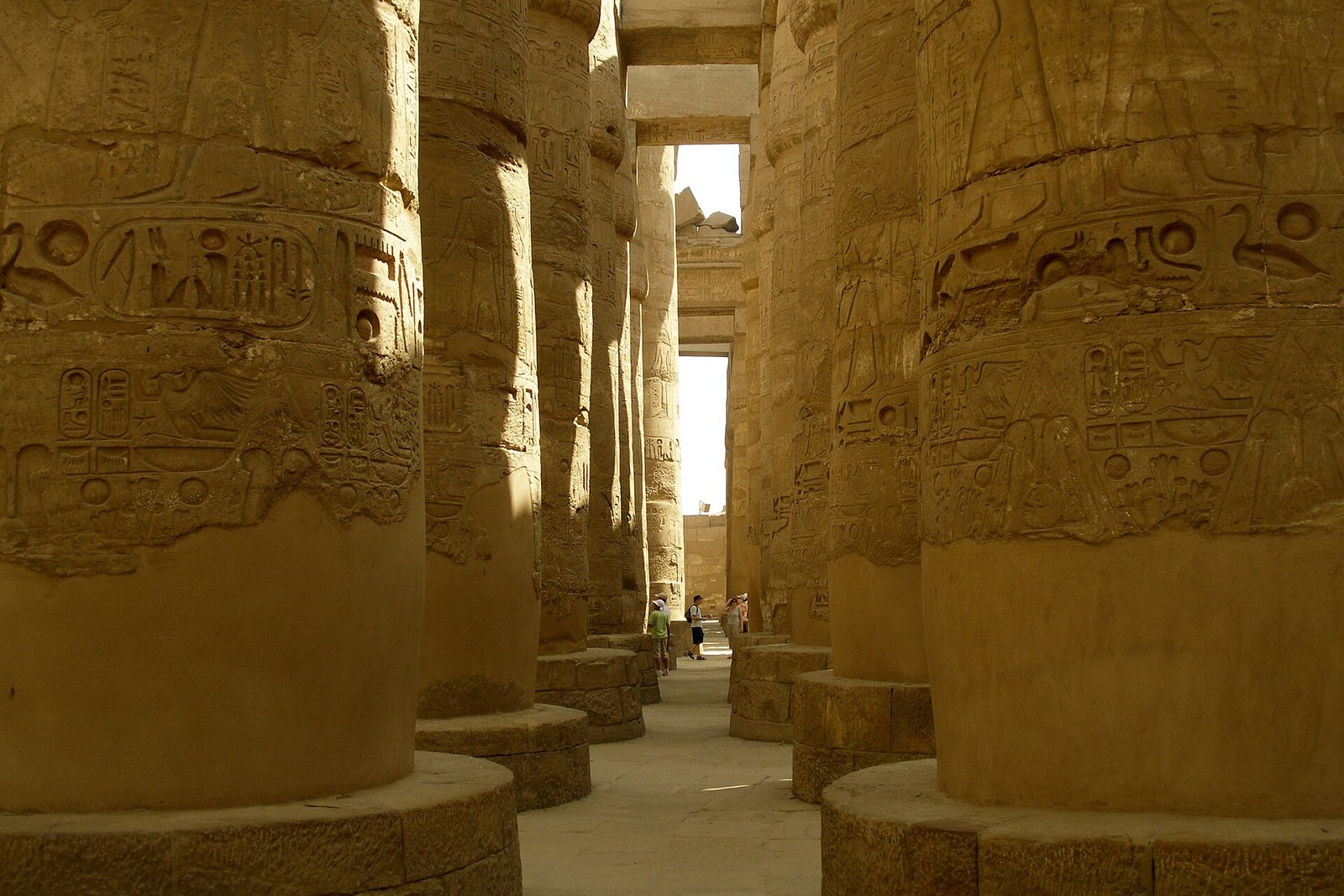
An early start that earns itself. The Valley of the Kings holds the painted tombs of the New Kingdom pharaohs, and the color on those walls does not look three thousand years old; your ticket covers three tombs. Then the terraced temple of Queen Hatshepsut against the cliff at Deir el Bahari, and the Colossi of Memnon. The boat then casts off for Edfu.
Meals: breakfast, lunch and dinner on board. Night: Nile cruise.
At Edfu, the Temple of Horus, the best preserved in Egypt and the only major one that still has its original roof. You arrive by horse carriage from the mooring, which is the local way and slightly ridiculous in the best sense. In the afternoon the boat stops at Kom Ombo, a double temple built in perfect symmetry for Sobek the crocodile and Haroeris. Then night sailing toward Aswan.
Meals: breakfast, lunch and dinner on board. Night: Nile cruise.
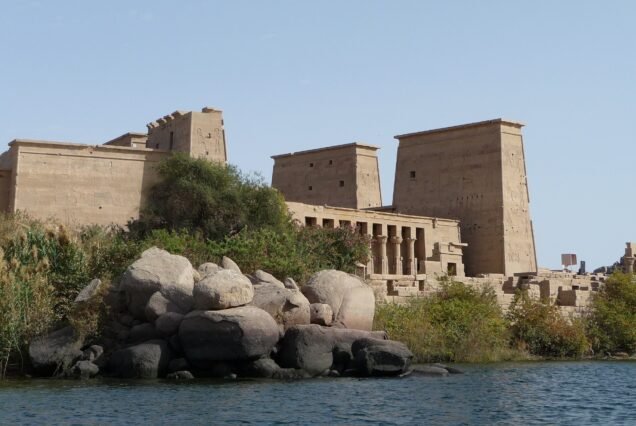
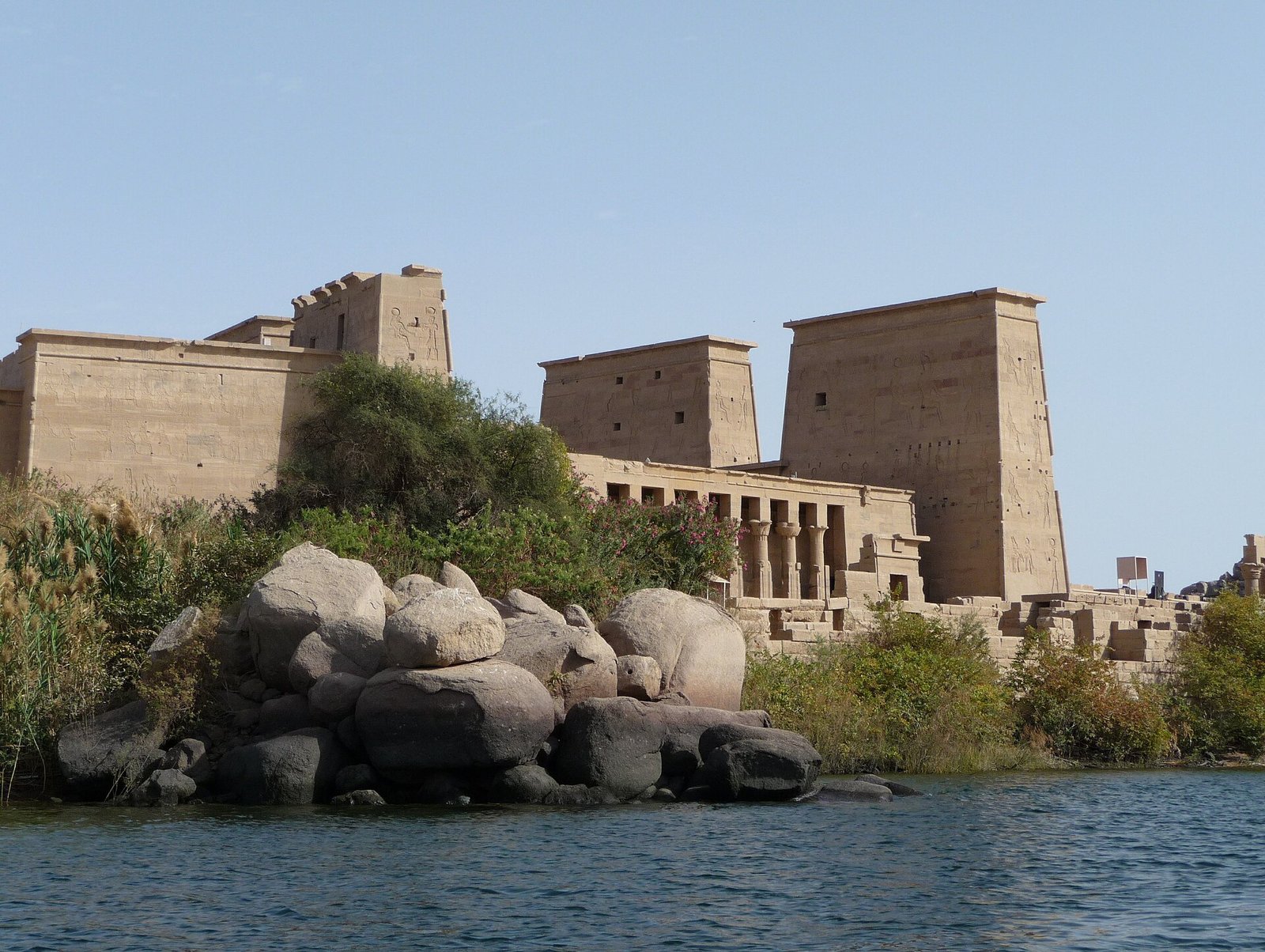
Aswan is the gentler Egypt, the Nubian one. You visit the High Dam, which ended the Nile floods and created Lake Nasser, then take a motorboat to the island where the Temple of Philae, dedicated to Isis, was cut apart and rebuilt block by block to escape the rising water. The afternoon is free for a felucca hour or an optional Nubian village visit.
Meals: breakfast, lunch and dinner on board. Night: Nile cruise.
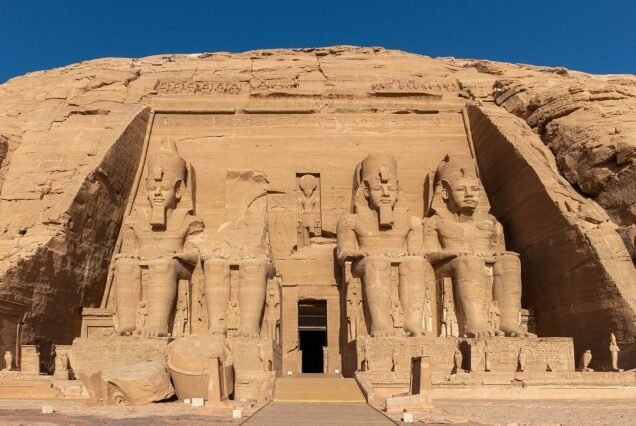
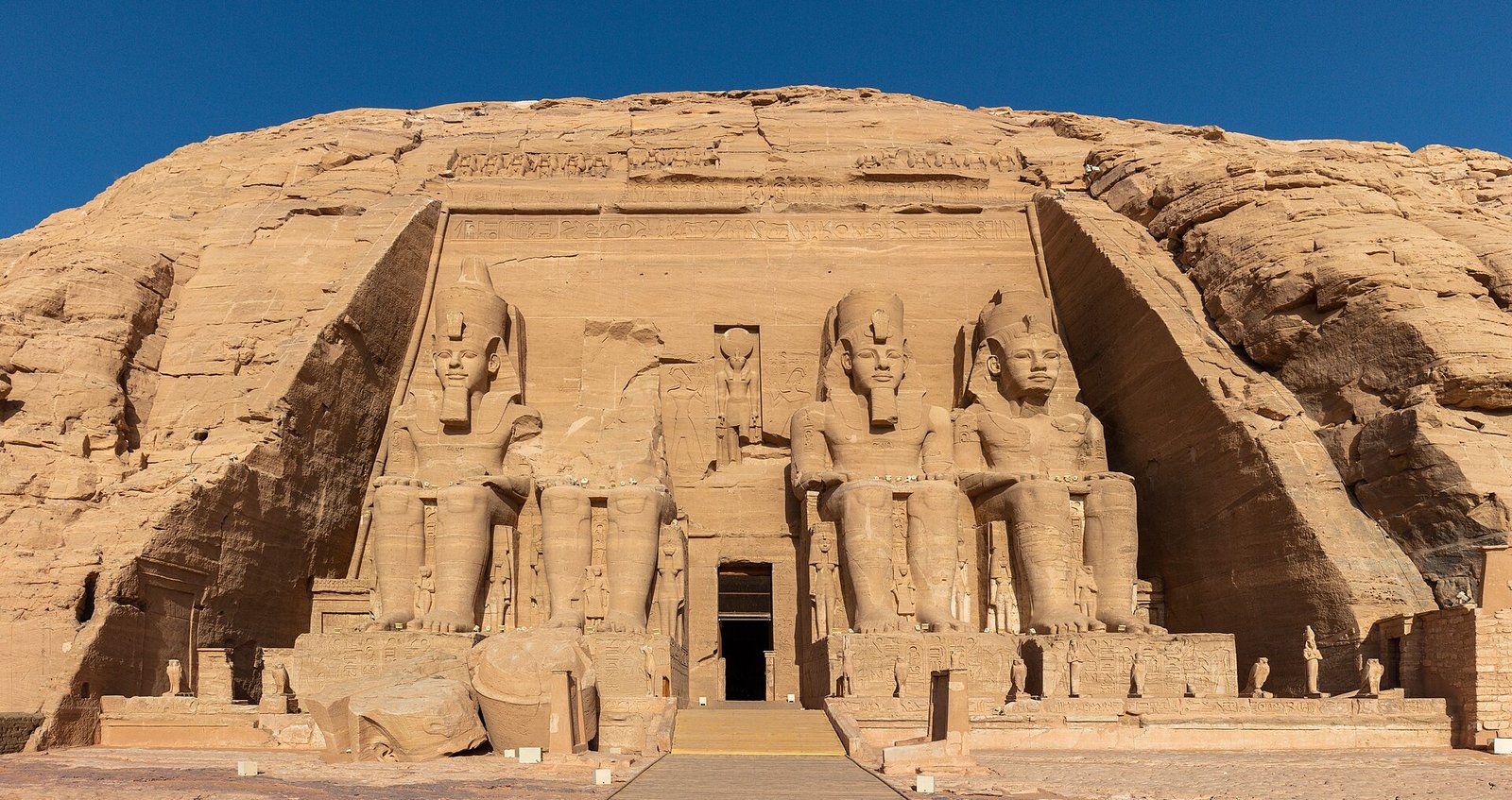
A very early departure, around 4 a.m., because it is roughly three hours by road toward the Sudanese border and you want the temples before the heat turns serious. Breakfast is arranged around the early start. Ramesses II cut two temples into the rock here, his own and one for Queen Nefertari, and the four seated colossi stand about sixty-five feet, or twenty meters, high. Back in Aswan by midday.
Meals: breakfast. Night: hotel in Aswan.
A domestic flight north to Cairo and one last history lesson at Saqqara, where the Step Pyramid of Djoser began the pyramid age about 4,700 years ago. Doing it at the end is deliberate: after a week of polished monuments you see Saqqara for what it is, the first attempt.
Meals: breakfast. Night: hotel in Cairo.
Breakfast at the hotel and a private transfer to Cairo International Airport with time to spare for your flight home. If your departure is late, tell us and we will put something short in front of it rather than leave you in a lobby.
Meals: breakfast. Night: none, the trip ends.
Want it in writing?
Day by day, hotels, what is included and the price for your dates. We send it on WhatsApp in a few minutes.
If something is not on either list, it is included. There is no third list and no charge added when you arrive.
These are the 2026 published gate fees, per person, from the official Ministry of Tourism and Antiquities ticketing platform. They are already paid inside your price, so you hand over nothing at the gate.
| Gate | Fee (EGP) | Approx. USD |
|---|---|---|
| Giza plateau: pyramids and the Sphinx | 700 EGP | US$14 |
| Egyptian Museum, Tahrir Square | 550 EGP | US$11 |
| Karnak temple complex | 600 EGP | US$12 |
| Luxor Temple | 500 EGP | US$10 |
| Valley of the Kings, three tombs | 750 EGP | US$15 |
| Temple of Hatshepsut | 440 EGP | US$9 |
| Temple of Horus, Edfu | 550 EGP | US$11 |
| Temple of Kom Ombo | 450 EGP | US$9 |
| Temple of Philae | 550 EGP | US$11 |
| Abu Simbel temples | 822 EGP | US$16 |
| Saqqara necropolis | 600 EGP | US$12 |
| Total already paid for you | 6,512 EGP | US$131 |
The Egyptian pound column is the real figure; the dollar column is an approximation at 1 USD = 49.79 EGP and it drifts, so treat it as a guide rather than a quote. Ministry fees are reviewed periodically and can change. The Grand Egyptian Museum, the Citadel of Saladin and the Aswan High Dam are also included, but their gate fees are not printed here because we publish only figures we have verified officially.
One entry sits deliberately outside the table. Going inside the Great Pyramid of Khufu is a separate 1,000 EGP ticket, about US$20, and it is not included. It is a low, hot, steep climb up a cramped passage to an empty granite chamber. Some find it unmissable and some regret it about forty steps in. Decide on the day.
From US$1,897 per person, double occupancy
Per person sharing a double room. It includes both domestic flights inside Egypt and every monument entry in the itinerary.
Entries includedEgyptologist guideNothing to pay today, quote with no obligation
From US$1,897 per person, double occupancy. That is the starting point: two people sharing a room, three-star hotels and a three-star cruise boat, with both domestic flights and every monument entry in the itinerary already inside it.
At the other end, the identical ten days with five-star hotels and a five-star cruise boat in high season comes to about US$3,000 per person. Same route, same guide, same tickets. What changes is where you sleep and which month you go.
What moves the number, in the order it usually matters:
If ten days is more than you have, the seven-day Egypt itinerary and the eight-day version with the Nile cruise cover similar ground at a different depth, while the twelve-day program goes further and slower. Compare them on the Egypt tour packages page, or take Abu Simbel as a standalone day trip if that is the only piece you are missing.
There is no online checkout here and nothing to pay today. Send your dates and we come back with a written quote in dollars for your party and category. Message us on WhatsApp at +20 103 229 5513 or use the enquiry form on this page, and we reply the same day.
We are in Egypt, and that shows up in unglamorous ways. When a domestic flight time moves, the person changing your guide's schedule is in the same country as your guide, on the same clock, not a reseller in another time zone emailing a supplier who emails a driver. When you message the WhatsApp line at 11 p.m. Cairo time, someone who can fix the problem reads it.
It also means we operate this trip rather than resell it. The guide is ours, the vehicle arrangements are ours, the boat relationship is ours. Much of what is sold abroad as an Egypt tour is a booking passed down a chain, and every link adds margin and subtracts information. That is why we can publish the gate fees above: we buy those tickets.
Some honest limits, since trust is the point of this section. We are an Egyptian company, so we do not hold the seller-of-travel or package protection schemes that some countries require of operators established there. That is one more reason to buy your international flight and your insurance yourself. On reviews we claim only what we can show: 12 real reviews left on WhatsApp and Facebook, about the agency and about our Egyptologist Shady Said rather than about this specific itinerary. We attach no star rating to individual trips, and there is no invented testimonial on this site. You can read the real ones in full.
Send your dates and party size and we come back the same day with a written quote in dollars, with hotel and boat categories named. Use the form on this page, message WhatsApp, or go through our contact page.
Tell us the essentials in 30 seconds. When you send it, WhatsApp opens with your message already written and someone from our team takes it from there.
A real person from our team replies, not a bot, almost always the same day. A quote is free and commits you to nothing.
We use your details only to prepare your quote. We do not share your information or send you advertising.