The best movies about Egypt to watch before your trip, and what each one gets right
The best movies about Egypt to watch before your trip, and what each one gets right
The movies about Egypt that prepare you best for the trip are not the biggest ones, they are the ones actually filmed there. Death on the Nile from 1978 was shot at Karnak, Abu Simbel and the Old Cataract in Aswan. The Spy Who Loved Me put James Bond at the Giza sound and light show and inside the hypostyle hall at Karnak. Land of the Pharaohs was filmed at the foot of the Great Pyramid, and the Egyptian classics by Youssef Chahine and Shadi Abdel Salam show you the country itself. Add a Netflix documentary on Saqqara, the BBC series on Carter and Champollion, and an animated film if you travel with kids. Below, what each title gets right, what it invents, and where you will recognize it.
Why watch Egypt on screen before you stand in front of it
A trip to Egypt is twice as good when you recognize what is in front of you. Walking into the hypostyle hall at Karnak knowing that a Bond fight was staged between those columns turns a visit into a scene. The reverse is also true: the traveler who arrives with The Mummy in their head goes looking for a buried city that never existed and misses the real one.
So this is not a ranking. It is a user guide. For each title you get where it was filmed, what it gets right and what it makes up, then a table of the real sites on Explora Egipto itineraries and a viewing order for your type of trip.
One honest warning: almost no big production of the last thirty years was shot in Egypt. Morocco, Tunisia, Malta, southern Spain and English soundstages have been standing in for the Nile for decades.
The classic epics: The Ten Commandments, Land of the Pharaohs and Cleopatra
The Ten Commandments (1956). Cecil B. DeMille took his cameras to Egypt for the location work, and the Exodus sequence with its thousands of Egyptian extras and the mountain scenes in the Sinai are the real thing. The red granite desert around Mount Sinai is what you will see on the sunrise climb of Mount Sinai. What the film invents is Pi-Ramesses in Hollywood proportions, and it casts Ramesses II as the pharaoh of the Exodus, which no Egyptian source confirms. Since it still airs on network television every spring, most Americans have seen it at least once without meaning to.
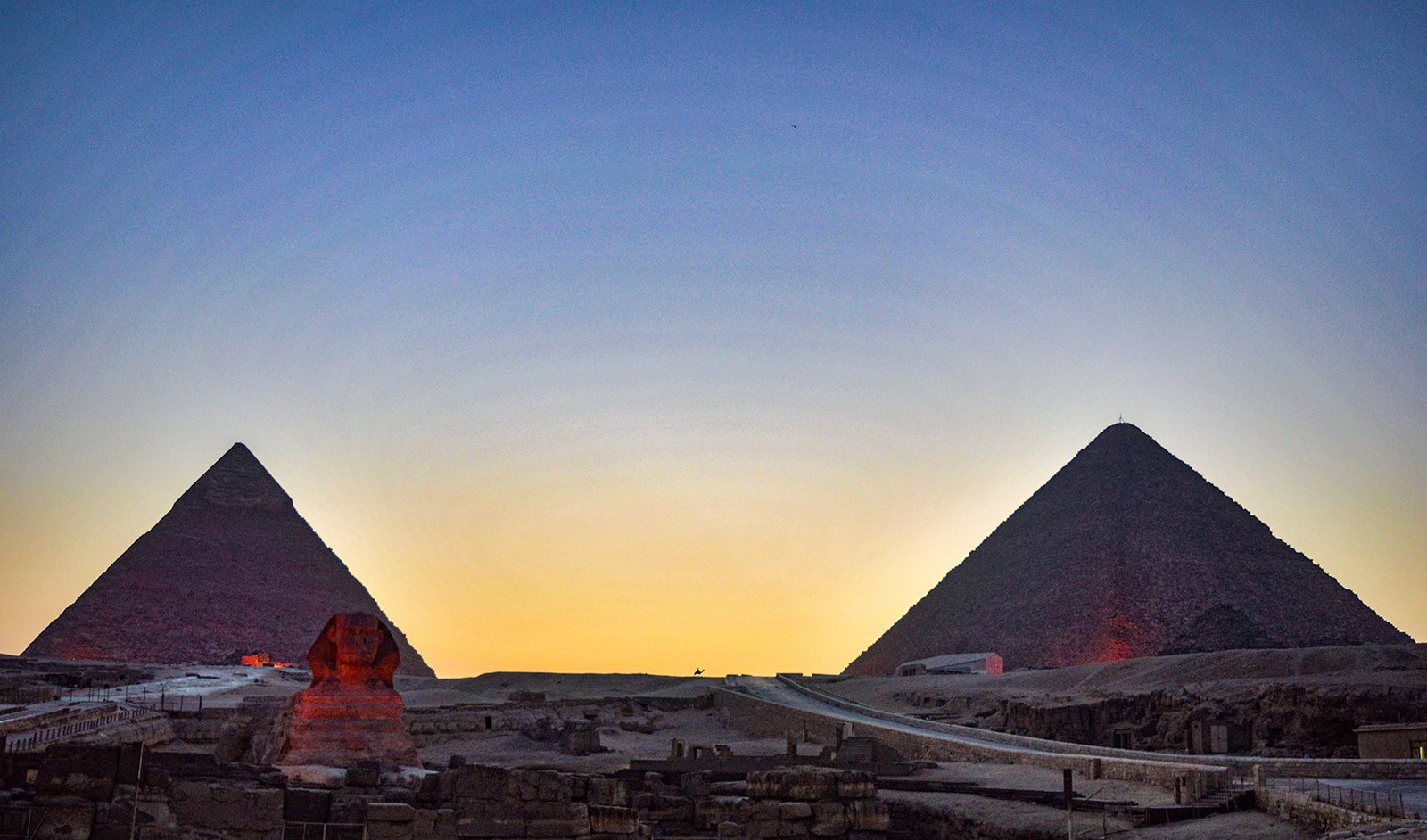
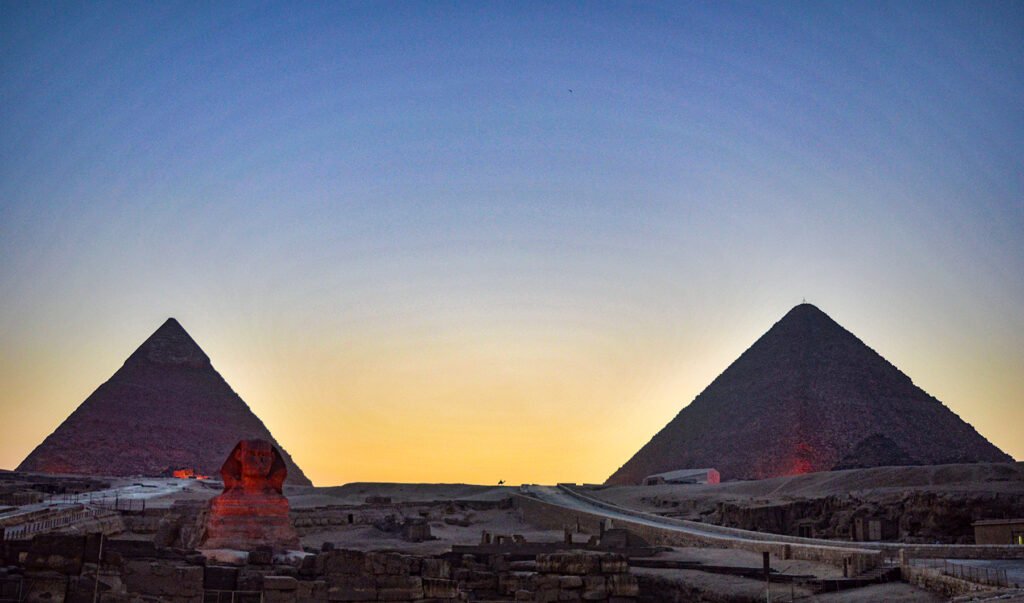
Land of the Pharaohs (1955). Howard Hawks shot it at the foot of the Great Pyramid with thousands of extras, and no other film conveys the scale of Giza as well. The plot, a pyramid for Khufu with a sand mechanism that seals the tomb forever, is pure invention. Watch the extras haul blocks across the actual plateau, and when you step onto the Giza plateau yourself you will understand why Hawks chose it.
Cleopatra (1963). Elizabeth Taylor's colossal Alexandria was built in Italy and the battles were shot in Almeria, Spain. There is not a single frame of Egypt in it. It gets the political weight of Alexandria right and the visuals wrong: the Hellenistic city lies under the sea and the modern one, and what you visit today is Pompey's Pillar, the catacombs and the fort on the site of the lighthouse.
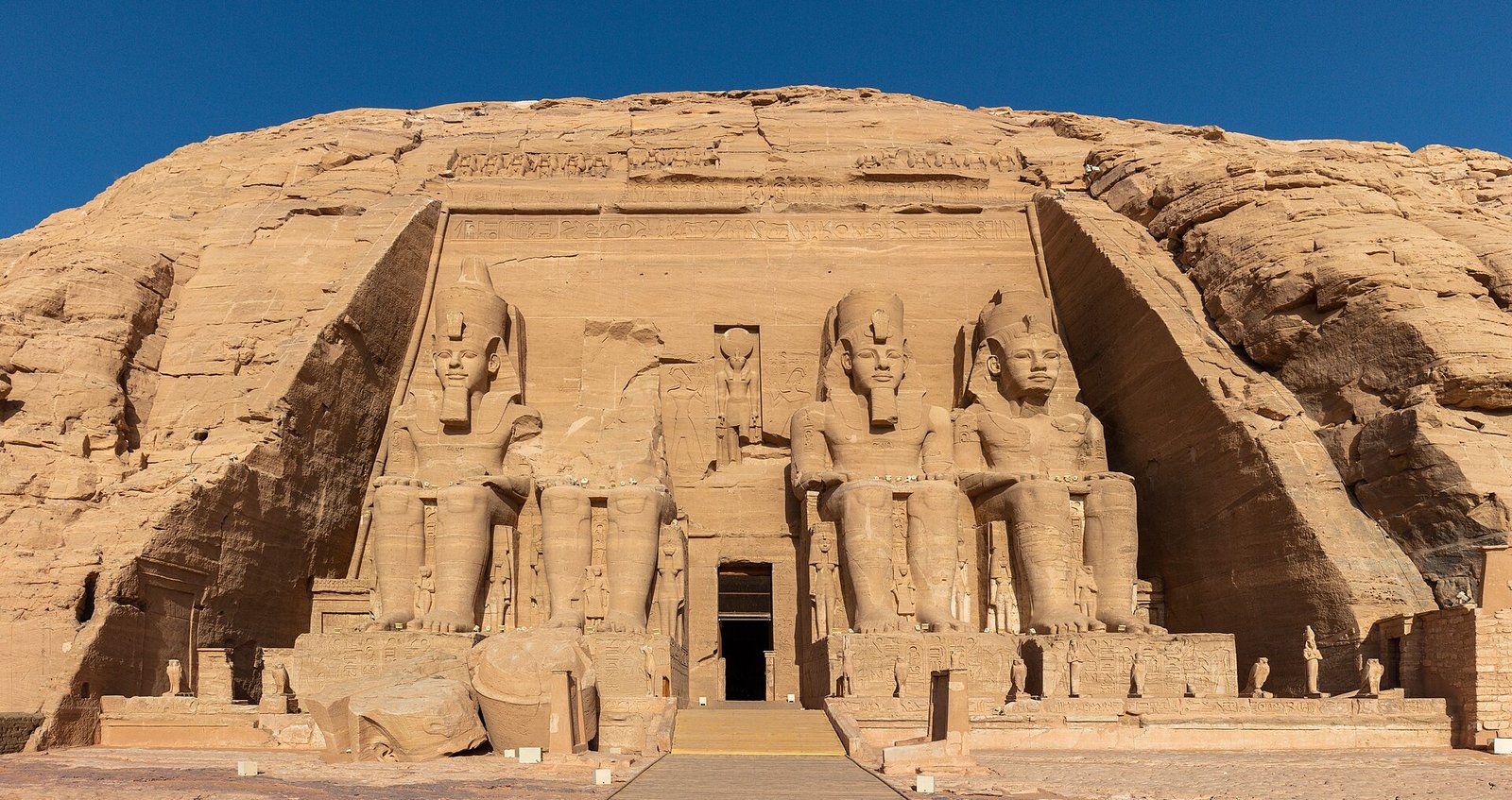
Death on the Nile, three times: which adaptation to watch before a cruise
Agatha Christie wrote the 1937 novel after a stay in Aswan, and it remains the best introduction to a Nile cruise because the characters' route is almost exactly yours. There are three screen versions and each is useful for a different reason.
Death on the Nile (1978), the one actually filmed there
John Guillermin's version with Peter Ustinov is the one to watch before you board. It was shot at the Mena House facing the pyramids, at the Old Cataract in Aswan, at the temples of Abu Simbel, inside Karnak and on board a real period steamer renamed Karnak for the film. The passengers step off to see the same temples you will. It only invents is the geography, jumping between Luxor, Aswan and Abu Simbel with no respect for distance.
Agatha Christie's Poirot: Death on the Nile (2004), the David Suchet version
The feature-length episode of the British series stays closer to the book and was also filmed in Egypt. It is the pick for anyone who wants the plot without the seventies glamour.
Death on the Nile (2022), the Kenneth Branagh version
Beautiful and almost entirely digital. It was made on soundstages in England with a full-size boat built for the shoot and Egypt added in post-production, including an Abu Simbel that does not match the real one. Watch it for the mood, not as a guide to what you will see. If you can only watch one, take 1978 to recognize places and 2022 to get excited.
Our guide to Nile cruise boat types explains the difference between the paddle steamers in these films and the motor cruisers and dahabiyas that sail today.
Adventure films: Bond, The Mummy, Indiana Jones and Moon Knight
The Spy Who Loved Me (1977). The most Egyptian Bond film there is. Roger Moore wanders through the sound and light show at the pyramids, fights Jaws among the columns of the hypostyle hall at Karnak, walks into the Gayer-Anderson house in Cairo dressed up as a nightclub, and the facade of Abu Simbel doubles as the British secret service headquarters. You will recognize all of it on sight. What it invents is that you can get from Giza to Karnak in an afternoon and that there is anything behind the statues of Ramesses.
The Mummy (1932 and 1999). The Boris Karloff original is studio theater and a gem. The Brendan Fraser version was shot in Morocco and England: Hamunaptra does not exist and the Cairo museum in the film is a set. It does get the atmosphere of the 1920s digs right, and Imhotep was a real person, the architect of the Step Pyramid at Saqqara, with no curse to his name.
Raiders of the Lost Ark (1981). Indiana Jones's Cairo is Kairouan, in Tunisia, and Tanis is Tunisia too. Tanis does exist, in the eastern Delta, and in 1939 Pierre Montet found intact royal tombs there whose gold masks are on display in Cairo today.
Moon Knight (2022). Its Cairo was built in Budapest, but one of the directors is the Egyptian filmmaker Mohamed Diab and it shows in how carefully the series treats Khonshu, Ammit and Taweret.
Documentaries and docuseries: Netflix, PBS, National Geographic and the BBC
This is where you learn the most per hour spent. Two criteria matter: that they were filmed on real excavations, and that they let Egyptian archaeologists do the talking.
Pyramids and Saqqara
- Secrets of the Saqqara Tomb (Netflix, 2020). Follows an all-Egyptian team through the excavation of the tomb of Wahtye, a Fifth Dynasty priest. It is the best portrait of fieldwork you will find, and the necropolis is the same one you visit with the Step Pyramid.
- Lost Treasures of Egypt (National Geographic, 2019 onward). A season-by-season series on the active missions at Giza, Saqqara, Luxor and Aswan. Cherry-pick the episodes that match your itinerary.
- NOVA: Decoding the Great Pyramid (PBS, 2019). Built around the papyri of Merer, the logbook of a boat captain who hauled limestone for Khufu. The best single hour on how the Great Pyramid was actually built.
Tutankhamun and the discoverers
- Egypt (BBC, 2005). A six-part docudrama on Howard Carter, Giovanni Belzoni and Jean-Francois Champollion. The best way to arrive at the Valley of the Kings knowing who found what and how.
Cleopatra and the Ptolemies
To separate the real queen from the legend: the miniseries Cleopatra (1999), with Leonor Varela and Timothy Dalton as Caesar, is the fullest biography on screen. The Alexandria episodes of HBO's Rome (2005 to 2007) show Ptolemaic Egypt as a power rather than a backdrop. The Netflix docuseries Queen Cleopatra (2023) caused a real controversy in Egypt over its casting and its claims about the queen's origins. Watch it knowing that.
Egyptian cinema worth knowing before you land
Egypt has the oldest film industry in the Arab world, and two or three Egyptian films before the trip change how you look at the country: you stop seeing a backdrop and start seeing a society.
Cairo Station (Bab el Hadid, 1958). Youssef Chahine directs and stars as Qinawi, the limping newspaper seller of Ramses Station. It was shot inside the station itself, with its platforms, porters and soda sellers. The station is still there, and it is where the trains to Luxor and Aswan leave from.
The Night of Counting the Years (Al-Mummia, 1969). Not to be confused with the Hollywood Mummy. Shadi Abdel Salam's masterpiece reconstructs the 1881 discovery of the royal mummy cache at Deir el-Bahari, when a family on the west bank of Luxor was quietly selling objects from the tombs. Filmed in Luxor. It is the film to watch before the Valley of the Kings.
The Yacoubian Building (2006). Adapted from Alaa Al Aswany's novel, with Adel Imam. The building is real, on Talaat Harb Street in downtown Cairo, and the film is a hard, honest ensemble portrait of the city in the 1990s.
Cairo 678 (2010). Mohamed Diab follows three women dealing with harassment on the city's buses. Uncomfortable and truthful, and the best modern film about everyday Cairo.
Cairo Time (2009). Filmed in the city with Patricia Clarkson, it is the gentlest of the lot: walks through downtown, Khan el Khalili, old cafes and a final visit to the pyramids that captures how the city feels. Pair it with our walk through Islamic Cairo.
Animated films for kids that actually prepare the trip
With children the goal is simple: arrive with a pyramid, a pharaoh and a god with an animal head already in their heads. These films manage that without scaring anyone.
- The Prince of Egypt (1998). The story of Moses with the best animated recreation of a New Kingdom palace and a construction site. The temples draw on Karnak, Luxor and Abu Simbel, and kids pick them out on the ground. Ages six and up.
- Asterix and Obelix: Mission Cleopatra (2002). Shot in Morocco, but it is the film that gets the most laughs out of a family before the trip, and along the way it introduces Cleopatra, the architects and the Sphinx, nose included. Ages seven or eight and up because of the double-layered humor.
- The Black Pharaoh, the Savage and the Princess (2022). Michel Ocelot's first tale, about the Kushite king Tanwekamani, is a visual treat about Nubia and Thebes, the stretch of the Nile a cruise covers.
- Mummies (2023), a Spanish animated feature, and the Tad the Lost Explorer films, which have kept an Egyptian mummy as a regular character since the second one in 2017, are the easiest entry point for the youngest in the house.
Our family guide to Egypt with kids explains which visits children handle well and which ones to shorten.
Where the movies were really shot: the sites on our itineraries
Each row matches a site on Explora Egipto itineraries with the titles that show it for real, not on a set.
| Real site | Where it appears | What you will recognize | What the screen leaves out |
|---|---|---|---|
| Pyramids and Sphinx of Giza | Land of the Pharaohs, The Spy Who Loved Me, Death on the Nile 1978, Cairo Time | The plateau, the sound and light show, the Mena House terrace | The city runs right up to the edge of the plateau |
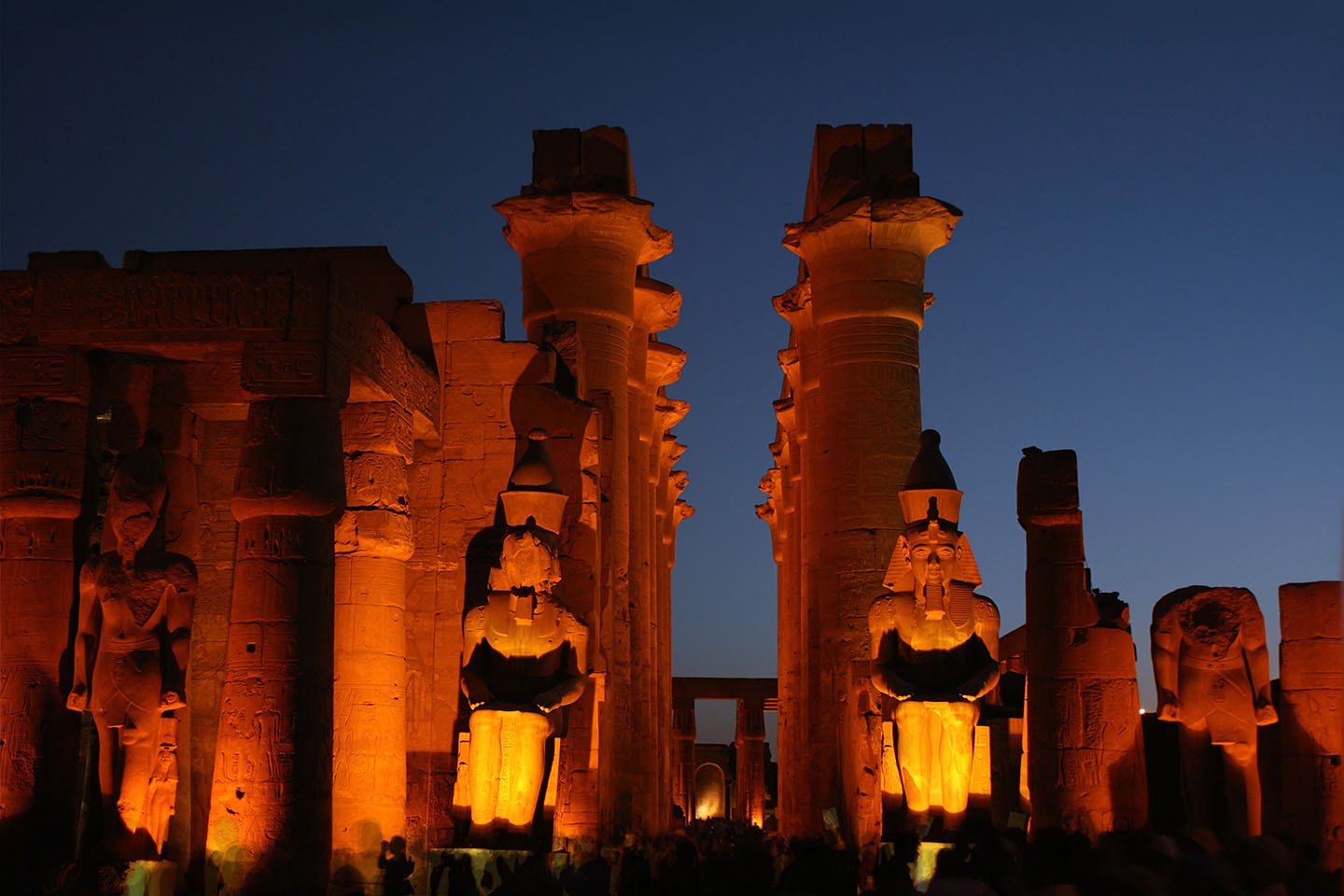
| Karnak Temple | The Spy Who Loved Me, Death on the Nile 1978 | The hypostyle hall and its 134 columns | The Bond fight covers a tiny fraction of the complex |
| Abu Simbel | The Spy Who Loved Me, Death on the Nile 1978, The Prince of Egypt | The four colossi of Ramesses II and the temple of Nefertari | It was moved block by block in the 1960s; the mountain is artificial |
| Philae Temple | Documentaries on the rescue of the Nubian temples | Trajan's Kiosk and the island in the middle of the reservoir | It almost never appears in fiction, which is why it surprises people |
| Ramses Station, Cairo | Cairo Station (1958) | The main hall and the platforms | The overnight trains to Luxor and Aswan leave from here |
| Khan el Khalili and downtown Cairo | Cairo Time, The Yacoubian Building, Cairo 678 | Bazaar alleys, old cafes, Talaat Harb Street | The Yacoubian Building is real and visible from the sidewalk |
| Saqqara and the Luxor west bank | Secrets of the Saqqara Tomb, The Night of Counting the Years, Egypt (BBC) | The Step Pyramid, Deir el-Bahari, the Valley of the Kings | Many of the excavations in the documentaries are closed to the public |
One more thing the screen leaves out: Giza to Karnak is roughly 400 miles by road, which is why most itineraries fly between Cairo and Luxor.
Viewing order by trip type
You do not need to watch everything. These are the combinations we recommend, in order, over the weeks before departure.
If you are taking a Nile cruise
- Death on the Nile (1978), for the boat, Karnak and Abu Simbel.
- The Night of Counting the Years (1969), to arrive on the Luxor west bank with different eyes.
- Death on the Nile (2022), the last night before you fly, for the mood alone.
If it is your first time and you are doing Cairo, Luxor and Aswan
- Egypt (BBC, 2005), at least the Carter episodes.
- The Spy Who Loved Me, to recognize Giza, Karnak and Abu Simbel in one sitting.
- Cairo Time, for the rhythm of the city.
If you travel with kids
- The Prince of Egypt.
- Asterix and Obelix: Mission Cleopatra.
- Secrets of the Saqqara Tomb, with the ten-and-ups.
If it is your second trip or you care about the living culture
- Cairo Station, by Chahine.
- The Yacoubian Building and Cairo 678.
- Agora (2009), by Alejandro Amenabar, if Alexandria is on the plan. Shot in Malta, but the only serious film about the city's ancient library.
Frequently asked questions
Which movies about Egypt were actually filmed in Egypt?
The clearest cases are Death on the Nile (1978), filmed at Karnak, Abu Simbel, Aswan and Giza; The Spy Who Loved Me (1977), with Giza, Karnak, Abu Simbel and the Gayer-Anderson house; Land of the Pharaohs (1955), at the foot of the Great Pyramid; and all of classic Egyptian cinema, from Cairo Station to The Night of Counting the Years. Most later blockbusters were made in Morocco, Tunisia or on a soundstage.
What is the best documentary about ancient Egypt?
For learning, Lost Treasures of Egypt and the BBC docudrama Egypt are the most reliable, because they follow real excavations and explain the discoverers. NOVA's Decoding the Great Pyramid is the best single hour on how Giza was built. For fiction with a historical base, the Alexandria episodes of Rome and the 1999 Cleopatra miniseries.
Is anything in The Mummy (1999) real?
Very little in the geography and a fair amount in the atmosphere. Hamunaptra does not exist and the museum is a set, but the feel of a 1920s excavation is well caught. Imhotep was a real person, the architect of the Step Pyramid at Saqqara, later revered as a sage, nothing like the villain. If you enjoyed it, watch The Night of Counting the Years next, the 1969 Egyptian film about a real tomb-robbing case.
Which documentary should I watch before visiting the pyramids and Saqqara?
Secrets of the Saqqara Tomb (2020) is the best starting point: it shows an Egyptian team excavating a Fifth Dynasty tomb in the same necropolis you will visit, with the Step Pyramid in the background. For Giza, NOVA's Decoding the Great Pyramid explains the logistics better than anything else.
Which animated film about Egypt is best for young children?
The Prince of Egypt (1998) is still the reference from about age six: palaces, temples and construction sites inspired by real places they later recognize. For the youngest, the mummy in the Tad the Lost Explorer films and Mummies (2023) work as a first contact without fear. Asterix and Obelix: Mission Cleopatra is the funniest for the whole family, better from seven or eight because of the double-layered jokes.
Can I visit specific filming locations on the trip?
Yes, without leaving the usual itinerary: the hypostyle hall at Karnak from The Spy Who Loved Me, the terrace of the Old Cataract from Death on the Nile, Ramses Station from Cairo Station, the Yacoubian Building on Talaat Harb Street and the Gayer-Anderson house next to the mosque of Ibn Tulun. Tell us which films you loved and your guide points out the shots.
From the couch to the Nile, with the same shots in front of you
Tell us which movies hooked you, how many days you have and who is traveling, and we build an itinerary through the real places you saw on screen, with an English-speaking Egyptologist guide who knows every scene. No prices on this page, just a quote in your inbox.