Twelve days across Cairo, a Nile cruise and the Red Sea
This is the trip for you if you have twelve days, you are crossing an ocean to get here, and you refuse to choose between the pyramids, the Nile and a stretch of beach. It does all three, in that order.
Twelve days and eleven nights: three in Cairo, three on a Nile boat sailing north from Aswan, one in Luxor, three at Hurghada on the Red Sea, then a last night in Cairo. You go through eleven ticketed gates, and we have paid every one before you land.
It runs privately: no fixed departure date, no coach of forty strangers, no minimum group size. Your own Egyptologist, your own driver, your dates, your route.
Two things it is not. It is not a beach vacation with monuments bolted on: the first week is a working week and you will be on your feet in the heat. And it does not include your international flight. We are an Egypt-based operator, and our part starts at Cairo passport control.
What separates this from other twelve-day programs: most spend the last three days back in Cairo, and this one ends at sea level. By day eight you have walked nine major sites and almost everybody hits a wall.
Day one is deliberately empty. A long-haul flight into Cairo runs many hours, and if you connect the door to door number is longer still, before you add the time change. A pyramid visit on the afternoon you land looks efficient on paper and miserable in practice. The program bends around your international flight too: send us your arrival and departure times and we build the twelve days inside them.
Our representative meets you past the gate at Cairo International, handles the arrival formalities and drives you to your hotel. That is the whole day, on purpose: after a long flight and a time shift, a quiet dinner and a full night of sleep is the sensible move.
Meals: none included. Night: Cairo hotel.
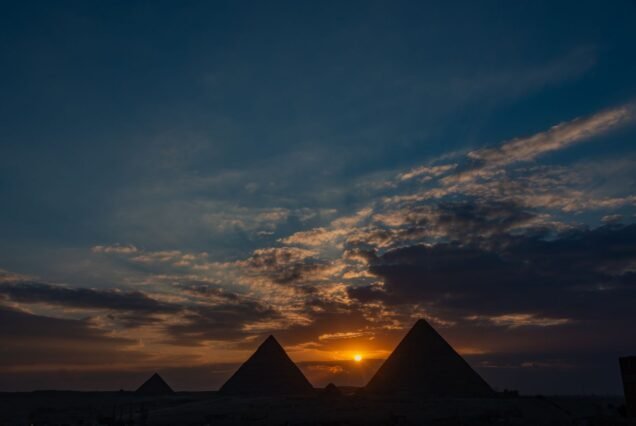
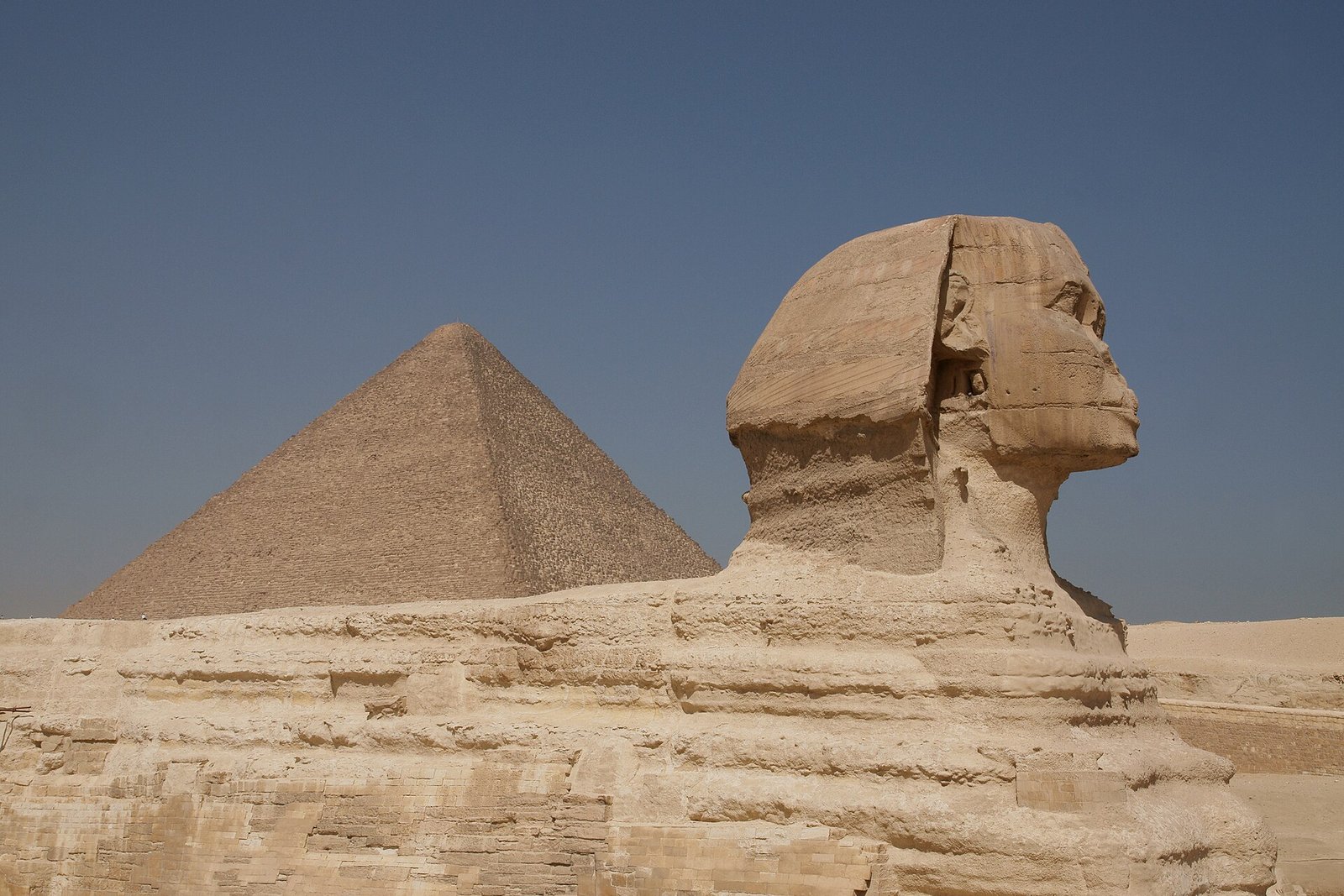
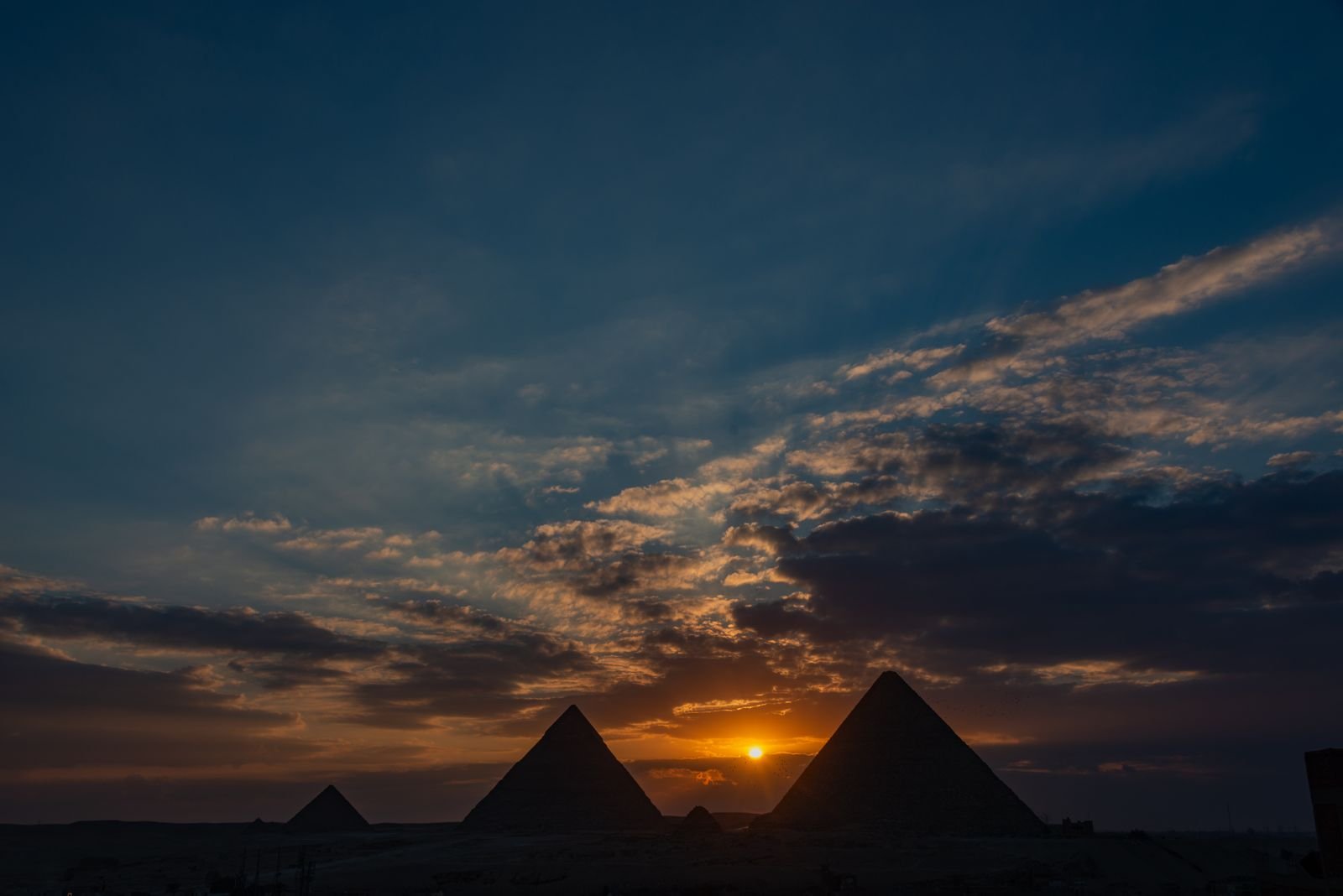
The main event first: the pyramids of Khufu, Khafre and Menkaure, the panorama with all three lined up, then the Great Sphinx and the Valley Temple, where your guide explains what happened to a pharaoh's body between death and burial. Wear real shoes; the plateau is sand and broken limestone with no shade. Afternoon free.
Meals: breakfast. Night: Cairo hotel.
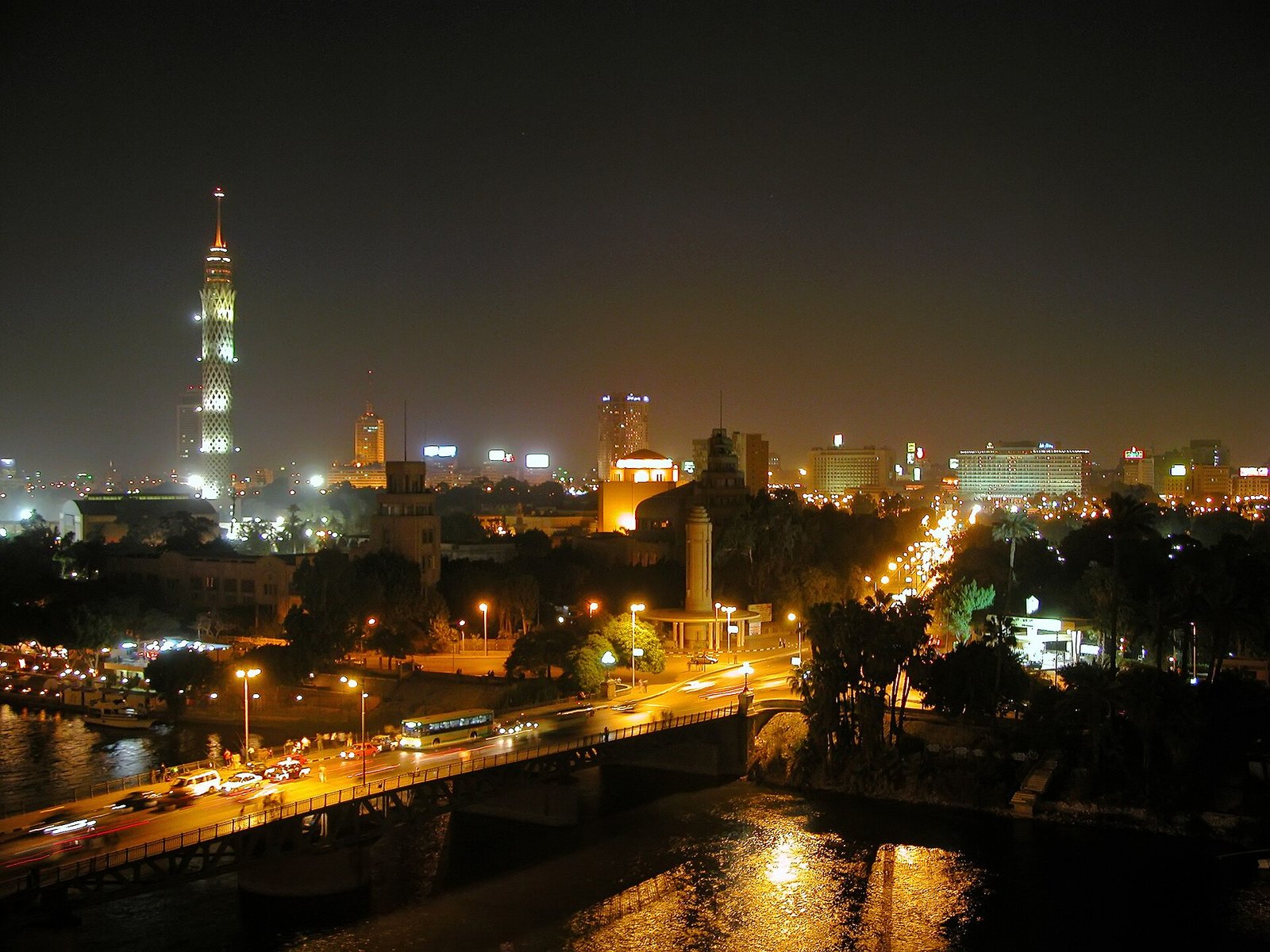
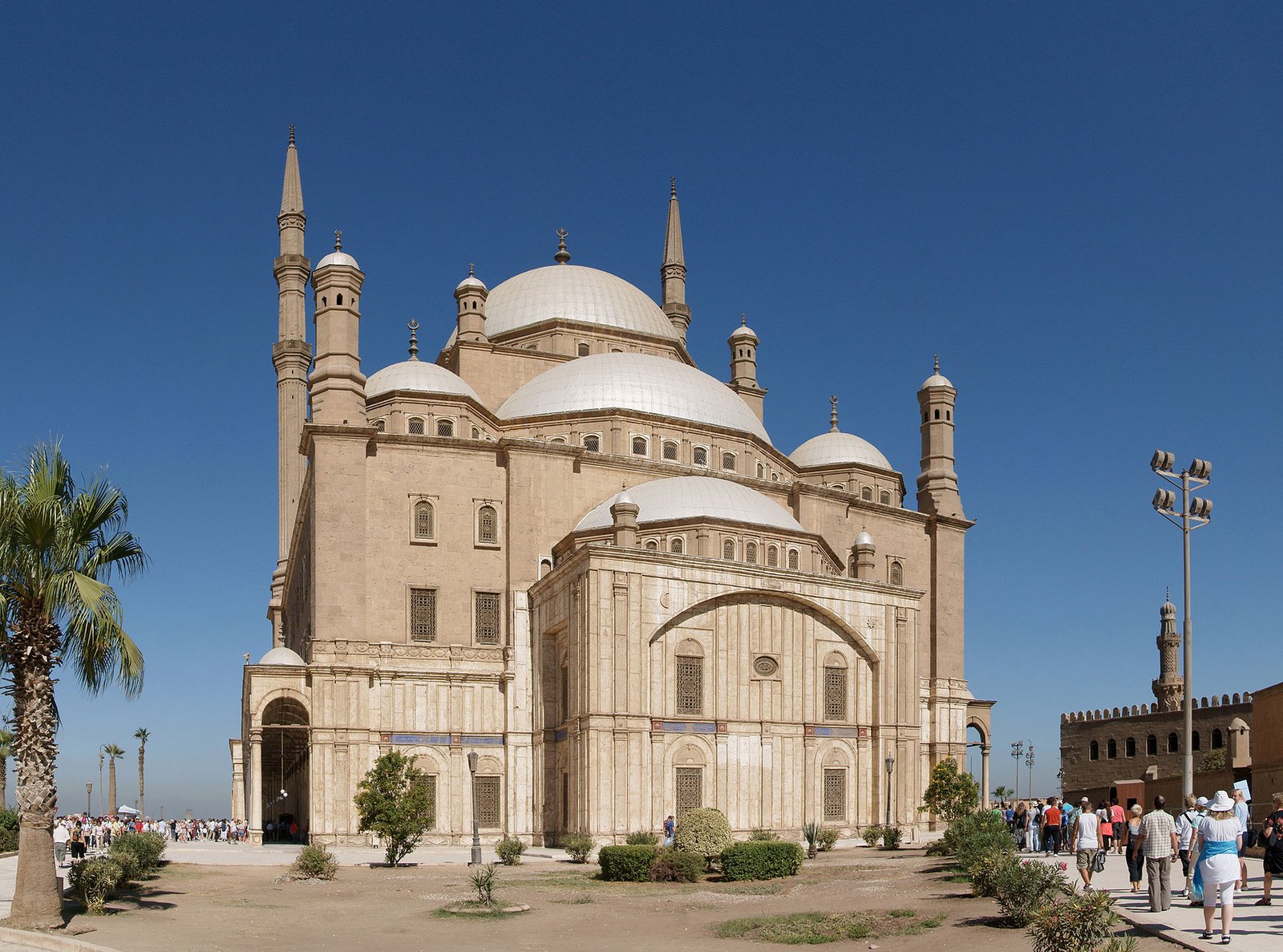
A day indoors and uphill. The Egyptian Museum on Tahrir Square is the old one, crowded and gloriously unmodernized. Then Saladin's Citadel for the Alabaster Mosque of Muhammad Ali and a view across the whole city, and finally Coptic Cairo, the quarter of old churches and narrow lanes. Cover shoulders and knees, men included.
Meals: breakfast. Night: Cairo hotel.
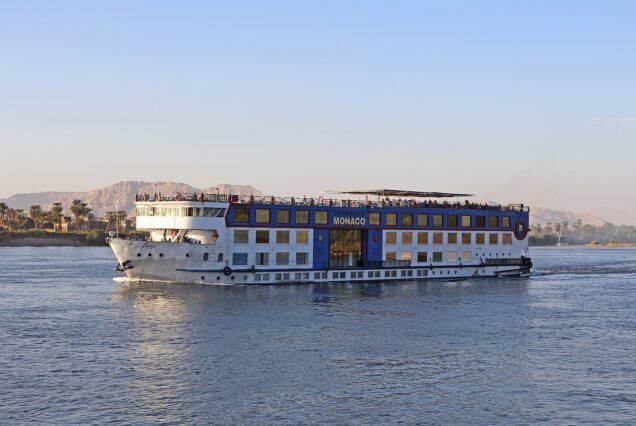
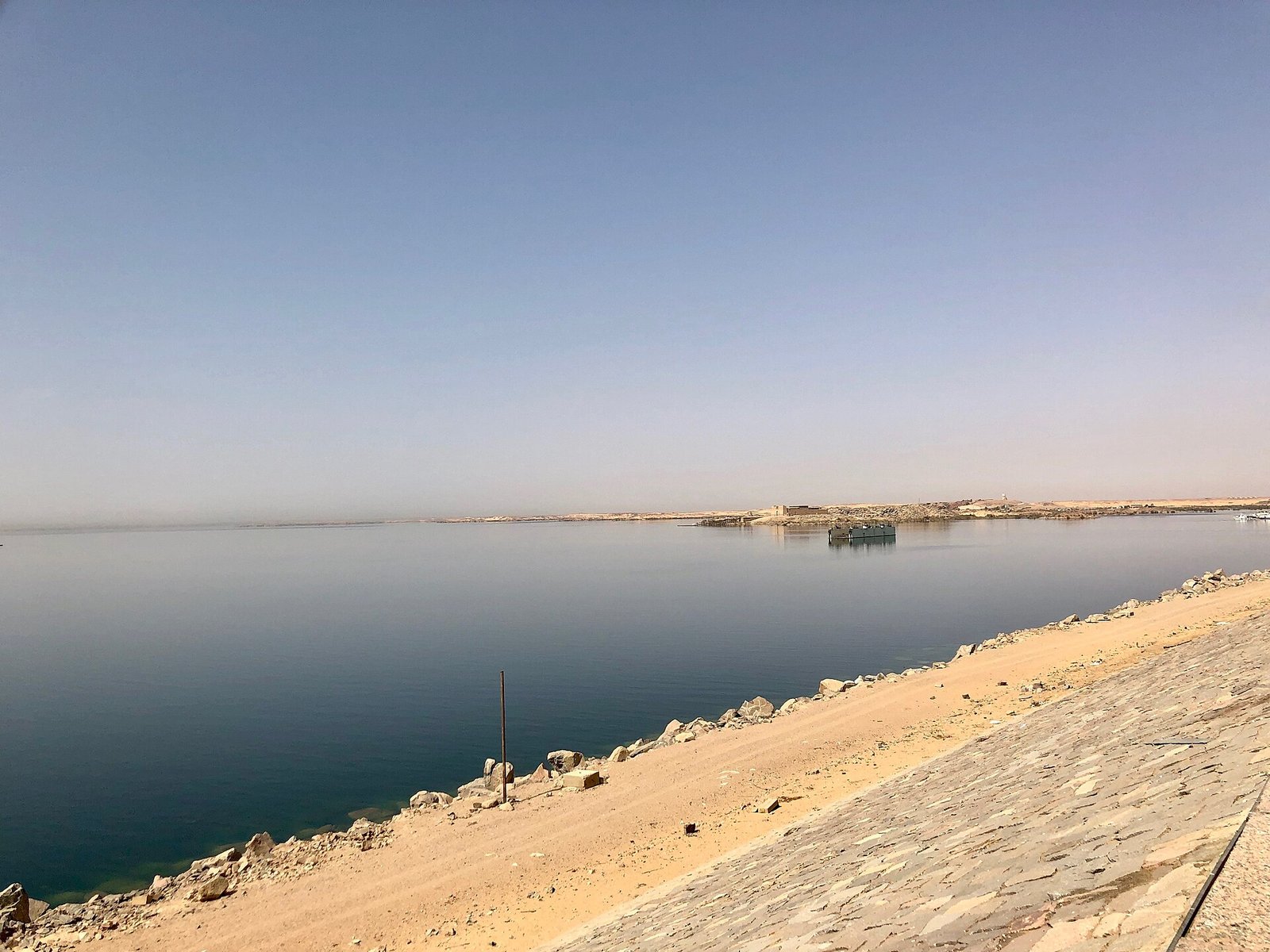
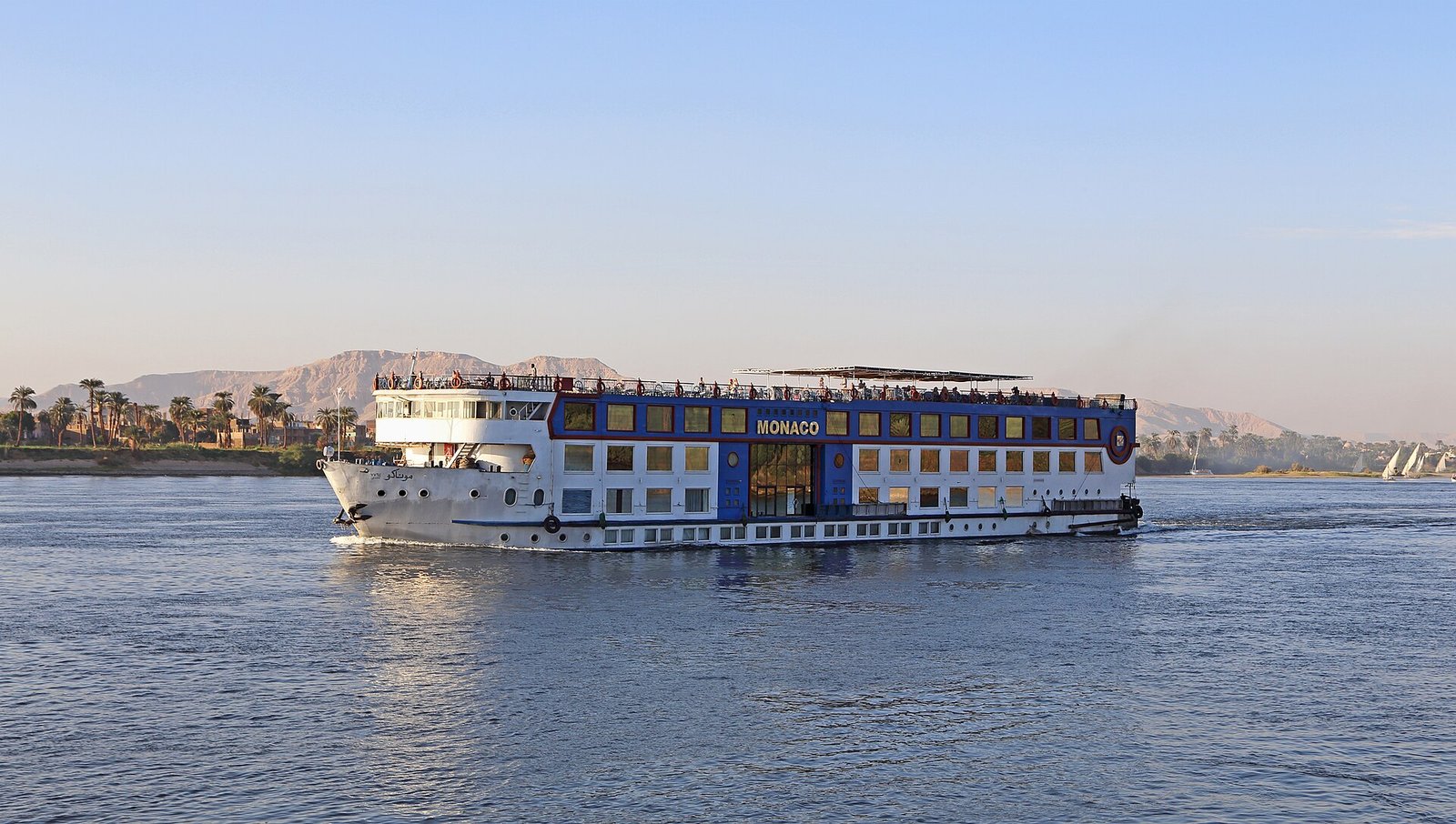
A short domestic flight south, and the temperature climbs with you. You board your Nile boat, then head out to the Aswan High Dam, the project that rewrote the river, and the Temple of Philae, drowned behind it and rebuilt block by block on higher ground. Philae is reached by motorboat, the prettiest arrival of the trip.
Meals: breakfast, dinner on board. Night: Nile cruise at Aswan.
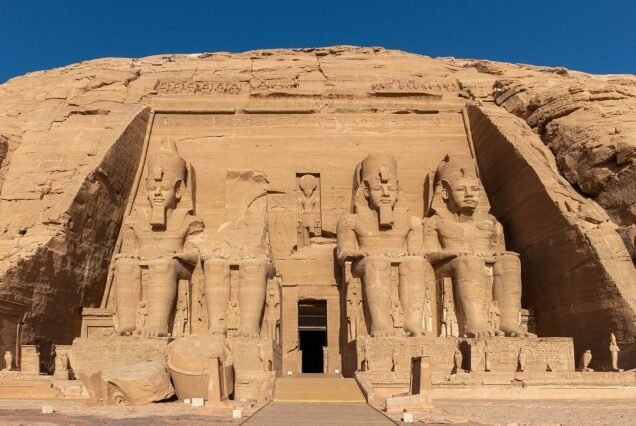
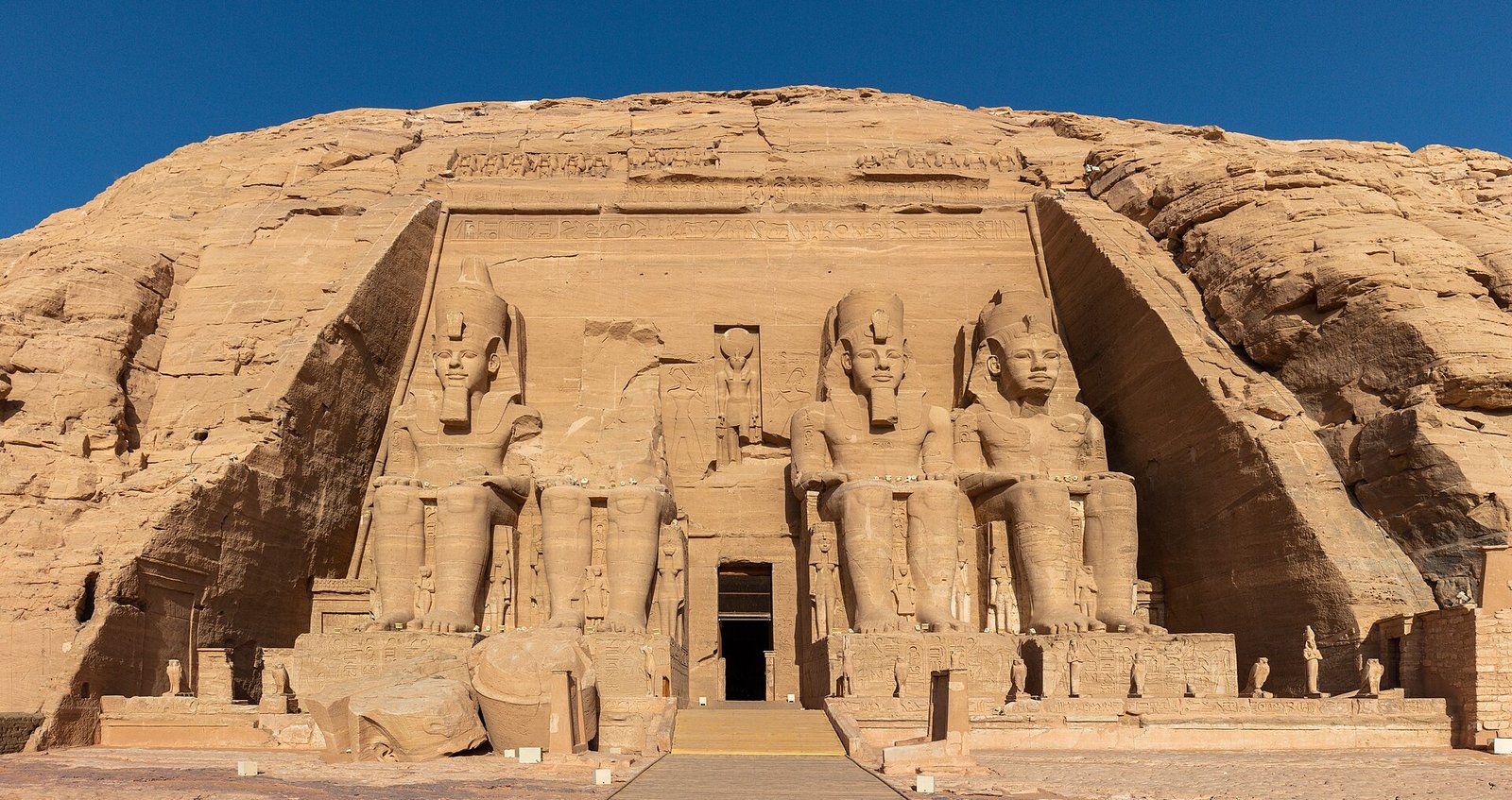
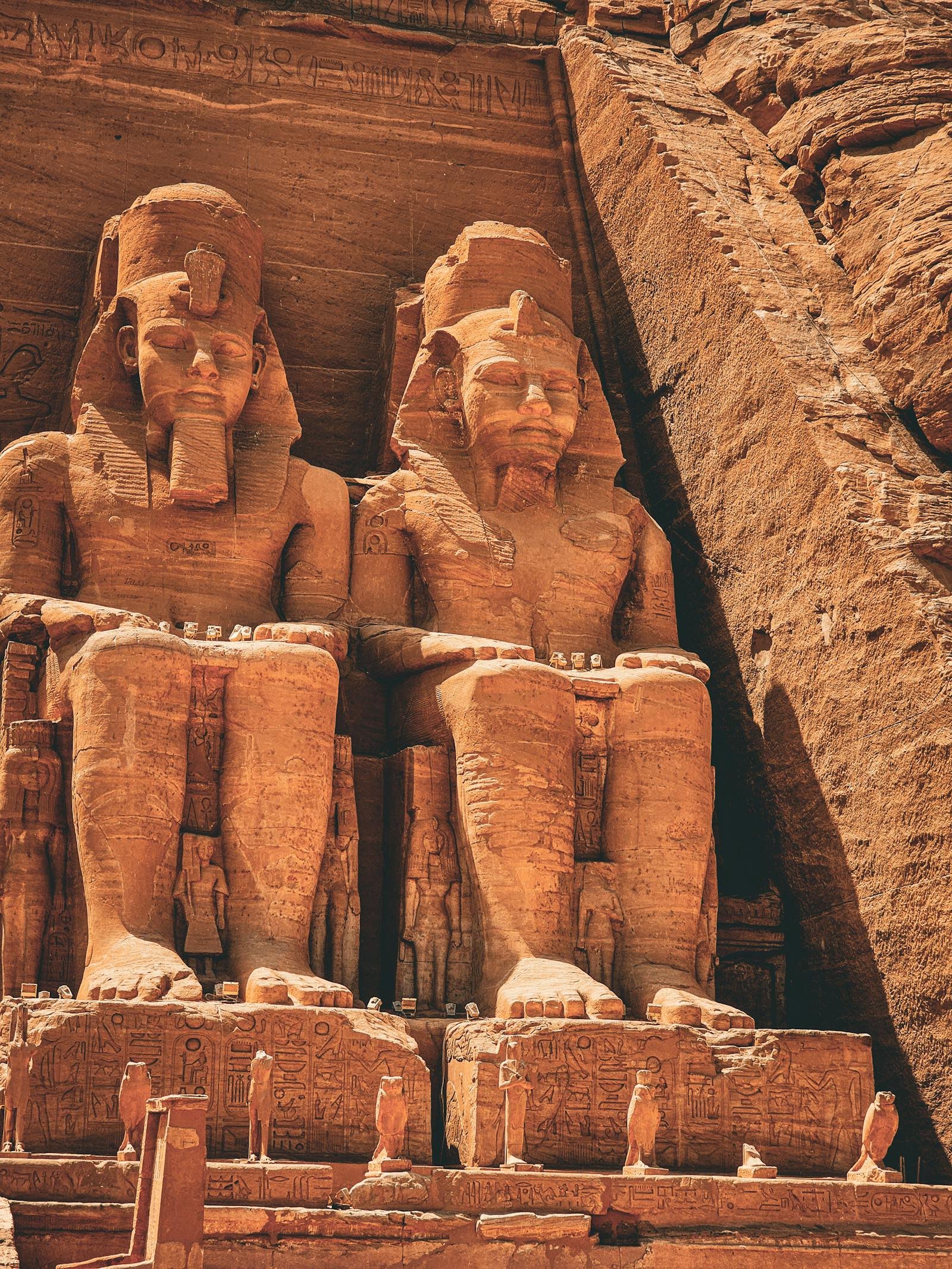
The early start of the trip, and the one nobody regrets. Abu Simbel sits about three hours south of Aswan by road, near the Sudanese border, and the four seated colossi of Ramses II cut into the cliff are the most imposing thing in Egypt. Nefertari's temple stands beside them; both were sawn apart and moved uphill when the dam waters rose. Then the boat casts off for the double temple at Kom Ombo, shared between Sobek and Haroeris.
Meals: breakfast. Night: Nile cruise.
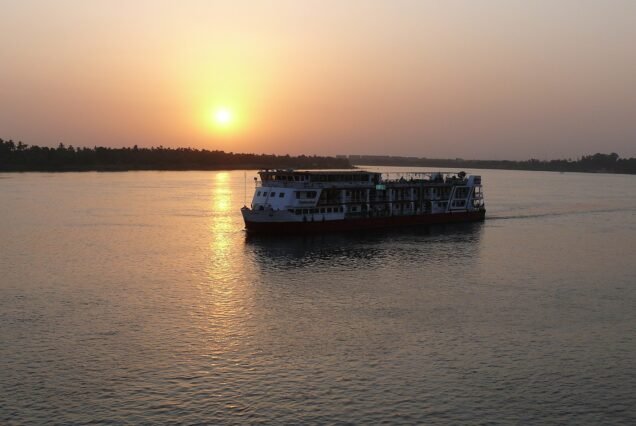
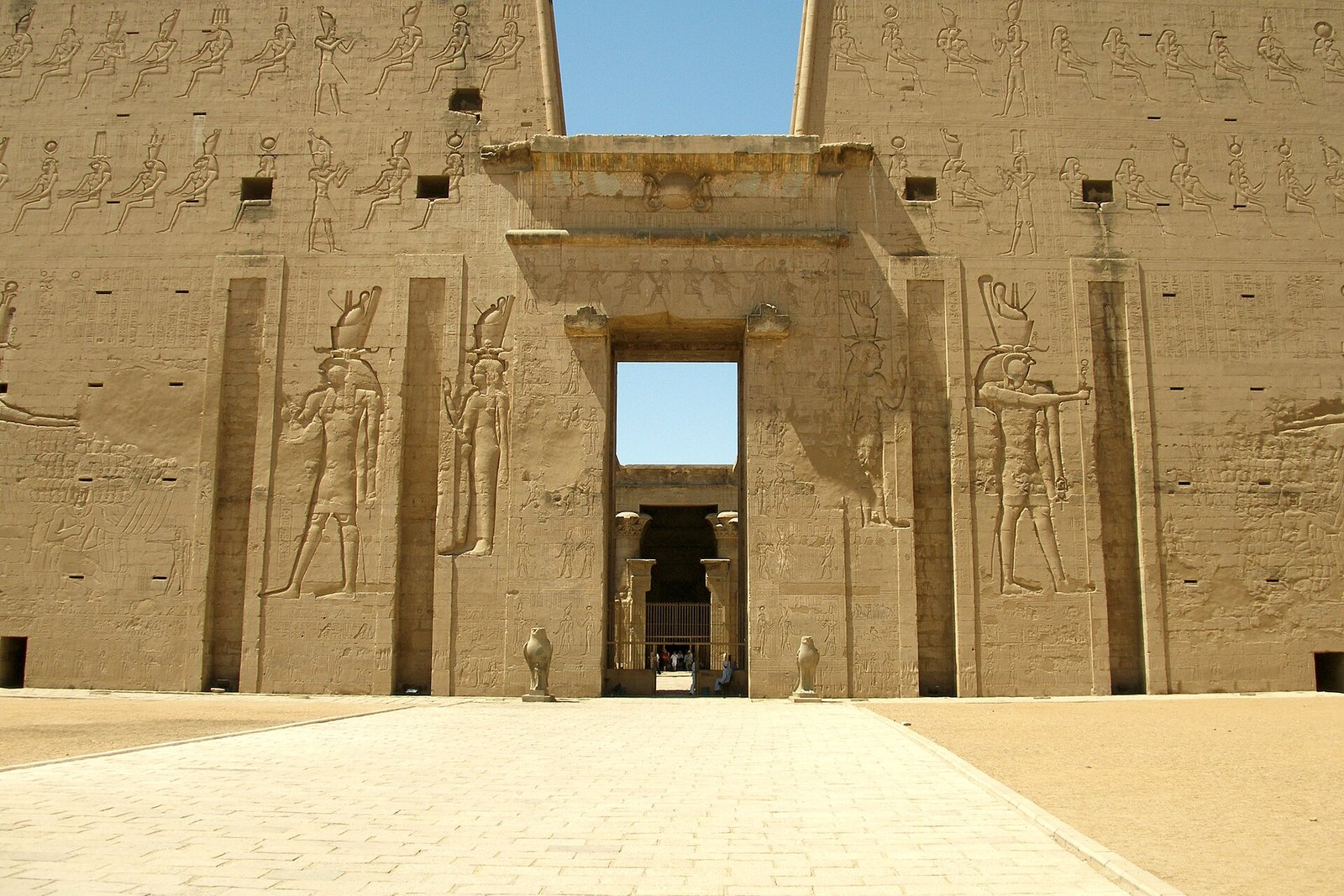
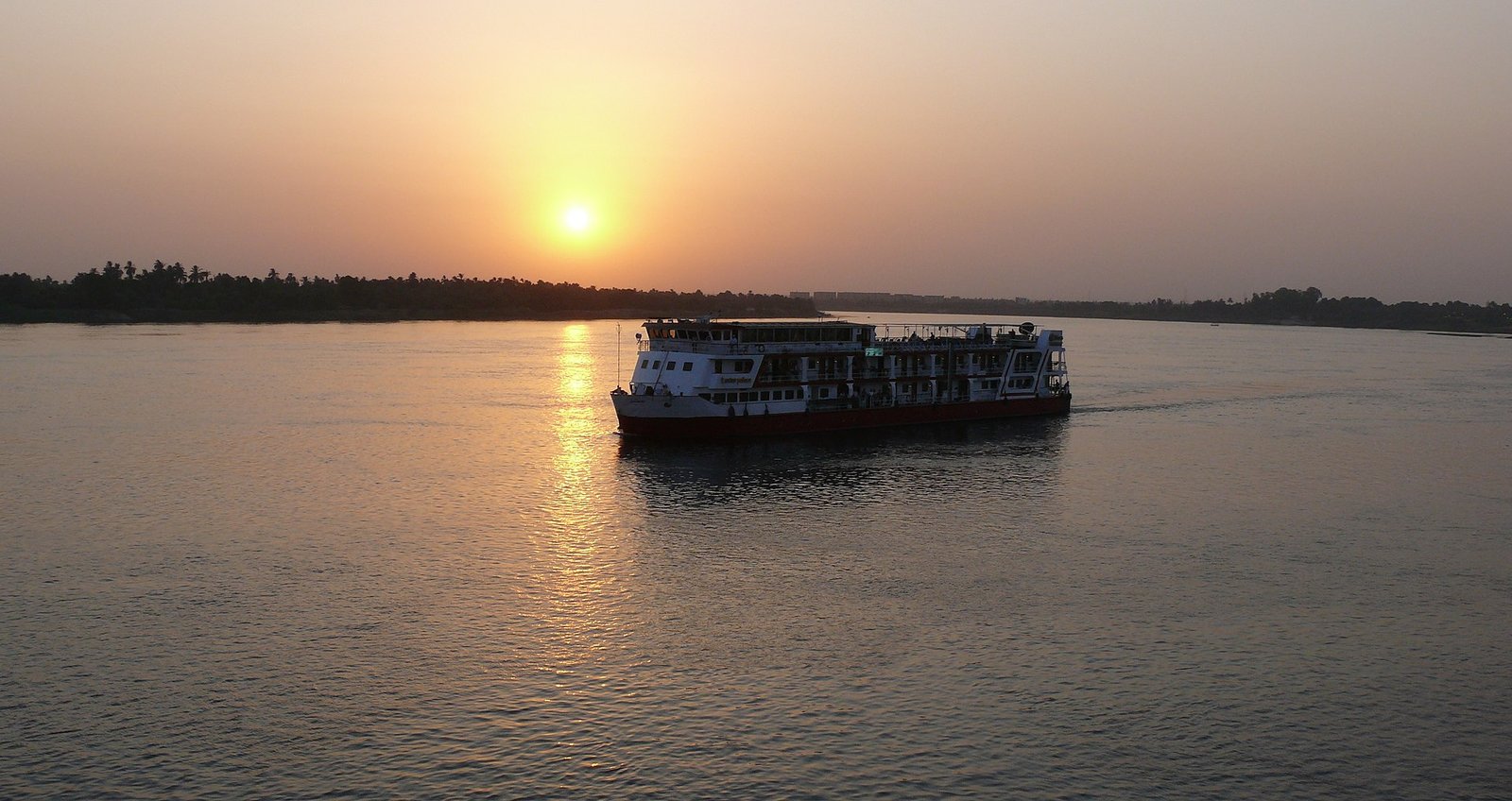
Morning at Edfu for the Temple of Horus, the best-preserved major temple in Egypt: the roof is still on, and the plan of an ancient temple is legible in a way it is nowhere else. The rest of the day is sailing north toward Luxor with nothing scheduled, and it is the day people describe when they get home.
Meals: breakfast. Night: Nile cruise.
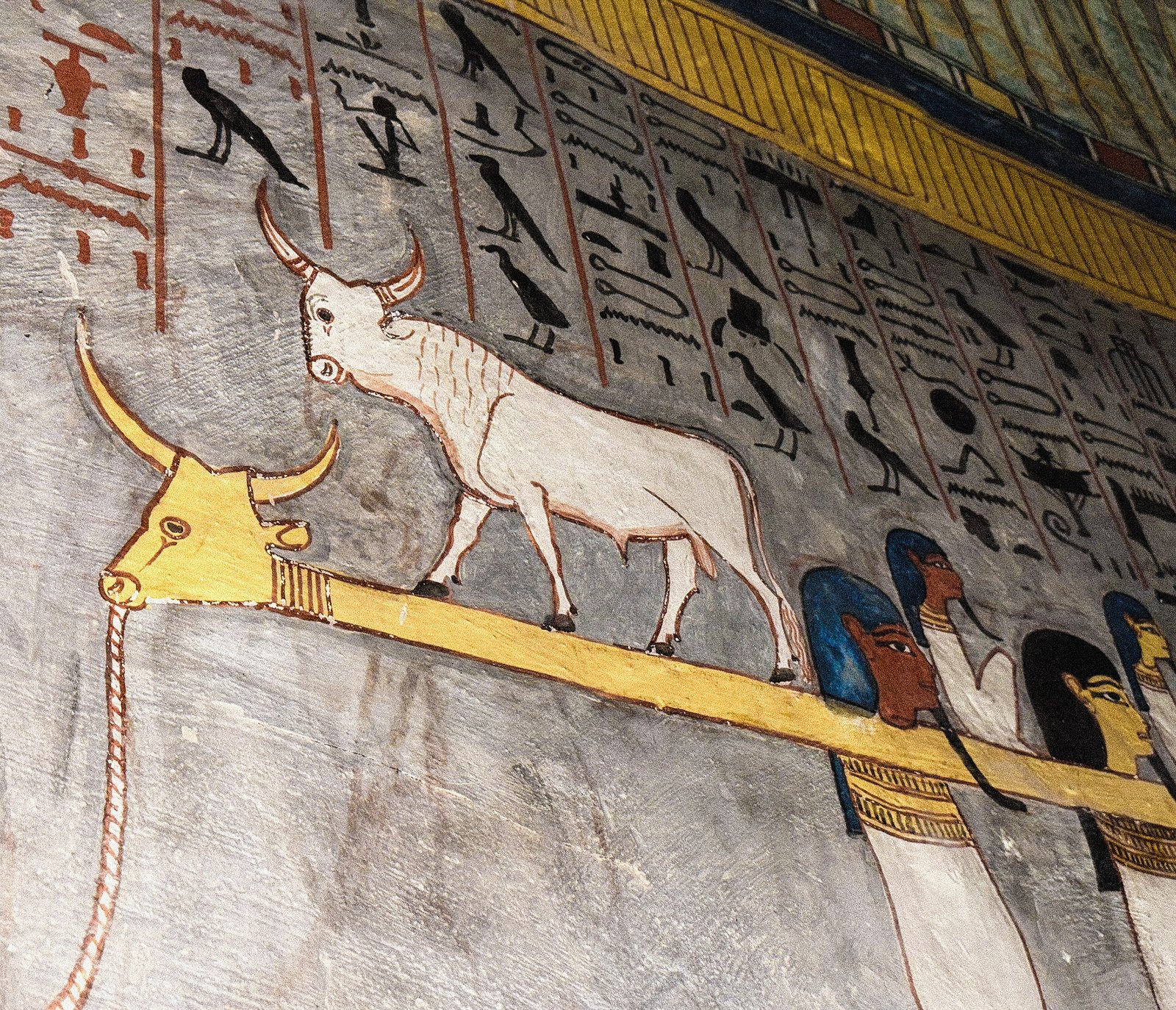
You leave the boat at Luxor and cross to the bank the Egyptians kept for the dead. In the Valley of the Kings you go down into three tombs, and the painted color still on those walls after three thousand years is what gets people. Then the terraced Temple of Hatshepsut at Deir el Bahari, and the Colossi of Memnon alone in farmland.
Meals: breakfast. Night: Luxor hotel.
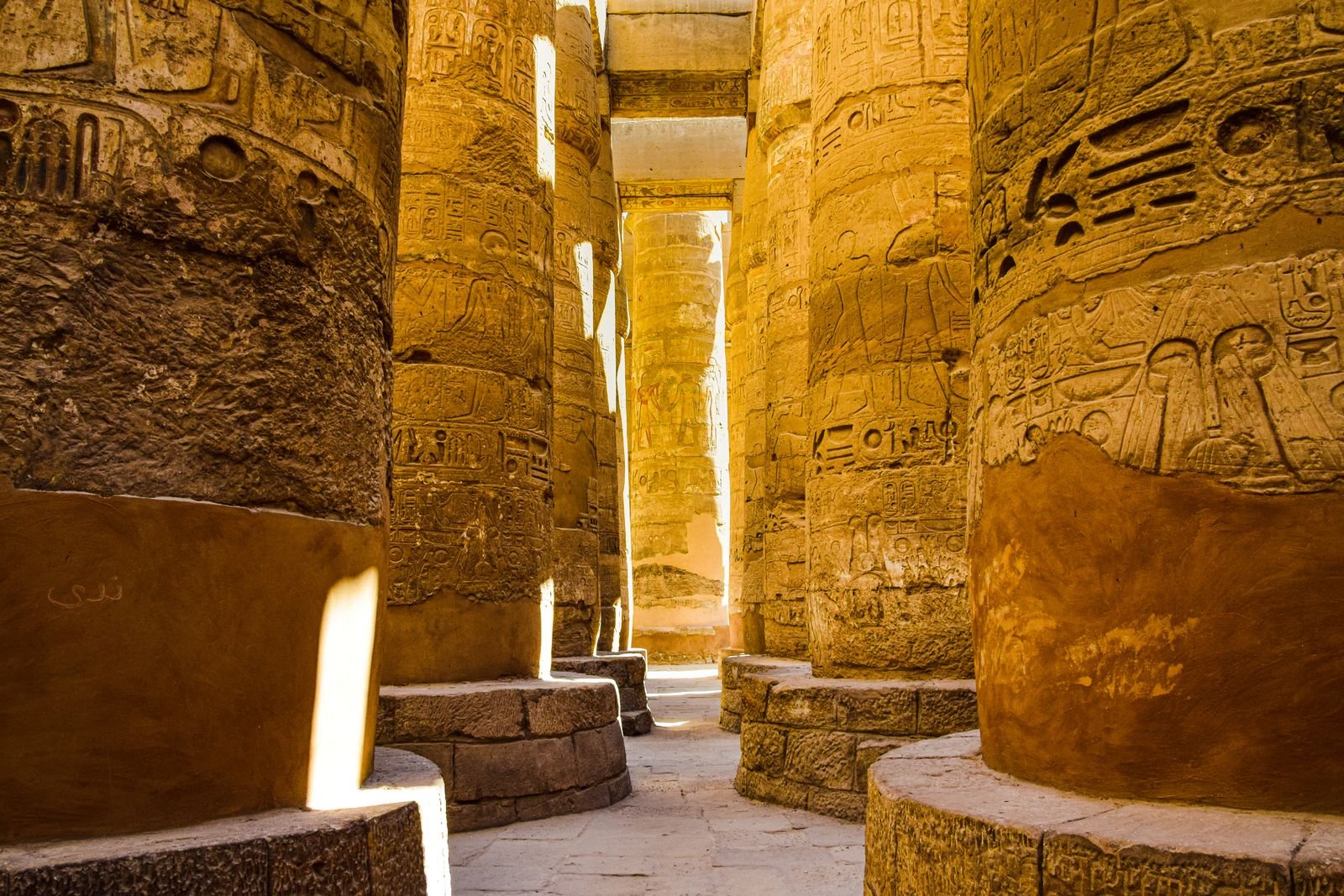
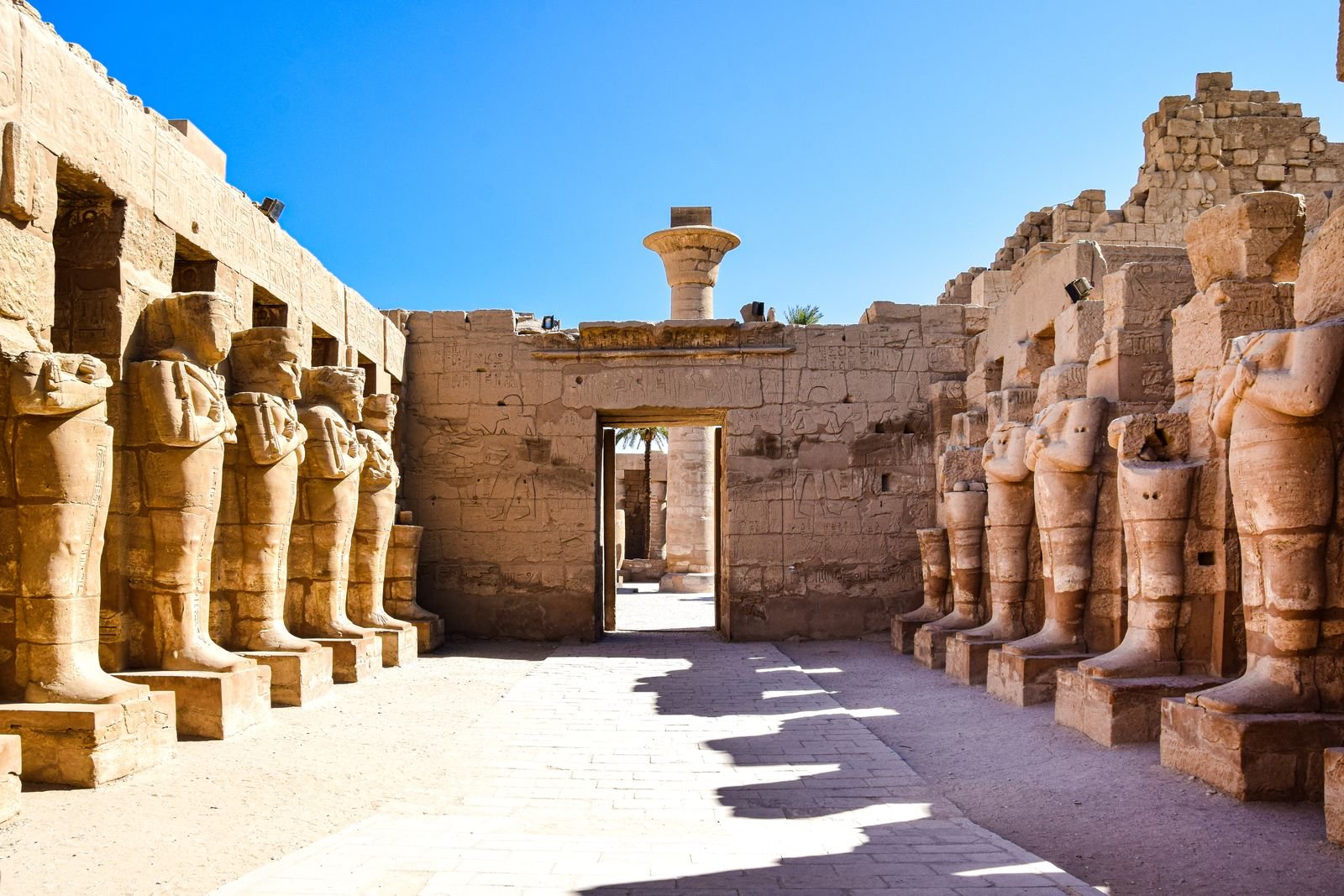
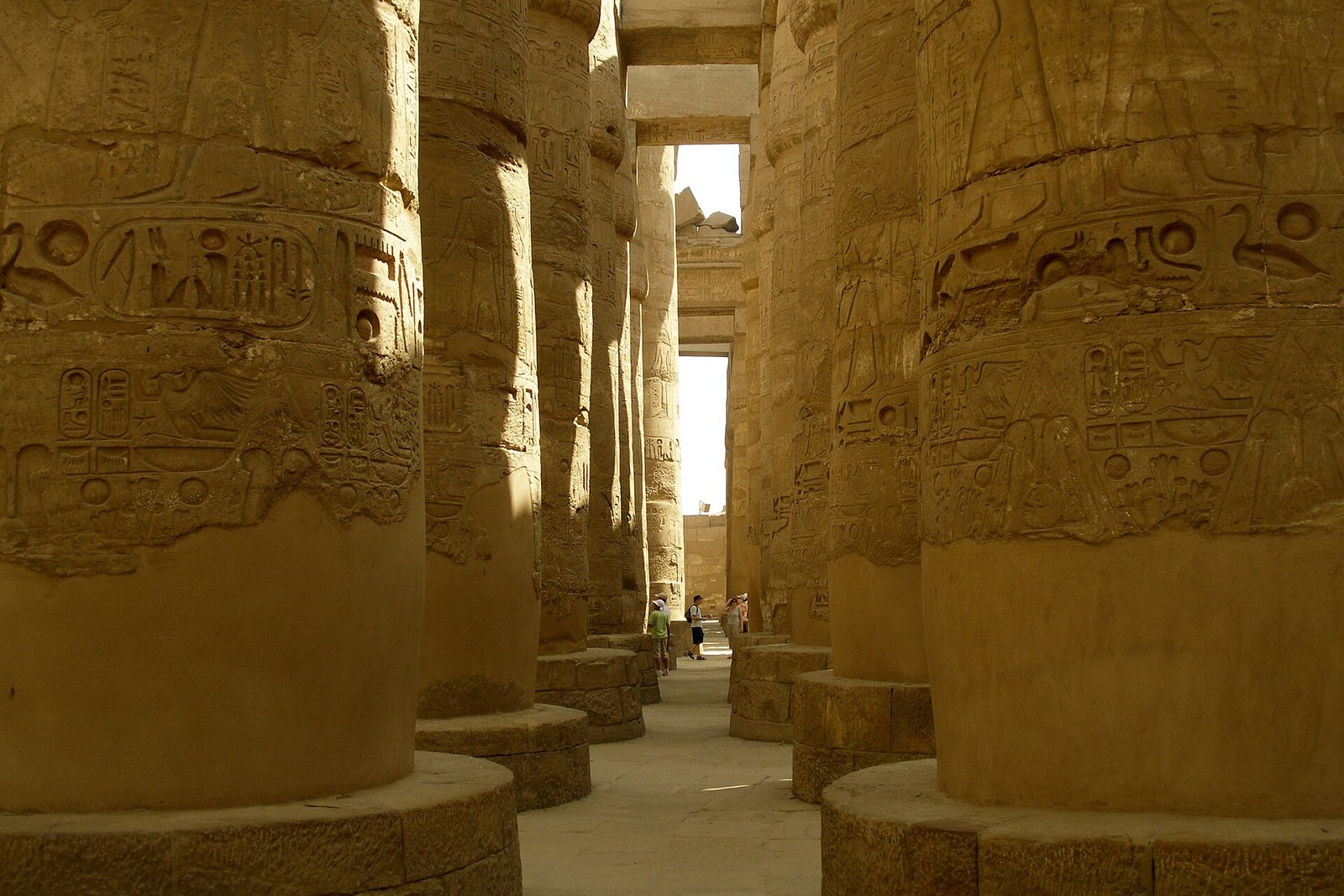
The east bank belonged to the living. Karnak first, a forest of columns no photograph has ever managed, built and rebuilt across two thousand years. Then Luxor Temple, smaller and cleaner in its lines, right on the river. In the afternoon you drive east across the desert and reach the Red Sea around sunset.
Meals: breakfast. Night: Hurghada hotel.
Nothing scheduled. Beach, pool, or an optional snorkeling boat out to the reefs that made this coast famous, leaving in the morning and back mid-afternoon. Message your guide on WhatsApp if you want something arranged. If you would rather lie still for eight hours, that is also a plan.
Meals: breakfast. Night: Hurghada hotel.
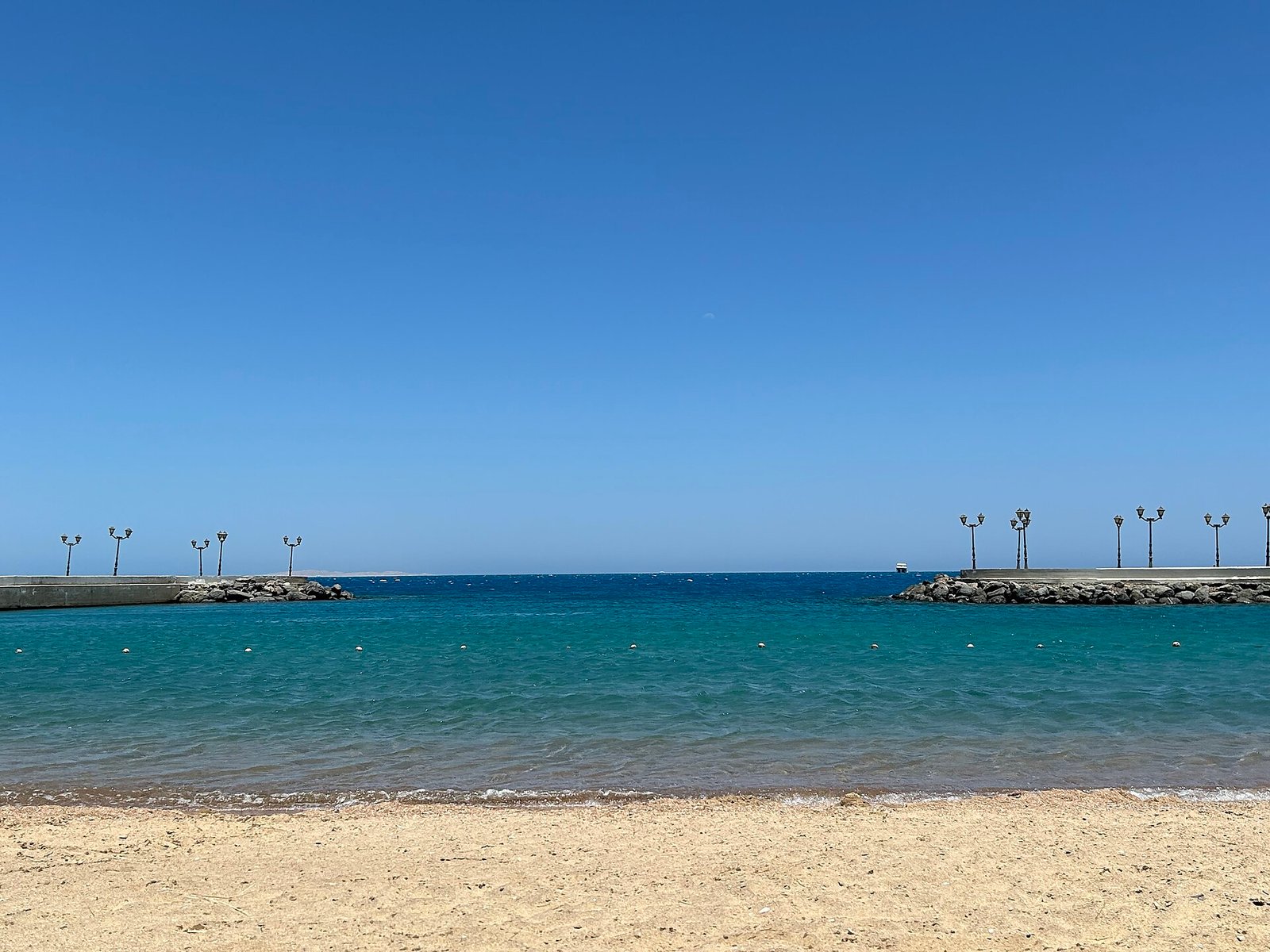
A second day at your own speed: the beach again, or an optional desert run by quad bike, a glass-bottom boat, a spa afternoon. It is also the sane moment to shop, because prices here are calmer than in Khan el Khalili.
Meals: breakfast. Night: Hurghada hotel.
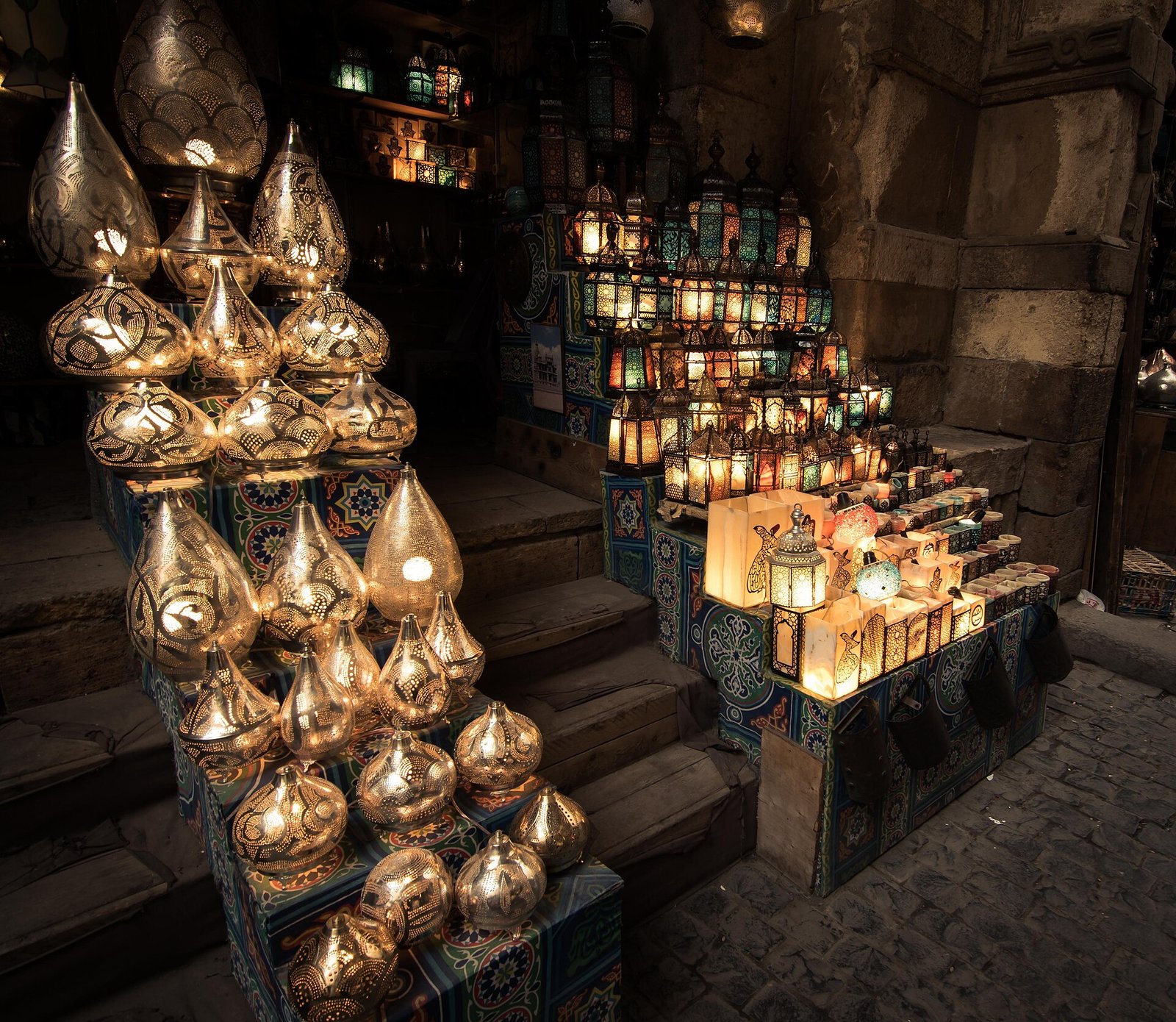
A long drive north to the capital, broken by the best possible stop. Saqqara sits just south of Cairo and holds the Step Pyramid of Djoser, the oldest in Egypt and the ancestor of everything you saw at Giza on day two. Seeing it at the end reorders the whole trip in your head. Then Khan el Khalili for lamps, spices, silver and cotton. Haggle: it is expected and it is not rude.
Meals: breakfast. Night: Cairo hotel.
Breakfast, then a private transfer to Cairo International timed to your flight. Our team stays with you through the terminal so the last hour is as calm as the first.
Meals: breakfast. Night: none, you fly home.
Want it in writing?
Day by day, hotels, what is included and the price for your dates. We send it on WhatsApp in a few minutes.
If something is not on either list, it is included. No small print, and no queue of extras waiting at the airport.
Operators love the phrase "entrance fees included" and almost none of them say what it is worth. Here is the arithmetic, at the official 2026 tariff published by the Ministry of Tourism and Antiquities on egymonuments.com, per person.
| Site | Official gate fee (EGP) | Approx. USD |
|---|---|---|
| Giza plateau: pyramids and Sphinx | 700 EGP | about $14 |
| Egyptian Museum, Tahrir | 550 EGP | about $11 |
| Temple of Philae, Aswan | 550 EGP | about $11 |
| Abu Simbel temples | 822 EGP | about $17 |
| Temple of Kom Ombo | 450 EGP | about $9 |
| Temple of Horus, Edfu | 550 EGP | about $11 |
| Valley of the Kings, 3 tombs | 750 EGP | about $15 |
| Temple of Hatshepsut | 440 EGP | about $9 |
| Karnak temple complex | 600 EGP | about $12 |
| Luxor Temple | 500 EGP | about $10 |
| Saqqara necropolis | 600 EGP | about $12 |
| Total already paid on your behalf | 6,512 EGP | about $131 |
Converted at 1 USD = 49.79 EGP, the Central Bank of Egypt rate on 6 August 2026. The pound moves, so treat the EGP figures as the real ones and the dollars as a guide; ministry tariffs are revised from time to time. Your entry to Saladin's Citadel and the Aswan High Dam is included too, and sits outside the table because we print only gate prices verified against the ministry's own platform.
The one gate we deliberately left unpaid is the Great Pyramid interior, at 1,000 EGP: a crouching climb into a bare, undecorated chamber that plenty of people find claustrophobic. Decide on the plateau, not in advance.
from US$2,196 per person
From US$2,196 per person, based on two people sharing a double room. That covers the domestic flight sector, all eleven nights, all transfers, your private Egyptologist at every site visit, and every gate fee in the table above.
What moves the price:
Send us your dates and traveler count and we come back with a written, itemized quote in your currency. You hold your place with a deposit and settle the balance later, so you are never asked for the full amount up front.
Read the live travel advisory your own government publishes for Egypt before you book, because advisories change and anything printed on a tour page has a shelf life. The geography is what stays stable: where an advisory carves out part of Egypt, the area named is the Northern and Middle Sinai, and nothing on this itinerary goes near it. You will be in Cairo, Aswan, the Nile valley and Hurghada, well away from it.
Yes. The e-Visa is 30 USD single entry and 65 USD multiple entry, at visa2egypt.gov.eg, the government's own portal, and single entry is all this trip needs. You will see 25 USD online, which is out of date, and 32 USD, the embassy's in-person service and a different product. Visa on arrival at Cairo airport must be paid in US dollars cash, so bring crisp, unmarked bills; worn notes and pre-2009 series get refused. Passport valid six months from arrival.
The frequency surprises visitors, not the amounts. Per traveler, roughly: the Egyptologist is the significant one, tipped at the end of each block of days; the driver a fraction of that; the cruise crew through a collective box at the end of the sailing; housekeeping a small note daily rather than at checkout; restroom attendants a few pounds in coin; a felucca captain a few dollars. Small denominations are the trick, and pounds beat dollars here.
Do not drink the tap water and do not brush your teeth with it. Bottled water is cheap, everywhere, and in the vehicle. Skip ice outside the hotels and the boat, skip raw salad, peel your own fruit. Hot food served hot is fine, and the food here is genuinely good. Restrooms at Karnak and the Valley of the Kings are attended and often out of paper, so carry tissue and coins, and pack rehydration salts.
Site by site. On the Giza plateau, in the Valley of the Kings and at the temples, ordinary hot-weather clothing is fine for everyone: loose cotton, long shorts or light pants, hat, sunglasses, closed shoes; the ground is rough. For Coptic Cairo and the Citadel mosque, shoulders and knees covered, men as well as women, shoes off inside. You cover your hair only inside a mosque, where a scarf is usually at the door. Swimwear is normal at the Red Sea, and no color is off limits.
We do not sell it and it is not included, so this is advice rather than an upsell. It matters because domestic health cover generally does not follow you abroad, and you should not assume any reciprocal arrangement applies in Egypt. Look for overseas medical treatment, medical evacuation and trip cancellation, and if you plan to dive at Hurghada, check diving is not excluded, because it often is.
Both, in that order. Dollars in cash for the visa if you take it on arrival, then change some into pounds early for tips, coffee and the bazaar. ATMs are reliable in Cairo, Luxor, Aswan and Hurghada, less so outside the cities, and cards follow the same pattern: fine at hotels and larger restaurants, unreliable at a village stall. The rate has moved through 2026, so check it live rather than trusting any number online, ours included.
No. We do not sell, book, quote or coordinate international flights, and we never will. You buy your own ticket to Cairo. What is included is the domestic Egyptian flying on this itinerary, which as written is the Cairo to Aswan sector. Send us your arrival and departure times and we build the twelve days around them.
Yes, and people do. Some cut the Red Sea days for another night in Luxor, some prefer a drive over a short flight, some add the Great Pyramid interior or a balloon over the Luxor west bank. Because the trip is private, changing it is a conversation rather than a form, and we tell you what each change does to the price first.
Moderately fit. The demanding parts are the walking at Giza, Karnak and Saqqara, the heat between roughly ten and four from May to September, and the steep steps into the tombs in the Valley of the Kings. If anyone in your party has mobility limits, tell us at the quote stage and we will say honestly which sites work and which we cannot adapt. To book, message WhatsApp +201032295513 with your dates and traveler count; an itemized quote comes back, usually the same day, with the hotels and boat named rather than "four star or similar".
We are in Egypt. The person answering your WhatsApp message is in the same country as your guide, your driver and your hotel, on the same time zone as the problem. When a boat changes its mooring or a road closes, someone who can call the person responsible fixes it. Most of what is sold as an "Egypt tour package" outside Egypt is a program bought from an Egyptian operator and marked up. We are the operator.
We also publish numbers most operators will not. The gate fee table above is checkable against the ministry's own platform, and we print 30 USD for the visa and name the government portal, because the indexed web disagrees with itself and the wrong number costs you time at the airport.
On reviews we will be direct. We have twelve written reviews from past travelers, all five stars, and they are about the agency and about our guide Shady Said rather than about any single itinerary. We do not attach a star rating to individual tours, because we have never collected ratings that way and inventing them would be both dishonest and illegal.
Short on time? The 10-day Egypt itinerary covers Cairo, Aswan and Luxor without the Red Sea, and the classic 7-day Egypt tour is the shortest version that still includes a Nile cruise. If the river is the part you came for, the Nile cruise from Aswan to Luxor and the same route sailing south from Luxor sell standalone, though both exclude domestic flights. Travelers building their own route often pair the Aswan and Luxor land itinerary with the Abu Simbel day trip from Aswan, and it is worth reading our guide to Egypt visa requirements and the reviews our travelers have written.
Send us your dates and traveler count and we come back with a written, itemized quote for your twelve days in Egypt, usually the same day. On the other side there are people who know every temple on this itinerary, not a bot.
Tell us the essentials in 30 seconds. When you send it, WhatsApp opens with your message already written and someone from our team takes it from there.
A real person from our team replies, not a bot, almost always the same day. A quote is free and commits you to nothing.
We use your details only to prepare your quote. We do not share your information or send you advertising.