

Most travelers reach Aswan on a Nile cruise or on a domestic flight from Cairo, then find they have less time here than they expected. Aswan is where the Nile narrows and the desert closes in on both banks, and it rewards a slower schedule. The complication is that the one unmissable site sits 175 miles, or 280 kilometers, further south, which forces a decision on your first morning.
This page covers every Aswan excursion we run, how long each takes door to door, and whether the gate fee sits inside the price or is paid at the ticket office. Explora is an Egyptian operator based here, not a reseller, so the guide who meets you is our guide and the vehicle is ours. We do not sell, book, quote or coordinate international flights at any stage. Prices are per person in double occupancy, in US dollars. There is no checkout on this page: you tell us what you want, we send back a written itinerary.
The Aswan excursions at a glance
Here is how the excursions compare on the two things that decide your schedule: how long they take door to door, and whether the entrance ticket is inside our price or paid on the day.
| Excursion | Time door to door | Gate fee | Entrance in our price? |
|---|---|---|---|
| Abu Simbel by road | 10 to 12 hours | 822 EGP, about $16.50 | Yes, on both Abu Simbel programs |
| Philae Temple | 2 to 2.5 hours | 550 EGP, about $11 | Yes, plus the motorboat |
| Nubian village | 3 hours | No fixed gate fee | Boat transfer included |
| High Dam | 45 minutes | Extra cost, paid at the ticket office | Access included on the 2-day Abu Simbel tour |
| Unfinished Obelisk | 40 minutes | Extra cost, paid at the ticket office | No, add on request |
| Felucca sail | 1 hour | No gate fee | Boat charter included when booked |
| Kalabsha Temple | 2 hours | Extra cost, paid at the ticket office | No, add on request |
| Nubian Museum | 1.5 hours | Extra cost, paid at the ticket office | No, add on request |
The exchange rate used throughout this page is 1 USD to 49.79 EGP. Where a monument has no figure next to it, that is deliberate: we will not print a number we have not confirmed on the ministry's own ticketing platform this year. Your guide tells you the exact amount before you get out of the car, and you pay it at the window.
Getting to Aswan, and what that does to your first day
Three ways in, and each one changes what you can realistically fit.
Domestic flight from Cairo. Roughly an hour and a half in the air. A morning departure puts you in Aswan before lunch with the whole afternoon usable, which is enough for the Unfinished Obelisk, the High Dam and Philae, or for a felucca hour and an early night before an Abu Simbel start. Domestic Egyptian flights are included only on our 7, 8, 10 and 12 day itineraries. On the Aswan excursions listed on this page they are not included, and we can quote a domestic sector separately if you want one.
Overnight sleeper train from Cairo or Giza. Around 13 to 14 hours, arriving in the morning. It is cheaper than flying and it costs you a night rather than a day, but the arrival time is not something anyone can guarantee, so we do not schedule Abu Simbel for the same morning.
By cruise ship. Ships moor on the corniche and generally board in the afternoon and leave early, which usually gives you one clear morning and one clear afternoon. If Abu Simbel matters to you, add a night in an Aswan hotel before you board or after you disembark, because the excursion does not fit inside a normal port call.
Your international flight is not part of any of this. We do not sell it, book it, quote it or coordinate it, and no program on this page changes if you switch carriers. Send us your arrival and departure times once you have them and we build the Aswan days around those times.
Abu Simbel: the reason you came this far south
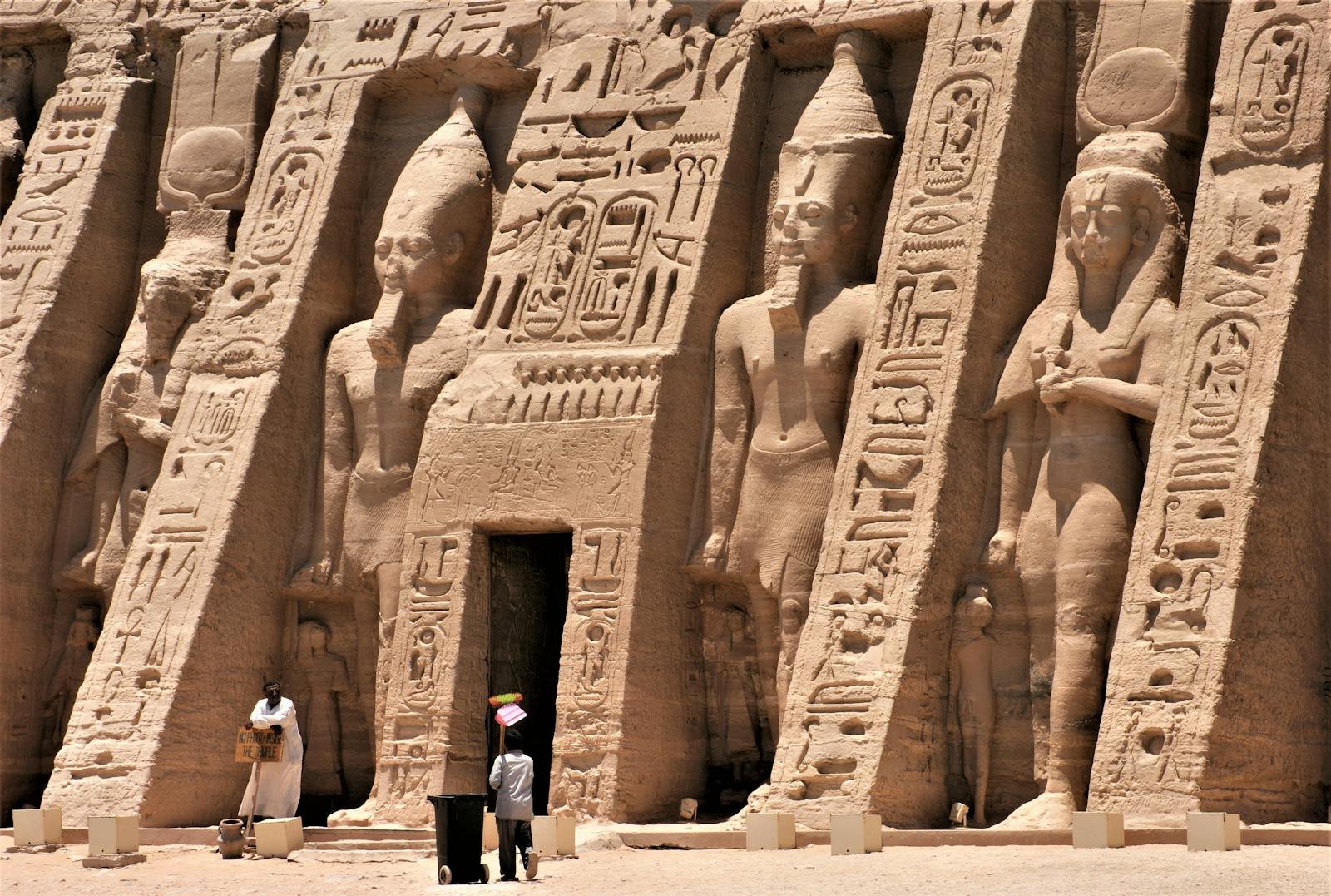
Two temples cut into a sandstone cliff above Lake Nasser, 175 miles, or 280 kilometers, south of Aswan and about 25 miles, or 40 kilometers, from the Sudanese border. The Great Temple carries four seated colossi of Ramesses II, each roughly 65 feet, or 20 meters, high, with a hall of Osiride pillars behind them and a sanctuary that catches the sun twice a year. The smaller temple belongs to Nefertari and the goddess Hathor, and the queen is carved there at the same scale as the king, which is rare in Egyptian temple sculpture.
The detail most people miss until they arrive: the whole complex was cut into more than a thousand blocks in the 1960s and rebuilt about 200 feet, or 60 meters, higher on an artificial hill, because the rising reservoir behind the High Dam would have drowned it. The seam lines are visible if you look, and the hill the temples now sit inside is hollow.
How long it takes?
A short domestic flight between Aswan and Abu Simbel does exist. It is not part of these programs, and no international flight is part of any program we sell. Our Abu Simbel day trip from Aswan travels by road in both directions, from US$120 per person, with the 822 EGP entrance to both temples already inside that price.
The overnight alternative
The day trip suits travelers on a tight Aswan window. The overnight at Abu Simbel suits anyone who dislikes 4 a.m. alarms, anyone traveling with children, and anyone who wants the temples without a crowd around them. Both run with a licensed English-speaking Egyptologist.
Philae Temple on Agilkia Island
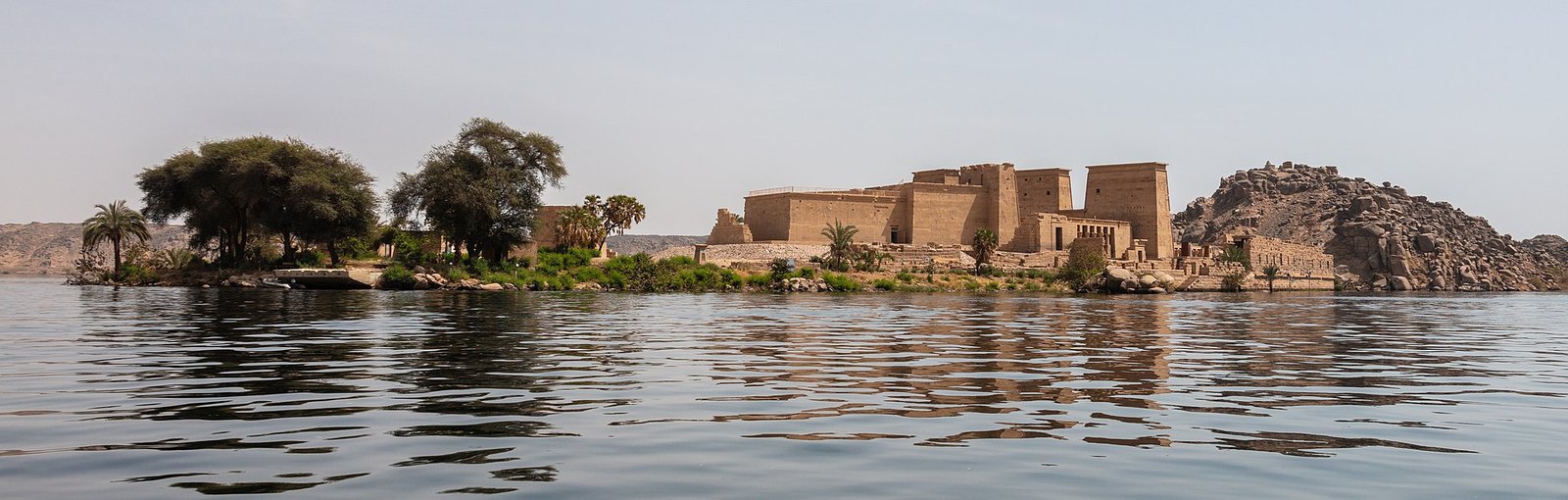
Philae is a temple to Isis, built and extended over roughly 700 years by Ptolemaic kings and then Roman emperors, and it was the last place in Egypt where the old religion was practiced. The final hieroglyphic inscription carved anywhere in the country was cut here in the fourth century. Christian crosses were later cut into the same walls by the monks who took the building over, and both sets of carving sit side by side on the same stone.
Like Abu Simbel, it was moved. The original island flooded after the first Aswan dam was raised, and for decades visitors saw the temple half submerged from rowing boats. It was taken apart and rebuilt on Agilkia Island in the 1970s, and the island itself was reshaped to match the old one.
How long it takes?
The gate fee is 550 EGP, about $11. On our programs the entrance and the motorboat transfer are both included, so there is nothing to negotiate at the landing, which is the one place around Aswan where visitors most often get pushed into paying twice. Philae also runs in the evening as a sound and light show; that is a separate ticket and we add it on request.
The Nubian villages at Gharb Soheil
On the west bank opposite Aswan, the Nubian villages are painted in blues, ochres and pinks that have nothing to do with the rest of Egypt. Nubian is a separate language and a separate culture, and many families here were resettled after the reservoir flooded their ancestral land in the 1960s. That history comes up in every conversation you have.
This is a home visit, not a monument. You are shown into a family house, given hibiscus tea or Nubian coffee spiced with ginger, and you sit and talk with your guide interpreting. Some houses keep a young crocodile, a tradition tied to old beliefs about protection. A small covered market sells handwoven baskets, spices and beads, and prices there are negotiable without any of the pressure you get in Cairo.
How long it takes?
There is no fixed gate fee for the village, and our boat transfer is included when the visit is booked. Bring small bills for tea, for the market and for the boat crew, and always ask before photographing people or the inside of their homes. If Nubian culture is a real interest rather than a stop on a list, pair the village with the Nubian Museum in town and give the two of them an afternoon and a morning.
The High Dam and Lake Nasser
The Aswan High Dam runs about 2.4 miles, or 3.8 kilometers, across and it changed the country. It ended the annual flood that had defined Egyptian agriculture for five thousand years, it powers a large share of the national grid, and it created Lake Nasser, one of the largest reservoirs on earth. It also submerged the Nubian homeland and forced the rescue of Abu Simbel, Philae and Kalabsha, which is why so much of what you see around Aswan has been moved at least once.
How long it takes?
The Unfinished Obelisk
In the northern granite quarries lies the largest obelisk anyone in the ancient world ever attempted. Had it been raised it would have stood about 137 feet, or 42 meters and weighed close to 1,100 tons, heavier than any obelisk that actually exists. It cracked while still attached to the bedrock and was abandoned where it lay.
That failure is why it is worth seeing. Because the work stopped mid-process, you can read how the job was done: the dolerite pounders, the trenches cut around the shaft by hand, the tool marks left by workers who then walked away from three quarters of a year of labor. It is the clearest lesson in ancient engineering anywhere in Egypt, and it takes forty minutes.
How long it takes?
Sailing the Nile: felucca, Elephantine and the islands
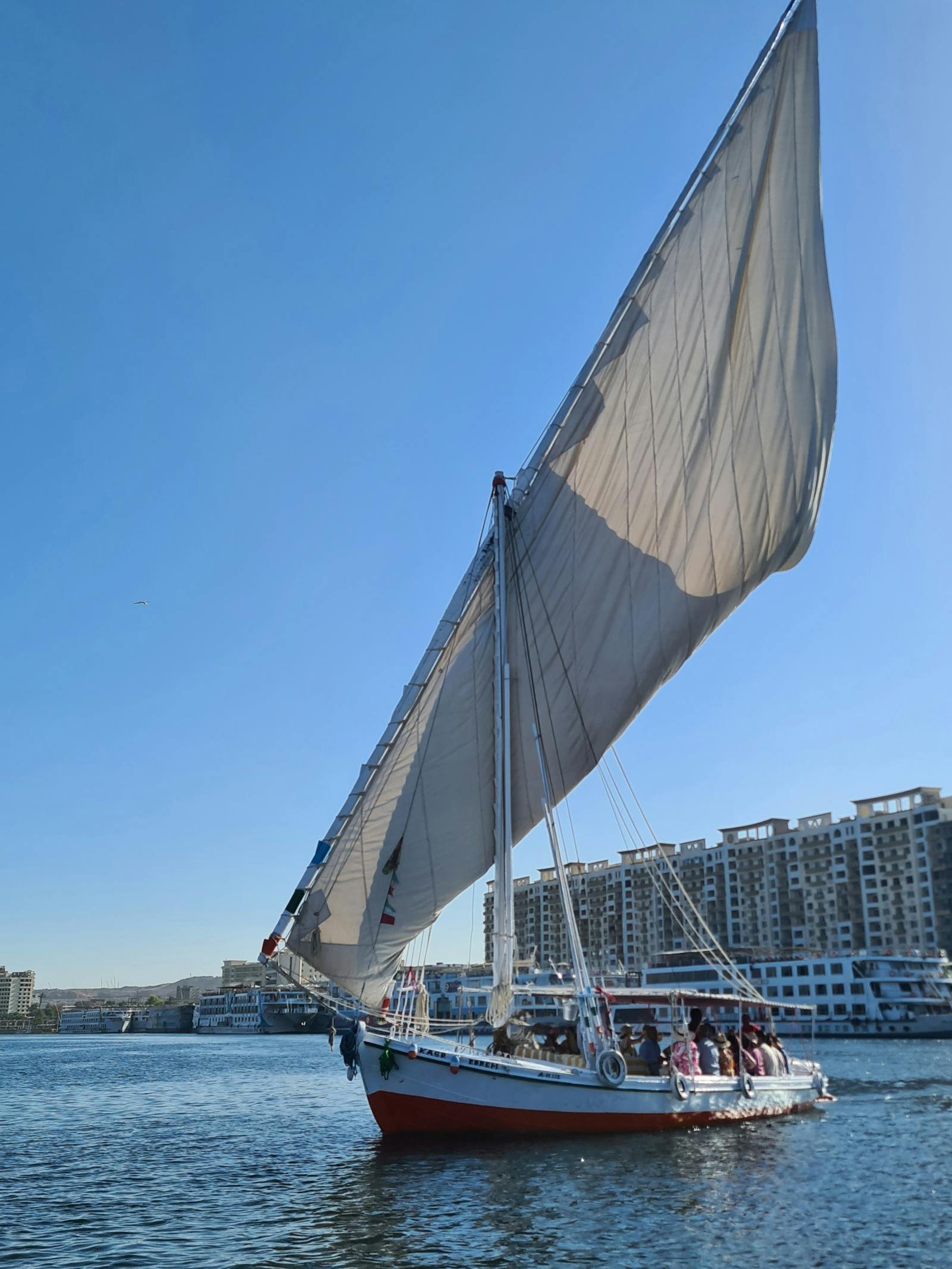
The Nile at Aswan is the prettiest stretch of the whole river, and the traditional way to see it is a felucca, a lateen-rigged wooden sailboat with no engine. An hour on the water at sunset, tacking between the granite boulders below Elephantine Island with the Aga Khan mausoleum on the western skyline, is the memory most travelers take home from Aswan. If there is no wind, the boat drifts, and that is not a failure of the excursion.
Elephantine Island holds the ruins of ancient Abu and a Nilometer cut into the rock, a staircase used to measure the flood and set the year's taxes. Kitchener's Island nearby is a botanical garden planted with species brought from across Africa and Asia. On the west bank you can ride a camel up to the Monastery of St Simeon, a mud-brick complex abandoned in the Middle Ages, or walk up to the Tombs of the Nobles cut into the cliff face, which are worth the climb as much for the view back over the river as for the reliefs.
How long it takes?
A felucca is also the natural way to fill the day you join a cruise, since ships in Aswan typically board in the afternoon. Both the Luxor to Aswan cruise and the Aswan to Luxor sailing spend time at anchor here, and neither includes internal flights, so plan your way in and out of Aswan by road, rail or a domestic sector we quote separately.
Kalabsha Temple and the Nubian Museum
Kalabsha sits on a headland just south of the High Dam, another rescued temple moved from a site now under the lake. It is Roman, begun under Augustus, and it is large, well preserved and almost always empty, which is its appeal. Beit el-Wali, a small rock-cut temple of Ramesses II with battle reliefs that still hold their color, was relocated alongside it, and the two share one visit.
The Nubian Museum in central Aswan is the right place to start if the Nubian story interests you. It covers the region from prehistory through the Kingdom of Kush to the resettlement of the 1960s, and its ground floor holds material recovered from sites that are now under water. Half an hour there before the village visit makes the village visit land differently.
How long they take?
Aswan town itself
The souq on Sharia el-Souq runs parallel to the corniche for about a mile, or 1.6 kilometers and it is a working market, not a tourist arcade: spices in open sacks, hibiscus by the kilo, Sudanese trade goods, and hard bargaining conducted in good humor. An hour there in the early evening costs nothing and is the best free thing to do in Aswan.
The corniche itself is worth walking at dusk, and the terrace cafes above the river are where most travelers finally understand why writers have gone on about Aswan for a century. None of this needs a guide or a ticket. We mention it because the most common mistake we see is a schedule packed so tight that the town gets skipped entirely.
Day trips from Aswan: Kom Ombo, Edfu and Luxor
Two temples sit on the road north between Aswan and Luxor, and both earn the stop. Kom Ombo is a double temple, unusual in Egypt, split down the middle between Sobek the crocodile god and Haroeris the falcon, with two of everything: two entrances, two halls, two sanctuaries. A wall in the outer corridor carries what is often read as a set of surgical instruments, and the museum next door holds mummified crocodiles recovered nearby. The gate fee is 450 EGP, about $9.
Edfu, an hour further north, is the most completely preserved temple in the country. Dedicated to Horus, it was buried in sand for centuries, which is precisely why the roof is still on and the reliefs are still sharp enough to read. The gate fee is 550 EGP, about $11. Both are stops on the overland program through Kom Ombo and Edfu, which runs Aswan to Luxor over 5 days and 4 nights from US$520 per person with the temple entries stated in the itinerary inside the price, and both are standard stops on either cruise direction.
Luxor is about three hours by road each way, which makes it a stretch as a single day from Aswan. If Luxor matters to you, give it its own overnight. Our two days in Luxor covers Karnak, Luxor Temple, three tombs in the Valley of the Kings and the Hatshepsut temple, from US$288 per person, with the 600 EGP Karnak, 500 EGP Luxor Temple, 750 EGP three-tomb Valley of the Kings and 440 EGP Hatshepsut entrances included. That program starts in Luxor and does not include internal flights, so you either travel north by road or rail on your own, or ask us to quote the domestic sector separately.
How many days do you need in Aswan?
The honest answer depends on whether Abu Simbel is in or out, because it consumes a whole day by itself.
| Time in Aswan | What fits | What you give up |
|---|---|---|
| 1 day | Either Abu Simbel, or the Philae, High Dam and Obelisk circuit with a sunset felucca | You cannot do both. Choose. |
| 2 days | Abu Simbel on day one, then Philae, the High Dam, the Obelisk and a felucca on day two | The Nubian village, Kalabsha, the museum, the souq |
| 3 days | All of the above plus a Nubian village afternoon and either Kalabsha or the Nubian Museum | Very little |
| 2 days with an overnight south | Abu Simbel at night and again at dawn, plus Philae and the High Dam on the return | Less time in Aswan city itself |
Two days is the sweet spot for most itineraries. Three days is genuinely relaxed, and it is what we suggest if Nubian culture is part of why you are coming this far south.
What two days actually looks like
| When | Day 1 | Day 2 |
|---|---|---|
| 04:00 to 07:00 | Pickup and the drive south beside Lake Nasser | Sleep |
| 07:00 to 09:00 | Both temples at Abu Simbel, before the buses | Breakfast, 08:30 pickup |
| 09:00 to 12:30 | Drive back to Aswan | Unfinished Obelisk, then the High Dam |
| 12:30 to 16:00 | Rest at the hotel or on board | Philae Temple by motorboat, then back to town |
| 16:00 onward | Felucca hour at sunset | Nubian village, or the souq and the corniche |
That shape is a starting point, not a fixed departure. The vehicle and the guide are yours for the day, so if you want longer at Philae and no obelisk, you say so in the car.
Which program covers Aswan
Aswan appears in several of our programs at different depths. Use this to place it inside a wider trip.
| Program | Length | From, per person | Abu Simbel | Domestic flights |
|---|---|---|---|---|
| Abu Simbel day trip | 1 day | From US$120 | The whole excursion | Not included |
| Abu Simbel, 2 days with hotel | 2 days, 1 night | From US$239 | The whole excursion | Not included |
| Aswan and Luxor overland | 5 days, 4 nights | From US$520 | Added on request | Not included |
| Nile cruise, Aswan to Luxor | 5 days, 4 nights | From US$755 | Added on request | Not included |
| Nile cruise, Luxor to Aswan | 5 days, 4 nights | From US$755 | Added on request | Not included |
| Classic Egypt, 7 days | 7 days, 6 nights | From US$1,348 | Added on request | Included |
| Classic Egypt, 8 days | 8 days, 7 nights | From US$1,451 | Included | Included |
| Cairo, Luxor and Aswan, 10 days | 10 days, 9 nights | From US$1,897 | Added on request | Included |
| Grand Egypt, 12 days | 12 days, 11 nights | From US$2,196 | Added on request | Included |
All figures are per person in double occupancy and move with season, hotel category and party size. Abu Simbel is a scheduled inclusion on the eight-day classic tour, which makes it the shortest program covering Cairo, the cruise corridor and the far south without cutting anything. On the other multi-day itineraries we add the Abu Simbel excursion when you ask for it, and it is written into your confirmation with the 822 EGP entrance stated, so nobody sells it to you again at the hotel desk. The ten-day Cairo, Luxor and Aswan itinerary adds breathing room, and the twelve-day grand tour finishes on the Red Sea at Hurghada.
What is included
- Private air-conditioned vehicle with a professional driver, for your party only. We do not put you in a shared van with other groups.
- Licensed English-speaking Egyptologist guide throughout each excursion.
- Entrance fees as stated for each program. Abu Simbel at 822 EGP and Philae at 550 EGP are prepaid by us wherever those sites appear in an itinerary.
- The motorboat transfer to Agilkia Island for Philae, and the boat transfer to the Nubian village where that visit is booked.
- Road tolls, parking and fuel.
- Bottled water in the vehicle on every excursion.
- Hotel pickup and drop-off in Aswan, including from a moored cruise ship on the corniche.
- Hotel accommodation and breakfast where a program includes an overnight, such as the 2-day Abu Simbel tour.
- Written confirmation of your itinerary before departure, and WhatsApp support from our Egypt office while you are in the country.
What is NOT included
- International flights. We do not sell, book, quote or coordinate them at any stage. Your ticket to and from Egypt is yours to buy, and your Aswan program is built around the times you give us.
- Domestic Egyptian flights on these Aswan excursions. The Abu Simbel day trip, the 2-day Abu Simbel tour, both Nile cruises, the Aswan and Luxor overland tour and the 2-day Luxor tour all exclude internal flights. Domestic sectors are included only on the 7, 8, 10 and 12 day itineraries. We can quote one separately if you want it.
- The Egypt e-Visa. 30 USD for a single entry, 65 USD for multiple entry, arranged by you before you travel.
- Entrance fees not listed as included, such as the High Dam on most arrangements, the Unfinished Obelisk, Kalabsha, the Nubian Museum, the island sites and the evening sound and light show at Philae. Each is an extra cost, paid at the ticket office.
- Meals beyond any breakfast stated in a program.
- Tips for your guide, driver and boat crew. Customary, never obligatory, and never collected by us.
- Travel insurance, which we strongly recommend you hold.
- Photography and video permits where a site charges them, and the separate ticket for any interior not named in your itinerary.
- Personal spending, souvenirs and drinks.
When to visit Aswan
November through March is the comfortable window. Daytime highs sit in the seventies and eighties Fahrenheit, mornings are cool, and walking a site at midday is pleasant rather than punishing. December and January are the busiest months and bring the coldest nights, so pack a layer for the felucca and for the pre-dawn drive.
October and April are shoulder months in name only. Both can run well into the nineties in Aswan, which is still workable if the schedule starts early, and both are noticeably quieter at the gates than the peak weeks.
Aswan in June, July and August is one of the hottest places in Egypt, regularly above 105 degrees Fahrenheit. Prices are lower and the sites are close to empty, but the schedule has to change: everything happens before 11 in the morning or after 4 in the afternoon, with a long break in between. In summer the pre-dawn start for Abu Simbel stops being a hardship and becomes the only sensible option.
Two dates draw crowds. On 22 February and 22 October the rising sun reaches down the length of the Great Temple at Abu Simbel and lights three of the four statues in the sanctuary. The site is extremely busy for it and hotel space in Abu Simbel goes early, so tell us months ahead if you want to be there.
Practical notes for American travelers
Cash. Bring it in small denominations. Card acceptance is thin outside hotels, and every gate fee you pay yourself is easier in Egyptian pounds. ATMs in central Aswan are reliable, and the tickets you buy at the window are cash only in practice.
Clothing. Lightweight long sleeves beat sunscreen at Abu Simbel, where there is no shade on the terrace. Closed shoes matter more than you expect, because the ground at the quarries and around Philae is loose granite chip. For a village visit, covered shoulders and knees are the courteous choice for both men and women.
Photography. Rules vary by site and change without notice, so let your guide check before you raise a camera, particularly at the High Dam and inside any tomb. Some sites charge a separate camera permit and some ban tripods outright.
Pace. Two sites a day in Aswan is a full day, not a light one. Travelers who try to add a third after Abu Simbel almost always cancel it in the car, and there is no penalty for doing that with us because the day is private.
Who you are dealing with. Explora is based in Egypt and runs its own guides and vehicles rather than subcontracting to a third party. The agency currently holds 12 client reviews averaging 5.0, written about the agency and about our guide Shady Said rather than about any single tour.
Frequently asked questions
How far is Abu Simbel from Aswan?
Can I do Abu Simbel and Philae on the same day?
How much are the Aswan entrance fees?
Are flights included in these excursions?
Is there a flight from Aswan to Abu Simbel?
How much does the Egypt visa cost?
What is the best time of year for Aswan excursions?
How long do I need in Aswan?
Are your Aswan tours private?
Can you collect me from my cruise ship?
Is Abu Simbel included in the Nile cruises?
What should I bring on the Abu Simbel day?
Can I combine Aswan with Luxor?
Do I have to pay anything on this website?
What is the Aswan quarry?
Aswan's granite quarries supplied the stone for obelisks, statues and sarcophagi all over ancient Egypt. The best-known spot is the Northern Quarry, home of the Unfinished Obelisk: it cracked while it was being carved and was left in the bedrock, and if finished it would have been the largest obelisk ever made. The rounded scoop marks you see around it were left by workers pounding the granite with balls of harder dolerite stone.
Plan your Aswan excursions
Tell us your dates, how many nights you have in Aswan and whether Abu Simbel is a must, and we will send back a written itinerary with the exact inclusions, the entrance fees we prepay, the ones you pay at the window, and a price per person in double occupancy.
The fastest way to reach us is WhatsApp on +20 103 229 5513, where a real person from our Egypt office answers, usually within the hour during Egyptian daytime. You can also use the enquiry form on this page. If you already know what you want, send us the name of it: the Abu Simbel day trip, the Nile cruise from Aswan to Luxor, the Aswan and Luxor overland route, or a full multi-day itinerary such as the eight-day classic tour with Abu Simbel.
Keep exploring
To finish planning your trip to Egypt
- ▸Catacombs of Kom el Shoqafa, Alexandria: Visitor Guide
- ▸Climbing Mount Sinai at Sunrise: Route, Timing and Packing
- ▸Luxor Day Trip from Hurghada: How It Works, Is It Worth It
- ▸Egypt in November: Peak Season and Getting the Ship You Want
- ▸Citadel of Saladin Cairo: Alabaster Mosque and the View
- ▸Haggling in Egypt: How to Bargain Without Overpaying
- ▸Real vs Fake Papyrus: How to Tell Real Papyrus in Egypt
- ▸See all our Egypt tours