

That single difference is why the numbers on this page look lower than what you may have seen on a site that bundles airfare into the package. A figure that includes a round-trip international ticket is a different product. What we quote is the ground portion: the part that happens after you land in Cairo, and the part that a local operator can actually control.
Programs run from one day to twelve. The short ones are built for travelers who already have a trip underway and need one region covered properly. The seven, eight, ten and twelve day programs are complete circuits with the internal air sectors written into the price. Below you will find a side-by-side comparison, two separate lists for what is and is not included, the 2026 gate fees printed in full so you can check our arithmetic, and answers to the questions travelers ask most often before committing.
All inclusive Egypt trips: what is really covered
Many travelers look for an all inclusive trip to Egypt, and our packages come close: once you land in Cairo, the guide, hotels or cruise ship, private transfers, monument tickets on the itinerary and domestic flights are already arranged and paid. What stays outside is short and we list it before you book: the international flight, the visa, tips and personal spending. Meals follow the program, with full board on the Nile cruise.
Short on lead time? Last-minute Egypt trips explains what can still be booked within days.
If what you want is a resort week with everything served at the hotel, that is a different trip: see our guide to Hurghada all inclusive resorts, which can be combined with a few days in Cairo and Luxor.
Compare every Egypt tour package
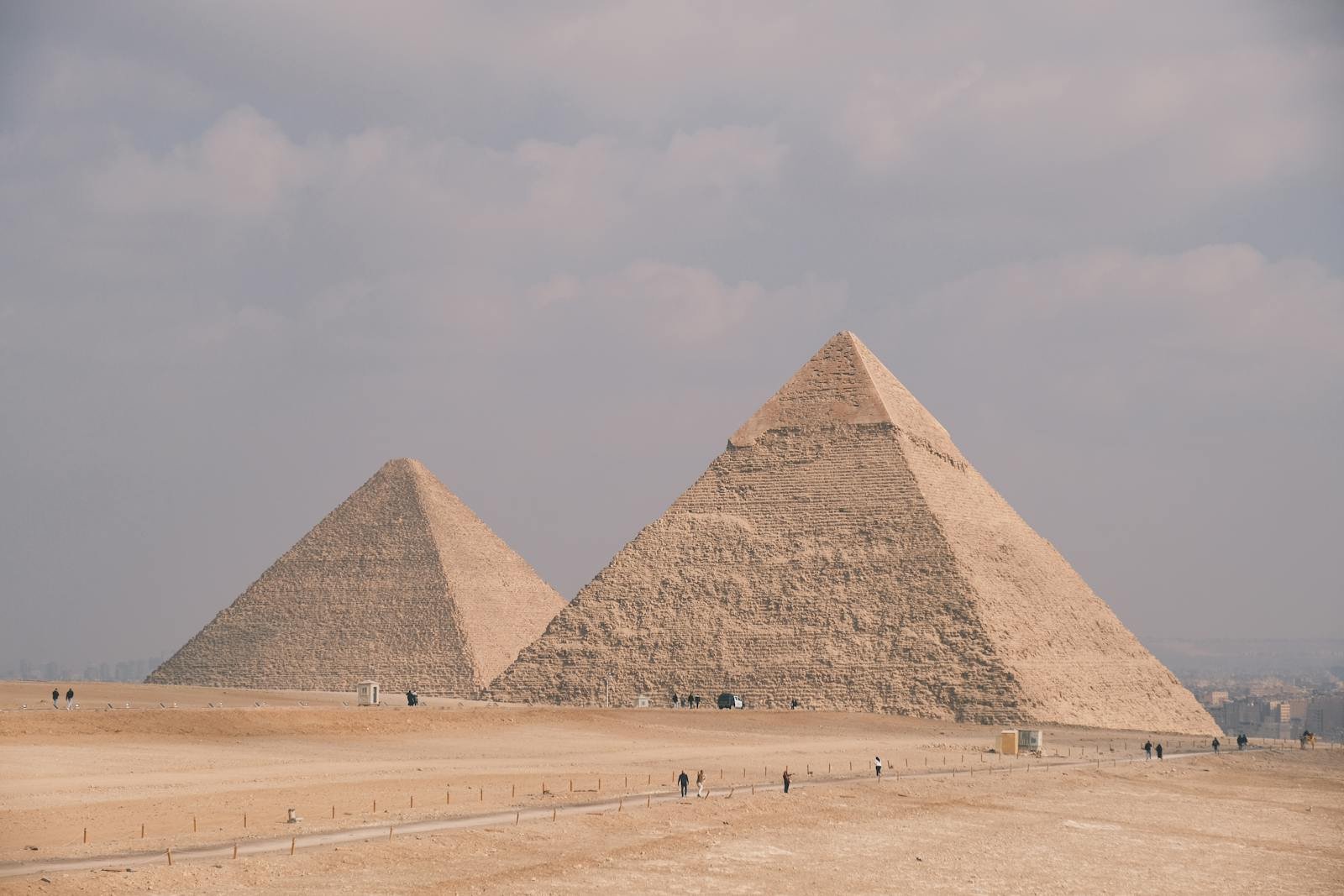
Every price is per person, based on two people sharing a double room. Solo travelers pay a single room supplement, quoted on request. Nothing here is a per-group figure.
| Program | Length | Route | Domestic flights | Price |
|---|---|---|---|---|
| Abu Simbel day trip | 1 day | Aswan to Abu Simbel and back, by road | Not included | From US$120 |
| Abu Simbel with an overnight | 2 days, 1 night | Aswan, Abu Simbel, Philae, High Dam | Not included | From US$239 |
| Luxor in two days | 2 days, 1 night | Karnak, Luxor Temple, West Bank | Not included | From US$288 |
| Aswan and Luxor overland | 5 days, 4 nights | Aswan, Abu Simbel, Kom Ombo, Edfu, Luxor | Not included | From US$520 |
| Nile cruise, Luxor to Aswan | 5 days, 4 nights | Luxor, Edfu, Kom Ombo, Aswan, upstream | Not included | From US$755 |
| Nile cruise, Aswan to Luxor | 5 days, 4 nights | Aswan, Kom Ombo, Edfu, Luxor, downstream | Not included | From US$755 |
| Classic Egypt, one week | 7 days, 6 nights | Cairo, Aswan, cruise to Luxor | Included, 1 sector | From US$1,348 |
| Classic Egypt with Abu Simbel | 8 days, 7 nights | Cairo, Aswan, Abu Simbel, cruise to Luxor | Included, 2 sectors | From US$1,451 |
| Cairo, Luxor and Aswan at length | 10 days, 9 nights | Cairo, Luxor, cruise, Aswan, Abu Simbel | Included, 2 sectors | From US$1,897 |
| Grand tour with the Red Sea | 12 days, 11 nights | Cairo, Aswan, cruise, Luxor, Hurghada | Included, 1 sector | From US$2,196 |
Higher categories exist on most programs, and the jump is real rather than cosmetic: a better address in Cairo, a larger cabin, a boat with a quieter deck. The eight-day route in the upgraded category is quoted from US$2,495 per person on the same double-occupancy basis, and the twelve-day circuit from around US$3,478. The starting figure in the table is a bookable rate in the standard category, not a teaser that disappears once you ask for a quote.
Choosing by trip length
One to five days: one region, done properly
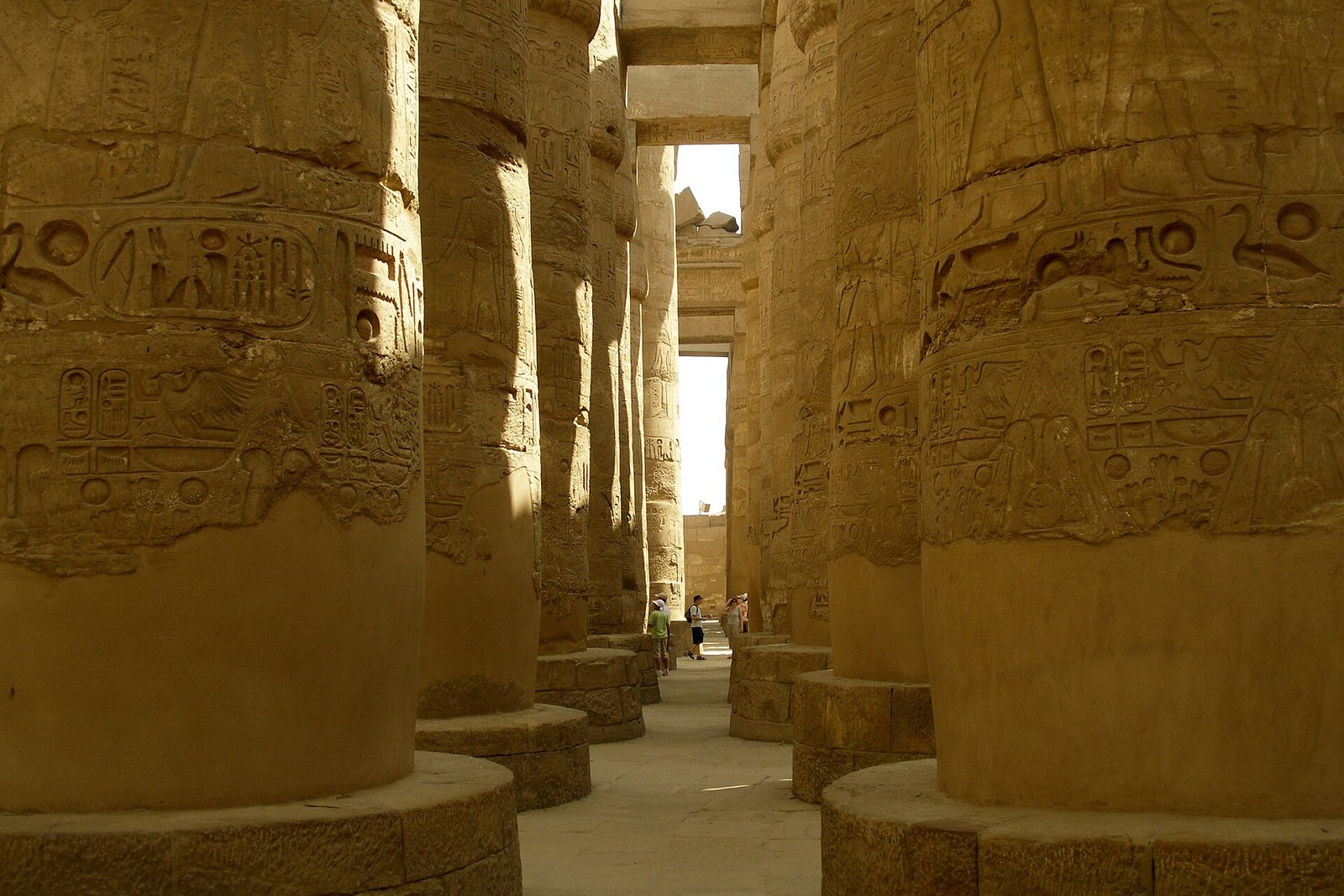
If Upper Egypt is the priority, two days in Luxor covers Karnak, Luxor Temple, three tombs in the Valley of the Kings, the temple of Hatshepsut at Deir el-Bahari and the Colossi of Memnon, with the same guide across both days, which matters more than most people expect. Continuity means the second morning starts where the first afternoon left off rather than repeating the introduction to the Eighteenth Dynasty. Lunch is included on each day and the night is spent in a three or four-star Luxor hotel.
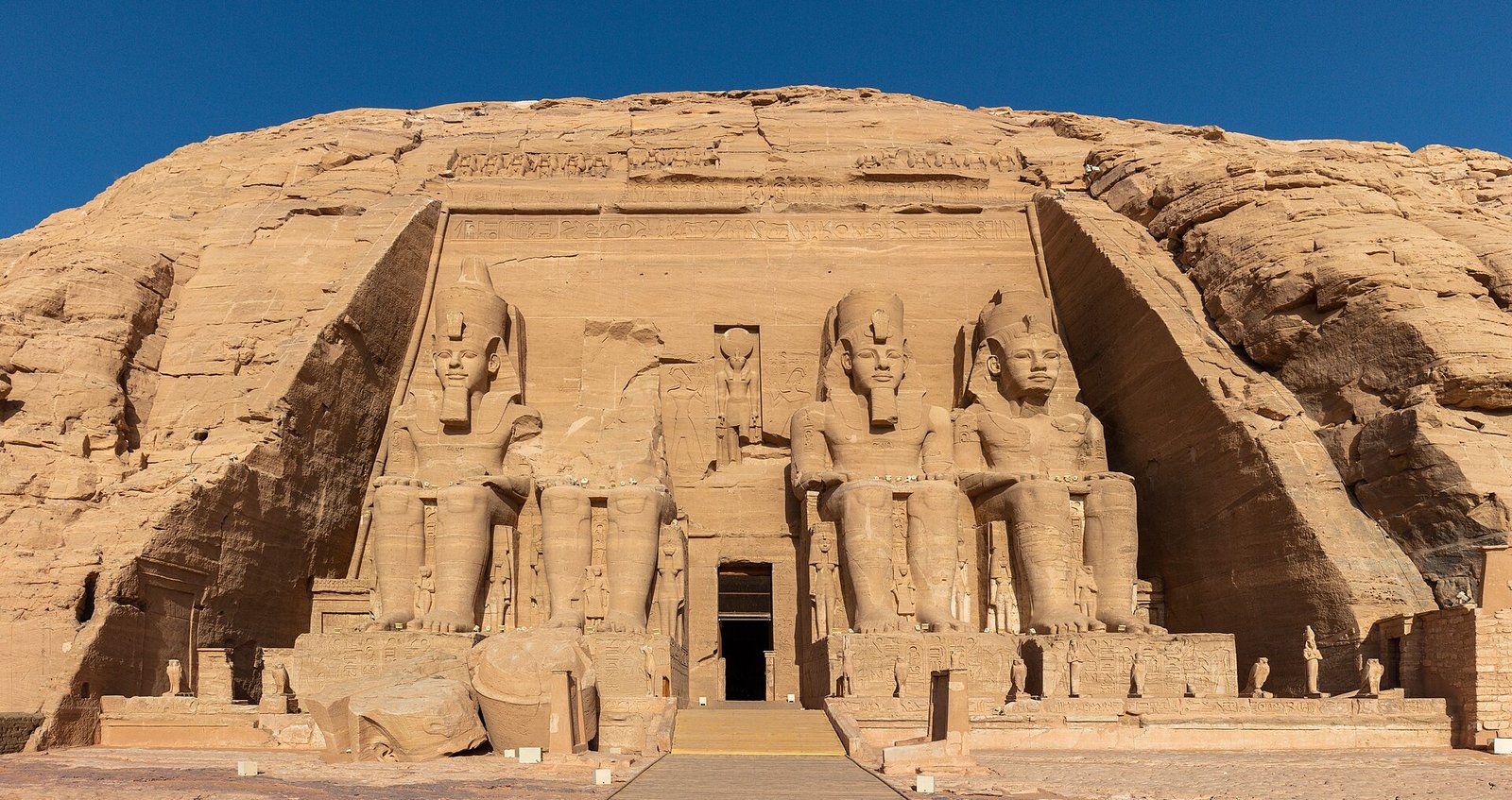
Further south, the Abu Simbel day trip is a road program leaving Aswan before sunrise, about three hours each way across the Nubian desert, covering the Great Temple of Ramesses II and the smaller temple of Nefertari and Hathor before turning back. If the pre-dawn start does not appeal, the overnight version departs in the afternoon, takes in the sound and light show at the temples, and returns the following day after a calmer morning, adding Philae and the High Dam on the way.
For five days without a boat, the Aswan and Luxor overland tour runs the same corridor by road with two nights in each city, taking in Philae and Abu Simbel at the Aswan end and stopping at Kom Ombo and Edfu on the drive north. It is the option for travelers who like a hotel room that stays put and dinner chosen from a menu rather than a buffet, and the only Upper Egypt program here that is not tied to a sailing schedule, so departure dates bend to your own arrival.
Five days on the river A Nile cruise is a different rhythm. You unpack once, the scenery moves, and the temples arrive at the pace of the current. Both directions cover the same monuments, run four nights aboard and cost the same. Sailing from Luxor to Aswan means starting with the biggest sites while your energy is highest and finishing on the quieter Nubian stretch. Sailing from Aswan to Luxor builds the other way, ending with Karnak, which is the more dramatic finish. Both itineraries also take in Philae and Abu Simbel around the Aswan end, and the day-by-day breakdown on each product page shows exactly where those fall. Full board runs from the first lunch aboard to the last breakfast, so the only money you need on the boat is for drinks and tips. Choose by logistics rather than romance. Whichever end matches your onward travel is usually the right one, and neither cruise includes the domestic air sector that gets you to the starting port. We can add that sector to your quote as a separate line if you would rather not book it yourself. Seven and eight days: the complete first visit
The eight-day route adds the one thing the seven-day version leaves out: Abu Simbel, reached overland from Aswan. It also carries a second internal sector, Luxor back to Cairo, which removes an overnight train or a long drive at the end of the trip, and it gives Cairo a fourth night, which is the difference between seeing the Giza plateau and being rushed past it. For a hundred dollars more per person, most travelers who care about Ramesses II should take it.
Ten and twelve days: room to breathe
The ten-day program is the antidote to a rushed schedule. Four nights in Cairo, four nights cruising rather than the usual three, and a night in an Aswan hotel so that Abu Simbel gets a proper day rather than being wedged into a travel morning. Two internal flights are included, Cairo to Luxor on day four and Aswan back to Cairo on day nine. The extra night afloat is what buys the unhurried Valley of the Kings morning that the shorter circuits cannot offer.
The twelve-day grand tour keeps the full antiquities circuit and adds three nights on the Red Sea at Hurghada. This is the one to pick if you want the trip to end with the water rather than with another 6 a.m. departure. The Red Sea days are unstructured on purpose: snorkeling boats, diving, desert quad trips and spa time are arranged locally and paid there, because pre-buying them commits you to weather you cannot see yet and to prices that move with the season.
What is included
Every multi-day program includes the items below. The one-day Abu Simbel trip is the exception: it carries the guide, the private vehicle, the temple tickets and the water, but no hotel and no meals. Where anything else varies by program, the variation is named.
- A licensed Egyptologist guide, in English. University-trained and licensed by the Ministry of Tourism and Antiquities, private to your party, with you at each site rather than waiting at the gate.
- Private ground transport. An air-conditioned vehicle with a professional driver for every transfer and every touring day. Your party travels alone. No shared coach, no pickup rotation collecting other groups.
- Meet and assist on arrival. Where a program starts with your arrival in Egypt or moves you through a domestic airport, a representative meets you there. On the short Upper Egypt programs the pickup is from your hotel, your moored boat, or the train station.
- Hotels with breakfast on the overnight programs. Four-star and five-star properties on the multi-day circuits, three or four-star in Luxor on the two-day program. Breakfast is included every morning you wake up in a hotel.
- Nile cruise accommodation, full board. The standard category is a four-star vessel, with the same private cabin and bathroom throughout and breakfast, lunch and dinner served aboard on every full day.
- Monument entrance fees for the sites on your itinerary. Prepaid, not collected from you at each gate. The full 2026 tariff is printed below so you can verify what that covers.
- Domestic flights on the seven, eight, ten and twelve day programs. Ticketed by us in your name, with timings confirmed in writing before you travel. They are not included on either Nile cruise, the two-day Luxor program, the overland Aswan and Luxor route, or either Abu Simbel product. On those we can add a sector to your quote as a separate line.
- Bottled water in the vehicle on every touring day.
- Local taxes and service charges on everything we book.
- Support on WhatsApp, around the clock, from our office in Egypt while you are in the country. Not a call center in another time zone.
What is NOT included
Read this list as carefully as the one above. Most complaints about Egypt trips come from items travelers assumed were covered.
- International flights. We do not sell, book, quote, coordinate or hold the ticket from the United States to Egypt or home again. It is not in any price on this site. You buy it yourself, direct with the airline or through your own agent, and you keep full control of it.
- Egyptian entry visa. US$30 for a single entry, US$65 for multiple entry. Obtained by you, either online in advance or on arrival.
- Travel insurance. Not included and not sold by us. Arrange your own before you fly, with medical and evacuation cover.
- The interior of the Great Pyramid. A separate ticket, 1,000 EGP, roughly US$20. It is an optional add-on, never bundled, because a meaningful number of visitors decide against the climb once they see the passage.
- Meals beyond those named in your program. Full board applies on the cruise portions, breakfast comes with every hotel night, and the two-day Luxor program includes a lunch on each day. Dinners on land are yours to choose, which on a Cairo evening is a feature rather than a cost.
- Drinks. Soft drinks, alcohol and bar service aboard the boat and at hotels are billed to you.
- Restricted tombs and photography permits. Tickets for tombs such as Tutankhamun and Seti I, and camera permits at certain sites, are an extra cost paid at the ticket office unless your program names them as included. Where a program does include one, it is written into the itinerary you approve before you pay.
- Optional excursions. The sunrise balloon over the West Bank, felucca sailing, sound and light performances where not already named, diving and reef trips at Hurghada, and the Egyptian Museum at Tahrir where it is not on your itinerary. Extra cost, arranged on request.
- Gratuities. Customary in Egypt and entirely at your discretion. Travelers commonly budget US$5 to US$7 per day in total for guide, driver and boat crew. Nothing is added to your invoice.
- Single room supplement, where you are not sharing.
- Personal spending, laundry, minibar, souvenirs.
The 2026 monument fees, printed in full
Gate prices in Egypt are set by the Ministry of Tourism and Antiquities and published on the official ticketing platform. These are the current figures, converted at 1 USD to 49.79 EGP. They are included in your program where the site appears on your itinerary. We print them because it lets you see what share of the price is fixed public tariff rather than operator margin.
| Site | 2026 fee (EGP) | Approx. USD |
|---|---|---|
| Giza plateau | 700 | 14 |
| Saqqara | 600 | 12 |
| Egyptian Museum, Tahrir | 550 | 11 |
| Valley of the Kings, 3 tombs | 750 | 15 |
| Hatshepsut temple | 440 | 9 |
| Karnak | 600 | 12 |
| Luxor Temple | 500 | 10 |
| Edfu | 550 | 11 |
| Kom Ombo | 450 | 9 |
| Philae | 550 | 11 |
| Abu Simbel | 822 | 17 |
| Great Pyramid interior (optional add-on, not included) | 1,500 | 30 |
Here is the arithmetic on a real program, so you can see how it works. The two-day Luxor tour visits Karnak at 600 EGP, Luxor Temple at 500, three tombs in the Valley of the Kings at 750 and Hatshepsut at 440. Add those four lines up at 49.79 EGP to the dollar and the gate fees come to about US$46 per person, prepaid on your behalf before you arrive at the first turnstile, with the Colossi of Memnon a roadside stop on the way between them. Run the same exercise against any itinerary we send you and the numbers will match this table.
Any site not on this list carries an extra cost, paid at the ticket office. We will not print a figure we cannot verify against the official tariff, because gate prices in Egypt are revised more than once a year and a stale number on a website is worse than no number at all. If a site you want is missing from the table, ask us and we will check the platform for your travel dates rather than quoting from memory.
Domestic flights, and why the international ticket is never in the price
The distinction trips up a lot of US travelers, so it is worth being blunt about it.
Domestic sectors are the internal hops between Cairo and Upper Egypt. They run about an hour and replace a night on a train or nine hours in a vehicle. We buy these tickets in your name, and this is exactly which ones sit inside which price:
- Seven-day classic: one sector, Cairo to Aswan.
- Eight-day classic with Abu Simbel: two sectors, Cairo to Aswan and Luxor to Cairo.
- Ten-day Cairo, Luxor and Aswan: two sectors, Cairo to Luxor on day four and Aswan to Cairo on day nine.
- Twelve-day grand tour: one sector, Cairo to Aswan. Any further sector can be added to your quote as a separate line, or driven instead, which we agree with you before you confirm.
- Every other program on this page: no flight of any kind is included. That covers both Nile cruises, the two-day Luxor tour, the Aswan and Luxor overland route, the Abu Simbel day trip and the two-day Abu Simbel program.
International flights are a different matter. We are an Egyptian ground operator. We do not sell them, do not include them, do not quote them and do not act as an intermediary for them under any circumstances. If a competitor's Egypt package appears to bundle your flight from the United States, you are looking at an agency reselling airfare on top of ground arrangements, which is a different business from ours. Buying the long-haul ticket yourself also means that if you need to change dates, you deal directly with the airline instead of waiting on a middleman in another time zone.
One practical consequence: build a buffer. Do not schedule your program to start the same morning your transatlantic flight lands. A delay out of a US hub can cost you the first internal sector, and that is a real cost we cannot absorb. A spare night in Cairo at the front of the trip is the cheapest insurance on the whole itinerary, and it also gives you a day to sleep off the time difference before the first 7 a.m. start.
What moves the price
Four things account for almost every difference between the figure in the table and the figure in your quote.
Season. Late December and the Easter period are the peaks, and the gap is not trivial. The two-day Abu Simbel program is quoted from US$239 per person in the standard season and from around US$375 on those peak dates. The same shape applies across the range, which is why an itinerary priced in October and booked for late December will be requoted rather than carried over.
Category. The seven-day classic runs from US$1,348 in the standard category and from around US$2,337 with an upgraded Cairo hotel or a higher-category boat. The ten-day program runs from US$1,897 and from around US$2,984 in five-star. What that money buys is the room and the food, not a different set of temples.
Party size and room occupancy. Every figure here assumes two people sharing. A solo traveler pays a single room supplement, and the guide and the vehicle serve your party whatever its size, so the per-person arithmetic shifts with the real number of travelers. Send the actual count and the quote reflects it.
Add-ons you choose. The balloon over the West Bank, the Great Pyramid interior, restricted tombs, an extra night, a domestic sector on a program that does not carry one. Each is priced as a separate line rather than folded into a headline number.
Hotels, boats and what the categories mean
Hotels on the multi-day circuits are four-star and five-star properties, chosen for location and for a reliable breakfast rather than for a lobby photograph. In Cairo that generally means Giza or a central district within reach of the plateau without a punishing morning commute.
Nile boats carry official star ratings, and the honest summary is that the rating describes the cabin and the food more than the itinerary. Every boat on a given route stops at the same temples at roughly the same hours, because mooring slots are allocated. Paying up buys you a larger cabin, a better buffet and a quieter deck. It does not buy you a different Egypt. Travelers on a fixed budget usually do better putting the difference into a longer program than into a higher boat category, and the ten-day circuit with its fourth night afloat is the clearest example of that trade working in your favor. If you do want the top of the range, from a dahabiya to the historic palace hotels, see our luxury Egypt tour.
How the private format works
Every program on this page is private by default. Your party gets its own guide and its own vehicle. There is no minimum number of travelers and no stranger in the next seat. Departure times bend to you: if the group wants an extra hour at Karnak and a later start the next morning, the guide reorganizes on the spot rather than checking with a coach schedule.
Guides are licensed Egyptologists working in English. On a cruise the shore excursions are guided by your own Egyptologist, who stays with you across the whole itinerary, rather than by a boat-supplied group leader shepherding forty people through Edfu. That continuity is the single biggest practical difference between a private program and a seat on a group departure, and it is the thing travelers mention most often afterward.
On the agency itself: Explora carries 12 reviews at a 5.0 average. Those reviews are about the agency and about our guide Shady Said, not about any single program on this page, and we will not attach a rating to an individual tour that has not earned one.
When to go
October through April is the comfortable window, and the stretch from late November to February is the most reliable for daytime touring in Luxor and Aswan, where a summer afternoon on the West Bank is genuinely punishing. Expect cool mornings on the boat in December and January and pack a layer that most first-time visitors leave at home.
March, April and October are the shoulder months: warm rather than hot, with thinner crowds at the Valley of the Kings than the Christmas and New Year peak. May through September is low season, and the pricing reflects it, but a July midday at Abu Simbel is a decision you should make with open eyes. If summer is the only window you have, the cruise programs handle it better than the overland ones, because you are on the water between sites instead of in traffic.
Book 60 to 90 days out for travel in the October to April window. Nile boats and the better Cairo hotels fill first, and the internal air sectors on the popular routes are the item most likely to be gone by the time everything else is confirmed.
Practical notes for US travelers
A few things that come up in almost every conversation with an American traveler, none of which are in the price. The full picture of planning from home is on Egypt tours from the USA.
- Passport validity. Egypt expects your passport to be valid for at least six months beyond your arrival date, with blank pages for the entry stamp. Check that before you buy anything else.
- The visa. US$30 for a single entry, US$65 for multiple entry, applied for online in advance or bought on arrival at the airport. It is never in a program price.
- Power. Egypt runs on 220 volts with the round two-pin European socket, so bring an adapter, and check that your chargers handle the voltage.
- Cash. Cards work in hotels and larger restaurants. Small Egyptian pound notes are what you want for tips, and getting them broken early in the trip makes the rest of it easier.
- What to wear. Covered shoulders and knees for mosques and churches, closed shoes for the Valley of the Kings, and a hat that stays on in the wind at Giza.
- The time difference. Egypt sits about seven hours ahead of New York. Messages sent during your evening are usually answered by your morning, which is why WhatsApp works better than a phone call for planning.
How booking works
- Message us on WhatsApp with your dates, party size and the program you are considering. You will be talking to our office in Egypt.
- We check live availability on the specific boat, hotels and internal sectors for your dates and come back with a written quote, itemized, in USD.
- You get the full itinerary in writing before anything is paid: sites by day, hotel names, boat name, domestic flight timings, and the two lists above applied to your specific program.
- A deposit confirms the booking and lets us ticket the internal sectors and hold the rooms. The payment options are set out in the quote.
- The balance is settled on arrival in Egypt.
- Your guide's number reaches you before you fly, along with the office line for anything that comes up while you are in the country.
Frequently asked questions
Do any of these prices include my flight from the United States?
What does the Egyptian visa cost?
Is this an all-inclusive trip in the sense Americans usually mean?
Which program suits a first visit to Egypt?
Are the tours private or will I be with a group?
Are monument entrance fees really included?
How much should I budget for tips?
I am traveling solo. Can I still book?
Can you arrange a domestic flight on a program that does not include one?
Can I add Abu Simbel to a program that does not include it?
Luxor to Aswan or Aswan to Luxor? Does the direction change the price?
What if I would rather not sail at all?
Can I combine the antiquities with beach time?
How far ahead should I book?
What happens if my international flight is delayed?
What do your Egypt travel packages include?
Every Egypt travel package includes a licensed Egyptologist guide, private transfers, hotels or the cruise ship with the meals stated, the monument tickets on the itinerary and the domestic flights where the program lists them. International flights, the visa, tips and personal spending stay outside the price, and we list them before you book.
Is an Egypt tour package all inclusive?
Almost. Our Egypt tour packages include the Egyptologist guide, hotels or the cruise ship with the meals stated, private transfers, the monument tickets on the itinerary and the domestic flights. The international flight, the visa, tips and personal spending are not included, and we list them before you book so there are no surprises.
Get a quote for your dates
Send us your travel dates, how many people are coming and which program caught your eye. You will get a written, itemized quote in USD with hotel and boat names, the domestic flight timings where they apply, and both lists above applied to your itinerary. Nothing is held back until after you have paid.
The fastest route is WhatsApp, answered from our office in Egypt: +20 103 229 5513. Whatever time zone you are in, write whenever suits you and the reply will be waiting the next time you look. You can also use the inquiry form on this page if you would rather have everything in email.
Not sure which length is right? Say what you want to see and how many nights you can spare, and we will tell you honestly which program fits, including when the answer is that a shorter one would serve you better.
Keep exploring
To finish planning your trip to Egypt
- ▸Wadi El Hitan, Whale Valley: Day Trip Guide from Cairo
- ▸Nile cruise vs land tour: which one is better between Luxor and Aswan
- ▸Is Egypt Expensive? The Honest Answer
- ▸What to Wear in Egypt
- ▸Great Sphinx of Giza: History, Missing Nose and How to Visit
- ▸Egypt in September: Weather, Crowds and Nile Cruises
- ▸Real vs Fake Papyrus: How to Tell Real Papyrus in Egypt
- ▸See all our Egypt tours