Nile cruise excursions are the whole point of the cruise, so here is what is included, what is optional and how each day runs
Nile cruise excursions are the whole point of the cruise, so here is what is included, what is optional and how each day runs
Every standard Nile cruise between Luxor and Aswan runs the same core excursions in either direction: Karnak and Luxor Temple on the east bank, the Valley of the Kings, Hatshepsut's temple and the Colossi of Memnon on the west bank, Edfu and Kom Ombo on the river, and in Aswan the High Dam, the Unfinished Obelisk and Philae. Esna is usually a lock, not a stop. Everything else is optional: Abu Simbel, the sunrise balloon, a Nubian village, Dendera and Abydos, the sound and light shows. This guide explains what each excursion involves, how the days run hour by hour, why a private Egyptologist beats the ship's group, and how to avoid paying for optionals sold on board.
What the standard Nile cruise excursion program includes
The classic cruise covers the 130 miles of river between Luxor and Aswan, and the excursion list is nearly identical on every ship because they all tie up at the same quays. What changes is the group size, the guide and the shopping stops.
Southbound from Luxor the program is normally 4 nights; northbound from Aswan it is 3, because Luxor is visited on the last day only. The sites are the same, just reversed. If you are deciding which way to go, read Luxor to Aswan or Aswan to Luxor.
- Luxor east bank: Karnak and Luxor Temple, guided, with transfers from the ship.
- Luxor west bank: Valley of the Kings on the standard three-tomb ticket, the temple of Hatshepsut, a photo stop at the Colossi of Memnon.
- Esna: the lock, which every ship passes; the temple of Khnum is a stop on some itineraries only.
- Edfu: the temple of Horus, reached from the quay by horse carriage or minibus.
- Kom Ombo: the double temple of Sobek and Haroeris, a short walk from the ship.
- Aswan: the High Dam, the Unfinished Obelisk and Philae by motorboat.
Everything in that list should appear by name in your booking document; the word "sightseeing" on its own is not a list. Our itineraries name every site and ticket, as you can see on the main Nile cruise page.
Luxor, east bank and west bank, the two densest days
Luxor has more to see than the rest of the cruise combined, which is why it takes a day and a half southbound and one compressed day northbound.
The east bank: Karnak and Luxor Temple
Karnak is the largest religious complex ever built, and the excursion concentrates on the temple of Amun: the ram-headed sphinxes, the Great Hypostyle Hall with its 134 columns, the obelisks and the sacred lake. Our page on Karnak Temple walks the site in the order your guide takes it.
Luxor Temple, in the middle of town, is better after dark, when the floodlights come on and the crowds have gone.
The west bank: the city of the dead
The west bank starts at the Colossi of Memnon, then the Valley of the Kings. The standard ticket covers three tombs from the list open that day; Tutankhamun, Seti I and Ramesses VI need a separate ticket each, and a good guide tells you which of the open tombs deserve your three choices before you walk in.
From the valley the road climbs over the ridge to Hatshepsut's temple, three terraces built into the cliff at Deir el Bahari. The group is back on board by lunch, because by early afternoon the valley is an oven. In July and August it passes 104 F (40 C), and there is very little shade.
Esna, Edfu and Kom Ombo, the temples you reach by river
The middle of the cruise is where the format earns its keep: two of the best preserved temples in Egypt sit minutes from the water, and the ship takes you to them while you sleep.
Esna: a lock first, a temple sometimes
Every ship passes the Esna lock, sometimes after a wait in the queue, which is when the rowing boats come alongside selling galabeyas. The temple of Khnum is 200 yards from the quay, sunk below street level, with a recently cleaned painted ceiling. It is not on every itinerary; if it matters to you, ask before booking. Details are on our Esna Temple page.
Edfu: the best preserved temple in Egypt
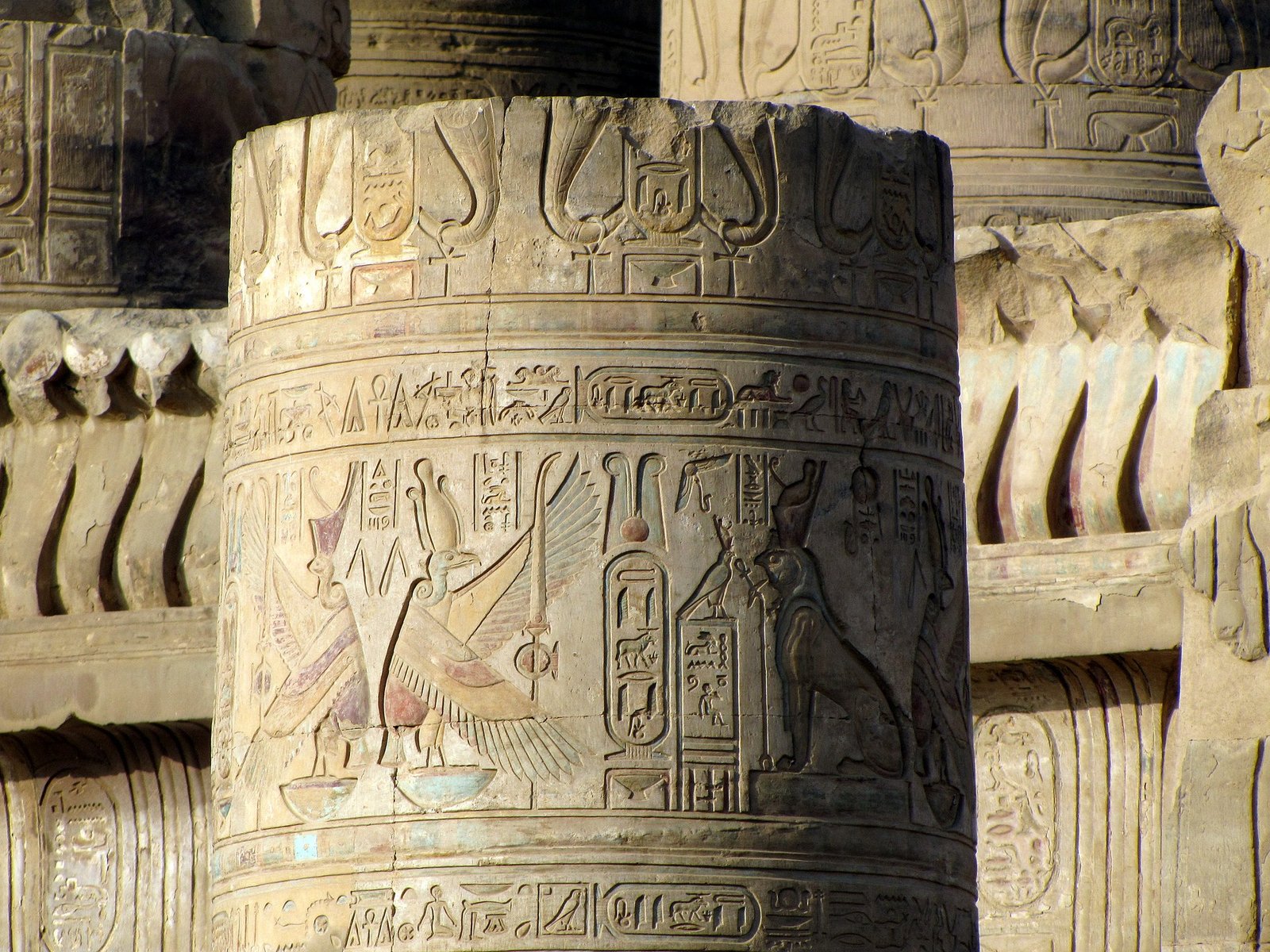
Edfu is the temple of Horus, built by the Ptolemies and buried in sand for centuries, which is why the roof, the great pylon and the sanctuary are all still standing. The traditional way up from the quay is by horse carriage; you can ask for a minibus instead. Our guide to Edfu Temple covers the reliefs of Horus fighting Seth that your guide reads to you from the walls.
Kom Ombo: the double temple at sunset
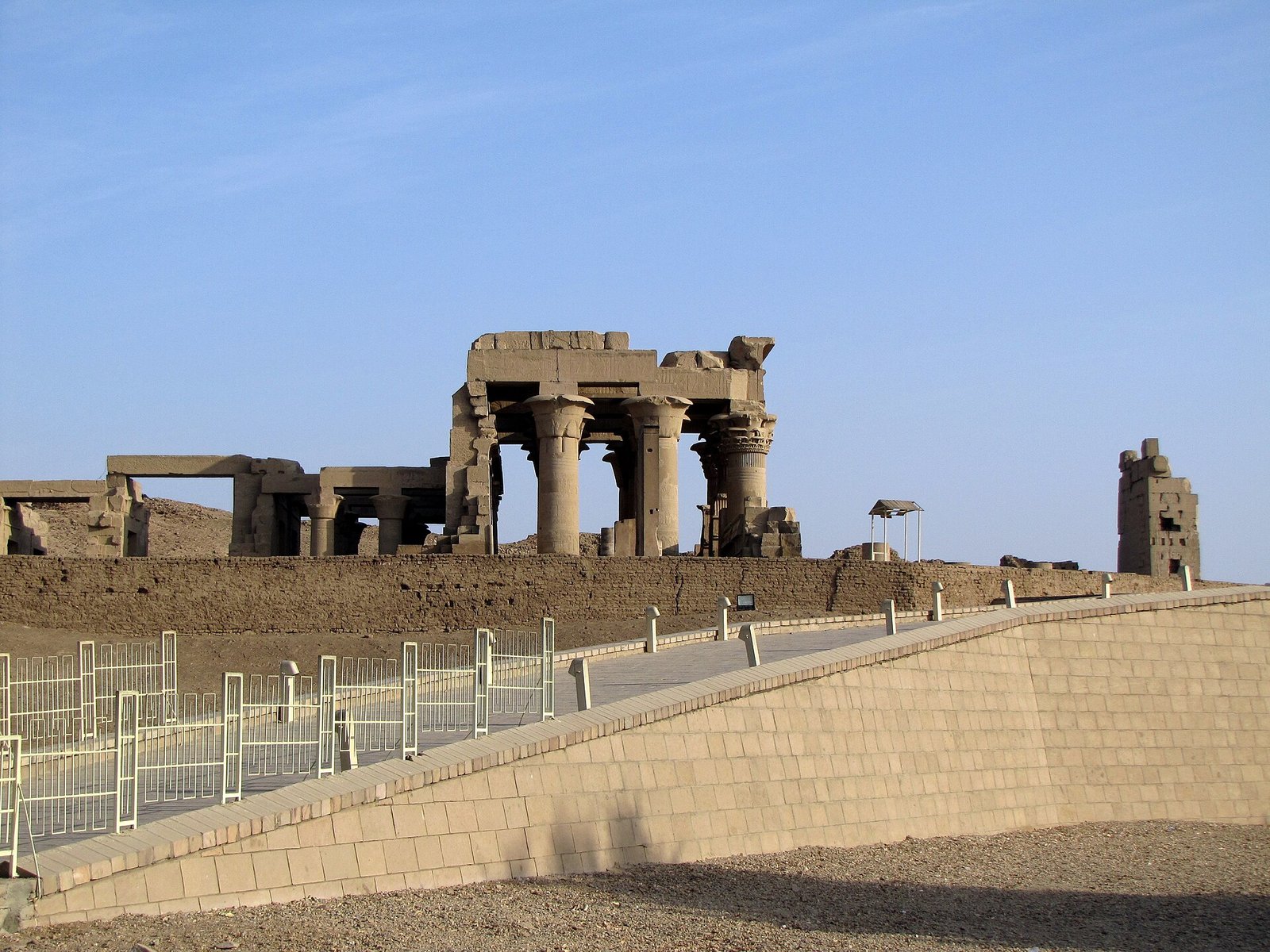
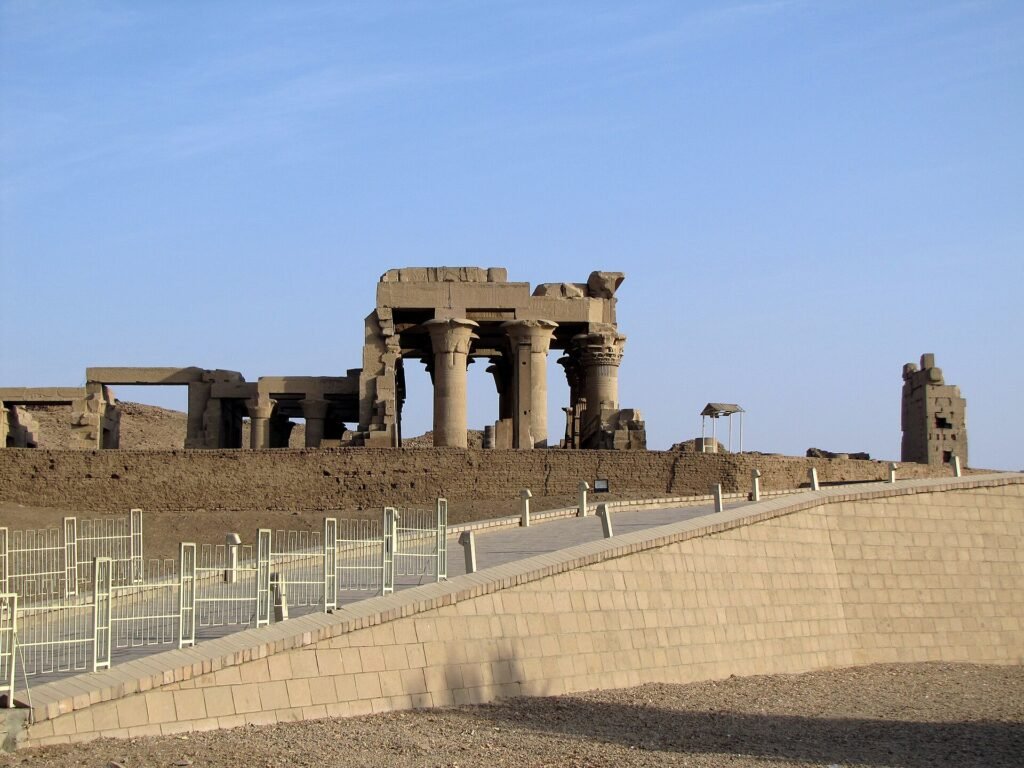
Kom Ombo is dedicated to two gods along two parallel axes, the crocodile Sobek and the falcon Haroeris, and it stands on a bend of the river so the ship docks below its walls. Most cruises reach it late in the afternoon and the light on the sandstone is the best of the trip. Read more on the Kom Ombo Temple page.
Aswan: Philae, the High Dam and the Unfinished Obelisk
The Aswan excursion is a half day of three stops in a fixed order: the High Dam first because it is farthest south, the Unfinished Obelisk on the way back, then Philae by motorboat.
The High Dam is a fifteen-minute stop: Lake Nasser on one side, the river below on the other. The Unfinished Obelisk is more interesting than it sounds, still attached to the bedrock of the quarry and cracked before it could be freed; seeing it explains how every obelisk at Karnak was cut.
Philae is the excursion people remember. The temple of Isis was dismantled and rebuilt on Agilkia island after the dams flooded its original site, and the only way in is a motorboat from the Shellal jetty. Allow an hour and a half on the island. The Philae Temple page explains the pylons, the kiosk of Trajan and the Coptic crosses cut into the courts.
The optional excursions, and which ones are worth adding
The optional list is where a cruise becomes your trip. None of these is included in a standard fare, and all are sold on board at a markup if you have not arranged them beforehand.
| Optional | Where and when | What it involves | Our view |
|---|---|---|---|
| Abu Simbel | From Aswan, last morning or an added day | About 3 hours by road each way leaving before dawn, or a short domestic flight. Two temples of Ramesses II on Lake Nasser. | The one optional we would never skip. Book it privately, not from the ship's desk. |
| Sunrise balloon | Luxor west bank, before the west bank excursion | Pickup around 4 am, 45 minutes over the Valley of the Kings, back for a late breakfast. | Spectacular but weather-dependent, so it needs a backup morning, which only a Luxor overnight gives you. |
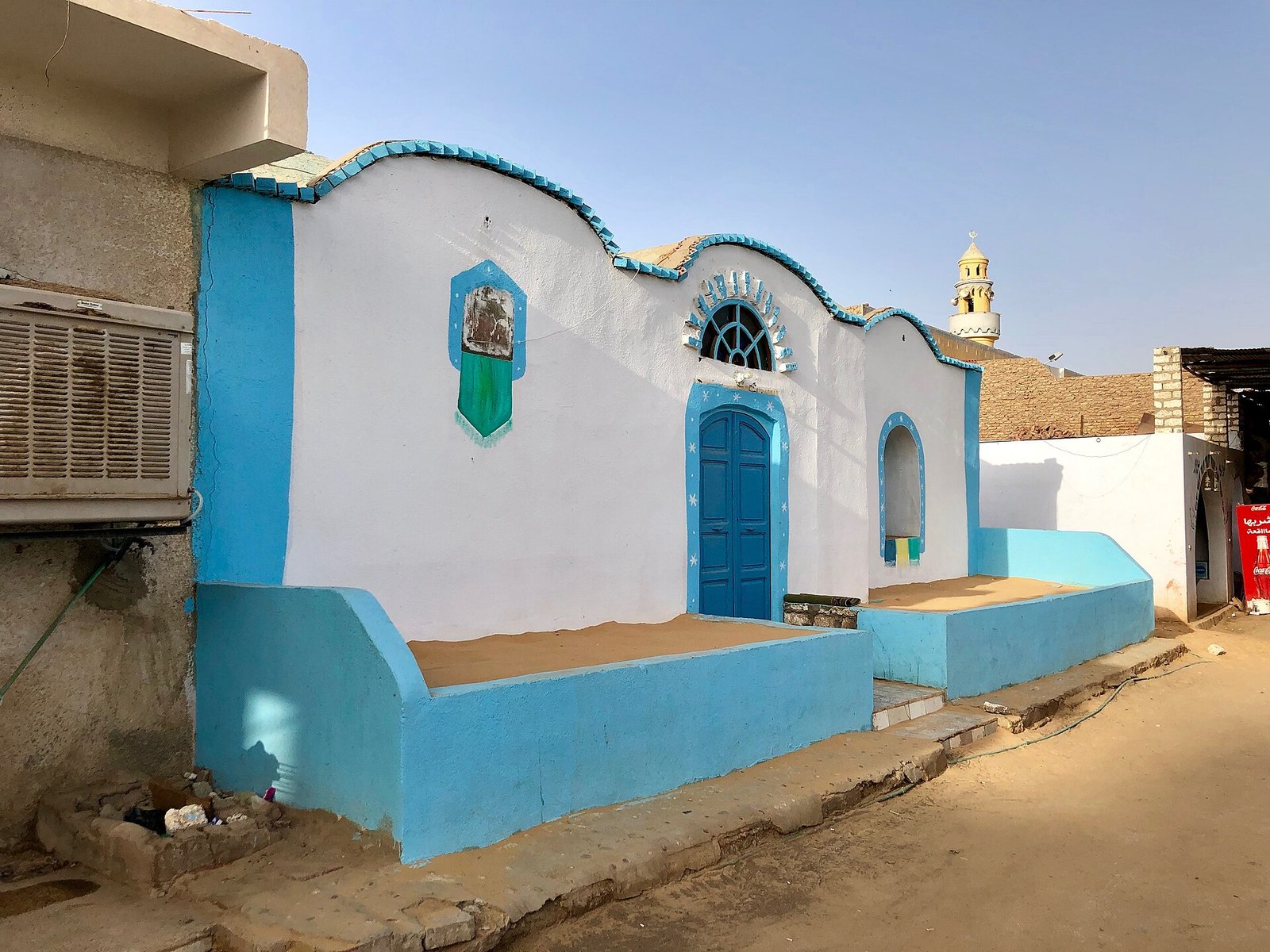
| Nubian village | Aswan, afternoon | Motorboat through the First Cataract to a painted village, tea in a family house. | Good with children and after a morning of temples. |
| Dendera and Abydos | Full day by road from Luxor, or on 7-day cruises | Hathor's zodiac ceiling and the finest reliefs in Egypt at Seti I's temple, about 5 hours of driving. | Superb on a second visit or a long cruise. Too much for a 3-night program. |
| Sound and light | Karnak or Philae, evenings | An hour of narrated floodlighting, walking at Karnak, seated at Philae. | Philae is the better one. Skip it before an early balloon or Abu Simbel start. |
What separates a good optional from a wasted morning is whether it fits the sailing schedule: a balloon booked for the morning the ship leaves Luxor cannot be rescheduled if the wind is wrong.
How an excursion day runs, hour by hour
Cruise days have a rhythm set by heat, crowds, lock timings and docking slots, and it is not negotiable. Here is a typical southbound program; times shift by an hour or so with the ship and the season.
- Day 1, Luxor: board at noon, lunch docked, 14:00 to 18:00 Karnak then Luxor Temple as the light drops, overnight in Luxor.
- Day 2, west bank: 04:00 balloon pickup for those who booked it; 07:00 depart for the Valley of the Kings, Hatshepsut and the Colossi; back by noon, lunch, sail; Esna lock in the evening.
- Day 3, Edfu and Kom Ombo: 07:00 Edfu by carriage, sail by 10:00; midday sailing, the best scenery of the river; 16:00 Kom Ombo, sail at sunset to Aswan.
- Day 4, Aswan: 07:30 High Dam, Unfinished Obelisk, Philae, back for lunch; 15:00 optional felucca and Nubian village; evening free or the Philae sound and light.
- Day 5: 04:00 departure for Abu Simbel for those who added it, otherwise breakfast and disembark by 08:00.
The early starts are real and consecutive, and the morning excursion is nearly always the better one for light and temperature. If you need to skip something, skip the afternoon stop, and tell reception so the headcount before sailing does not go looking for you.
Private Egyptologist or the ship's group excursion
This decision changes the experience more than the choice of ship. On most cruises the excursions are run by the ship: passengers are split into language groups of 25 to 40 with a whisper headset, moving at the speed of the slowest member. A private guide and vehicle for your own party is the other model, and it is how Explora Egipto runs every cruise.
| Ship's group | Private with Explora Egipto | |
|---|---|---|
| Group size | 25 to 40 people, headsets | Your party only |
| Start time | Fixed by the ship for everyone | Earlier for empty sites, later for the sleep |
| Tomb choice | The guide picks three for the whole group | Your guide picks for you; extra tombs at your pace |
| Shopping stops | Usually one a day | None unless you ask |
| Optionals | Sold on board, cash on the day | Pre-booked and written into the itinerary |
| Flexibility | The bus leaves when the schedule says | Stay longer at Philae, skip the dam, add the Luxor Museum |
The private model costs more per person and is worth it for almost everyone, because the excursions are the cruise. A family whose nine-year-old is done after two tombs and a photographer who needs Kom Ombo at sunset without forty heads in the frame get a different trip. Ask us for the quote.
The trap: optional excursions sold on board
Here is the pattern behind most complaints about Nile cruises, and it is entirely avoidable. A cruise is sold cheaply with the wording "all sightseeing included". On the first evening the cruise manager presents the optional list: the balloon, Abu Simbel, the Nubian village, the sound and light, sometimes even Luxor Temple or Philae, which the buyer assumed were included. Payment is cash, that evening, and the pressure is real because the bus leaves at 4 am.
It is not a scam, it is a revenue model: the ship, the manager and the guides earn a commission on every sale, which is why some fares look impossible until you add what is sold afterward. You get no choice of operator, nothing in writing, and the group format whether you wanted it or not.
The related pattern is the shopping stop: an alabaster workshop, a papyrus institute, a perfume shop. Each starts with an interesting demonstration and continues on a sales floor. If you do not want them, say so when you book, because a private itinerary can leave them out and a group one cannot.
The fix is a named list in your booking of every site and ticket included, and of the optionals you have chosen, confirmed as booked. If the operator cannot produce that list, that tells you what kind of cruise it is.
What to wear and carry on excursion days
Excursions are short, hot and dusty, with a lot of standing on stone. Pack the day bag the night before.
- Shoes: closed, broken-in walking shoes; Karnak is a mile of uneven paving.
- Clothes: light, loose, long trousers or a long skirt and a shirt that covers the shoulders, for the sun as much as for modesty.
- Winter layers: from November to February dawn on the west bank can be around 45 F (7 C) and the afternoon around 77 F (25 C), so bring a fleece you can tie around your waist.
- Sun: a brimmed hat, sunglasses and sunscreen.
- Small bills: for restroom attendants, the carriage driver at Edfu and the boatman at Philae.
- Camera: phones are fine in the temples; some tombs sell a separate photography ticket, and flash is banned inside.
The full packing list for the ship itself is in what to pack for a Nile cruise.
How Explora Egipto pre-books every excursion before you fly
We are a local agency in Egypt with our own Egyptologists and vehicles. Every excursion, included or optional, is decided and booked before you travel, and the written itinerary names each site, each ticket and each start time.
- The core program is private: every included site with your own Egyptologist and vehicle, no ship groups, no shopping stops unless you want one.
- Extra-ticket tombs are decided in advance, so there is no queue and no negotiation in the valley.
- Abu Simbel goes in a private car or on the domestic flight from Aswan, with the visit as long as you want it. On a 3-night cruise it fits the disembarkation morning; on longer programs it gets its own day.
- The balloon is booked with a licensed operator on a morning that has a backup, which is why we place it on a Luxor overnight and never on a sailing day.
- The Nubian village, the sound and light, Dendera and Abydos are scheduled around the sailing times, or added as a day before or after the cruise.
Tell us your dates and what you want to see, and we send you the quote with the complete excursion list and nothing left to sell you on board.
Frequently asked questions
Are the excursions included in a Nile cruise?
On a standard cruise, yes for the core sites: Karnak, Luxor Temple, the west bank, Edfu, Kom Ombo, Philae, the High Dam and the Unfinished Obelisk, with a guide and transfers. Ask for the sites by name in writing. Abu Simbel, the balloon, the Nubian village, Dendera and Abydos and the sound and light shows are optional everywhere.
Is Abu Simbel included in a Nile cruise?
No. Abu Simbel is 175 miles south of Aswan on Lake Nasser and no standard Luxor to Aswan cruise includes it. It is added as a road trip leaving Aswan before dawn, or as a domestic flight from Aswan, on the disembarkation morning or an extra day. Sold on board it goes in a convoy bus; pre-booked with us it goes in a private car with your own guide.
Can I skip an excursion and stay on the ship?
Yes, and after three days of temples it can be the best decision of the trip, especially with children, older travelers or anyone who is not feeling well. Tell your guide or reception that you are staying, because there is a headcount before sailing. If it is fatigue rather than lack of interest, skip the afternoon stop and keep the early one.
Which direction gives better excursion days?
Southbound from Luxor gives you 4 nights, a Luxor overnight for the balloon and Luxor Temple after dark, and Kom Ombo at sunset. Northbound from Aswan is 3 nights and compresses all of Luxor into the final day. If you have the days, sail south; if you are short of time, sail north and add a night in Luxor afterward.
Is the tomb of Tutankhamun included in the Valley of the Kings visit?
No. The standard ticket covers three tombs from the list open that day, and Tutankhamun, Seti I and Ramesses VI each need a separate ticket bought at the site or in advance. The tomb is small and the treasures are in Cairo, but the mummy is still there. Decide before the day and we add the tickets to your plan.
Are the shopping stops on cruise excursions mandatory?
On a ship's group excursion they are part of the route and the bus goes there whether you like it or not; nobody can force you to buy, and a polite no is enough. On a private itinerary they are left out unless you ask. If you want the demonstration without the sales floor, tell your guide and it becomes fifteen minutes instead of an hour.
Every excursion decided before you board, none sold to you on deck
Send us your dates and who is traveling, and we come back with a cruise itinerary that names every temple, every ticket and every optional you have chosen, with your own Egyptologist and vehicle at each stop, and a first evening on board with nothing to sign up for.