
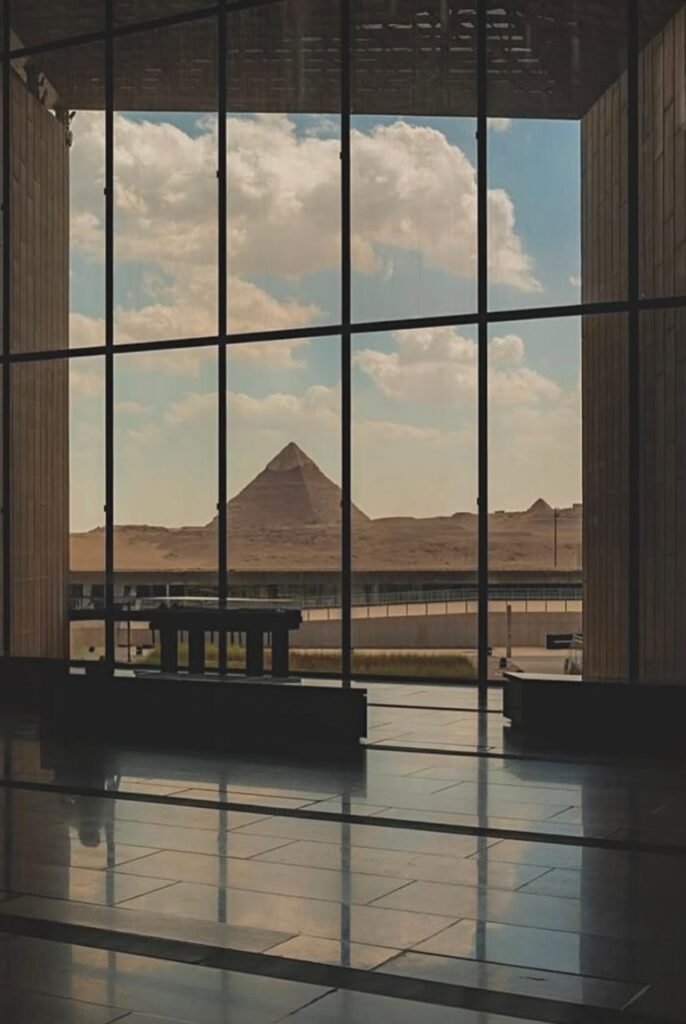
We are a tour operator based in Egypt, not a booking site reselling somebody else's van. The guide who meets you in the lobby works with us, the driver works with us, and the person answering your messages before the trip is the same team that runs the day. Every excursion on this page is private by default, which means your group and nobody else's, your pace, and a start time that fits when you actually want to leave the hotel.
Two things are worth saying up front, because they are the questions we are asked most. First, we do not sell or book your international airfare. Your flight to Cairo is yours to arrange, and nothing on this page includes it. Second, monument entrance fees are not included in the excursion price. They are paid at the gate on the day, and we publish the ones we can verify further down so there are no surprises at the ticket window.
Which Cairo excursion should you pick?
Most travelers land in Cairo with two or three usable days and a long list. The honest answer is that the list does not fit, and the sites that suffer when you rush are the ones people came for. Below is every excursion we run in and around Cairo, with the real length of the day rather than the marketing length.
| Excursion | Length | Best for | Entrance fees | Price |
|---|---|---|---|---|
| Giza pyramids and the Sphinx | 4 to 5 hours | First morning in Egypt | Not included, paid at the gate | From $45 per person |
| Grand Egyptian Museum | 3 to 4 hours, longer if you want it | The full Tutankhamun collection | Not included, extra cost | From $55 per person |
| Egyptian Museum, Tahrir Square | 3 hours | Classic collection, downtown setting | Not included, paid at the gate | From $40 per person |
| Saqqara, Memphis and Dahshur | Full day, 7 to 8 hours | Pyramids without the crowds | Not included, paid at the gate | From $75 per person |
| Citadel of Saladin and the Alabaster Mosque | 3 to 4 hours | Islamic Cairo, city views | Not included, extra cost | From $45 per person |
| Coptic Cairo | 3 to 4 hours | Early Christian and Jewish Cairo | Mostly unticketed, museum extra | From $45 per person |
| National Museum of Egyptian Civilization | 3 hours | The royal mummies | Not included, extra cost | From $45 per person |
| Khan el Khalili and Islamic Cairo | 3 hours, best in the evening | Shopping, street food, atmosphere | None, it is a public market | From $40 per person |
| Pyramids, museum and bazaar combined | Full day, 9 to 10 hours | Travelers with one day only | Not included, paid at the gate | From $90 per person |
| Alexandria day trip | 12 hours door to door | Mediterranean Egypt, Greco-Roman sites | Not included, paid at the gate | From $110 per person |
Prices are from, per person, based on two travelers sharing. Solo travelers pay a supplement, because on a private excursion the vehicle and the guide are not shared with anybody. Tell us your dates and group size on WhatsApp and you get a firm number back, not a range.
Giza pyramids and the Sphinx
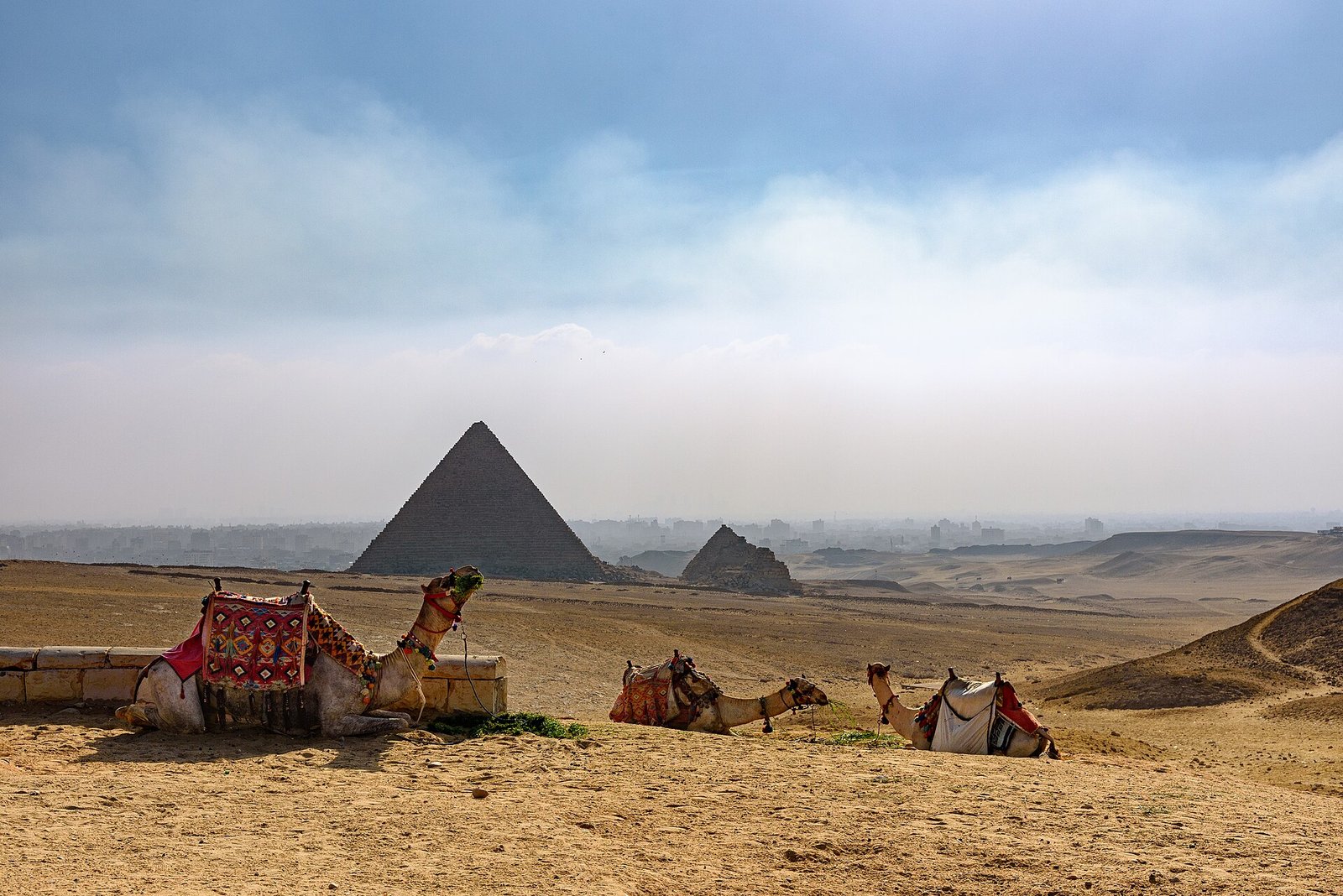
This is the reason most people fly to Egypt, and it is the one excursion we push you to do first thing in the morning rather than after lunch. The plateau sits roughly twelve miles, or twenty kilometers, from downtown Cairo, which is a forty-five minute drive at 7am and can be well over an hour by mid-morning. Heat and crowds both build through the day, and the light on the limestone is better early.
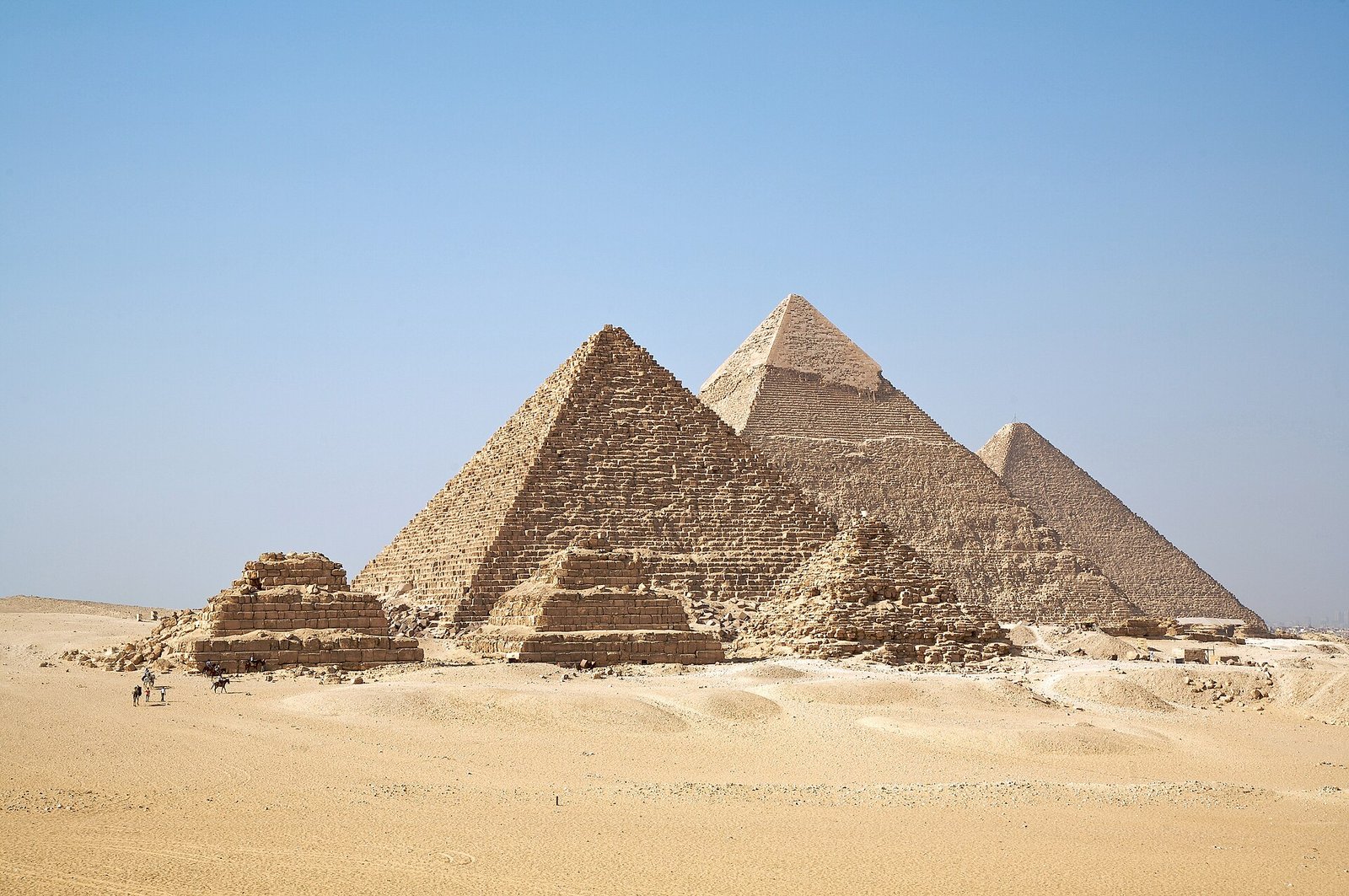
What you see. The three main pyramids, Khufu, Khafre and Menkaure, the three smaller queens' pyramids, the panoramic viewpoint out in the desert where the whole group lines up in one frame, the Valley Temple with its granite blocks, and the Sphinx from the terrace directly in front of it. Your guide walks the site with you rather than dropping you at a gate and waiting in the van.
For something far from the monuments, the Birqash camel market on the desert edge northwest of Cairo is a loud, early-morning half day.
How long it takes. Four to five hours from hotel pickup back to hotel drop-off, including the drive both ways. If you add the interior of the Great Pyramid it runs closer to five and a half.
Entrance. Not included. The Giza plateau ticket is 700 EGP, about $14, paid at the gate. Going inside the Great Pyramid is a separate ticket at 1,000 EGP, about $20, and it is genuinely optional. The passage is low, steep and hot, there is no decoration in the chamber, and travelers with claustrophobia or knee trouble regularly regret it. Your guide cannot come in with you, so ask your questions before you go down.
Camels and horses. The handlers on the plateau work for themselves, not for us. A short ride is an extra cost paid directly to the handler, and the price is whatever you agree before you get on, not after. Our guide will tell you what is reasonable and will stand there while you agree it. If you would rather skip it entirely, say so and nobody will push.
The evening show. There is a sound and light performance at the plateau after dark, sold separately from the daytime ticket. It is an extra cost paid at the ticket office, it is not part of any excursion price on this page, and it is a genuinely different experience from the daytime visit rather than a repeat of it. Tell us if you want it and we will keep the evening free.
The Grand Egyptian Museum
The Grand Egyptian Museum sits about a mile and a half, or two and a half kilometers, from the plateau, which is why pairing the two on one day works so well logistically. It opened in full in November 2025, and the headline is simple: the complete Tutankhamun collection is displayed together, in one purpose-built sequence, for the first time since Howard Carter cleared the tomb. That includes the gold funerary mask, the nested shrines, the chariots and the several thousand smaller objects that sat in storage for decades.
What you see. The Grand Hall with the colossal statue of Ramesses II, the Grand Staircase lined with royal statuary and looking out toward the pyramids through the glass, the main galleries arranged by period, the Tutankhamun galleries, and the Khufu boat. Beyond the Tutankhamun rooms, the main galleries are the part first-time visitors underestimate and then wish they had budgeted more time for.
How long it takes. We schedule three to four hours with a guide, which covers the highlights properly. If you are the kind of traveler who reads every label, tell us and we will build a longer visit. Museum people happily spend a full day here.
Entrance. Not included, extra cost. GEM runs on timed entry, so this is not a ticket you buy by walking up on the day. When you confirm your dates we agree the slot with you in advance and the guide builds the rest of the day around it.
One planning note. Doing GEM properly and doing Giza properly on the same day is a long day, not a relaxed one. It works, and plenty of travelers with a single Cairo day do exactly that, but pyramids in the morning and museum in the afternoon means roughly ten hours out of the hotel. If you have two days, split them.
The Egyptian Museum in Tahrir Square
The old museum downtown did not close when GEM opened, and it is not a leftover. It stays open to the public and keeps a vast classical collection, the Old and Middle Kingdom material, the Amarna room, and the atmosphere of a nineteenth-century museum that GEM deliberately does not have. Wooden cases, painted ceilings, objects packed in close together. For a lot of travelers it is the more memorable of the two buildings, precisely because it has not been redesigned.
What you see. The Amarna gallery with the Akhenaten colossi, Old Kingdom statuary, the Middle Kingdom rooms, and a great deal of everyday material, tools, furniture, painted models and food offerings, that tells you more about how Egyptians actually lived than any gold object does. Objects do move between Cairo's museums as displays are reworked, so your guide confirms on the day what is currently out and routes you around anything that is off view.
How long it takes. Three hours, and the location downtown means you can walk out into Tahrir Square and be in the middle of modern Cairo in ninety seconds.
Entrance. Not included. The foreign adult ticket is 550 EGP, about $11, paid at the gate.
The royal mummies and the museum in Fustat
Here is the detail a lot of tour pages still get wrong. The royal mummies are not at Tahrir and they are not at GEM. They moved in 2021 to the National Museum of Egyptian Civilization in Fustat, where they are displayed in a dedicated, deliberately dim hall, one body to a case, with the wall text kept short. It is a quiet room and it lands harder than people expect.
What you see. The royal mummies hall, plus a main gallery that runs the whole span of Egyptian civilization rather than stopping with the pharaohs, so predynastic pottery, Coptic textiles, Islamic metalwork and modern material all sit in one sequence. It is the museum that explains the country rather than the dynasty.
How long it takes. Three hours. Fustat sits next to Coptic Cairo, so pairing the two makes a clean half day with almost no driving between them, and adding the bazaar in the evening turns it into a full one.
Entrance. Not included, extra cost paid at the ticket office. If seeing Ramesses II and Hatshepsut face to face matters to you, say so when you message us and we will build the day around this museum rather than bolting it on at the end.
Saqqara, Memphis and Dahshur
This is the excursion regular Egypt travelers recommend to first-timers, and the one first-timers skip. Saqqara is where pyramid building was invented, Dahshur is where they got it right on the second attempt, and both are far quieter than Giza.
What you see. At Saqqara, the Step Pyramid of Djoser and its restored funerary complex, plus the decorated Old Kingdom mastaba tombs where the wall reliefs of farming, fishing and butchery survive in colors that look freshly painted. At Dahshur, the Bent Pyramid, which shows the exact moment the builders realized the angle was wrong, and the Red Pyramid, the first true smooth-sided pyramid, which you can walk into with a much shorter line than at Giza. At Memphis, the open-air museum with the fallen colossus of Ramesses II and the alabaster sphinx, on the site of Egypt's first capital.
How long it takes. A full day, seven to eight hours, with lunch at a local restaurant included. Saqqara is roughly twenty miles, or thirty kilometers, south of Giza and Dahshur a short way beyond, so the driving is real, but it is desert road rather than city traffic.
Entrance. Not included. Saqqara is 600 EGP, about $12, paid at the gate. Memphis and Dahshur have their own tickets, each an extra cost paid at the ticket office. Some of the individual tombs inside the Saqqara complex are ticketed separately again, also an extra cost at the ticket office, and your guide will tell you which of them are worth it on the day you are standing there.
Why it is worth the drive. At Giza you share the site. At Dahshur you can stand at the base of the Red Pyramid with almost nobody else in the frame, walk down into it without a line, and get a sense of scale that the crowds at Giza make impossible. Travelers who do both usually say Dahshur was the surprise of the trip.
The Citadel of Saladin and the Alabaster Mosque
Cairo did not stop being interesting in 2500 BC, and this is the excursion that makes that point. The Citadel is a twelfth-century fortress on the Mokattam spur, built by Saladin, expanded for seven hundred years afterward, and still the best free-standing view over the city. On a clear winter morning you can see the Giza pyramids from the terrace.
What you see. The Mosque of Muhammad Ali, clad in alabaster and modeled on Ottoman imperial mosques in Istanbul, with the courtyard clock that came from France and is traditionally tied to the obelisk now standing in the Place de la Concorde. The older Mosque of al-Nasir Muhammad. The walls and the terrace views. Depending on your interests we add the Police Museum or the military museum, or skip both.
How long it takes. Three to four hours.
Entrance. Not included, extra cost paid at the ticket office.
What to wear. This is a working mosque. Shoulders and knees covered for everyone, and women cover their hair inside the prayer hall. Shoes come off at the door. Bring socks you do not mind walking in, and a scarf is easier than borrowing one.
Coptic Cairo
A compact, walkable quarter inside the Roman fortress walls of Babylon, holding one of the oldest continuously worshipping Christian communities anywhere and a synagogue older than most European cathedrals. The whole area covers a few hundred meters, which makes it an easy half day and a natural pairing with the bazaar or with the museum in Fustat next door.
What you see. The Hanging Church, suspended over the Roman gate towers, with its inlaid wooden screens and marble pulpit. The Church of Saints Sergius and Bacchus, built over a crypt that tradition holds sheltered the Holy Family. The Ben Ezra Synagogue, where the Cairo Geniza documents were found in the nineteenth century, a cache that rewrote what historians know about medieval Mediterranean trade. The Roman towers themselves.
How long it takes. Three to four hours including the drive.
Entrance. The churches and the synagogue are not ticketed the way the pharaonic sites are. If you add the Coptic Museum, that is an extra cost paid at the ticket office.
One courtesy note. These are active places of worship with real congregations, not exhibits. Services run, especially on Sunday mornings and around the Coptic feast days, and photography inside is restricted in places. Cover shoulders and knees here too. Your guide will tell you where a camera is welcome and where it is not.
Khan el Khalili and Islamic Cairo
Khan el Khalili has been a market since the fourteenth century and it is still a market, not a heritage exhibit. That distinction matters, because it means the lanes are full of Egyptians buying gold, spices and copperware alongside the tourist stalls, and it means the prices are negotiable.
What you see. The main bazaar lanes and the older stone gates, the coppersmiths' alley, the spice and perfume sellers, the medieval street of al-Muizz with its mosque and madrasa facades lit at night, and El Fishawy, the old cafe in a corridor of mirrors where the mint tea arrives whether or not you asked for a second glass.
How long it takes. Three hours, and this is the one excursion we actively recommend doing in the evening. The heat drops, the lights come on along al-Muizz, and the market is at its liveliest after dark.
Entrance. None to pay. It is a public market street.
On haggling. Expect it and enjoy it. Opening prices for visitors run well above what the seller will accept, and walking away is a normal part of the conversation rather than an insult. Our guide will not steer you into a shop that pays a commission. If you want to buy something specific, papyrus, cotton, silver, an alabaster piece, tell the guide before you go in and they will point you at the sellers who are not selling the tourist-grade version.
Alexandria as a day trip from Cairo
Roughly one hundred and forty miles, or two hundred and twenty five kilometers, northwest on the desert road, about three hours each way, and a completely different Egypt: Mediterranean, Greco-Roman, sea air instead of desert dust. It is a long day and worth it if you have four or more days in Cairo.
What you see. The Bibliotheca Alexandrina, the modern library built on the memory of the ancient one, with its tilted disc of a reading room. The Catacombs of Kom el Shoqafa, a second-century multi-level tomb complex where Egyptian and Roman funerary art collide in the same carved room. Pompey's Pillar and the Serapeum. The Qaitbay Citadel on the spit where the Pharos lighthouse stood, built partly from its fallen stone. Lunch is seafood on the Corniche.
How long it takes. Twelve hours door to door. Departure is early, usually around 7am.
Entrance. Not included. Each site charges its own ticket, an extra cost paid at the ticket office.
The one-day combination: pyramids, museum and bazaar
If Cairo is a stopover and you have exactly one day, this is the excursion. It is nine to ten hours and it is not a leisurely one, but it delivers the three things people fly here for.
The shape of the day: hotel pickup between 7am and 8am, the Giza plateau and the Sphinx while it is still cool, lunch at a local restaurant, then either the Grand Egyptian Museum or the Tahrir museum depending on which collection you want, and Khan el Khalili in the early evening before the drop-off. Your guide is with you throughout and the vehicle stays with you, so bags, jackets and shopping live in the car rather than on your shoulder.
Entrance. Not included. Giza is 700 EGP and the Tahrir museum is 550 EGP, both paid at the gate. If you choose the Grand Egyptian Museum instead, that entrance is an extra cost arranged in advance because of timed entry.
What is included in every Cairo excursion
- A licensed, English-speaking Egyptologist guide for the whole day, not a driver with a script
- Hotel pickup and drop-off in central Cairo, Giza or Heliopolis
- A private, air-conditioned vehicle that stays with your group all day
- Bottled water in the vehicle
- Lunch at a local restaurant on full-day excursions
- All taxes and service charges on the items above
- WhatsApp support before, during and after the excursion, with a real person on the Egypt side
What is not included
- Your international flight. We do not sell, book, quote or coordinate international airfare, and no excursion or program on this site includes it. You arrange your own flight to Cairo. Flights inside Egypt are a separate matter and are included on our multi-day programs only, never on a Cairo excursion.
- Monument entrance fees. Every gate ticket on this page is paid on the day. We publish the verified 2026 figures below so you can budget them.
- The Egypt entry visa. Currently 30 USD for a single entry and 65 USD for multiple entries.
- Optional extras such as the interior of the Great Pyramid, camel or horse rides, the sound and light show, separately ticketed tombs, and any additional site added on the day.
- Tips for the guide and driver, which are customary in Egypt and entirely at your discretion.
- Personal spending, including drinks beyond the water provided, souvenirs and bazaar purchases.
- Travel insurance, which we strongly recommend you arrange at home before you fly.
- Hotel accommodation, unless you are booking one of our multi-day programs rather than a standalone excursion.
Verified 2026 entrance fees you pay at the gate
These are the current official figures for the sites where we can verify them. Anything not on this list is still an extra cost paid at the ticket office, and we would rather print no number than print a stale one.
| Site | Foreign adult ticket | Approximate USD |
|---|---|---|
| Giza plateau | 700 EGP | about $14 |
| Great Pyramid interior, optional add-on | 1,000 EGP | about $20 |
| Egyptian Museum, Tahrir Square | 550 EGP | about $11 |
| Saqqara | 600 EGP | about $12 |
Dollar equivalents are converted at 1 USD = 49.79 EGP. The pound moves, so treat the dollar column as a guide and the pound column as the number printed on the ticket. Tickets are sold in Egyptian pounds and most gates now take cards, though a working card reader is never guaranteed, so carry pounds as a backup. Two travelers covering Giza, the Tahrir museum and Saqqara across a couple of days are looking at well under a hundred dollars in gate fees between them, which is worth knowing before you assume entrance costs are the expensive part of Egypt.
Drive times you should plan around
Cairo traffic is the single biggest variable in any excursion, and it is the reason our pickups are earlier than travelers expect. These are honest door-to-gate estimates from a central Cairo or Zamalek hotel.
| Destination | Approximate distance | Early morning | Mid-morning or afternoon |
|---|---|---|---|
| Giza plateau | 12 miles | 40 to 45 minutes | 60 to 90 minutes |
| Grand Egyptian Museum | 13 miles | 45 minutes | 60 to 90 minutes |
| Citadel of Saladin | 4 miles | 20 minutes | 30 to 45 minutes |
| Khan el Khalili | 3 miles | 20 minutes | 30 to 45 minutes |
| Coptic Cairo and Fustat | 4 miles | 20 to 25 minutes | 35 to 50 minutes |
| Saqqara | 20 miles | 55 minutes | 75 to 90 minutes |
| Dahshur | 25 miles | 70 minutes | 90 minutes plus |
| Alexandria | 140 miles | about 3 hours | 3 to 4 hours |
How many days should you give Cairo?
The most useful thing we can tell you is how the days stack, so here is what we actually recommend rather than what fits on a brochure.
One day
Two days
Three days
Four days or more
Timing traps that quietly ruin a Cairo day
None of these are secrets, but they are the things that go wrong when a day is planned without local input.
Friday middays. Mosques close to visitors around the Friday congregational prayer. If the Citadel is on your list, we schedule it for a morning or a different day rather than dropping you at a closed prayer hall.
Ramadan. The Islamic calendar shifts about eleven days earlier each year, so Ramadan moves across the seasons. During it, site hours can shorten, many restaurants change their service, and the city comes alive after sunset instead. It is a genuinely good time to visit if you plan around it. Send us your dates and we will tell you exactly how they overlap.
Timed entry at GEM. The Grand Egyptian Museum admits by slot. A day built around a fixed museum slot has to be planned backward from that time, which is precisely why we ask for your dates before promising a shape for the day.
Heat. There is no shade on the Giza plateau. None. From May to September an afternoon start is not a scheduling preference, it is a bad idea, and we will say so.
Drones and camera rigs. Leave the drone at home. Flying one at Egyptian sites is not permitted, and bringing one into the country without authorization creates a customs problem you do not want on day one. Phone photography is fine at every site on this page. Tripods and professional camera setups are treated differently at some gates, where a separate permit is an extra cost paid at the ticket office.
How Cairo fits into a longer Egypt trip
Cairo is the front half of Egypt. The back half is the Nile valley, and the trips people come home raving about almost always contain both.
The shortest complete version is our 7-day classic Egypt tour, which pairs the Cairo sites on this page with a Nile cruise. If Abu Simbel is on your list, and for most first-timers it should be, the 8-day itinerary that adds Abu Simbel is the same trip with the extra day it needs. Travelers who want the temples at a walking pace rather than a marching one usually land on the 10-day Cairo, Luxor and Aswan itinerary, and the fullest version is the 12-day grand tour that finishes on the Red Sea at Hurghada. Flights inside Egypt are included on all four of those programs. Your international flight is not, on any of them.
If you would rather build the trip around a boat, pick a direction. The 5-day Nile cruise from Luxor to Aswan sails upstream and ends in Aswan, while the Aswan to Luxor sailing runs the same temples in reverse and finishes closer to the Valley of the Kings. Prefer hotels to a cabin? The Aswan and Luxor overland tour covers the same ground by road. The cruises and the overland tour do not include flights inside Egypt, so the Cairo to Luxor or Cairo to Aswan sector is yours to arrange, or ask us and we will price that domestic sector for you as an add-on.
For shorter southern add-ons, two days in Luxor covers both banks properly. Abu Simbel runs either as an Abu Simbel day trip from Aswan or, if you want to be there for sunrise on the facade without the pre-dawn road convoy, as a two-day Abu Simbel trip with a hotel night. Neither of those includes flights inside Egypt, and neither does the two-day Luxor tour.
Practical notes for travelers
Visa. US passport holders need an entry visa. It is 30 USD for a single entry and 65 USD for multiple entries. Your passport needs at least six months of validity beyond your arrival date.
When to come. October through April is the comfortable window, with December through February the coolest and the busiest. May through September is genuinely hot in Cairo, which is workable if you start at 7am and treat the afternoon as museum time. Summer travelers get the plateau far emptier than winter travelers do.
Jet lag, honestly. If your flight lands in the evening or overnight, your first morning is your worst morning. Put Giza on your second day if the schedule allows it, and use the arrival day for the bazaar, which asks nothing of you.
Money. Egypt runs on the Egyptian pound. Hotels, restaurants and most museum gates take cards, but the bazaar, the camel handlers, tips and small cafes are cash. ATMs in Cairo dispense pounds and are the simplest way to get them. Carrying some small notes makes tipping much easier.
What to wear. Lightweight, covered, and shoes you can walk sand and uneven stone in. Shoulders and knees covered is the comfortable default for both men and women anywhere outside a hotel, and it is required at the Citadel mosque. A hat, sunglasses and real sunscreen are not optional at Giza, where there is no shade at all.
Mobility. The sites are ancient and most of them are not level. Giza is sand and rock, Saqqara has steps, and the Coptic churches are reached by narrow stairs. A private vehicle helps a great deal because it drops you close and waits, but tell us before you book if anyone in your group uses a wheelchair or cannot manage stairs, and we will tell you honestly which parts work and which do not.
Traveling with kids. Cairo works well with children if the days are shorter. Camels, mummies and a lot of gold do most of the work. We cut the full-day itineraries down and build in a break rather than pretending a nine-year-old will do ten hours.
Safety. The tourist sites are policed and our guides are on the ground in Cairo every day. The practical risks are heat, dehydration and traffic, in that order, not crime. Cairo traffic does not work the way you will be used to, so cross with your guide rather than on your own read of the situation.
Tipping. Tipping is woven into daily life in Egypt and is expected for the guide, the driver, and small services along the way. It is discretionary and there is no fixed rate. Ask your guide what is normal if you would rather not guess.
About our reviews. We have twelve reviews, averaging 5.0. They are about the agency and about our guide Shady Said rather than about any one excursion on this page, and we would rather tell you that plainly than imply a review count we do not have.
How booking an excursion works
There is no cart on this page and no checkout, on purpose. A Cairo day that fits you is not a product you add to a basket, it is a conversation that takes about ten minutes on WhatsApp.
Send us four things: your dates in Cairo, how many travelers and their ages, the hotel or district you are staying in, and the sites you actually care about. We come back with a proposed shape for each day, the pickup times, the per-person price, and a plain list of what you will pay at the gates. If the plan does not fit, we change it. When it does fit, we confirm the guide and the vehicle for those dates and send you the driver's details before you fly.
Asking costs nothing and commits you to nothing. We would rather talk you out of a day that will not work than sell it to you and have you spend three hours of it in traffic.
Frequently asked questions
Are your Cairo excursions private or shared with other travelers?
Are monument entrance fees included in the price?
Do you book my flight from the United States to Cairo?
Can I see the pyramids and the Grand Egyptian Museum on the same day?
How much is the Grand Egyptian Museum ticket?
Where are the royal mummies?
What time do Cairo excursions start and finish?
Where do you pick up from?
Is Cairo safe for American travelers?
Do I need to cover my hair?
How much cash should I carry?
Is going inside the Great Pyramid worth 1,000 EGP?
Can I combine a Cairo excursion with a trip south to Luxor and Aswan?
What is the best month for a Cairo excursion?
Plan your Cairo days with us
Tell us your dates, how many travelers, and which of the excursions above you actually care about, and we will come back with a day-by-day plan and a firm per-person price.
The fastest way to reach us is WhatsApp, on +20 103 229 5513. Messages go to the Egypt office, not to a call center, and you will normally have an answer within minutes during Cairo daytime hours. If you would rather write it all out, use the contact form on this page and include your arrival date, your departure date, and anything that is non-negotiable for you, whether that is going inside a pyramid, seeing the royal mummies, or having an evening free for the bazaar.
If you are still deciding between two or three days in Cairo and a longer trip that runs down to Luxor and Aswan, say that too. We will lay out both, tell you what each one costs per person, and be straight with you about which one suits the time you actually have. Either way, your international flight stays yours to book and every gate ticket is yours to pay on the day. Everything else, we handle.
Keep exploring
To finish planning your trip to Egypt
- ▸Can You Drink the Water in Egypt?
- ▸Food Prices in Egypt: What Meals Really Cost
- ▸Wadi El Rayan Waterfalls: Fayoum Lakes Day Trip from Cairo
- ▸Second Time in Egypt: What to See on Your Second Visit
- ▸Ancient Egyptian Religion: Temples, Priests and Rituals
- ▸Sharm el Sheikh: things to do, diving and Mount Sinai
- ▸Egypt Temperature by Month: Cairo, Luxor and Hurghada
- ▸See all our Egypt tours