A quad bike safari in Egypt is the best two hours you will spend off the beach, as long as the operator is a good one
A quad bike safari in Egypt is the best two hours you will spend off the beach, as long as the operator is a good one
A quad bike safari in Egypt is a guided convoy ride on your own ATV through the desert behind the Red Sea coast or along the edge of the Giza plateau. The classic version leaves Hurghada in the late afternoon, gives you about an hour of riding over sand tracks and low dunes, stops at a Bedouin camp for tea and bread baked on a hot metal sheet, and brings you back after the sun drops behind the mountains. No driver's license is needed, but a good operator gives you a real briefing, a helmet that fits and a guide at both ends of the line. Below is where to do it, what a safe trip looks like, who should ride, and how we build it into your stay.
What a quad bike safari in Egypt actually is
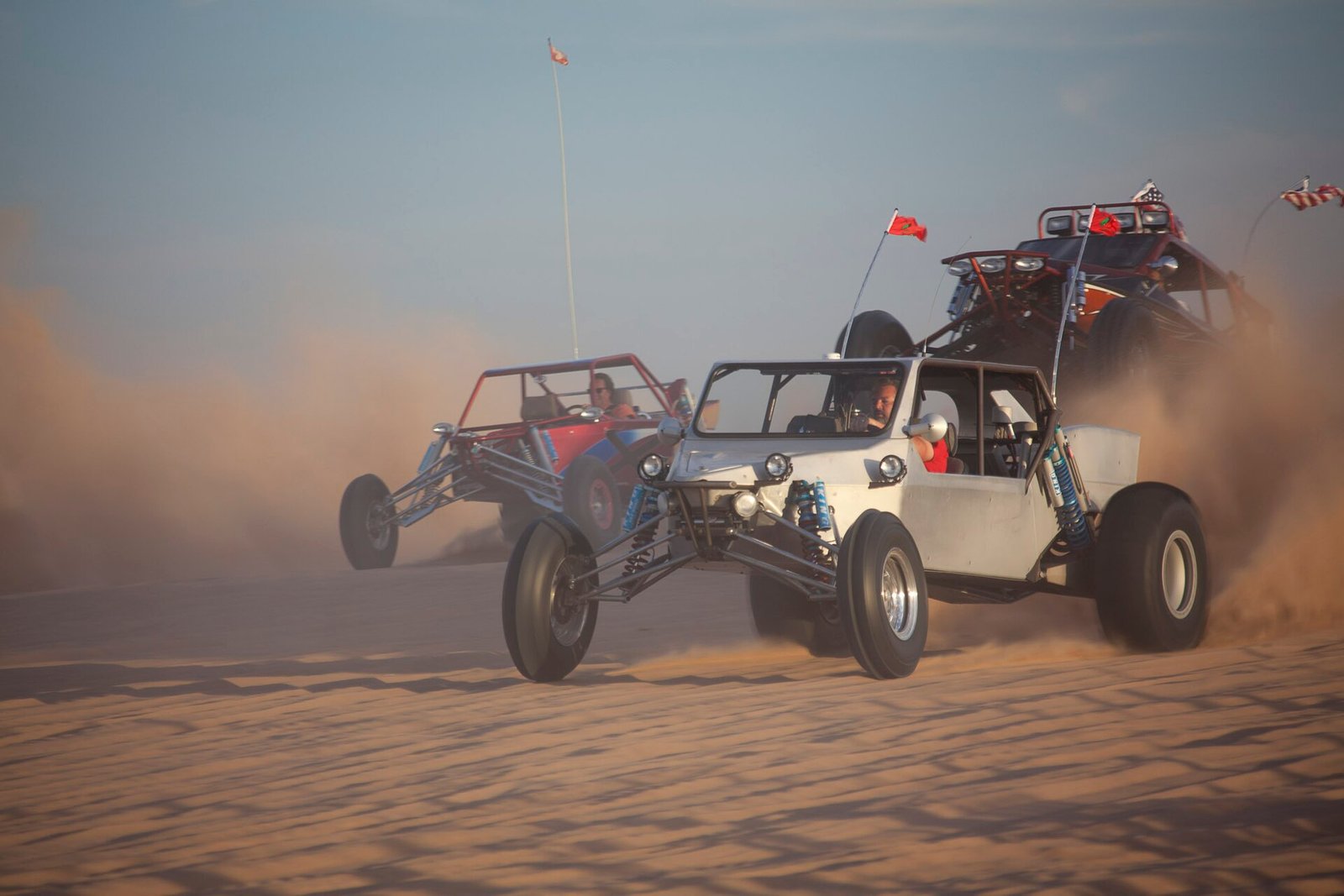
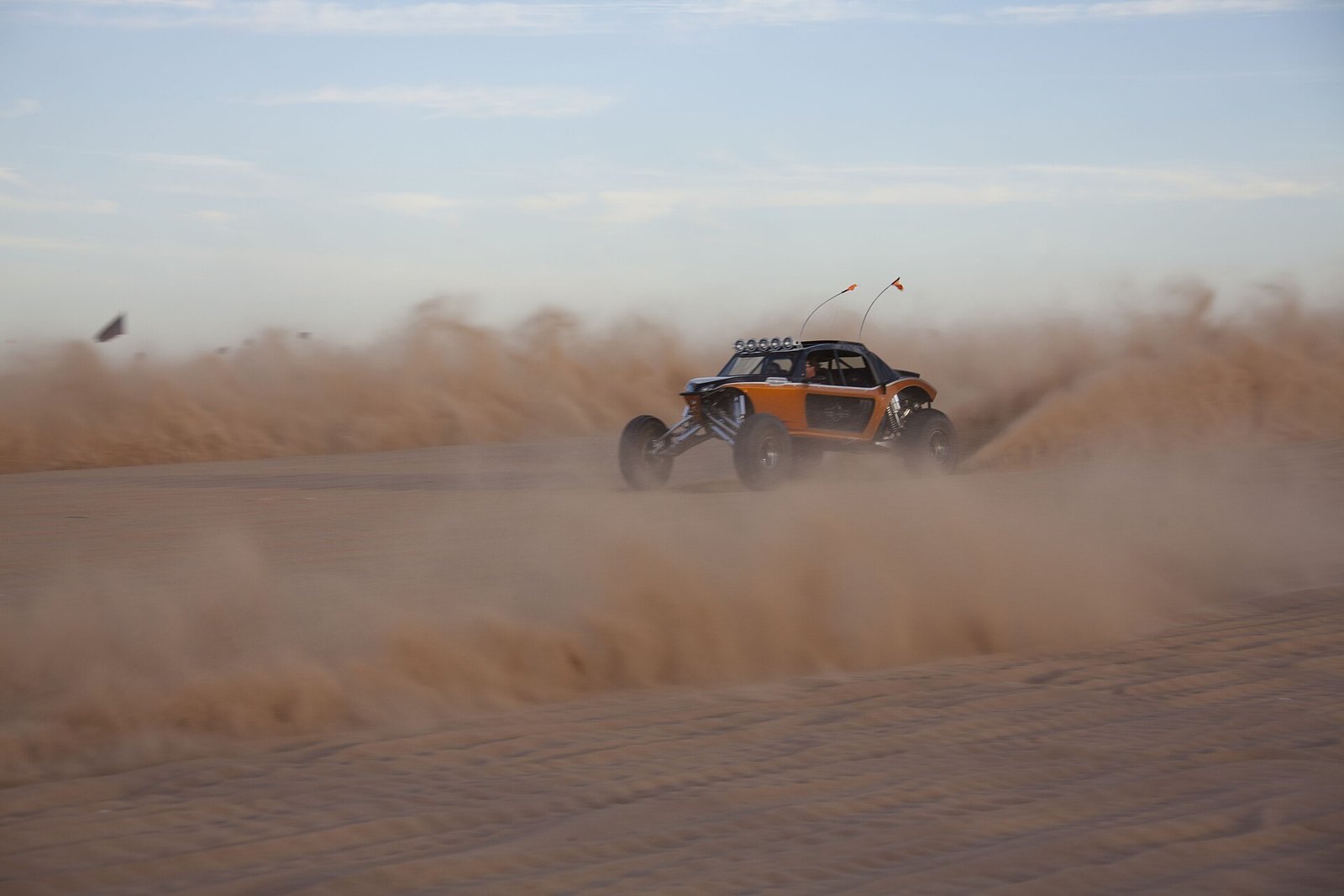
The word safari throws Americans off, so let us clear that up first. There are no animals to spot. In Egypt a safari is any organized trip into the desert, and a quad safari means you ride your own four-wheeled ATV in a line of riders behind a lead guide, with a second guide sweeping the back. The machines are usually 150 to 250 cc, semi-automatic, with a thumb throttle, hand brakes and no clutch.
The riding lasts between 45 and 90 minutes in total, split into an outbound and a return leg. The terrain is hard-packed sand tracks, gravel plains and low dunes, not the giant Sahara dune fields you may be picturing. Behind Hurghada and Sharm the desert is dry riverbeds and bare mountains that turn orange at the end of the day.
What makes it worth doing is the contrast: a reef in the morning, and by five a silent valley with tea in your hand. It is the one adventure experience in Egypt that needs no water, no temple and no early alarm.
Where to do it: Hurghada, Sharm, Marsa Alam and the Giza desert edge
Four places in Egypt run quad safaris every day of the year, and they are not interchangeable.
| Base | The desert | Best for | Watch out for |
|---|---|---|---|
| Hurghada | Eastern Desert mountains and gravel valleys, camps 20 to 30 minutes from the hotels | Most choice, easiest to fit into a beach week | Bus-fed camps where three groups arrive at once |
| Sharm el Sheikh | Granite Sinai mountains, camps toward Nabq and the interior | Scenery and stargazing | Longer transfers from the far end of the bay |
| Marsa Alam | Quiet Eastern Desert, few other riders | Couples who want the desert to themselves | Camps are farther apart, so the day runs longer |
| Giza desert edge | The sandy plateau behind the pyramids, all three in view | Photos and a short ride on a Cairo day | Horses, camels and other quads share the sand |
Hurghada is the default for a reason: the camps are close, the terrain is forgiving for first-timers and you are back at the hotel for dinner. Our Hurghada guide and the Sharm el Sheikh guide cover what else each town offers around the safari. Marsa Alam is the quiet one, with a fraction of the riders and camps run by families less used to crowds, and it pairs well with the reefs in our Marsa Alam guide. The Giza version is short and slow, and the view is the whole point.
How the trip runs, hour by hour
Every operator sells a slightly different package, but the skeleton of a good sunset quad safari from Hurghada looks like this.
- Hotel pickup, about three hours before sunset. A minibus drives you 20 to 40 minutes inland to a base camp at the edge of the mountains.
- Gear and paperwork. A waiver, a helmet, goggles and a scarf for the dust. This is when you say you have never ridden one.
- Briefing and test lap. Throttle, brakes, how to lean on a slope, what to do if the engine stalls, then a flat loop.
- Convoy out. Single file, a guide at each end, 30 to 45 minutes to the Bedouin camp with a photo stop on a ridge.
- Bedouin village stop. Tea, flatbread baked on a metal sheet over embers, a look at how the family lives. A short camel ride is usually offered.
- Sunset. The sand goes from yellow to deep orange in about ten minutes.
- Dinner and show, on the longer version. A grilled meal under a tent, sometimes music and a telescope.
- Return. On the quads with headlights, or in a 4x4 if the operator does not run quads after dark. Drop-off three to five hours after pickup.
The morning version is the same in reverse, minus the dinner, and ends before lunch. Both fit into a normal program of excursions from Hurghada without stealing a beach day.
The honest safety picture
Quad safaris are the adventure activity with the most avoidable injuries in Egypt, and almost all of them come down to three causes: worn machines, no briefing, and groups too big for the guides to watch. Run properly, the activity is not dangerous. The work is in choosing who you go with and in how you ride.
Helmets, goggles and dust masks
Wear the helmet, buckled, the entire time you are on the machine, even between the camp and the viewpoint. Goggles are not optional either: the rider ahead kicks up a wall of fine sand and the return leg is often into a low sun. Use the scarf the camp hands out as a dust mask, or bring a buff.
Single file and spacing
Keep the quad ahead in sight but never close: two to three lengths on the flat, more on dunes. Passing the guide is the fastest way to end the trip for everyone. Dust drops visibility to nothing when riders bunch up, which is why good guides stretch the line out on purpose.
License and experience
No driver's license is required anywhere in Egypt for a guided quad safari, but experience still matters. Most rollovers happen the same two ways: turning too fast across a side slope, or accelerating over the crest of a dune without seeing what is behind it. A first-timer who follows the guide's line at a modest speed is safer than a confident rider who does not.
Insurance
Many standard travel policies exclude motorized off-road vehicles, and some name ATVs specifically. Read the activities section before you go. Our page on travel insurance for Egypt explains what to look for.
Kids, passengers and who should not ride
This is the question we get most from American families. Operators set their own minimum ages and they vary from camp to camp. The common pattern on the coast is that teenagers around 16 and up drive their own quad, younger children ride as a passenger behind an adult or in a two-seat buggy, and small children go in a 4x4 that follows the convoy to the same camp.
A passenger changes how a quad handles. With two people on a 150 cc machine the front goes light, braking takes longer and every side slope feels twice as steep. If you carry a child, ride at the back, keep it slow and skip the dunes. Better still, ask for a buggy, the vehicle we recommend for any parent who is not an experienced rider.
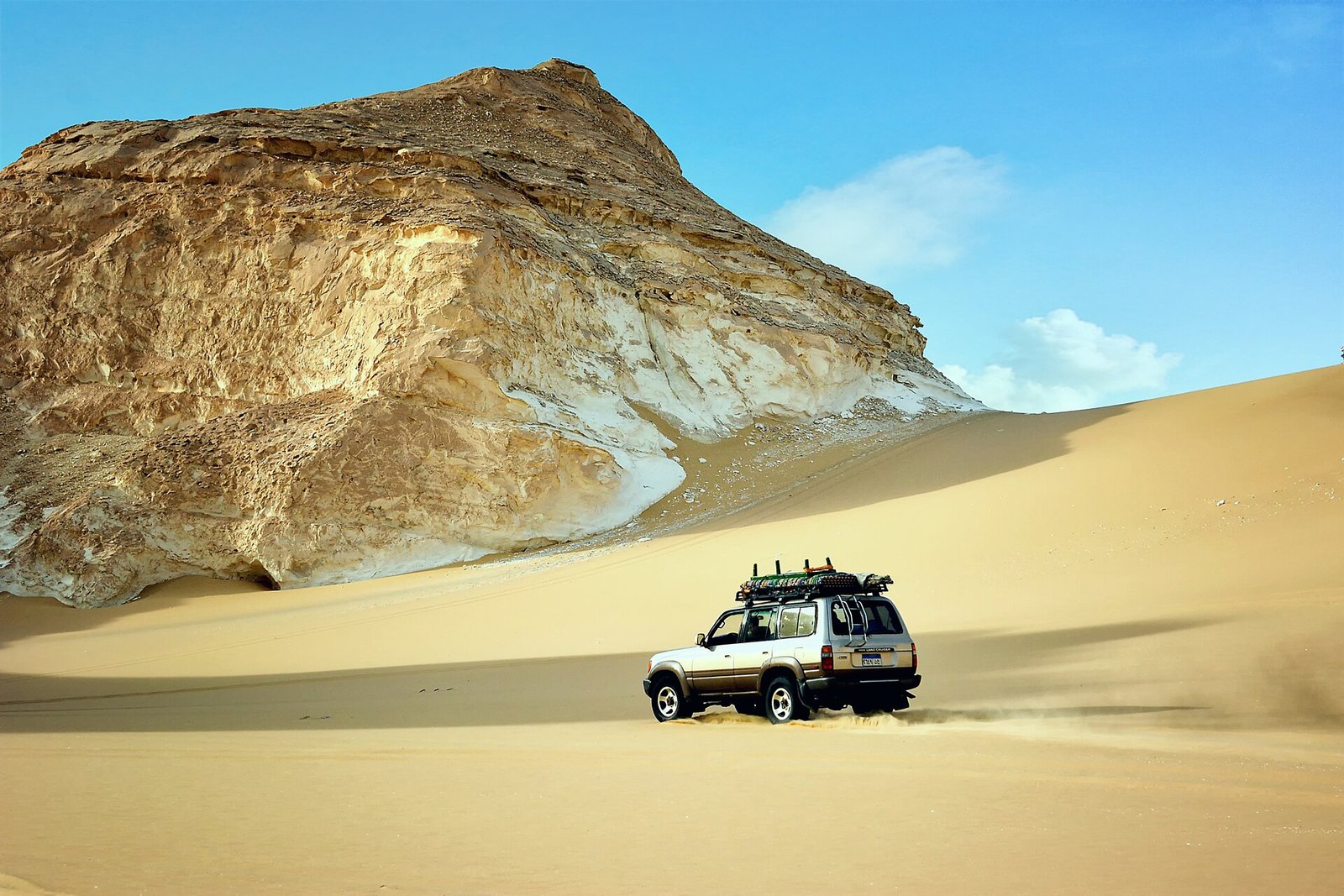
Some people should not ride at all, and a good operator asks rather than hoping. Anyone pregnant, anyone with a recent back, neck or shoulder injury, and anyone who had a few drinks at the pool bar belongs in the 4x4. The camp, the tea, the camel and the sunset are identical whether you arrived on a quad, in a buggy or in the back of a Land Cruiser.
What to wear and what to bring
Dress for dust, wind and a temperature swing, not for a beach afternoon. The desert behind the coast can be 100 F (38 C) at four in the afternoon in summer and drop to the low 50s F (around 10 C) after a winter sunset.
- Closed shoes. Sneakers at minimum. Flip-flops get you refused at the camp by any operator worth using.
- Long pants and a long-sleeved top. Light cotton in summer, against sun, sand and the hot engine cover.
- A scarf or buff over the nose and mouth. The camp usually supplies one, but bring your own if you care what it smells like.
- Sunglasses under the goggles. Fine sand and contact lenses do not mix; glasses are fine.
- A layer for after sunset. A fleece from October to March, a windbreaker even in summer.
- Sunscreen and lip balm applied before you leave the hotel.
- A zip pocket for your phone. Phones bounce out of open pockets on the first dune. Leave the good camera in the safe.
- A little cash for the guide and the camel handler.
Leave jewelry and anything white in the room. Everything you wear will be the color of the desert by the time you get back.
The Bedouin stop, the camels and animal welfare
Almost every quad safari on the coast includes a stop at a Bedouin camp, and this is the part that varies most between operators. At its worst it is a stage set: a few tents, a rushed glass of very sweet tea, a row of camels for photos and a souvenir counter. At its best it is a working family camp where someone explains how the tribes of the Eastern Desert or South Sinai live, you watch bread come off the hot metal sheet and there is time to sit down.
The difference is not what is included but how long the stop lasts and how many people share it. Fifteen minutes with three buses is not an experience. Forty minutes with one small group is. The tea comes hot, sweet and usually with mint or a desert herb called habak. Accepting it is basic courtesy; if you do not take sugar, say so before it is poured.
Camels, snakes and photo props
The camel ride at the camp is short, ten or fifteen minutes on a lead rope, and optional. Look at the animal first. A healthy working camel has no open sores under the saddle, a halter that is not cutting into its face, and a handler who does not use a stick. If what you see bothers you, say no and stay by the fire.
What you should refuse outright are the photo props. Some camps in the busiest areas offer a snake or a bird of prey to hold for a picture. Those animals are not treated well, and paying for the photo keeps the practice going. We do not work with camps that use them.
A good operator versus a bad one
You can tell within five minutes of arriving at the base camp which kind you have booked.
| What to check | A good operator | A bad operator |
|---|---|---|
| Helmets | One per rider, buckled before anyone moves, offered without being asked | A pile in the corner nobody mentions |
| Briefing | Throttle, brakes, slopes, stalling, hand signals, then a test lap | Point at the throttle and go |
| Machines | Start on the first try, brakes bite, tires have tread | Engines that need three pulls, bald tires, a brake lever that hits the grip |
| Guides | One in front, one at the back, a capped number of riders between them | One guide, twenty riders, the last five out of sight |
| Rider screening | Asks about age, experience and health before matching you to a quad | Anyone on any machine as long as they signed |
| The camp | A real family camp, one group at a time, time to sit | A parking lot of buses and a photo camel |
| After dark | Working headlights or a 4x4 back | Riding home by moonlight with half the lights out |
One more sign: the good ones stop the whole line if one rider falls behind. The bad ones treat the convoy as a race to the camp.
Sunset or morning: which slot to book
Sunset is the version everyone books, and most of the time it is the right call. The light in the last hour is the reason the desert looks the way it does in photos, the temperature drops to something comfortable, and on the longer trips the stars come out over dinner. Its two downsides: the convoy rides back into dusk, so dust hangs longer and headlights matter, and in the busiest camps every operator arrives for the same sunset.
The morning slot solves both. You ride out at eight or nine, the air is cool, visibility is at its best and you have the camp to yourself, with the afternoon free for the beach. From June to early September, when a late afternoon in the desert can still be over 100 F (38 C), morning is the only slot we recommend. In winter, book sunset but pack a real jacket.
Quad, buggy or 4x4: how to choose
A quad is not the only way into the desert, and for some travelers it is not the best one. The same camps run all three options to the same Bedouin stop, so you lose nothing but the driving.
| Option | How it feels | Best for | Not for |
|---|---|---|---|
| Quad (ATV) | You drive, you feel every bump, you get dusty | Anyone who wants the ride itself | Children, back problems, nervous drivers |
| Buggy | Two seats, steering wheel, seat belts, roll cage, far more stable | Couples where one drives, parents with a child, first-timers | Riders who want the exposed feel of a quad |
| 4x4 with driver | Air-conditioned, no dust, goes farther into the mountains | Small kids, seniors, photographers, anyone injured | Anyone who came for adrenaline |
| Camel | Slow, awkward for ten minutes, then oddly relaxing | Short sunset rides, especially at Giza | Long distances, hot afternoons |
The rule of thumb we use: children under about twelve mean 4x4 or camel, a couple where one person does not want to drive means buggy, a photographer means 4x4 at sunset, and anyone who came for the ride means a quad with a serious operator. Sandboarding is often thrown in on the Hurghada side, ten minutes of falling over that teenagers rate as the best part of the day.
How Explora Egipto books it
We are a local agency with our own guides and vehicles, and we do not send guests to whichever camp has space that day. We work with a short list of base camps in Hurghada, Sharm and Marsa Alam that meet the checklist above, and we know which family runs each one. Booked through us, three things are different from the hotel desk version.
- Group size is capped. A convoy small enough for both guides to see every rider, at a slot when the camp is not receiving bus groups.
- The vehicle is chosen, not assigned at random. Quad, buggy, a passenger seat or the 4x4, decided once we know who is traveling.
- It slots into the rest of the trip. A sunset safari before a rest day, a morning safari before a snorkeling boat, or the Giza version on the day you visit the pyramids with our guide.
From Cairo, a domestic flight to Hurghada takes about an hour and we arrange it with the rest of the itinerary. On the coast, hotel pickup is included and the whole thing takes an afternoon. Tell us your dates, your hotel and who is in the group, and we send you the quote.
Frequently asked questions
Do I need a driver's license for a quad bike safari in Egypt?
No. Guided quad safaris in Hurghada, Sharm el Sheikh, Marsa Alam and at Giza do not ask for a driver's license, only a signed waiver. What matters more is that you listen to the briefing, ride the test lap and keep your place in the line. First-timers who follow the guide are safer than experienced riders who pass him.
How long does a quad safari from Hurghada take?
Plan three to five hours door to door. The transfer from the hotel to the base camp is 20 to 40 minutes, the riding adds up to between 45 and 90 minutes in two legs, and the rest is the briefing, the Bedouin stop and the sunset. The longer version with dinner and stargazing gets you back after dark.
Can children do a quad bike safari?
Yes, but not on their own quad until their mid teens at most camps, and minimum ages vary by operator. Younger children ride as a passenger behind an adult, in a two-seat buggy with a parent or guide, or in a 4x4 that follows the convoy to the same camp. The tea, bread, camel and sunset are the same for everyone.
Is a quad bike safari in Egypt safe?
It is when the operator maintains the machines, gives a real briefing, keeps groups small and puts a guide at both ends of the line. Most injuries come from turning fast on a side slope, cresting a dune blind or riding too close to the quad ahead. Wear the helmet the whole time, keep your spacing and check that your travel insurance covers ATVs.
What is the difference between a quad safari and a buggy safari?
A quad is a single-rider ATV you straddle like a motorcycle, with handlebars and a thumb throttle. A buggy is a two-seat vehicle with a steering wheel, seat belts and a roll cage. The buggy is more stable and lets a non-driver ride along, which makes it the better pick for couples, parents with a child and anyone nervous about a quad. Both go to the same Bedouin camp.
Can I do a quad safari at the pyramids of Giza?
Yes. Operators on the desert side of the Giza plateau run short quad rides along the edge with the three pyramids in view, usually at sunset. It is shorter and slower than the coast version and you share the sand with horses and camels, so it suits a calm rider. We add it to a Cairo day after the guided pyramids visit.
Ride the desert at sunset with a camp you can trust
Tell us where you are staying, who is in the group and whether anyone has ridden a quad before, and we come back with the right camp, the right vehicle for each person and the slot that fits your week, from a sunset run behind Hurghada to a short ride along the Giza plateau. No prices on this page, just a quote in your inbox.