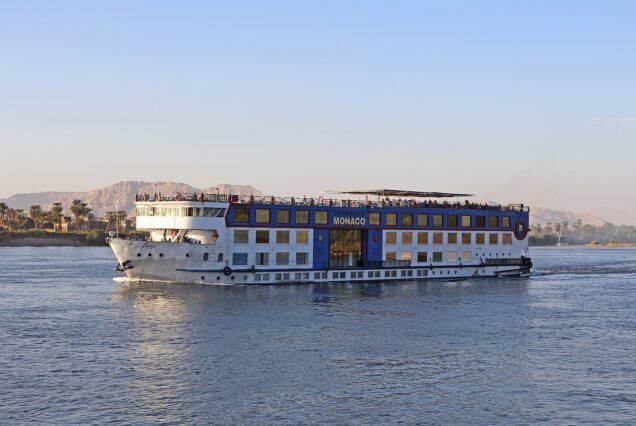
From Aswan to Luxor, with the current doing the work
This trip is for you if you have five days, want the great temples of southern Egypt, and would rather unpack once than change hotels four times. It is not a Cairo trip. There are no pyramids on this route and no Egyptian Museum.
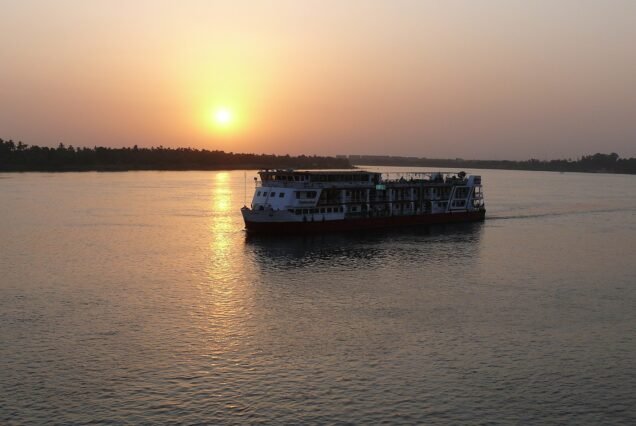
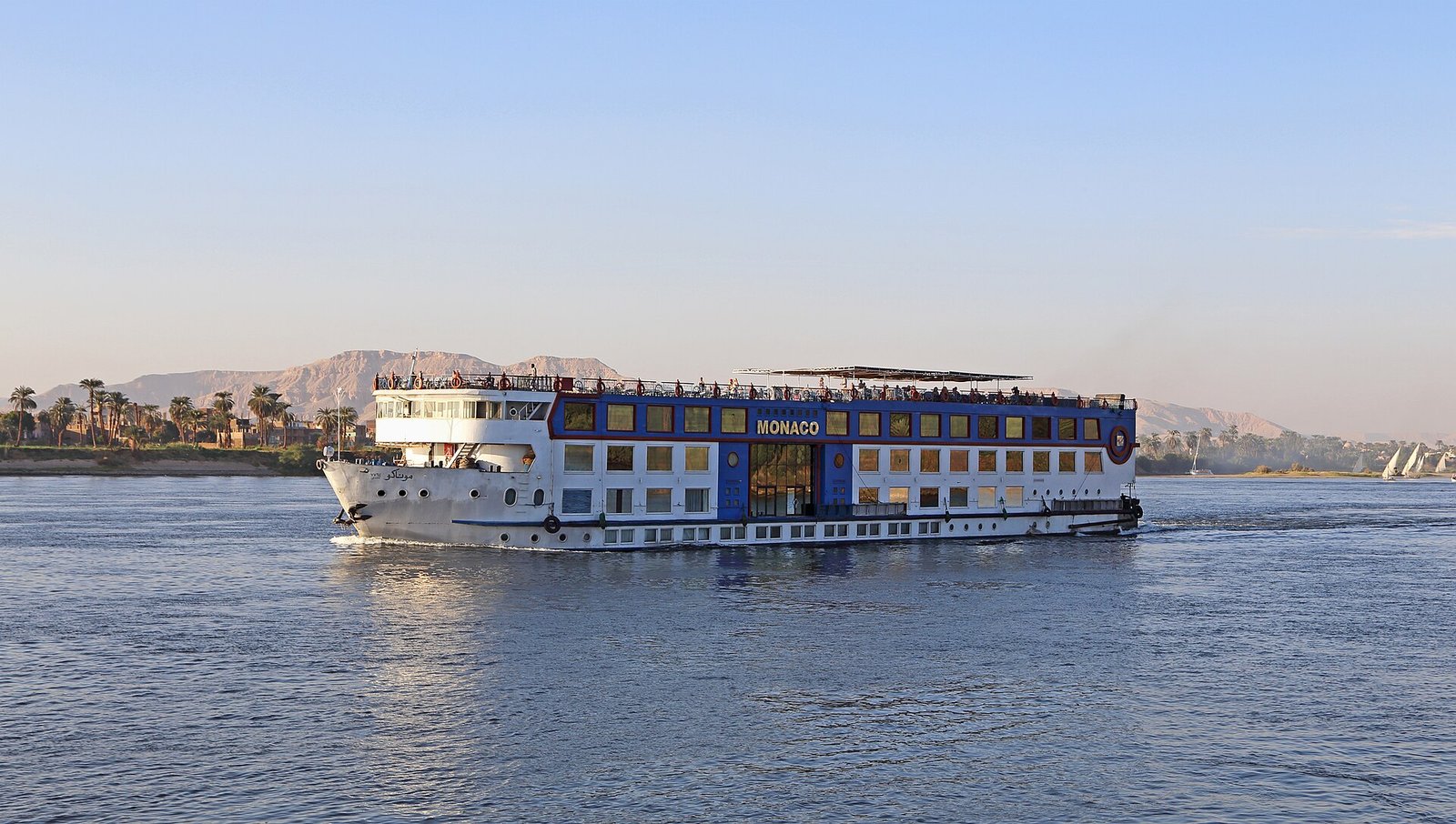
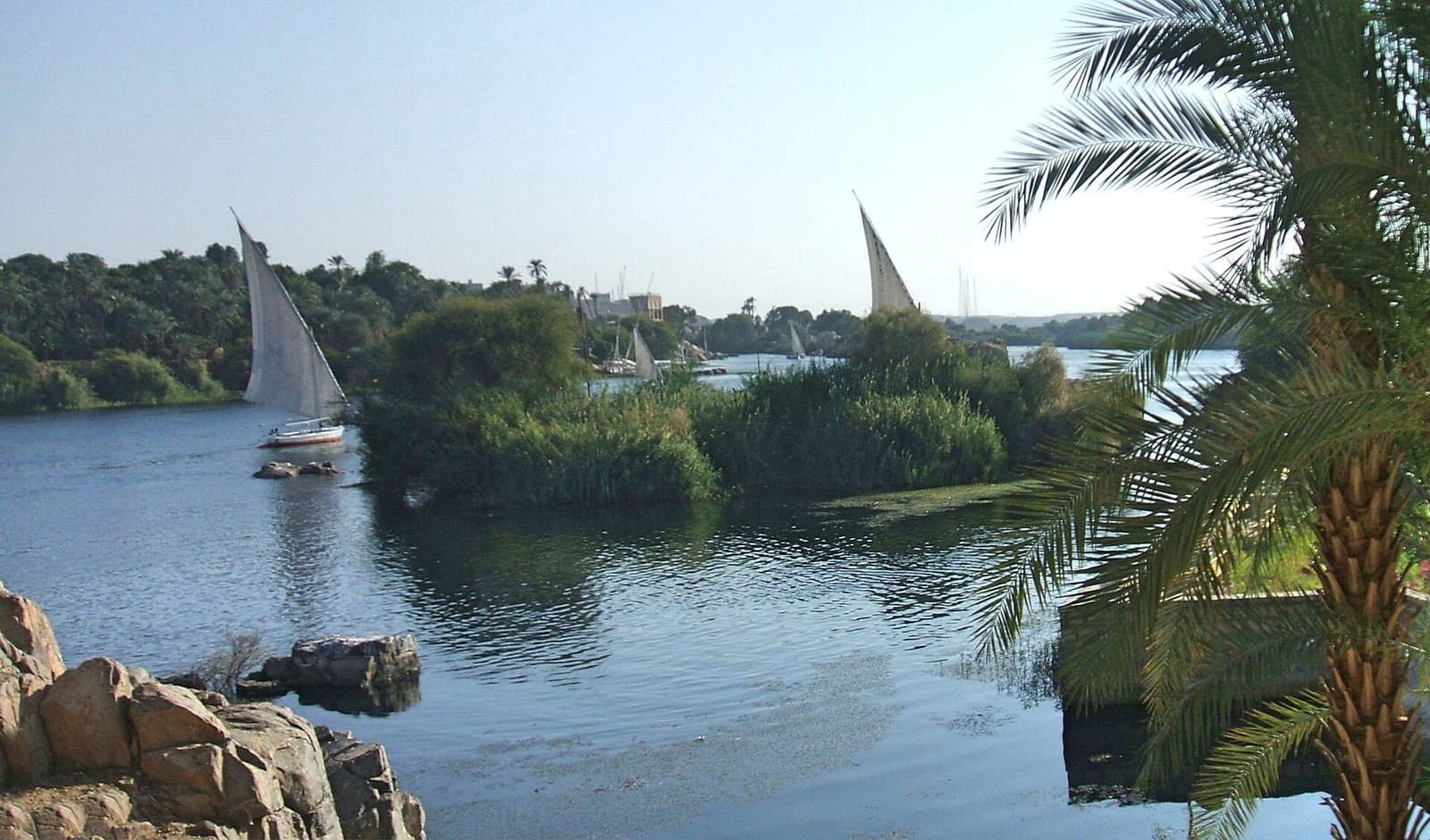
What you get instead is the stretch of river most people are actually picturing when they picture Egypt: Philae on its island, Abu Simbel cut into a cliff face, Kom Ombo at the water's edge, Edfu with its roof still on, then both banks of Luxor. You board in Aswan and get off in Luxor, so the ship runs downstream with the current doing the work. It sails at night and during meals, so you are not spending daylight in transit.
Four nights on board, full board, a private Egyptologist with you at every site, and all eight gate fees paid before you land. The flight, visa, water, tipping and money questions are answered on this page rather than buried in a PDF.
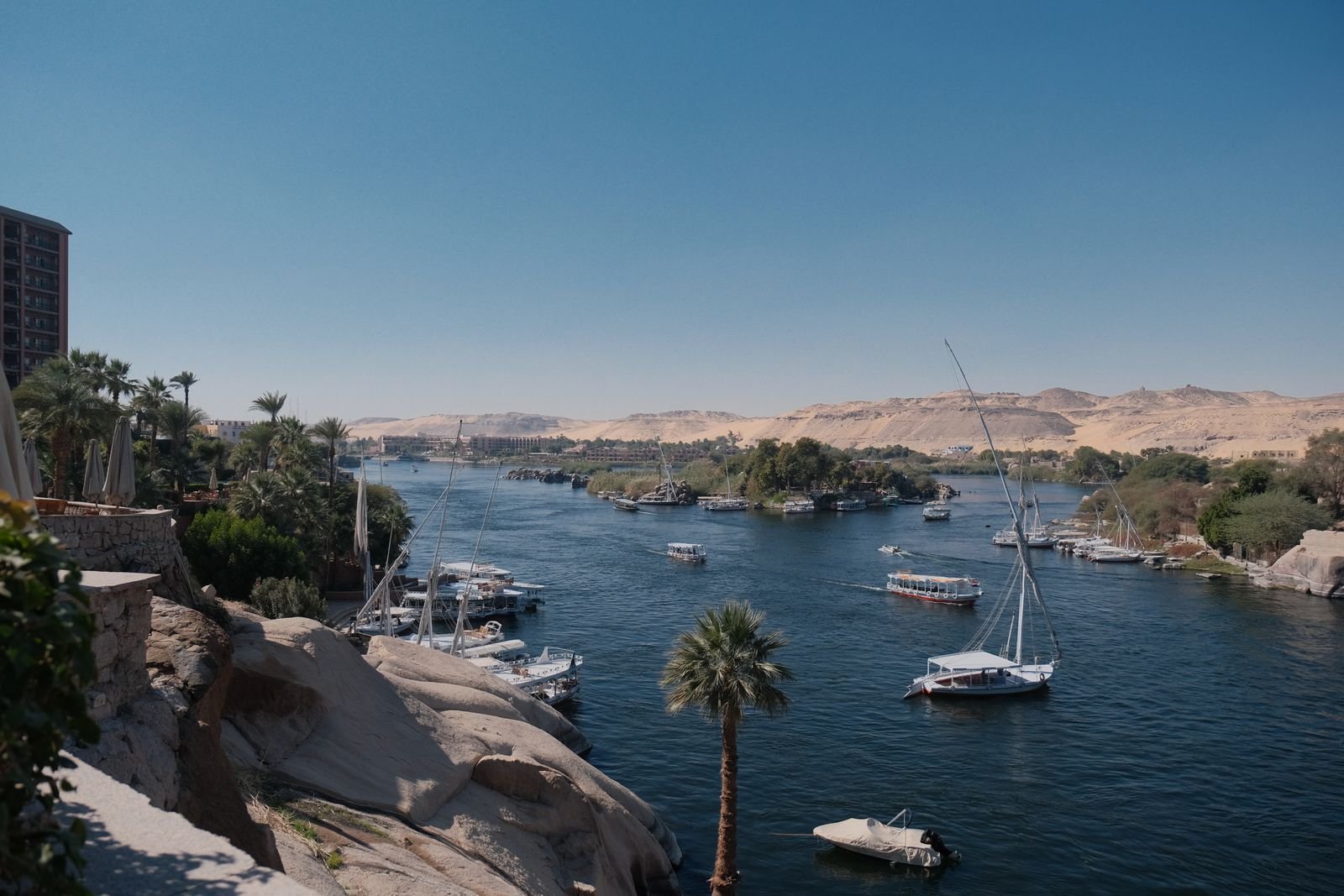
Trip at a glance
| Length | 5 days, 4 nights |
|---|---|
| Route | Aswan to Luxor, downstream, roughly 130 miles or 210 km of river |
| Where you sleep | All 4 nights aboard the ship, same cabin throughout |
| Meals | Full board on board. Drinks are not included |
| Guide | Private English-speaking Egyptologist at every site |
| Group | Private. No fixed departure dates, no strangers on your bus |
| Sites | Philae, Abu Simbel, Kom Ombo, Edfu, Valley of the Kings, Hatshepsut, Colossi of Memnon, Karnak, Luxor Temple, Nubian village |
| Gate fees | All 8 ticketed gates prepaid. Nothing to buy at a window |
| Starts and ends | Starts on arrival in Aswan, ends after Luxor Temple on day 5 |
| Not included | Any flight, the visa, travel insurance, tips, drinks |
The direction is the point. Downstream means shorter sailing legs and slack in the schedule when the Esna lock backs up. It also puts the two heaviest days at the end, after three nights of sleep, instead of throwing the Valley of the Kings at you on day one while you are still out of sync from the flight. If your flights land you in Luxor instead, take the mirror image: the Luxor to Aswan Nile cruise covers the same sites in reverse.
One cabin, one unpack. The same route by road means three check-ins and a bag in a van every morning. Some travelers prefer that because it bends around awkward flight times, and we sell it as the Aswan and Luxor land itinerary.
Getting to Aswan is not covered. Aswan sits about 400 miles, some 650 km, south of Cairo, reached on a 90-minute domestic flight or the overnight sleeper train, and neither is in this price.
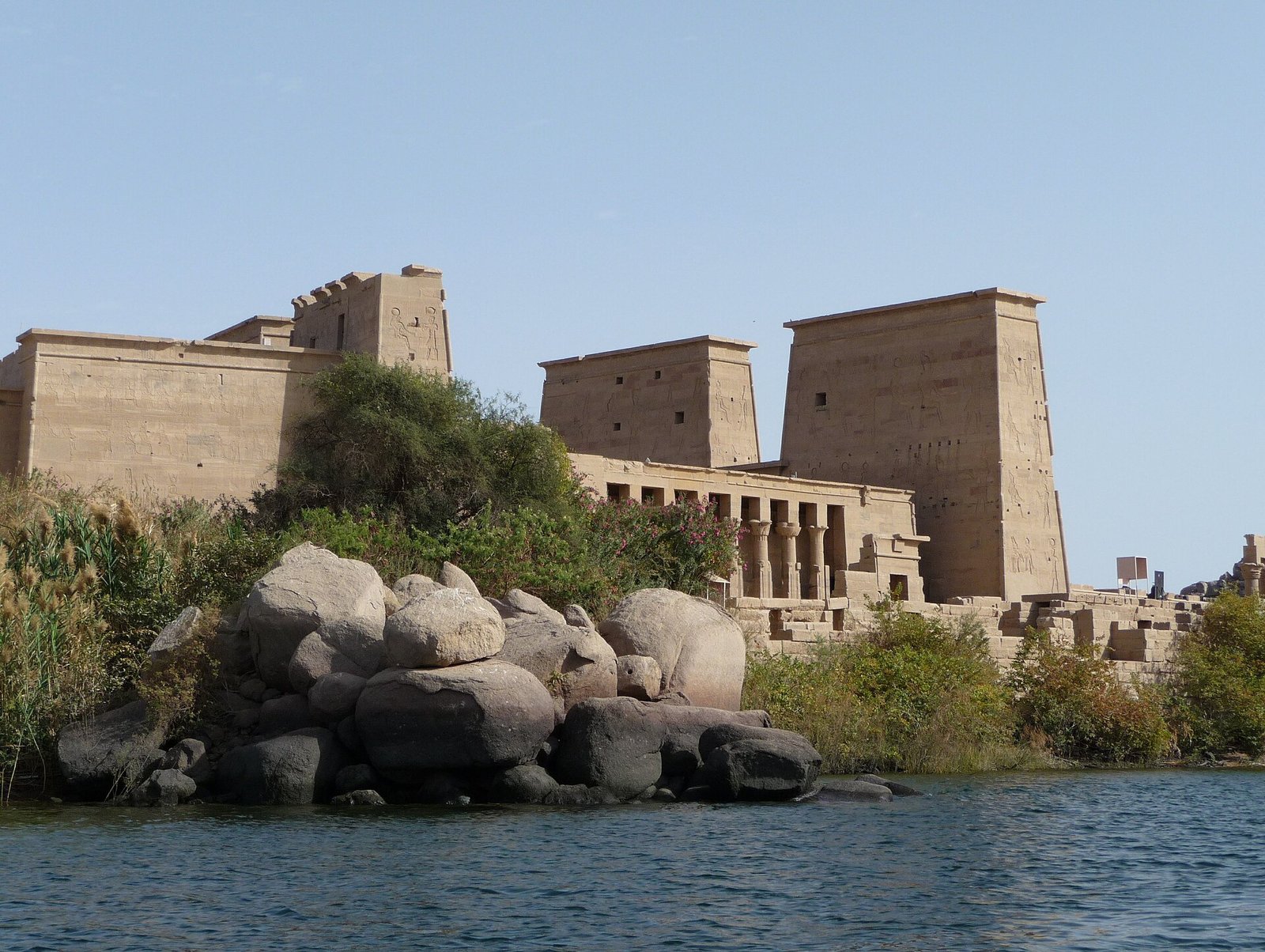
We meet you at Aswan airport or the railway station and take you to the ship for check-in. Once your bags are in the cabin, your guide takes you out to Philae, the temple of Isis, which sits on an island and is reached by motorboat. Worth knowing first: the complex was cut into more than 40,000 pieces in the 1970s and rebuilt on higher ground at Agilkia, because the original island now lies underwater behind the Aswan dams. The joins are visible if you know where to look.
A second boat crosses to a Nubian village on the west bank, where the houses are painted indigo and ochre and Nubian is spoken as its own language, distinct from the rest of Egypt.
Meals: dinner on board, plus lunch if your flight lands early enough. Night: aboard, moored at Aswan.
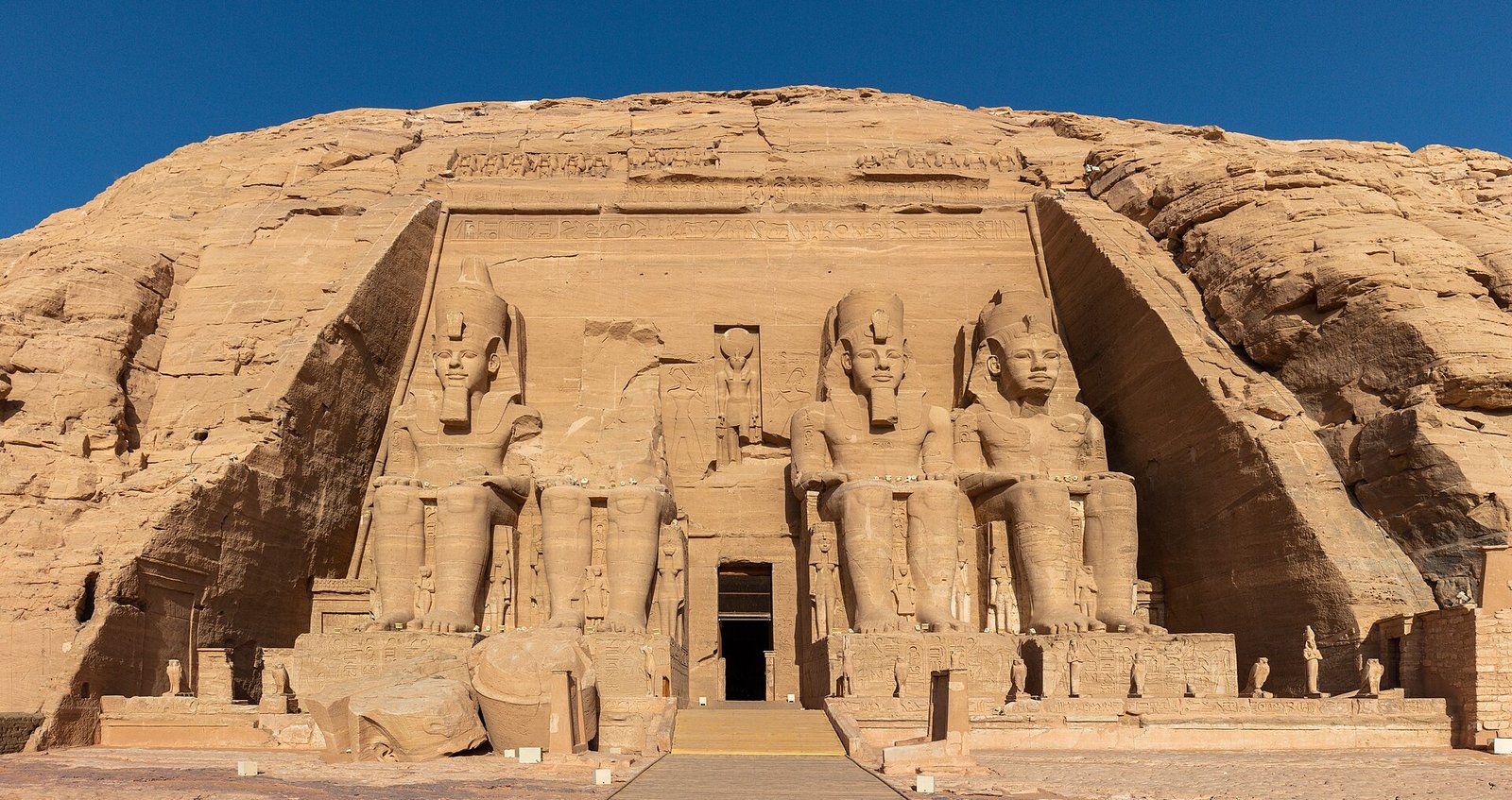
Early start, and there is no way around it. The road run south takes roughly three hours each way across open desert, and leaving early puts you at the temples ahead of the heat and the Aswan coaches. What you came for is the facade: four seated figures of Ramses II, each around 65 feet or 20 meters tall, cut straight into the sandstone. Beside it stands the smaller temple he built for Nefertari, one of very few in Egypt where the queen is carved the same height as the king.
Both were sawn apart and lifted more than 200 feet, over 60 meters, up the cliff in the 1960s, before Lake Nasser filled. Back in Aswan you eat on board while the ship casts off.
Meals: breakfast, lunch and dinner on board. Night: aboard, on the river toward Kom Ombo.
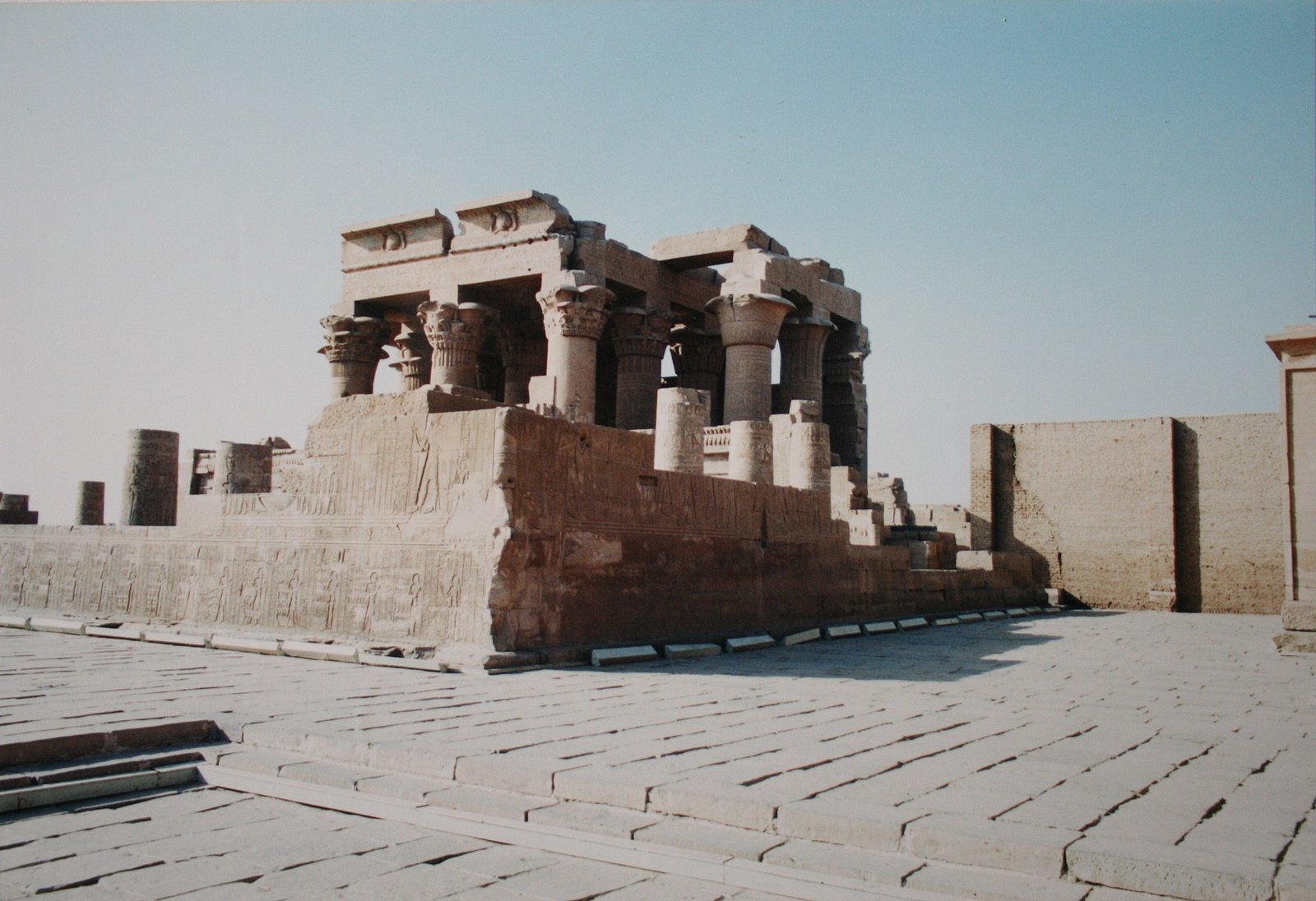
Kom Ombo is a short walk from where the ship ties up, which is unusual and welcome. It is Egypt's only major double temple, split down the middle: the right half for Sobek the crocodile god, the left for Horus the Elder. A wall of surgical instruments carved in relief gets photographed more than the sanctuaries do.
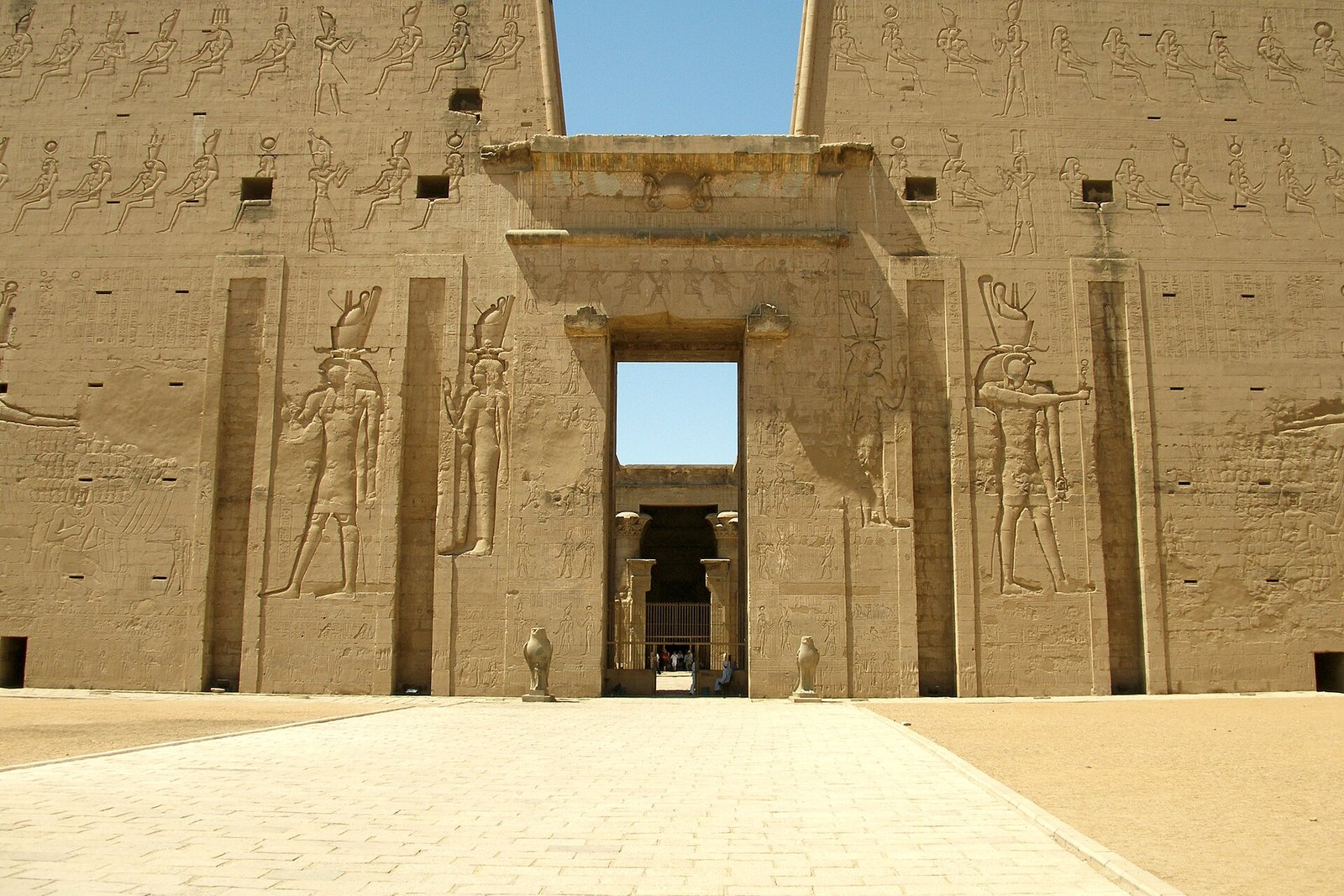
The ship moves on to Edfu and the Temple of Horus, the best preserved temple in the country by a wide margin. It still has its roof, its pylon and its enclosure wall, because it spent centuries buried in silt. It is late work, built by the Ptolemies, so the carving is crisper and the wall texts more complete than anything else you see this week.
The afternoon is the long leg north. Tea on the sun deck, green banks, water buffalo, the Esna lock.
Meals: breakfast, lunch and dinner on board. Night: aboard, sailing toward Luxor.
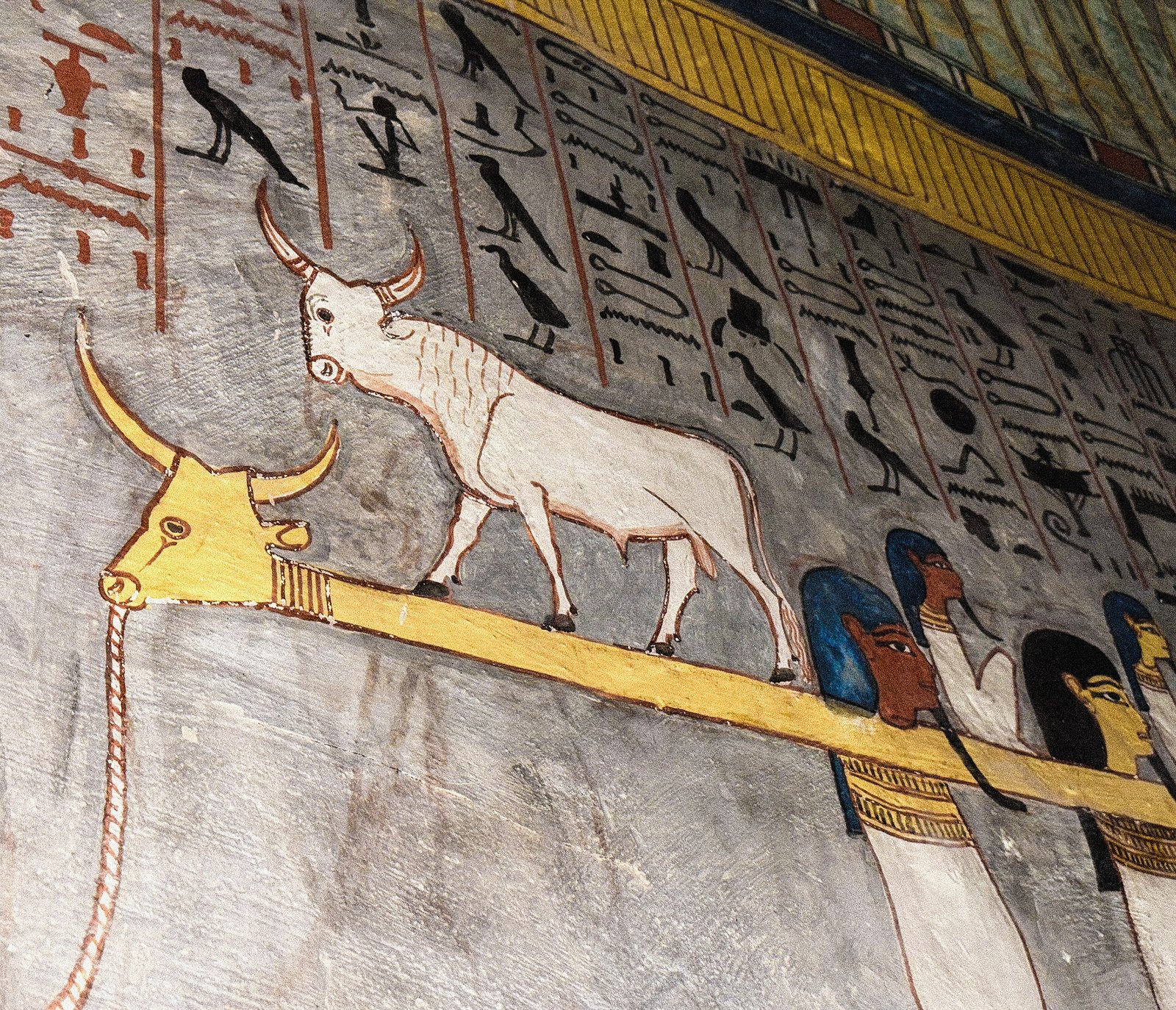
The biggest day. You cross to the West Bank for the Valley of the Kings, where New Kingdom pharaohs were buried in cut-rock tombs instead of pyramids, precisely because a pyramid advertises where the treasure is. Your ticket covers three tombs, and your guide picks from what is open that morning and least crowded at the hour you arrive. Nobody is prepared for the color: three thousand years old and still saturated.
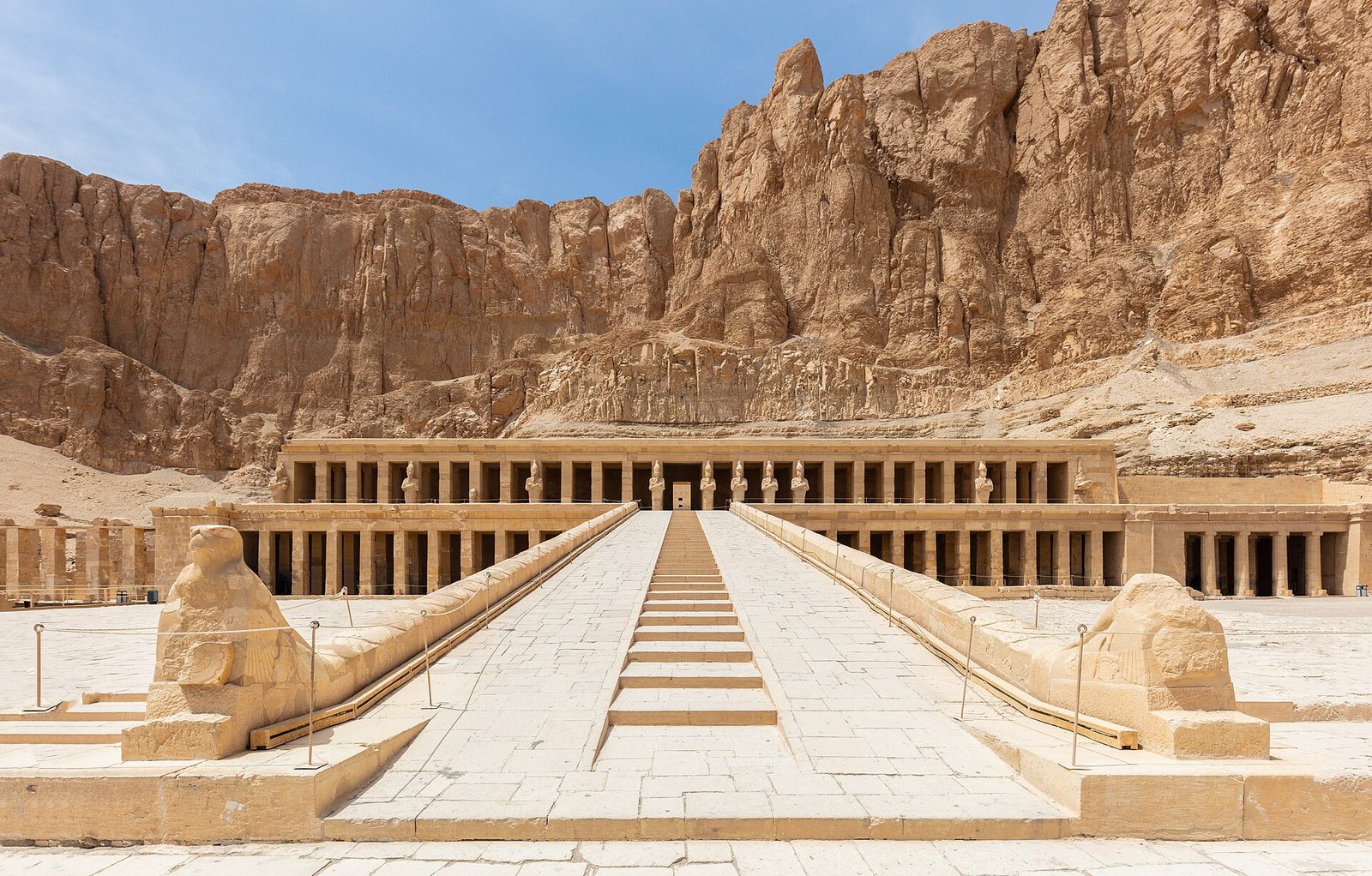
Next is the temple of Hatshepsut at Deir el-Bahari, three terraces set flat against the cliff for the woman who ruled Egypt as pharaoh for two decades and whose successor tried to chisel her out of the record. You finish at the Colossi of Memnon, two seated statues of Amenhotep III, all that stands of what was once Egypt's largest temple complex. The afternoon is free.
Meals: breakfast, lunch and dinner on board. Night: aboard, moored at Luxor.
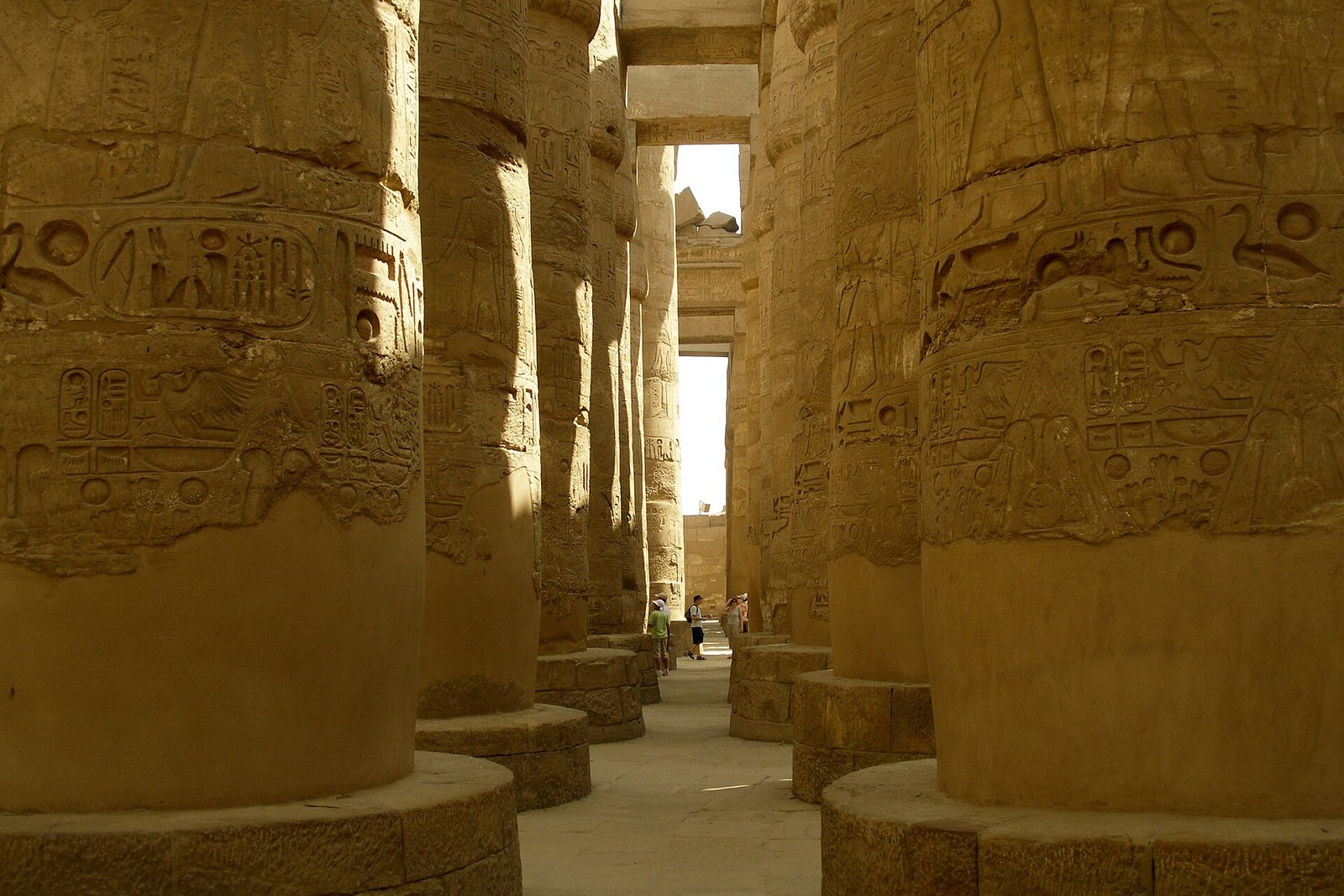
After breakfast you go ashore for the East Bank. Karnak is the largest religious complex of the ancient world, built and rebuilt across two thousand years by pharaohs who each wanted their name on it. The Great Hypostyle Hall is 134 columns, the tallest around 70 feet or 21 meters, and it does the thing where the group goes quiet.
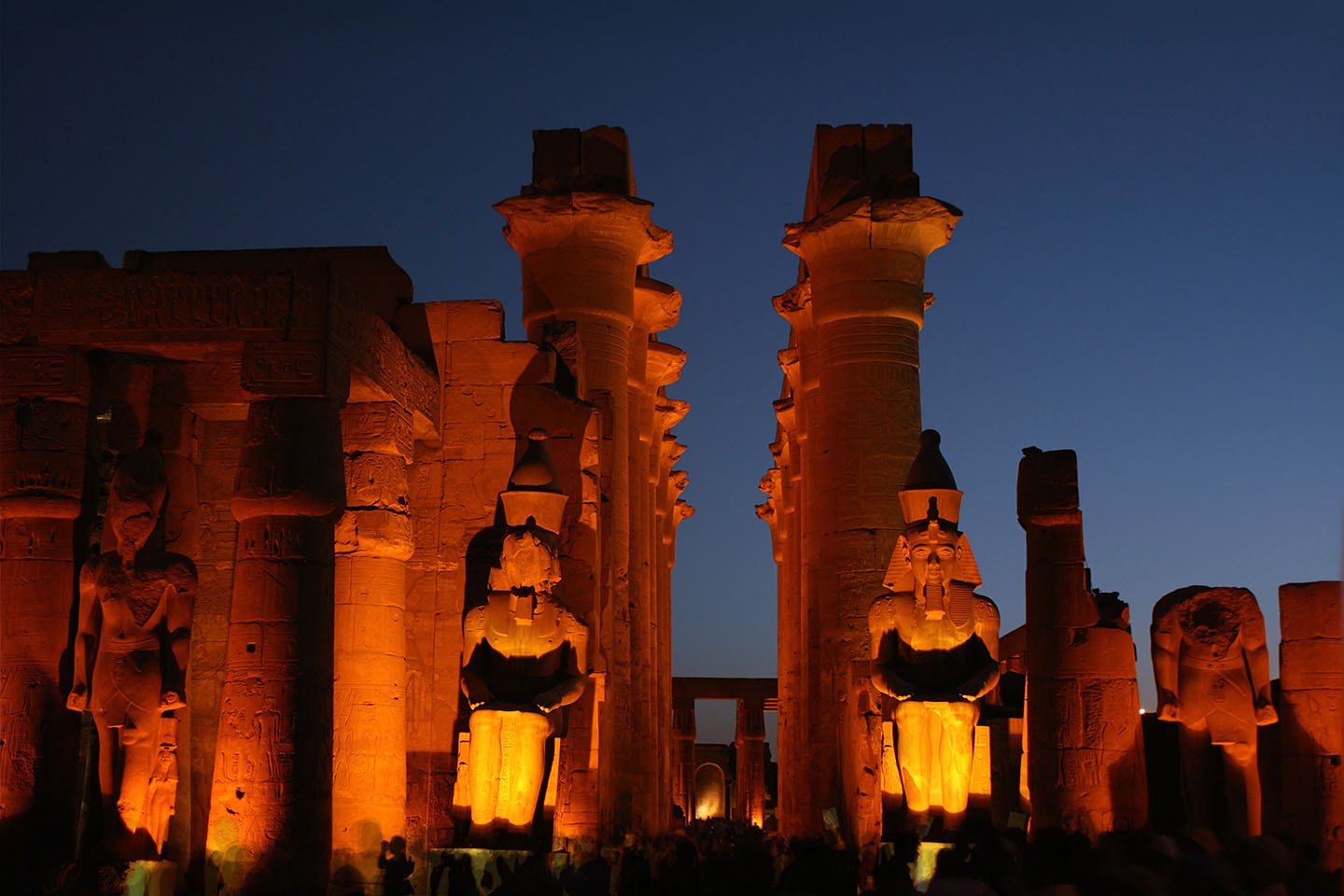
A couple of miles south, roughly 3 km, Luxor Temple closes the circle. The two were joined by an avenue of sphinxes running the whole distance between them, since excavated and reopened, so you can finally read the relationship the builders intended. Luxor Temple is also where the layers stack up: a pharaonic temple, a Roman chapel painted over the reliefs, and a working mosque on top.
Then we drive you to Luxor airport, the station or a hotel, depending on what comes next. Services end there.
Meals: breakfast on board. Night: not included. If you are staying on in Luxor we will book a hotel on request.
Want it in writing?
Day by day, hotels, what is included and the price for your dates. We send it on WhatsApp in a few minutes.
If something is not on either list, it is included. There is no small print on this program and nothing gets added at the desk when you arrive.
What the entrance tickets are worth
Egyptian gate fees are published by the Ministry of Tourism and Antiquities and sold in Egyptian pounds. Every one below is paid on your behalf before you arrive, per person.
| Gate | Official fee | Approx. USD |
|---|---|---|
| Philae Temple, Aswan | 550 EGP | ~$11 |
| Abu Simbel, both temples | 822 EGP | ~$17 |
| Kom Ombo Temple | 450 EGP | ~$9 |
| Temple of Horus, Edfu | 550 EGP | ~$11 |
| Valley of the Kings, 3 tombs | 750 EGP | ~$15 |
| Temple of Hatshepsut | 440 EGP | ~$9 |
| Karnak Temple complex | 600 EGP | ~$12 |
| Luxor Temple | 500 EGP | ~$10 |
| Total already paid for you | 4,662 EGP | ~$94 |
The Colossi of Memnon is an open site with no gate fee, and the Nubian village visit is arranged and paid by us. The dollar column is approximate, converted at 1 USD = 49.79 EGP, the rate in force when we last checked these fees in August 2026. Treat the pound figure as the real number, because the exchange rate moves and the pound price does not. Ministry fees are reviewed periodically.
We print this table because almost nobody else does. When a competing itinerary says entrance fees are not included, this is the money it means, and 94 dollars a head is not a rounding error.
From US$755 per person
Per person, double occupancy. Every gate fee on the program is already paid, so there is nothing to buy at a ticket window.
Gate fees includedEnglish-speaking EgyptologistNothing payable today, quote with no obligation
That is the real starting number for two sharing a cabin, and it covers the whole included list above, the Abu Simbel excursion and all 4,662 EGP of gate fees. Depending on season and ship, the same program runs up to around US$1,200 per person.
What moves the price:
Nothing is payable on this page and there is no cart. Send your dates and traveler count on WhatsApp, we come back the same day with a written quote in US dollars, and if it works you hold the dates with a deposit and settle the balance in Egypt.
We are in Egypt. The guide who meets you at Aswan airport works with us, the driver works with us, and the relationship with the ship is ours. When a gate closes for restoration or a sandstorm shuts the Abu Simbel road, we fix it that morning from here. A company selling this same cruise from an office outside Egypt is buying it from an operator like us and adding a margin, and when it goes sideways at 6 a.m. Cairo time, their office is shut.
The way we work is plain. Message +20 10 3229 5513 on WhatsApp with your dates and party size. A person answers in English, usually the same day, with a written quote in US dollars, the ship named and the inclusions itemized exactly as on this page. Nothing is charged until you say yes, you hold the dates with a deposit, and the balance is settled in Egypt once you have met us. Wiring thousands of dollars overseas to a company you found on Google is an act of faith, so we built it so you do not have to.
On reviews we will be blunt. There is no star rating on this page for this cruise, because we have no verified reviews tied to this one product and inventing them is dishonest and illegal. What we do have is 12 published reviews from real travelers about our agency and our guide Shady Said, names attached. Most are about the guiding, which is the part of an Egypt trip that decides how much you enjoy it.
We also do not sell your international flight, will not pretend to, and say so on every page. Every itinerary we run is private, so there is no minimum group to fill and no departure date to bend your vacation around. If five days is not enough, the same river sits inside the 8-day Egypt itinerary and the 12-day Egypt program, both of which include the domestic flights. To compare them all, start from our Egypt tour packages.
Send us your dates and we come back the same day with a written quote in US dollars. No endless forms and no automated replies: a real person on our team answers you in English.
Keep exploring
Tell us the essentials in 30 seconds. When you send it, WhatsApp opens with your message already written and someone from our team takes it from there.
A real person from our team replies, not a bot, almost always the same day. A quote is free and commits you to nothing.
We use your details only to prepare your quote. We do not share your information or send you advertising.