Nile Cruise With Kids: A Family Guide to Cruising the Nile
Nile Cruise With Kids: A Family Guide to Cruising the Nile
A Nile cruise is one of the easiest trips you can take with children, and the reason is unglamorous: you unpack once. The boat is a floating hotel with a pool on deck and full board, so nobody repacks a suitcase in the morning and nobody goes hunting for a restaurant at eight in the evening with a child who stopped coping an hour ago. You sit still and the country moves past you.
Why a cruise is the easy way to see Egypt with children
A cruise solves, in a single booking, the two hardest parts of traveling with children: where they sleep and what they eat. The boat is the same hotel all week. Compare that with a land itinerary where you change hotel every second night, and the difference shows in everyone's mood by day three.
The deeper reason it works is not the sightseeing program at all. It is that your accommodation is a closed, familiar space, so after every visit everyone comes back to the same cabin and the same pool. A boat also has obvious physical limits, so children move around the deck and the common areas with a freedom they will never have in a city hotel or on a coach tour.
Traveling with a child under two is its own case, with cribs, formula and heat to plan around; we cover it in traveling to Egypt with a baby.
Egypt has a hook that few destinations match for younger travelers. Mummies, pyramids, hieroglyphs and pharaohs are exactly the kind of history children already like, and temples grip them far more than parents expect, particularly from six or seven onwards. What makes it land is a guide who pitches the story at the child's level instead of reciting dynasties. It also helps if children arrive able to recognize a few gods, because a wall of carvings then turns into a game of spot the falcon, the jackal and the woman with the sun disc on her head.
What age does a Nile cruise start to be worth it?
With very young children, under four or five, the cruise is still perfectly workable because of the comfort. What you should expect is that the temples will say very little to them, and that one parent will be taking a turn back on the boat while the other visits. That is a fair trade if you want Egypt now rather than in five years, but go in with the expectation, not with a plan to drag a three-year-old around Karnak in the middle of the day.
The band where it really starts to pay off is around six or seven. That is when children can last through a visit, follow the story a guide is telling and remember what they saw afterwards. Preteens and teenagers do even better. The pool, the atmosphere on board and the general feeling of an expedition suit them, and several of the temples are genuinely spectacular by any standard, not only by a child's.
Whatever the age, the thing that ruins a family cruise day is overloading it. One visit properly lived plus an afternoon in the pool beats three temples and a child who has shut down. Any decent operator will let you skip a stop. Ask about that before you book rather than on the morning you need it.
One point that catches families out: optional extras have their own rules. Balloon flights over Luxor are run by independent operators who set their own minimum age and height limits, so check with the operator before you promise a child anything.
Cabins are the one thing to settle before you book
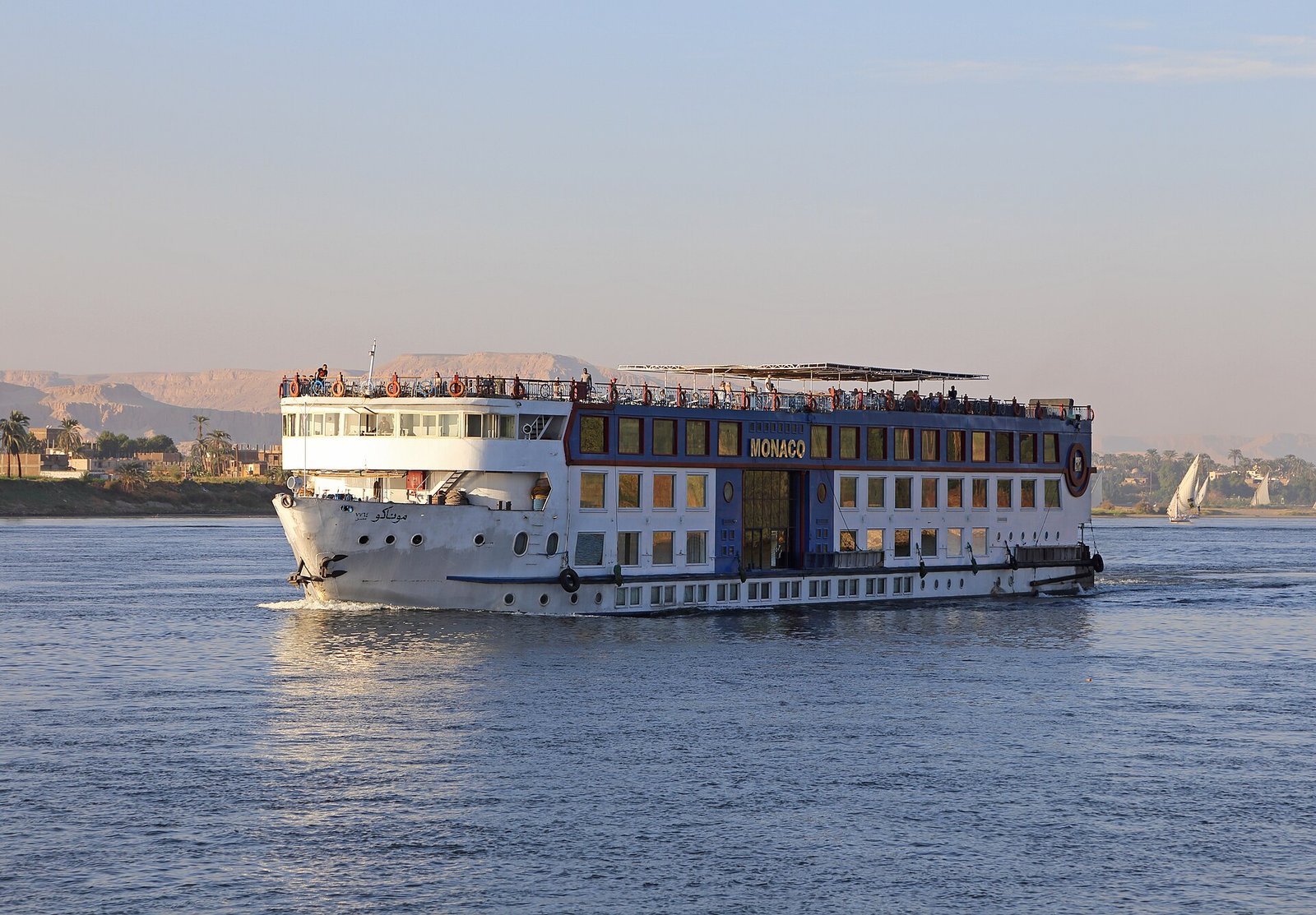
This is the part that needs planning, because most cruise cabins are doubles and they are not large. Cabin size and layout vary a lot between boats and between cabin grades on the same boat, so it is a detail to get confirmed in writing rather than discover on embarkation day. There are three workable configurations.
| Option | Best for | What to check |
|---|---|---|
| Triple cabin or extra bed | Two adults and one smaller child; the least expensive route | Whether the boat actually has triples, and how much floor space is left once the third bed is in |
| Two adjoining or connecting cabins | Older children and teenagers; the most comfortable option by some distance | Adjoining and connecting are not the same thing. Ask which one you are getting, and book early because these pair up fast |
| Privatizing a dahabiya | Large families, or two or three families traveling together | How many cabins the boat has in total, and whether the whole-boat rate beats booking cabins separately |
A dahabiya is a small sailing boat with a handful of cabins, and taking the whole thing is a different holiday from a standard cruise ship. You set the pace, you stop where you like, and there is nobody else on board. For a group large enough to fill it, the economics often work out better than people assume.
Two habits will save you grief later. Ask explicitly for adjoining or connecting cabins if you are booking two, and confirm the bed configuration at the time of booking rather than assuming a twin is a twin. Not every boat offers every layout, and this is the sort of detail that is easy to fix a month out and impossible to fix at the gangway. If you are still weighing boats, the practical differences are covered in more depth in our guide to choosing a cruise boat.
Food, water and the small health kit
Meals on board are buffet, varied and generous, so children reliably find something they will eat. Pasta, rice, chicken, fruit and desserts are always on the table, and fussy eaters tend to do better here than at a set-menu hotel. Nobody has to finish anything, and there is no waiting for a bill.
Off the boat, take the ordinary Egyptian precautions. Bottled water only, no ice in drinks, and skip salads at places you cannot judge. This is not alarmism, it is the same advice any local would give their own family, and the reasoning behind it is explained in our note on drinking water in Egypt. On board you can relax about it.
Pack a small kit and you will need very little else: high-factor sunscreen, insect repellent, something for upset stomachs, and whatever your children normally take at home in the quantities they normally take it. Bring prescription medication in its original packaging and in enough quantity for the whole trip, because a brand you rely on may not exist in an Egyptian pharmacy. Sun matters more than families plan for: even in January the light on the deck and in open temple courtyards is strong, and hats are not optional.
Planning this trip yourself takes hours. We build it for you, and we answer every question before you commit to anything.
How safe is a Nile cruise with children?
A Nile cruise is a very protected environment. You are moving along an established tourist corridor with crew who notice things, transfers arranged for you and none of the exposure that comes with getting yourself around a foreign country independently. For most families this is the least stressful way to see Upper Egypt, and it is worth reading our broader piece on safety in Egypt alongside your own government's current travel advice.
The real hazards on a family cruise are the ones you would watch for at any hotel with a pool. Do not assume the pool is supervised: treat it as an unsupervised pool unless the boat confirms otherwise. Deck railings vary from boat to boat, and with a small child the height and spacing of those railings is a legitimate question to ask before you book, not a fussy one. Those two checks, pool supervision and railing height, are worth more than any general reassurance.
Travel insurance deserves a line of its own. Medical care in Luxor and Aswan handles ordinary problems, but you may want the option of moving a patient to Cairo, and that is what a policy is for. Buy it when you book.
When to go, and how many nights
Travel between October and April and avoid the summer. Upper Egypt in July and August is genuinely hard on small children, and no amount of pool time compensates. In winter the days are mild and visits are comfortable, and the difference between a February morning at Karnak and an August one is not a matter of degree. Timing also has to fit school holidays, and the good months are the same handful of weeks that every other family is targeting, so book well ahead. Our guide to the best time to visit breaks the seasons down month by month.
On duration, four nights on the boat plus a couple of days in Cairo is the balance that works for most families. It is long enough to see the important things without the trip turning into an endurance test. Stretching to a week also works if your children are older and you like a slower pace, though few families with under-tens want more than four nights afloat.
Direction matters more than families expect. The standard itineraries run between Luxor and Aswan, and they are not symmetrical. Nights and stops differ from boat to boat, so confirm the program for the sailing you are quoted:
| Route | Usual length | Usually includes |
|---|---|---|
| Luxor to Aswan | Four nights on most programs | Karnak and Luxor temples, the Valley of the Kings, the Esna lock, Edfu, Kom Ombo, then Philae and the High Dam at Aswan |
| Aswan to Luxor | Three nights on most programs | The same sites in reverse, with less time on board and a tighter last morning in Luxor |
So when a family asks for four nights, they are usually asking for the Luxor to Aswan direction whether they know it or not. If you want the Abu Simbel excursion, it attaches at the Aswan end, which is another argument for finishing there rather than starting there. Fitting the cruise inside a sensible overall trip length is its own question, and our page on how many days to plan works through the usual combinations.
The hours on board between the temples
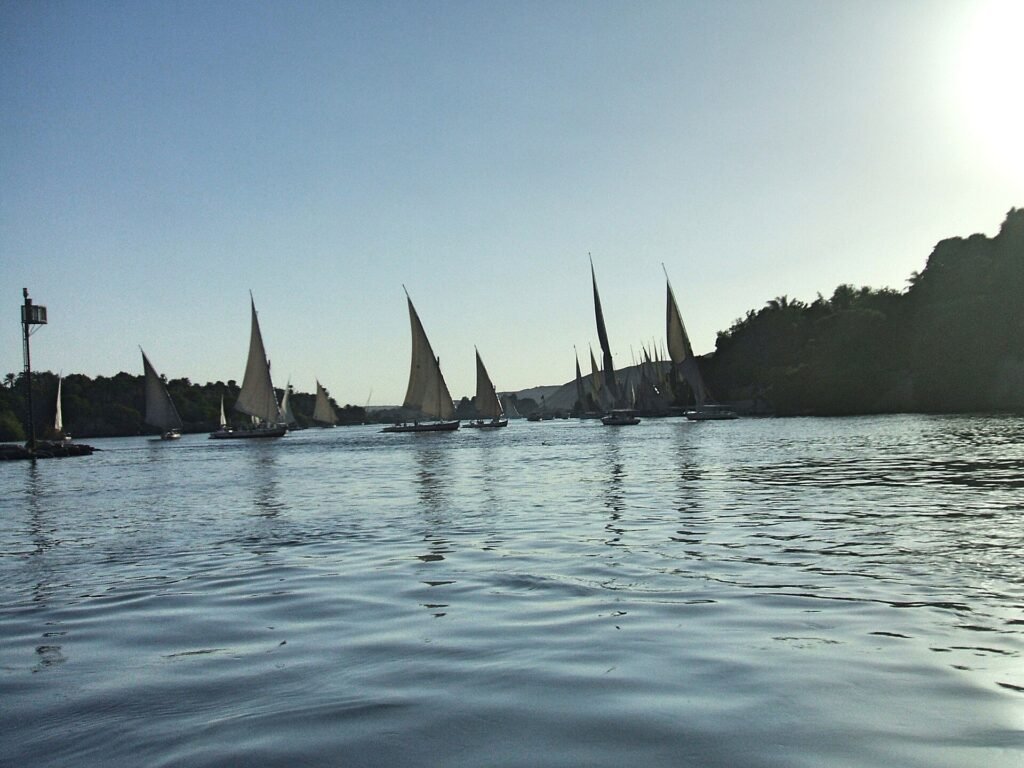
Sailing happens mostly in the middle of the day, and those hours are free time. They work better than parents expect. There is the pool, there is the deck, and there is a bank that changes continuously: villages, fishing boats, buffalo, donkeys, egrets and kingfishers. Children who will not sit through a museum will sit on a sun lounger watching that for a surprisingly long time.
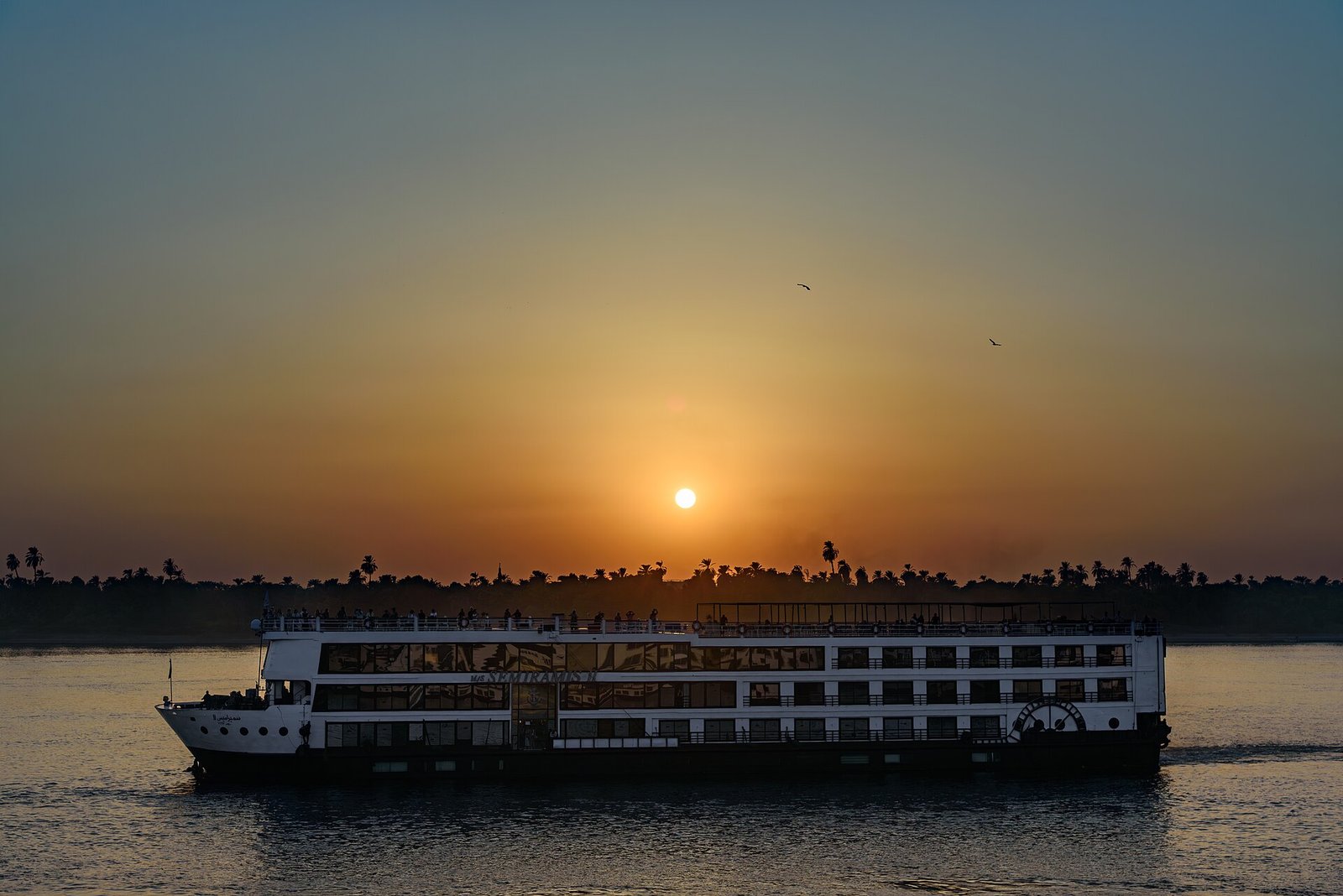
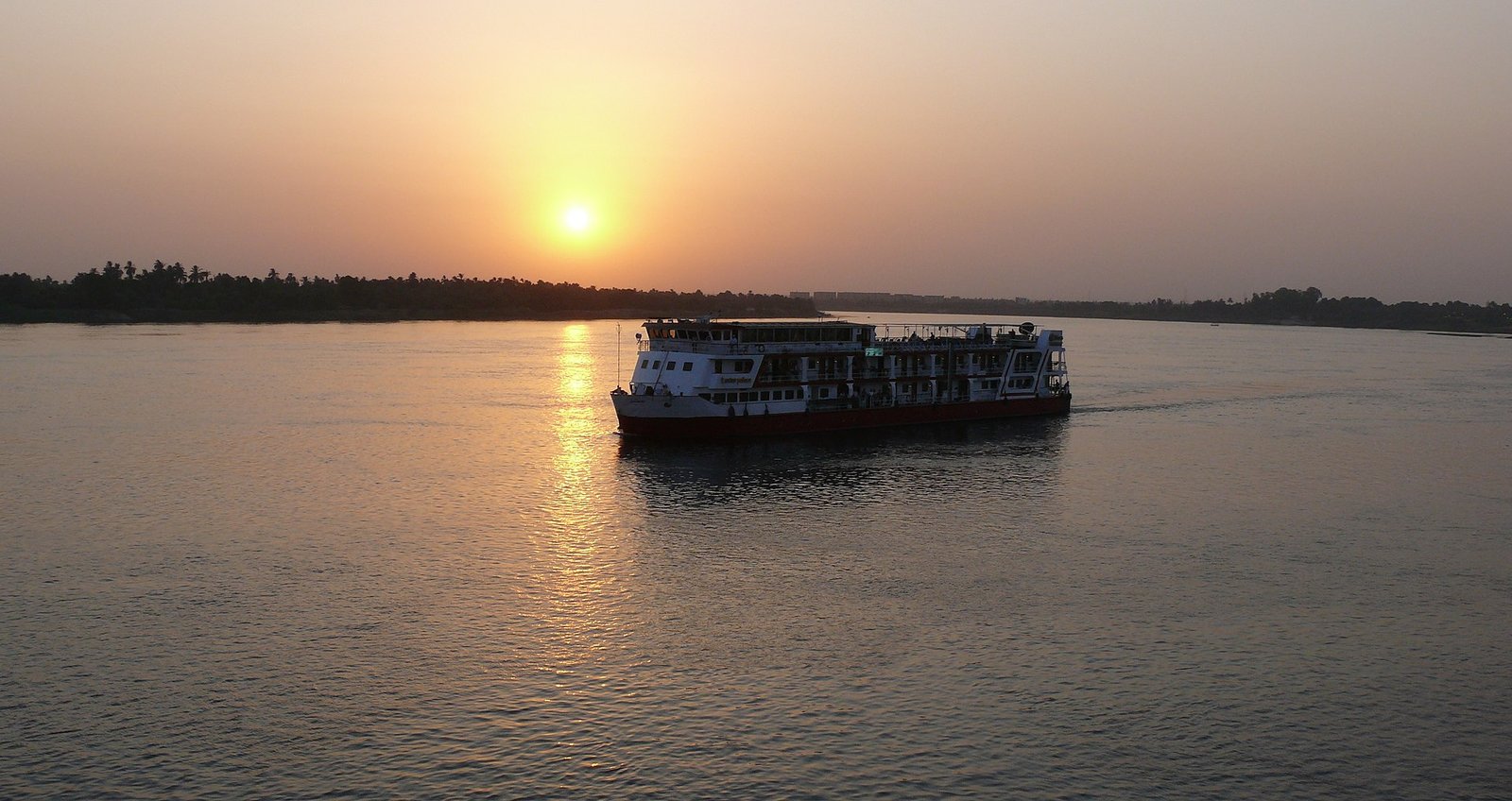
Two moments are reliably the favorites. The first is the Esna lock, where the boat is raised or lowered between water levels and small vendor boats come alongside to throw goods up to the deck, which children find far more entertaining than any temple. The second is sunset over the river, which is the reason people write about the Nile in the first place.
Bring entertainment that does not need a signal. Wi-fi on board is irregular and sometimes absent for long stretches, so anything that depends on streaming will fail at the worst moment. Cards, a book, a sketchpad, downloaded films on a tablet. Treat the connection as a bonus rather than a service.
Putting the family trip together
Four things make the difference between a smooth family cruise and a fraught one: private transfers instead of shared coaches, a guide who is genuinely good with children, cabins confirmed in advance, and domestic flights timed without a rush. Improvising connections or changing hotel every night with tired children is precisely what a cruise saves you from, so it is worth assembling properly.
On flights, one clarification. We handle the Egyptian domestic legs, Cairo to Luxor or Aswan back to Cairo, inside the program. Your international flights into and out of Egypt are yours to arrange. Send us your arrival and departure times before we finalize the internal flights so the two fit together with margin.
On cost, our Nile cruise programs start from US$755 per person, and many boats charge a reduced rate for children, particularly when they share a cabin with their parents. The exact reduction and the age at which it applies depend on the boat and the season, so the only honest answer is a quote for your actual family and dates. Budget separately for entrance fees where they are not included, and for crew tips at the end of the cruise, which are customary and paid in Egyptian pounds.
We build family trips to measure: the pace matched to your children's ages, a boat with the cabin configuration you actually need, and every question answered before you pay anything. Message us on WhatsApp at +201032295513, or look through the family tour packages to see how a cruise fits into a full itinerary. We are a local agency in Egypt, so you are talking to the people who will run the trip rather than to an intermediary.
Common questions about a Nile cruise with children
From what age is a Nile cruise worth doing with children
Is a Nile cruise safe for children?
Are there family cabins on Nile cruises?
What do children eat on board?
When is the best time to cruise with children?
Do children pay the same on a Nile cruise?
Let us put the trip together
We are a local agency in Egypt. Tell us your dates and what you want to see, and we will come back with a plan, the practical details sorted and someone to ask when you are here.
Keep exploring
To finish planning your trip to Egypt
- ▸4-Star vs 5-Star Nile Cruise: What Really Changes
- ▸Nile Cruise from Hurghada: Formats, Transfer Day and Tips
- ▸Nile Cruise in December: Weather, Crowds and Christmas
- ▸Nile Cruise Luxor to Aswan or Aswan to Luxor: Which Way?
- ▸Nile Cruise Boats: Types, Categories and How to Choose the Right One
- ▸A cheap Nile cruise can be a smart buy, if you know exactly what was cut
- ▸Traveling to Egypt with a Baby: Heat, Cruise, Cribs, Formula
- ▸See all our Egypt tours