A Nile cruise in summer is a different trip, and this is what June, July and August feel like on the ship
A Nile cruise in summer is a different trip, and this is what June, July and August feel like on the ship
A Nile cruise in June, July or August is hot, quiet and more comfortable than the forecast suggests, provided the ship runs on a summer clock. Luxor and Aswan sit around 106 F (41 C) in the afternoon, but the air is bone dry and the ship is air conditioned, so the day is simply flipped: temples at first light, sailing through the hottest hours with the deck in shade, pool and tea at four, Luxor Temple after dark. Fewer ships sail, so cabins are easy to find and the temples are half empty. It is not the season for a dahabiya, and not for anyone who wants to be outside at two in the afternoon. For everyone else it works.
What the heat means on a moored ship versus a sailing ship
The number people quote is the afternoon high, and from late June to the end of August that is 104 to 108 F (40 to 42 C) in Luxor and a degree or two more in Aswan. What the forecast never tells you is how different that feels depending on whether the ship is tied up or moving.
A moored ship in the afternoon is the worst case. It is often rafted three or four deep on the Luxor or Aswan corniche, so one side of cabin windows looks at a steel hull, the sun deck has no breeze, and the pool reaches bath temperature by three. Inside stays cool on the air conditioning, but nobody goes up top.
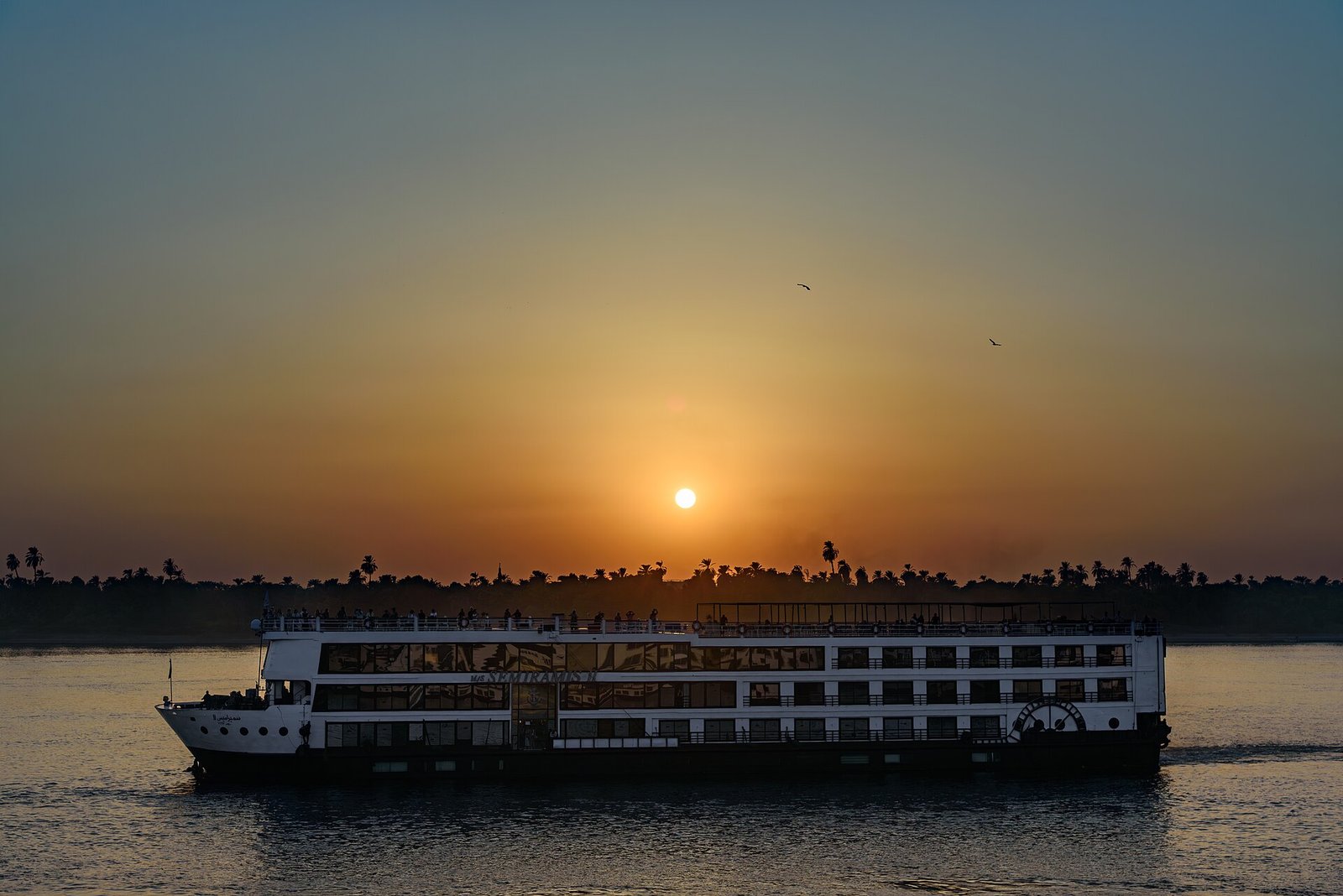
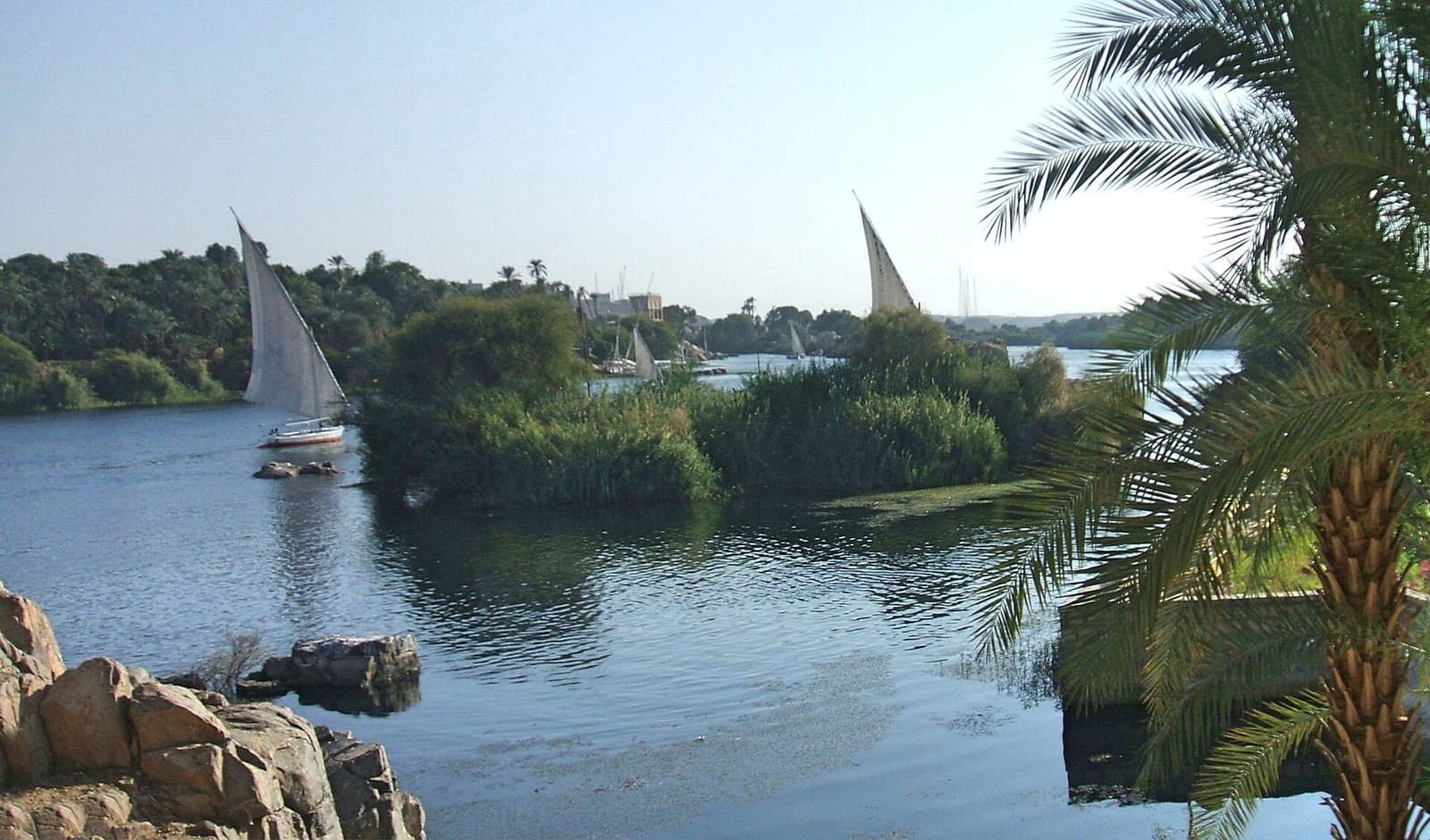
A sailing ship is a different world. Once the boat is moving into the prevailing north wind, the deck picks up a steady breeze, the shade sails go out, and the river itself is cooler than the town. This is why good captains sail through the hottest hours instead of sitting at a dock, and why a summer itinerary that spends the afternoon moored in Luxor is a badly built one.
Humidity in Upper Egypt in summer is very low, so 106 F feels like a dry desert afternoon, not a Gulf Coast one. Nights drop to the mid 70s F (around 24 C), which is why the top deck after dinner is where everyone ends up.
The summer rhythm the crew adopts
Every crew that sails in July follows the same playbook. It is not printed anywhere; you learn it from the wake-up knock.
- Temples at dawn. Wake-up call around 5 am, a quick coffee, and the bus or carriage reaches Edfu or Karnak as the gates open. You are back on board before ten, before the stone starts radiating heat.
- Sailing at midday. The ship casts off mid morning and sails through lunch and the early afternoon. The lounge is cold enough for a sweater and the deck is empty except for one or two people under the shade sail with the breeze.
- Pool and deck at four. By four the sun has lost its edge, the pool has been topped up, and tea is served on deck. This is the social hour of a summer cruise, and it runs to sunset around 7 pm.
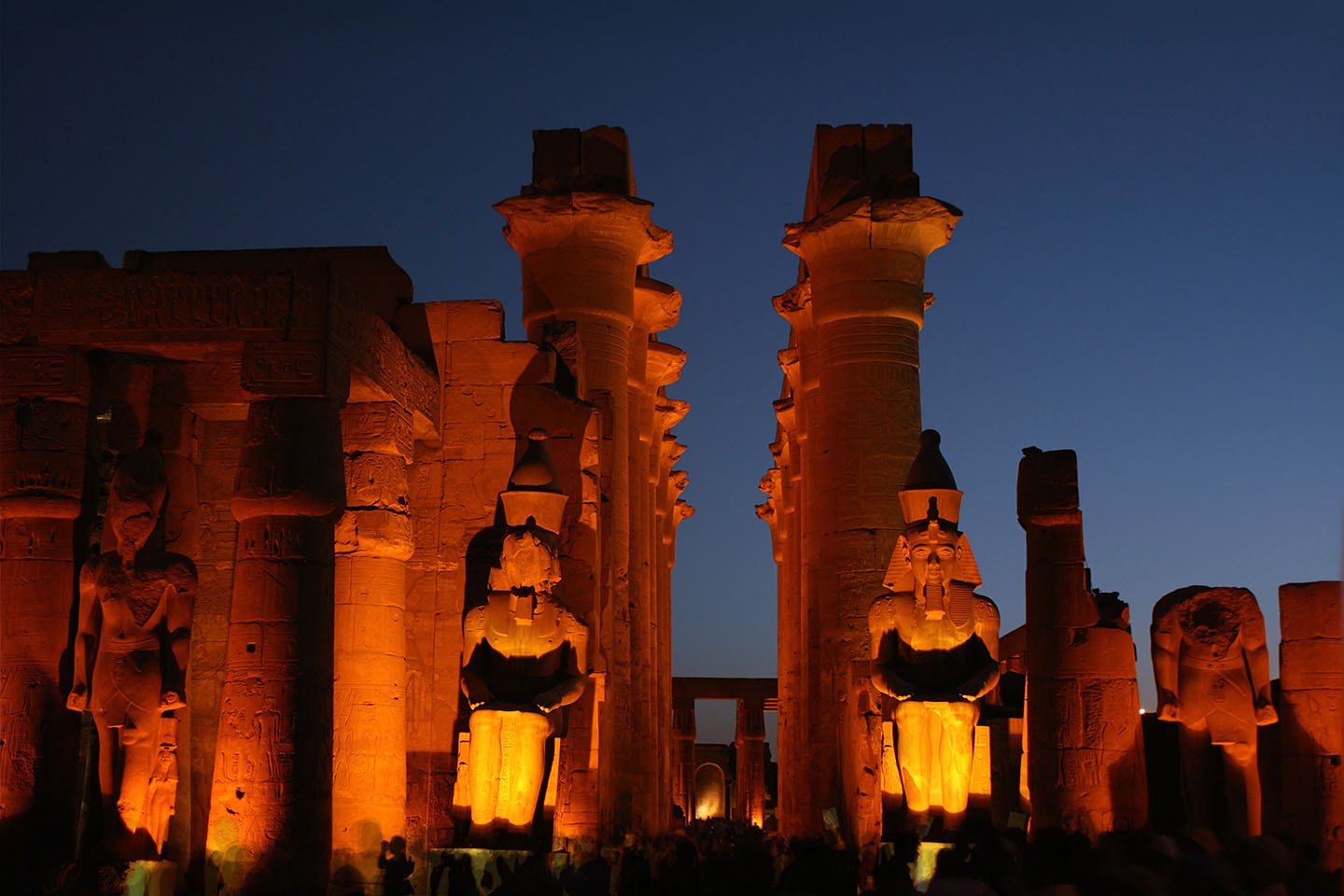
- Luxor Temple at night. On the Luxor end the crew sends you to Luxor Temple after dinner, when it is floodlit and the air is soft. Karnak's sound and light show fills the other evening.
Kom Ombo is the exception, a short walk from the mooring and usually done at dusk, when the light is at its best.
The reduced summer fleet and what it does to availability
From June to September a large share of the Nile fleet goes into dry dock for repainting, engine work and refurbishment. The ships that keep sailing are the ones with strong summer bookings, usually the bigger five-star vessels with the best pools and the most reliable air conditioning. The small, older boats mostly stop.
That pulls in two directions. Availability is easy: on a given Saturday in July there are cabins on good ships that would be sold out in November, and upgrades are often possible on request. But choice is narrower. If you have your heart set on one boutique ship, check whether it sails at all in August.
The smaller fleet also changes the temples. Edfu at seven in the morning in February has twenty ships' worth of visitors walking up from the carriage stands. In July it can be three or four. Some ships also drop to a single weekly departure, so your arrival day may be set by the ship. Read the overview of how a Nile cruise works if you are new to the route, then treat summer as its quiet edition.
Cabin side, the sun and the Esna lock
Which side of the ship
People ask about port or starboard more in summer than any other season, and the honest answer is that it matters less than the deck. Sailing south from Luxor the west bank is on your right, so those cabins take the afternoon sun; sailing north it reverses. But the ship turns at each end and moors on whichever side the corniche allows.
What does matter is height. Lower deck cabins sit close to the water under two or three floors of insulation and are the coolest rooms on the ship. Cabins directly under the sun deck warm up by late afternoon even with the air conditioning working hard. If you run hot, ask for a middle or lower deck cabin.
The Esna lock in summer
Every ship between Luxor and Aswan passes the lock at Esna, and in winter the queue can cost four or five hours tied up in the sun. In summer, with far fewer ships, the wait is short and often happens at night while you sleep. You wake up on the other side with the day already on schedule.
Hydration and clothes on deck
Dry heat is treacherous because you do not feel yourself sweating. On a July sailing day you should be drinking a liter of water every couple of hours and adding salt through food or a rehydration sachet once a day. Keep a bottle in the cabin fridge and drink before you feel thirsty, because by then you are already behind.
Clothes on deck follow three rules:
- Long, loose and light beats short and tight. A linen shirt with the sleeves down is cooler than a tank top by mid afternoon.
- A real hat with a brim, not a baseball cap. The back of the neck is where people burn on the Nile, because the sun is high and reflected off the water.
- Footwear that slides on and off. The deck boards get hot enough to notice by two.
For the temples, the same shirt plus long light trousers and a scarf you can wet and drape over the neck. The full list is in our guide to what to pack for a Nile cruise.
Families in summer break
American families are the biggest group on the summer ships, because the kids are out of school and nobody else sells a vacation with pyramids, a pool and a boat in one trip. It works, as long as the ship has a real pool and the day runs on the crew's clock.
The dawn temple visits are short by necessity, which suits children. Two hours at Edfu before breakfast is a better experience for a nine-year-old than four hours at noon in April. The afternoon becomes a pool day with the Nile going by, and the evening visits feel like an adventure. Kom Ombo's crocodile museum, the Nubian village boat ride and the carriage to Edfu are the three things kids talk about afterwards.
Two cautions. Book a ship with a proper pool, not a plunge tub on the sun deck. And keep the west bank day in Luxor to three tombs, not six. We cover the rest, including interconnecting cabins, in our guide to a Nile cruise with kids.
Why a dahabiya can be harder in summer
A dahabiya is the two-masted sailing boat with eight or ten cabins that moors at islands instead of city docks, and it is the best way to see the Nile from October to April. In July it is a harder sell.
There is no pool. The deck is shaded and the north wind is often strong in summer, which helps the sailing, but the only way to cool off is the cabin or a swim off a sandbank where the crew allows it. The pace is slow, so the boat cannot sail away from the heat the way a motor ship does; when the wind drops, a tug tows it at walking pace. And several dahabiya operators simply do not run in July and August.
That said, a dahabiya in June with a strong wind and a group that likes to read in the shade can be lovely, and island moorings are cooler than a corniche. Our dahabiya Nile cruise guide is written for exactly that decision. Our default for July and August is a five-star motor ship with a good pool.
The honest case for and against
For
- The temples are as empty as they get all year, and the dawn light on the sandstone at Edfu and Kom Ombo is the best you will see.
- Cabins are available, upgrades are realistic, and the crew has time for you.
- The night visits, Luxor Temple lit up and the Karnak show, are on every summer itinerary and missed by many winter travelers.
Against
- Between eleven and four you are inside, full stop. If you want to wander a temple at noon, this is the wrong season.
- The Valley of the Kings is hard in July even at seven in the morning. It is done, but briskly.
- Anyone with heat-sensitive health conditions, and very small children, should look at September or spring instead.
The short version: summer suits a family, a couple who likes quiet, and a traveler adding the Nile to a Red Sea week. It is not the season if the cruise is the once-in-a-lifetime centerpiece and you can travel any time. For that, read our guide to the best time to visit Egypt and pick October to April.
A summer day by day for a 4 night cruise, Luxor to Aswan
This is the shape a good ship keeps in July. Times shift with the sunrise, around 5 am in June and closer to 5:30 by late August.
- Day 1, Luxor. Board around noon, lunch, pool through the heat. Late afternoon bus to Karnak until sunset, dinner, then Luxor Temple after dark. Ship stays moored.
- Day 2, west bank and sail. Wake at 5, across the river at 6, Valley of the Kings with three tombs, Hatshepsut's temple, the Colossi from the bus. Back on board by 10:30, ship sails south through lunch. Esna lock in the afternoon or overnight. Deck, pool, tea.
- Day 3, Edfu and Kom Ombo. Carriage to Edfu at 6:30 while it is still cool, back by 8:30. Sail through the day. Kom Ombo at dusk, walking distance from the mooring, then sail on to Aswan overnight.
- Day 4, Aswan. Early motor boat to Philae before the heat, back on board by 11. Afternoon at the pool. At five a felucca to the Nubian village, sunset on the water. Optional Abu Simbel as a pre-dawn road trip the next morning.
- Day 5, disembark. Breakfast and off the ship by 8, before the day warms up.
June, July and August compared
The three months are not the same, and the differences decide who should go when.
| Month | Heat in Luxor and Aswan | Ships sailing | Who should go |
|---|---|---|---|
| June | Highs around 104 F (40 C), sunrise near 5 am, nights still comfortable on deck. | Most good ships still sailing; dry dock begins toward the end of the month. | Couples and families who want the widest choice of ship. |
| July | Highs around 106 to 108 F (41 to 42 C), the hottest weeks of the year, still at the docks but breezy on the river. | The smallest fleet. Mainly five-star motor ships, very few dahabiyas. | Families on summer break, and anyone adding the Nile to a Red Sea week. |
| August | Highs the same as July, sunrise a little later, evenings softer in the last week. | Still small; ships start returning from dry dock toward the end of the month. | Late summer break travelers, and those who can push to the last week for more choice. |
June is the pick if the trip is about the cruise itself; the wider picture is in our guide to visiting Egypt in June. If you have any flexibility, visiting in September explains why the month after summer, when the fleet returns and the afternoons ease, is the quiet reopening month.
How a local agency builds a summer cruise around the heat
A summer cruise sold as a generic itinerary is the one that produces bad reviews. Built properly, it looks like this.
- We pick the ship first, from the ones actually sailing that week, and we choose for the pool, the shade on the sun deck and the age of the air conditioning, in that order. Our guide to Nile cruise boat types and how to choose covers what we look for.
- Your guide runs the dawn schedule, cuts the Valley of the Kings to the three best tombs, and adds the Luxor Temple evening visit that winter programs often skip.
- Any hotel nights in Luxor or Aswan go to properties with real pools, and the Abu Simbel road trip leaves at four in the morning so you are back by lunch.
- We tell you the truth about which month is better. If it is the once-only trip and you can travel in October, we say so and send both quotes.
Send us your dates and how many are traveling. We reply with the ships sailing those weeks, the cabins still open, and an itinerary written around the heat rather than pretending it is not there.
Frequently asked questions
Is a Nile cruise in July too hot to enjoy?
Not if the ship runs the summer schedule. Afternoons in Luxor and Aswan reach 106 to 108 F (41 to 42 C), but you spend them on board, sailing with the breeze on deck or in a cool lounge. Temple visits are at dawn and after dark, when the air is in the 80s F (high 20s C). The people who struggle are the ones who insist on a noon visit.
Which Nile cruise ships sail in summer?
Fewer than in winter. Many owners use June to September for dry dock, so the ships still sailing are mostly the larger five-star motor vessels with good pools and strong air conditioning, plus a few dahabiyas in June. The list changes every year. Tell us your dates and we send you which ships are actually departing Luxor and Aswan that week.
Does the pool on a Nile cruise ship actually help in August?
Yes, and it is the most used part of the ship from noon to five. The water warms up on a moored ship by mid afternoon, but on a sailing ship the wind keeps the deck and the pool pleasant, and the crew tops it up. Choose a ship with a real pool rather than a plunge tub; in summer that choice matters more than the cabin category.
Is the Esna lock a problem for summer Nile cruises?
Usually the opposite. In winter ships can wait four or five hours at Esna for their turn, moored in the sun. With the reduced summer fleet the wait is short and often overnight. In some years the lock closes for maintenance for a couple of weeks in early summer, and ships then run in two halves with a short bus link. A local agency knows the dates before you book.
Should I choose a dahabiya or a motor cruiser for a summer Nile cruise?
For July and August, a motor cruiser with a pool. A dahabiya has no pool, moves slowly, cannot sail away from the heat through the afternoon, and several operators pause for the hottest months. In June with a strong north wind a dahabiya can still be lovely, and its island moorings are cooler than the city docks. We give a straight recommendation once we know your dates.
What should I wear on deck during a summer Nile cruise?
Long, loose and light. A linen shirt with sleeves down, light long trousers or a long skirt, a brimmed hat and slip-on sandals. For the temples add a scarf you can wet and drape on your neck. Drink water constantly on deck, because the dry air hides how much you are losing. Swimwear is fine at the pool and nowhere else on the ship.
Tell us your summer dates and we will tell you which ships are sailing
Write to us on WhatsApp with the week you have in mind and how many are traveling. Explora Egipto is a local agency in Egypt with its own guides and vehicles, and we sail the summer route every year. We reply with the ships departing that week, the cabins still open, an itinerary built around the heat, and the quote.