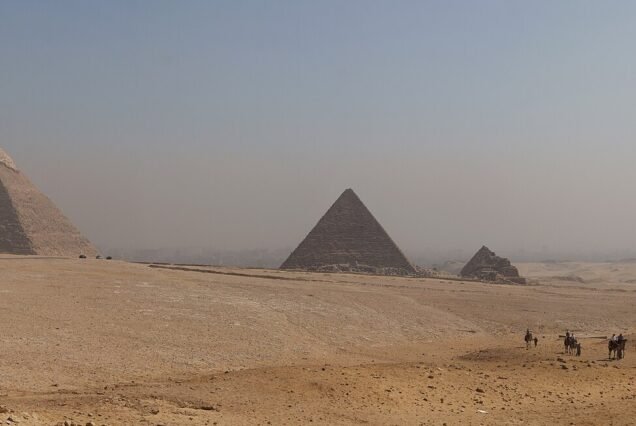
The pyramids, three nights on the Nile and Abu Simbel, without spending your vacation in a van
Eight days, seven nights, one licensed Egyptologist throughout. Domestic flights inside Egypt and every gate fee on the route are already paid.
If this is your first trip to Egypt and you want the pyramids, the Nile and Abu Simbel without spending your vacation in a van, this is the itinerary that fits. Eight days is the point where Egypt stops feeling rushed. You get three full days in Cairo, three nights sailing between Aswan and Luxor, and a west bank finale that includes the tomb of Nefertari, which most programs sell separately.
It suits travelers who would rather move by short domestic flight than by long highway, who want a private guide instead of a coach with forty strangers on it, and who want to know before booking exactly which gate fees are covered. Every temple ticket on this route is prepaid, so you will not be pulled aside at Karnak for cash.
It is less suited to travelers who want Red Sea beach time or a two-week trip adding Alexandria and the oases. This is the classic circuit, done properly, in the time most travelers can take off work.
Eight days and seven nights, starting and ending at Cairo International Airport. Cairo to Aswan by air, Aswan to Luxor by river, Luxor back to Cairo by air.
Three things separate it from the other eight-day programs you will compare it against. Nefertari's tomb sits inside the price rather than at the gate. The two long transfers are flown, so you keep the ten hours the Cairo to Luxor highway would cost you. And the gate fees are itemized further down this page at the published 2026 ministry rate, so you can check the math before sending a deposit.
Many long-haul flights land in Cairo in the evening or after midnight. Even a nonstop is a long flight, and if you are connecting the door-to-door number can run past twenty hours. Add the time difference from home on top of that.
So nothing is scheduled today, on purpose. A representative meets you before immigration to help you through the formalities, and a private car takes you to your hotel. Programs that schedule a pyramid visit for arrival afternoon are selling a day you spend half asleep.
Meals: none scheduled. Night: Cairo hotel.
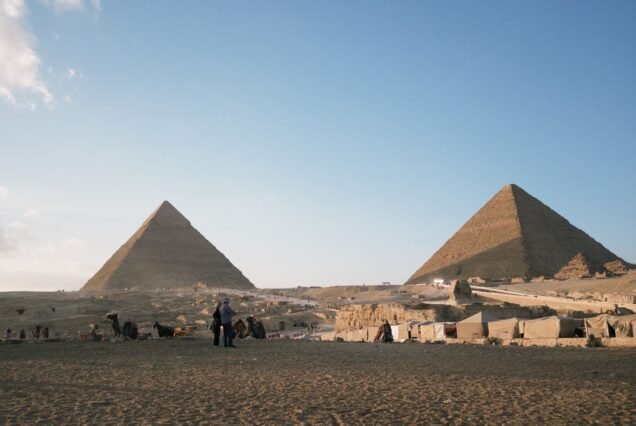
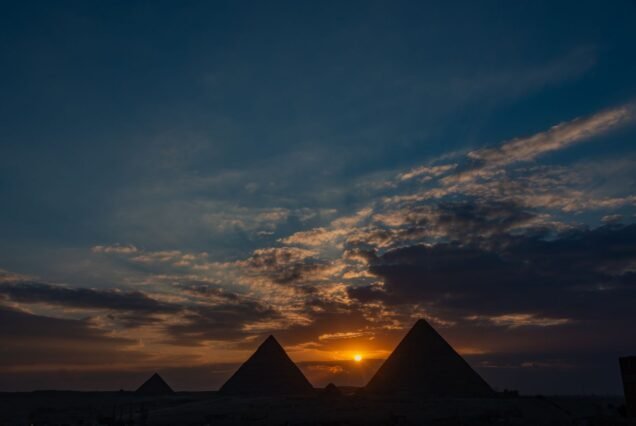
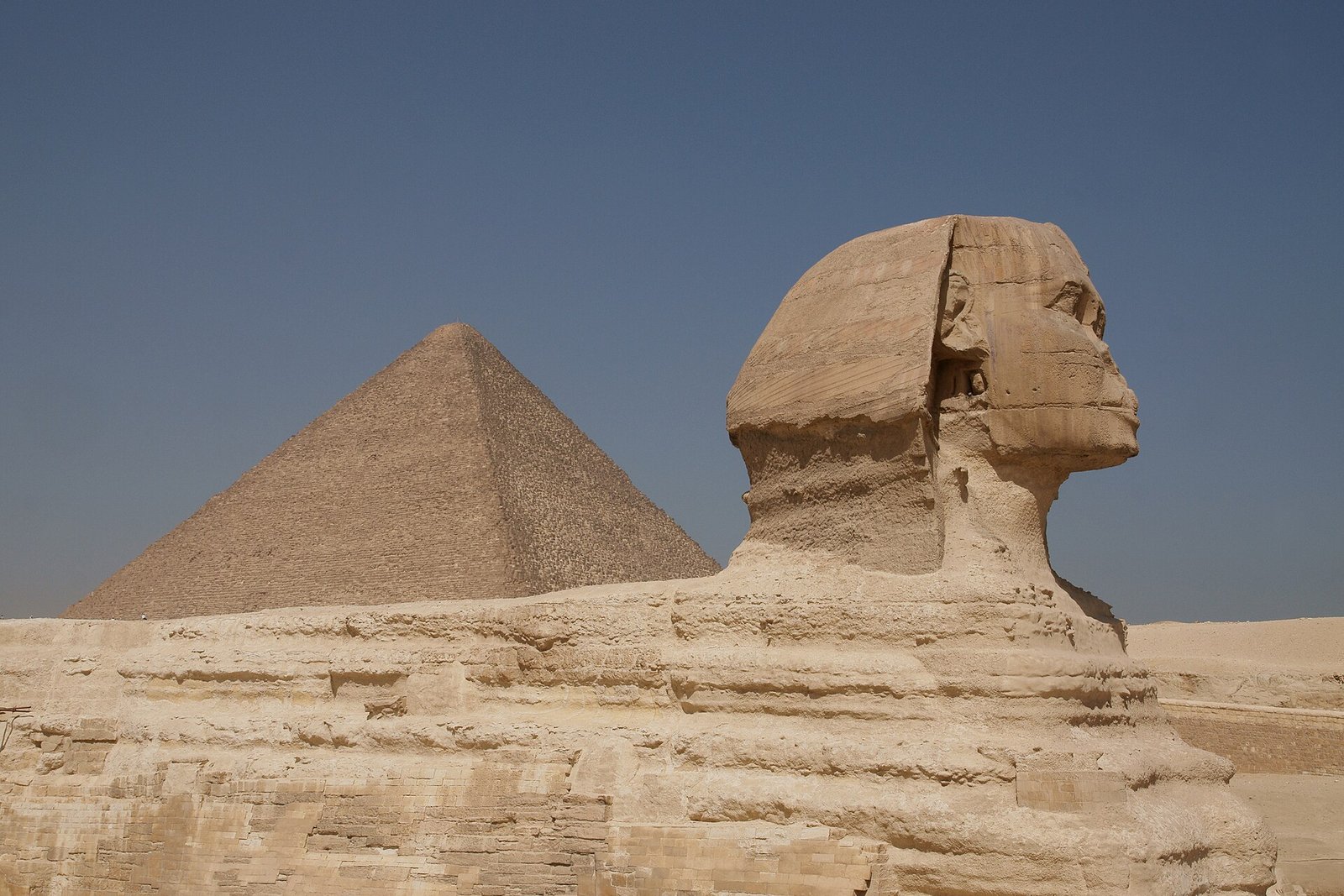
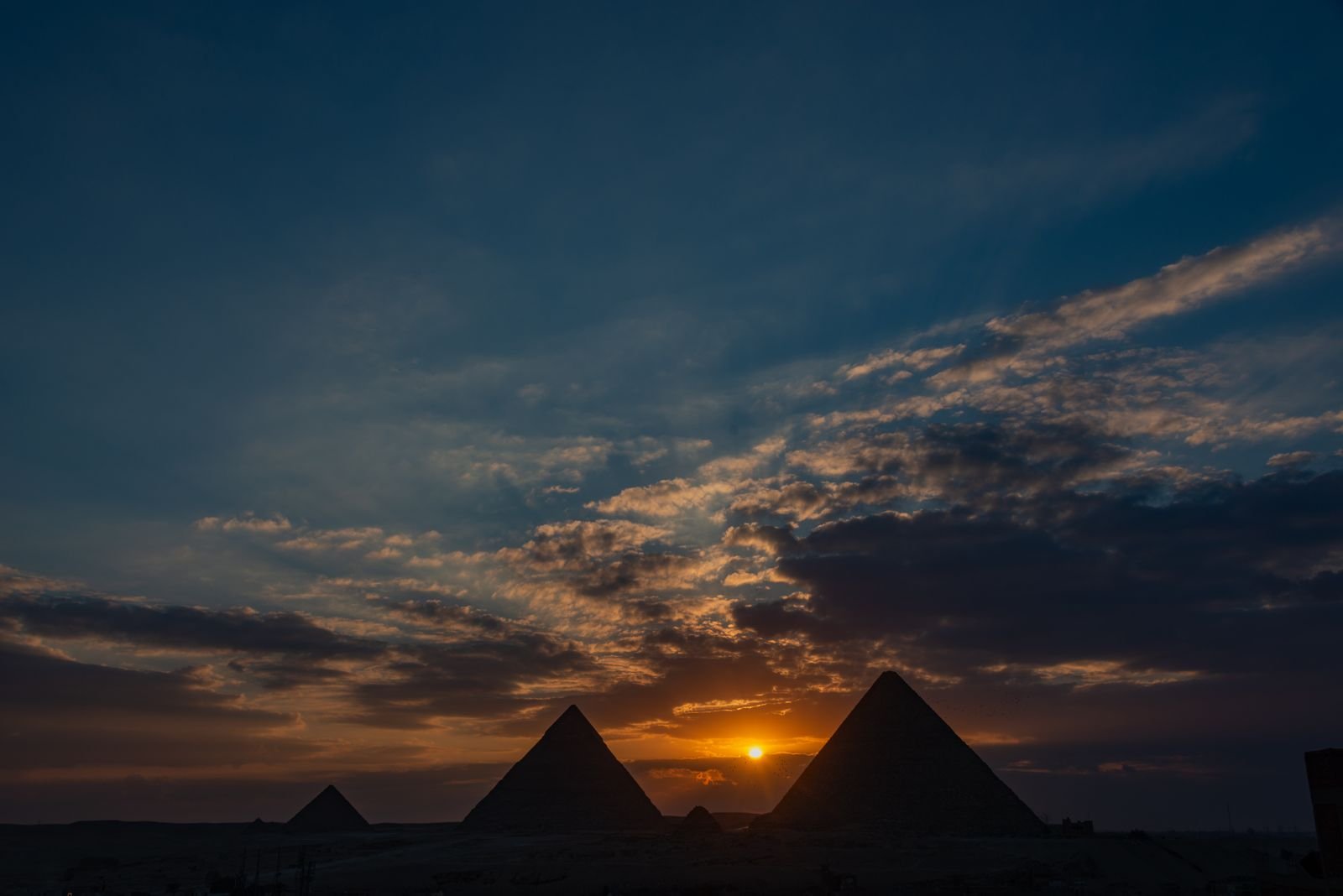
After breakfast you go straight to the plateau: Khufu, Khafre and Menkaure, the Sphinx and the valley temple below it. Your Egyptologist explains why the plateau is laid out the way it is, and you get real time at the panoramic point rather than a ten-minute stop. Going inside the Great Pyramid is a separate ticket, bought at the gate.
In the afternoon you climb to the Saladin Citadel, the medieval fortress above the city, and the alabaster mosque of Muhammad Ali inside it. On a clear day the terrace gives you the pyramids on one horizon and Islamic Cairo on the other.
Meals: breakfast. Night: Cairo hotel.
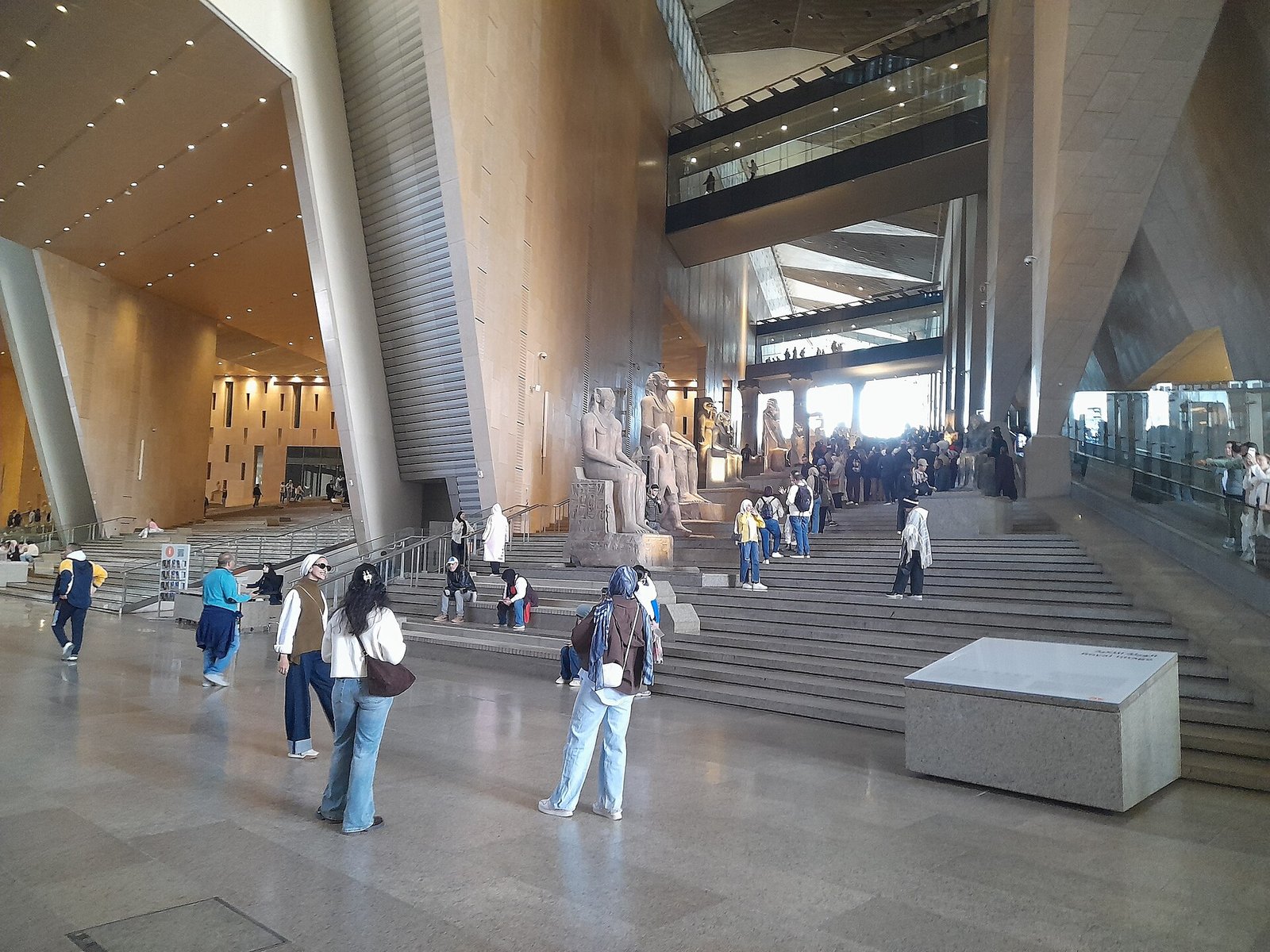
A morning of collections, and they are not interchangeable. The Grand Egyptian Museum is the newer building, the largest in the world devoted to a single civilization, and where the scale of the Tutankhamun material finally lands. The Egyptian Museum at Tahrir Square is older, denser and more crowded in the best way.
The afternoon is Khan el-Khalili: copper, spices, perfume oils and a mint tea in an alley trading since the fourteenth century. Your guide will tell you what a fair opening price looks like before you bargain.
Meals: breakfast. Night: Cairo hotel.
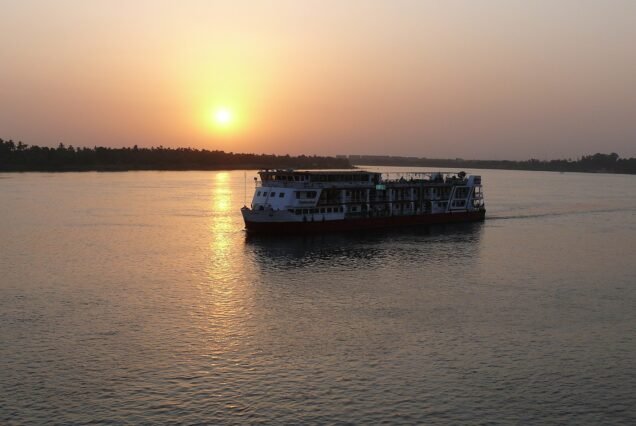
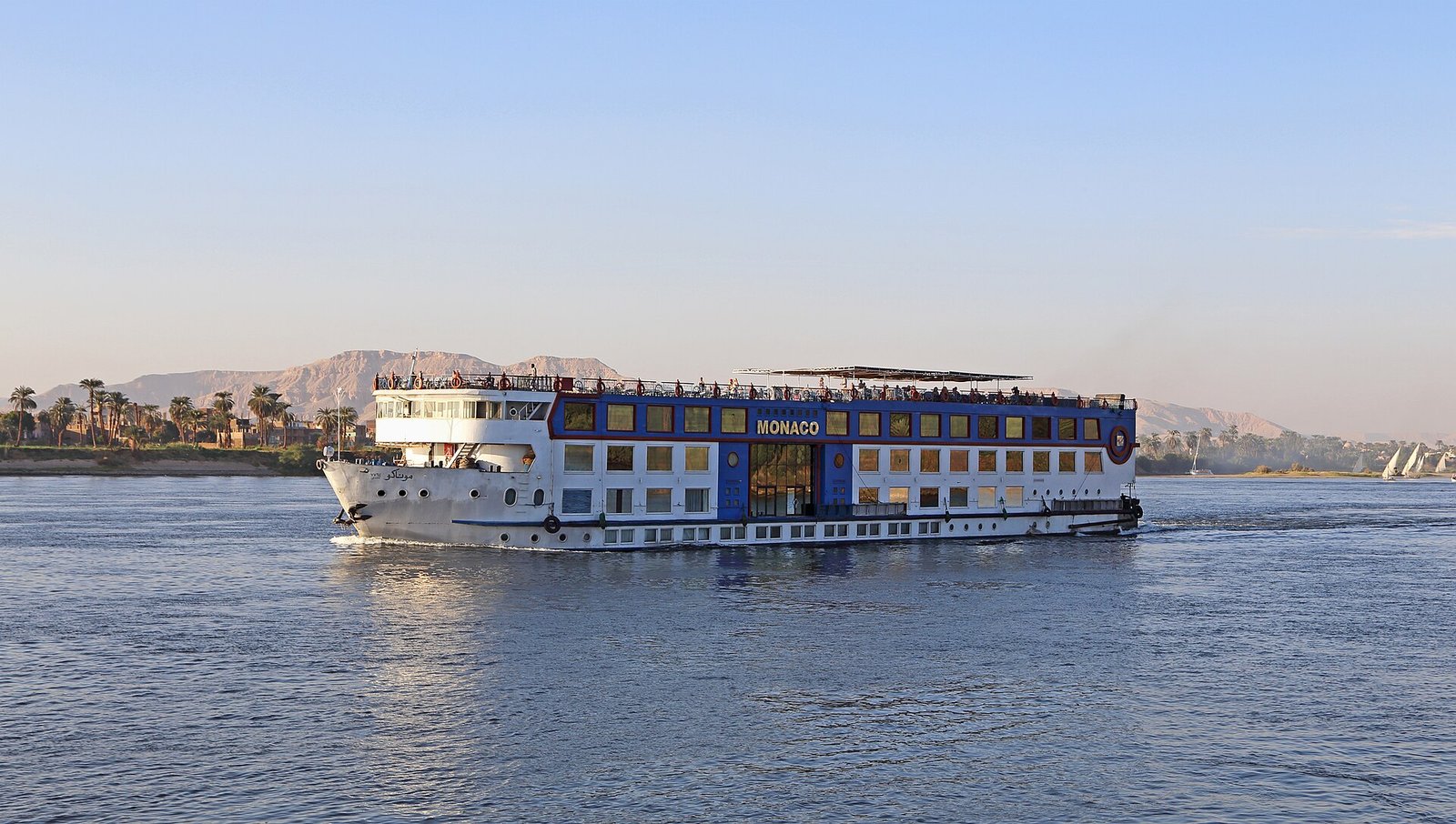
Early breakfast and the domestic flight south to Aswan, the calmest city in the country. You board the ship, find your cabin and eat your first meal aboard. Full board starts here.
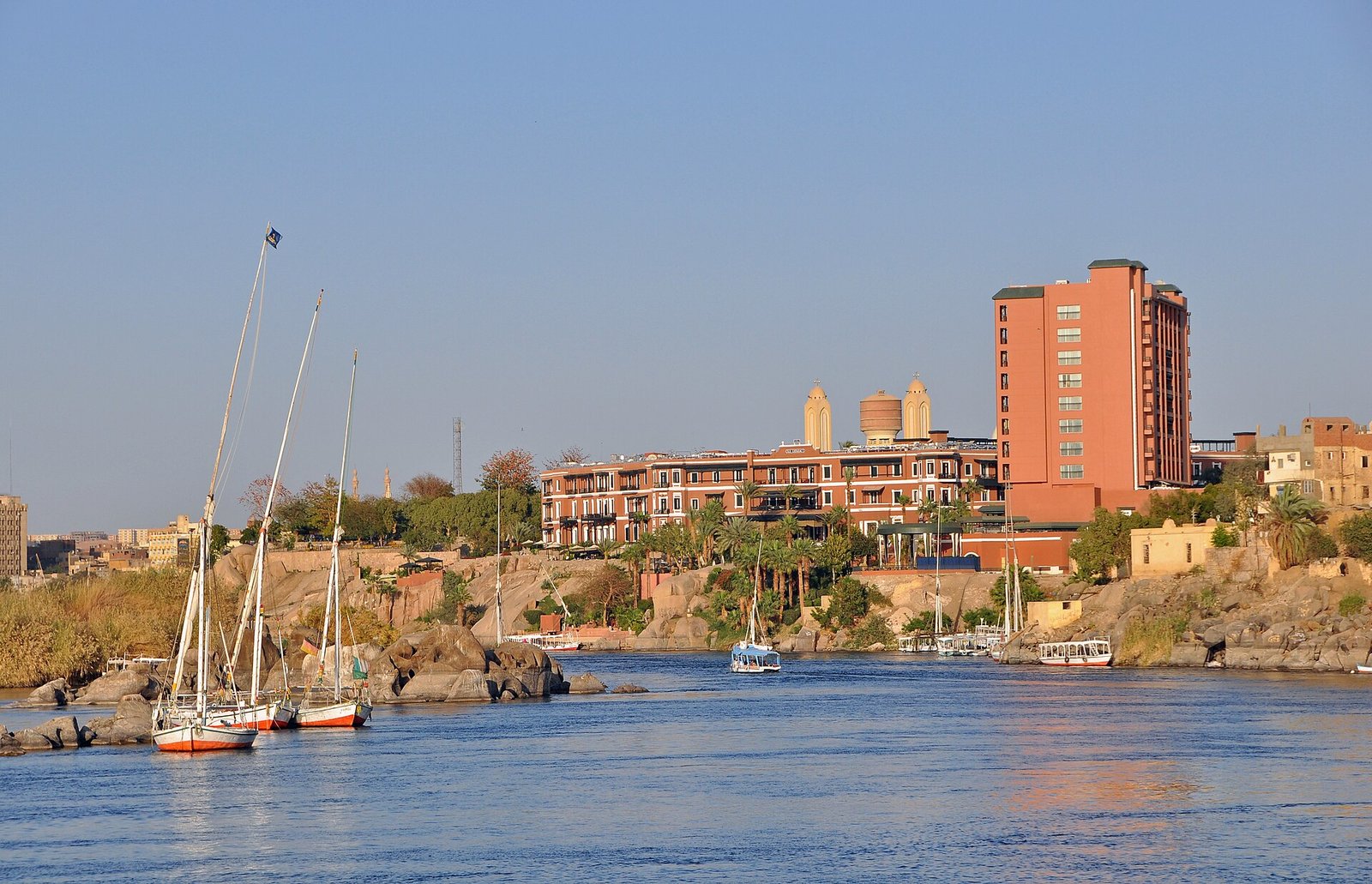
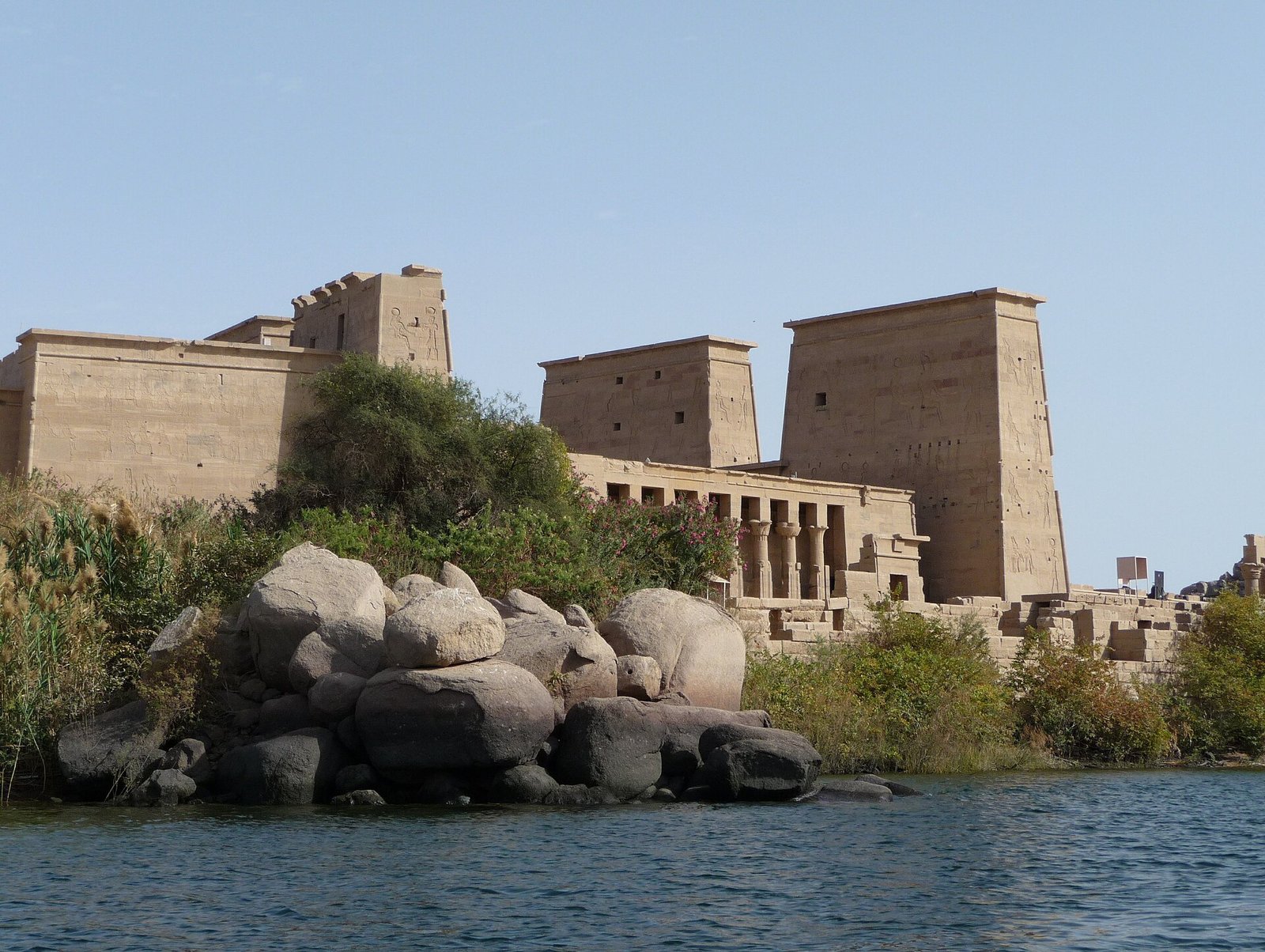
The afternoon covers three sites in a compact loop. The High Dam, and the story of what it saved and what it drowned. The Unfinished Obelisk, still lying in the quarry where it cracked, which says more about how the ancients worked stone than any finished monument does. And the Temple of Philae on its island, dedicated to Isis, taken apart block by block and rebuilt above the waterline when the dam went up.
Meals: breakfast, lunch, dinner. Night: aboard the cruise ship in Aswan.
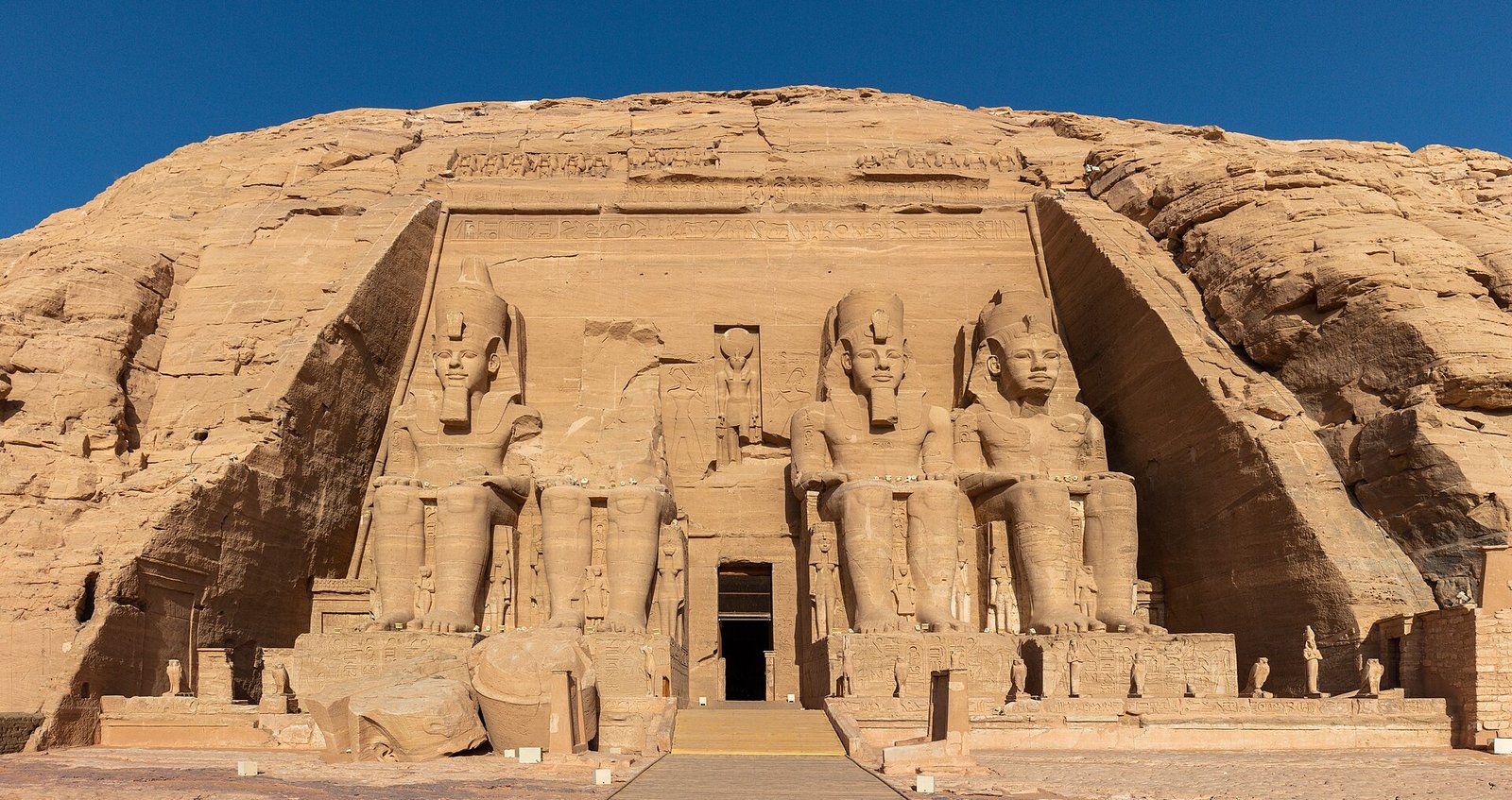
An early start, in the dark, for the road along Lake Nasser to Abu Simbel. The four seated colossi of Ramses II stand roughly twenty meters tall, cut into the mountain, and the smaller temple beside them belongs to Nefertari. This itinerary reaches Abu Simbel by road, and the entrance is already paid.
You return to the ship for lunch and it sails north to Kom Ombo, where the temple is split down its axis and dedicated to two gods at once, Sobek the crocodile and Horus the elder. It is the only major temple in Egypt built as a perfect double, and the crocodile mummies next door are worth a look.
Meals: breakfast, lunch, dinner. Night: aboard the cruise ship.
Morning at Edfu, the Temple of Horus, the best preserved in the country because the desert buried it and kept it. The roof is still on and the reliefs still read.
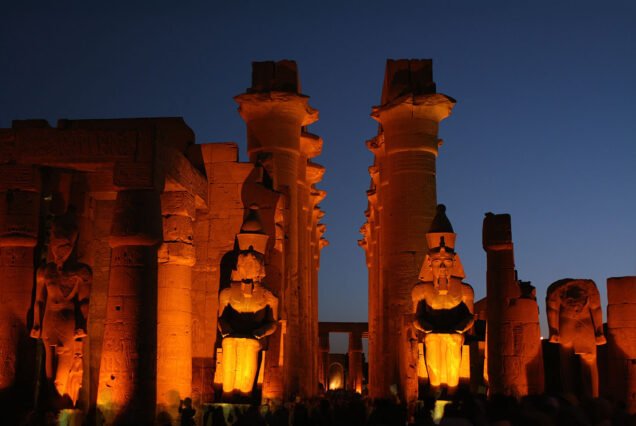
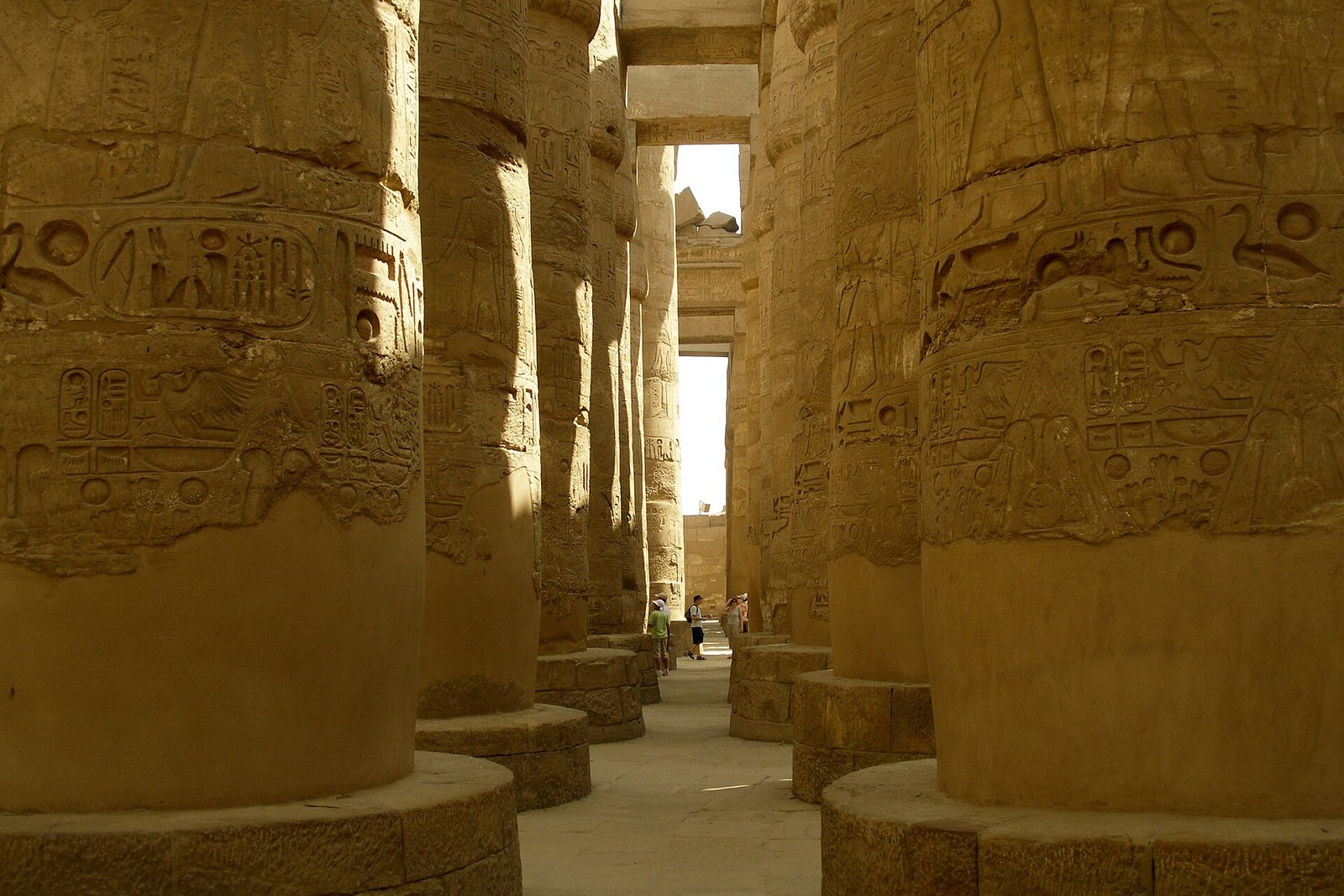
The ship continues to Luxor and you take the east bank in the afternoon. Karnak first, where the hypostyle hall carries 134 columns and you have to stand under them to understand the number. Then Luxor Temple as the light drops. It is your last night on the river.
Meals: breakfast, lunch, dinner. Night: aboard the cruise ship in Luxor.
The strongest day of the trip. You cross to the west bank for the Valley of the Kings, where your ticket covers three tombs and your guide steers you toward the best surviving paint rather than the longest line. Then the terraced temple of Hatshepsut at Deir el-Bahari, built into the cliff, and the Colossi of Memnon in the field on the way back.
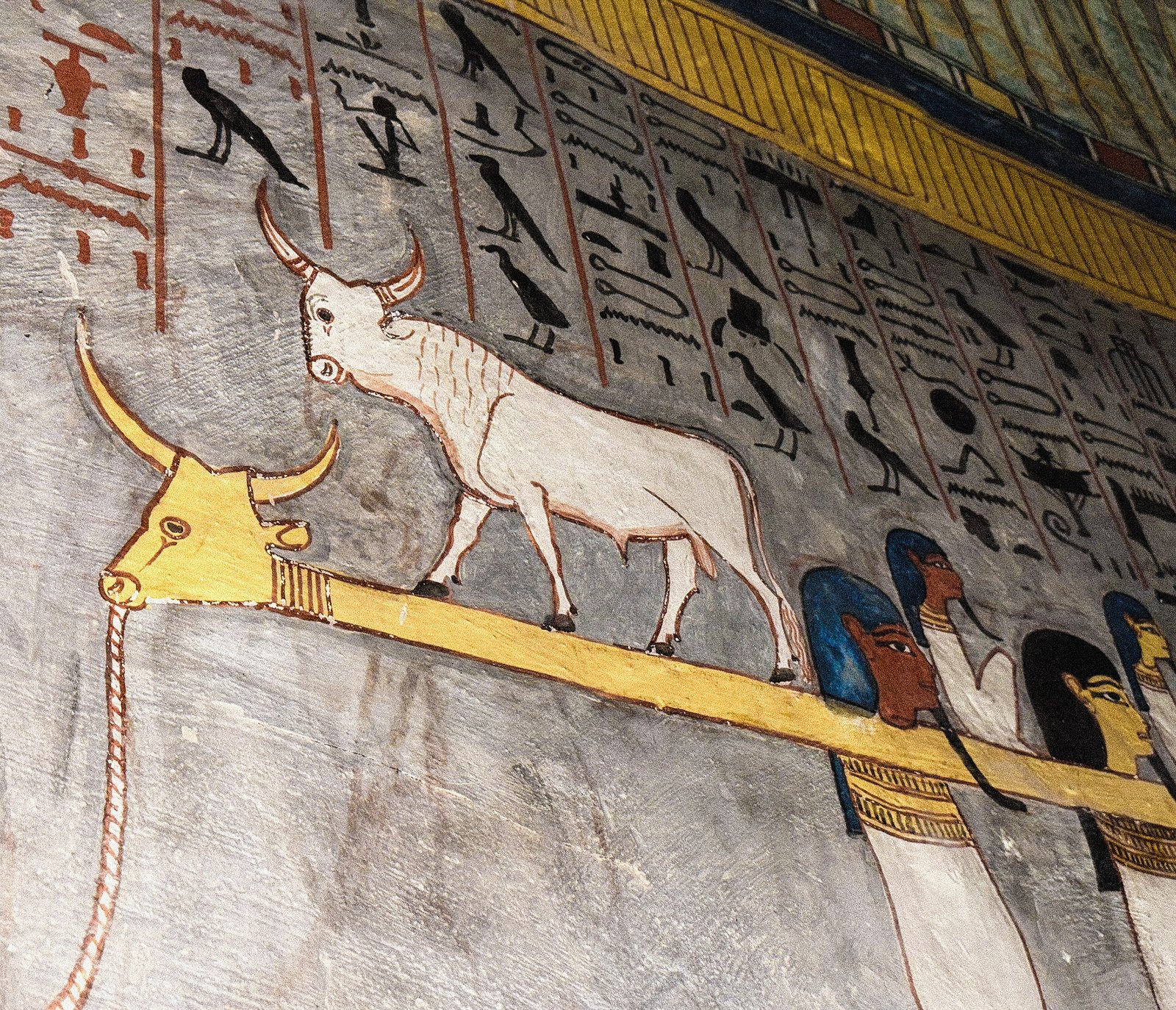
The one that stays with people is the tomb of Nefertari in the Valley of the Queens. The pigments are the most intact in Egyptian art and the ceiling is still deep blue. Access is limited and timed, and it is included here rather than sold at the entrance. In the afternoon, the domestic flight back to Cairo and your last hotel night.
Meals: breakfast. Night: Cairo hotel.
Breakfast at whatever hour your flight allows, a private transfer to Cairo International Airport, and assistance through to your airline counter. If you have a late departure, tell us and we will fill the morning.
Meals: breakfast.
Want it in writing?
Day by day, hotels, what is included and the price for your dates. We send it on WhatsApp in a few minutes.
Two lists, no small print. Read both.
If something appears on neither list, it is included. No fuel supplement, no service fee added later.
Published 2026 gate fees for the monuments on this route, per person, from the official ministry ticketing platform. You pay none on the day. We list them because the honest way to compare two Egypt quotes is to work out how much of the gap is actually tickets.
| Gate | Fee (EGP) | Approx. USD |
|---|---|---|
| Giza plateau, pyramids and Sphinx | 700 | 14 |
| Egyptian Museum, Tahrir Square | 550 | 11 |
| Temple of Philae, Aswan | 550 | 11 |
| Temples of Abu Simbel | 822 | 17 |
| Temple of Kom Ombo | 450 | 9 |
| Temple of Horus, Edfu | 550 | 11 |
| Karnak temple complex | 600 | 12 |
| Luxor Temple | 500 | 10 |
| Valley of the Kings, 3 tombs | 750 | 15 |
| Temple of Hatshepsut, Deir el-Bahari | 440 | 9 |
| Total already paid on your behalf | 5,912 | 119 |
USD figures are approximate, converted at 1 USD = 49.79 EGP, the Central Bank of Egypt reference used when this table was compiled in August 2026. The rate moves, so treat the EGP column as the real number. Ministry fees can change.
Five more entries are included but not priced above, because we publish only figures verified against the official platform: the Grand Egyptian Museum, the tomb of Nefertari, the Saladin Citadel, the High Dam and the Unfinished Obelisk. We pay them all the same. Nefertari is the expensive one, and it is why this reads differently from other Egypt tour packages of similar length.
From US$1,451 per person, double occupancy. The standard category, holding both domestic flights, seven nights of accommodation, full board on the cruise, your Egyptologist for every visit, and all the gate fees above.
The same itinerary reaches US$2,500 per person in high season with five-star luxury hotels and a luxury ship. The distance between those numbers is category and calendar, not sightseeing, which is identical.
What moves the price:
There is no checkout on this site and no card details are taken on a web form. You message us your dates, we send a written quote the same day, and a deposit holds the booking with the balance settled before you travel. If you are still comparing, the 7-day version drops a Cairo day, and the 10-day itinerary adds Saqqara, Memphis and Dendera.
Check it yourself rather than taking an operator's word for it. Read the travel advisory your own government publishes for Egypt, and read the current version before booking, because the wording differs from one country to the next and the level can change. Whatever it says about the Sinai, this itinerary never goes near it: it runs Cairo, Aswan, Abu Simbel and Luxor, all in the Nile valley, well away from any border area.
Most visitors need a tourist visa for Egypt: 30 USD single entry, 65 USD multiple entry. The 25 dollars quoted on plenty of sites is out of date, and the embassy figure is higher because that is a consular service with its own fee. Apply in advance at visa2egypt.gov.eg, the official portal, or on arrival at the airport. If you take it on arrival, bring clean US dollar bills in cash; the counter refuses worn or old-series notes. Your passport needs six months of validity from your entry date.
No, and we do not arrange them. We are an Egypt-based operator and the international ticket is not something we sell, book or quote. You buy your own flight to Cairo and send us the times, and we build the ground program around them. What is included is the flying inside Egypt: Cairo to Aswan on day 4 and Luxor to Cairo on day 7.
No, because day one has nothing on it, deliberately. Whatever hour you land, someone meets you before immigration and drives you to the hotel. Your first touring morning is day two, so you do not pay for a day you cannot use.
Private. The guide, the driver and the vehicle are yours, and the dates are yours rather than a fixed departure calendar. The ship itself is shared, since it is a hotel that floats, but your guiding and shore visits stay private. There is no minimum number of travelers to make a date run.
Yes, on day 7, alongside the Valley of the Kings and Hatshepsut. It is worth asking, because almost every competing program leaves it out and sells it at the gate, where it is by a wide margin the most expensive single ticket in Luxor. Access is limited and timed by the Ministry, and if they restrict entry on your dates we tell you before you commit.
Do not drink the tap water and do not brush your teeth with it. Skip ice in street drinks, skip raw salad outside your hotel and the ship, eat fruit you peel yourself, and be careful with anything sitting warm at a buffet. Bring tissues for the restrooms at Karnak and the Valley of the Kings, where paper is not guaranteed and an attendant expects a small tip.
It is a desert: light cotton, sleeves that cover your shoulders, real walking shoes, sunglasses, sunscreen and a hat. Evenings on the river turn cool from November onward, so pack a light jacket. For women, knees and shoulders covered is the comfortable standard at temples and in the street. You do not have to cover your hair anywhere except inside a working mosque, where a scarf is required and usually available at the door. Shorts are fine on the Giza plateau and the sun deck, but loose trousers draw less attention.
Tipping is constant in Egypt and the individual amounts are small. Egyptian pounds are better received than dollars, so change money early and keep low denominations on you. As guidance rather than a rule: something meaningful per day for your Egyptologist, less for your driver, a pooled envelope for the cruise crew at the end, a small daily amount for housekeeping, and loose change for restroom attendants and the felucca captain. Ask your guide the going rate for anything you are unsure about.
Bring more cash than you expect to need, in clean US dollars, and change it into Egyptian pounds as you go. Hotels, the ship and larger restaurants take cards. Kiosks at smaller sites, taxis, the bazaar, tips and roadside stops are cash, and terminals fail often enough outside the cities that you should not depend on one. ATMs are easy to find in Cairo, Luxor and Aswan and sparse elsewhere. Since everything structural here is prepaid, your spending is tips, drinks and shopping.
We do not sell it, it is not in the price, and you should have it. Domestic health cover generally does not follow you abroad, and you should not assume any reciprocal arrangement applies in Egypt. Look for a policy covering overseas medical treatment, medical evacuation and trip cancellation, since your international flight is a large non-refundable cost we do not control. Buy it when you book the flight, not the week you leave.
October to April is the comfortable window, with daytime temperatures broadly in the twenties and low thirties Celsius, the seventies and eighties Fahrenheit, and cool evenings on the water. December and January are busiest and priciest. May through September is genuinely hot at midday in Luxor and Aswan, which is why summer prices fall; touring then shifts early and afternoons become ship time. Ramadan changes opening hours rather than closing anything to visitors.
We are based in Egypt, not reselling from an office abroad. Three things you can check.
The guide is the product. Every visit is led by a licensed Egyptologist who studied this material and is employed here, not a driver with a laminated sheet. Our published reviews are about the agency and about our guide Shady Said personally rather than about any single itinerary, which is the honest way to read them. There are twelve, and you can read them all.
We hold the tickets. Because we buy the gate fees directly, we can show you the table above line by line and you can check it against the official ministry platform yourself. A reseller quoting one bundled number cannot do that.
You reach a person, in Egypt, while you are in Egypt. The same WhatsApp number that quotes you answers when your flight shifts, when a site closes for restoration, or when you decide on day 5 that you want the balloon after all.
To compare, start with the full list of Egypt tours, or take the river alone if Cairo is already covered: the Aswan to Luxor cruise and the Luxor to Aswan cruise, both of which exclude domestic flights and say so on their own pages. If Abu Simbel is the piece you care about, there is a dedicated Abu Simbel excursion from Aswan.
Send your dates and the number of travelers and you will have a written itinerary and a price the same day. No card details on a form, and no pressure if the answer turns out to be a different trip.
Tell us the essentials in 30 seconds. When you send it, WhatsApp opens with your message already written and someone from our team takes it from there.
A real person from our team replies, not a bot, almost always the same day. A quote is free and commits you to nothing.
We use your details only to prepare your quote. We do not share your information or send you advertising.