
These are the 15 must-see places in Egypt, ranked, with how many days each one really needs
These are the 15 must-see places in Egypt, ranked, with how many days each one really needs
The must-see places in Egypt fall into four clusters. Around Cairo: the Giza Pyramids and the Sphinx, the Grand Egyptian Museum, Islamic Cairo, Coptic Cairo and Saqqara. In Luxor: Karnak, Luxor Temple, the Valley of the Kings and the Temple of Hatshepsut. On the Nile and in the far south: Edfu, Kom Ombo, Philae and Abu Simbel. Then two with no pharaohs at all: the Red Sea at Hurghada or Marsa Alam, and the White Desert. A classic 10 day trip covers thirteen of the fifteen. Below, each place ranked with one tight paragraph, a table of days by region, the route that strings them together, and what to save for a second visit.
How this ranking works
Most top 15 lists for Egypt are written from a map. This one is written from the van. We take American travelers through these sites every week, and the order follows one question: if you dropped this place, how much would the trip lose? Number 1 you cannot skip. Number 15 is wonderful but optional.
This page is the ranked list. For the whole country laid out region by region, with everything worth seeing, use our what to see in Egypt guide.
Cairo and Giza: places 1 to 5
Cairo is where nearly every itinerary starts, and it holds five of the fifteen. Give it three days, not the day and a half most tours allow.
1. The Pyramids of Giza and the Sphinx
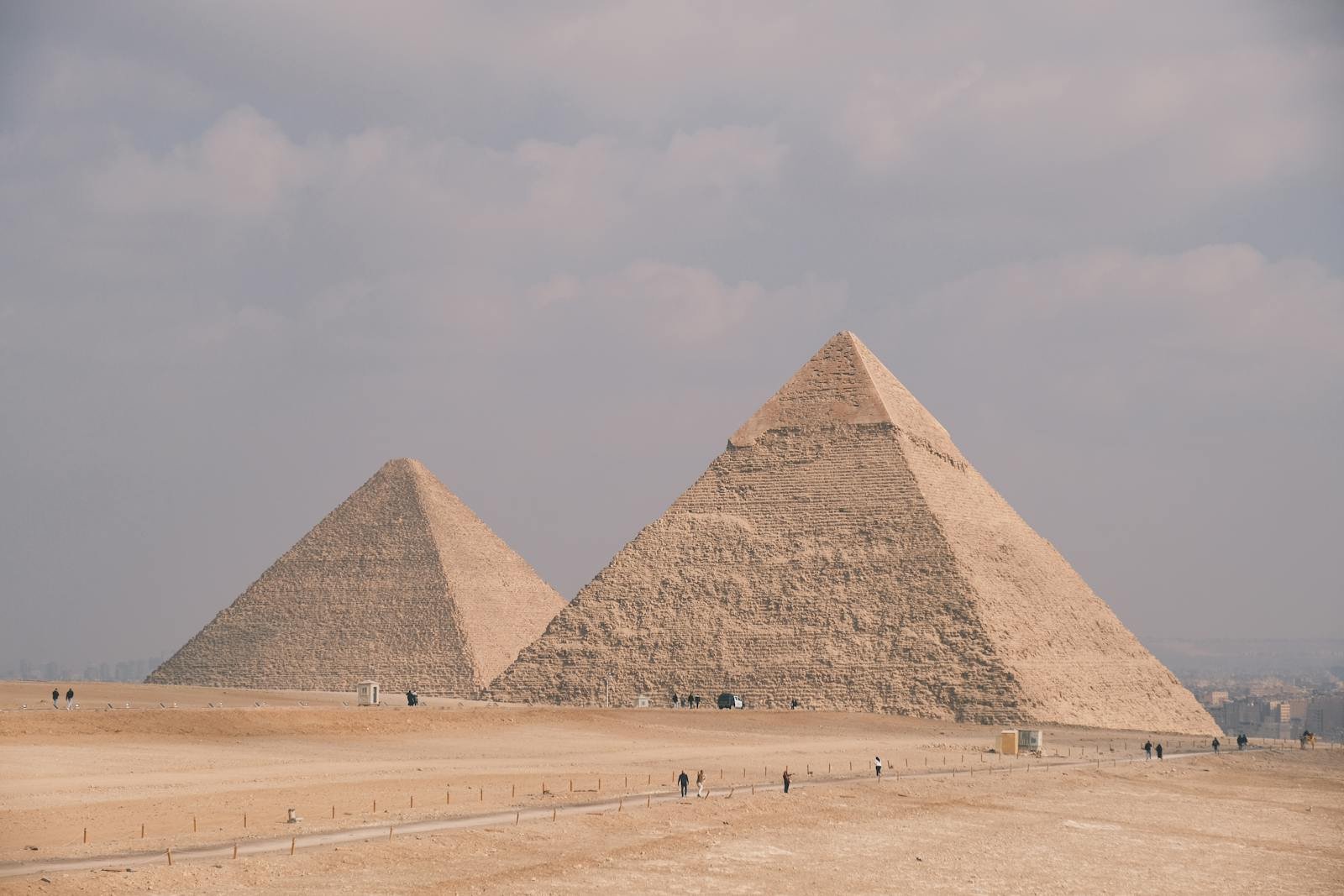
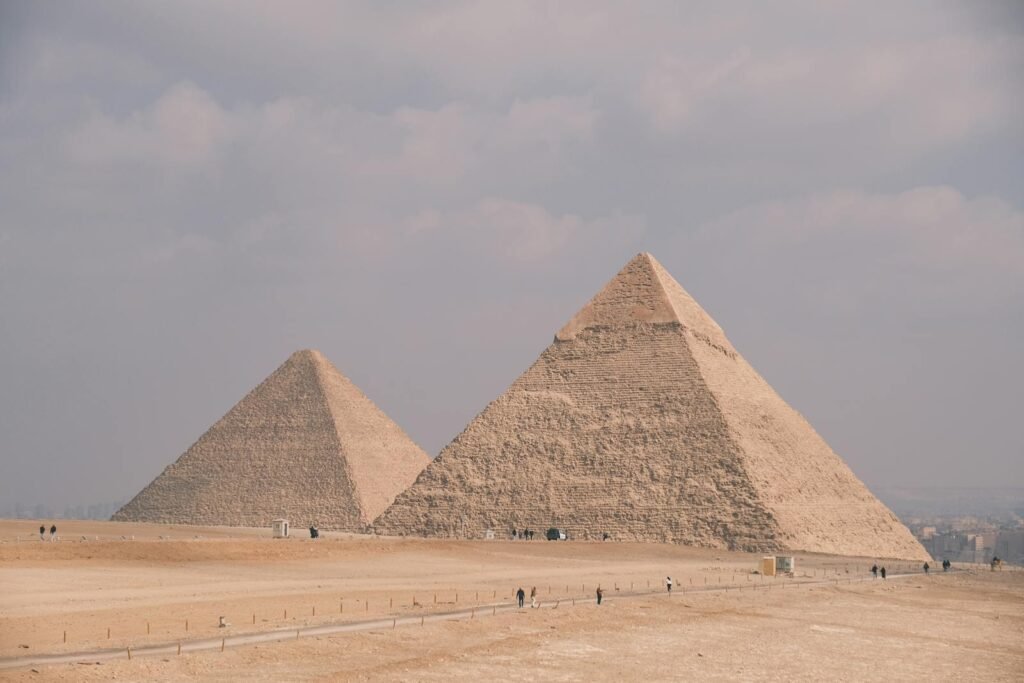
Number one, and it is not close. The Great Pyramid is the only survivor of the Seven Wonders of the ancient world, and the first sight of it over the plateau is why most people book the trip. Walk the causeway, go inside one pyramid, stand at the paws of the Sphinx and drive to the panoramic point where all nine pyramids line up. Our guide to the Pyramids of Giza covers the plateau step by step.
2. The Grand Egyptian Museum
You need one great museum in Cairo, and today that means the Grand Egyptian Museum at Giza, with the complete Tutankhamun collection under one roof and a grand staircase lined with colossal statues. The old museum on Tahrir Square is worth an afternoon if you have one spare. Visit the museum at the end of your Cairo days, after Saqqara and Giza, so the objects have context.
3. Islamic Cairo
Al Muizz street, the Citadel with the alabaster mosque, Al Azhar, Bab Zuweila and the covered lanes of Khan el Khalili. This is the living medieval city, the densest concentration of Islamic monuments anywhere, and the part of Cairo that feels least like a museum. Walk it in the late afternoon. Our Islamic Cairo walk gives you the order.
4. Coptic Cairo
A compact quarter inside the Roman fortress of Babylon: the Hanging Church, the church over the crypt where tradition says the Holy Family sheltered, the Ben Ezra synagogue and the Coptic Museum. Two hours, on the same day as Islamic Cairo. Details in our guide to Coptic Cairo.
5. Saqqara
Thirty minutes south of Giza, Saqqara is where the pyramid was invented. The Step Pyramid of Djoser is a full century older than the Great Pyramid, the noble tombs around it hold the freshest painted reliefs near Cairo, and you can climb down into the Pyramid of Unas to see the first funerary texts ever carved. Read our Memphis and Saqqara guide before you go.
Luxor: places 6 to 9
Luxor holds four of the fifteen and needs two full days, one per bank. The east bank holds the temples, the west bank the tombs.
6. Karnak
The largest religious complex ever built, added to by pharaoh after pharaoh for two thousand years. The Hypostyle Hall, 134 columns as thick as redwoods, is the single most overwhelming room in Egypt and the place where photographs fail. Give it a full morning and do not let anyone rush you through in ninety minutes. Our Karnak Temple guide walks the axis with you.
7. Luxor Temple
Smaller, more elegant and best at night, when the floodlights turn the colonnade of Amenhotep III into theater. Ramesses II added the pylon and the seated colossi, the Romans painted a chapel, and a mosque still sits on one corner. Go after dinner. Details in our Luxor Temple guide.
8. The Valley of the Kings
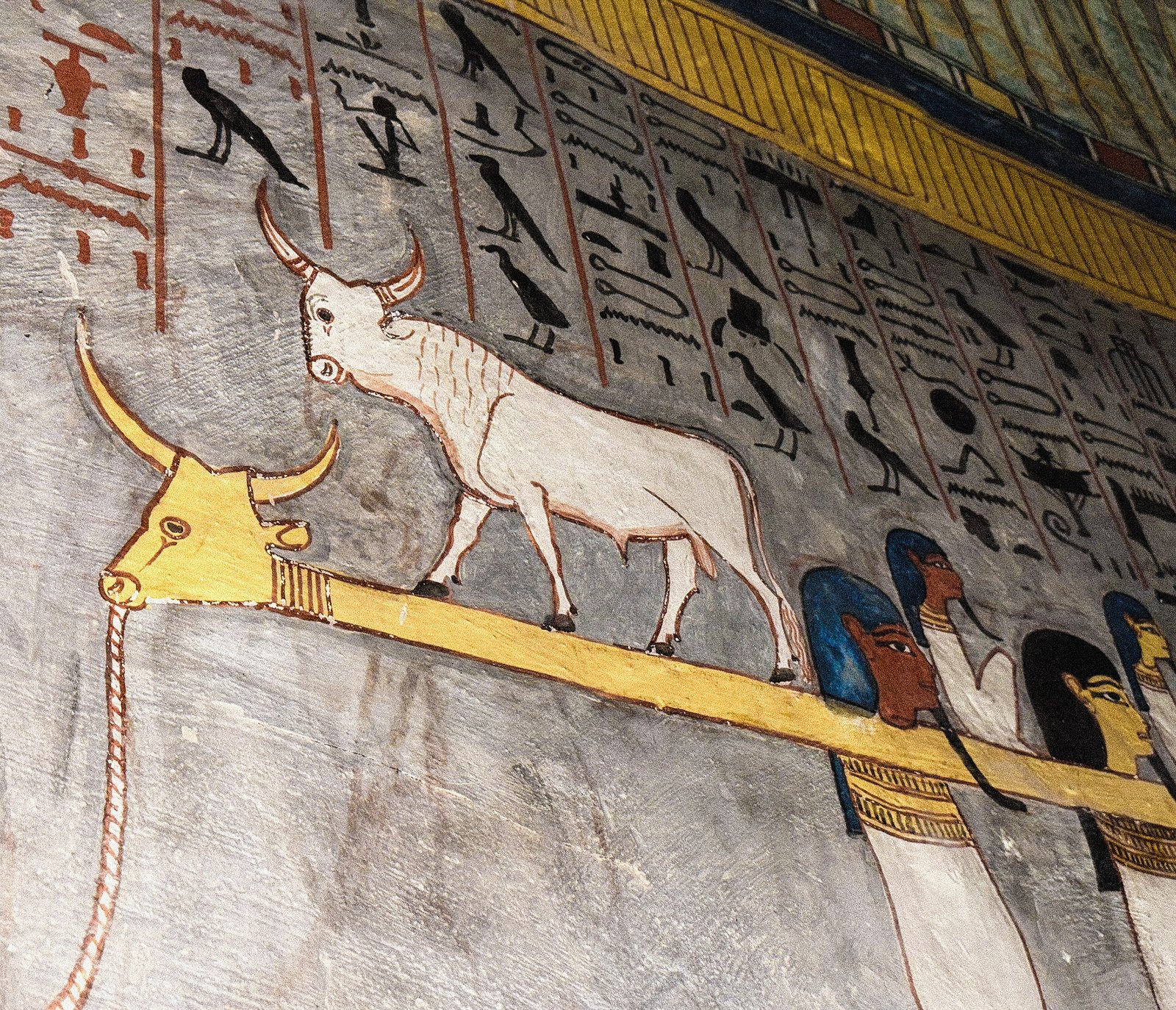
The burial ground of the New Kingdom pharaohs, cut into a dry valley behind the cliffs. The standard entry admits you to a rotating set of tombs, and the famous ones like Tutankhamun and Seti I have separate entries. Pick three tombs with your guide and go early. Our guide to the Valley of the Kings explains which extra tombs earn their entry.
9. The Temple of Hatshepsut
Three terraces of pale limestone set into a natural amphitheater of cliffs at Deir el Bahari, built for the woman who ruled as pharaoh. It sits ten minutes from the Valley of the Kings, so you see them the same morning. Our guide to the Temple of Hatshepsut has the walkthrough.
The Nile and the far south: places 10 to 13
Between Luxor and Aswan the river does the work. A Nile cruise of three or four nights covers Edfu and Kom Ombo, ends in Aswan for Philae and sets up Abu Simbel.
10. Edfu
The temple of Horus is the best preserved in Egypt, roof and all, because it spent centuries buried under sand and houses. You walk through darker and darker halls to the sanctuary where the shrine still stands, and understand how a temple actually worked. Our Edfu Temple guide covers the reliefs to look for.
11. Kom Ombo
A double temple on a bend in the river, shared between the crocodile god Sobek and the falcon god Horus, with everything in mirror image. The reliefs of surgical instruments on the back wall and the mummified crocodiles next door make it more fun than its size suggests. Cruises tie up right below it. See our Kom Ombo Temple guide.
12. Philae
The temple of Isis on an island at Aswan, moved stone by stone when the High Dam flooded its original site. You reach it by motorboat, and it is the most romantic of the temples: palms, granite, water on every side. Our Philae Temple guide explains the rescue and the reliefs.
13. Abu Simbel
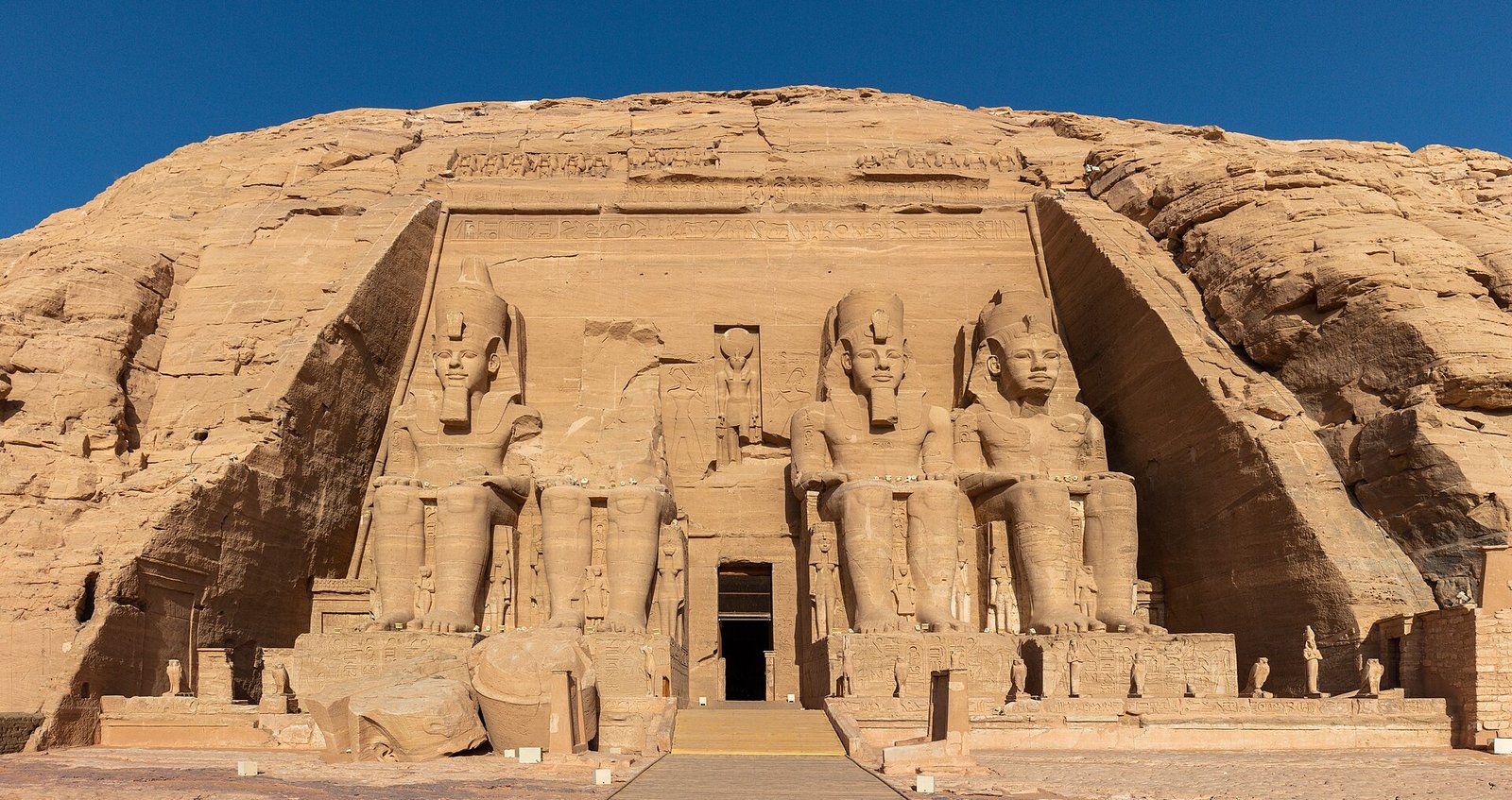
Four seated colossi of Ramesses II, each taller than a six-story building, carved into a cliff near the Sudanese border and moved uphill in the 1960s to escape Lake Nasser. A full day from Aswan by road or a short domestic flight, and the second peak of the trip after Giza. Read our guide on how to visit Abu Simbel, including the overnight that gets you the sunrise.
Beyond the pharaohs: places 14 and 15
The last two spots go to Egypt without a single temple. They rank lower only because they compete with the classic route for days.
14. The Red Sea at Hurghada or Marsa Alam
Some of the clearest, warmest reef water on the planet, a short domestic flight from Cairo or a four-hour drive from Luxor. Hurghada has the resorts and the easiest snorkeling for families. Marsa Alam, further south, is quieter, with sea turtles and the reefs serious divers come for. Compare them in our guides to what to see in Hurghada and Marsa Alam.
15. The White Desert
Four hours west of Cairo past the Bahariya oasis, a plain of chalk formations shaped by wind into mushrooms, chickens and icebergs. You sleep in a camp under more stars than you have ever seen. It costs two days and one cold night, so it sits last on the list, but nobody who does it ranks it last. Our White Desert guide explains the logistics.
Region, days and which trip length includes each place
The time column is the honest minimum to see the place well. The last column is the shortest trip length that normally includes it.
| Place | Region | Time needed | Included from |
|---|---|---|---|
| 1. Pyramids of Giza and the Sphinx | Cairo | Half day | Every trip |
| 2. Grand Egyptian Museum | Cairo | Half day | Every trip |
| 3. Islamic Cairo | Cairo | Half day | 6 days |
| 4. Coptic Cairo | Cairo | Two hours | 6 days |
| 5. Saqqara | Cairo | Half day | 7 days |
| 6. Karnak | Luxor east bank | Half day | 5 days |
| 7. Luxor Temple | Luxor east bank | Two hours | 5 days |
| 8. Valley of the Kings | Luxor west bank | Half day | 5 days |
| 9. Temple of Hatshepsut | Luxor west bank | Two hours | 5 days |
| 10. Edfu | Nile, Luxor to Aswan | Half day | 7 days with cruise |
| 11. Kom Ombo | Nile, Luxor to Aswan | Two hours | 7 days with cruise |
| 12. Philae | Aswan | Half day | 7 days |
| 13. Abu Simbel | Far south, from Aswan | Full day | 8 days |
| 14. Red Sea, Hurghada or Marsa Alam | Red Sea coast | 3 nights | 12 days |
| 15. White Desert | Western Desert | 2 days, 1 night | 12 days, or second trip |
Cairo plus Luxor is five days before you step onto a boat. That is why the honest answer to how many days you need in Egypt is ten, and why a week means leaving two or three of these behind.
The classic route that covers thirteen of the fifteen
The classic itinerary strings places 1 through 13 in geographic order, uses the river as a hotel and saves the second big moment for the end. In its ten-day form:
- Days 1 to 3, Cairo. Giza and Saqqara on day one, Islamic and Coptic Cairo on day two, the Grand Egyptian Museum on the third morning once the tombs have given you context.
- Day 4, fly to Luxor. An early domestic flight gets you to Karnak before lunch and Luxor Temple after dark.
- Day 5, the west bank. Valley of the Kings at opening, Hatshepsut, the Colossi of Memnon, then board the boat.
- Days 6 to 7, sailing. Edfu in the morning, Kom Ombo at sunset, tea on the sun deck between them.
- Day 8, Aswan. Philae by motorboat, the High Dam, a felucca around Elephantine Island.
- Day 9, Abu Simbel. Full day by road with your guide, or a short flight.
- Day 10, home. Fly to Cairo and connect out, or stay on.
This is essentially our 10 day Egypt itinerary. Squeeze it into one week and you lose Saqqara, Coptic Cairo and usually Abu Simbel. Stretch it to two weeks and you add the Red Sea or the White Desert and finish with all fifteen.
Why the order matters
Giza and Abu Simbel are the two absolute peaks. Put both at the start and the second half runs downhill. The classic route opens with the pyramids and ends at Abu Simbel, two summits separated by a week of rising ground, which is why we resist itineraries that fly to Aswan first.
What to leave for a second visit
Fitting all fifteen into nine days is physically possible and you will remember none of it clearly. With under twelve days, drop them in this order.
- The White Desert. Two days for one place, at the wrong end of the country from Luxor. Beautiful, and the first to go.
- The Red Sea. Three nights of reef and resort are a different vacation. Save them for a return trip.
- Coptic Cairo and Saqqara. Both are half days in Cairo, so on a seven-day trip they compete with each other. Keep Saqqara if you love archaeology, Coptic Cairo if you love living history.
- Abu Simbel. Cut last and with regret. On six days or fewer it costs a full day you do not have, and the four temples of the Nile still tell a complete story.
Beyond the fifteen, a second visit is when Alexandria, Siwa, Mount Sinai, Dendera, Abydos and Fayoum come into play. Our guide to a second trip to Egypt lays out that tier; each of them costs a first trip a day.
Four mistakes that cost the most days
Trying Abu Simbel as a day trip from Cairo
Abu Simbel is roughly 175 miles south of Aswan. From Cairo it means two flights and a brutal day. It belongs at the end of the Aswan stretch, where it fits naturally.
Giving Luxor a single day
Two banks, each a full day. Compressing four of the fifteen into one day means leaving with the feeling you saw nothing properly.
Treating Cairo as an airport
Many itineraries use the capital as an entry and exit point without real days. Five of the fifteen are here, and they do not fit in a day and a half.
Underestimating internal transfers
Distances are large and moving between them takes longer than the map suggests. Seven stops on paper can become four days of transport. Start from the days you really have, not from the wish list.
How Explora Egipto builds it
We are a local agency in Egypt with our own Egyptologist guides and our own vehicles, and we build trips around this list rather than around a bus schedule. Tell us your dates and we come back with a day-by-day plan that puts the fifteen in the right order, with Abu Simbel as the finale.
Every trip is private, at your pace. The Nile section runs on a cruise boat or a dahabiya, and the domestic flights, transfers, entries and hotels are handled by us. Our Egypt tour packages show the shapes we start from, and anything on them can be reshaped.
Write to us on WhatsApp with your dates and the three places on this list you refuse to miss. We build the rest around them and send you the quote.
Frequently asked questions
What are the must-see places in Egypt?
The fifteen ranked here are the Pyramids of Giza and the Sphinx, the Grand Egyptian Museum, Islamic Cairo, Coptic Cairo, Saqqara, Karnak, Luxor Temple, the Valley of the Kings, the Temple of Hatshepsut, Edfu, Kom Ombo, Philae, Abu Simbel, the Red Sea at Hurghada or Marsa Alam, and the White Desert. The first thirteen sit on the classic route; the last two need extra days.
What is the single most important place to visit in Egypt?
The Pyramids of Giza with the Sphinx. It is the only surviving wonder of the ancient world and the image every traveler carries home. The next tier is the Valley of the Kings, Karnak and Abu Simbel, and almost everyone adds a Nile cruise to connect them. With only three days, Giza plus Luxor is the strongest short trip.
How many days do you need to see the top 15 places in Egypt?
Thirteen of the fifteen fit in a well-built 10 day trip: three days in Cairo, two in Luxor, a three or four night Nile cruise, a day in Aswan and a day for Abu Simbel. Adding the Red Sea takes you to about thirteen days, and adding the White Desert as well to fifteen or sixteen.
Can you combine the temples with a beach stay on the Red Sea?
Yes, and it is one of the most popular ways to finish. After the classic route ends in Aswan or Luxor, a short domestic flight or a four-hour drive from Luxor puts you in Hurghada, and Marsa Alam is a few hours further south. Three nights is enough to snorkel or dive and reset before the trip home.
Is Abu Simbel worth the extra day?
On any trip of eight days or more, yes without hesitation. The four colossi of Ramesses II and the halls behind them are the second peak of the trip after Giza, and finishing there gives the itinerary its shape. On six days or fewer it costs a full day that would otherwise go to Luxor or Cairo, and that trade is not worth it.
What should a first-time visitor skip and save for a second trip?
Skip the White Desert and the Red Sea on a first trip of under twelve days; they are a separate kind of vacation. Also save Alexandria, Siwa, Mount Sinai, Dendera and Abydos, all excellent, each costing the classic route a day. Do not skip Saqqara or Coptic Cairo; they are half days inside Cairo and add depth for very little time.
See all fifteen in the right order, with a guide who knows them
Send us your dates and the places on this list you will not give up. We reply with a day-by-day plan built by our team in Egypt, private guide and vehicle included, and the quote for it.