The 10 must-see temples in Egypt, ranked, and how to see them all in one trip
The 10 must-see temples in Egypt, ranked, and how to see them all in one trip
The ten must-see temples in Egypt are Karnak, Abu Simbel, Philae, Edfu, the temple of Hatshepsut at Deir el Bahari, Luxor Temple, Dendera, Abydos, Medinet Habu and Kom Ombo. Seven of them sit on a standard Luxor to Aswan Nile cruise or a short drive from it, Abu Simbel is a day trip south of Aswan, and Dendera and Abydos are a full day north of Luxor. You can see all ten in nine or ten days, and see them well, if you spread them out and catch each one in the right light. Below is the ranking, why each earns its place, the near misses, a comparison table and the route that strings them together.
How this ranking works, and why the best preserved temple is not number one
Every guidebook lists roughly the same ten temples. What differs is the order, and the order matters because it decides what you skip when a day runs short. This ranking weighs scale, how much survives including the color, the setting, and the feeling at the gate, which nobody can measure but everybody remembers.
That is why Edfu, the most complete temple in the country, sits at four rather than one. It is a perfect textbook. Karnak is two thousand years of pharaohs outbuilding each other, and Abu Simbel and Philae rank above Edfu for what they do to you at first sight. Fame did not count: Luxor Temple lands at six and Abydos is at eight only because it takes a full day to reach.
The ten must-see temples in Egypt, ranked
1. Karnak, Luxor east bank
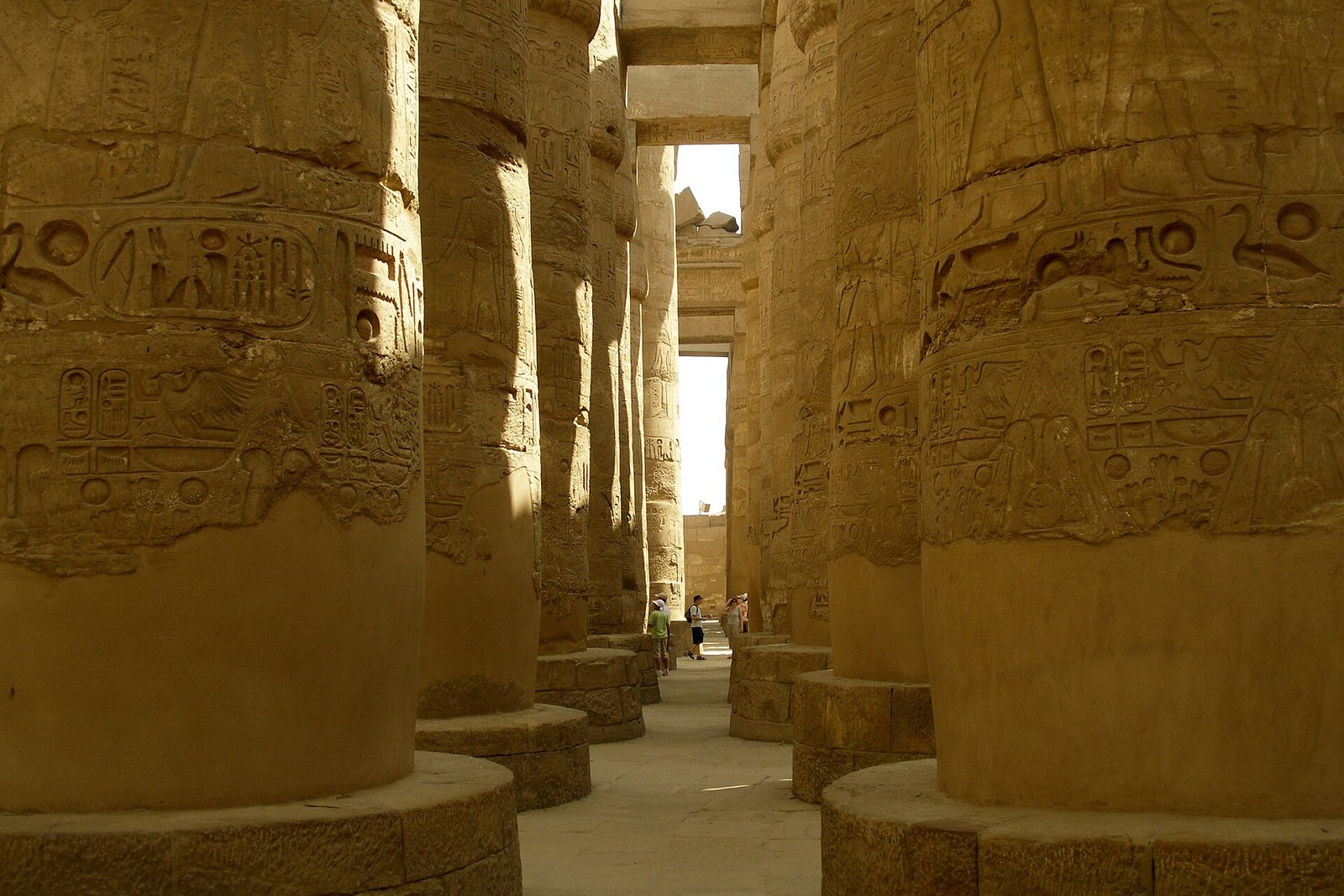
Karnak is not one temple but a walled city of them, built over some two thousand years around the shrine of Amun-Ra. The Great Hypostyle Hall alone holds 134 columns, the central twelve around seventy feet tall, and walking through it feels like a stone forest. Add the obelisks of Hatshepsut, the sacred lake and the ram-headed sphinxes and you have the largest religious complex ever built. Our guide to visiting Karnak Temple maps the route that avoids the cruise groups.
2. Abu Simbel, south of Aswan
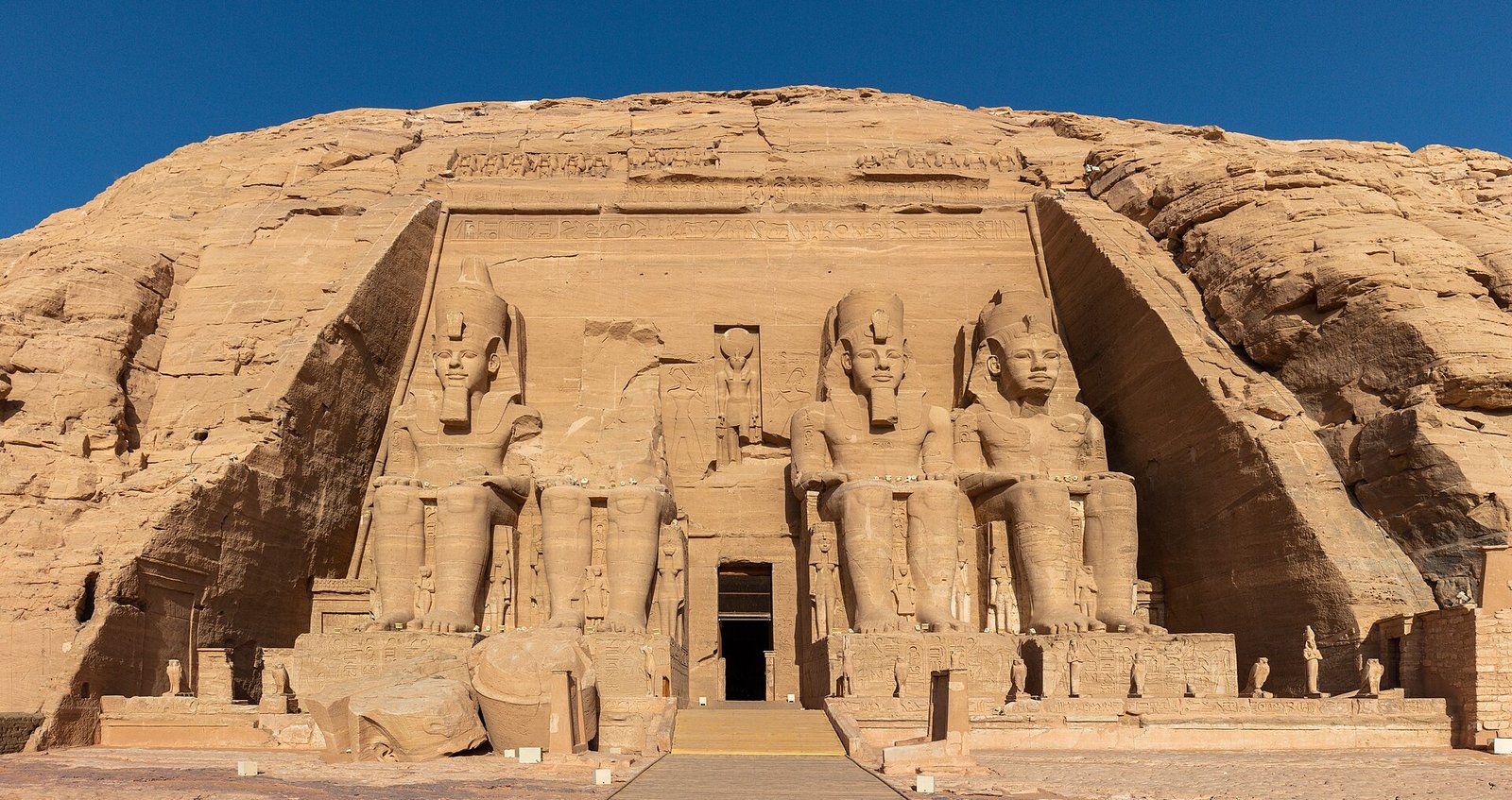
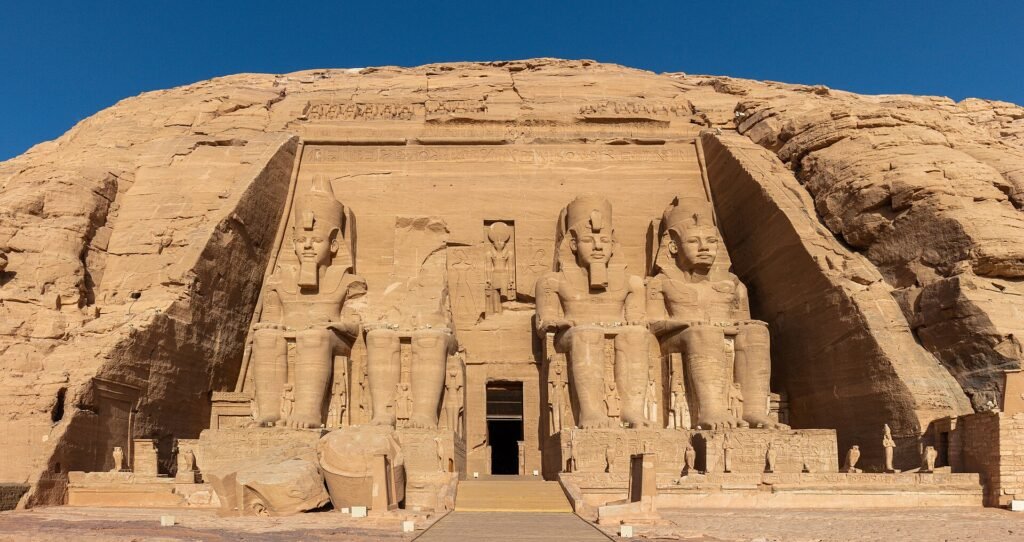
Ramses II had two temples cut straight into a sandstone cliff near the Nubian border, with four seated colossi of himself around sixty-five feet high on the great temple. Twice a year the rising sun reaches the sanctuary and lights three of the four statues inside. When Lake Nasser rose in the 1960s, engineers sawed the whole thing into blocks and rebuilt it higher up, a second marvel on top of the first. Read our Abu Simbel visiting guide before choosing between the road and the flight.
3. Philae, Aswan
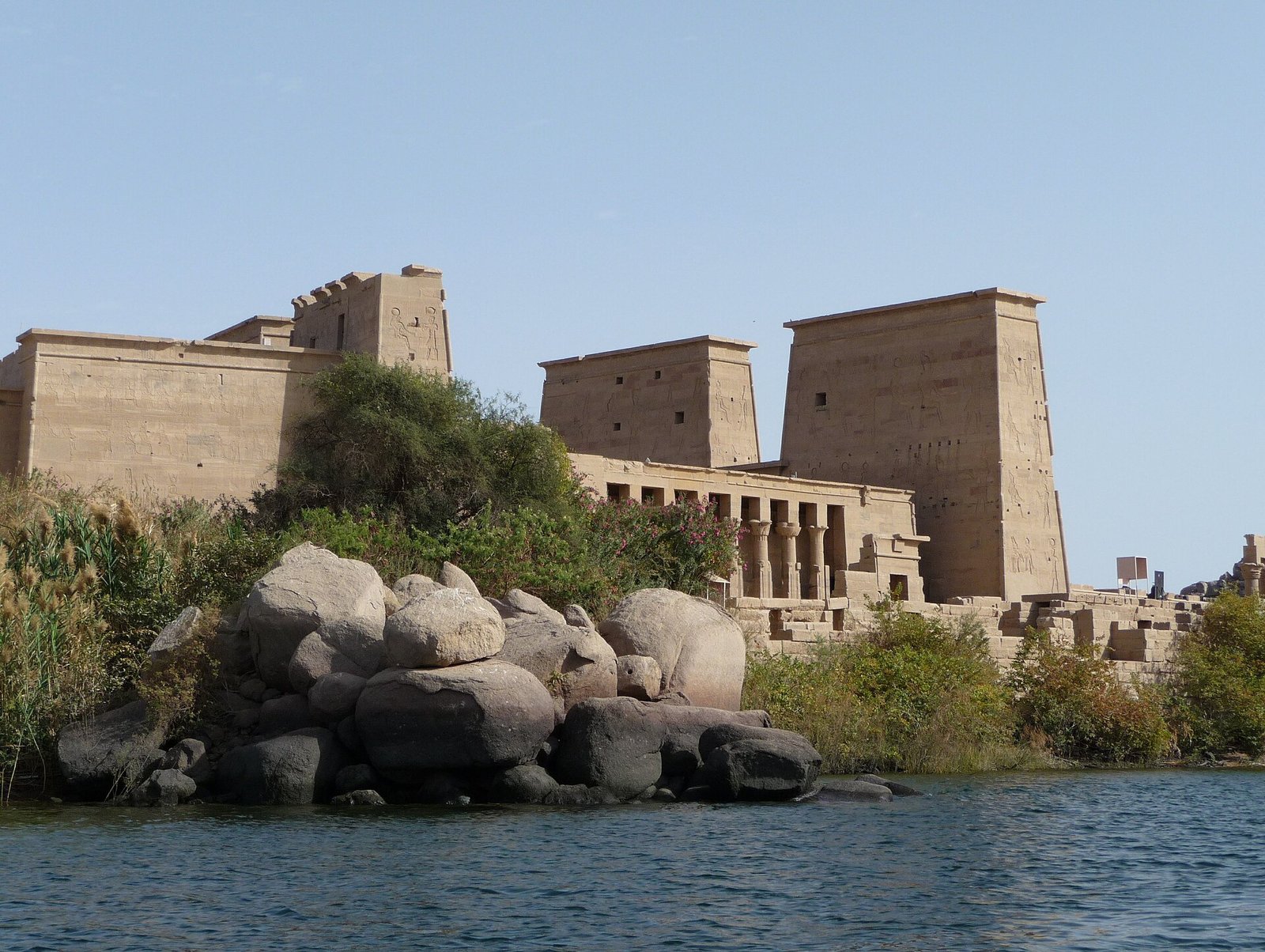
The temple of Isis stands on an island, and the motorboat ride out from the Shellal landing is half the magic. Like Abu Simbel it was moved block by block, from the original island of Philae to neighboring Agilkia, when the High Dam threatened to drown it. Pylons, colonnaded forecourt and the Kiosk of Trajan sit over the water among the granite islands of the cataract. The Philae Temple page covers the boat, the timing and the evening show.
4. Edfu, between Luxor and Aswan
The temple of Horus at Edfu shows you how every other temple once looked. Built under the Ptolemies over about 180 years, it keeps its roof, its pylon, its full sequence of court, hypostyle halls and sanctuary, and even the granite shrine where the god's statue stood. The walls carry the story of Horus defeating Seth, carved like a play with stage directions. Cruises dock below it and ferry you up by horse carriage. Our Edfu Temple guide tells you which parts the groups miss.
5. Temple of Hatshepsut at Deir el Bahari, Luxor west bank
No other temple in Egypt looks like this. Three broad terraces climb the base of a limestone cliff by ramps, with colonnades that look almost modern, and the cliff itself does the work a pylon does elsewhere. Built for the female pharaoh Hatshepsut by her architect Senenmut, it holds the reliefs of the expedition to the land of Punt, with its fish, incense trees and the unforgettable queen of Punt. Go early, before the heat bounces off the rock, and pair it with the Valley of the Kings next door.
6. Luxor Temple, in the middle of the city
Started by Amenhotep III and finished by Ramses II, Luxor Temple was linked to Karnak by a two mile avenue of sphinxes that has been excavated and reopened end to end. What sets it apart is the layering: a Roman chapel with painted emperors and the mosque of Abu al-Haggag sitting on top of the pharaonic court, still in use. It is the one temple that is better at night, with the floodlights on and the city going about its business around it. See the Luxor Temple guide for the evening plan.
7. Dendera, north of Luxor
Dendera is where you go for color. Years of careful cleaning have taken centuries of soot off the ceiling of the hypostyle hall, and the astronomical scenes now glow in blue, yellow and red as they did when the Romans finished them. The circular zodiac in the roof chapel is a cast, the original having gone to the Louvre in the 1800s, but the roof, the crypts and the rear wall relief of Cleopatra with her son Caesarion are all original. About an hour by road from Luxor, usually paired with Abydos.
8. Abydos, north of Dendera
Abydos was the burial place of Osiris in Egyptian belief, and the temple of Seti I is the reason to make the trip. The raised reliefs in its seven chapels are the finest carving in Egypt, so delicate that guides carry a flashlight to rake light across the faces. Down a side corridor is the Abydos King List, where Seti and the young Ramses II read the names of seventy-six predecessors. Behind it, the half-sunken Osireion is one of the strangest buildings in Egypt, and you will have it nearly to yourself.
9. Medinet Habu, Luxor west bank
The mortuary temple of Ramses III is the west bank temple most travelers skip and then regret skipping. You enter through a fortified gatehouse modeled on a Syrian fortress, and the first courts still carry original paint on ceilings and column capitals in quantities Karnak lost long ago. The outer walls record the battles against the Sea Peoples, the closest thing to a war documentary from the Bronze Age, tally of severed hands included. Ten minutes from the Valley of the Kings and usually empty.
10. Kom Ombo, between Edfu and Aswan
Kom Ombo is a double temple with two parallel axes, one for Sobek the crocodile god and one for Haroeris, the elder Horus, sharing a single building on a bend of the Nile. Cruise boats tie up right beneath it, so you walk from the gangway into the forecourt, and at sunset the columns turn orange against the river. Look for the surgical instruments relief on the rear wall and the mummified crocodiles by the exit. Our Kom Ombo Temple guide explains why the two halves mirror each other.
The near misses: Esna, the Ramesseum and Kalabsha
Three temples came close, and on a second trip each one earns its place.
Esna. Only the hypostyle hall of the temple of Khnum survives, sunk about thirty feet below the modern street in the middle of town. A recent cleaning uncovered rows of painted vultures, zodiac figures and stars on the ceiling in colors nobody had seen for centuries. Cruise boats pass the Esna lock beside it and rarely stop; our Esna Temple guide explains how to get off the boat here.
The Ramesseum. The mortuary temple of Ramses II on the Luxor west bank is half ruined, and that is the appeal. A granite colossus of the king lies shattered in the first court, the statue that inspired Shelley's Ozymandias, and the mud-brick storerooms behind are the best preserved in Egypt. The Ramesseum page shows how to fit it between Hatshepsut and Medinet Habu.
Kalabsha. A Roman era temple to the Nubian god Mandulis, rescued from Lake Nasser and rebuilt beside the High Dam, a short boat ride away. Large, well preserved and almost never visited.
The ten temples compared
A standard cruise means the four or five night Luxor to Aswan sailing almost every Nile itinerary uses, with fixed stops at Edfu and Kom Ombo.
| Temple | Where | Era | Time needed | On a standard cruise? |
|---|---|---|---|---|
| Karnak | Luxor, east bank | Middle Kingdom to Ptolemaic | 2.5 to 3 hours | Yes, on the Luxor day |
| Abu Simbel | Lake Nasser, south of Aswan | Ramses II, New Kingdom | 2 hours on site, a full day with travel | No, optional day trip from Aswan |
| Philae | Agilkia island, Aswan | Ptolemaic and Roman | 1.5 to 2 hours with the boat | Yes, on the Aswan day |
| Edfu | West bank, between Luxor and Aswan | Ptolemaic | 1.5 hours | Yes, fixed stop |
| Hatshepsut | Deir el Bahari, Luxor west bank | New Kingdom, 18th Dynasty | 1 to 1.5 hours | Yes, on the west bank day |
| Luxor Temple | Luxor city center | New Kingdom, with Roman additions | 1.5 hours, best at night | Yes, often as a short stop |
| Dendera | Near Qena, north of Luxor | Ptolemaic and Roman | 2 hours | No, day trip from Luxor |
| Abydos | Near Sohag, north of Dendera | Seti I, New Kingdom | 2 hours | No, same day trip as Dendera |
| Medinet Habu | Luxor west bank | Ramses III, New Kingdom | 1 to 1.5 hours | Rarely, ask for it to be added |
| Kom Ombo | River bank, between Edfu and Aswan | Ptolemaic | 1 hour | Yes, fixed stop |
The cruise covers six of the ten without effort. The other four need a deliberate decision and a driver, and they are exactly the four people name afterward as the best of the trip.
How to see all ten temples in one trip
This is the route we build most often for a first visit that wants the full set. It runs north to south, which puts the cruise stops in order and saves Abu Simbel for the end.
- Day 1, arrive in Luxor. Domestic flight from Cairo. Luxor Temple after dark.
- Day 2, Luxor west bank. Valley of the Kings at opening, then Hatshepsut, Medinet Habu and, if you have the legs, the Ramesseum.
- Day 3, Dendera and Abydos. Early departure by private car, Abydos first because it is farther, Dendera on the way back.
- Day 4, Karnak and boarding. Karnak at opening, three hours, then board the cruise boat and sail.
- Day 5, Edfu and Kom Ombo. Edfu in the morning, Kom Ombo late afternoon from the boat, Esna if your boat passes the lock in daylight.
- Day 6, Aswan. Philae by boat in the morning, the High Dam, a felucca at sunset.
- Day 7, Abu Simbel. Pre-dawn departure by road, two hours at the temples, back in Aswan for lunch. Or sleep there and see it at sunset with nobody around.
Seven days for ten temples; with Cairo before or after, nine to ten. With less time, drop Dendera and Abydos first and Medinet Habu second, never Abu Simbel.
The best light for each temple
The difference between a good visit and a great one is often just the hour.
- Karnak: first thing in the morning. Low sun lights the hypostyle columns from the side, and the cruise groups arrive mid-morning.
- Luxor Temple: the last hour of daylight into darkness. The only temple that clearly wins at night.
- Hatshepsut: as early as the gate allows. The cliff behind it becomes an oven by late morning.
- Medinet Habu: late afternoon, when the western sun rakes across the painted courts.
- Dendera and Abydos: the interiors are dim at any hour, so midday on a day trip is fine. The Dendera roof is best around noon.
- Edfu: whenever the boat docks. Bring a flashlight for the sanctuary.
- Kom Ombo: sunset, from the boat deck first and then inside.
- Philae: mid-morning by boat, with the sun behind you on the approach. The evening show is a separate, gentler visit.
- Abu Simbel: the great temple faces east and is lit head-on at sunrise. Sunset, if you stay overnight, is the quiet alternative.
How to read a temple so they stop looking alike
Around the fourth temple most people feel they have seen it before. Almost every temple here follows one plan, and once you know it each building becomes a variation rather than a repeat.
You approach along a sphinx-lined way and pass through a pylon, the sloping gateway that serves as facade. Behind it is an open court, the only space ordinary Egyptians entered, and only on festival days. Then the hypostyle hall, a dim forest of columns reserved for priests, and finally the sanctuary, a small dark room holding the god's statue. The floor rises and the ceiling drops as you go, squeezing the space toward the holy of holies. Edfu shows the sequence intact, Karnak repeats it six times over, Kom Ombo doubles it, and Abu Simbel drills it into solid rock.
What a guide adds at each temple
At Karnak or Edfu you can enjoy the architecture alone. At Dendera, Abydos or Philae, without someone reading the walls, the reliefs stay decoration. A licensed Egyptologist turns them back into a script: the Punt expedition at Hatshepsut, the Horus and Seth drama at Edfu told in order, the Seti reliefs at Abydos lit from the side so the depth shows. The other thing a guide handles is pacing. Two temples a day with a long lunch beats four in a row every time.
How Explora Egipto builds a temple trip
We are a local agency in Egypt with our own Egyptologist guides and vehicles, and the ten temple route above is one we run all year. We start from your dates and how many days you can give the south, fit the cruise around its two fixed stops, and add Dendera and Abydos or Abu Simbel as private days with a driver and guide, not a bus tour.
Entrance tickets are handled so you never queue, and the same guide stays with you from Luxor to Aswan so the story builds from temple to temple. We do not publish prices on this page; tell us your dates and we send you the quote.
Frequently asked questions
What is the best temple in Egypt?
Karnak, for scale and the hypostyle hall, if you can only see one. Abu Simbel if you are choosing by first impression, and Edfu if you want the most complete temple to walk through. Most people who see all three come home naming a different favorite.
Which temples are included in a standard Nile cruise?
A four or five night Luxor to Aswan cruise normally covers Karnak, Luxor Temple, Hatshepsut, Edfu, Kom Ombo and Philae, plus the Valley of the Kings. Medinet Habu, Dendera, Abydos and Abu Simbel are not standard; they are added as private days from Luxor or Aswan. Ask for them when you book, not on the boat.
Is Abu Simbel worth the long day from Aswan?
Yes, and it is the one temple we would never drop. The road trip is about three hours each way through the desert; most people leave before dawn and are back by early afternoon. If the early start worries you, there are domestic flights from Aswan, or you can sleep in the village and see the temples at sunset with almost nobody there.
Can I see Dendera and Abydos in one day from Luxor?
Yes, and that is how nearly everyone does it. Leave Luxor early, drive to Abydos first, stop at Dendera on the way back and return by late afternoon. It is a long day in the car, so put it in the middle of your Luxor stay, not on the day you board the cruise, and go by private car with a guide.
How many temples can you see without getting temple fatigue?
Two a day, three at most, and never on consecutive days without a break. In a classic week you comfortably see six or seven of the ten. Fitting all ten takes the nine or ten day plan above, with the cruise days in the middle acting as the rest.
Do I need a guide for the temples in Egypt?
Not legally, but in practice yes for anything beyond Karnak and Edfu. The reliefs at Abydos, Dendera and Philae are stories, and without a guide who reads hieroglyphs you walk past them. A guide also handles tickets, Abu Simbel timing and the order of the west bank sites. Every Explora Egipto trip includes a licensed Egyptologist.
Ten temples, one trip, one guide who knows them all
Tell us your dates and how many days you can give the south, and we come back with the temple route that fits, the cruise in the middle, the private days for Abu Simbel and Abydos, and the same Egyptologist from the first pylon to the last. Ask us for the quote.