Egypt in 2 weeks is the trip where you stop choosing, as long as you give the 14 days a shape
Egypt in 2 weeks is the trip where you stop choosing, as long as you give the 14 days a shape
Two weeks in Egypt is the first length where you do not have to give anything up. Ten days buys Cairo, a Nile cruise between Aswan and Luxor and Abu Simbel, done at a steady clip. Fourteen days buys the same core with room to breathe, plus one real second act. Three shapes work: the classic route with four or five days on the Red Sea, the classic route with Alexandria and a night in the White Desert, or the classic route stretched slow on a dahabiya sailboat with extra days in Luxor. All three keep the monuments first and the rest second. This page is the decision guide; the fixed schedules are on our 12-day and 15-day pages.
What 14 days adds that 10 days cannot
Our 10-day Egypt itinerary is a good trip. It gives Cairo three days, the cruise four, Abu Simbel a morning, and leaves one spare day. What it does not give you is a second Egypt, and the pace never drops below steady.
Four extra days change that in three ways, and you spend them on one of the three, not all:
- A second region. Four days is exactly what the Red Sea coast costs, or Alexandria plus the White Desert. With fewer, the add-on becomes a detour.
- Slack. A rest day in the middle and an unscheduled afternoon in Luxor. On a 10-day trip these do not exist.
- Depth in Luxor. The west bank has more open tombs than any cruise stop can show. Two extra days there is a different experience.
What two weeks does not add is a fourth region; that is a three-week trip. If you are still deciding on length, our guide to how many days you need in Egypt covers every length.
The three shapes of a two-week trip, side by side
Every two-week trip we build starts from the same core: three days in Cairo, a four-night cruise or sail between Aswan and Luxor, and Abu Simbel from Aswan. That core takes eight or nine days done properly. The shape is what you do with the rest.
| Shape | The core | The second act | Pace | Best for |
|---|---|---|---|---|
| One: classic plus Red Sea | Cairo, cruise Aswan to Luxor, Abu Simbel | Four or five nights in Hurghada, El Gouna or Marsa Alam | Busy first week, slow second | First trips, families, anyone who wants to end on a beach |
| Two: classic plus Alexandria and the desert | Cairo, cruise Aswan to Luxor, Abu Simbel | A night in Alexandria, a night camping in the White Desert | Steady throughout, two long drives | History-first travelers, photographers, second visits |
| Three: classic slow, dahabiya and extra Luxor | Cairo, five-night dahabiya sail, Abu Simbel | Two extra days in Luxor, a rest day in Aswan | Slow from day four onward | Couples, honeymoons, seniors, anyone who hates packing |
Notice what none of them do. None combine the sea and the desert, which sit in opposite directions from Cairo. None add a second country. And none put the beach first, because the monuments are the tiring part and belong in the week when your legs are fresh.
Shape one: the classic route, then the Red Sea
This is the shape we build most often, and the one the day table below follows. You spend eight days on temples, tombs and museums, moving every night or two, and then you stop moving entirely. Four or five nights in one hotel on the coast, with nothing on the schedule, is the reward for the first week.
The geography helps. From Luxor, Hurghada is around four hours by road across the Eastern Desert, so the coast connects to the end of the cruise without a flight, and a short domestic hop returns you to Cairo at the end.
Which resort matters a little. Hurghada has the widest choice of day boats, El Gouna is quieter and suits couples, Marsa Alam is further south and rewards divers. Sharm el Sheikh sits in Sinai and needs a flight, so we leave it for other trips. The coast options are compared on our Egypt and Red Sea itinerary page.
Shape two: the classic route, then Alexandria and the White Desert
This shape is for the traveler who came for the history and does not need a beach to feel rested. The extra days go north and west of Cairo rather than east.
Alexandria is around three hours from Cairo by road. Most tours do it as a day trip and come back tired. With a night there, the city changes: the corniche at sunset, a fish dinner by the harbor, the Bibliotheca in the morning without a clock running, the catacombs of Kom el Shoqafa before the drive back. It is the Mediterranean half of Egypt, Greek and Roman rather than pharaonic.
The White Desert is the other direction, around five hours southwest of Cairo past the Bahariya oasis. You go in a 4x4 with a driver who cooks, sleep in a camp among chalk formations that look like another planet, and wake to a silence you will not find anywhere else in Egypt. One night is enough.
The cost is time in a vehicle: two long drives in three days, plus the return. It suits people who read on the road and want to see the country between the famous places.
Shape three: the classic route, slowed down, on a dahabiya
The third shape does not add a region. It spends the extra days making the core slower and deeper, and the centerpiece is the boat.
A dahabiya is a two-masted sailboat with between six and twelve cabins. It sails the same river as the big cruise ships, but it moors at islands and villages the ships pass, stops at temples the ships skip, and takes five nights over what they do in four. With no engine noise, the river becomes the point rather than the transport. Our page on the dahabiya Nile cruise explains the boats, the route and who they suit.
The other half of this shape is Luxor. Instead of the single west bank morning every cruise gives you, you get two or three full days from a Luxor hotel: the Valley of the Kings before the coaches, then Medinet Habu, the tombs of the nobles and the Ramesseum on separate mornings, with afternoons by the pool.
It is the gentlest of the three on the body and the hardest to book late, because the good dahabiyas fill months out in the cool season.
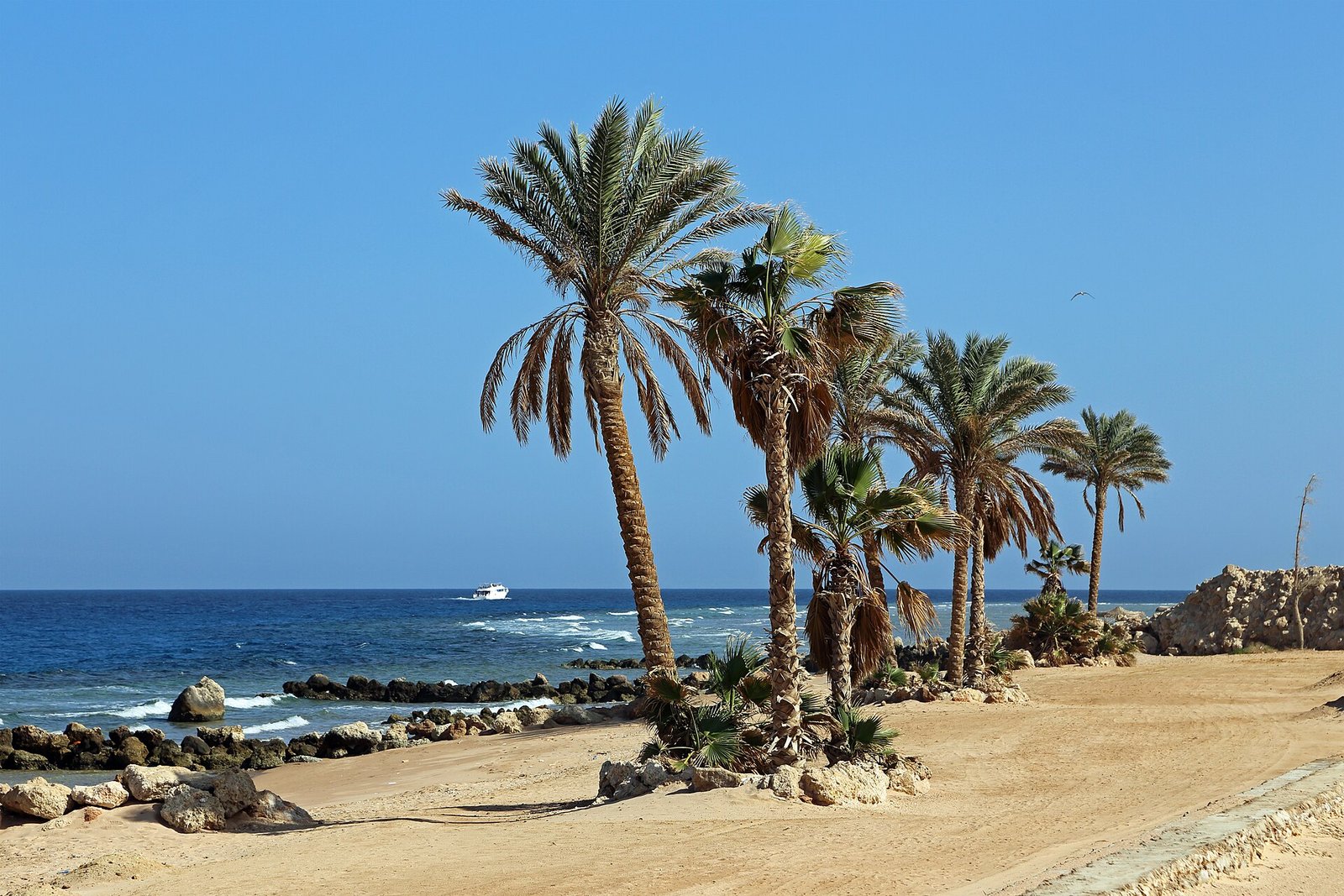
The 14-day table for shape one, the one we recommend most
This is how shape one lays out when we build it, a working skeleton rather than a fixed product: three nights in Cairo, four on the ship, two in Luxor, four on the coast.
| Day | Where you sleep | What the day holds |
|---|---|---|
| 1 | Cairo | Arrival and transfer to the hotel. Nothing scheduled. The Nile at dusk if you have the energy. |
| 2 | Cairo | Giza early: the Pyramids, the Sphinx, the desert-edge view. Grand Egyptian Museum after lunch. |
| 3 | Cairo | Saqqara, Dahshur and Memphis. Late afternoon in Khan el Khalili and Al Muizz street. |
| 4 | Aswan | Coptic Cairo and the Citadel. Afternoon domestic flight to Aswan. Evening on the corniche. |
| 5 | Ship, Aswan | Abu Simbel at first light, by road or short flight. Board the ship. Felucca at sunset. |
| 6 | Ship, Kom Ombo | Philae, the High Dam and the Unfinished Obelisk. Sail north. Kom Ombo at dusk. |
| 7 | Ship, Luxor | Edfu in the morning. Through the Esna lock. Luxor Temple lit up after dinner. |
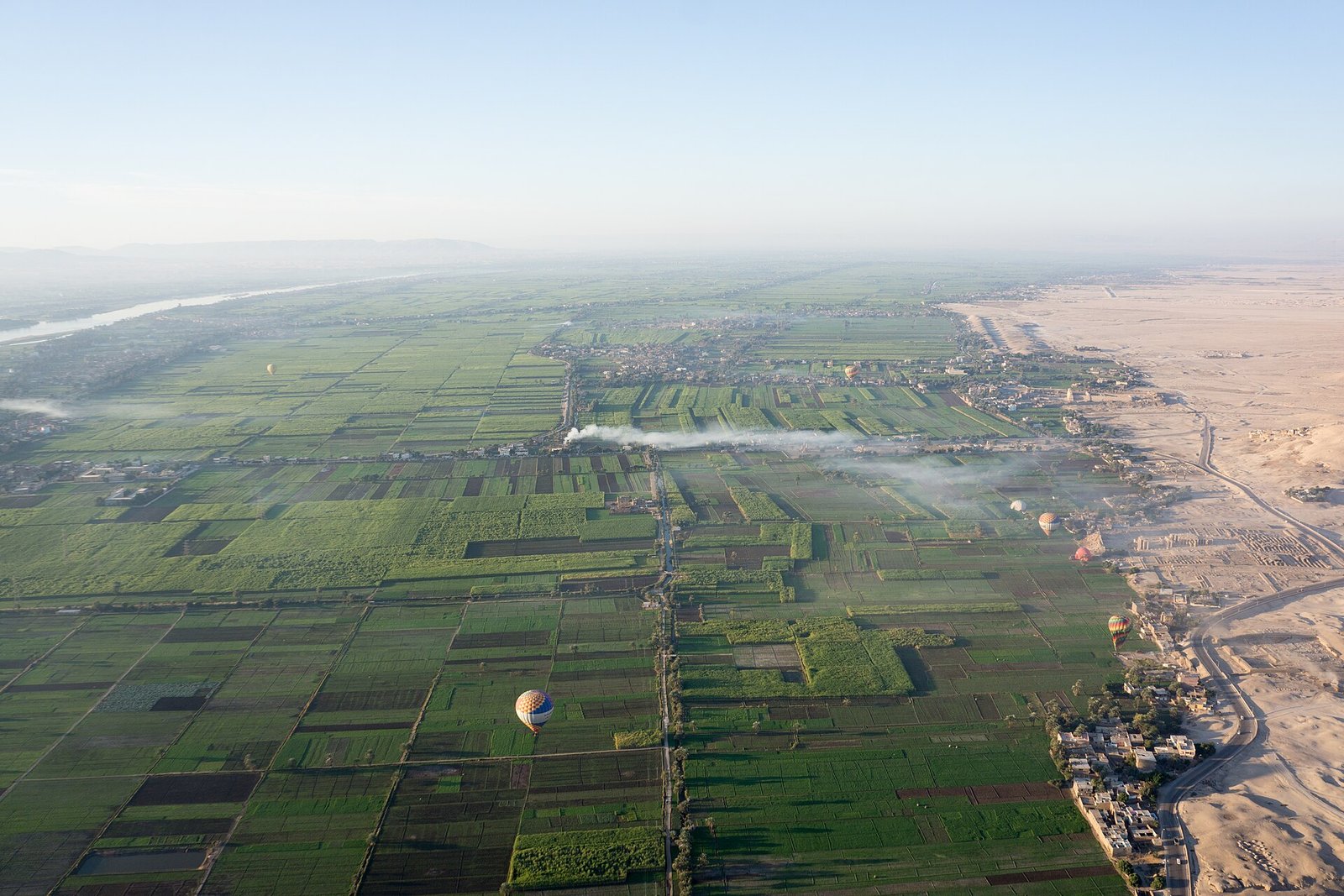
| 8 | Luxor | West bank: Valley of the Kings, Hatshepsut, Colossi of Memnon. Karnak in the afternoon. Disembark to a hotel. |
| 9 | Luxor | Rest day. Balloon at dawn if you want it, then nothing. |
| 10 | Hurghada | Road to the coast, around four hours. Check in. First swim before sunset. |
| 11 | Hurghada | Reef day by boat: snorkeling or diving, lunch on board, Giftun island. |
| 12 | Hurghada | Free. A second boat, a desert quad trip, or the beach and a book. |
| 13 | Hurghada | Free. Last full day on the water. |
| 14 | Departure | Domestic flight to Cairo. A last museum or a walk in Zamalek, then home. |
Two things are deliberate. Abu Simbel comes on day five, so the longest day lands while you are fresh. And the rest day is day nine, not day fourteen.
Rest days belong in the middle, not at the end
Up to about a week, an Egypt trip is a circuit optimized for coverage. Around day eight that logic breaks. Temples blur, the guide's explanations stop landing, and the afternoon site gets skipped for the hotel.
The fix is to plan for rhythm rather than coverage, and the best tool is a day with nothing on it, placed where fatigue peaks. In shape one that is day nine in Luxor. In shape two it is the day between the cruise and the drive to Alexandria. In shape three the boat provides it, and a second one fits in Aswan.
Stacking the rest at the end does not work. Four beach days after nine days of monuments is recovery, but it does not help you on day seven at Kom Ombo. One empty day in the middle does.
- Put the rest day after the physically hardest stretch, which is always the Luxor west bank.
- Book nothing for it. An optional dawn balloon is the only exception we make.
- Keep the same hotel on both sides of it. A rest day that starts with checkout is not a rest day.
When to take two weeks, in Fahrenheit and Celsius
The shapes react differently to heat. The figures are typical daytime highs; the Red Sea column is roughly the water temperature.
| Months | Cairo | Luxor and Aswan | Red Sea water | Which shapes work |
|---|---|---|---|---|
| October to November | 82 to 86 F (28 to 30 C) | 90 to 97 F (32 to 36 C) | About 79 F (26 C) | All three. Best window for shape two. |
| December to February | 66 to 70 F (19 to 21 C) | 73 to 77 F (23 to 25 C) | About 72 F (22 C) | One and three. The desert drops near freezing at night and Alexandria gets its rain. |
| March to April | 75 to 84 F (24 to 29 C) | 84 to 95 F (29 to 35 C) | About 75 F (24 C) | All three. Occasional khamsin wind days. |
| May to September | 93 to 97 F (34 to 36 C) | 104 to 110 F (40 to 43 C) | About 82 F (28 C) | One only, sites done by late morning. |
If you have the choice, late October through early December is the sweet spot: warm on the Nile, warm enough to swim, cool enough to walk the Valley of the Kings at noon. It is also the busiest period, so book early. Our best time to visit Egypt guide goes month by month if your dates are fixed.
Which shape suits which traveler
After enough of these trips you can usually guess the right shape from the first message.
Shape one, classic plus Red Sea
- A first trip with the whole family, including teenagers who will tolerate five temples but not nine.
- One traveler wants history and the other wants a vacation. The coast settles the argument.
- Summer travel, when the coast is the only part of the country that is comfortable all day.
Shape two, classic plus Alexandria and the desert
- A second visit, or a first visit by someone who has read enough that the classic route feels short.
- Photographers. The White Desert at dawn is a frame the Nile cannot give you.
- Travelers who do not need a beach.
Shape three, slow classic on a dahabiya
- Couples and honeymoons, where the boat is part of the point.
- Travelers in their seventies and beyond, or anyone who hates daily packing.
- Anyone whose reaction to the word "buffet" is a small sigh.
The wrong fit is easy to spot too: shape two with young children, shape three in July, shape one for a pure history traveler.
The logistics that only show up at two weeks
At fourteen days a set of practical questions appears that a one-week trip never raises.
- Domestic flights. Every shape needs two: Cairo to Aswan at the start of the river stretch, and a flight back to Cairo at the end, from Hurghada in shape one and from Luxor in the other two. Our page on domestic flights in Egypt covers the airports and timings.
- Laundry. Nobody packs fourteen outfits. Hotels and ships do laundry in a day. Pack for a week and plan one wash around day six.
- Luggage. Leave the big case at the Cairo hotel and take a small bag to the desert.
- Entry paperwork. Check that the stay your visa allows covers the whole trip with margin.
- Cash and medication. Enough for the full two weeks, split between bags.
- The empty days. Two, spread through the trip, not banked at the end.
How Explora Egipto builds a two-week trip
We are a local agency in Egypt with our own guides and vehicles. Three regions, two domestic flights, a ship or a sailboat and five or six hotels only work when one team holds every connection.
You tell us your dates, who is traveling, and which shape sounds like you, or that you are not sure. Within a day or two you have a day table like the one above, adjusted to your dates, with the hotels and the boat named. Ask us for the quote.
- One Egyptologist guide travels the whole Nile stretch with you, so the story builds instead of restarting.
- Flights, the cabin or dahabiya and every hotel are booked by us.
- The rest days are protected. If a hotel offers to fill them, we say no on your behalf.
- Changes on the ground are handled by the person standing next to you.
To see what a finished schedule looks like, our 12-day Egypt itinerary is the core route with a short coast extension, and our 15-day Egypt itinerary is shape one with an extra night at each end. Both are fixed day-by-day plans; this page is where you choose between them.
Frequently asked questions
Is two weeks too long for Egypt?
No, as long as the second week has a different texture from the first. Fourteen straight days of temples is too long for almost anyone. Nine days of monuments followed by four or five of coast, desert or slow river is exactly right, and people who take two weeks rarely wish they had taken fewer.
Can I do both the Red Sea and the White Desert in 14 days?
You can, but we advise against it. The coast lies east of the Nile and the desert lies west of Cairo, so combining them means crossing the country twice and losing two full days to the road. In two weeks you get one second act. If you want both, that is a three-week trip or a second visit.
Which shape is best for a first trip to Egypt?
Shape one, the classic route followed by the Red Sea, for most first-timers. It covers everything a first visit should, Cairo, the cruise and Abu Simbel, then ends with rest, which is what the body wants after nine days of sites. The exception is a first-timer with no interest in a beach; for that person shape two is the better fit.
How many domestic flights does a two-week Egypt trip need?
Two, in every shape. One from Cairo to Aswan at the start of the river stretch, and one back to Cairo at the end, from Hurghada in the Red Sea shape or from Luxor in the other two. Both are around an hour, and we book them as part of the trip. Everything else moves by ship, sailboat or road with our own driver.
Should the Red Sea come at the start or the end?
At the end. The monuments are the physically demanding part of Egypt, with early starts, heat and a lot of walking, and they belong in the week when you are fresh. Starting on the beach and finishing with nine days of sites leaves the hardest stretch for when your energy is lowest.
What is the difference between this page and the 15-day itinerary?
This page is the decision: the three ways a two-week trip can be shaped, what each adds, and who suits which. The 15-day and 12-day pages are fixed schedules, one line per day, for a single version of the trip. Read this one first to choose the shape, then open the fixed schedule closest to it for the day-by-day detail.
Two weeks is the length where Egypt stops being a checklist
Tell us your dates, who is coming, and whether the second week should be a beach, a desert night or a slow sail, and we come back with the 14-day table, the boat and hotels named, and one quote for the whole trip. Not sure which shape is yours? Say so and we choose together.