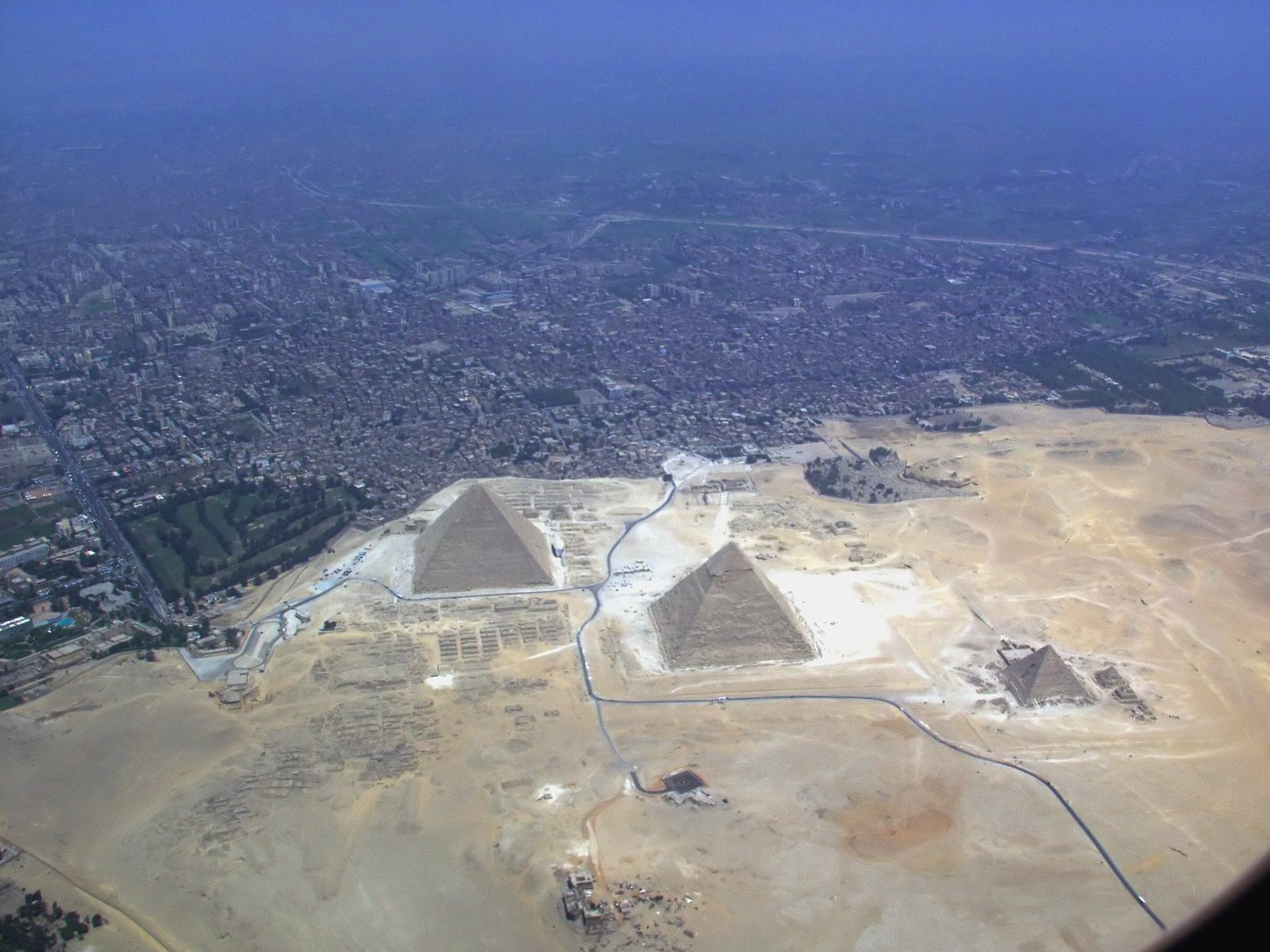
The Giza plateau sits on the western edge of Cairo, roughly 20 kilometers from the city center, and covers about 16 square kilometers holding three great pyramids, six smaller queens' pyramids, the Great Sphinx and the Valley Temple. Allow three to four hours, arrive at opening rather than mid morning, and buy the interior ticket separately if you want to go inside a pyramid.
Most people picture three pyramids in empty desert. The reality is a working site of about 16 square kilometers on a limestone shelf above the west bank of the Nile, with the suburb of Giza pressing against the fence on one side and open Sahara on the other.
On it sit the pyramids of Khufu, Khafre and Menkaure, six much smaller queens' pyramids at their feet, the Great Sphinx with its Valley Temple, fields of nobles' tombs, and a viewpoint where all of them line up in one frame. Everything except the pyramid interiors is covered by the ordinary ticket.
Distances are larger than photographs suggest, and there is no shade at any point, which is the fact that decides how most visits go.
The Ministry of Tourism and Antiquities sets the prices, charges them in Egyptian pounds, and revises them often enough that any figure printed on a travel site is probably stale. The structure does not change, and that is what you need before the gate.
| Ticket | What it covers | How it is sold | Who needs it |
|---|---|---|---|
| General admission | The plateau, the outsides of all three pyramids, the queens' pyramids, the Sphinx, the Valley Temple | At the gate or the official ministry portal | Everyone |
| Great Pyramid interior | The ascending passage, Grand Gallery and King's Chamber inside Khufu | Separate ticket, capped daily quota | Anyone set on Khufu and fine in tight spaces |
| Second pyramid interior | The burial chamber of whichever of Khafre or Menkaure is open | Separate ticket, well below Khufu | A substitute once the Khufu quota goes |
| Interior tickets | Each interior on its own ticket, on top of general admission | Bought one by one at the gate or online | Anyone certain they are going inside |
| Student reduction | A reduced rate on the above | Against a valid international student card | Students carrying the card, not a photo |
Worth knowing before someone tries it on you: the Sphinx has no ticket office of its own and never has. It sits inside the general admission area. Our page on monument entrance fees covers the wider system.
The plateau is on the west bank, and the drive from the center takes between forty five minutes and an hour and a half depending on traffic, which is not a minor variable here. Plan the return leg as generously as the outbound one. Ride hailing works well: see Uber and Careem.
Avoid the unmetered taxis touted near the site. The pattern is consistent: an inflated fare, an unrequested stop at a relative's papyrus shop, and the line that the main gate is closed and he knows another one. There is no other entrance worth using. More in is Cairo safe for tourists.
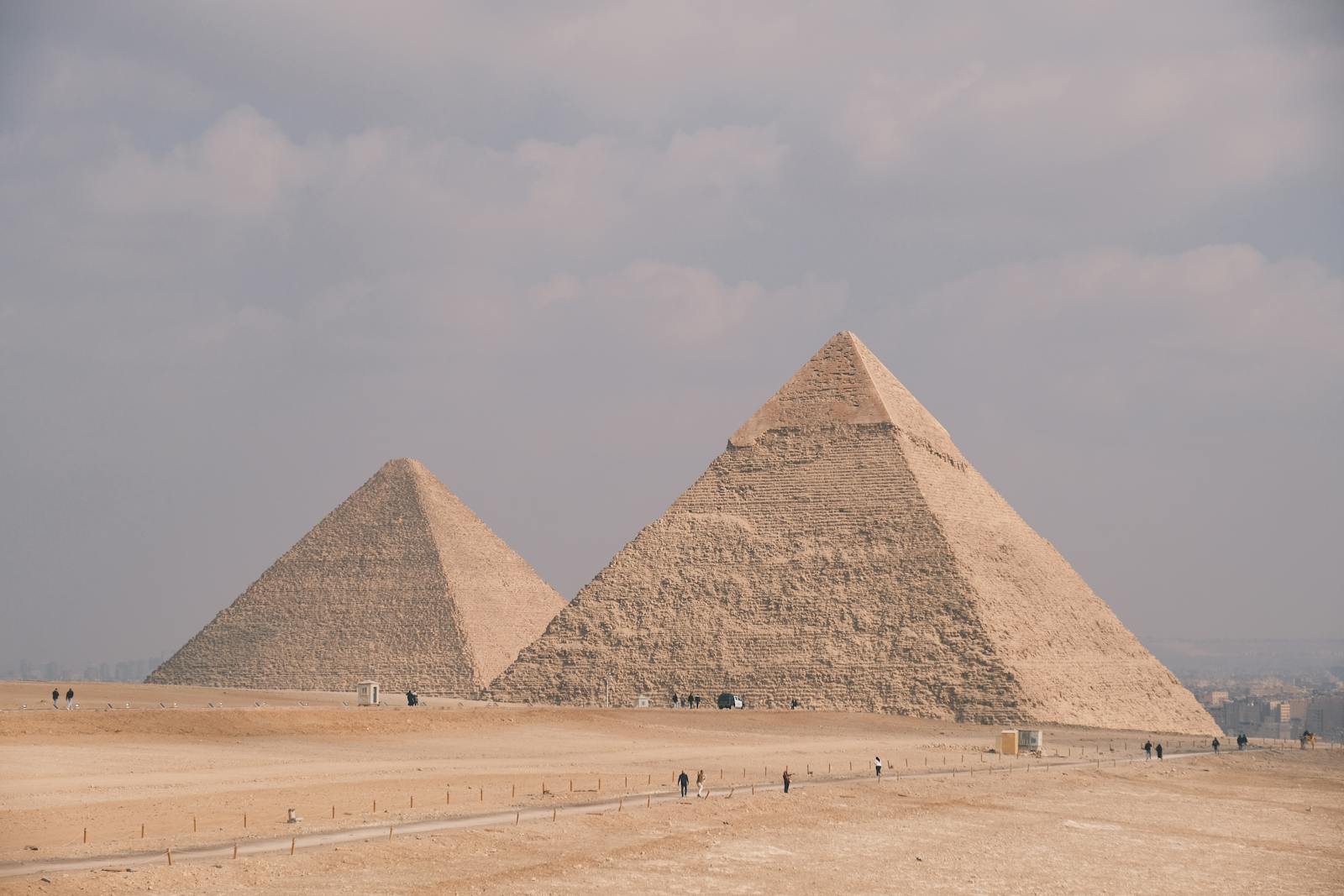
Khufu, the Great Pyramid, is the northernmost and largest. It stood about 146 meters when finished and is around 138 meters now, having lost its outer casing. It holds roughly 2.3 million blocks and is the only one of the seven wonders of the ancient world still standing.
Khafre, in the middle, fools everybody. It is genuinely shorter at about 136 meters, yet looks taller in almost every photograph. Two things do that: it stands on ground roughly ten meters higher, and it still wears a cap of the original polished limestone casing at its summit.
Menkaure, the southernmost, is much smaller at about 65 meters and much less visited. Its north face carries a deep vertical wound, left by a twelfth century attempt by the sultan Al-Aziz Uthman to take it down. His workers gave up after eight months, having learned that dismantling a pyramid is harder than building one.
The interior divides opinion, so here is what it involves. You climb a narrow, low, warm passage of about forty meters, bent almost double, on a wooden ramp with cleats for grip. There is light and ventilation, but the air is close.
Then it opens into the Grand Gallery, the payoff: a corbelled corridor about 8.6 meters high rising ahead of you at an angle. At the top is the King's Chamber, a bare granite room with an empty sarcophagus. There are no hieroglyphs, no paintings and no treasure. If enclosed spaces or steep steps are a problem, this is a clean skip and your day loses nothing.
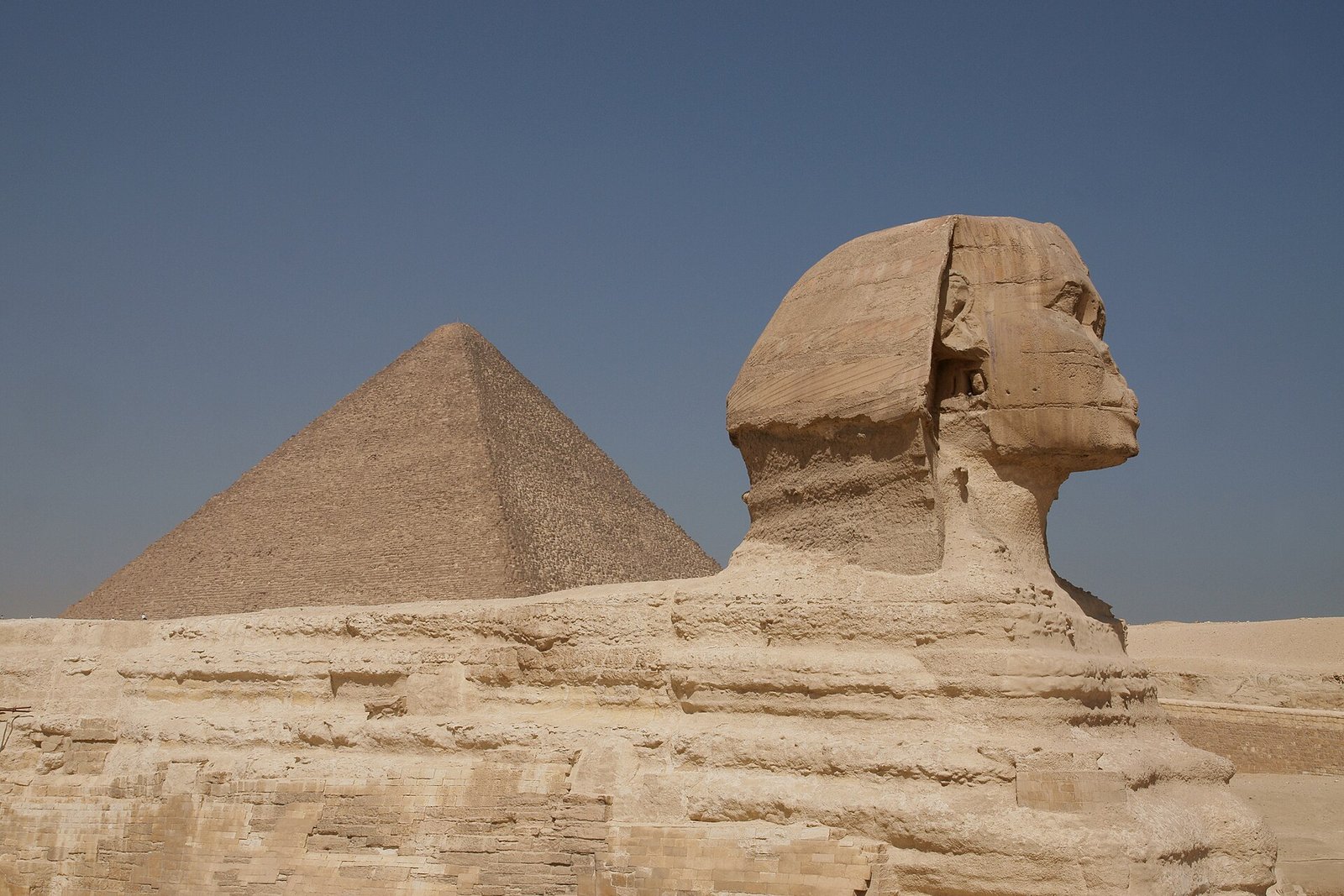
This is the original, and it is asked often enough to answer plainly. The Great Sphinx of Giza, about 73 meters long and 20 meters high, carved roughly four and a half thousand years ago from a single limestone outcrop in front of Khafre's pyramid, is the one every other sphinx copies. Las Vegas, the museum pieces, the replicas: all later.
The nose was not shot off by Napoleon's army. The Danish traveler Frederic Louis Norden drew the Sphinx in 1737, six decades before the French expedition reached Egypt, and his drawings already show it without one. You see it best from the Valley Temple below, which general admission covers and which earns a few minutes for its enormous unadorned granite blocks.
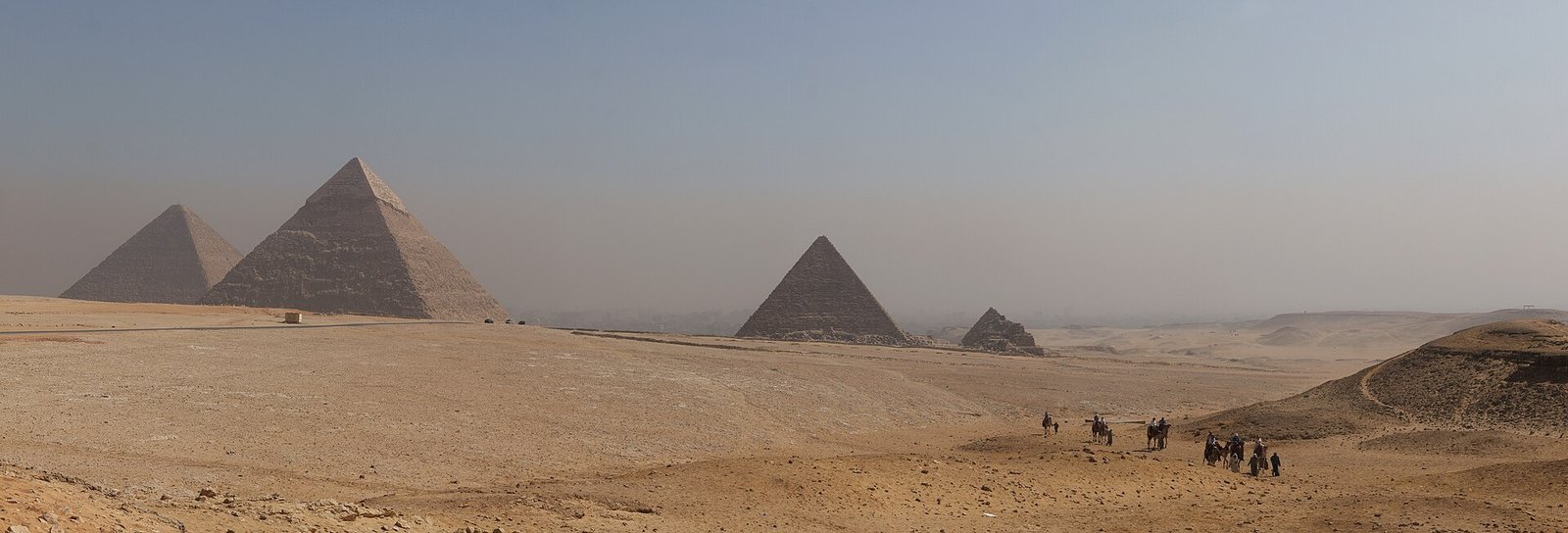
At the desert end of the plateau a viewpoint lines the three great pyramids up with the six queens' pyramids behind them. It is the only place on the site where all nine fit one frame, and it is where the picture in your head comes from.
On foot it is roughly twenty minutes from Menkaure across open sand; by car it is a short run on the internal road. Late afternoon light here is the best of the day, so plan the visit backwards from this spot rather than arriving when everyone is tired. Our notes on photography and camera rules cover what is permitted where.
The plateau opens in the morning and closes in the late afternoon, and the exact times shift with the season and during Ramadan, so confirm them for your own date. The shape of the day holds regardless, because it is set by coach arrivals and by the sun.
Allow three to four hours. Under two and you will feel you saw the pyramids through a car window. From June to September avoid the middle of the day: there is no shade anywhere and temperatures above forty degrees are normal. Bring closed shoes, a brimmed hat and more water than you expect. See the best time to visit Egypt and what to pack for Egypt.
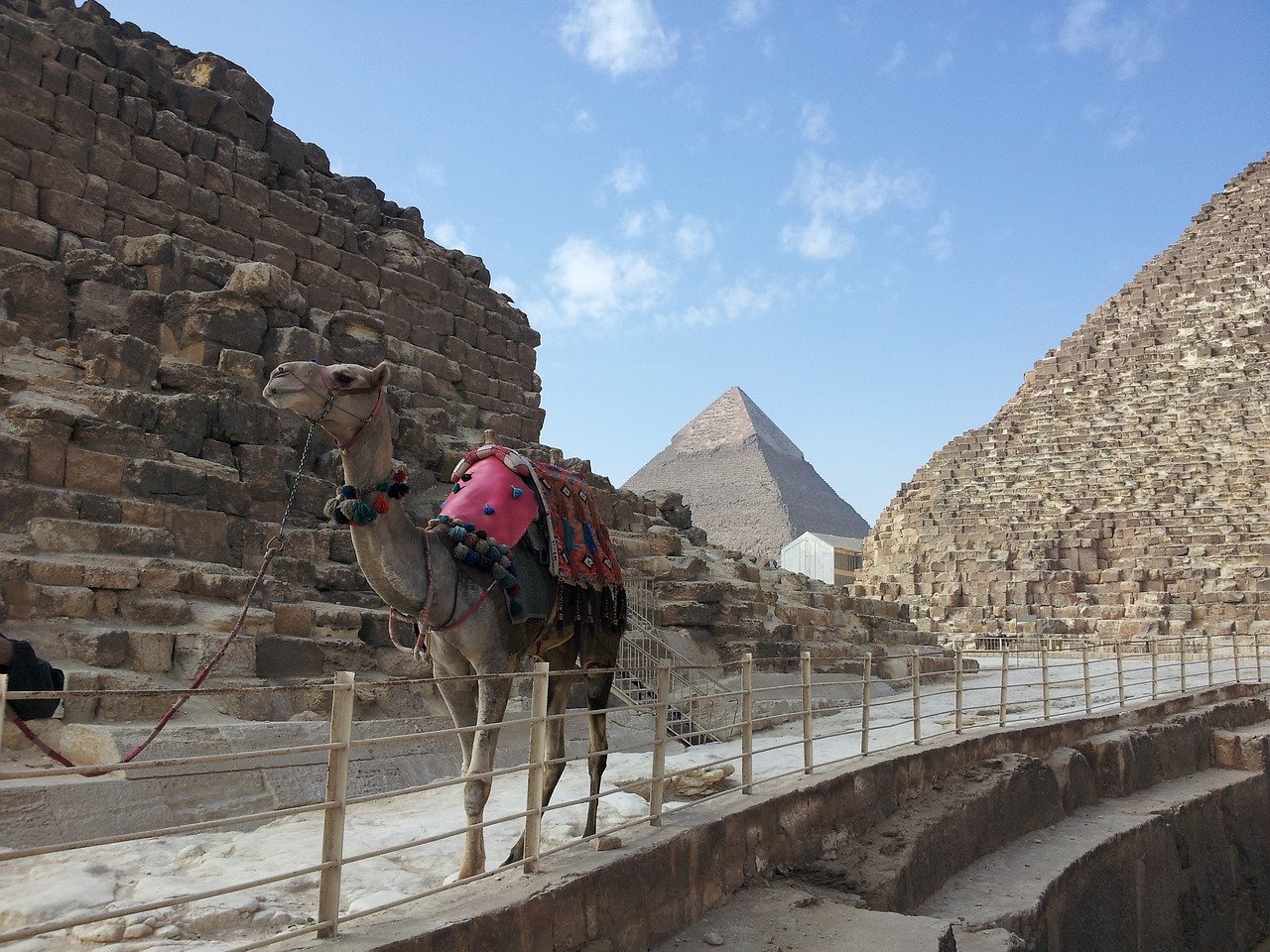
The camel ride photographs beautifully and generates more complaints than any other activity in Egypt. The problem is mechanical. You are invited up for free, just for the photograph, and once you are up there the camel does not kneel again until money changes hands. A camel obeys its handler and nobody else, so the negotiation is lost the moment you are in the saddle. The defense is in the order of events:
On a guided day this disappears, because the rate is settled with a known handler beforehand. The same instincts apply in the bazaars: see haggling in Egypt.
Both work, and the answer depends on the kind of traveler you are. What we will say, after years on this plateau, is that Giza without context is three very large piles of stone.
| Approach | What you get | What it asks of you | Suits |
|---|---|---|---|
| Private day with a qualified Egyptologist | Hotel pick up, tickets handled, a guide to yourselves, your own pace, no vendor reaching you | Almost nothing. The day is built around you | First visits, families, tight schedules |
| Large group coach tour | Fixed departure and route, a guide shared with a full coach | You keep the group's clock, and most include a commercial stop | Trading flexibility for simplicity |
| Independent visit | Complete freedom over route, order and hours | Tickets, transport both ways and every vendor approach | Repeat and confident independent visitors |
We are a local operator in Cairo rather than a reseller, and our guides are qualified Egyptian Egyptologists. Travelers have written on our reviews page, and what is included in our tours shows how a day is assembled.
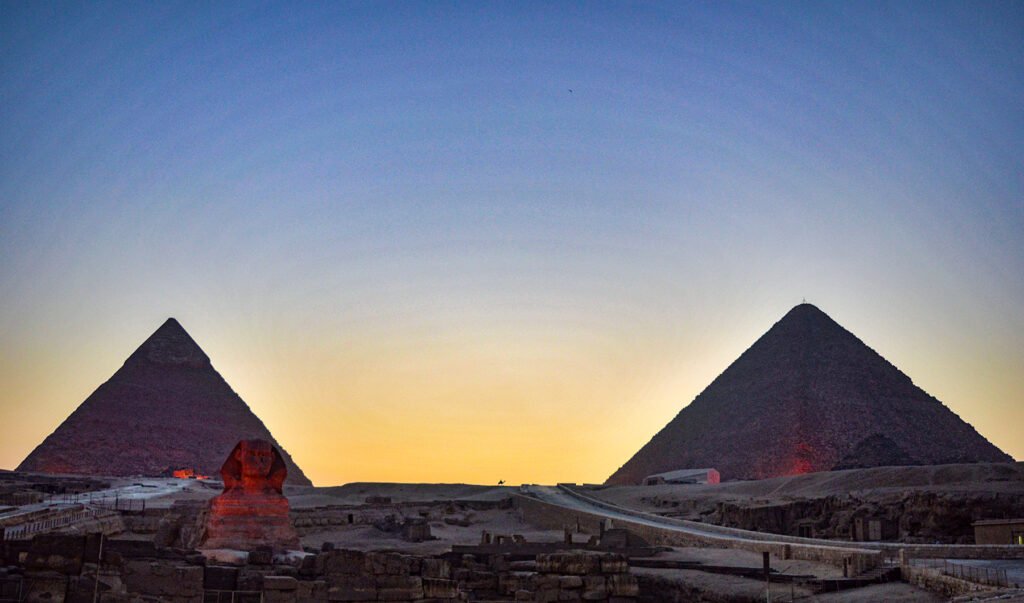
Every night the pyramids and the Sphinx are lit for a projection and narration show of about three quarters of an hour, watched from a stand facing the Sphinx. Performances rotate through several languages across the evening sessions, so confirm the schedule for your night.
Our honest view: a production from another era. The narration is solemn and the technology is not what a modern show would use, yet the Sphinx floodlit in color with three pyramids dark behind it is a genuinely odd sight. Go if you are staying in Giza and the evening is free; do not cross Cairo in rush hour for it. Several cafe terraces facing the entrance see it for the price of a tea. More in our sound and light guide.
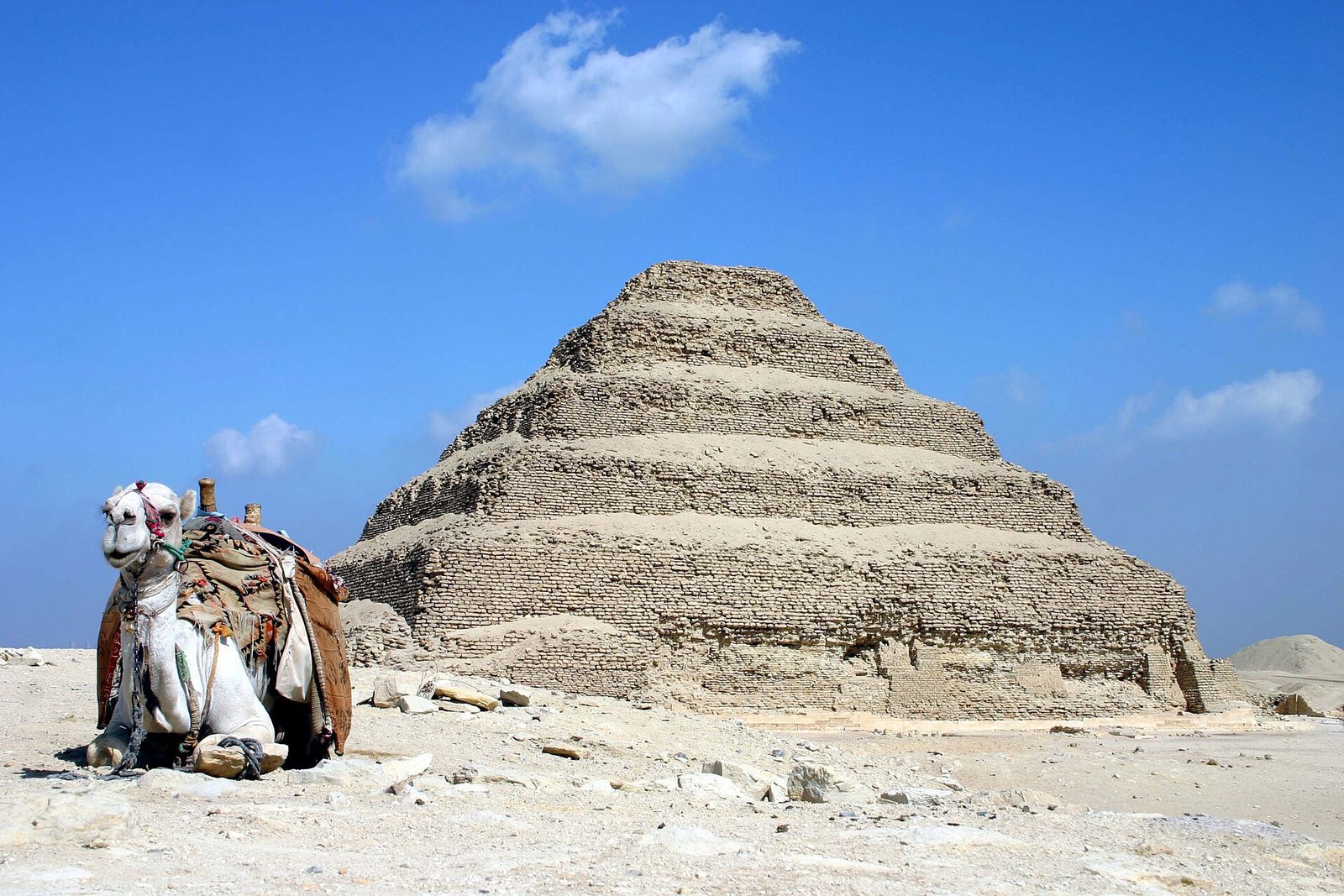
The common mistake is assuming the pyramids of Egypt are the three at Giza. Less than an hour south is the rest of the story, and it is the extension we recommend most.
Each has its own ticket, bought on arrival. With Giza they make a long but coherent day, which is why our ten day itinerary gives Cairo more room than most.
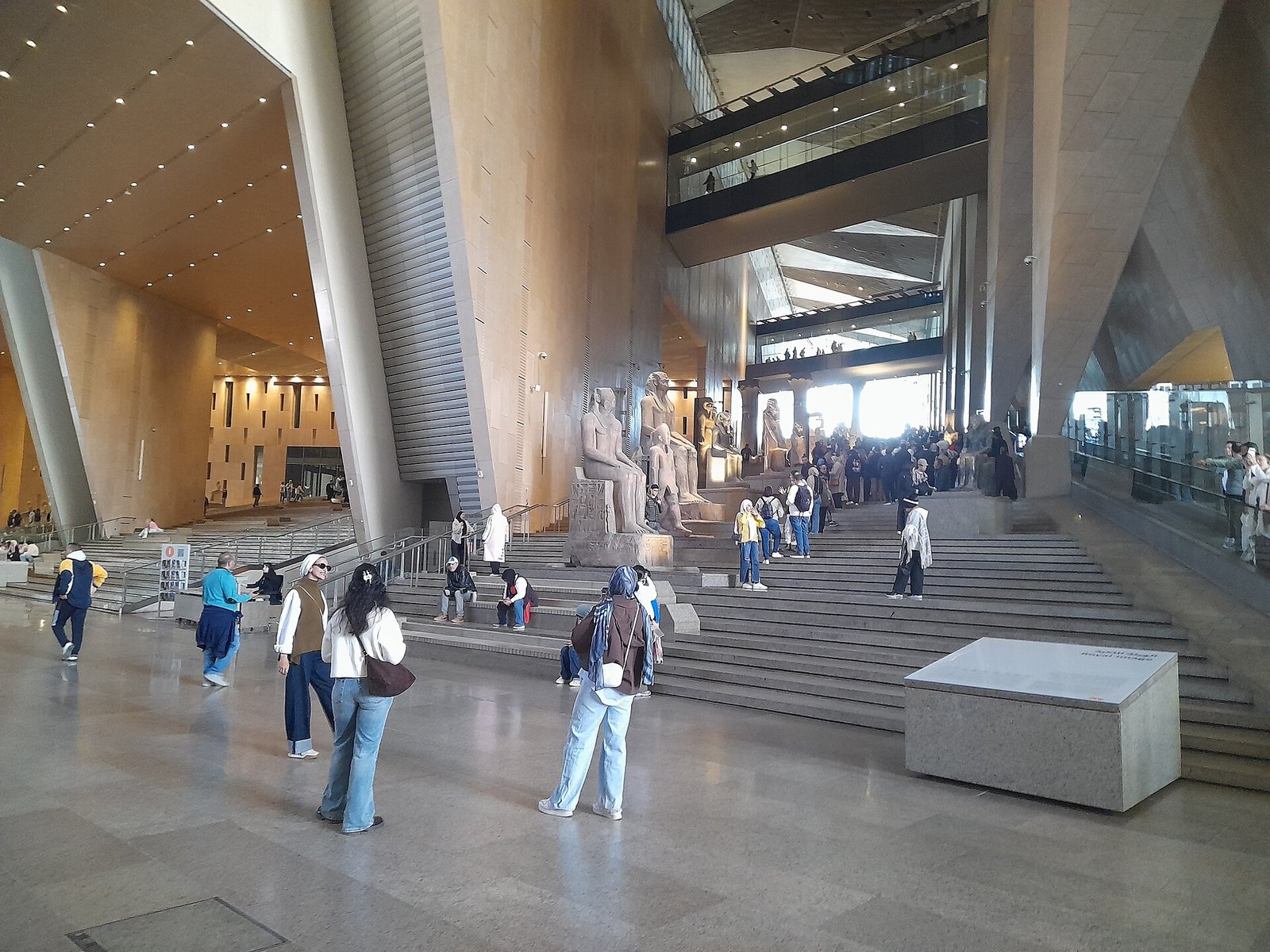
The Grand Egyptian Museum stands about two kilometers away and is the other half of the visit rather than an optional extra: roughly one hundred thousand objects, the complete Tutankhamun material together for the first time, and a staircase of statuary ending at a window that looks straight at the pyramids.
It also holds Khufu's solar boat, a cedar vessel of about 43 meters recovered in pieces in 1954. It used to sit in its own building against the south face of the Great Pyramid; it moved here in 2021 and that building is gone. Itineraries still list the boat museum as a Giza stop, so check which one a program means.
Both in one day works and is what we are asked for most: the plateau from opening until midday, then the museum through the afternoon. Book the museum slot ahead, because entry runs on timed windows and they fill. Our museum guide covers how to work through it.
Every one of our Egypt trips includes a full Giza day with a qualified Egyptologist guide, tickets arranged in advance, private transport and hotel pick up. We are the Cairo team that runs these days rather than handing them to a third party.
Send your dates and how many are traveling and you get an itinerary written for you, with our best first-trip conditions and a plain list of what is included and what is not. It commits you to nothing and a person answers. The usual shapes are the seven day classic, the ten day version when you want Saqqara and Dahshur unhurried, or a tailor made itinerary. See also how many days in Egypt and Cairo excursions.
General admission covers the plateau, the outsides of all three pyramids, the queens' pyramids, the Sphinx and the Valley Temple. Going inside needs a separate ticket, the Great Pyramid costing well above the second and released in a capped daily quota. Each ticket is bought separately, and students aged 24 or under with a valid card get a reduction. Rates change, so check the current one.
Yes, with an additional ticket and a limited number released each day. You climb bent over through a narrow passage of about forty meters, pass through the Grand Gallery at around 8.6 meters high, and reach the King's Chamber and its empty granite sarcophagus. There are no hieroglyphs or objects inside, and it is not recommended with claustrophobia or bad knees.
Three to four hours suits an unhurried visit: the exteriors, one interior, the Sphinx, the Valley Temple and the panorama point where all nine pyramids line up. Under two hours feels like a drive past. Adding Memphis, Saqqara and Dahshur makes it a full day.
The site opens in the morning and closes in the late afternoon, with times adjusted seasonally and during Ramadan, so confirm them for your date. The first two hours after opening are the best window: low light, bearable heat, ahead of the coaches. The last two hours are the alternative, with sunset from the panorama point, though the interior quota will be gone.
Independent is cheaper and gives you total freedom, but you handle the tickets, both transport legs and every vendor approach, and you get the monuments without the context. A private day with a qualified Egyptologist includes transport, tickets and a guide to yourselves. The explanation is what turns three stone structures into four and a half thousand years of history.
A government set hourly tariff exists for camel rides on the plateau, so ask the current figure and use it as your reference rather than accepting whatever is named. Settle the total sum and the duration before you get on, pay when you dismount rather than in advance, and refuse anything offered as a free gift.
Yes. They are about two kilometers apart. The combination that works best is the plateau from opening until midday, lunch nearby, then the museum through the afternoon once the groups have moved on. It is intense but common, and it is the standard first full day on our Cairo itineraries. Book the museum slot in advance.
The Great Sphinx at Giza is the original: about 73 meters long and 20 meters high, carved roughly four and a half thousand years ago from a single limestone outcrop in front of Khafre's pyramid. Every other famous sphinx, from Las Vegas to theme park replicas, is later. General admission covers it, best seen from the Valley Temple below.
The Great Pyramid of Khufu stood about 146 m (481 ft) tall when it was finished, around 2560 BC, and is about 138 m (455 ft) today, because it lost its smooth limestone casing and capstone. For about 3,800 years it was the tallest structure built by people anywhere in the world. Khafre's pyramid looks taller from most angles only because it stands on higher ground.
On the Giza plateau, on the west bank of the Nile at the edge of the Western Desert, about 8 miles (13 km) southwest of central Cairo. The city of Giza now runs right up to the plateau, so the pyramids are a 30 to 60 minute drive from downtown Cairo depending on traffic, and only a few minutes from the Grand Egyptian Museum.
The Great Pyramid of Khufu was about 481 feet (146.6 m) tall when finished and stands about 455 feet (138.5 m) today, on a base roughly 756 feet (230 m) on each side. The Pyramid of Khafre was built slightly smaller, about 471 feet (143.5 m), but it sits on higher ground and still keeps a patch of its original casing stones near the top, which is why it often looks taller in photos. The Pyramid of Menkaure is much smaller, about 215 feet (65.5 m) high.
All three were built during Egypt's Fourth Dynasty, in the Old Kingdom, roughly between 2600 and 2500 BC. The Great Pyramid of Khufu came first, around 2560 BC, followed by the pyramids of his son Khafre and of Menkaure. That makes them about 4,500 years old.
Keep exploring