Egypt in August is the beach-first month, when the Red Sea does the heavy lifting and the temples become a dawn bonus
Egypt in August is the beach-first month, when the Red Sea does the heavy lifting and the temples become a dawn bonus
Visiting Egypt in August means accepting the hottest weeks of the year and building the trip the way Egyptians do: water first, monuments at first light. Luxor and Aswan run between 105 and 110 F (41 to 43 C) after lunch, Cairo sits near 97 F (36 C), and the Red Sea holds its warmest, clearest water of the year at 84 to 86 F (29 to 30 C). The south is empty because the whole country has gone north to the coast, so you walk into the Valley of the Kings at opening with almost nobody there. Come for the reef, and treat every sunrise temple as the bonus it is.
Why August is a beach month with monuments attached, not the other way round
Most people plan Egypt as a Nile trip with a few beach days at the end. In August we turn that around. The Red Sea is the base, the pool and the reef fill the middle of every day, and the great sites are visited in the cool hours after sunrise, then left alone. A winter itinerary run in August is miserable by the second afternoon.
August is the hottest month of the Egyptian year, a degree or two above July in the south. What it offers that no cool month can is the sea at its peak, the south at its emptiest and the softest quotes of the year. Our guide to high and low season in Egypt explains why the calendar works this way.
Our default August shape is three nights on the coast first, to settle into the heat, then a four-night cruise with dawn temples, then Cairo for the museums. If you want long days among the ruins, read our guide to the best time to visit Egypt and come between October and April.
Where Egypt goes in August, and why the south is empty
Egypt has its own summer vacation, and in August the whole country moves north. Cairo families drive to the Mediterranean: Alexandria and the resort strip of the north coast. The Corniche in Alexandria is packed until well after midnight and the beach hotels are full of Egyptians, not foreigners.
The mirror image is Upper Egypt. Luxor and Aswan in August are as quiet as they ever get. The felucca captains sit in the shade waiting for a customer. Foreign visitors are a trickle: Gulf families used to the heat and a few American parents squeezing a trip in before school.
Two conclusions. Skip Alexandria and the north coast, where a visitor gains nothing in August but humidity and crowds. And lean into the empty south: Karnak with no one in the hypostyle hall, Philae without another boat at the landing, a tomb to yourself for five minutes. Those are August photographs, and they are impossible in December.
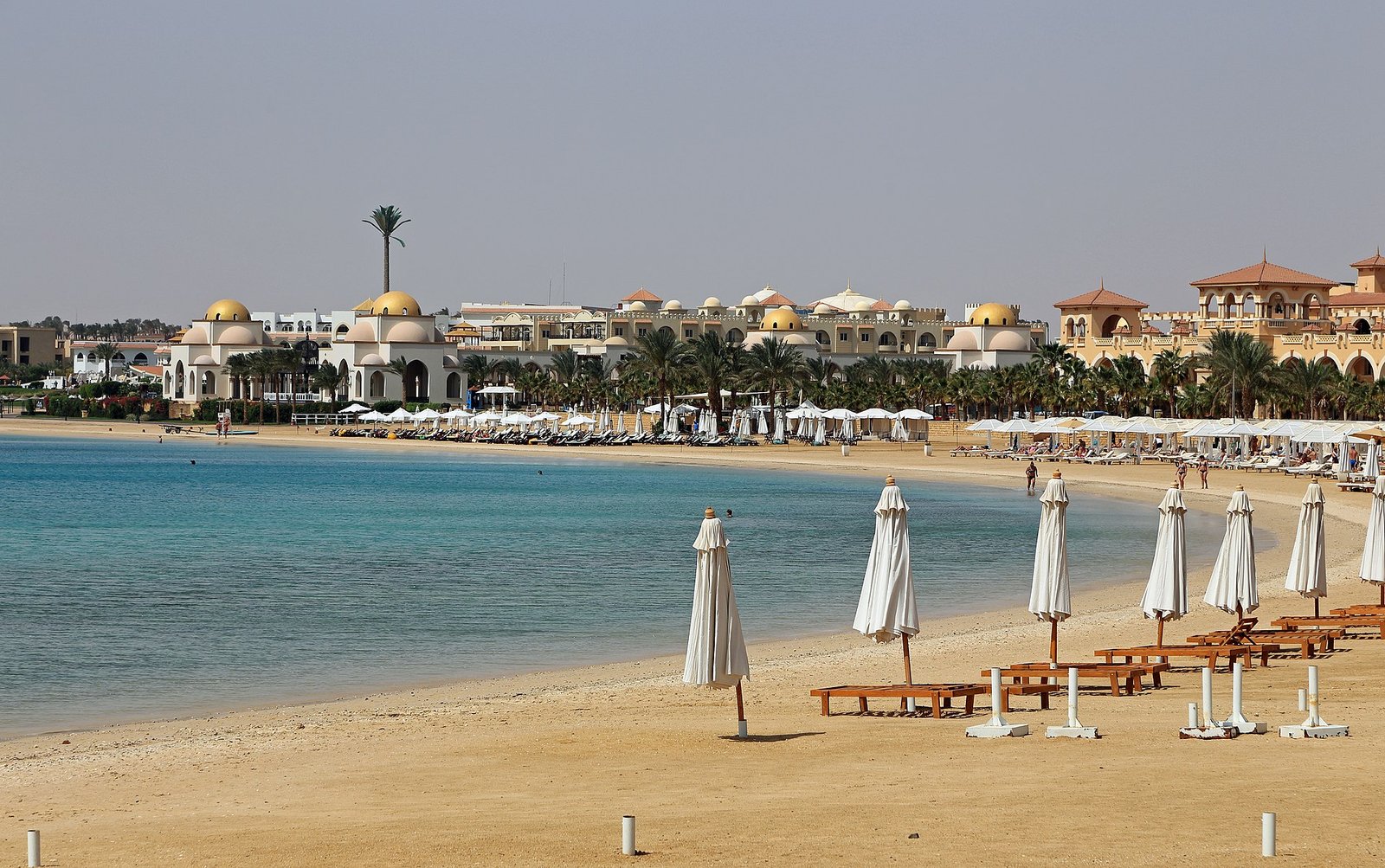
The Red Sea in August: the warmest water and the clearest reefs of the year
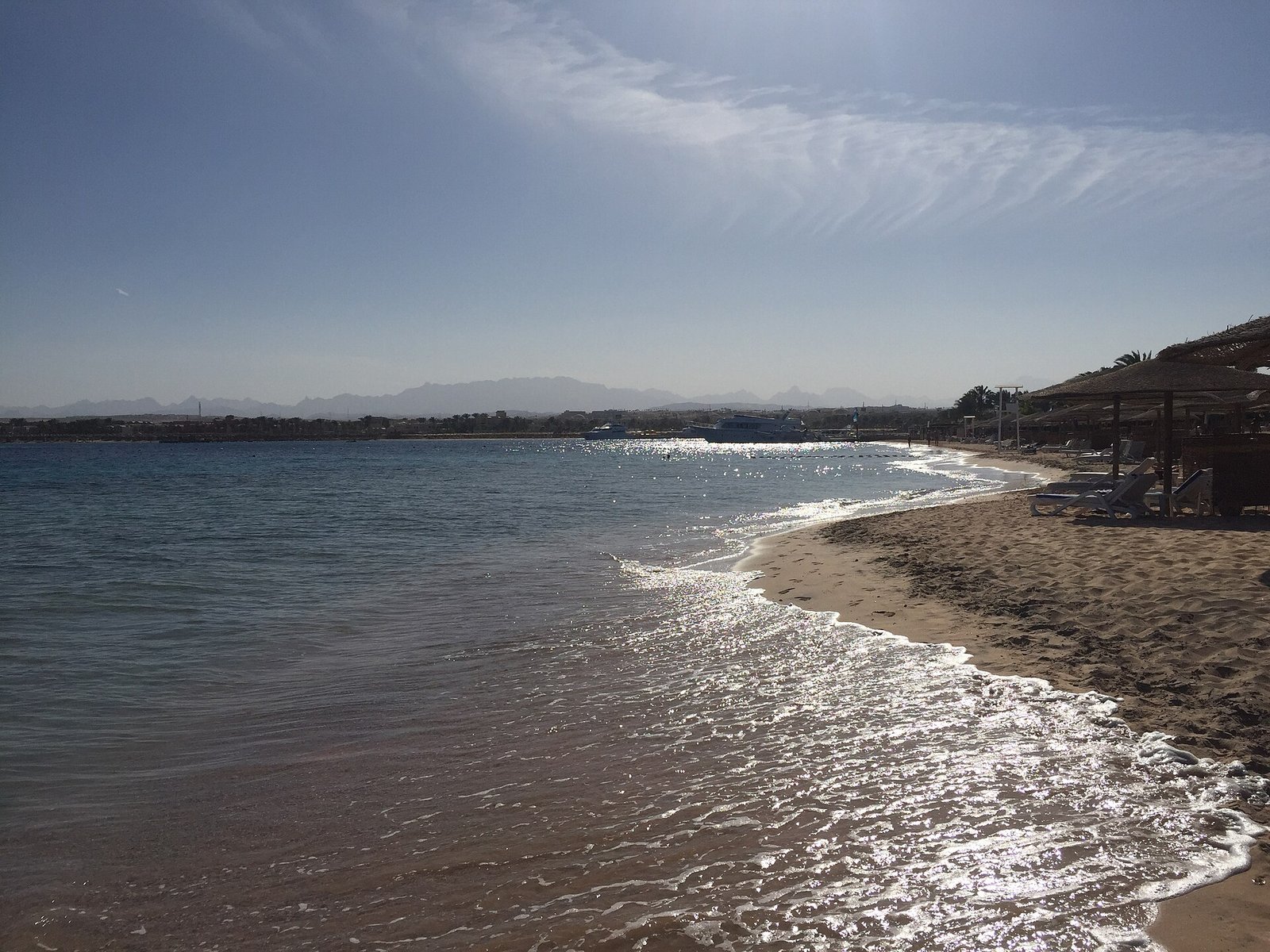
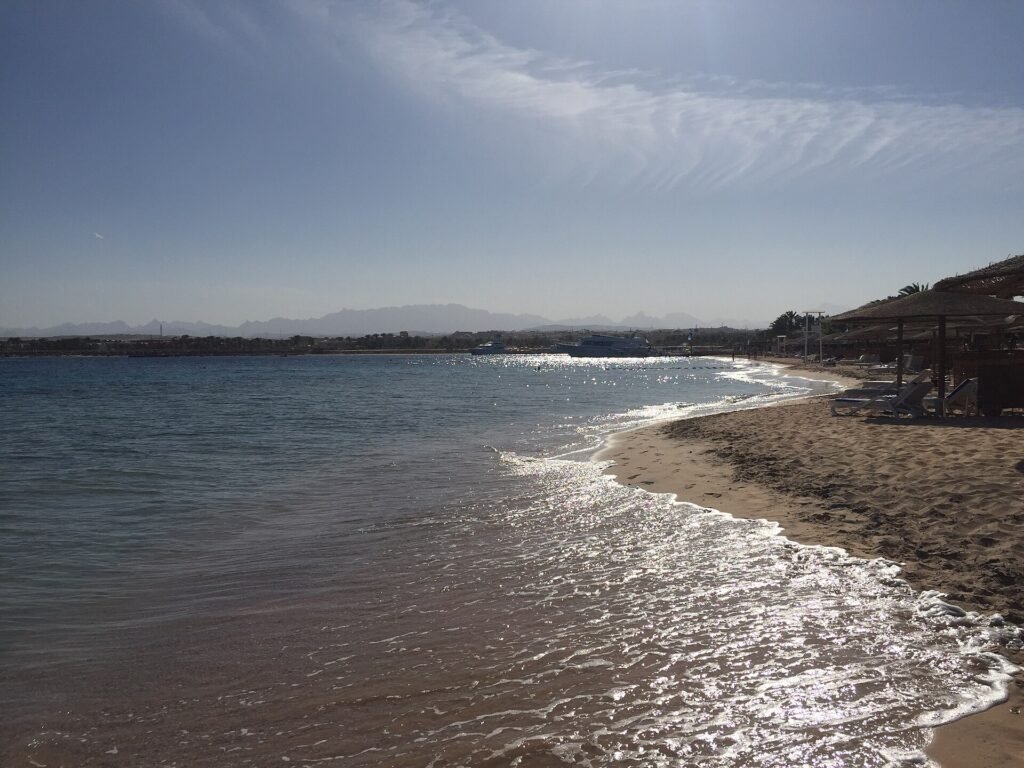
The Red Sea is why you come in August, so it gets the most days. By mid month the water reaches 84 to 86 F (29 to 30 C), an hour of snorkeling without a wetsuit, and visibility peaks because the winter northerlies that stir the shallows have not started. The house reefs off Hurghada, El Gouna and Sahl Hasheesh are glassy in the morning.
The air is in the mid 90s F (35 C), but the breeze makes it a different heat from Luxor. A coast day is easy: reef in the morning, lunch and a nap, pool at four, the marina at sunset, dinner outside at nine. Nobody sightsees.
Which coast, and the sun on the water
Hurghada, El Gouna and Sahl Hasheesh are the easy choice because a road links them to Luxor in under four hours, so the beach block and the Nile block join without a flight. Sharm el Sheikh and Dahab, on the Sinai side, need a domestic flight to reach the Nile.
The one hazard on the reef is above it. Floating face down at noon burns your back through any sunscreen, so wear a rash guard and leggings in the water and snorkel before eleven or after four.
August weather by region, and what it does to the shape of your day
This table pairs the temperatures with what each region lets you do.
| Region | Dawn | Mid afternoon | What it means on the ground |
|---|---|---|---|
| Cairo and Giza | Around 77 F (25 C) | 95 to 100 F (35 to 38 C), hazy | Pyramids at opening, museums from eleven, the city alive after nine |
| Luxor | Around 78 F (26 C), still | 105 to 108 F (41 to 42 C), bone dry | West bank done by nine thirty, Karnak before sunset, nothing between |
| Aswan and Abu Simbel | Around 80 F (27 C) | 108 to 112 F (42 to 44 C) | Philae and Abu Simbel before nine, felucca after five |
| Red Sea coast | Around 82 F (28 C) | Mid 90s F (35 C) with a breeze | Water at its warmest, reef mornings, shade at midday, long evenings |
| Alexandria and north coast | Around 77 F (25 C), humid | Upper 80s F (31 C), humid | Sticky, and full of Egyptian vacationers |
| Western Desert and Siwa | Upper 70s F (26 C) | Above 105 F (41 C) | Overnight camping off the table until late September |
What the table cannot show: the heat is dry everywhere except the Mediterranean, so sweat evaporates instantly and you do not feel how much water you lose until a headache tells you. There is no rain, wind or dust all month, and only in the last week do the Luxor dawns drop a couple of degrees and the evening wind on deck start to feel like relief, the first hint of change.
Why the Valley of the Kings must be the first stop of the day
If you get one thing right in August, it is this: the Valley of the Kings is the first place you go, the moment the gate opens, before anything else on the Luxor west bank. Not after Hatshepsut, not after breakfast on the ship. First.
The valley is a bowl of bare limestone without shade. For the first hour after opening the eastern cliffs block the sun and the air in the wadi is still the night air, close to 80 F (27 C). By nine the sun clears the ridge and the white rock throws heat back at you; by ten the walk between tomb entrances is the hottest walk in Egypt. Inside, the corridors trap warm air and the breath of everyone who went in before you.
So the west bank order is fixed. Valley of the Kings at opening, three tombs chosen the night before from our guide to the Valley of the Kings tombs and tickets, out before the sun reaches the floor of the wadi. Then Hatshepsut's temple, already bright but with a portico for shade, the Colossi of Memnon from the car window, and back on board by ten. Groups that reverse the order for a better photograph regret it by nine thirty.
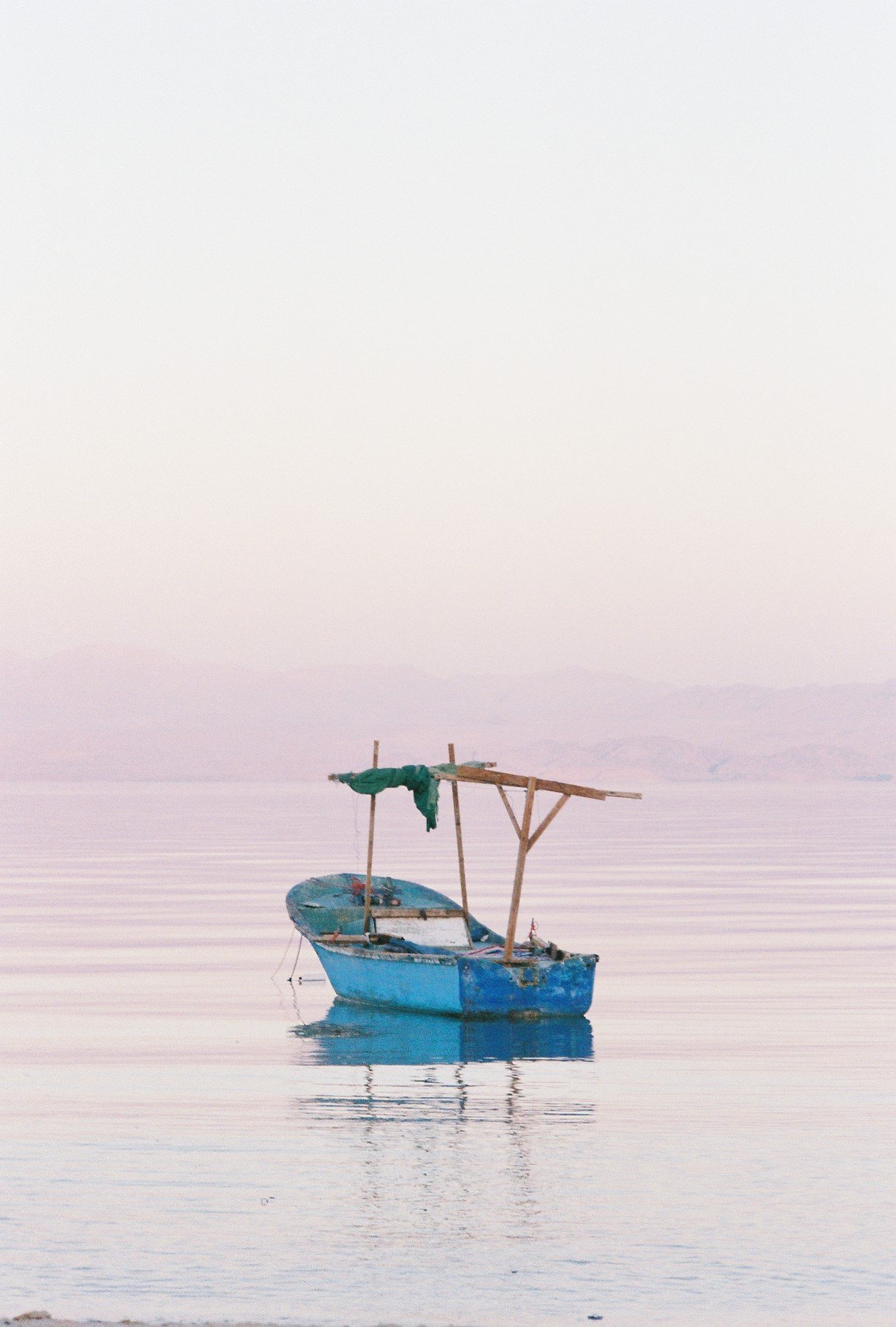
Dawn-only temples: one August morning in Aswan and at Abu Simbel
Every monument in the south follows the same rule: nothing outdoors between ten and five, and the afternoon reopens only for a temple with a sunset worth seeing.
- Abu Simbel from Aswan. The road leaves in the dark, about three hours across the desert, and you arrive with the sun still low and shining straight into the great temple, which is why its builders faced it east. An hour at the two temples, then back. The short domestic flight from Aswan is the faster option, and we quote either.
- Philae. The motorboat across the lake at seven in the morning is one of the loveliest moments of an August trip; walk the colonnades while the stone is cool, then leave. Philae also works after five, for the sound and light show.
- Kom Ombo and Edfu. The ship reaches Kom Ombo late in the day and Edfu early in the morning, so both already fall in the cool slots.
- Karnak and Luxor Temple. Karnak after four thirty, when the light through the hypostyle hall turns orange and the sandstone stops radiating. Luxor Temple after dark, floodlit.
Across a four-night cruise that is every major site between Aswan and Luxor at the best hours, without one walk in the afternoon sun.
On the ship: air conditioning, which side to ask for, and the river in flood
A Nile cruise is the most comfortable way to see the south in August: a cold box that moves you between dawn temples while you eat, nap and swim. Every cabin and lounge is air-conditioned, the sundeck has shaded loungers and a pool, and the few ships sailing in August sail half full; our guide to a Nile cruise in summer covers how the fleet thins out.
Which side of the ship
The ships sail through the middle of the day. Heading south from Luxor to Aswan, the left side, the port side, faces east and gets only the morning sun, while the right side takes the full afternoon glare through the window. Heading north the sides swap. Ask us for the shaded side and the cabin stays noticeably cooler.
One caveat: in port the ships moor three or four abreast, so your window may face another ship; the rule matters while sailing, which is when you are in the cabin anyway. Middle-deck cabins also run cooler than those under the sundeck.
Flood season and the Wafaa el Nil
August was the heart of the ancient flood season, and the Nile still runs fullest now because the High Dam releases the most water in summer for the fields. From the deck the light is golden and hazy rather than the sharp blue of winter. Egypt still marks the old flood with Wafaa el Nil, a river festival with pharaonic roots held around mid August with boat displays and concerts on the Nile in Cairo; its date and scale vary each year, so ask us what is on the river your week.
Cairo museums as the midday refuge, and the city that wakes up at night
Cairo in August is a split day. Giza at opening time, when the plateau is still in the low 80s F (28 C), then a long break in the coolest rooms in the country.
The Grand Egyptian Museum sits at the edge of the plateau, so it pairs with the pyramids without a drive across town: pyramids at seven, museum from eleven, out at four. The old museum on Tahrir Square is the alternative for the classic cabinets. Our page on the Grand Egyptian Museum or the Egyptian Museum at Tahrir helps you choose; in August a two-museum day beats any outdoor afternoon.
Then Cairo wakes up after dark. Khan el Khalili is a night market, the Corniche fills with families after ten, and Islamic Cairo, which we would never walk at two in the afternoon, is a pleasure at nine at night with the mosques lit. The city gives you a full day, just not the one you are used to.
American families before school, and the mid-August drop in demand
August has two halves for the American traveler. In the first half the ships and Red Sea hotels carry a last wave of US families using the final weeks before school. Schools reopen from early to mid August across much of the South and Southwest, and from about the fifteenth the Nile is at its quietest of the year, quieter even than September.
With school-age children, the first two weeks are your window and they work. Kids love the ship pool, the felucca, the camel at Giza and the reef, and the dawn schedule suits them because they are up early anyway. Keep the Nile to three or four nights and the Red Sea a full week.
Adults with flexible dates should take the second half: the cabins that sell out in November are all available, the guide has six people instead of twenty, and the quotes are the softest of the year. For the opposite end of the calendar, our page on visiting Egypt in December describes perfect afternoons and full ships.
If your dates coincide with Ramadan or an Eid. The Islamic calendar moves about eleven days earlier each year, so some years Ramadan or an Eid touches August. Nothing closes: temples open, ships sail, hotels serve. What changes is rhythm, quiet streets by day and a burst of life after sunset, and during an Eid a three-day rush of Egyptian families to the coast. Check the current year before fixing dates.
What to pack for August, and how to stay well in the heat
Half the August list is about the sun. The full checklist is on our what to pack for Egypt page; these are the August-only items.
- Loose long-sleeved shirts in linen or cotton, light colors; covered skin is cooler in dry heat.
- A wide-brimmed hat, not a baseball cap. The back of the neck is where August gets you.
- A rash guard and swim leggings for the reef, and a second swimsuit so one is always dry.
- Oral rehydration sachets, because on a dawn temple morning water alone does not replace the salt you lose.
- A cotton scarf to wet and wear at the neck, the best trick we know.
- Closed shoes for the Valley of the Kings, and one light layer for the ship dining room, the museums and the Abu Simbel minibus, all set cold.
Heat sickness starts with a headache, then dizziness and nausea; the serious sign is when someone stops sweating and their skin turns hot and dry. At the first headache we stop, find air conditioning and drink with salts. Older travelers and small children should keep the southern block short.
Frequently asked questions
Is August the hottest month to visit Egypt?
Yes, by a small margin over July in the south. Luxor and Aswan afternoons run from 105 to 110 F (41 to 43 C), Cairo sits in the upper 90s F (36 to 37 C), and the Red Sea coast is in the mid 90s F (35 C) with a breeze. The heat is dry, more bearable than the numbers suggest, but real; the trip works because temples are done at dawn and midday is spent in water or air conditioning.
Should we do the Red Sea first or the Nile first in August?
Red Sea first, for most travelers. Three days on the coast let you adjust to the heat and the time zone before the early wake-ups in Luxor, and it puts the hardest days in the middle of the trip. Nile first suits couples who want to end in complete rest. Either way the coast block should be at least as long as the Nile block.
Is Alexandria worth visiting in August?
Not for a foreign visitor. Alexandria in August is the Egyptian summer capital, humid, crowded and full of families from Cairo on their own vacation along the Corniche. The library and the catacombs are open, but the heat is sticky rather than dry and the beaches belong to locals. Save it for a cooler month and give those days to the Red Sea, where the water is clearer.
Which side of the ship should I ask for on an August Nile cruise?
The side that faces away from the afternoon sun for your direction. Sailing south from Luxor to Aswan, the left or port side faces east and stays shaded through the hot hours; sailing north from Aswan to Luxor it is the right or starboard side. Ships moor several abreast in port, so the rule only matters while sailing, which is when you are in the cabin anyway.
Can we take our kids to Egypt in August before school starts?
Yes, and the first two weeks of August are exactly when American families do it. Children handle the dawn schedule well because they wake early anyway, and the ship pool, the felucca and the reef fill the hot hours happily. Keep the Nile to three or four nights, give the Red Sea a full week, carry rehydration salts and keep hats on. Very young children are better served by a cooler month.
What can I actually see in August if I only have the early mornings?
Everything that matters. A four-night cruise puts the Valley of the Kings, Hatshepsut, Karnak, Luxor Temple, Edfu, Kom Ombo and Philae into dawn and sunset slots, and Abu Simbel is a sunrise trip from Aswan. In Cairo the pyramids are a first-light visit and the museums fill the day. You lose the leisurely second walk around a site and the desert overnights; you gain having most of those places almost to yourself.
Tell us your August dates and we build the beach first and the temples at dawn
Write to us with your dates, who is traveling and how many days you want in the water. We reply with the ships sailing your week, the shaded cabin side, a day by day plan that keeps everyone indoors from ten to five, and the quote. Our own guides and vehicles, our own office in Egypt.