
The first trip to Egypt itinerary that works, and the version to avoid
The first trip to Egypt itinerary that works, and the version to avoid
For a first time Egypt itinerary, use the classic shape and keep the order: two or three nights in Cairo for the pyramids and a museum, a morning domestic flight south, three or four nights on a Nile cruise between Luxor and Aswan with the temples visited from the boat, Abu Simbel as a day out of Aswan, and, only if the calendar allows, a few nights on the Red Sea to finish. Eight days covers the core. Ten adds Abu Simbel and breathing room. Twelve adds the sea. Cairo goes at the start, never at the end. Book the cruise first, the domestic flights second, the hotels third. Below is the reasoning behind each piece, the day-by-day for eight and ten days, and the mistakes almost every first-timer makes.
Why every good first itinerary has the same shape
Egypt's first-rank sights sit in two clusters about 400 miles apart, with almost nothing a first-timer needs in between. The northern cluster is Cairo: the Giza plateau, Saqqara, the big museum, the medieval streets of Islamic Cairo and the churches of Coptic Cairo. The southern cluster is the Nile valley from Luxor to Aswan: Karnak, the Valley of the Kings, the river temples at Edfu and Kom Ombo, Philae and, further south, Abu Simbel.
That geography decides the trip. You need a Cairo block, a southern block and a fast way between them. The domestic flight covers the distance in about an hour. The Nile cruise is the smart way to do the southern block because the boat is your hotel and your transport at once. You unpack once, the temples come to you, and the afternoons on deck are the rest a first trip badly needs.
Every good first itinerary is a variation on this. The only real decisions are nights per block, sailing direction, Abu Simbel or not, and whether you finish on a beach.
Cairo first, and why two or three nights is enough
Start in Cairo for three reasons. You land there anyway. You want the pyramids on your first fresh morning, because they are why most people book and seeing them on day two means the trip has already paid off. And Cairo is the loudest, most demanding city of the route, far easier to absorb with a full tank than at the end when you are worn down.
The reverse order, Cairo at the end, is the most common structural mistake. It puts the traffic, the bazaar and the museum crowds on your last days, usually after a late flight up from Luxor and before a pre-dawn airport alarm. Ending on the boat or the beach sends you home rested. Ending in Cairo sends you home needing a vacation.
What two full days cover
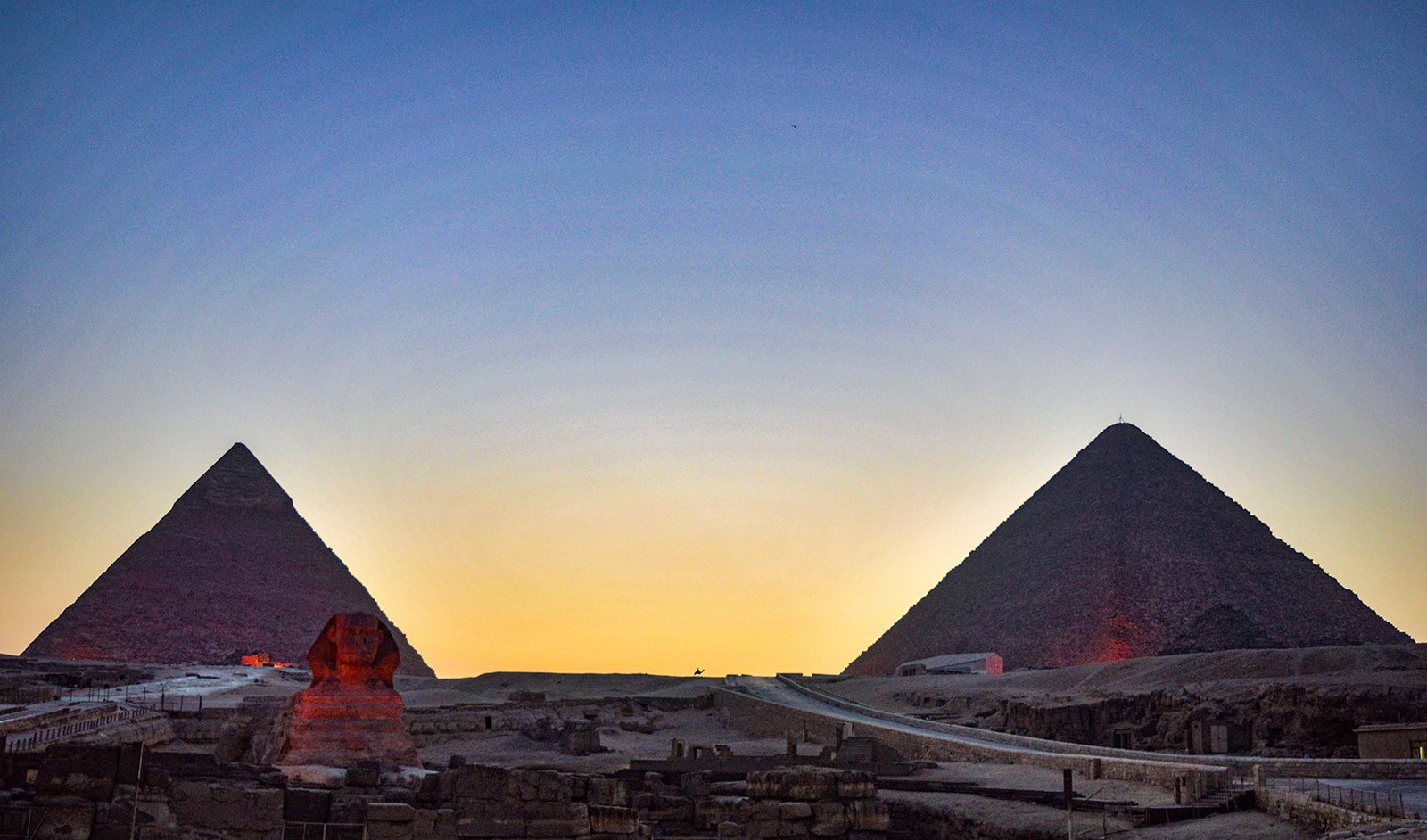
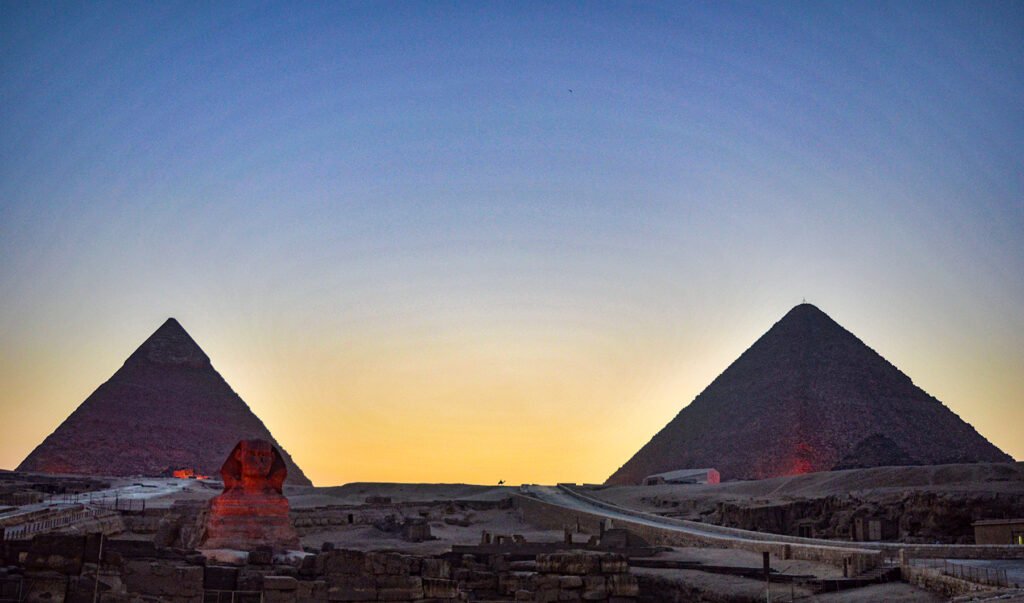
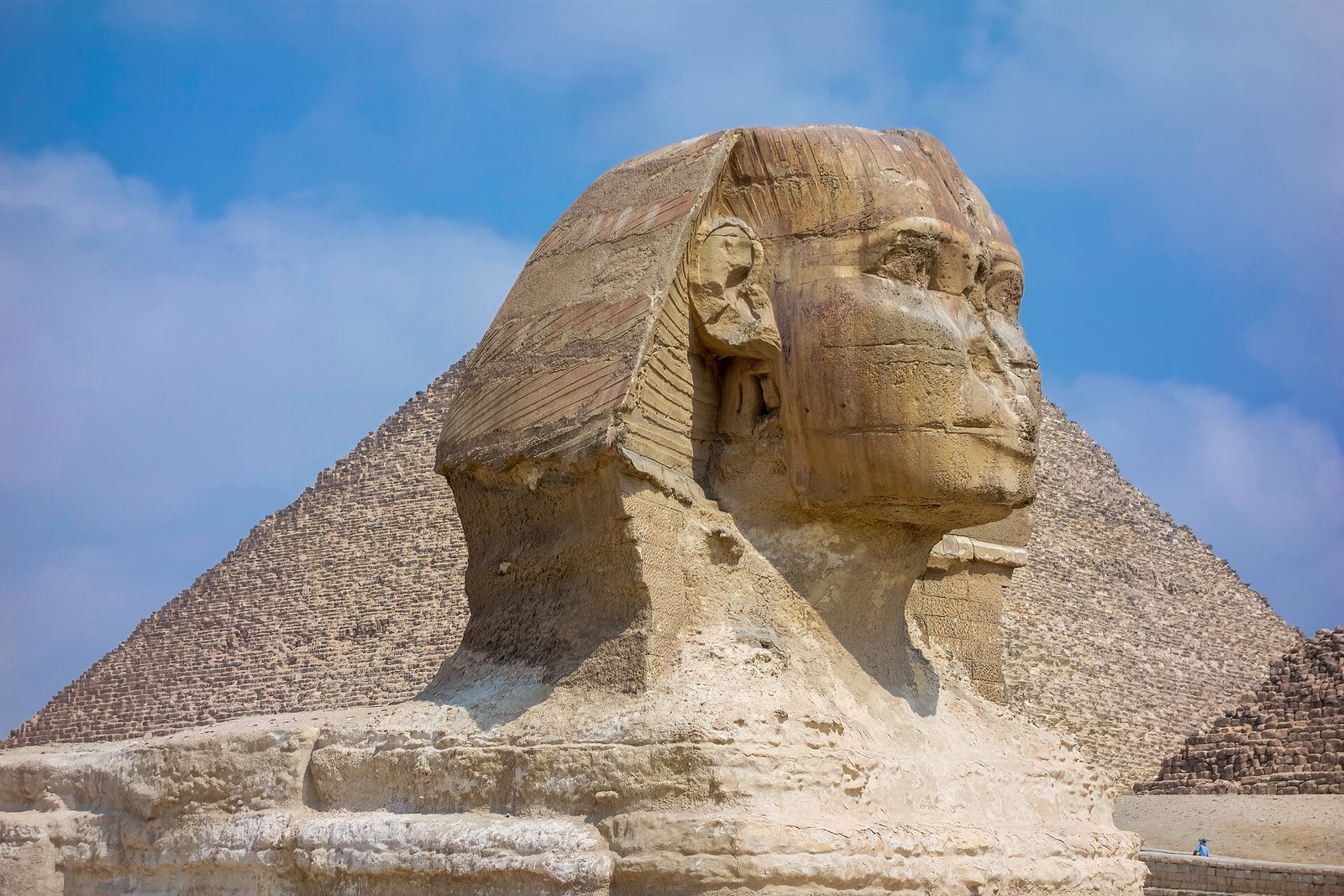
- Day one: the Giza plateau early, the Sphinx, then Saqqara with the Step Pyramid and a painted tomb or two. This is the day people remember.
- Day two: the Grand Egyptian Museum or the old museum on Tahrir, then Islamic Cairo with Khan el Khalili, or Coptic Cairo if churches interest you more.
Three nights gives you those two days plus a landing evening and a buffer for a late arrival. Two nights works when you land early and move fast. Our guide to Cairo in 3 days has the hour-by-hour version. Alexandria, Fayoum and a second museum do not belong in your first three days.
The domestic flight south is the move that saves the trip
Cairo to Luxor and Cairo to Aswan are about an hour in the air, with several departures a day. A morning flight has you at the boat or at Karnak before lunch. The sleeper train is a fine adventure for a second visit, but on a first trip it costs a night of real sleep and, in practice, a full sightseeing day. Take the flight.
The rule is simple: fly into the city where your cruise begins and out of the city where it ends. A Luxor to Aswan cruise means Cairo to Luxor on the way down and Aswan back up. An Aswan to Luxor cruise reverses it. Never plan a road transfer between Luxor and Aswan on top of a cruise that already covers the same river.
- Domestic baggage allowances are lower than long-haul ones. One checked bag per person keeps every connection easy.
- Your guide or driver meets you at the destination airport. Nobody should be negotiating a taxi in Luxor on day four.
Timings, terminals and what to expect on board are in our guide to domestic flights in Egypt.
Three nights or four on the Nile, and which direction
The classic cruise runs between Luxor and Aswan and stops at the same places in either direction: Karnak and Luxor Temple, the Valley of the Kings and Hatshepsut on the west bank, Edfu, Kom Ombo, and in Aswan the temple of Philae, the High Dam and a felucca sail. The difference is how many nights you sleep on board and how much sailing you get in daylight.
| Option | Usual direction | What you gain | What you give up |
|---|---|---|---|
| 3 nights | Aswan to Luxor | Fits an 8-day trip with a full Cairo block; ends in Luxor with the west bank on the last morning | Tighter mornings, less deck time, Luxor compressed at the end |
| 4 nights | Luxor to Aswan | An extra sailing day, Luxor visited first while you are fresh, ends in Aswan next to Abu Simbel | One more day of the calendar |
For a first trip, take the four nights if the calendar allows. The pace is the point: mornings for temples, afternoons for the deck. Guide quality matters more than one more star on the hull. Our full guide to the Nile cruise compares boats, cabins and sailing days.
Abu Simbel: worth it on a first trip, if it fits without a squeeze
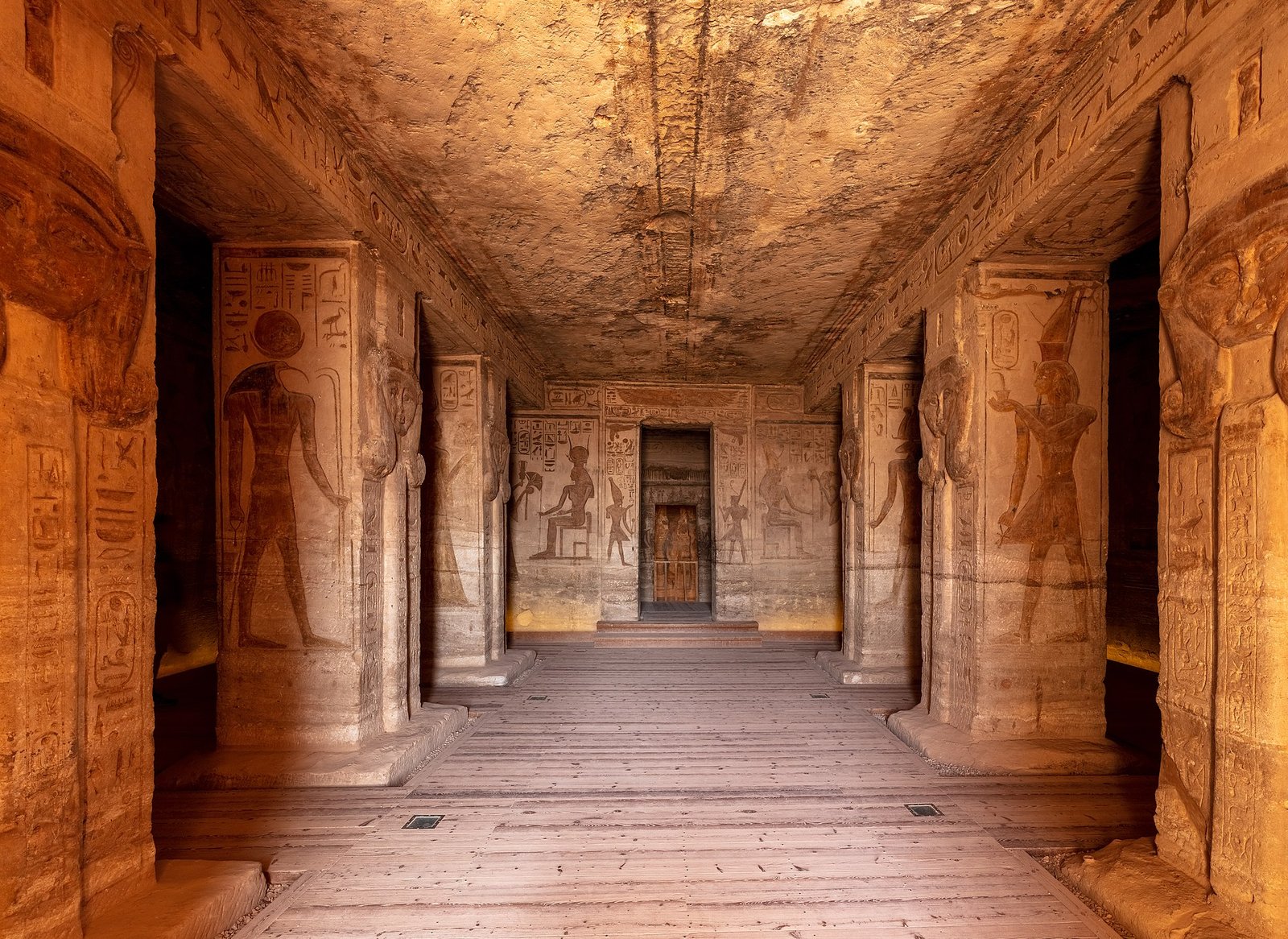
Abu Simbel is the pair of rock temples Ramses II cut into a cliff near the Sudanese border, moved block by block in the 1960s to save them from the rising lake. It is the most dramatic single site in the country and a long way from Aswan: roughly three and a half hours each way by road, leaving around dawn, or a short round-trip flight. Either way it is a full day with a very early start.
Here is the honest test. With ten days, Abu Simbel goes in without argument, on the day after the cruise ends in Aswan. With eight, it only fits by cutting a Cairo day or stacking a dawn departure directly against your flight north, and both cost more than they give. In that case leave it for the second trip and do Aswan properly. Tickets, timings and the road versus flight choice are in our guide to Abu Simbel tickets and how to visit.
The Red Sea finish, and when it earns its place
The natural pairing is Hurghada. It sits across the Eastern Desert from Luxor, about four hours by road, and connects by domestic flight through Cairo from Aswan. Three nights is the minimum that makes sense; anything shorter is a transfer day, a beach day and another transfer day.
Who should add it: families who need a break from temples, honeymooners, and anyone whose trip runs eleven days or more. Who should skip it: everyone on eight or nine days, because a beach stop taken out of a short trip means a weaker Cairo or a rushed cruise. Sharm el Sheikh adds a Sinai flight, so Hurghada wins the first time. If you add the sea, put it last.
Eight days, day by day
The core trip with nothing squeezed in. Abu Simbel is not in it, on purpose.
| Day | Where | What happens |
|---|---|---|
| 1 | Cairo | Arrive, airport meet, hotel, an easy dinner. No sightseeing. |
| 2 | Cairo | Giza plateau and the Sphinx early, then Saqqara and the Step Pyramid. |
| 3 | Cairo | Grand Egyptian Museum in the morning, Islamic Cairo and Khan el Khalili after lunch. |
| 4 | Luxor | Morning flight, board the boat, Karnak and Luxor Temple with your guide. |
| 5 | Luxor to Edfu | West bank: Valley of the Kings, Hatshepsut, the Colossi. Sail in the afternoon. |
| 6 | Edfu to Aswan | Temple of Horus at Edfu, Kom Ombo at sunset, arrive Aswan at night. |
| 7 | Aswan | Philae, the High Dam, a felucca sail around Elephantine, free evening. |
| 8 | Aswan to Cairo | Disembark, fly to Cairo, connect onward. |
With one day fewer, drop a Cairo night and take the three-night cruise; that version is our Egypt itinerary for 7 days. Do not cut Cairo to a single day to keep four nights on the boat; the pyramids on a jet-lagged arrival morning is the wrong first memory of Egypt.
Ten days, day by day
Ten days is the version we recommend most often, because it adds Abu Simbel and a slack day without changing the shape.
| Day | Where | What happens |
|---|---|---|
| 1 to 3 | Cairo | As in the eight-day plan: arrival evening, Giza and Saqqara, museum and old Cairo. |
| 4 to 7 | Nile cruise | Luxor to Aswan, four nights, all the temples with your Egyptologist. |
| 8 | Aswan and Abu Simbel | Disembark early, road or flight to Abu Simbel, back for a night in an Aswan hotel. |
| 9 | Aswan to Cairo | Late-morning flight north, a free afternoon for the Citadel, a last walk in the bazaar, or nothing at all. |
| 10 | Cairo | Departure day. |
This page gives you the shape and the reasoning. The fixed schedule with hotel nights and transfer timings is our Egypt itinerary for 10 days, and the version that adds the Red Sea is the Egypt itinerary for 12 days.
The mistakes first-timers make
Almost every first trip that goes wrong went wrong on paper. In order of damage:
- Too many cities. Cairo, Luxor, Aswan, Hurghada, Alexandria and Sharm in nine days looks great in a spreadsheet and feels like a forced march. Egypt tires you faster than you expect. Two clusters plus a beach at most.
- No guide at the big sites. The Valley of the Kings without an Egyptologist is a row of decorated holes in rock. With one, it is the best morning of the trip.
- The wrong season. Luxor and Aswan in July and August sit above 40 C (104 F) by late morning, and tomb interiors are hotter. October to April is the window. Christmas, New Year and Easter book out early. Month by month it is in our guide to the best time to visit Egypt.
- Cairo at the end. Covered above. It turns a good trip into a tiring one.
- The sleeper train to save a hotel night. You do not save a night, you lose a day. Fly.
- Booking the cruise last. Boats sail on fixed weekdays. Fix the flights first and the boat you want is often not sailing the day you arrive.
- Sightseeing on the arrival day. The pyramids straight off an overnight arrival are wasted on you.
- Treating Abu Simbel as a quick add-on. It is a full day with a dawn start. Give it one or leave it out.
What to book first, and in what order
Each piece constrains the next. Done backwards, you end up choosing between the boat you wanted and the flight you already paid for.
- Dates and season. Decide the month, then the exact days. Everything else follows.
- The cruise. Boats depart Luxor and Aswan on set days of the week. Pick the sailing and the cruise dates become the spine of the trip.
- The domestic flights. Cairo to the embarkation city on the morning of boarding, and back from the disembarkation city, or on to Hurghada if you are adding the sea.
- The Cairo hotel. Now you know the exact nights. Giza side for a pyramid view, downtown or Zamalek for the museums.
- Abu Simbel. Road or flight, booked for the day after the boat.
- The guide. One Egyptologist for Cairo, one on the boat, both arranged before you land, not at the hotel desk.
With a local agency all six happen from one conversation, in the right order.
Pacing rules, and what to skip on trip one
A first trip should feel full, not frantic. We build these rules into every itinerary.
- One big site per morning, one lighter one per afternoon. Never three temples before lunch.
- No more than one pre-dawn alarm in a row. Abu Simbel and the Valley of the Kings both start early; keep them on separate days.
- A free evening every three days with nothing scheduled. On the boat this happens naturally.
- Arrival day and departure day are not sightseeing days.
- Every transfer longer than three hours needs a night at the far end, not a visit and a return.
Leave these for the second visit
Alexandria, the White Desert and Siwa, Abydos and Dendera unless your boat calls there, the Sinai beyond a beach stop, Fayoum and the second big museum. All excellent, none essential the first time, and each one taken out of a short trip costs you something that is. Most people come back; they are the backbone of a very good second trip.
How Explora Egipto builds a first trip
We are a local agency in Egypt with our own Egyptologist guides and our own vehicles, and a first trip is the itinerary we build most often. It starts with two questions: how many days, and which month. From those we place the cruise first, choose the direction from the flight timings that day, add the Cairo nights in front, fit Abu Simbel if the calendar has room, and only then talk about the sea.
You get one plan on one page: airport meet, an Egyptologist in Cairo and another on the boat, domestic flights matched to the sailing, private transfers and a single WhatsApp contact for the whole trip. The eight, ten and twelve-day shapes are the three we quote most, and each bends to your dates. No prices on this page; send us your dates and we send you the quote.
Frequently asked questions
Is 8 days enough for a first trip to Egypt?
Yes, if you keep to the classic shape: three nights in Cairo, a four-night Nile cruise from Luxor to Aswan and departure from Aswan on the last morning. You see the pyramids, Saqqara, the museum, Karnak, the Valley of the Kings and the river temples without rushing. What eight days does not fit comfortably is Abu Simbel or a beach. Ten days adds Abu Simbel, twelve adds the Red Sea.
Should a first trip start in Cairo or in Luxor?
Cairo. You land there, you see the pyramids on your first full day while you are fresh, and you get the loudest city of the trip out of the way before the calm of the river. Starting in Luxor means a same-day connection after a long journey and ending in Cairo, which puts traffic and a dawn airport alarm on your last day. Cairo first, river second, sea last if at all.
Do I really need a guide on a first trip?
At the major sites, yes. An Egyptologist turns the Valley of the Kings, Karnak and the museum from impressive stone into a story you follow, and on the boat the guide comes with every visit. A guide also removes the daily friction of tickets, transport and negotiation that wears first-timers down. Many travelers do the first trip guided and the second independently.
Is Abu Simbel worth it on a first trip?
With ten days or more, absolutely; it is the most dramatic site in the country and goes in on the day after the cruise ends in Aswan. With eight days it only fits by cutting Cairo or stacking a dawn departure against your flight north, and both are poor trades. In that case save it for the second visit and do the Aswan sights properly. Road or flight, it is a full day with a very early start.
Luxor to Aswan or Aswan to Luxor, which direction is better the first time?
Luxor to Aswan, on the four-night cruise, is the better first-trip direction. You visit Karnak and the Valley of the Kings while you are fresh, you get an extra sailing day, and you finish in Aswan next door to Abu Simbel. Aswan to Luxor, on three nights, is the tighter version that suits an eight-day trip when Abu Simbel is not planned. Both cover the same temples.
What is the best month for a first trip to Egypt?
October to April, with the shoulder weeks in October, November, March and April the sweet spot: warm days around 25 to 30 C (77 to 86 F) in Luxor, cool evenings on deck and manageable crowds. December to February is the busiest period and books out early around the holidays. Summer is workable with dawn starts, but for a first visit with so much outdoor sightseeing, the mild months are worth planning around.
Your first trip to Egypt, built in the right order
Tell us how many days you have and which month. We come back with the classic itinerary fitted to your dates, cruise first, flights matched, Cairo in front and Abu Simbel where it belongs, with an Egyptologist at every site and one contact for the whole trip. No prices on this page, just the quote in your inbox.