What to Pack for Egypt
What to Pack for Egypt
Egypt is an easy country to pack for and a surprisingly easy one to pack wrong. The mistakes are not exotic. People bring a suitcase full of hot-weather clothes and then shiver on a temple ramp at six in the morning. They bring a charger that fits nothing on the wall. They arrive with a card and no cash, in a country where the small transactions of a travel day are still settled in paper money.
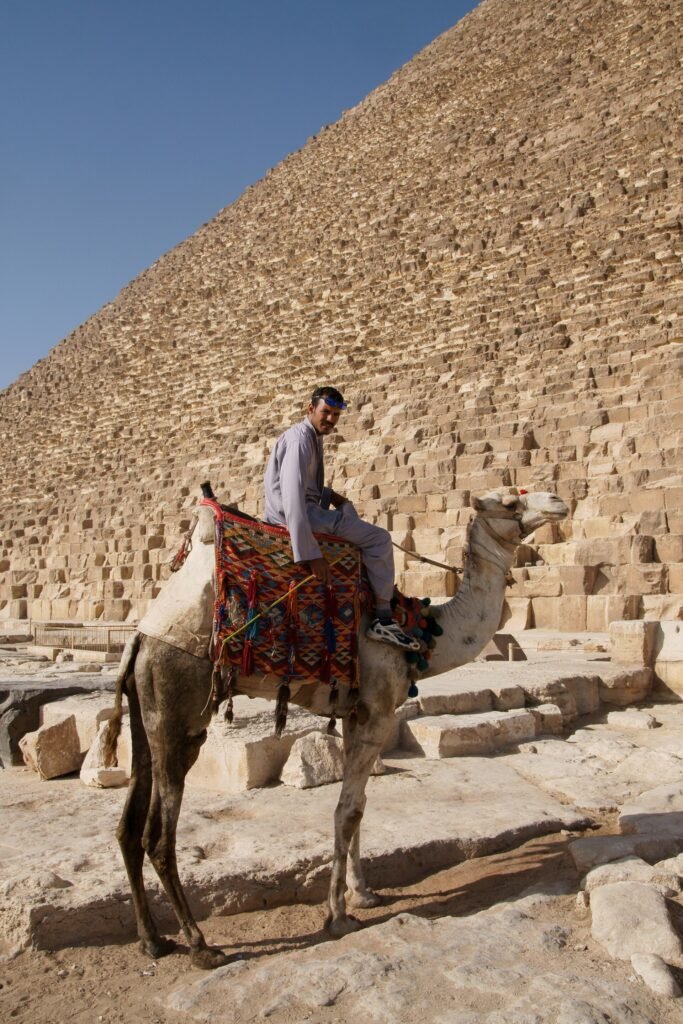
None of it needs specialist gear. It needs a bag built around four things: layers, closed shoes, sun protection, and small denomination cash.
The short version
If you read nothing else: light cotton or linen clothes that cover shoulders and knees, walking shoes you have already broken in, sunscreen and a hat, one warm layer for the evenings, a two round pin plug adapter for the 220V sockets, and cash in small bills for tips and markets. That covers most of a normal Egypt trip.
Clothes, and the three settings you are dressing for
One suitcase has to work in three different environments, and they are less alike than the brochure photographs suggest.
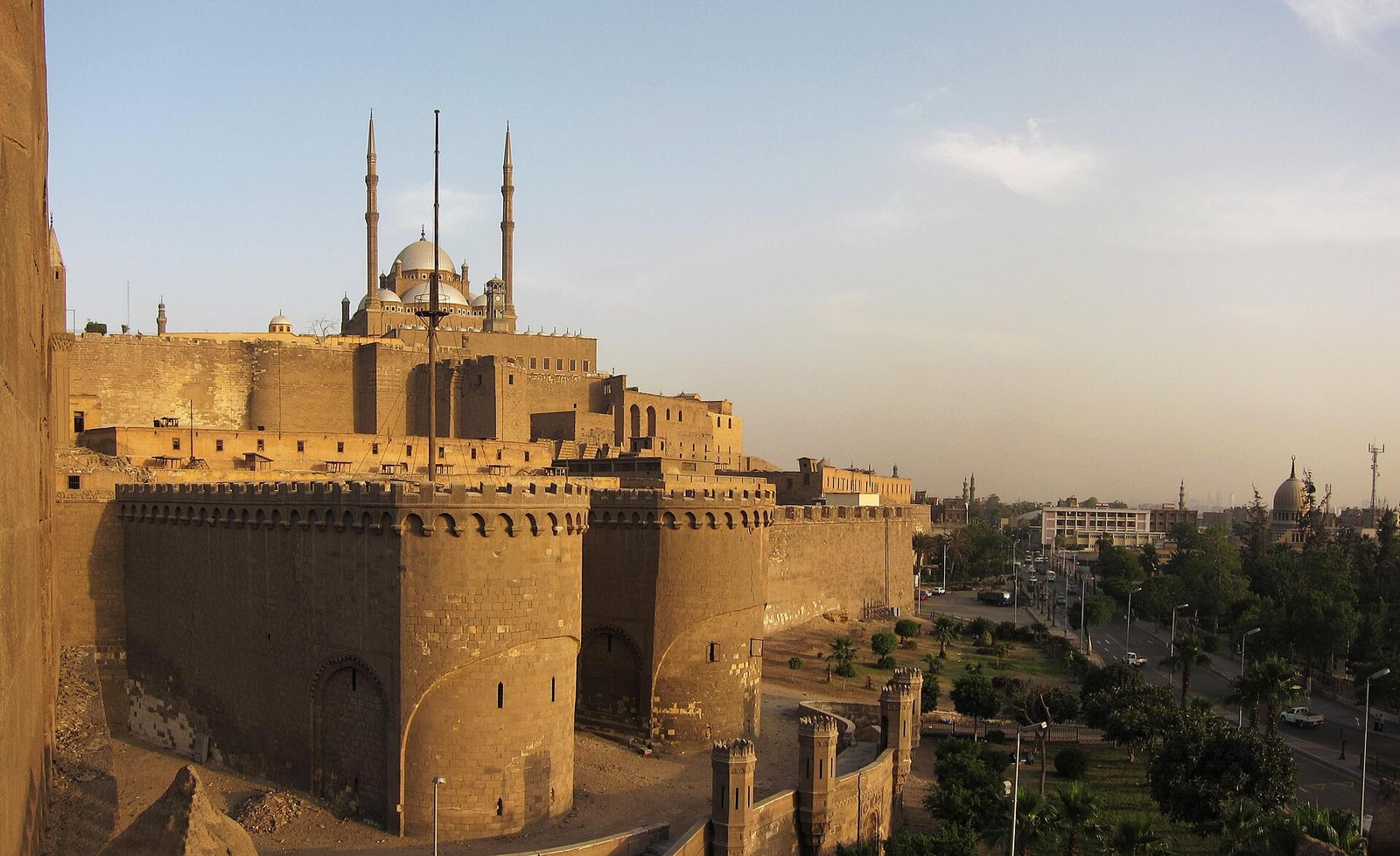
City streets and archaeological sites are the default setting, and the practical convention is shoulders and knees covered. This is not a law, and nobody stops you at the gate of Karnak. It is a courtesy that also happens to be the more comfortable choice, because covered skin under a strong sun is cooler than bare skin. Light long sleeves outperform a sleeveless top at two in the afternoon in Luxor.
Mosques are the setting with an actual requirement. Arms and legs covered, hair covered for women, shoes off at the door. A large light scarf handles this in about ten seconds and then goes back in the day bag, where it also earns its place against fierce air conditioning on buses. Clean socks, and shoes that come off without sitting down, make mosque visits painless.
Pools, boats and the Red Sea are the third setting, and there the rules simply stop. Swimwear at the pool, whatever you like at a resort in Hurghada or Sharm. If you want the season by season detail on cut, fabric and color, the fuller guide to what to wear in Egypt goes deeper than a packing list can.
Shoes, and the mistake that costs you a week
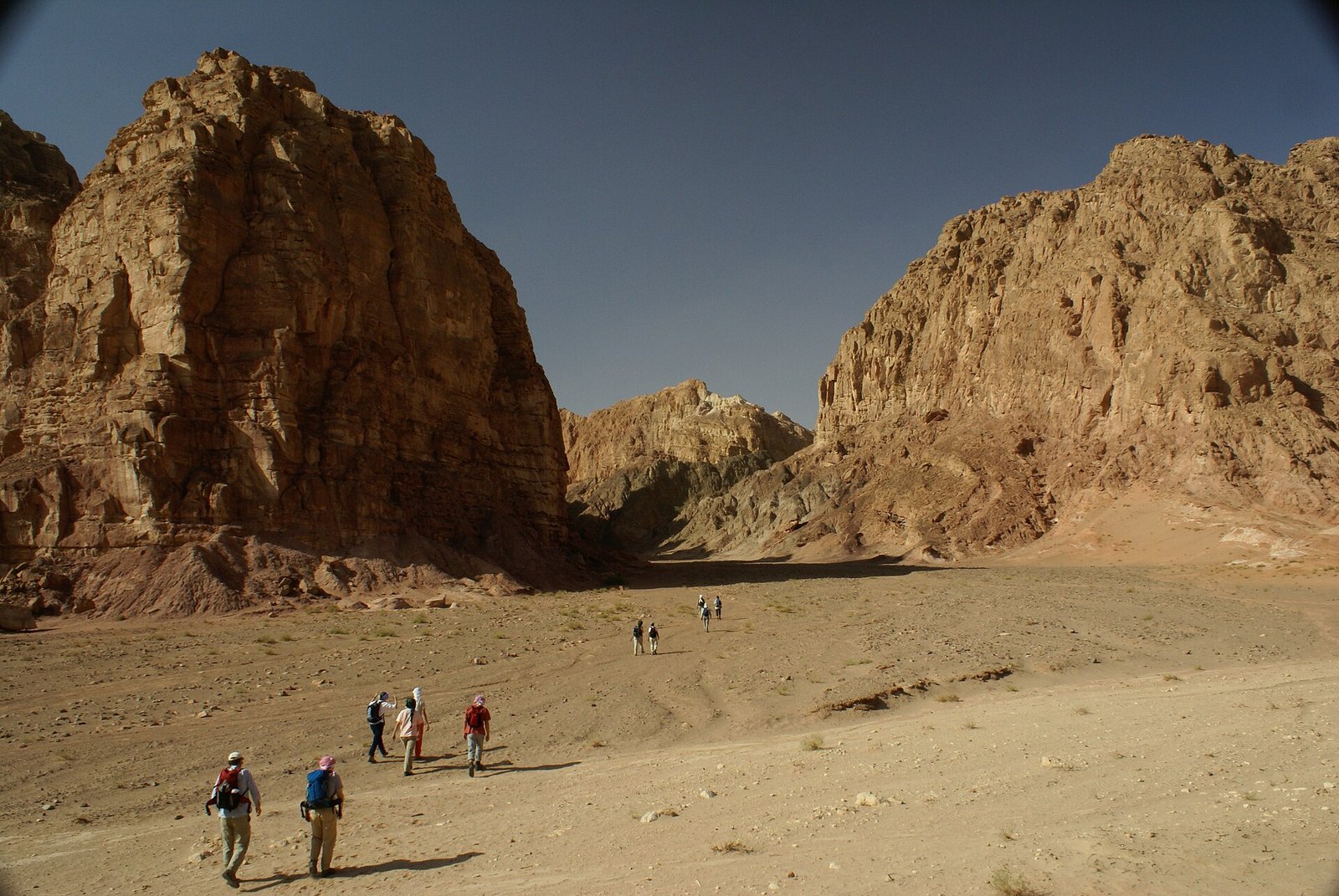
You walk more than you expect, and rarely on flat ground: sand, stone polished slick by centuries of feet, temple ramps, and stairs built to no modern standard. Closed walking shoes with a real sole, already worn in, do more work than anything else you pack. Add flat sandals for the hotel, the pool and the boat and your footwear is finished.
The rule that matters: never travel in shoes bought for the trip and not yet worn. A blister on day one follows you through every site for the rest of the week, and there is no rest day on a normal Egypt itinerary. If a Nile cruise is on your itinerary, the boat-side version of this list, including what the cabin already provides, is in our guide to packing for a Nile cruise.
The season changes the bag more than people expect
Egypt has two personalities and the desert switches between them daily. A day that reaches 35C (95F) in Aswan still cools sharply after dark, and out in the open desert the drop is far larger. The answer is always layers rather than a heavier single garment.
October to April
This is the comfortable half of the year for sightseeing, with warm sunny days that suit long site visits. The nights are what catch people out. Winter mornings in Cairo can start below 10C (50F), and standing on the open deck of a moving boat adds wind to whatever the thermometer says. Pack a mid-weight jacket or a thick sweater, a light scarf, and at least two long-sleeved tops.
Pay particular attention if your itinerary includes a hot air balloon flight over Luxor or the early convoy south to Abu Simbel. Both start well before sunrise, when the air is at its coldest, and a jacket is the difference between watching and enduring. Set that layer aside in the day bag the night before.
May to September
Luxor and Aswan pass 40C (104F) regularly. Here quick-drying technical fabric beats heavy cotton, and pale colors beat dark ones. The hat stops being an accessory. High-factor sunscreen reapplied through the day stops being optional. In exchange you get emptier sites and softer early mornings, which is a real trade rather than a consolation. If your dates are still movable, the month by month comparison in our guide to the best time to visit Egypt is worth reading before you buy anything.
Electricity: what your chargers meet at the wall
It is easy to forget, and awkward to solve once you have landed.
Egyptian sockets take the European two round pin plug, types C and F, running at 220 volts and 50 hertz. If your plugs at home are flat-pinned or three-pinned, you need a physical adapter. Bring two. One of them will stay behind in a hotel room.
An adapter changes the shape of the plug and nothing else, which is fine for almost everything you carry. Phone chargers, laptop bricks and camera chargers are nearly all dual voltage, and the fine print on the housing will say something like 100-240V. If it does, an adapter alone is enough.
The exception is a heating appliance built for a 110V country: a hair dryer, a straightener, a curling iron, a travel kettle. Those genuinely need a voltage converter, not an adapter, and plugging one straight into 220V will destroy it and possibly trip the room. The easier answer is to leave it at home, since most hotel rooms and most cruise cabins provide a hair dryer.
Two more power details worth planning for. Cruise cabins and older hotel rooms often have only one or two accessible sockets, so a small multi-plug or a multi-port USB charger prevents a nightly negotiation between two phones, a camera and a tablet. And a power bank of reasonable capacity is close to essential, because a day of pyramids, museum and bazaar is a heavy photography day spent nowhere near a wall.
Money, and why the denomination matters
Cards work in hotels, restaurants and larger shops. Everything smaller is cash: tips, market stalls, a taxi, a bottle of water, the man who looks after your shoes at a mosque. Carrying the right kind of cash matters more than carrying a lot of it.
Bring US dollars or euros in small, clean, recent bills. Small denominations are the easiest to change, and worn or heavily marked notes are often refused at exchange counters. If your nationality gets a visa on arrival, the classic one is paid in cash US dollars at a bank counter before passport control (Cairo airport also sells a 36 USD digital one by card), so keep those notes separate and reachable rather than buried.
For day to day spending inside the country, change money in small amounts and often, and pay in Egyptian pounds. You get a better result than paying in dollars at a stall, and you avoid ending the trip with a thick stack of local currency you cannot use. Tipping is a normal, expected part of how service works here rather than a bonus for exceptional performance, and our guide to tipping in Egypt covers who, when and roughly how much. For the wider budget question, including how much to change at a time, see how much cash to bring to Egypt.
Documents weigh nothing and cause the most trouble
Your passport needs to be valid well beyond your travel dates, and six months from the date of entry is the standard to check against. It is worth checking today rather than in the week of departure, because renewing takes as long as it takes.
Whether you can get a visa on arrival or need to apply online first depends on your nationality, and eligibility follows published lists rather than one rule for everyone. Confirm yours against the Egypt visa requirements before you book anything. Carry a printed copy of the visa confirmation as well as the version on your phone, along with your insurance policy and its emergency assistance number. Paper does not run out of battery in a queue.
You arrange your own international flights. Photograph the whole document bundle and store it somewhere you can reach without signal.
The health kit
A digestive adjustment is the thing most worth packing for, brought on by different water, unfamiliar spicing and a schedule that eats at odd hours. Start there: oral rehydration salts, which take up almost no space and can save a day of sightseeing, plus a stomach remedy and an anti-diarrheal.
Add a painkiller, an antihistamine, adhesive bandages, hand sanitizer and wipes for long site visits where washing is not an option, and insect repellent for evenings by the river, which matters more in Aswan than in Cairo. Bring your prescription medication in its original labeled packaging and carry the prescription itself, ideally with an English translation. Our travel first aid kit guide goes through the whole kit properly, including the vaccination question.
Two habits are worth building in. Drink sealed bottled water only, including for brushing your teeth if your stomach is sensitive, and take ice only where it is made with filtered water, which in practice means hotels and restaurants used to international guests. The short answer to whether you can drink the tap water is that you should not, and treating that as absolute is easier than judging case by case.
Planning this trip yourself takes hours. We build it for you, and we answer every question before you commit to anything.
What Egyptian customs does not want in your bag
Read this part before you close the case.
- Drones. Do not bring one. Their use is heavily restricted, importing one without a specific permit is generally prohibited, and that permit is not something a tourist obtains in practice. A drone found in your luggage gets held at minimum. The camera rules at Egyptian sites cover what you can use instead, including where a tripod is and is not welcome.
- Night vision equipment. Restricted under the same security thinking, and not something to find out about at the counter. Ordinary binoculars are a softer case: a small pair may draw no comment at all, but optics can attract a longer bag check, which is a poor trade for the use you will get.
- Opioid painkillers without documentation. Egypt is strict about controlled medication, including common combinations containing codeine or tramadol. If you depend on something in that category, carry the prescription, translated, and keep the medicine in its original pharmacy packaging.
- Anything you would hate to lose. Not because of danger, but because valuable jewelry complicates markets and adds a worry you do not need when you are in and out of hotels, boats and vehicles all week.
Luggage size is a real constraint here
A classic Egypt itinerary moves you constantly: hotel to airport for a domestic flight, airport to boat, boat to coach, coach to another hotel. Cruise cabins are efficient rather than spacious, with a narrow wardrobe and space under the bed for an empty case. At busy moorings, boats tie up side by side and you cross a neighboring vessel's lounge with your bag in hand.
A medium suitcase plus a small day backpack is the combination to aim for. The day pack carries water, sunscreen, the scarf, the power bank and a pocket flashlight, which is more useful than it sounds: several tombs and inner chambers are dimly lit, and a small light shows you painted ceiling detail that most of the group walks straight past.
If a Nile cruise is part of your trip, the boat changes the calculation further, because practically every ship runs a wash and press laundry service. That means clothing for four or five days plus one wash covers even a longer program.
Leave it at home and buy it there
Bottled water is available everywhere and there is no reason to carry it in. Scarves and light cotton wraps are sold in every market, cost little, work against sun and dust, and go home as a souvenir. Cotton and linen clothing is inexpensive and decent quality locally, which is a fair argument for leaving space in the bag rather than filling it.
Sunscreen is the reverse case. It is available, but the range of brands is narrower, so bring your own, especially if your skin is particular. Bring your own prescriptions too. And if you are continuing to the Red Sea, bring your own mask and snorkel if you care about the fit.
On connectivity, you can decide before you fly or on the ground. An eSIM activates before landing and skips the airport counter, though most travel eSIMs are data only and leave you without an Egyptian number; a physical card gives you that number. Either works, and our guide to a SIM card and mobile data in Egypt compares them. Cruise wifi is not something to count on: some boats charge for it or keep it to one deck, and all of them lean on the same riverside signal your own phone uses, which comes and goes between towns.
The packing list at a glance
| Clothes | Four to six light tops with at least two long-sleeved, two or three pairs of light trousers or long skirts, one warm jacket or sweater, a large scarf, a hat, swimwear, one smarter item if your trip includes a Nile cruise gala dinner |
| Feet | Broken-in closed walking shoes, flat sandals, clean socks that come on and off easily |
| Sun | High-factor sunscreen, lip balm with sun protection, sunglasses with real UV filtering, refillable bottle |
| Power | Two type C or F plug adapters, a multi-plug or multi-port charger, a power bank, a pocket flashlight |
| Money | Small, clean, recent notes in US dollars or euros, with the US dollars for a visa on arrival kept separate |
| Documents | Passport valid six months beyond entry, printed visa confirmation, insurance policy with its assistance number, copies stored on your phone |
| Health | Rehydration salts, stomach remedy, painkiller, antihistamine, bandages, repellent, sanitizer, your prescriptions in original packaging |
| Bags | Medium suitcase and a small day backpack |
The last check before you leave
Do three checks. Confirm the passport date. Confirm the fine print on every charger says 100-240V, and pull out anything that does not. Put the warm layer and the scarf where you can reach them on the first morning.
Then stop packing. Egypt rewards a light bag and forgives almost everything you forgot, because pharmacies are good, markets sell what you need, and the things that genuinely cannot be replaced are the passport, the prescriptions and the shoes that already fit your feet. If you want a hand matching the list to your specific route and dates, message us on WhatsApp at 201032295513 and we will go through it with you.
Common questions about packing for Egypt
What is the most common packing mistake for Egypt?
What clothes do you need for Egypt?
What plug adapter do you need in Egypt?
Should you take cash to Egypt, and in what denomination?
What should you not put in your luggage for Egypt?
What can you leave at home and buy in Egypt?
Let us put the trip together
We are a local agency in Egypt. Tell us your dates and what you want to see, and we will come back with a plan, the practical details sorted and someone to ask when you are here.
Part of our guide to
Practical Guide 11 guides
This article is part of that pillar. The rest of it:
- ▸Arabic Phrases for Travel in Egypt
- ▸Cairo Airport: What Happens When You Land, and How to Leave
- ▸Can You Drink the Water in Egypt?
- ▸Exchanging Money in Egypt: Where to Change Cash and How Much at a Time
- ▸Haggling in Egypt: How to Bargain Without Overpaying
- ▸High Season, Low Season and Shoulder Season in Egypt
- ▸How Much Does a Trip to Egypt Cost? A Real 2026 Breakdown
- ▸Food Prices in Egypt: What Meals Really Cost
- ▸How Much Money to Bring to Egypt: The Cash You Actually Need
- ▸Is Cairo Safe? The Real Risks and How to Get Around
- ▸Photography in Egypt: The Rules, the Tickets and the Light
Keep exploring
To finish planning your trip to Egypt
- ▸Egypt Packing List: What to Bring, Item by Item, by Season
- ▸Egypt Travel Checklist: Passport, Visa, Packing and Timeline
- ▸How Much Money to Bring to Egypt: The Cash You Actually Need
- ▸Getting Around Egypt: Transport Guide by a Local Agency
- ▸Power Plugs in Egypt: Outlet and Adapter Guide
- ▸Accessible Egypt: Wheelchair Travel Guide by a Local Agency
- ▸Real vs Fake Papyrus: How to Tell Real Papyrus in Egypt
- ▸See all our Egypt tours