Visiting Egypt in March means warm afternoons, cool mornings and the last calm weeks before the heat
Visiting Egypt in March means warm afternoons, cool mornings and the last calm weeks before the heat
Egypt in March is the sweet spot between winter and summer. Cairo sits in the low to mid 70s Fahrenheit (about 22 to 24 Celsius) by day, Luxor and Aswan climb into the 80s, and the Red Sea is warm enough to swim in by the end of the month. The winter crowds have thinned, the ships are easier to book outside the spring break weeks, and the Nile banks are green with the spring harvest. Two things to plan around: the khamsin, a dusty desert wind that blows a few days each month, and a thermometer that climbs week by week. Come in the first half of March for the coolest tombs, or in the second half for the warmest sea.
Why March is the last calm month of the Egyptian year
Egypt's high season runs from October through the end of winter, and March is its tail. The big European groups that fill Karnak in January are mostly gone, the Presidents Day travelers have flown home, and the Easter crowds do not land until April in most years. What is left is winter temperatures in the morning, summer temperatures by mid afternoon, and fewer people between you and the monuments.
That is the whole argument for March. A ship that sold its last cabin in November has choices, outside the spring break weeks. Guides have more time per group. The queue at the Great Pyramid moves. In our guide to high and low season in Egypt, March is where the two overlap and the balance still tips in your favor.
It is also the last month you can build a normal day. From May onward we schedule Luxor around dawn and dusk; in March we still plan Karnak at nine and the west bank after lunch. The honest caveat is the wind: March opens the khamsin season, and a dust day or two is part of the deal.
March weather in Egypt, region by region
Cairo and Giza
Mornings start in the mid 50s Fahrenheit (about 13 Celsius) and afternoons reach the low to mid 70s (22 to 25 Celsius). A light jacket at breakfast, short sleeves by the time you reach the Sphinx. The Cairo-specific issue is haze: on still days the city holds its own dust, on khamsin days it holds the Sahara's.
Luxor and Aswan
Upper Egypt is where March moves fastest. In the first week, Luxor afternoons sit in the low to mid 80s (28 to 30 Celsius); by the last week, Aswan can touch the low 90s (32 to 34 Celsius). Nights stay in the mid 50s to low 60s (13 to 16 Celsius), which is why the top deck at sunset is the best seat in the country this month. The Valley of the Kings sits in a bowl of pale rock that stores heat, so the tombs after eleven feel warmer than the forecast.
The Red Sea coast and Sinai
Hurghada, El Gouna and Sharm el Sheikh see daytime air in the mid to high 70s (24 to 27 Celsius). The water is the slow part: around 72 Fahrenheit (22 Celsius) at the start of the month, a couple of degrees warmer by the end. Swimmers and snorkelers are fine; divers doing three dives a day still want a shorty wetsuit. Sharm, sheltered by the Sinai mountains, is generally the calmer beach.
The Western Desert
The White Desert and the oases are at their best: days in the high 70s to mid 80s, nights that still drop into the 40s Fahrenheit (5 to 9 Celsius). This is the last comfortable month for a camping night among the chalk formations.
Alexandria and the north coast
Alexandria sits in the high 60s (19 to 21 Celsius) with a real chance of a rainy day, the last month of the year with one. The sea is too cold for a swim, so treat it as a day trip from Cairo, not a beach stop.
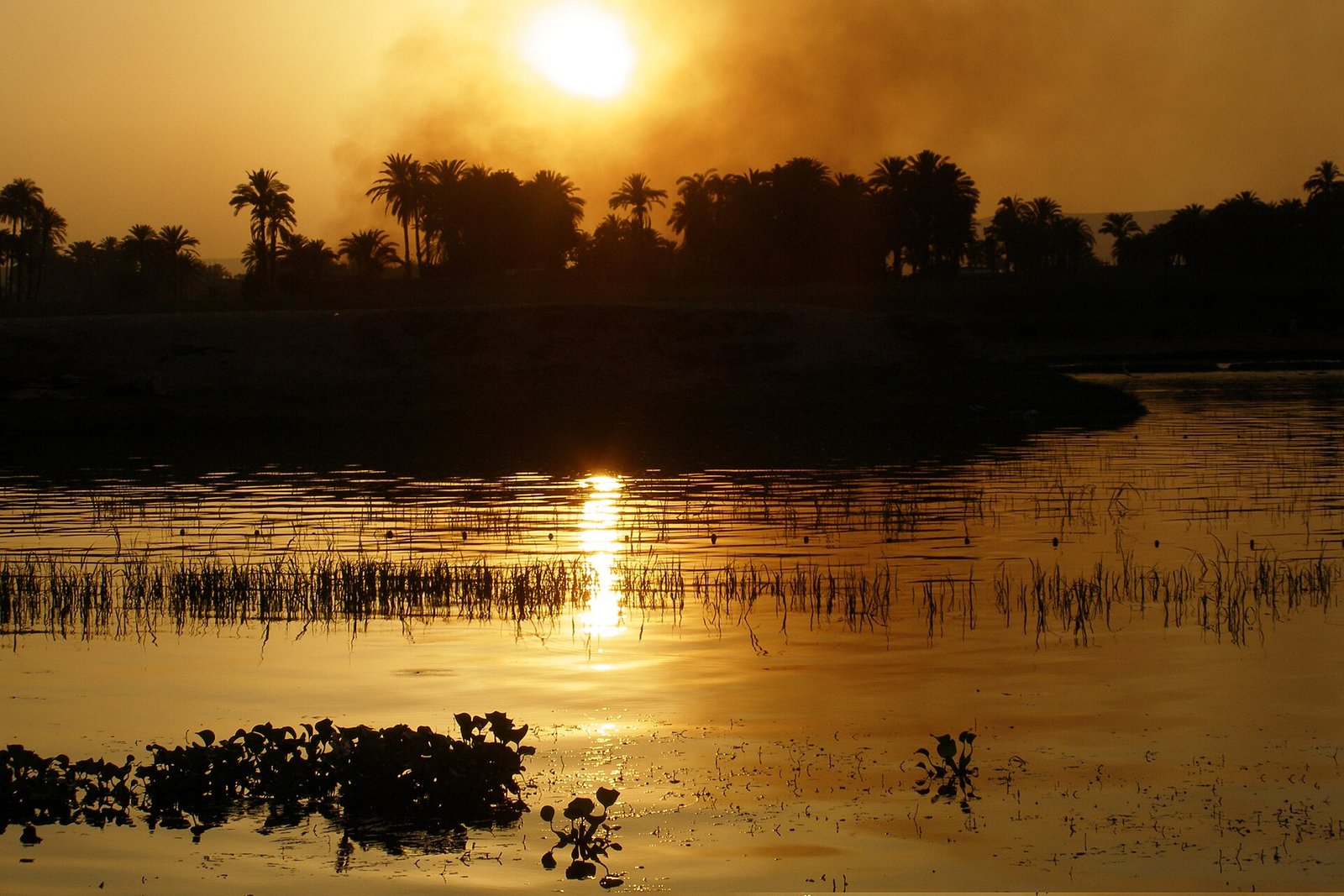
The khamsin wind: what a dust day looks like and how we plan around it
Khamsin comes from the Arabic word for fifty, the rough number of days between early March and May when this wind can blow. It is a hot, dry southerly that runs ahead of a low pressure system crossing North Africa and lifts the Sahara into the air. Most years the first episodes come in March.
A khamsin day is unmistakable. The sky goes from blue to a flat yellow-gray, the pyramids soften into silhouettes, and the temperature can jump by fifteen or twenty degrees Fahrenheit in a couple of hours, then fall back when the wind swings north. Lips crack, lenses need a cloth every ten minutes, and everyone in the street has a scarf pulled up to the eyes. It usually lasts a day, sometimes two, and a typical March brings a few episodes, not a constant siege.
We do not cancel a day for dust. Here is what we do instead.
- In Cairo we swap the order. The Egyptian Museum, the Grand Egyptian Museum, Coptic Cairo and the covered lanes of Khan el Khalili are sheltered days; Giza moves to the clear day that follows.
- On the Nile the ship keeps sailing. Edfu and Kom Ombo stay open, the visit is simply shorter and dustier.
- On the Red Sea the boats decide. Strong southerlies can keep dive boats in the marina for a day; reefs off the beach still work.
- Domestic flights rarely cancel. They may delay, so we build a buffer before any cruise embarkation.
Spring break in Egypt: what the mid March to early April weeks do to the ships
American spring break is not one week. Colleges and school districts scatter their breaks from the second week of March to the first week of April, so Egypt feels a rolling wave of US families rather than a single peak. It is nothing like Christmas, but it is enough to change which cabins are left.
The pattern is the same every year. The standard four and five night cruises fill first, in the Luxor to Aswan direction, because most itineraries default to it. Abu Simbel day trip vehicles from Aswan fill next. Cairo hotels barely notice. Inside those weeks, three moves make the difference.
- Book the cabin before anything else. The Nile cruise is the one piece of a March trip with a hard ceiling on capacity.
- Consider the Aswan to Luxor direction. Same temples, same ship, fewer people at the same dock at the same time.
- Look at a dahabiya. A sailing boat with a handful of cabins docks at islands and villages, not behind six cruise ships at Edfu.
| Detail | First half of March | Second half of March |
|---|---|---|
| Luxor afternoons | Low to mid 80s F (28 to 30 C) | Upper 80s to low 90s F (31 to 34 C) |
| Red Sea water | Fresh, shorty wetsuit for long sessions | Comfortable for swimming and snorkeling |
| Ships | Easy to book, quiet docks | Spring break demand, book ahead |
| Khamsin risk | Lower, first episodes possible | Higher, a dust day is likely |
Luxor and Aswan in March: green banks, comfortable temples and long evenings on deck
Ask our Luxor guides for their favorite month on the river and most say March, because of the banks. The winter wheat is turning gold, the clover is being cut for the animals, the sugarcane harvest is finishing, and in Aswan the mango trees are in flower. Sail past a village at five and you see the whole spring of Upper Egypt from a deck chair.
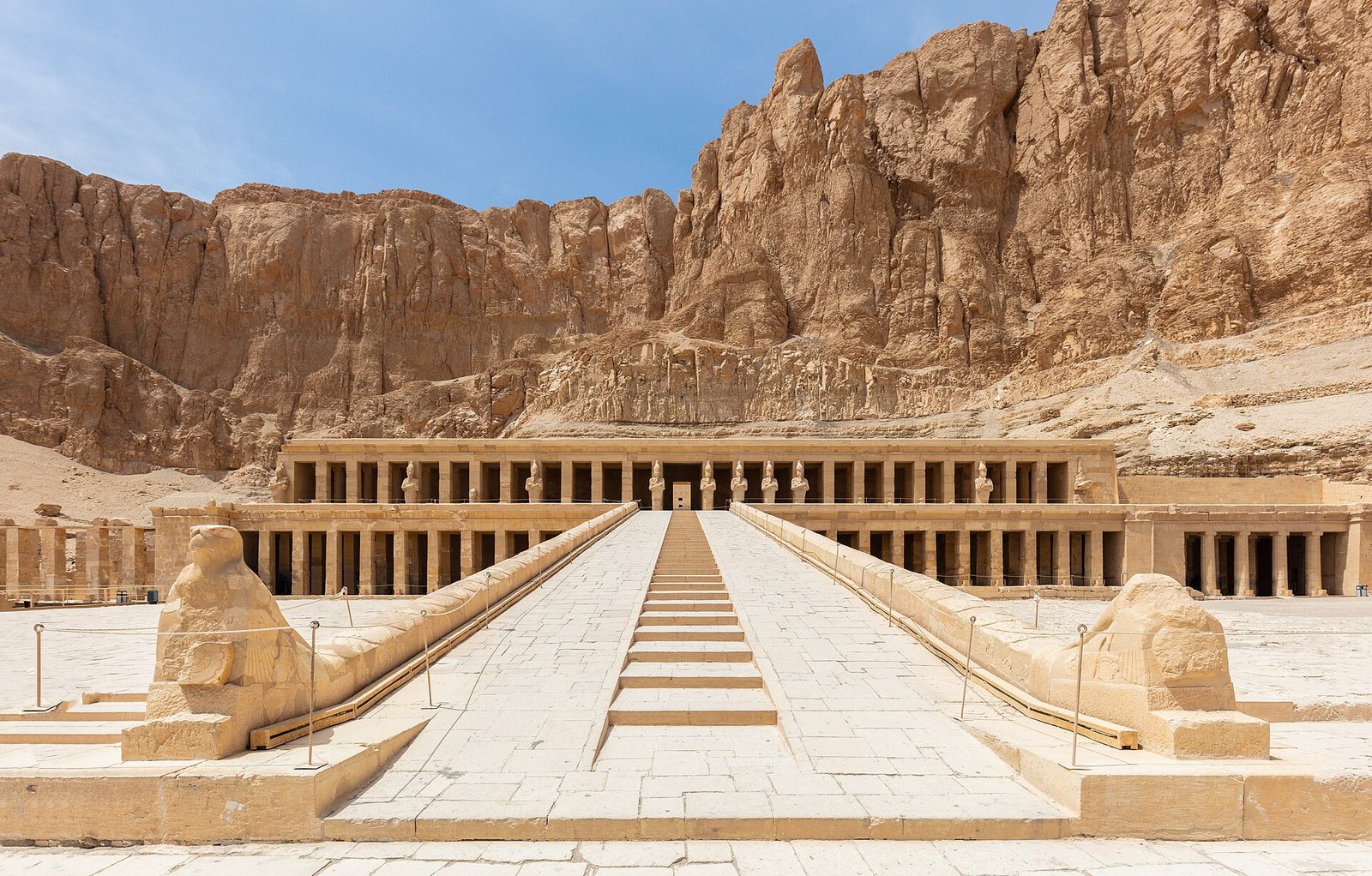
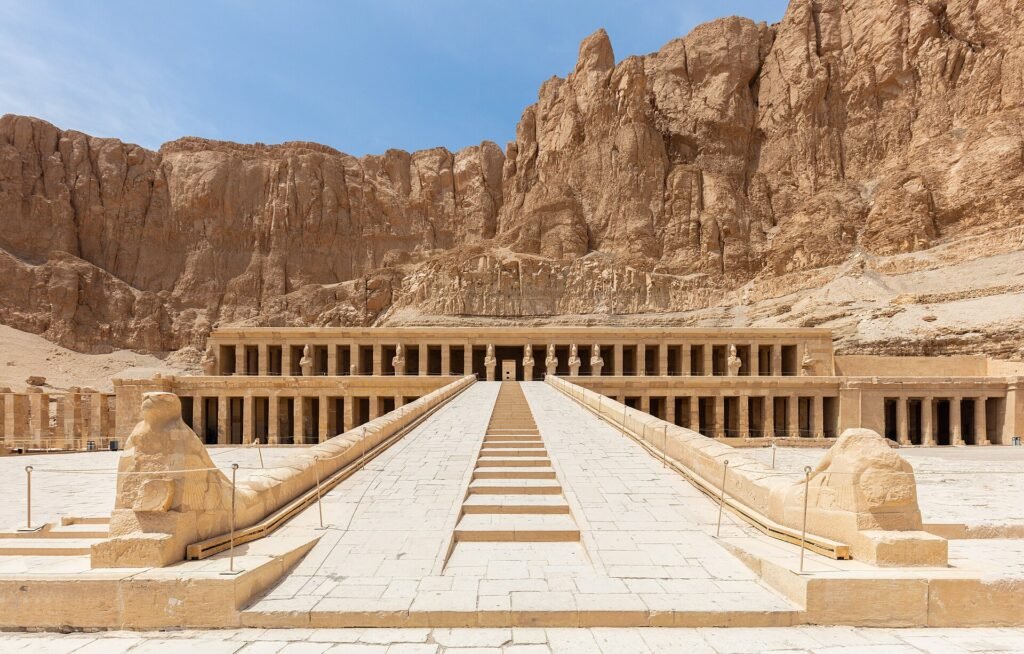
The temples are still comfortable if you keep to one rule: the west bank before the heat builds. We do the Valley of the Kings first, when the tombs are cool and the light is soft, then Hatshepsut's terraces, then the Colossi of Memnon on the way to lunch. Karnak works in the late afternoon, when the sandstone turns orange and the crowds have gone back to their ships.
March is also a strong month for the hot air balloon over Luxor. The dawn air is calm more often than not, the fields below are at their greenest, and the sun comes up without the summer haze. The caveat is wind: a khamsin morning grounds the balloons, so if the flight matters to you, give it two possible mornings rather than one.
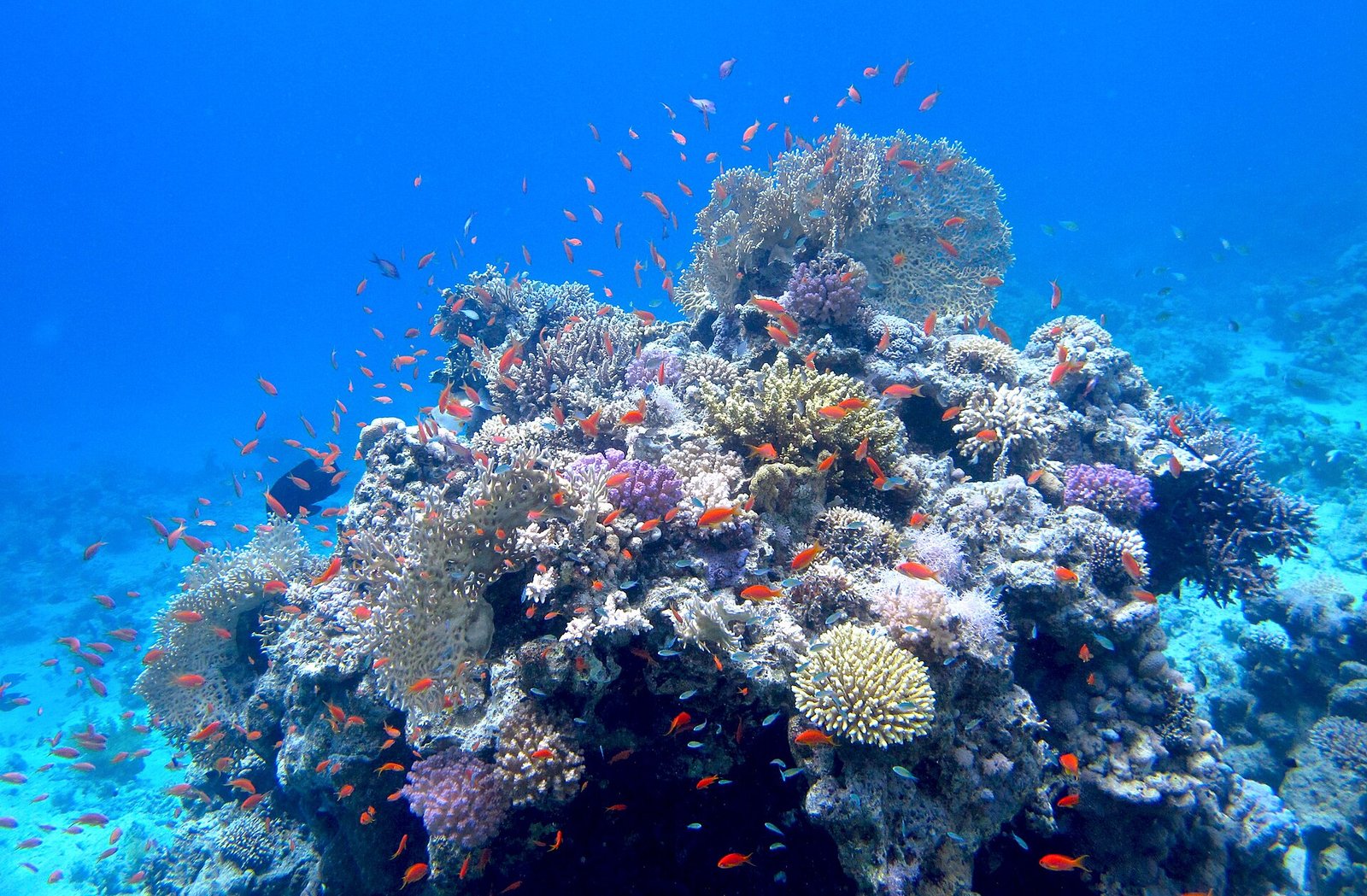
The Red Sea in March and the start of whale shark season in the south
The Red Sea is the part of Egypt that improves as March goes on. Water that felt bracing in the first week is comfortable by the last, and visibility is excellent because the summer plankton bloom has not started, so the reefs off Hurghada and the walls at Ras Mohammed are as clear as they get all year.
The reason serious snorkelers and divers circle March is the deep south. From Marsa Alam down to Hamata, whale shark encounters begin to be reported from March onward and continue into early summer. These are wild animals and nobody can promise one. What we can say is that the southern operators start running dedicated trips this month, and that the same waters hold the mantas of Elphinstone and the dugong bay at Abu Dabbab. Book through a licensed operator with a marine park permit; the good ones keep their distance and refuse to chase.
For a family or a couple who simply want sun and a reef after the temples, the choice in March comes down to wind. Hurghada and El Gouna are breezier, wonderful for kitesurfing and less so for a lazy afternoon on a sunbed. Sharm el Sheikh, tucked under the mountains, is usually the stiller water. Our comparison of Hurghada or Sharm el Sheikh goes into the reefs, the hotels and the transfers.
How to build a March itinerary around the thermometer
The rule is simple: temples before the sea, and Upper Egypt before the month gets old. Cairo works on any March date, Luxor and Aswan are nicest in the first half, the Red Sea in the second. A ten day trip that follows that logic looks like this.
- Day 1, Cairo. Arrival and an evening walk along the corniche.
- Day 2, Giza. Pyramids in the morning, the Grand Egyptian Museum after lunch; if the wind is up, we reverse the two.
- Day 3, Cairo to Aswan. Morning flight, Philae and the High Dam, sunset felucca.
- Day 4, Abu Simbel. Early departure, then back to Aswan to board the ship.
- Days 5 to 7, the cruise. Kom Ombo, Edfu, then Luxor.
- Day 8, Luxor west bank. Valley of the Kings at opening, Hatshepsut, then a road transfer to Hurghada.
- Days 9 and 10, the Red Sea. One reef boat day, one day of nothing, then the flight back to Cairo.
Our standard ten day Egypt itinerary is built on this skeleton and we adjust the order to your dates. With only a week, drop the sea and keep the river. With two weeks, add the White Desert between Cairo and Aswan; March is the last month we recommend a night under the chalk.
March compared with December and April
Travelers often ask us to place March against December, the classic high season pick, and April, when spring break and Easter push the crowds back up.
| What matters | March | December | April |
|---|---|---|---|
| Cairo afternoons | Low to mid 70s F (22 to 25 C) | High 60s F (19 to 21 C) | High 70s to low 80s F (26 to 29 C) |
| Luxor afternoons | 80s F, low 90s at the end (28 to 34 C) | Low 70s F (22 to 24 C) | Low to mid 90s F (33 to 36 C) |
| Red Sea water | Warming, comfortable by month end | Cool, wetsuit for long sessions | Warm and settled |
| Crowds on the river | Moderate, spring break bumps | Peak, book months ahead | High over Easter, easing after |
| Wind and dust | Khamsin season begins | Calm, occasional rain in Cairo | Khamsin continues |
December wins on temple weather and loses on availability, cold dawns and the sea; our guide to visiting Egypt in December explains what that peak month feels like. April wins on the sea and loses on the heat in Upper Egypt. March sits between them, and if your priority is the monuments with a swim at the end, it is the better of the three. The whole year, month by month, is in our guide to the best time to visit Egypt.
What to pack for Egypt in March
March is a layering month. You will be cold at seven on the top deck and hot at two at Edfu, on the same day.
- A fleece or light sweater for dawn balloon flights, desert nights and the deck at sunrise.
- Light, long trousers and long-sleeved shirts in breathable fabric; they beat shorts for both sun and dust.
- A cotton scarf or buff, the single most useful item on a khamsin day, which doubles as a shoulder cover for mosques.
- Wraparound sunglasses, a brimmed hat and high factor sunscreen; the Aswan sun is stronger than the temperature suggests.
- Closed walking shoes for the tombs and sandals for the ship.
- Swimsuit, rash guard and, if you dive, your own shorty.
- Eye drops and lip balm for the first dusty afternoon.
The full checklist, including what the ships provide, is in our guide to what to pack for Egypt.
If your March dates coincide with Ramadan
Ramadan follows the lunar calendar and moves about eleven days earlier each year, so in some years it falls partly or entirely in March. If it coincides with your trip, the changes are modest. Every monument and museum stays open, though afternoon closing times shorten, so we front-load the sightseeing. Restaurants outside hotels and ships are quiet by day and come alive at sunset for iftar; joining one is a highlight. Alcohol is limited outside hotels and ships, which serve as normal. Send us your dates and we will tell you whether they overlap.
Frequently asked questions
Is March a good month to visit Egypt?
Yes, and for many travelers it is the best month of spring. Temperatures are warm without being punishing, the Red Sea is warming up, the Nile valley is green with the harvest, and outside the spring break weeks the ships and guides have space. The trade-off is the khamsin, a dust wind that appears a few days a month. Plan a flexible museum day for it and March delivers almost everything winter does, with fewer people around you.
How hot is Luxor in March, and can I still walk the Valley of the Kings at midday?
Luxor afternoons run from the low 80s Fahrenheit at the start of the month to around 90 by the end (28 to 33 Celsius). You can walk the valley at midday in early March; by the last week we would rather not, because the rock bowl stores heat and the tombs feel warmer than the air outside. We schedule the west bank for opening time and keep Karnak for the late afternoon.
Will the khamsin ruin my trip?
No. A typical March brings a few dust episodes, each lasting a day or two, and the days around them are usually clear. On a khamsin day we move the museums forward and push Giza to the next morning, the Nile ship keeps sailing, and Red Sea boats sometimes stay in the marina for one day. Bring a scarf, sunglasses and eye drops. Most guests find the yellow light over the pyramids strange and memorable rather than disappointing.
Can you swim in the Red Sea in March?
Yes. The water starts the month around 72 Fahrenheit (22 Celsius) and gains a couple of degrees by the end, which is comfortable for swimming and snorkeling, especially with a rash guard. Divers doing several dives a day still prefer a shorty wetsuit. Visibility is excellent because the summer plankton has not arrived. Sharm el Sheikh is usually the calmer beach because the mountains shelter it from the wind that keeps Hurghada breezy.
Can I see whale sharks in Egypt in March?
March is when whale shark sightings begin to be reported in the southern Red Sea, around Marsa Alam and Hamata, and the season runs into early summer. Sightings are never guaranteed; these are wild animals and the boats go looking rather than to a fixed spot. If a whale shark is high on your list, base yourself in the deep south for several days in the second half of March and book through a licensed marine park operator.
How far ahead should I book a Nile cruise for spring break?
For dates between the second week of March and the first week of April, secure the cabin before you fix anything else in the trip. The standard five day ships in the Luxor to Aswan direction fill first. If you are flexible, the Aswan to Luxor direction and the small dahabiya sailing boats keep availability longer. For the first ten days of March the river is quiet and a few weeks of notice is usually enough.
March is the month to see Egypt before the heat arrives
Tell us your dates, who is traveling and whether the temples or the sea matter more to you, and we will build a March itinerary around the thermometer, with the cabin held, the balloon given two mornings and a museum day ready for the khamsin. Our guides and vehicles are our own, and we answer on WhatsApp the same day.