Visiting Egypt in July only works when the itinerary is built around the heat, so this is how we build it
Visiting Egypt in July only works when the itinerary is built around the heat, so this is how we build it
July is one of the three hottest months in Egypt, with June and August. Luxor and Aswan reach 106 to 110 F (41 to 43 C) most afternoons, Cairo sits near 95 F (35 C) with drier, more bearable air, and the Red Sea stays in the low 90s F with a warm, calm sea. It is a workable month if you stop fighting it. We put every temple at opening time, spend the middle of the day on the ship or in a pool, run the sound and light shows at night, shorten the cruise, and give the second half of the trip to the Red Sea or Sinai. Fewer ships sail and the temples are quiet.
The July rule: the sun sets the schedule, not the itinerary
Most bad July trips to Egypt have the same cause. Someone took a November itinerary and walked onto the Giza plateau at one in the afternoon. The month did not fail them. The plan did.
We build July from the sun. Sunrise in Luxor is around five and the light is usable from a quarter past. From then until about ten the outdoors is yours. From eleven to four you are under a roof, in the water or on a moving ship. After five the stone cools and Egypt opens a second day that runs to midnight.
Accept those three blocks and everything else follows: which sites go where, how long the cruise should be, and why the trip ends on a beach. Our guide to the best time to visit Egypt puts July in context. This page is about making July itself work.
What July temperatures look like in each part of Egypt
Luxor and Aswan. The hot end. Afternoons sit between 106 and 110 F (41 to 43 C), a spell of 113 F (45 C) happens most summers, and nights only fall to the low 80s F (about 27 C). The saving grace is humidity, which is close to nothing, so shade or a breeze makes an immediate difference. Aswan runs a degree or two above Luxor.
Cairo and Giza. Around 95 to 97 F (35 to 36 C) in the afternoon and 75 F (24 C) at night. The same dry air as the south with ten fewer degrees, so a Cairo afternoon is tiring but nowhere near a Luxor afternoon. Museums, mosques and Coptic Cairo all work after lunch.
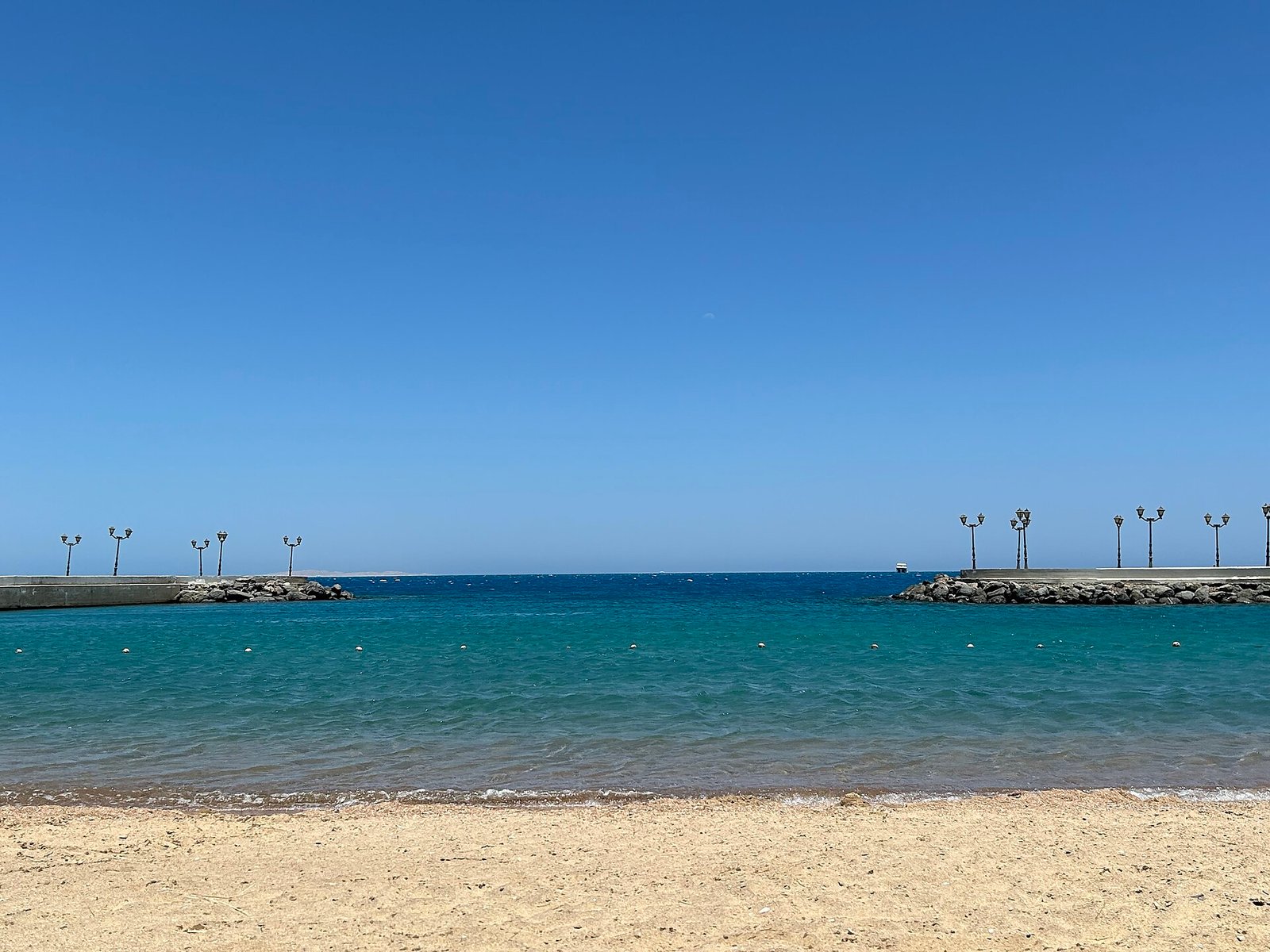
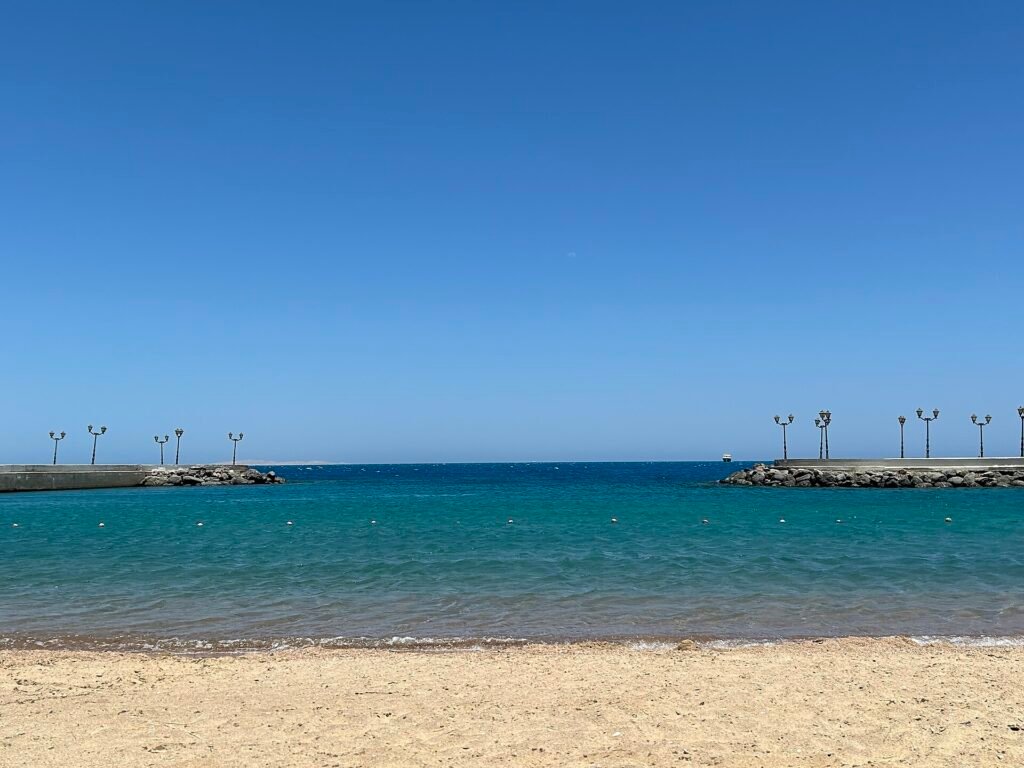
The Red Sea coast. Hurghada, El Gouna, Sahl Hasheesh and Marsa Alam sit in the low to mid 90s F (33 to 35 C) with a steady north wind and water at 82 to 84 F (28 to 29 C).
Sinai. Sharm el Sheikh and Dahab reach 98 to 100 F (37 to 38 C), with the Gulf of Aqaba flat and warm. Saint Catherine, at altitude, gives nights in the low 60s F (around 16 C), the only place in Egypt where you want a sweater in July.
The Western Desert and Alexandria. The oases run past 102 F (39 C) with no shade, so the desert comes off the July program. Alexandria is the mildest city at about 86 F (30 C), humid, and full of Cairo families.
A July day in Luxor, hour by hour
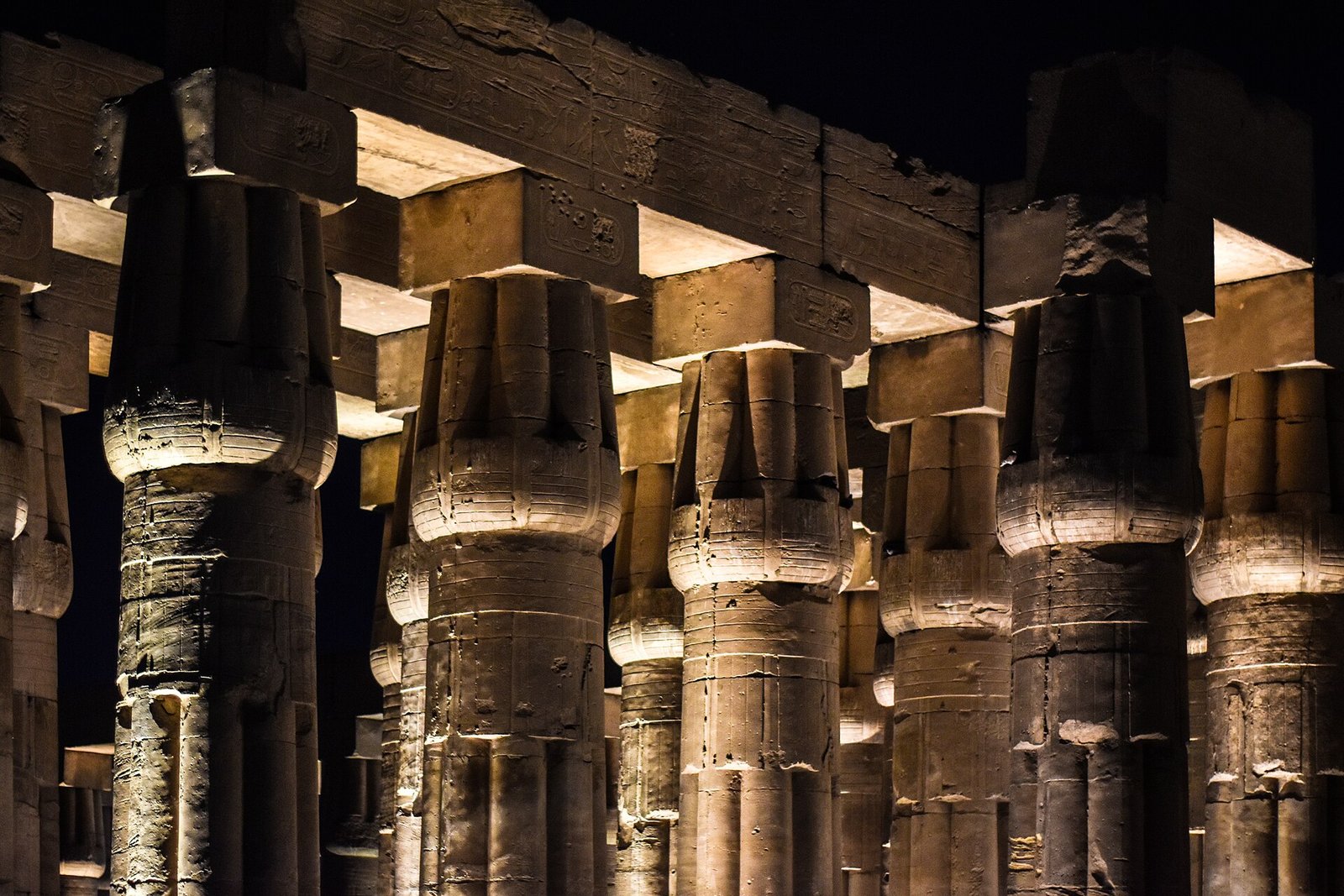
This is the timetable we run on a July temple day. It looks extreme on paper and feels normal by the second morning.
| Time | Where you are | Why it works |
|---|---|---|
| 4:45 am | Wake up call, coffee on the ship | The only cool hour, about 80 F (27 C) |
| 5:30 am | Crossing to the west bank | Empty roads, the cliffs still in shadow |
| 6:00 am | Valley of the Kings as the gate opens | Three tombs before the first buses |
| 8:00 am | Hatshepsut's temple, the Colossi of Memnon from the road | The cliff behind Hatshepsut becomes an oven by ten |
| 9:45 am | Back on board | Second breakfast, then the pool or the cabin |
| 12:00 to 4:00 pm | Ship sailing or moored, lunch, nap | The hottest four hours, spent under a roof |
| 4:30 pm | Karnak | Sun behind the first pylon, the hypostyle hall in shadow |
| 7:00 pm | Sunset on the top deck | The north wind at its strongest, the best light of the day |
| 9:00 pm | Luxor Temple lit at night, or the Karnak sound and light show | Stone has cooled, streets are full, Egypt is awake |
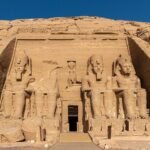
The same clock applies in Aswan. Philae by motorboat first thing, Abu Simbel with a departure in the dark so both temples are done before nine, and a felucca or the Nubian village for the late afternoon. Nothing outdoors between eleven and four, in any city. Show times rotate by season, so we confirm the current program for your dates.
The Nile in July: shade that moves with you and a breeze that does not stop
In July the cruise becomes the most practical way to see Upper Egypt, for one reason. Your air conditioned room moves with you. No luggage across a hot parking lot between hotels, and every temple dock is minutes from the ship.
The river helps. The prevailing wind on the Nile blows from the north and in July it is strongest in the late afternoon. On the top deck at sunset near Kom Ombo, with that wind in your face, the thermometer stops mattering.
Two honest notes. The pool on a Nile ship is small, and the sun deck at noon is fierce, with glare off the water on top of direct sun. Use the deck before ten and after five. And cabin air conditioning runs cold, so a thin long sleeved layer for indoors is the item nobody packs and everybody borrows.
Fewer ships sail in July because part of the fleet goes into maintenance. Departure days are more limited, but the ships that run are quieter and cabins are easy to get. Our page on a Nile cruise in summer covers which ships we use and why.
Why the Red Sea and the Gulf of Aqaba are where July is best spent
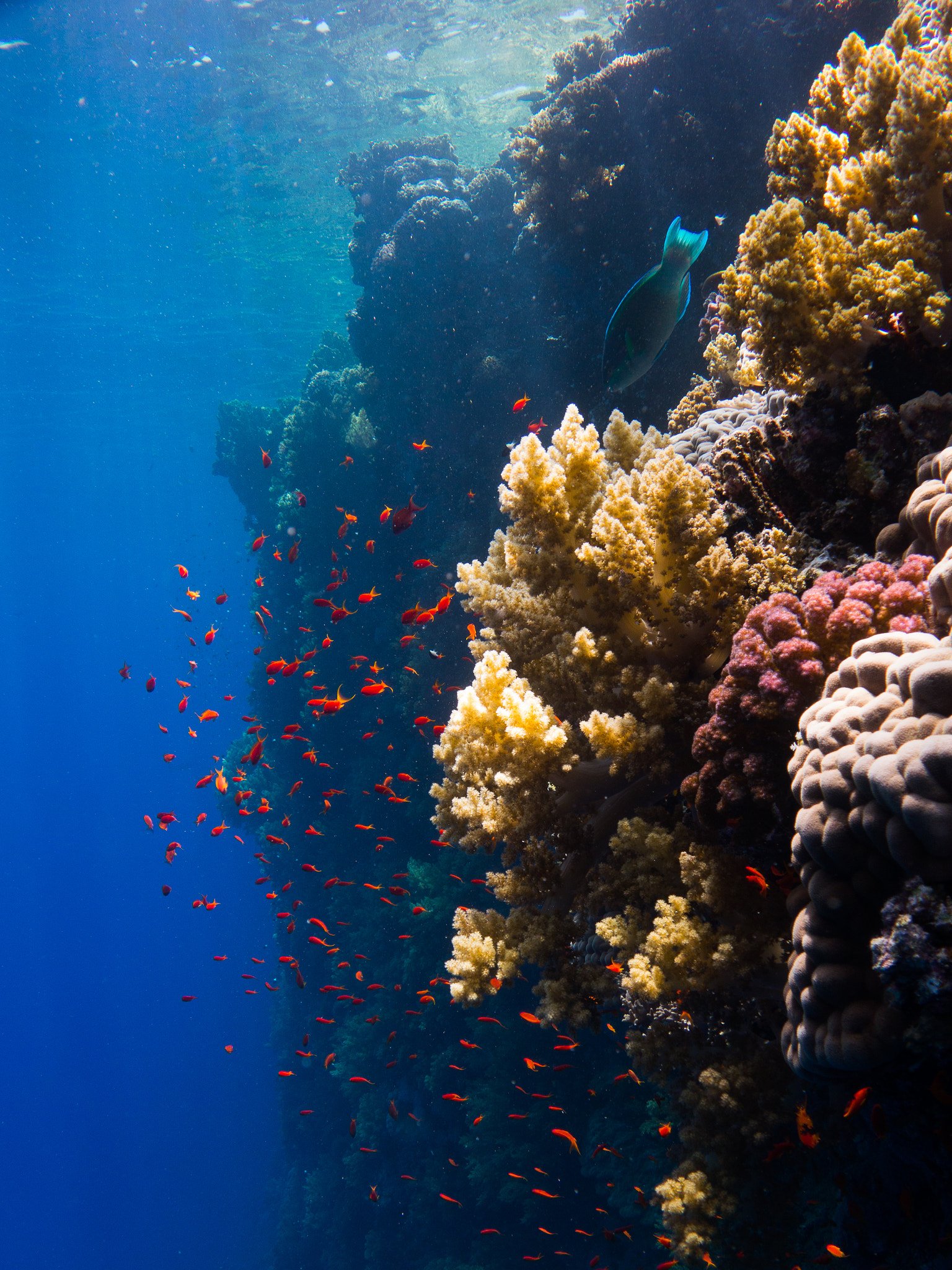
The Red Sea does not just tolerate July. It was built for it. Every resort on the coast is designed around lagoons, shaded pools and a reef a short swim from the beach, and the water is at its warmest of the year.
The two coasts behave differently in July, and it matters when you choose.
- The Hurghada side (Hurghada, El Gouna, Sahl Hasheesh, Makadi Bay, Marsa Alam) has a steady north wind all summer. It keeps the beach feeling cooler than the number, but it puts a chop on open water in the afternoon, which is why we pick lagoon resorts and sheltered bays for families.
- The Gulf of Aqaba (Sharm el Sheikh, Dahab, Nuweiba) is sheltered by mountains on both sides, so the sea is calmer and the wind lighter. Sharm is hot and still, with reef walls right off the shore at Ras Mohammed. Dahab, an hour north, is the relaxed version, with the Blue Hole and a beach town rhythm that suits July nights. Our Dahab guide explains how a few days there change a summer trip.
The Hurghada side links to Luxor by road, the natural partner for a short cruise. Sinai suits couples and divers, and puts a cold night at Saint Catherine within reach.
The July formula: a shorter cruise and more beach
In winter we happily sell seven nights on the Nile. In July we do not. After four dawn starts in a row, a family is ready for a pool bigger than a bathtub and a morning that does not begin at a quarter to five.
The three shapes we build most often in July:
- Cairo, a three night cruise, the Red Sea. Two nights in Cairo, a domestic flight to Aswan, a 3 night Nile cruise to Luxor with Abu Simbel at dawn on the first morning, then the road to Hurghada or El Gouna for four or five nights.
- Cairo, a four night cruise, Sinai. Same start, the four night Luxor to Aswan sailing, then a domestic flight to Sharm el Sheikh, a Sharm resort and a couple of nights in Dahab, with the night climb of Mount Sinai for those who want it.
- Cairo and the coast only. For families with small children, three nights in Cairo on the dawn schedule and a week on the Hurghada side, with Luxor as a single very early day trip by road if the parents want the Valley of the Kings.
All three keep the temples in the cool hours. Tell us which one sounds like your group and we send the quote for it.
July for American families on summer vacation
July is the middle of the American school break, and the week around the Fourth of July is when many families can string ten days together. It is our busiest month for travelers from the United States with children, and the schedule fits kids better than adults.
Jet lagged children are awake at five anyway, so a dawn start at the pyramids costs nothing, and the pool afternoons the heat forces on everyone are the part children talk about for years. Teenagers come alive after dark.
What we change for families in July:
- One major site per morning, never two. The Valley of the Kings alone is a full morning for a ten year old.
- The camel ride at Giza at opening, on the sand behind the plateau, while it is still in the 70s F.
- Rash guards in the water, brimmed hats on land, a full water bottle at every stop.
- The Grand Egyptian Museum and the National Museum of Egyptian Civilization as the Cairo afternoons, cold inside and good with children.
Our family guide to Egypt covers ages, strollers and food, all of it valid in July with the clock moved earlier.
If Ramadan or an Eid falls in your July week
The Islamic calendar moves about eleven days earlier each year, so whether Ramadan or an Eid overlaps July depends on the year, and we do not print dates that would soon be wrong. If it does overlap, nothing closes to you. Temples, tombs and museums open, ships and hotels serve every meal, and restaurants in tourist areas serve during the day. What changes is the rhythm: shorter site hours, emptier afternoons, and the most festive nights of the year. An Eid puts Egyptian families on the move and fills the coast, so we book those legs earlier. Our guide to the high and low season in Egypt explains how the holidays shift the calendar from year to year.
Heat, hydration and what to pack for real summer
Heat is the factor that decides whether a July trip goes well, and it is managed before anyone has symptoms. The warning signs of dehydration and heat exhaustion arrive in a reliable order: strong thirst, a headache, dark urine, tiredness out of proportion to the walk, dizziness, cramps, and at the far end nausea and skin that stops sweating. The first two are enough to stop, get under a roof, and drink.
Drinking well is not only water. Heavy sweating in dry heat loses salt as fast as fluid, and water alone can leave you feeling worse. Oral rehydration sachets weigh nothing, every Egyptian pharmacy sells them, and one in the morning bottle on temple days is our standard.
The first two or three days are the hardest because the body has not adjusted, so we keep the start of a July trip light and put the longest temple mornings later in the week. Four rules our guides enforce without discussion: drink before you are thirsty, no alcohol at lunch on temple days, a hat on every head outdoors, and tell the guide the moment anyone feels unwell.
One site specific warning. Underground tombs are not cool. They are narrow, unventilated and humid from the breath of visitors, and by late morning often hotter than the air outside. They go first, at opening, never last.
The July packing list
Shorter than a winter list, less forgiving, and with three items almost nobody brings.
- Loose, light colored, long sleeved linen or thin cotton rather than tank tops. It covers you from the sun, breathes, and satisfies the dress code at mosques.
- A wide brimmed hat, not a baseball cap, because the neck and ears burn first.
- Oral rehydration sachets, the most useful thing in the bag.
- A buff or thin scarf. Wet it, wear it around the neck, and the felt temperature drops at once. The first item nobody brings.
- A thin long sleeved layer for indoors. Absurd to pack in July, appreciated on every bus, ship and museum. The second.
- Enough high factor sunscreen to reapply three times a day. Sold in Egypt, but the choice is limited. The third.
- Closed, breathable shoes for sandy sites, sandals for the rest, swimwear and a rash guard for the reef.
July next to June, August and December
If July is your only window, this is how it compares with its neighbors and with the opposite end of the year.
| What changes | June | July | August | December |
|---|---|---|---|---|
| Luxor afternoon | 104 to 108 F (40 to 42 C) | 106 to 110 F (41 to 43 C) | 106 to 110 F (41 to 43 C) | Low 70s F (about 22 C) |
| Red Sea water | Warm, about 80 F | Warmest of the year, 82 to 84 F | Warmest of the year | Cool, wetsuit for long swims |
| Who is there | American families start arriving | American families, few groups | European groups in numbers | Everyone, book months ahead |
| Ships sailing | Reduced fleet | Reduced fleet, easy cabins | Reduced fleet, filling up | Full fleet, full ships |
| Best trip shape | Dawn temples, pool afternoons | Short cruise, long beach | Short cruise, long beach | Long cruise, full days outdoors |
June and July are close cousins, and our guide to visiting Egypt in June covers the dawn temple routine both share. July has the warmer sea and, because the European vacation wave arrives late in the month, quieter temples than August. December is another planet, and visiting Egypt in December shows what a full day outdoors looks like. The monuments do not care what month it is. In July, they care what time it is.
Frequently asked questions
Is July hotter than June in Egypt?
By a degree or two, and it rarely matters. Both months put Luxor and Aswan above 104 F (40 C) every afternoon, and July adds a warmer sea and slightly warmer nights. The schedule is identical: temples at opening, a roof or a pool from eleven to four, the shows and the markets after dark. If you can choose between them, choose on your dates and the ships available.
Is July or August better for a trip to Egypt?
July, slightly. The temperatures are the same, but July is quieter because the large European vacation groups arrive at the very end of the month and fill August. Cabins on the ships that sail are easier to get in July, and the docks and temples at dawn are close to empty. August works on the same plan with more company at Karnak.
Are the tombs in the Valley of the Kings cool in July?
No, and it surprises almost everyone. The tombs are cut into rock, but they are narrow, unventilated and humid from the breath of thousands of visitors, and by late morning they can be hotter than the air outside. That is why we put the Valley of the Kings first, at opening time, and limit the visit to three or four tombs.
How long should a Nile cruise be in July?
Three or four nights. That is enough for Abu Simbel at dawn, Philae, Kom Ombo, Edfu, the Valley of the Kings, Hatshepsut and Karnak, all in the cool hours, without a fifth consecutive wake up call before five. The nights saved go to the Red Sea, where a July afternoon is a pleasure rather than a problem.
Is the Red Sea too hot in July?
It is hot but built for it. Air temperatures sit in the low to mid 90s F (33 to 35 C), the water is at its warmest of the year, and the north wind on the Hurghada side keeps the beach feeling cooler than the number. The Gulf of Aqaba at Sharm and Dahab is calmer and stiller.
Is Egypt crowded in July?
No. July is deep low season for the temples. The winter groups are long gone, the European rush arrives in August, and the fleet on the Nile is reduced. Dawn at the Valley of the Kings or Abu Simbel is often close to private. The exception is the coast, where Egyptian families take their own summer holidays, so we book it earlier than the cruise.
Give us your July dates and we build the trip around the sun
Send us your dates, who is traveling and whether you picture a short cruise plus a lagoon on the Red Sea, a few nights in Dahab, or a cold night on Mount Sinai. We reply with a day by day plan that keeps every temple in the cool hours, the ships sailing in your week, and a quote. Our guides, our vehicles, our office in Egypt.