Egypt in June: Dawn Temples, Quiet Cruises and the Red Sea
Egypt in June: Dawn Temples, Quiet Cruises and the Red Sea
Egypt in June is real summer. Luxor and Aswan pass 104 F (40 C) most afternoons, Cairo sits in the high 90s F (mid 30s C), and the sun is up before five in the morning. It is still a good month to come if the itinerary respects that. Temples at dawn, tombs before ten, a pool or a cabin with the Nile breeze through the middle of the day, and a second day that starts at sunset with sound and light shows and night markets. Fewer ships sail, so the cruise feels quieter, and the Red Sea and Sinai make a cool base for the second half. American families come in June because school is out, and it works well when a local agency sets the clock.
What June actually feels like on the ground
Two things people get wrong about Egypt in June. The first is humidity. Americans hear 105 F and picture a Houston afternoon. Upper Egypt is nothing like that. The air in Luxor and Aswan is bone dry, so shade and a breeze change the temperature you feel by a wide margin. The second mistake is assuming nothing is possible. The heat is a scheduling problem, not a closed door.
Sunrise comes a little before five and sunset lands close to seven, so the cool hours at both ends of the day are generous. A morning at the Valley of the Kings that starts at six gives you four comfortable hours before the sun turns serious.
June is also quiet. The winter groups left in April and the European rush does not arrive until late July. The person standing alone in the tomb of Ramesses VI at seven in the morning in June is, most days, you.
The heat, region by region
Egypt is a long country and June does not treat every part of it the same way.
- Cairo and Giza. Afternoons in the high 90s F (35 to 38 C), nights around 70 F (21 C), dry. The Giza plateau has no shade, so the pyramids are a first thing in the morning visit. The Grand Egyptian Museum is air conditioned and absorbs an entire afternoon.
- Luxor and Aswan. The hottest stretch of the trip. Afternoons run 104 to 110 F (40 to 43 C), and Aswan is usually a degree or two above Luxor. Dawn is the reward, around 75 to 80 F (24 to 27 C) with a breeze off the river. The stone at Karnak stores heat and radiates it back after noon, which is why we never schedule it then.
- The Red Sea coast. Hurghada, El Gouna and Sahl Hasheesh sit in the mid 90s F (about 35 C) with a steady northerly wind that makes the beach feel cooler than the number. The water is around 80 F (27 C), with calm mornings and long visibility for snorkeling.
- Sinai. Sharm el Sheikh is hot and still. Dahab, an hour north, gets the wind. Saint Catherine sits at altitude, so nights drop into the 60s F (high teens C), and the night climb of Mount Sinai is genuinely pleasant in June.
- The Western Desert. The oases run past 100 F (upper 30s to low 40s C) and the White Desert has no shade for a hundred miles. Overnight desert camping comes off the June itinerary.
- Alexandria. Mid 80s F (around 29 C), humid, with a sea breeze. It is the one Egyptian city where June feels like a beach town, and the corniche fills with Cairo families escaping the capital.
How a local agency schedules the temples in June
The rule is simple and we do not bend it: nothing outdoors between eleven in the morning and four in the afternoon. Dawn on the monuments, the middle of the day under a roof, the late afternoon back outside once the sun has dropped behind the cliffs.
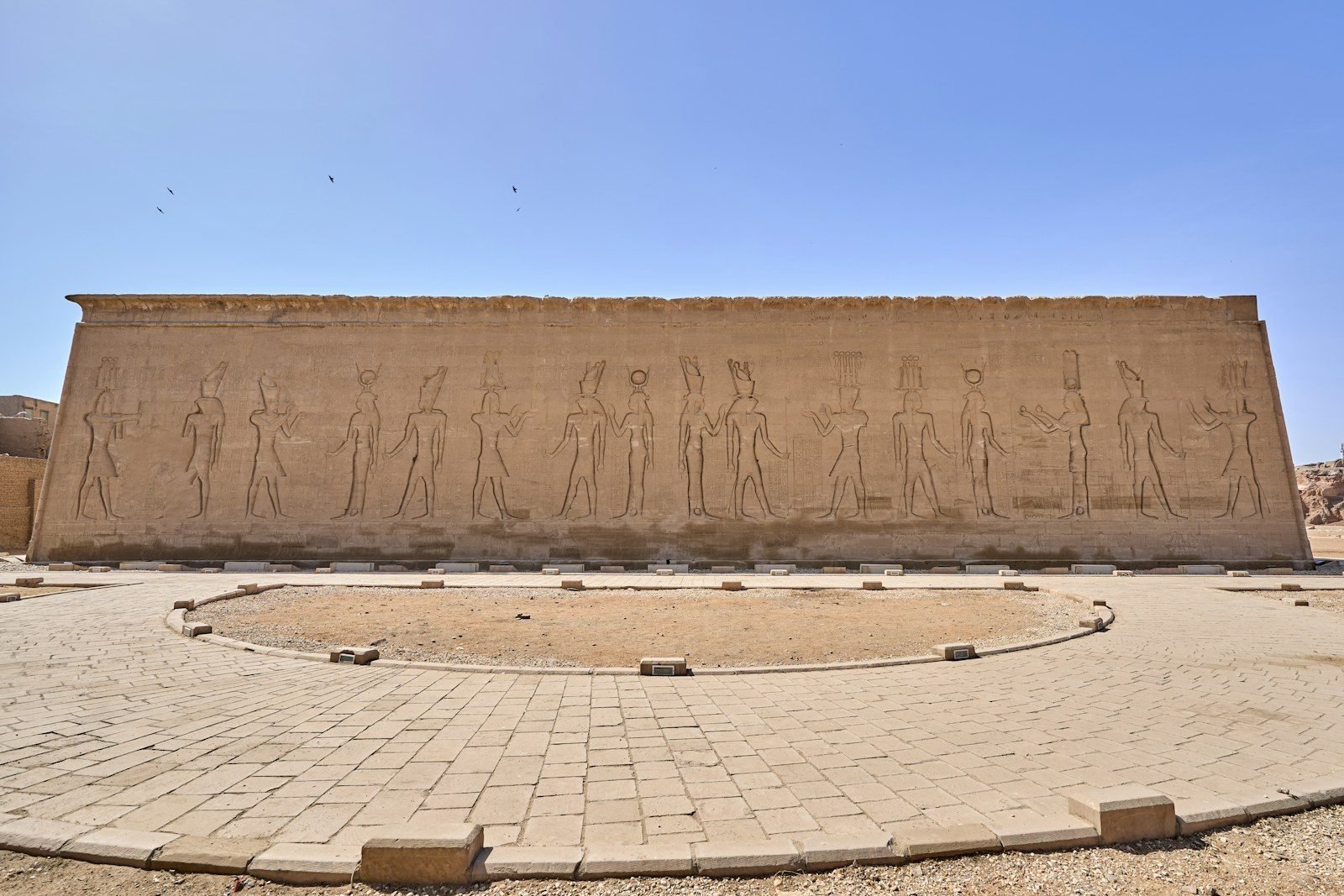
A June morning on the west bank of Luxor
- Wake at half past four. Coffee while the sky is still gray, then across the bridge to the west bank.
- The Valley of the Kings as the gates open. The tombs are cool inside at that hour and the walk between them is shaded by the eastern ridge. Three tombs, sometimes four, before the first buses arrive.
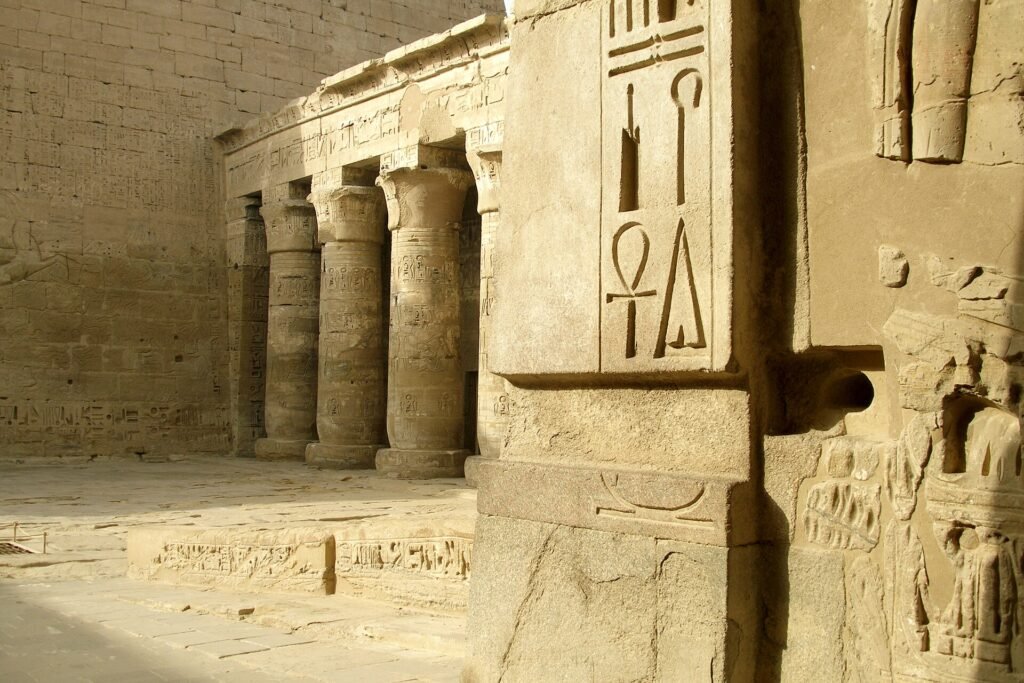
- Hatshepsut's temple next, with the Colossi of Memnon from the roadside on the way back. Hatshepsut faces east, and the cliff behind it turns into a reflector by nine.
- Back on board or at the hotel by half past ten. Pool, lunch, a nap, air conditioning. This is not lost time. It is the reason the afternoon works.
- Karnak at half past four, when the sun is behind the first pylon and the hypostyle hall is in the low light it was designed for. In any month it is the best hour for Karnak. In June it is the only one.
The same logic in Aswan
Philae goes first, because you reach it by motorboat and the water carries a breeze even at eight in the morning. For Abu Simbel we leave Aswan in the dark and arrive as the sun climbs over Lake Nasser, so you walk both temples before nine and are back for lunch. The Aswan afternoon is a felucca at sunset or the Nubian village by boat, never a temple.
The Nile in June: fewer ships, a quieter river and the breeze on deck
Part of the fleet goes into dry dock over the summer, so fewer ships sail between Luxor and Aswan in June. The ones that keep operating are the ones whose owners know the season: strong cabin air conditioning, a shaded top deck with a pool, and crews used to a dawn schedule.
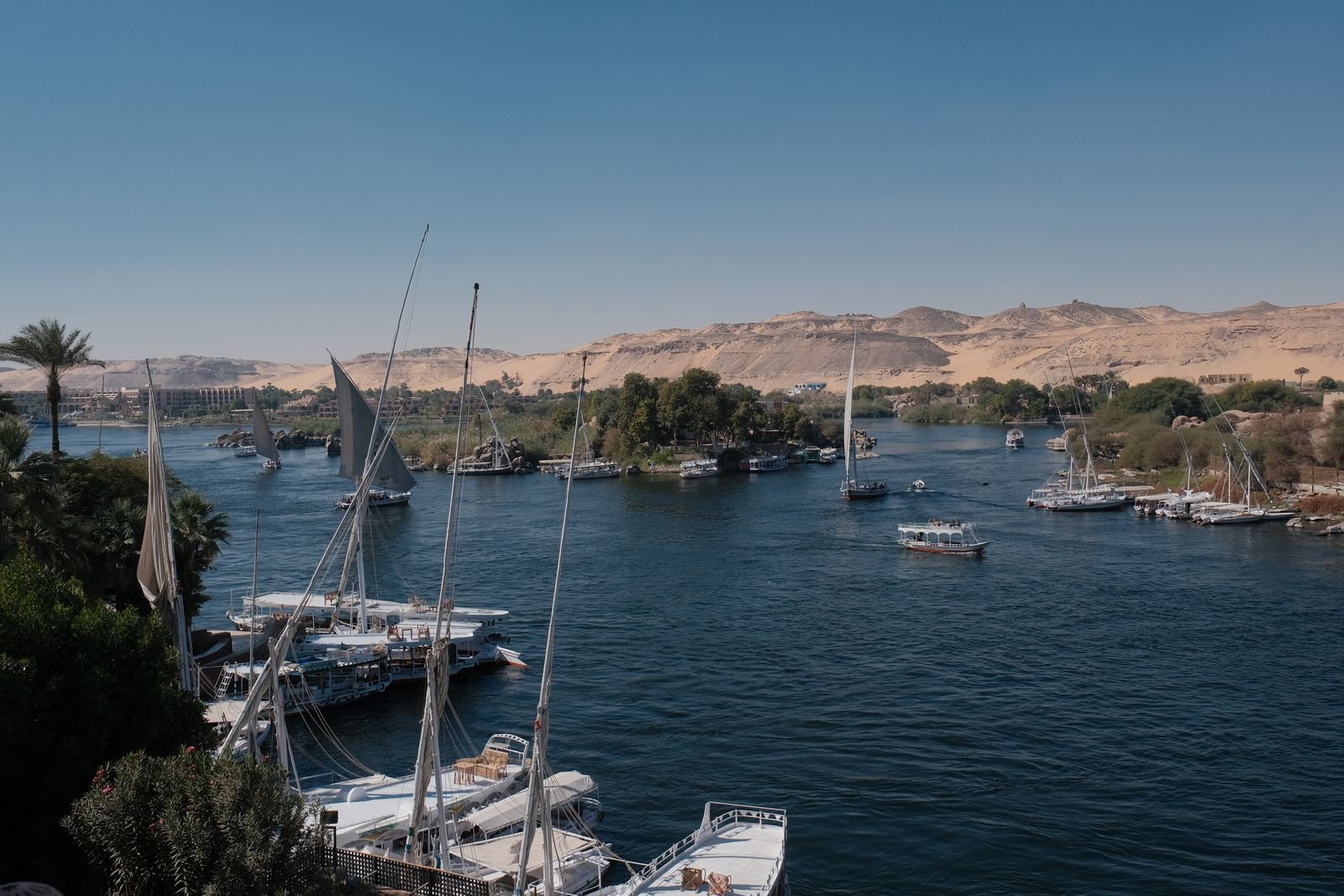
The upside is real. Cabins are easier to get, the sun deck is never full, and the docks at Edfu and Kom Ombo are not lined with eight ships unloading at once. A Nile cruise in June is closer to the way it looked decades ago, one or two boats moored under the temple and a quiet river between them.
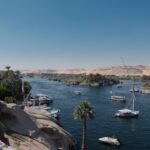
The breeze is the other reason. The wind on the Nile blows from the north almost all year, and in June it is strongest in the late afternoon. Sunset from the top deck near Kom Ombo, with that wind in your face, is the moment most June clients tell us about afterwards.
Two honest cautions. Fewer ships means fewer departure days each week, so your dates are less flexible than in winter. And in June a cabin's air conditioning matters more than its square footage, which is why we steer summer clients toward newer ships rather than the largest ones.
Why the Red Sea and Sinai are the June base
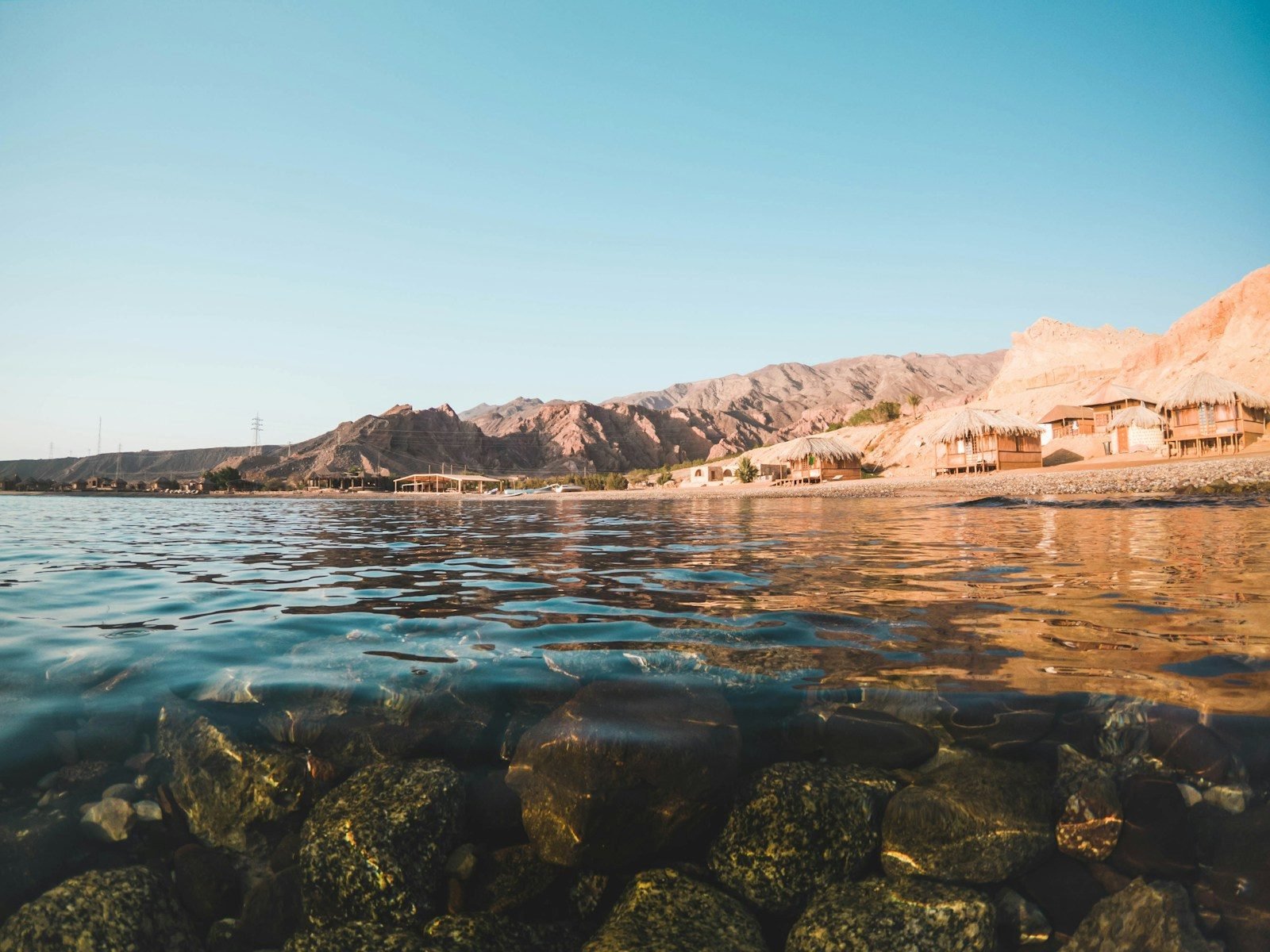
In June we change the balance of the trip. Instead of eight nights on the Nile and two on the coast, we do three or four nights of temples on a dawn schedule and then four or five on the sea, where the wind and the water do the work. The sights are all still in, just concentrated into the cool mornings.
| In June | Hurghada side | Sinai side |
|---|---|---|
| Feel of the heat | Steady north wind, feels cooler than the number | Sharm still and hot, Dahab breezy |
| Water | Warm, calm mornings, long visibility | Warm, reef right off the shore at Dahab |
| Day trips | Luxor by road for a dawn visit, Giftun island | Mount Sinai at night, Ras Mohammed, the Blue Hole |
| Best for | Families, lagoon resorts, an easy link to Luxor | Couples, divers, a mountain night to break the heat |
If you cannot decide between the two coasts, our comparison of Hurghada and Sharm el Sheikh goes through it resort by resort. In June specifically, the Hurghada side wins for families because it links to Luxor by road and its lagoons stay calm in the afternoon wind. Sinai wins for couples who want a reef they can swim to and a cold mountain night in the middle of a hot week.
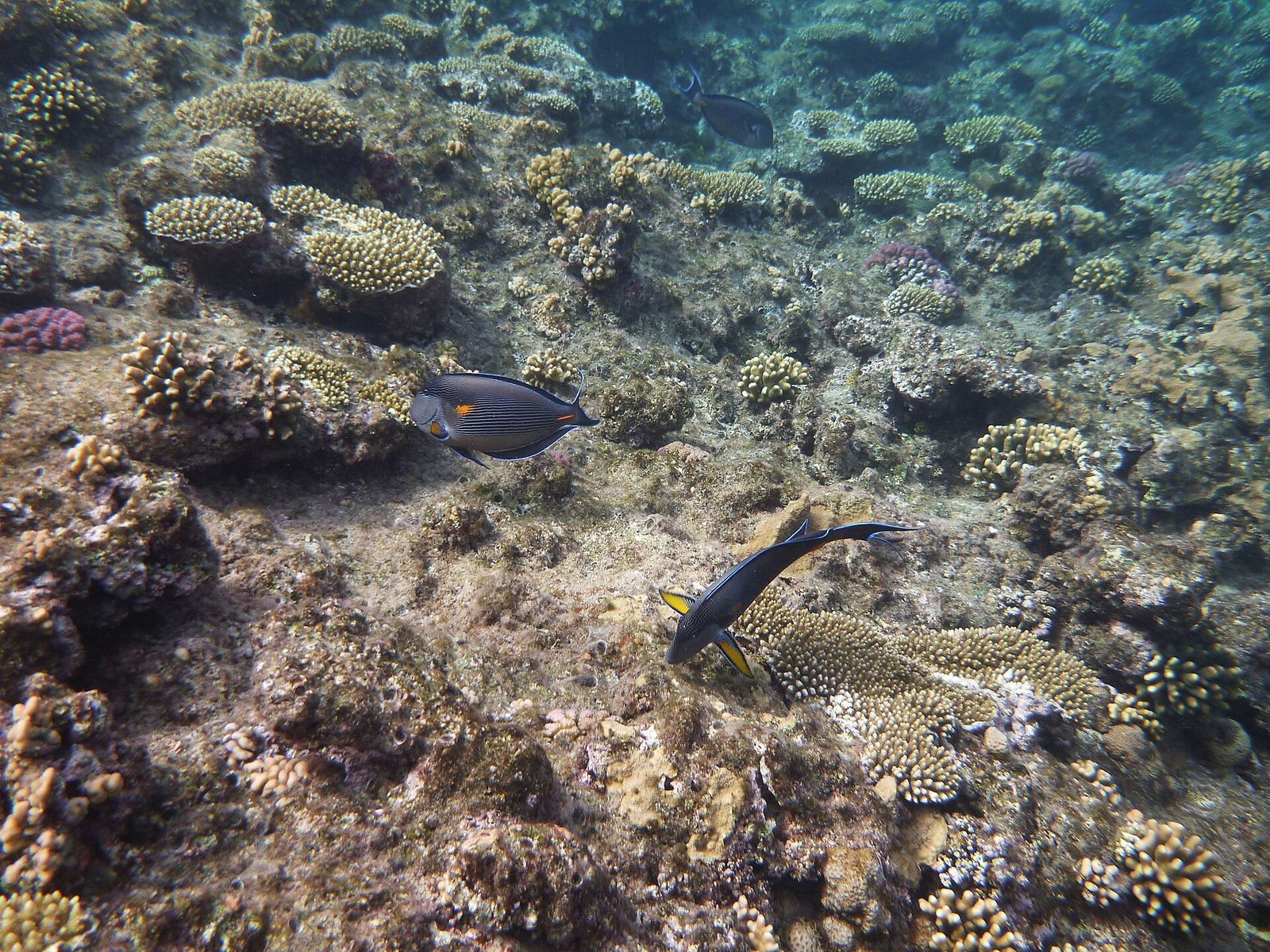
June for American families: school is out and the schedule already fits kids
June is when most American school years end, which is why it is our busiest month for families from the United States. The June schedule is a children's schedule already. Jet lagged kids are awake at five, so a dawn start at the pyramids costs you nothing, and the pool afternoons the heat forces on adults are the part children remember for years.
What we change for families in June:
- One big site per morning, never three. The Valley of the Kings alone is a full morning for a nine year old.
- The camel ride at Giza happens at opening, on the sand behind the plateau, while it is still in the 70s F.
- Museums move to the afternoon, when they are cold inside.
- On the ship, the pool deck is the afternoon program. On the coast, we book resorts with a lagoon rather than an open beach.
- Sun protection is not negotiable. Long sleeved rash guards in the water, brimmed hats on land, and a refill of the water bottle every time the vehicle stops.
Teenagers do well in June because the night program, when Egypt is most alive in summer, suits a schedule that runs past midnight.
The second day starts at sunset
In June, Egypt runs two days inside every twenty four hours, and the second one begins when the sun goes down. Egyptians eat dinner at ten in summer, the streets of Cairo fill after nine, and the stone finally cools by then. A June itinerary that stops at dinner wastes half the country.
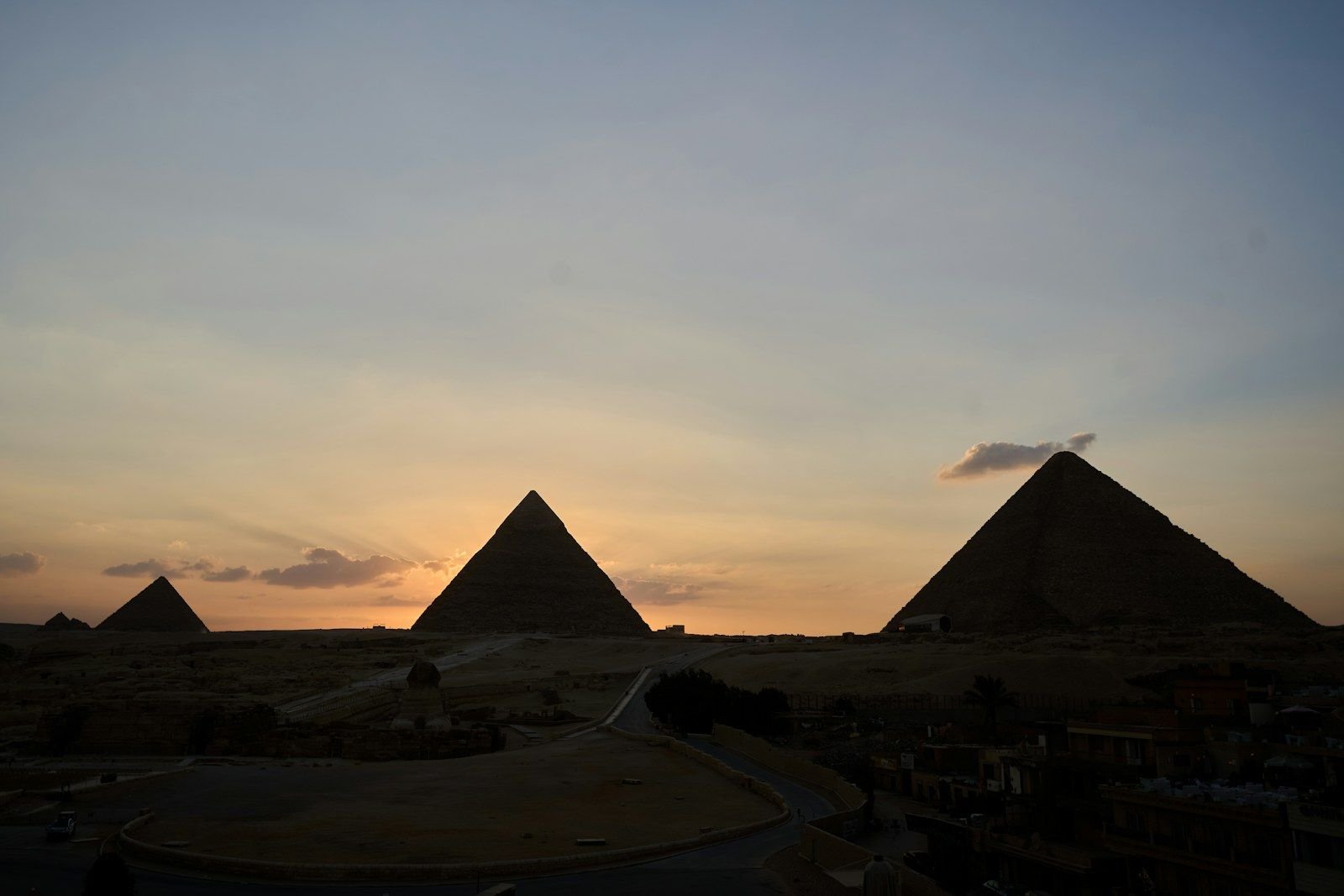
The sound and light show at the pyramids is the obvious anchor for a Cairo night. It is a long way from high art, but the Sphinx in the dark with the pyramids lit one after another outlives the script. Karnak and Philae have their own. Schedules and languages change from season to season, so we check the current program for your dates rather than promising a night in advance.
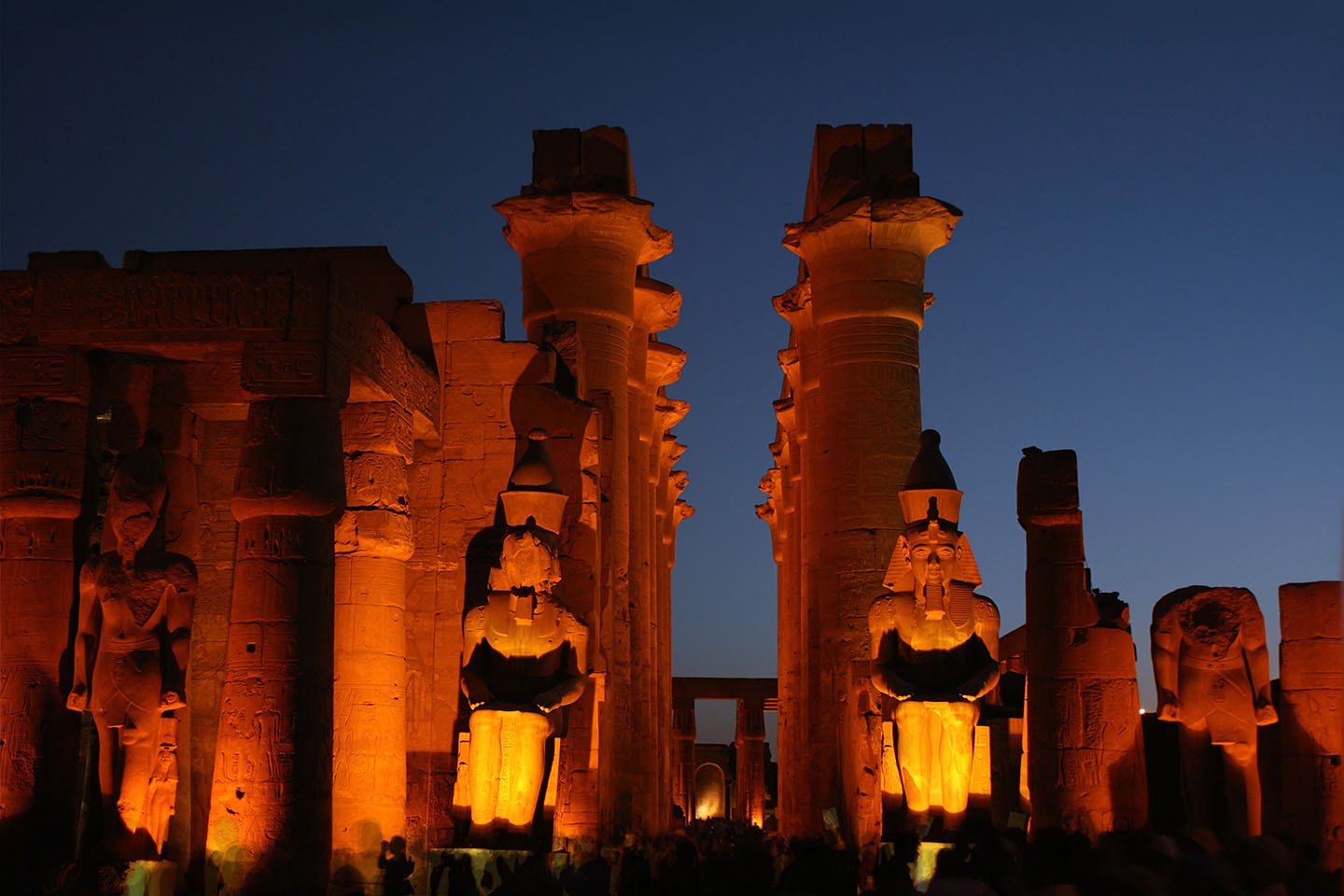
Beyond the shows, the June nights we recommend most are Luxor Temple after dark, lit from below with the avenue of sphinxes running off toward Karnak, and Khan el Khalili after ten, when the market is at full volume and the lanes are finally comfortable. In Aswan it is a felucca at sunset, tacking between the islands as the wind picks up.
What comes off the June itinerary, and what goes in instead
We take things out in June that we would never remove in November, and we say so up front.
Out in June
- Overnight camping in the White Desert. There is no shade between Bahariya and the camp.
- Siwa as a road trip. The oasis has springs and palm shade, but the drive is long and hot.
- Saqqara and Dahshur after ten in the morning. Both are open desert and belong at opening time.
In instead
- The Grand Egyptian Museum and the National Museum of Egyptian Civilization as the standard Cairo afternoons.
- Coptic Cairo, whose churches sit below street level in narrow shaded lanes, and the mosques of Islamic Cairo from five in the afternoon, when the courtyards are in shadow.
- A hot air balloon over the west bank of Luxor. Balloons still fly in June, they leave at first light and land well before the heat.
If your June dates coincide with Ramadan or an Eid
The Islamic calendar moves about eleven days earlier every year, so whether Ramadan or one of the two Eid holidays touches June depends on the year, and we do not print dates that would soon be wrong. If your week does overlap, nothing closes to you: temples, tombs and museums open, ships and hotels serve every meal, and restaurants in tourist areas serve during the day. What changes is the rhythm: shorter site hours, empty afternoons, and the most festive nights of the year. An Eid puts Egyptian families on the move, which fills trains and the coast, so we book those legs earlier. Our guide to the best time to visit Egypt explains how we plan around it.
Packing and staying well in real summer
June packing is shorter than winter packing but less forgiving. What matters:
- Loose, light, long sleeves and long trousers in linen or thin cotton. They beat tank tops for the sun and for the dress code at mosques.
- A hat with an actual brim, sunglasses you trust, and a high factor sunscreen you reapply at every stop.
- Closed shoes with grip for the tombs.
- A refillable bottle. Bottled water is everywhere and our vehicles carry it cold; tap water is not for drinking.
- Electrolyte sachets from home. In dry heat you lose water faster than you feel thirsty.
The health rules are the ones every guide of ours repeats: drink before you are thirsty, skip alcohol at lunch, and tell the guide the moment anyone feels dizzy or stops sweating. Our full Egypt packing list covers the rest, from adapters to medication.
June against December and the shoulder months
If you can travel in any month, we would not point you at June. If June is the window you have, it is a better month than its reputation. This is how it lines up.
| June | December | October and April | |
|---|---|---|---|
| Luxor afternoons | 104 to 110 F (40 to 43 C) | Low 70s F (about 22 C) | High 80s to mid 90s F (31 to 35 C) |
| Crowds at the sites | Light, mostly at dawn | Heavy, all day | Building or fading, manageable |
| Ships sailing | Reduced fleet, easy to book late | Full fleet, book months ahead | Full fleet, book early |
| Day shape | Dawn and dusk, pool in between | Full days outdoors | Long mornings, short break |
| Best suited to | Families in summer break, quiet temple lovers | Holiday travelers, first timers | Almost everyone |
Our guide to visiting Egypt in December shows what the opposite end of the year looks like, and our breakdown of high and low season explains why June is quiet without being empty. The temples do not care what month it is. They care what time it is, and in June that is the only question that matters.
Frequently asked questions
Is June too hot to visit Egypt?
No, if the days are built for it. Afternoons in Luxor and Aswan pass 104 F (40 C), but the heat is dry and the mornings are in the 70s F. Every temple visit happens before half past ten or after half past four, the middle of the day is spent on a ship or in a museum, and the nights are cool enough for shows and markets. Travelers who keep a winter schedule suffer; those who follow the local rhythm are fine.
Can you take a Nile cruise in June?
Yes. Fewer ships sail in summer because part of the fleet goes into maintenance, so departure days are more limited, but the cruises that run are quieter and the cabins are easier to get. The ship becomes your shade in the middle of the day, the deck pool is the afternoon, and the north wind keeps the top deck cooler than the bank. We choose newer ships with strong cabin air conditioning.
Should we do more Nile or more Red Sea in June?
More Red Sea than you would in winter. A typical June split is three or four nights of temples on a dawn schedule, Cairo included, and then four or five nights on the coast. The Hurghada side links to Luxor by road and has calm lagoons for families; Sinai suits couples who want a reef off the beach.
How early do we have to start in June?
Half past four to five in the morning on temple days, which sounds brutal and feels normal after the first day. Sunrise is a little before five, the sites open early in summer, and by the time you have seen three tombs and Hatshepsut's temple it is not yet ten. We confirm the current opening hours for your dates and build the pickup around them so you are at the gate when it opens.
Is Abu Simbel doable in June?
Yes, and it is one of the best mornings of a June trip. We leave Aswan while it is still dark, arrive as the sun rises over Lake Nasser, and you walk both temples before nine, when the facade is lit from the front and the heat has not started. You are back in Aswan for lunch. A domestic flight from Aswan is the alternative for anyone who prefers a later start.
Do the sound and light shows run in June?
They do, and June is when they earn their place, because the night is the best part of the day. The pyramids show at Giza, the walk through show at Karnak and the show at Philae all run in summer, but times and the language rotation change from season to season. We check the current program for your dates and slot it in after a rest and before a late dinner, the way Egyptians spend a summer night.
Tell us your June dates and we build the trip around the sun
Send us your dates, who is traveling and whether you picture a quiet ship, a lagoon on the Red Sea or a night on Mount Sinai. We reply with a day by day plan that puts every temple in the cool hours and the ships that are sailing in your week. Our guides, our vehicles, our office in Egypt.
Keep exploring
To finish planning your trip to Egypt
- ▸Egypt in May: Heat, Empty Temples and Easy Cruise Cabins
- ▸How to choose an Egypt tour that fits the way you actually travel
- ▸Egypt Itinerary 15 Days: Alexandria, Abu Simbel and the Nile
- ▸Egypt Trip Reviews: What Travelers Praise and Complain About
- ▸Egypt in 5 Days: Two Itineraries That Actually Fit
- ▸Egypt or Jordan: which one to visit when you can only do one trip
- ▸Real vs Fake Papyrus: How to Tell Real Papyrus in Egypt
- ▸See all our Egypt tours