Grand Egyptian Museum or Egyptian Museum in Tahrir, which one should you visit in Cairo
Grand Egyptian Museum or Egyptian Museum in Tahrir, which one should you visit in Cairo
If you only have one museum slot in Cairo, choose the Grand Egyptian Museum. It sits beside the Giza pyramids, the galleries are bright and easy to walk, and the complete Tutankhamun collection is shown together. Paired with the pyramids it makes the strongest single day in Egypt. Choose the Egyptian Museum in Tahrir if this is your second trip, if you love old-fashioned museums where the objects sit close enough to touch, or if your day is already built around downtown and Coptic Cairo. Do not do both in one day. Two museums, two days, and the royal mummies at the NMEC on the Old Cairo day.
What the Grand Egyptian Museum is today
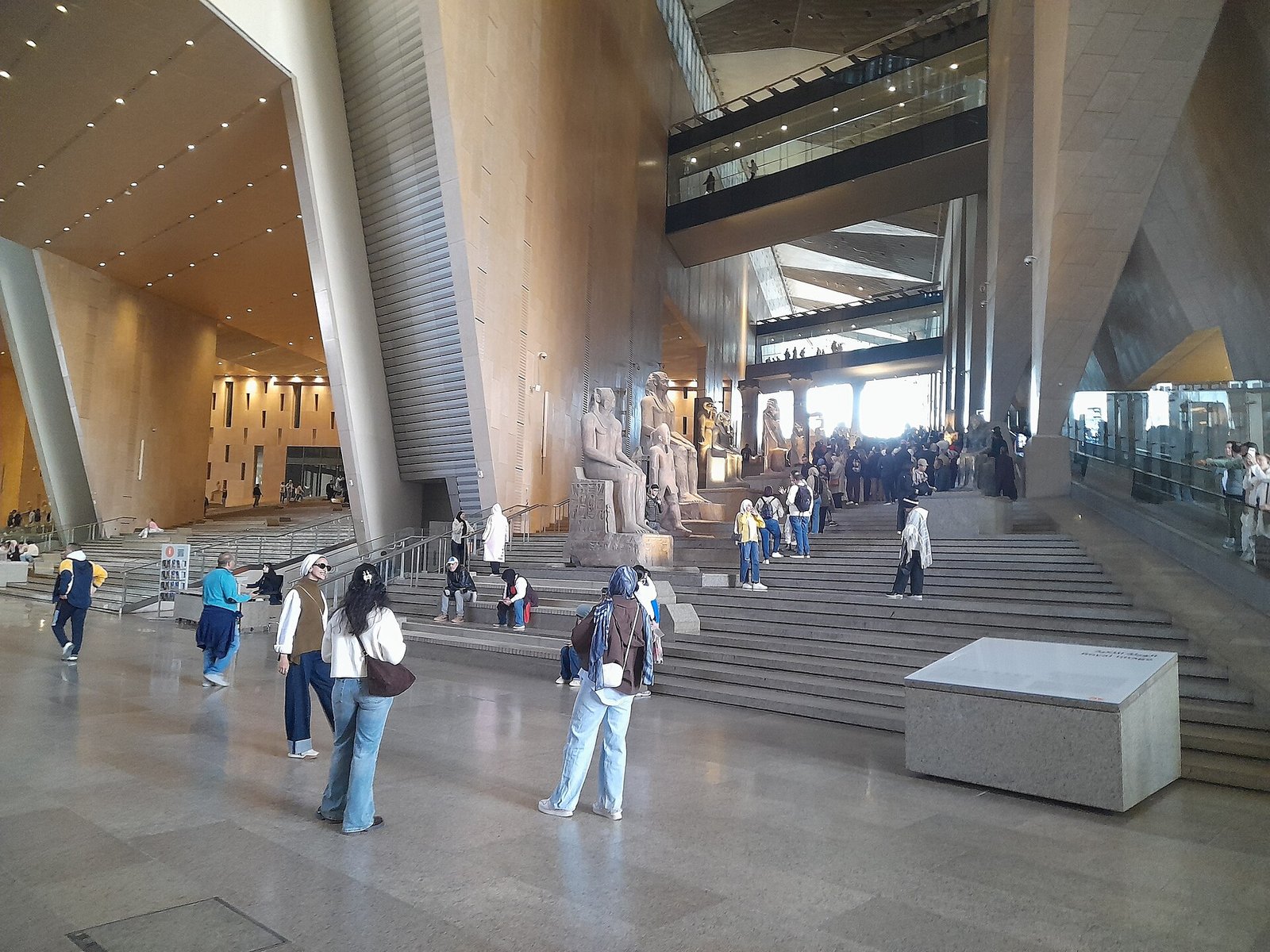
The Grand Egyptian Museum, usually shortened to GEM, is the new home of Egyptian antiquities on the Giza plateau. It stands a short drive from the Great Pyramid, and the building was designed so that the pyramids appear in the window line as you climb through it. It is the museum Egypt spent a generation building: a vast stone and glass entrance, a hanging obelisk in the forecourt, a colossal Ramesses II in the atrium, and climate-controlled halls that finally treat the objects the way they deserve.
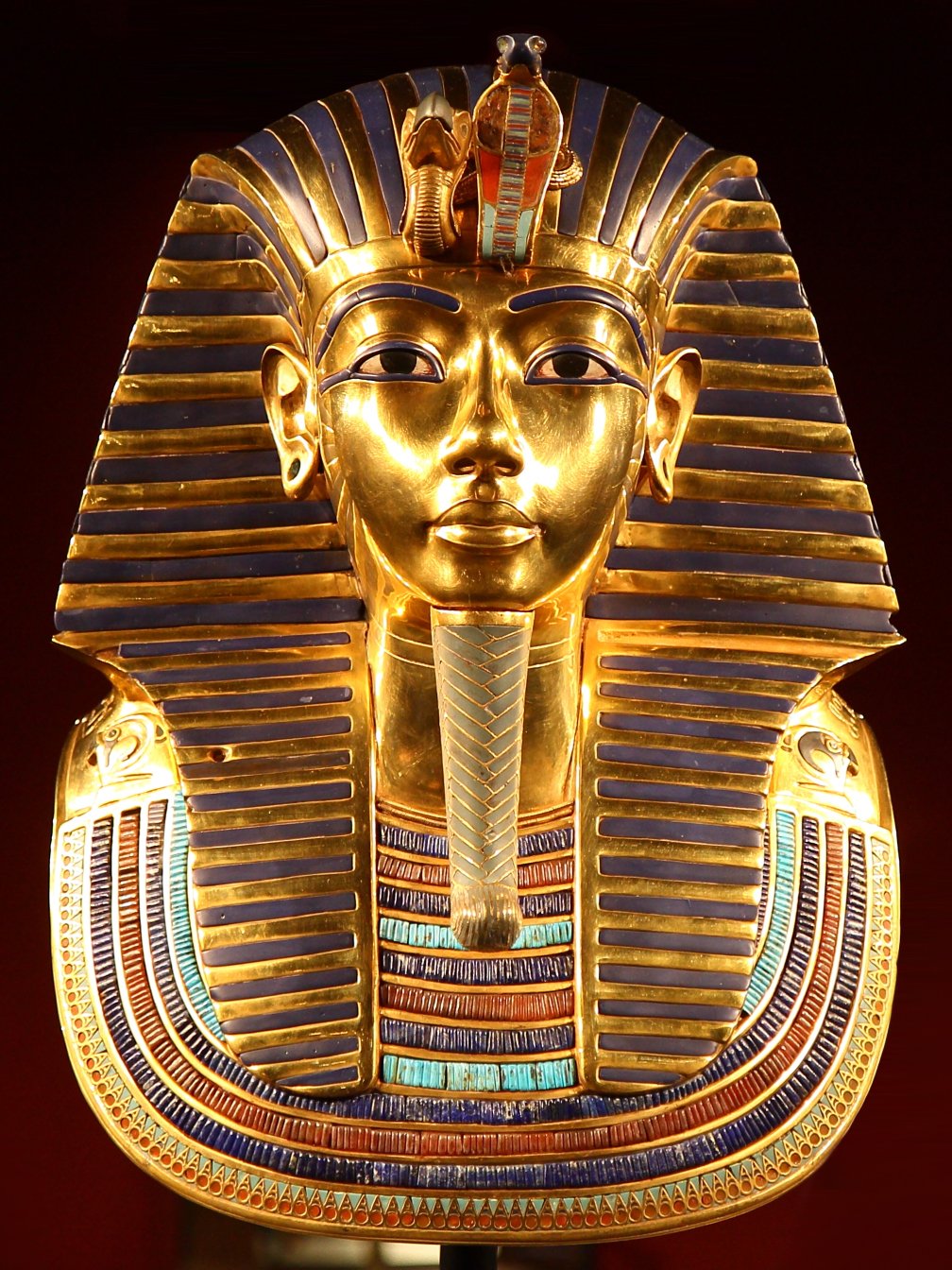
The part everyone asks about is Tutankhamun. For the first time, the objects from his tomb are displayed together, not split across rooms and floors. The gold mask, the nested shrines, the chariots, the beds, the sandals and the jewelry that used to be crammed into cases in Tahrir now have room to breathe.
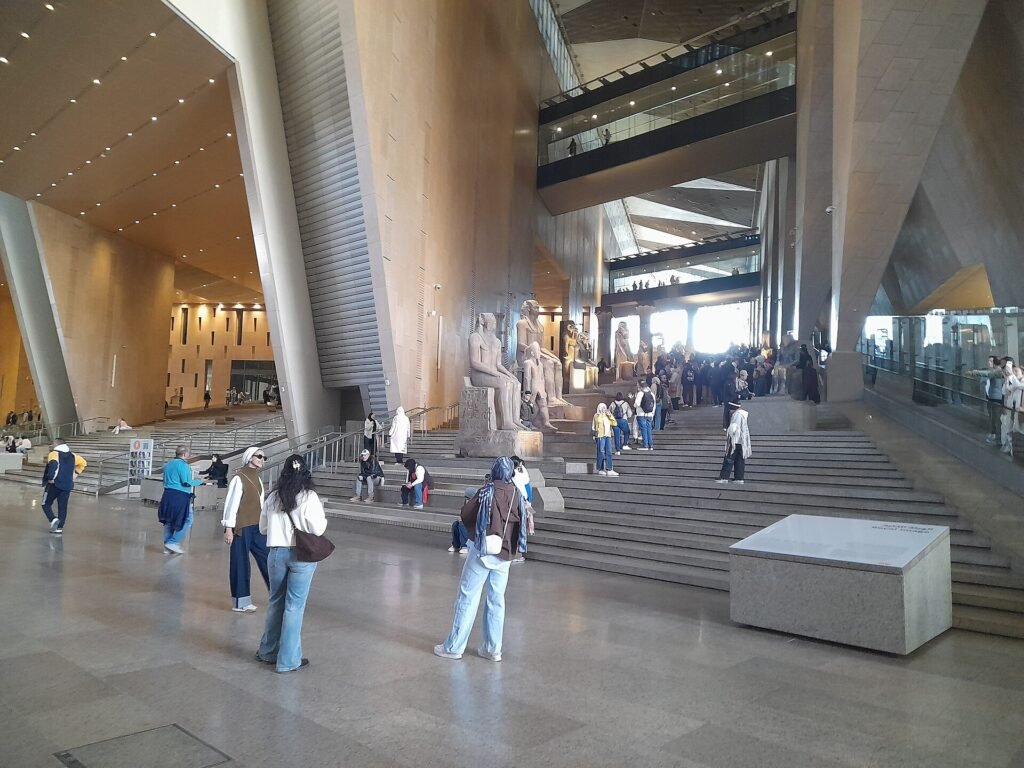
Then there is the grand staircase, a wide tiered ascent lined with kings, queens and gods in stone, arranged so that as you climb you move through Egyptian history with the pyramids waiting at the top. It is the best free-standing gallery in the country, and the spot where every phone comes out.
The main galleries above are organized by period and theme, with wide aisles and clear English labels. The room-by-room picture is in our Grand Egyptian Museum guide. One warning that applies to every museum in Cairo: exhibit locations change. Objects move between galleries, halls close for conservation, and last year's layout may not match the layout on the day. Our guide checks what is open on the morning of your visit and adjusts the route.
What the Egyptian Museum in Tahrir is today
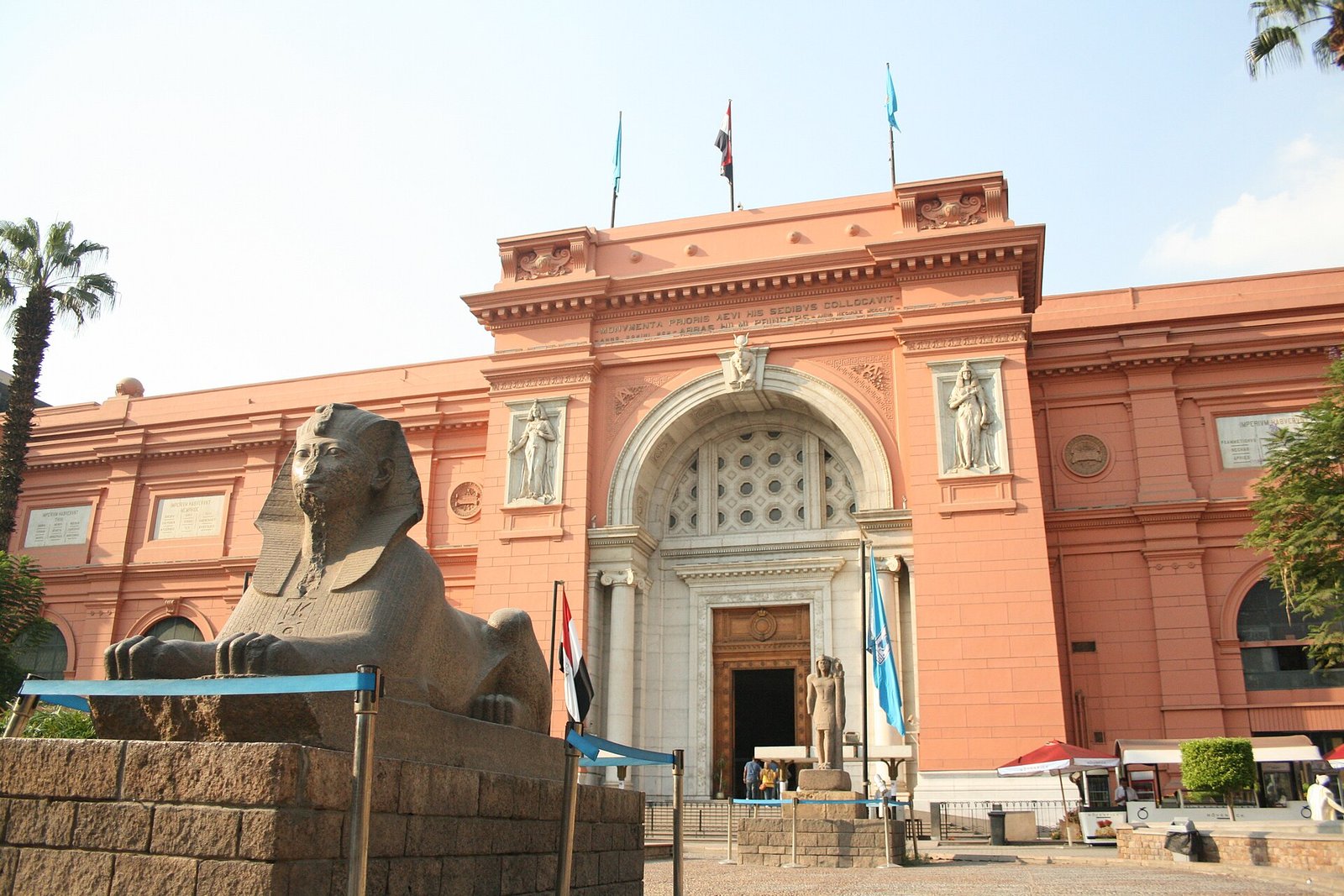
The Egyptian Museum on Tahrir Square is the pink neoclassical building that opened in 1902 and held the national collection for more than a century. It was built by a French architect in the grand European style, with a central atrium, two long floors of galleries, skylights, iron railings, and wooden cases that in many rooms have not changed since the museum opened.
Two transfers changed it. The Tutankhamun collection went to the GEM, and the royal mummies went to the National Museum of Egyptian Civilization. People sometimes conclude that Tahrir has been emptied. It has not. The building still holds an enormous amount of material from the Old, Middle and New Kingdoms, the Amarna period, the Late Period and the Greco-Roman era, plus statues, sarcophagi, papyri and daily-life objects that never left. Some galleries have been reorganized, but it remains one of the densest collections of Egyptian art anywhere.
What Tahrir gives you that the GEM cannot is proximity and atmosphere. You stand a few inches from a painted Old Kingdom statue with only a low rope between you. You walk past sarcophagi lined up like cars in a lot. The labels are sometimes yellowed typewritten cards, sometimes modern panels, sometimes missing. It is a museum you explore rather than one that leads you, and for the right traveler that is the charm. We go deeper on the building and the galleries in our Egyptian Museum in Tahrir Square page.
Where each museum sits and how it fits into a Cairo day
The GEM belongs to the Giza day
The GEM is in Giza, minutes from the pyramid plateau. The natural pairing is obvious: pyramids and Sphinx in the morning while the light is soft, lunch near the plateau, then the museum in the afternoon when the sun gets heavy. You never cross the city, and the day ends close to most Giza hotels. See our Pyramids of Giza guide for how we run the plateau part of that morning.
Tahrir belongs to the downtown and Old Cairo day
The Tahrir museum sits in the center of downtown Cairo, beside the Nile Corniche. The natural companions are Coptic Cairo with its churches and the Ben Ezra synagogue, the NMEC in Fustat next door, the Citadel, and Khan el-Khalili. That is a day about the city, not the desert. We build both days as standard pieces in our Cairo excursions.
With three days in Cairo the museums fall into place on their own: Giza and the GEM, then Old Cairo with Tahrir and the NMEC, then Saqqara and Dahshur. Our Cairo in 3 days itinerary lays this out hour by hour.
How much time each museum needs
Give the GEM half a day. The building is huge, the walks between galleries are long, and the Tutankhamun galleries alone can eat a couple of hours if you read the labels. Add the staircase, the main galleries, a coffee and the walk back to the car, and a comfortable guided visit runs three to four hours.
Tahrir is more flexible. A focused visit with a guide covers the highlights of both floors in about two hours. A slow morning for someone who loves Egyptology can stretch to three or more, because there are more objects per square foot and less signage to help you skip. The building is smaller and easier on the legs.
- GEM, first visit with a guide: three to four hours, plus travel.
- GEM, second visit alone, targeting a few galleries: two hours.
- Tahrir, guided highlights: about two hours.
- Tahrir, unguided deep dive: three hours or more, with a map.
- NMEC, mummies hall plus the main gallery: about ninety minutes.
Crowds, timing, and the hours of the day that work
The GEM is the busier museum now, and the Tutankhamun galleries are the busiest part of it. Group tours arrive mid-morning after the pyramids, so the quietest moments inside are shortly after opening and in the late afternoon. Our preferred order is pyramids early, then the museum after lunch when the first wave of groups has moved on. On very hot days we flip it: museum first in the cool, plateau late when the light turns gold.
Tahrir is calmer than it was before the transfers. The Tutankhamun crowds are gone, so the galleries breathe. Mornings are still the busiest slot because that is when downtown tours start. Early afternoon, when groups have moved on to the Citadel or Khan el-Khalili, is often the sweetest time.
Opening hours change with the season, with Ramadan and with evening programs, so we do not print them here. Check the current schedule close to your date, or let us confirm it when we build the day.
First visit or second visit, which museum to choose
For a first trip to Egypt with a single museum slot, choose the GEM. It gives you the objects everyone knows, the Tutankhamun mask above all, in a setting that makes sense of them, and it pairs with the pyramids without any extra driving. You leave with the story straight in your head.
For a second trip, or for anyone who has already seen the GEM, Tahrir becomes the more rewarding choice. You are no longer hunting for the famous pieces. You are wandering through the deep collection, finding an Old Kingdom scribe or a Middle Kingdom wooden model that stops you cold. If you enjoyed reading about the dynasties in our guide to the pharaohs, Tahrir is where you meet them in person, one after another, at close range.
Tell us if it is your first Cairo trip and we will suggest a museum
Visiting with children
The GEM is the easier museum for kids. There is space to move, there are ramps and elevators, the cafes are real, and the staircase with its giant statues is a natural hook for a child bored of vitrines. The Tutankhamun galleries hold their attention because everything is gold, chariots included. A stroller works fine. We plan a shorter family route: staircase, Tutankhamun, one or two main galleries, then out before the meltdown.
Tahrir is harder with small children. The floors are stone, there are stairs to the upper galleries, and the older cases sit at adult eye level. That said, older children who like a treasure hunt do very well there, precisely because the museum is less curated. Our guides run it as a game: find the statue with the blue eyes, find the boat, find the animal mummies.
If your children are the type who ask what the symbols mean, prime them with our introduction to hieroglyphs before either museum. Reading a cartouche on the day is a small thrill that lasts.
Photography in each museum
Photography rules in Egyptian museums shift repeatedly and are enforced room by room, so treat this as the pattern rather than the law. In the GEM, phone photography without flash is generally allowed in the atrium, on the staircase and in the main galleries. The Tutankhamun galleries have been the exception, with staff keeping cameras away from the most sensitive objects, above all the gold mask. Tripods and professional rigs need a separate permit.
Tahrir has traditionally been more relaxed, and the natural light through the skylights is better for pictures. Again, flash is the line that gets you told off, and certain rooms may be marked no-photo on the day. Ask the guard or your guide before raising the phone in a doubtful room. A polite question costs nothing.
The mistake of doing both museums in one day
Every season we get the same request: GEM in the morning, Tahrir in the afternoon, both done. We push back every time. The museums are on opposite sides of Cairo and the drive between them can take an hour or more. The GEM alone needs half a day. By the time you finish it, eat and cross the city, you reach Tahrir tired, with an hour before closing, and walk through the galleries seeing nothing. After three hours of ancient objects, a fourth hour adds little and a sixth adds nothing.
The better plan is the GEM on the Giza day and Tahrir on the Old Cairo day. With only one full day in Cairo, do pyramids and the GEM and save Tahrir for the next visit. Egypt has a way of bringing people back.
The one combination that does work in a single day is Tahrir plus the NMEC. They sit on the same side of the river, the NMEC visit is shorter, and the pairing tells a good story: the objects in the morning, the kings themselves in the afternoon.
How a guide changes each visit
At the GEM the building tells the story, and a good guide adds the layer the labels cannot: what the Tutankhamun objects were actually for, which pieces were found broken and rebuilt, which ones carry a controversy. The guide also routes you around the groups and confirms which halls are open, because exhibit locations change.
At Tahrir, the guide is closer to essential. Without one, the museum is a beautiful maze. With one, it becomes a narrative: the earliest dynasties, the Old Kingdom statues, the Middle Kingdom models, the Amarna room, the Greco-Roman end. A guide knows which unlabeled piece is worth stopping for. The difference between a guided and an unguided Tahrir visit is the difference between a museum and a warehouse.
Our Egyptologist guides work both museums weekly and check the current layout and any closures on the morning of your visit, then adjust the route before you arrive. That is the most useful thing a local agency does for a museum day.
The NMEC, the third option for the royal mummies
The National Museum of Egyptian Civilization, the NMEC, sits in Fustat on the edge of Coptic Cairo, beside a lake. It became the home of the royal mummies after they were moved from Tahrir in a televised parade through the city. The mummies now lie in a dim, hushed hall designed to feel like a tomb, each with a short biography, and the experience is far more respectful than the old room in Tahrir ever was. Ramesses II, Seti I, Hatshepsut and Thutmose III are among them.
The rest of the NMEC is a single large gallery from prehistory to the modern era. It is a shorter visit than the other two museums and fits neatly into the Old Cairo day between the churches and Tahrir. If seeing the actual faces of the pharaohs is on your list, this is where they are. We describe the mummies hall and the logistics in our NMEC guide.
So the real answer to "GEM or Tahrir" is often "GEM, then Tahrir with the NMEC, on two different days."
Grand Egyptian Museum vs Egyptian Museum Tahrir at a glance
| Criterion | Grand Egyptian Museum (GEM) | Egyptian Museum, Tahrir |
|---|---|---|
| Location | Giza, beside the pyramid plateau | Tahrir Square, downtown Cairo |
| Building | New, vast, glass and stone | Historic 1902 neoclassical building |
| Signature draw | Complete Tutankhamun collection, grand staircase | Dense old-style galleries, close-up viewing |
| Royal mummies | No, at the NMEC | No, at the NMEC |
| Time needed | Three to four hours | Two to three hours |
| Best paired with | Pyramids and Sphinx | Coptic Cairo, NMEC, Citadel, Khan el-Khalili |
| Crowds | Heavy in the Tutankhamun galleries mid-morning | Moderate, busiest early morning |
| Children | Easy, ramps, space, cafes | Manageable for older kids, stairs and stone floors |
| Photography | Phones without flash in most halls, restricted around Tutankhamun | Generally relaxed without flash, room by room |
| Guide value | High, adds context and routing | Very high, turns a maze into a story |
| First-timers | Our pick | Second visit or museum lovers |
| Layout stability | Galleries still opening and shifting | Objects moved after the transfers |
Frequently asked questions
Is the Egyptian Museum in Tahrir still worth visiting after the Tutankhamun collection moved?
Yes, especially for a second trip or for anyone who loves old museums. Tutankhamun and the royal mummies have gone, but the building still holds a huge collection from every period of ancient Egypt, and the galleries are calmer and easier to enjoy than they were. Think of it as the deep collection rather than the greatest hits, and pair it with Coptic Cairo and the NMEC.
Can I see the Tutankhamun mask at both museums?
No. The Tutankhamun objects, including the gold mask, are displayed together at the Grand Egyptian Museum in Giza. Tahrir no longer shows them. If the mask is the reason you are going to a museum in Cairo, the GEM is the one. Confirm with your guide on the day, since objects are occasionally taken off display for conservation.
Where are the royal mummies now?
The royal mummies are at the National Museum of Egyptian Civilization in Fustat, near Coptic Cairo, in a dedicated hall built for them. They are not at the GEM and no longer at Tahrir. The NMEC visit is short and fits naturally into the Old Cairo day alongside Tahrir and the Coptic churches.
Can I visit the Grand Egyptian Museum and the pyramids on the same day?
Yes, and it is the pairing we recommend. The GEM is a short drive from the pyramid plateau. Our usual order is the pyramids and Sphinx early in the morning, lunch nearby, then the museum in the afternoon. On very hot days we reverse it so the museum takes the midday heat. Either way you stay in Giza all day.
Is it possible to do the GEM and the Tahrir museum in one day?
Possible on paper, a mistake in practice. The museums are on opposite sides of the city, the GEM alone needs half a day, and museum fatigue sets in long before you finish the second building. Put the GEM on your Giza day and Tahrir on your Old Cairo day. With one day only, choose pyramids plus the GEM.
Do I need a guide for the museums, or can I go alone?
You can enter either museum alone, and the GEM in particular is well signposted. A guide still changes the visit: at the GEM by adding the stories behind the objects and routing you around the crowds, at Tahrir by turning an unlabeled maze into a narrative. Our guides also check which galleries are open on the morning of your visit, since exhibit locations change.
Two museums, two days, one plan that works
Tell us how many days you have in Cairo and whether it is your first visit, and we will place the Grand Egyptian Museum, the Tahrir museum and the NMEC where they belong in your trip, with an Egyptologist guide who confirms the galleries on the day. We send you the quote.