Here is what to see in Cairo, grouped by area and by how many days you actually have
Here is what to see in Cairo, grouped by area and by how many days you actually have
Cairo has five things a first visit should not miss: the Giza Pyramids and the Sphinx, the Grand Egyptian Museum next door, the Step Pyramid at Saqqara, the Citadel with the Muhammad Ali Mosque, and the medieval streets of Islamic Cairo around Al Muizz and Khan el Khalili. A second tier rewards a third day: Coptic Cairo, the royal mummies at the NMEC, Ibn Tulun, Al Azhar Park and a felucca on the Nile at sunset. The trick is the geography. Cairo is enormous and its traffic is real, so the sights below are grouped by area, with how long each takes and how to combine them into one, two or three days.
How this list is organized, and how long each area really takes
Most lists of things to do in Cairo do not tell you that the Pyramids and the Citadel are on opposite sides of a city of more than twenty million people. So this guide groups the sights by area, and the table below is the one to plan around. Read the time column as time on site plus the drive to the next cluster.
| Area | What is there | Time it needs |
|---|---|---|
| Giza plateau | Great Pyramids, the Sphinx, Grand Egyptian Museum | One full day, or a morning without the museum |
| Saqqara, Dahshur, Memphis | Step Pyramid, Bent and Red Pyramids, Memphis open-air museum | Half a day |
| Downtown and Tahrir | Egyptian Museum, the corniche | Half a day |
| Fustat and Old Cairo | NMEC with the royal mummies, Coptic Cairo | Half a day, both within a short walk |
| The Citadel district | Citadel, Muhammad Ali Mosque, Sultan Hassan, Al Rifai, Ibn Tulun | Half a day |
| Fatimid Cairo | Al Muizz street, Khan el Khalili, Al Azhar, Al Azhar Park | An afternoon into the evening |
| The Nile and Zamalek | Felucca, Cairo Tower, dinner cruise | An evening |
| Alexandria | Library, Qaitbay, the catacombs, the sea | A full day trip |
Add those up and you get three days for the whole list, two for the essentials, and one very full day if that is all you have.
Giza, Saqqara and Dahshur, the pyramid side of the city
The Giza Pyramids and the Sphinx. Khufu, Khafre and Menkaure stand on a limestone plateau on the western edge of the city, close enough that the suburbs lap at the ticket gate. That surprises people, and then the scale makes it stop mattering. Go at opening time, walk the base of the Great Pyramid, ride out to the viewpoint where all three line up, and finish at the Sphinx and the granite valley temple beside it. Going inside a pyramid is a hot, steep crawl to an empty chamber; do it once if you are not claustrophobic. Our Giza Pyramids tour covers the order of the stops and the camel question.
Saqqara. Forty minutes south is the necropolis of Memphis, the first capital. The Step Pyramid of Djoser is the oldest large stone building on earth, the experiment that made Giza possible. The real reason to come, though, is the mastaba tombs of the Old Kingdom nobles, whose painted reliefs of cattle, fishing and bread making are the most human thing you will see in Egypt. The Serapeum, a tunnel of giant granite sarcophagi for the sacred Apis bulls, is worth twenty strange minutes.
Dahshur. Ten minutes beyond, in open desert, are the two pyramids of Sneferu, Khufu's father. The Bent Pyramid changes angle halfway up because the builders lost their nerve; the Red Pyramid beside it is the first true pyramid ever finished, and you can climb down inside with almost nobody else there. It is the pyramid interior we recommend over Giza's.
The three museums, and which one you actually need
Cairo now has three major museums of ancient Egypt, and a first visit does not need all three.
The Grand Egyptian Museum. Built on the edge of the Giza plateau, with the Pyramids visible from the galleries. This is where the complete Tutankhamun collection now lives, shown together for the first time, along with the colossus of Ramesses II in the atrium, the Grand Staircase of royal statues and Khufu's cedar solar boat. Vast, modern and air conditioned, it is the perfect midday refuge after a morning on the plateau. Budget three hours.
The Egyptian Museum in Tahrir Square. The old salmon-pink building downtown. Tutankhamun has moved out, but the Narmer Palette, the Old Kingdom statues of Khafre and the seated scribe, the Amarna room and the golden treasure of Yuya and Tuya are still here, in crowded wooden cases with typewritten labels. Walkable in two hours, and plenty of people love it more than the new one. We compare them in Grand Egyptian Museum or Egyptian Museum in Tahrir.
The NMEC and the royal mummies. The National Museum of Egyptian Civilization in Fustat holds the Royal Mummies Hall, a dim, silent gallery where Ramesses II, Seti I, Hatshepsut and Thutmose III lie in climate-controlled cases. It is the most moving room in the city and takes forty minutes. Combine it with Coptic Cairo next door.
The Citadel, the Muhammad Ali Mosque, Sultan Hassan and Al Rifai
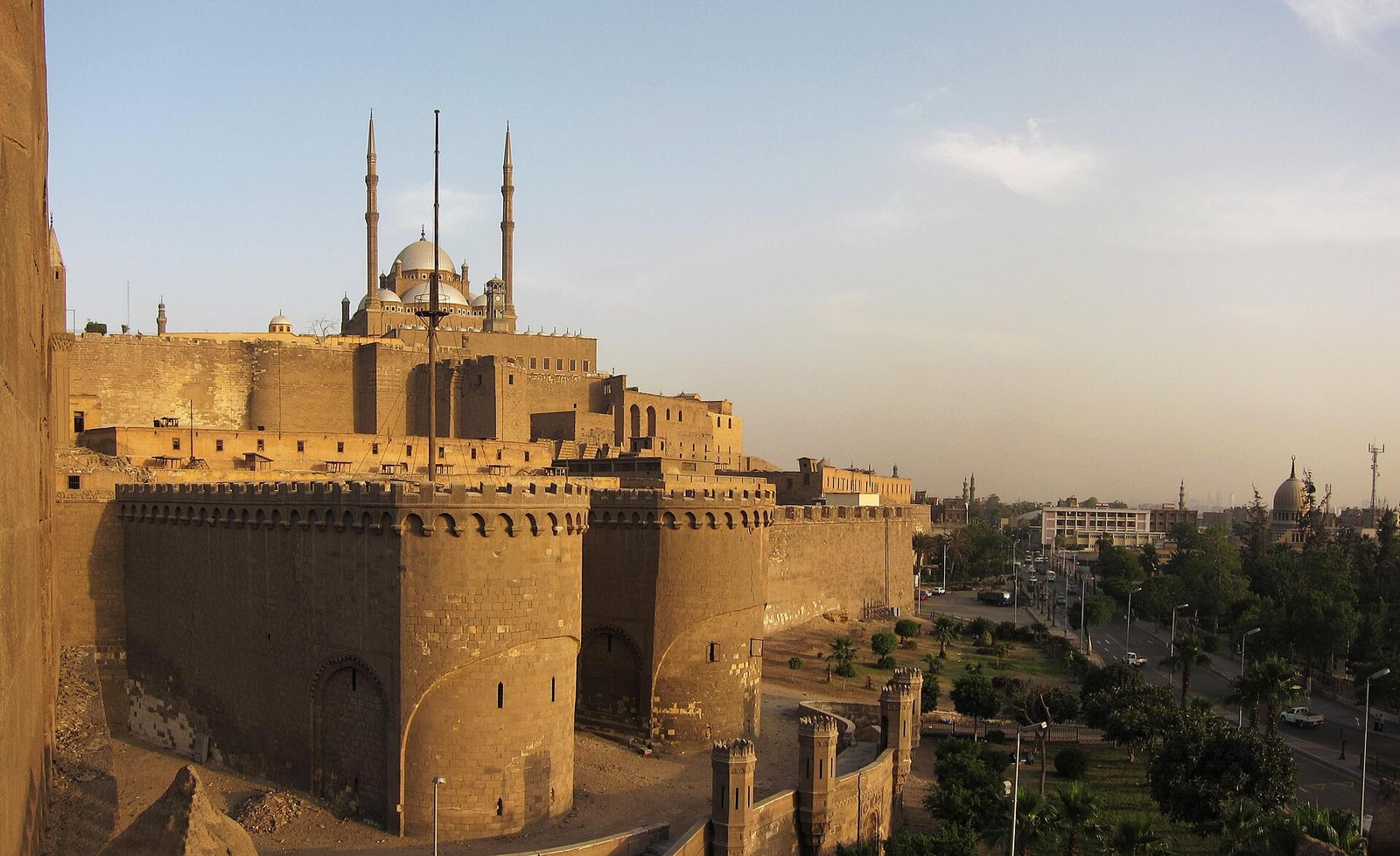
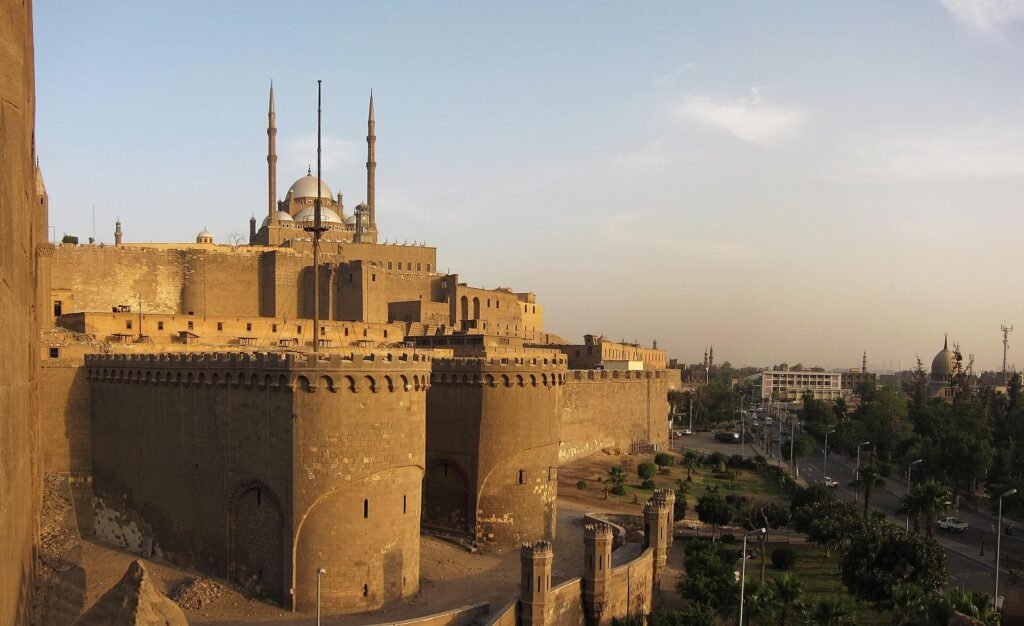
The Citadel of Saladin is the limestone fortress on the Muqattam spur that ruled Egypt for seven hundred years. Inside, the Muhammad Ali Mosque is the postcard: an Ottoman dome and twin pencil minarets in the Istanbul style, faced with alabaster, built by the Albanian officer who made himself master of Egypt in the early nineteenth century. Sit on the carpet under the hanging lamps, then walk to the terrace behind. On a clear day you see the whole city out to the Pyramids.
Directly below the Citadel, facing each other across a square, are two giant buildings most tours drive past. The madrasa of Sultan Hassan is the masterpiece of Mamluk architecture, a fourteenth-century stone courtyard with four vaulted halls so tall that voices vanish. Al Rifai opposite is a nineteenth-century echo of it and the burial place of King Farouk and the last Shah of Iran. Twenty minutes in each changes the way you see everything Islamic afterward.
This cluster sits between Old Cairo and Fatimid Cairo, so it fits the day you do Coptic Cairo in the morning and the bazaar in the evening.
Al Muizz street, Khan el Khalili, Al Azhar and Ibn Tulun
Al Muizz street. The spine of Fatimid Cairo, from the northern gate of Bab al Futuh to Bab Zuwayla in the south, is the densest stretch of medieval Islamic architecture anywhere. Pedestrianized and lit at night, it passes the Qalawun complex, the mosque of Barquq and the wooden balconies of Bayt al Suhaymi. Walk it north to south in the late afternoon.
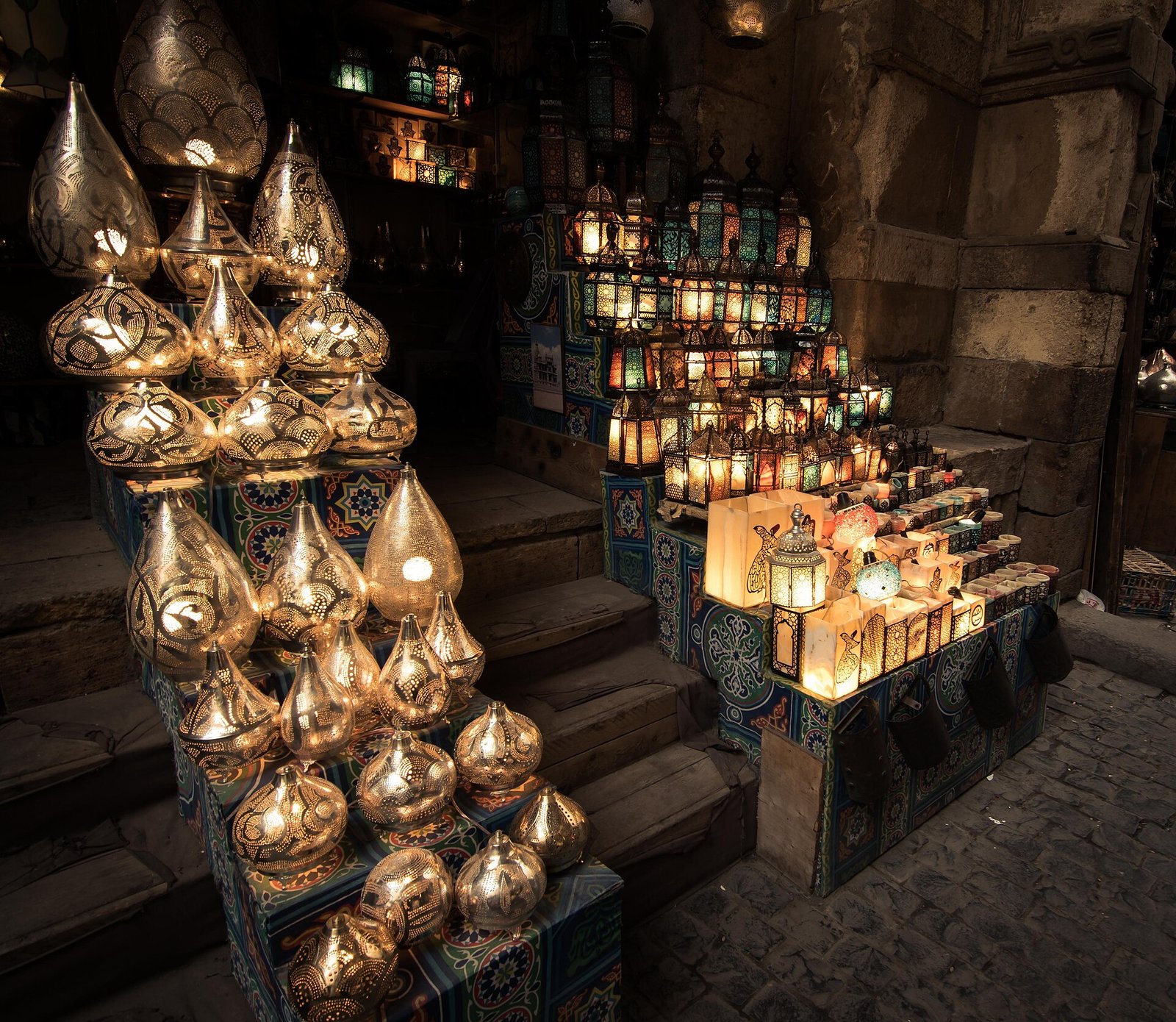
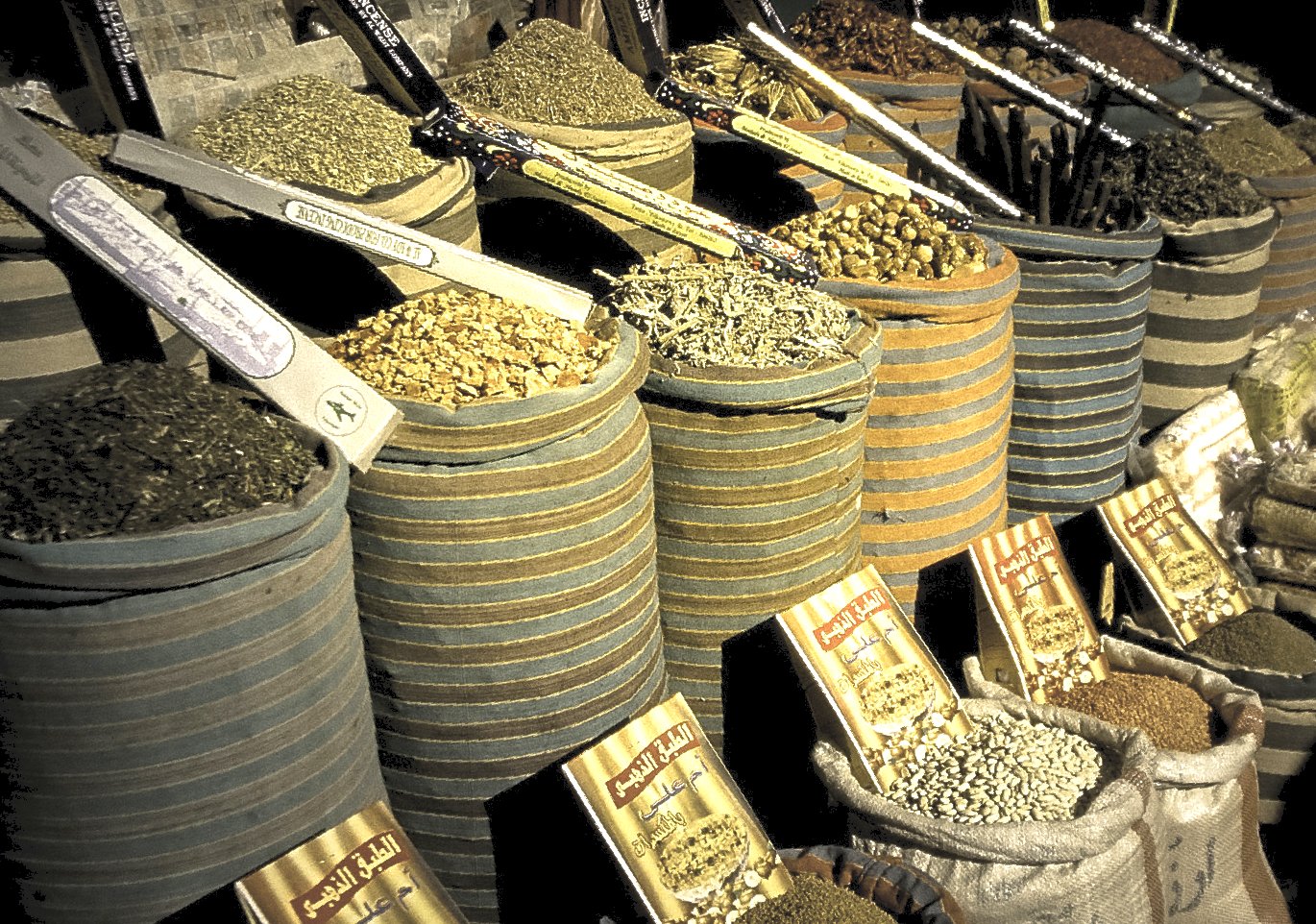
Khan el Khalili. The bazaar has traded since the fourteenth century and still sells to Cairenes as well as tourists: spices, brass lamps, inlaid boxes, silver, cotton, perfume oils. The lanes by the Hussein mosque are the loud part; the alleys behind, toward the goldsmiths and the tent makers, are where the trade is. Finish at El Fishawy, the mirror-lined cafe, with mint tea.
Al Azhar. Across the road, the mosque founded by the Fatimids in the tenth century and still the most important seat of Sunni learning. The marble courtyard is open outside prayer times, shoulders and knees covered.
Ibn Tulun. A separate stop, ten minutes from the Citadel. The oldest mosque in the city in its original form, a ninth-century square of brick arcades around a courtyard the size of a soccer field, with a spiral minaret you climb from the outside for the best rooftop view in Islamic Cairo. It is almost always empty and, we think, the most underrated place in the city.
All four are in our guide to Islamic Cairo, with mosque etiquette and what to wear.
Coptic Cairo, the oldest quarter of all
Before Cairo there was Babylon, a Roman fortress on the Nile, and inside its walls grew the Christian quarter Egyptians still call Old Cairo. It is compact, quiet and entirely on foot.
The Hanging Church is built across the top of two Roman towers, so the nave floats over a void you can see through a glass panel in the floor. The Church of Saints Sergius and Bacchus has the crypt where tradition says the Holy Family sheltered in Egypt. The Ben Ezra Synagogue is where the Cairo Geniza was found, the greatest cache of medieval Jewish documents ever discovered. The Coptic Museum ties it together with textiles, icons and the earliest Christian art in Egypt.
Two hours does it, three with the museum, and the royal mummies are a five-minute drive away. Our Coptic Cairo guide has the walking order and the dress code, which is the same as for a mosque.
The Nile at night, a felucca, Zamalek and the Cairo Tower
The river is why the city exists and the best way to end a day. Three options, in the order we like them.
- A felucca at sunset. A wooden sailboat with a single lateen sail, hired by the hour from the moorings in Garden City, drifting while the towers light up. No engine, no music, tea from a thermos. An hour is enough.
- A dinner cruise. A bigger boat with a buffet, a belly dancer and a tanoura dervish. Touristy and fun, especially with kids or a group. Two hours, book ahead.
- The Cairo Tower. The lotus-shaped concrete tower on Gezira island, with an observation deck above the whole city. Go at dusk for daylight and lights in one visit.
Zamalek, the northern half of the island, is the leafy embassy quarter with the best cafes and galleries, for an evening without a monument. Everything after dark, from the sound and light show to the bazaar at midnight, is in Cairo at night.
Al Azhar Park, the view nobody expects
For five centuries the ground east of the medieval walls was the city's rubbish dump. It is now a hillside garden of lawns, fountains and palm walks, with a restored stretch of the twelfth-century Ayyubid wall along its edge and, from the top terrace, the best view in Cairo: the minarets of Al Muizz street in front, the Citadel to the right, the Muqattam cliffs behind. Come an hour before sunset. It fits between the Citadel and an evening in the bazaar, and Cairo families use it exactly that way.
A day trip to Alexandria
Alexandria is about three hours by road each way: leave at seven, back after dark. What you get is a different Egypt, Mediterranean, Greek and Roman rather than pharaonic, with sea air and grilled fish on the corniche.
Four stops: the Bibliotheca Alexandrina, the glass-and-granite library built in memory of the ancient one; the catacombs of Kom el Shoqafa, three levels of Roman-era tombs where Egyptian gods wear togas; Pompey's Pillar; and the Qaitbay Citadel, the Mamluk fort on the exact site of the Pharos lighthouse.
Do it only with a fourth day in Cairo. On a three-day visit it displaces things that matter more.
How to combine everything into 1, 2 or 3 days
The pattern that works is always the same: the plateau early, a museum in the heat of midday, the old city as the light goes.
| Days in Cairo | Morning | Midday | Afternoon and evening |
|---|---|---|---|
| Day 1 (any visit) | Giza Pyramids and the Sphinx at opening | Grand Egyptian Museum | Al Muizz street, Khan el Khalili, tea at El Fishawy |
| Day 2 | Coptic Cairo, then the royal mummies at the NMEC | Lunch in Old Cairo | Citadel, Sultan Hassan, sunset at Al Azhar Park, felucca |
| Day 3 | Saqqara and Dahshur, inside the Red Pyramid | Memphis on the way back | Egyptian Museum in Tahrir, Ibn Tulun, Zamalek for dinner |
With one day, take the first row exactly as written and accept that Saqqara, the Citadel and Coptic Cairo wait for the next trip. The hour-by-hour version, with where to eat, is in Cairo in one day.
With two days, take rows one and two. That gets you the Pyramids, the best museum, the mummies, the Christian and Islamic city and the river. It is what most of our clients do before a Nile cruise.
With three days, the third row adds the older pyramids, the old museum and the mosque we like most. The full plan with hotel areas is in Cairo in 3 days. Alexandria becomes a fourth day, never a substitute.
What to skip on a first visit
All of this is fine. None of it should cost you a place on the list above if time is short.
- The Pyramids sound and light show. A dated narration projected on the Sphinx. Fun for kids, skippable for everyone else, and it eats the evening you could spend in the bazaar.
- The Tahrir museum on a two-day visit. Two big museums in two days is too much for most people. Keep it for a third day.
- Manial Palace and the Baron Empain Palace. A prince's eclectic mansion on Roda island and a Belgian industrialist's Hindu-style folly in Heliopolis. Second-visit material.
- The City of the Dead. Architecturally extraordinary, but a lived-in neighborhood that needs a guide who knows it and a reason to go.
- Alexandria on a three-day visit. Six hours in a car for a day that competes with Saqqara is a bad trade the first time.
How Explora Egipto runs Cairo
We are a local agency based in Egypt with our own Egyptologist guides and vehicles, and Cairo is where that matters most. Traffic decides everything, so we build the days in the order above, pick you up at the hotel, and keep the car with you between clusters so nobody is hunting for a taxi outside the Citadel at four in the afternoon.
The guide handles tickets at each gate, walks you through the mastabas and the mummies, and knows which mosque is closed for restoration this month. The pace is yours: a fast two days ahead of a Nile cruise, or a slow three.
Tell us how many days you have, where you are staying and what interests you most, and we send back a day-by-day plan and the quote.
Frequently asked questions
What are the absolute must-sees in Cairo?
Five things: the Giza Pyramids and the Sphinx, the Grand Egyptian Museum with the Tutankhamun collection, the Step Pyramid at Saqqara, the Citadel with the Muhammad Ali Mosque, and the medieval streets of Islamic Cairo around Al Muizz street and Khan el Khalili. Add Coptic Cairo and the royal mummies with a second day.
How many days do you need in Cairo?
Three days covers the full list without rushing: one for Giza and the Grand Egyptian Museum, one for Old Cairo, the Citadel and the bazaar, and one for Saqqara, Dahshur and the Tahrir museum. Two days gets you the essentials. One day works if you keep to the Pyramids, one museum and the bazaar.
Which museum should I visit, the Grand Egyptian Museum or Tahrir?
On a first visit, the Grand Egyptian Museum. It has the complete Tutankhamun collection, sits next to the Pyramids and is comfortable in the heat. The Egyptian Museum in Tahrir keeps the Narmer Palette, the Old Kingdom statues and the Amarna room and is worth a third day. The royal mummies are in a third building, the NMEC in Fustat.
Is Saqqara worth the extra time?
Yes, and many people come home saying they liked it more than Giza. The Step Pyramid is the oldest large stone building in the world, the noble tombs have the finest Old Kingdom reliefs in Egypt, and the site is far quieter than the plateau. With Dahshur and the inside of the Red Pyramid it fills a morning and is the best use of a third day.
Can you see Cairo on your own or do you need a guide?
You can do the Pyramids and the museums alone with a ride-hailing app. Saqqara, Dahshur, the Citadel district and the lanes of Islamic and Coptic Cairo are far better with a guide and a driver, because the distances are long, the traffic is heavy and the sites explain nothing on their own. Most of our clients take a guide for Cairo.
Is Alexandria worth a day trip from Cairo?
With four or more days in Cairo, yes: the library, the catacombs and the Qaitbay Citadel make a good long day with the sea at the end. With three or fewer, no, because the six hours on the road would replace Saqqara, the Citadel or Coptic Cairo, which matter more on a first trip.
Tell us how many days you have and we build the rest
Send us your dates, your hotel and what pulls you most, the pharaohs, the mosques, the churches or the river, and we come back with a day-by-day Cairo plan in the order that beats the traffic, with guide, car and tickets handled. Ask us for the quote.