Yes, you can travel to Egypt with a baby, and families do it every season. What changes is how the trip is built. The heat becomes a hard limit, so November through February is the window and midday in Luxor and Aswan is off the table. The stroller stays in the trunk and a carrier does the work at the sites. A Nile cruise is the easiest base in the country, because you unpack once and the cabin is two minutes from every nap. Diapers and formula are easy in the cities, bottled water is the only water, and one big visit a day is the honest pace.
First, what this page is not. Our guide to traveling in Egypt with kids works by age from about three up, and our page on a Nile cruise with kids is for children who already walk and swim. A baby fits neither: there is nothing to offer a ten month old and they will remember none of it. The trip is designed for the adults, and the baby is the constraint you design around.
So the real question is how much work you are willing to take on. A baby does not care about a tomb; they notice heat, noise, a broken routine and hours in a car. The hard part is logistics, not culture. Egyptians adore babies, and someone will offer to hold yours everywhere.
Counterintuitively the most manageable stage. They sleep a lot, do not move and ride in a carrier without complaint. The trade-off is the smallest margin for error: they dehydrate fast, and a fever far from home changes the whole trip.
The hard stretch. The baby moves, wants down, and understands no instruction. At a site that means loose stone, steps with no rail and excavation edges. One adult is fully on the baby, so parents take turns and neither sees the whole place.
Easier. They walk, stay awake longer, and water, boats and the temple cats start to entertain them. No cultural content yet, but the logistics relax.
A sweaty adult keeps functioning. A baby cannot tell you they are thirsty, regulates temperature poorly, and dehydrates before you see it. In summer Luxor and Aswan sit around or above 104 F (40 C) at midday, and half of every site has no shade. The day breaks into two usable blocks with a hole in the middle.
That leaves one strong visit a day, two at most.
| Months | What it means with a baby |
|---|---|
| November to February | The comfortable window. Luxor days around 68 to 77 F (20 to 25 C). Nights are cool in Aswan: pack a light jacket and a sleep sack. |
| March and October | Acceptable with strict timing. Midday already weighs in the south. |
| April, May and September | Demanding. Cairo and the Red Sea only, or a cruise with short shore visits. |
| June to August | Hard. Cairo plus the Red Sea works. A temple circuit in the south with a baby is something we advise against. |
The month by month comparison is in our guide to the best time to visit Egypt.
The stroller does not work at Egyptian sites, and this is the one point with no nuance. The grounds are loose sand, uneven flagstone, steps with no ramp and, in the tombs, narrow sloping corridors. The stroller becomes one more thing you carry.
What works is a structured carrier or a backpack carrier with lumbar support and its own sunshade. Hands free, entry to any site, and the baby sleeps through Kom Ombo. The price is heat, one more reason the morning block is the only block.
The stroller earns its place in the big museums, with smooth floors and air conditioning, the hotel gardens, and the corniche walks in Luxor and Aswan. Bring a light folding one and accept that it lives in the trunk most days.
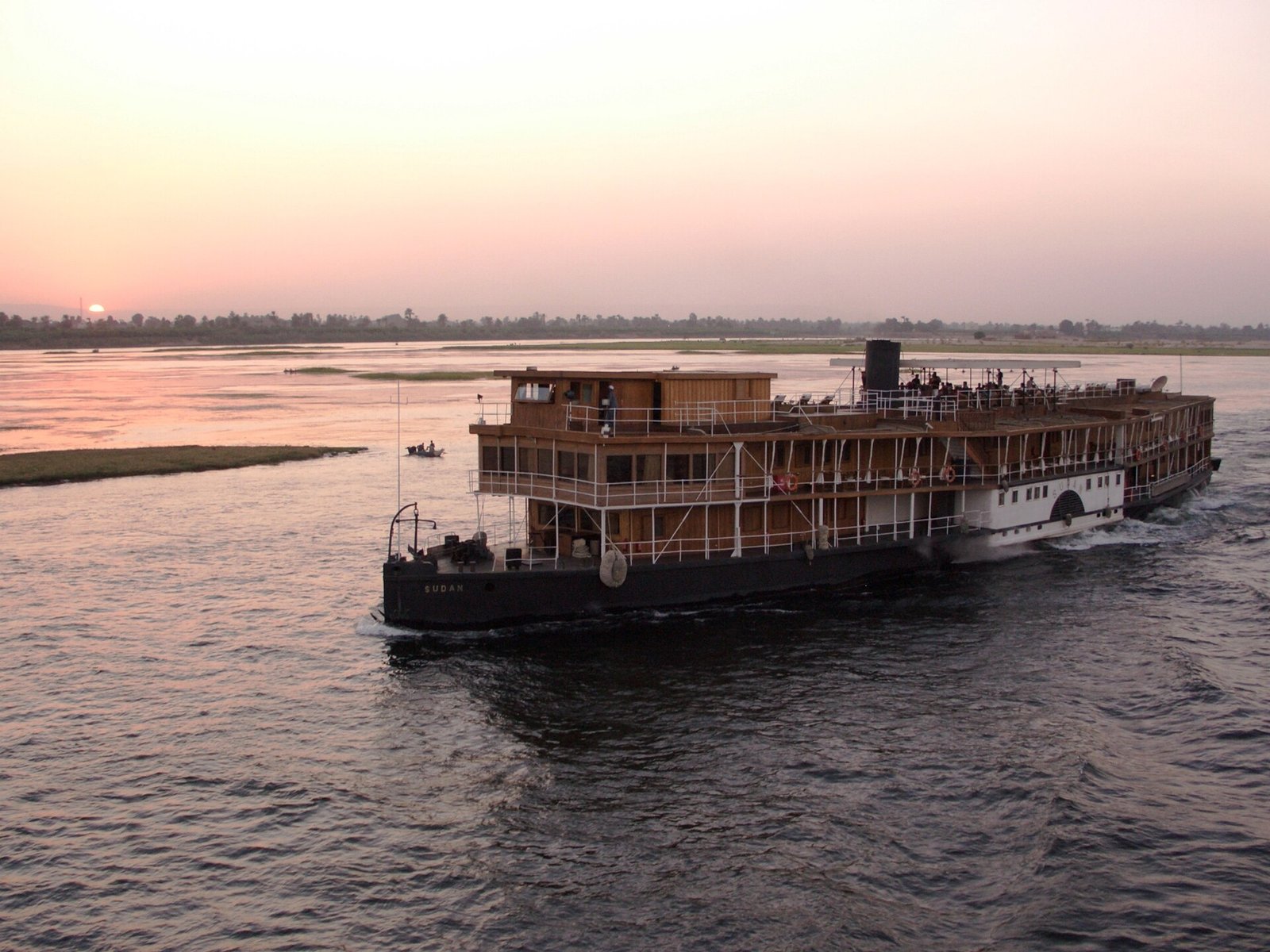
The cruise is the part that frightens first-time parents most and usually the part that goes best, for one reason: you unpack once. No hotel changes, no transfers with luggage, and the cabin is two minutes from wherever you are on the boat. Nap time is a stroll along the deck, not a taxi ride across a city.
A standard cabin is a small room with two beds and a full bathroom. Parents and a baby fit, with three warnings.
Most boats have a small cabin fridge for bottles and expressed milk. The crew warm a bottle in the galley and keep hot water coming for formula.
The excursions are still open-air temples with the same heat and ground. The deck pool is small with no shallow end: for cooling off in your arms, not for play. Railings vary, and some have gaps a climbing toddler gets a leg through. We check that for you.
Hotels with cribs are a real category in Egypt, but not one you can filter for reliably online. The large international hotels in Cairo, Giza, Luxor, Aswan and the Red Sea resorts all keep cribs. Smaller boutique hotels and Nubian guesthouses may or may not.
What we ask on your behalf, in writing:
Three or four nights in one hotel beats a new bed every night. Our baby itineraries use two hotel stays and one cruise.
In Cairo, Luxor, Aswan, Hurghada and Sharm el Sheikh pharmacies are everywhere and you will find the essentials. Outside those cities, in an oasis or a village on the road, assume there is nothing.
| Item | How easy to find | Our advice |
|---|---|---|
| Diapers and wipes | Easy, in supermarkets and pharmacies. | Large sizes run short. Bring the first three days' worth. |
| Formula | City pharmacies stock it, but your exact brand and stage may be missing. | Special or prescription formula: bring the whole trip's supply. |
| Jarred baby food and cereal | Patchy. Some in the big Cairo supermarkets, little elsewhere. | Bring pouches for the sites; hotel and boat kitchens will puree rice, potato and carrot. |
| Bottles, nipples and pacifiers | Available in cities, not your model. | Pack spares of everything. |
| Sterilizer | Do not look for one. | Sterilizing tablets weigh nothing and work in the cabin sink. |
| Baby sunscreen | Exists, limited range. | Bring your own, mineral, high factor. |
| Warm clothes | Hard. | Winter nights in Aswan and the desert are cold, and baby fleece is not stocked in a hot country. |
Tap water is not for drinking, mixing a bottle or rinsing a nipple. Use sealed bottled water for everything the baby touches. For formula, choose a low mineral water; the label lists sodium and total dissolved solids, and the high mineral brands are not suitable for infants. Our page on whether you can drink the water in Egypt covers the brands.
Also off limits: ice, street-stall juice, pre-peeled fruit and salads. For a baby, diarrhea is serious and fast.
Cooked food is easy. Rice, potato, chicken, bread and lentils are on every menu and can be ordered without spice. Fruit you peel yourself is fine; loose dairy is not. Hand sanitizer on every adult, and a folding changing mat, because changing tables barely exist.
Babies under six months should not be in direct sun at all, and for them protection is not cream: it is shade and clothing. Thin long sleeves, a full-brim hat that covers neck and ears, and your own sunshade that does not depend on a tree. At Giza, at Abu Simbel and in the Valley of the Kings there are no trees.
For older babies, high-factor sunscreen reapplied through the morning, a muslin over the carrier and a small spray bottle of water.
Warning signs: fewer wet diapers than usual, very hot dry skin, unusual drowsiness or an irritability that does not settle. With any of them, shade, fluids and a doctor.
Pharmacies in Egyptian cities are plentiful, open late and staffed by pharmacists who speak English. The larger cities have private hospitals with pediatricians, and the better hotels and cruise boats keep a doctor on call. In an emergency your guide takes you, translates and stays.
We do not give medical advice, and you should distrust any travel page that does. What we can give you is the list of questions for the pediatrician before you book:
The general picture is in our guide to travel vaccinations and health advice for Egypt, and what to carry is in our travel first aid kit list. Check that the baby is named on your travel insurance policy.
Car seats are not standard in Egyptian transfer vehicles, taxis or ride-hailing cars. Two routes. The first is to ask for one when booking, in writing, with the baby's weight and age, then confirm again a few days before. The second is to bring your own, the only one where you control the model and the fit.
Skip city public transport and long night drives. Cairo, Luxor and Aswan are best linked by air or by boat.
Cairo to Luxor, Aswan, Hurghada or Sharm el Sheikh is around an hour in the air against a full day on the road, which is the whole argument. An infant under two normally flies on your lap without a seat and still needs a ticket, so the baby's passport must be issued well in advance. There are no bassinet walls on these short routes, so the baby is on you the whole way. Arrive with margin, because security checks liquids and bottles carefully. Routes and timings are in our guide to domestic flights in Egypt.
| Site | With a baby |
|---|---|
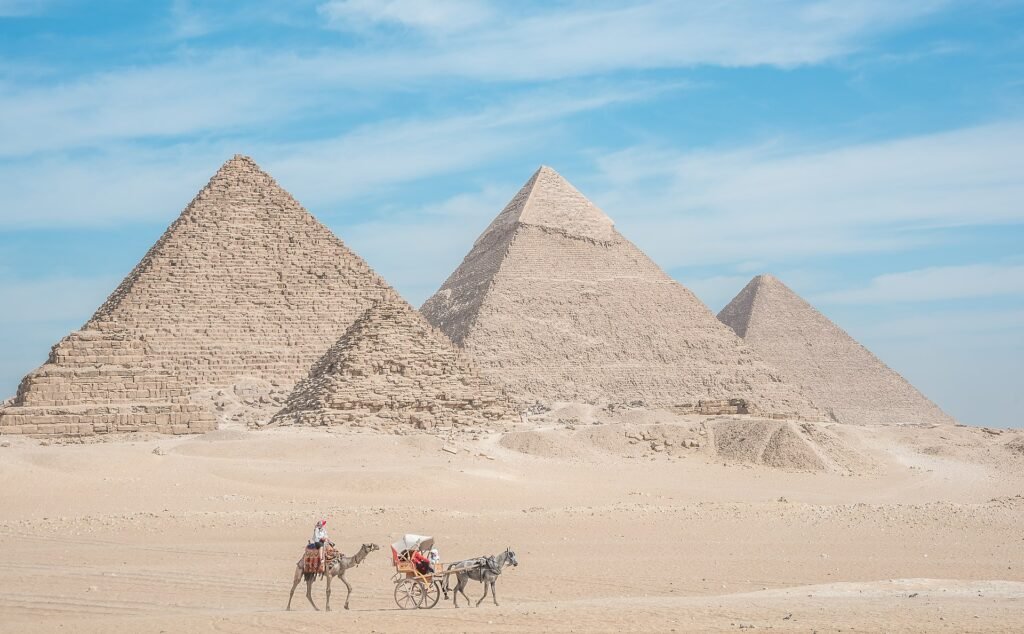
| Giza plateau | Yes, at opening, in a carrier. Inside the pyramids, no: steep ladder, crouching corridor, thick air. |
| Cairo museums | Yes. Indoors, climate controlled, smooth floors. Stroller territory. |
| Philae temple, Aswan | Yes. Reached by boat, small, with a river breeze. |
| Karnak and Luxor temples | Yes, in the first morning block, trimmed. Big and shadeless. |
| Valley of the Kings | Mixed. Slopes, stairs inside the tombs, heat off the rock. One tomb, not three. |
| Abu Simbel by road | No. A pre-dawn start and hours of car for a short visit. By air it is workable. |
| Khan el Khalili and markets | Hard. Narrow alleys, crowds and motorbikes. |
| Felucca on the Nile | Yes, with a life vest and in your arms. |
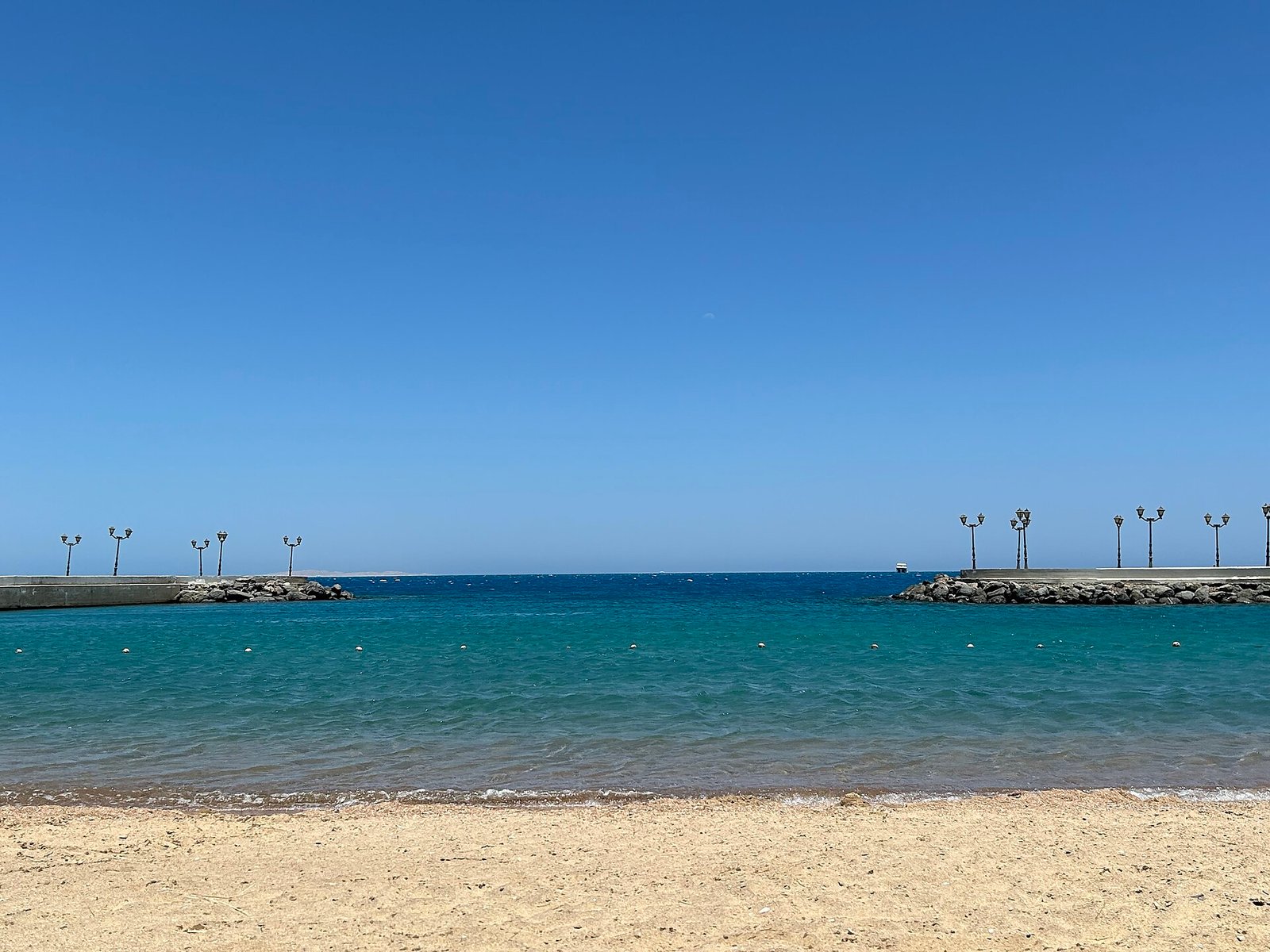
| Red Sea | Yes. A shaded beach, calm water and a hotel you never have to leave. |
The shape we build most often for a couple with a baby in the cool months: one anchor visit a day, midday indoors, two beds for the whole trip.
That is the skeleton of our Egypt classic tour in 8 days, slowed down with the cabin naps built in. Send us the baby's age and ask us for the quote.
Before they crawl or after they walk confidently. The stretch in between, roughly six to eighteen months, takes the most work: they move but do not listen, and the ground at the sites does not forgive a fall. Under six months is the calmest in a carrier, as long as you guard against dehydration.
Seven to nine days, with Cairo and a Nile cruise. Stretching it usually means more transfers, and transfers are what wear a family with a baby down. Extra days pay off better on the Red Sea, where the hotel does the work. Two hotel stays and one cruise is the shape we recommend.
Diapers and wipes, no problem in any city, in supermarkets and pharmacies. Formula is in city pharmacies, but the specific brand and stage may be missing and labels are in Arabic and English. If your baby is on a special or prescription formula, bring the whole trip's supply from home.
In the south in high summer, midday outdoors is not acceptable for a baby. Luxor and Aswan reach around 104 F (40 C) and the sites have little shade. If your trip falls in those months, the honest plan is Cairo and the Red Sea, with the southern temples left for another time.
With a baby the cruise usually wins. You unpack once, the transfers with luggage disappear, and the cabin is minutes from every nap. Check three things before choosing a boat: a crib confirmed in writing, the height and gaps of the railings, and whether the cabin door or window locks.
Car seats are not standard in transfer vehicles, taxis or ride-hailing cars in Egypt. Either request one in writing with the baby's weight and age and confirm it before travel, or bring your own, the only option where you control the model and the fit. In our vehicles we fit one when asked.
With a baby, the good itinerary is the one with the least in it. Write to us with your dates and how old your baby will be, and we tell you honestly whether they fit, which boat and hotels have the crib confirmed, and what the gentle version of the trip looks like. If the honest answer is to wait a few months, we say that too.