A luxury Egypt tour buys you time, silence and a private Egyptologist, not a different Egypt
A luxury Egypt tour buys you time, silence and a private Egyptologist, not a different Egypt
A luxury Egypt tour rests on five things, and the hotel is the least important of them. A private Egyptologist and private vehicle that walk you into Giza and the Valley of the Kings at opening, before the buses. A dahabiya under sail or a top-deck suite on a five-star Nile ship. Historic palace hotels and Nile-view suites chosen for position, not lobby. Domestic flights instead of ten hours on a train. And a day paced around light and heat, with a balloon at dawn and a felucca at sunset. What it does not buy is an empty, air-conditioned Egypt. That version does not exist at any budget, and knowing it is the first step to enjoying the real one.
What luxury actually means in Egypt
In most countries luxury travel means a better room and a better restaurant. In Egypt the room matters, but it is not where the money shows. The monuments and the heat are the same for everyone, and a tomb closed for conservation is closed for everyone. What you are paying for is control over your day, and in a country where the two hours after sunrise are worth more than the rest combined, that is the whole game.
Think of it as four layers. Access: a guide and driver who work for you alone. The Nile: a sailing boat or a top-deck suite instead of a standard cabin. Recovery: a hotel and a boat good enough that day seven feels like day two. Texture: the balloon, the felucca, the dinner with the pyramids lit behind you. A tour with the fourth layer and not the first is a photo album. We build ours from the first layer up.
The private Egyptologist and private vehicle are the backbone
If a proposal does not put the word private next to the word guide, put it down. A licensed Egyptologist who works with your party only is the difference between a lecture recited to twenty people and a conversation that follows what you ask.
The private vehicle matters as much. An air-conditioned car with a driver who waits at the exit, not one you hunt for in a Giza parking lot at noon, saves an hour a day and most of your patience. On the Luxor west bank it means you visit the tombs in whatever order the crowds dictate.
- You are inside Giza, Karnak and the Valley of the Kings minutes after the gates open.
- Tickets, including the separately sold tombs, are bought before you arrive.
- The day is reshuffled on the spot when a site is busy or a tomb is unexpectedly open.
- You skip what bores you and stay an extra hour where you are hooked.
The honest rule: a great guide and a good hotel beat a great hotel and a group guide every time. Our guide to choosing an Egypt tour operator explains what to look for in the guide clause.
Early and private access, where it exists and where it does not
Luxury Egypt marketing gets loose with the truth here, so this is what actually exists. Being first through the gate is real, and it is the most valuable thing on this page. Giza at opening, with the plateau in cool light and the buses still on the ring road, is a different place from Giza at eleven. The same goes for the Valley of the Kings, Abu Simbel and Philae.
Separately ticketed tombs exist and are the closest thing to a private visit you can buy in the ordinary way. The tombs of Seti I and Nefertari sell limited tickets at a much higher category than the general pass, so you often share the finest painted chambers in Egypt with two or three other people. Our page on Valley of the Kings tickets and tombs covers which are on the general ticket and which are extra.
After-hours private openings are different. They exist only as exceptional permits from the antiquities authorities, issued case by case for film crews, state visits and academic missions. An operator selling private access to the Great Pyramid as a standard line item is either describing the ordinary early entrance or promising what it cannot guarantee. We will not pretend.
What we do instead is engineer quiet into the itinerary: Karnak late in the afternoon, Luxor Temple after dark, Medinet Habu at the end of the day when the courtyard may be yours.
Dahabiya or top-deck cruise suite: the two luxury ways to sail the Nile
The Nile is the heart of any luxury Egypt travel plan, and there are two ways to do it well. Choose between them first, because the boat sets the pace of your trip.
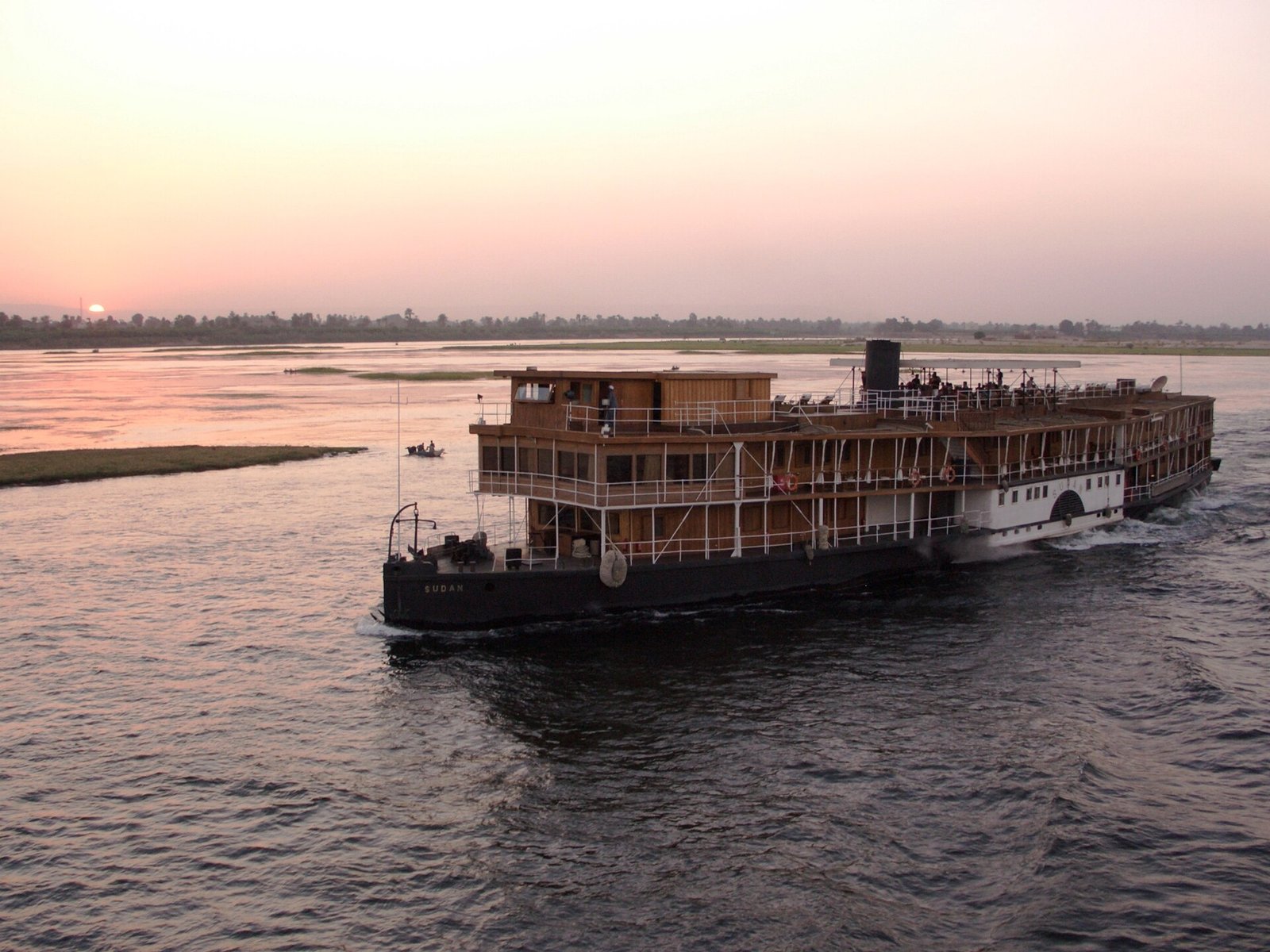
A dahabiya is a traditional two-masted sailing boat with six to twelve cabins, a shaded upper deck and a small crew. It moors at islands the big ships cannot reach and stops at Gebel el Silsila and El Kab, which most cruise passengers never see. No pool, no show, no loudspeaker. Silence is the luxury. A whole boat can be chartered for a family or a group of friends. Read our guide to the dahabiya Nile cruise before you decide.
A five-star cruise ship is the other route. The luxury move is the top deck: the few suites with a private terrace and a butler, where you watch the west bank slide by from your own chair. You get hotel comfort, a pool, a spa and a schedule that hits Esna, Edfu and Kom Ombo like clockwork. Our guide to the luxury Nile cruise explains how the top category differs from a standard ship.
| Question | Dahabiya | Top-deck suite on a five-star ship |
|---|---|---|
| Guests on board | Roughly 12 to 24 | Roughly 100 to 150 |
| Feel | Private sailing house, silent | Boutique hotel that moves |
| Comfort | Air conditioning, small cabins, no pool | Pool, spa, gym, large suite, butler |
| Typical length | 4 to 7 nights | 3 to 4 nights, 7 for the full loop |
Our opinion: if you can live without a pool for four nights, take the dahabiya. If one of you is a light sleeper, dislikes small spaces or wants a gym every morning, take the suite.
Hotels: historic palaces, Nile-view suites and the pyramid-view rule
Egypt has a handful of genuinely historic hotels, and they are the ones worth arranging a trip around. We do not name properties here because contracts and renovations change, but the categories are stable.
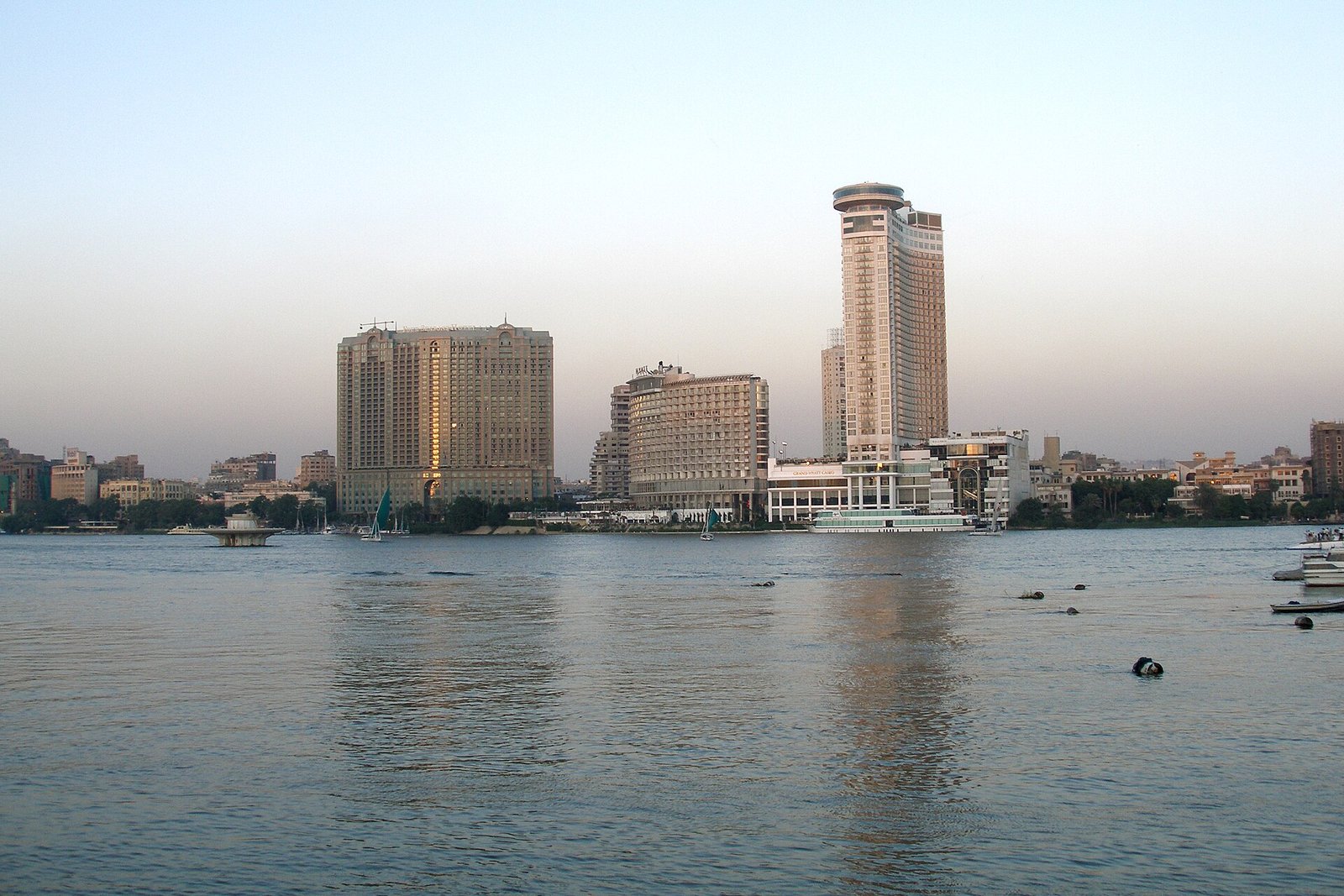
Cairo has two historic choices: a nineteenth-century palace on an island in the Nile, still wrapped around its original garden, and a former hunting lodge at the foot of the Giza plateau where the older rooms look straight at the Great Pyramid. The modern alternative is a Nile-front tower in Garden City or Zamalek with a high-floor suite facing the river. Our Cairo rule: one night with a pyramid view, the rest on the Nile.
In Luxor the grand old hotel is a Victorian-era building on the Corniche with a garden running down to the river. In Aswan the historic hotel sits on a granite bluff above the first cataract, looking across at Elephantine Island and the desert. That terrace at sunset is the most photographed hotel view in Egypt. Aswan is where we suggest spending the most on the room, because it is where you will spend the most time on the balcony.
What we weigh, in order: position, the view from the actual room category, pool, restaurant. A five-star hotel forty minutes from the sights is a three-star decision.
The experiences worth adding, and the ones that only sound good
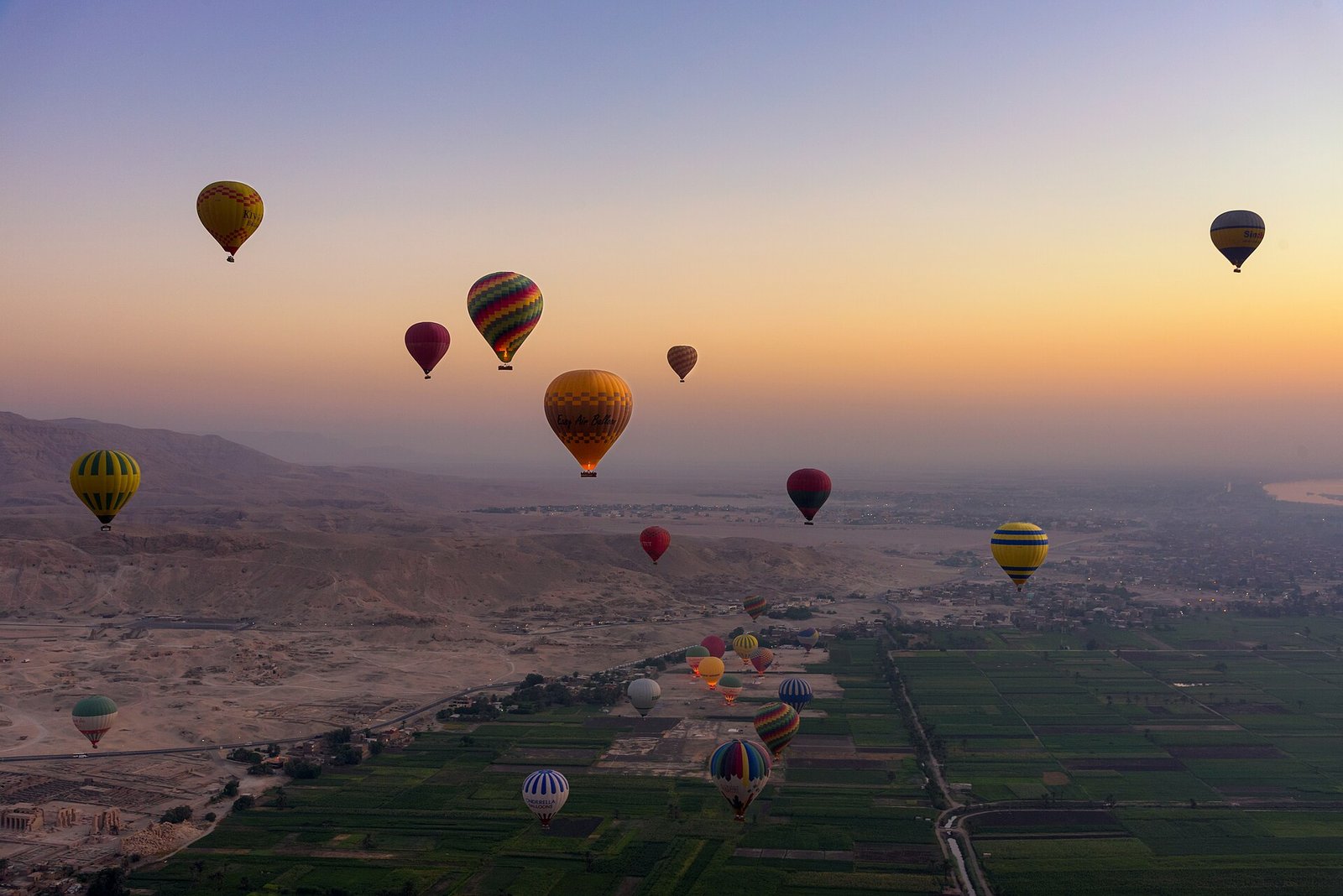
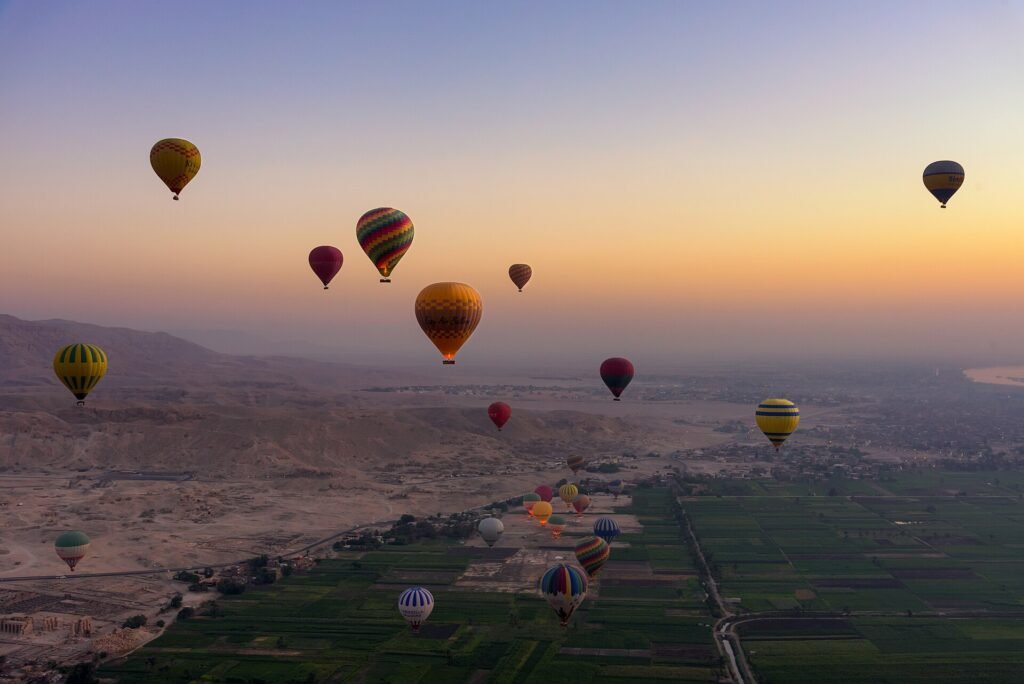
The balloon over Luxor is worth it. You lift off from the west bank in the dark, the Theban hills turn pink, and you drift over the Valley of the Kings and Hatshepsut's temple as the sun clears the east bank. The luxury version is a smaller basket, or a private one where the operator offers it. Our guide to the hot air balloon over Luxor covers timing and weather. One honest note: it flies only when the wind allows, and no budget changes the wind.
A private felucca at sunset in Aswan is worth it and takes no effort. One boat, one boatman, your party, tea and the islands turning gold. It is the most romantic hour in Egypt and the reason so many couples build a honeymoon Nile cruise around a night in Aswan.
A private dinner facing the lit pyramids is worth it once. Abu Simbel at opening is worth it, because the same temples at eleven are a crowd.
What only sounds good: a camel ride longer than twenty minutes, a VIP dinner cruise on a Cairo party boat, and any spa treatment scheduled before the sightseeing rather than after it.
Domestic flights instead of trains, and how the transfers work
Cairo to Luxor is about an hour in the air and about ten hours on the rails. Cairo to Aswan is a little longer by air and closer to thirteen by train. The sleeper train has charm, but a luxury Egypt tour flies, and at civilized hours: a mid-morning departure after breakfast, not a dawn check-in.
For Abu Simbel there are two options. A round-trip flight from Aswan has you there and back before lunch. A private car leaves Aswan in the dark and takes around three and a half hours each way, which is easier than it sounds with a good driver and a reclined seat. The flight suits most people. Our page on how to visit Abu Simbel lays out both.
The rest of the transfers should be invisible: a driver holding your name at every airport, luggage moving between hotel, ship and airport without you touching it, and your guide in the lobby at breakfast.
Dining and pacing: what a luxury day in Egypt looks like
Egypt at midday can sit above 100 F (38 C) for half the year, and even in winter the light after noon is flat and the sites are full. A luxury day is front-loaded.
- Before sunrise. Coffee in the room, out the door in the dark.
- Opening to about eleven. The main site with your Egyptologist while it is cool and quiet.
- Early afternoon. Back to the hotel or the boat. Pool, spa, sleep. Non-negotiable on any trip longer than five days.
- Late afternoon. A site in the good light: Karnak, Philae from the water, Giza from the desert side.
- Evening. A felucca, a temple after dark, a terrace dinner. In bed by ten.
On dining, be realistic by city. Cairo has excellent restaurants, from old-school grills in Zamalek to modern Egyptian tasting menus. In Luxor and Aswan the best food is in the historic hotels and on a good boat, and the memorable meals are the simple ones: a Nubian family lunch on an island, grilled fish on a felucca, a picnic at Gebel el Silsila.
What does not exist in Egypt, at any budget
The most expensive disappointment in Egypt is the one built on a promise nobody could keep.
- An empty Giza. Early is quiet. Empty is not on offer.
- Closed tombs. Tombs in the Valley of the Kings rotate for conservation. The ones closed during your week are closed to everyone.
- Cool air inside the tombs. The painted corridors are hot and still. Go early and drink water.
- A yacht. A dahabiya is a wooden sailing house with small cabins, modest water pressure and patchy signal. That is the point, but know it going in.
- The end of tipping. It is part of how Egypt works. We brief you and handle most of it, but it does not vanish.
What money does buy is time, comfort, silence, a person who answers your questions and the absence of friction. That is a great deal. It is just different from buying a different Egypt.
A luxury Egypt itinerary for 8 to 10 days
This is the shape we build most often. Every line is adjustable and none of it is a fixed package.
- Day 1, Cairo. Private airport meet, transfer to a Nile-view suite, early night.
- Day 2, Giza and Saqqara. On the plateau as the gates open with your Egyptologist, the Great Pyramid interior, lunch with a pyramid view, Saqqara in the afternoon.
- Day 3, museums and the old city. The Grand Egyptian Museum with your guide, Islamic Cairo in the late afternoon, a rooftop dinner.
- Day 4, fly to Luxor. Mid-morning flight, Karnak in the late light, Luxor Temple after dark, the historic hotel on the Corniche.
- Day 5, west bank and the boat. Balloon at dawn, the Valley of the Kings with the separately ticketed tombs, Hatshepsut's temple. Board your boat in the afternoon.
- Day 6, sailing. Esna, then Edfu and the Temple of Horus, then a quiet mooring.
- Day 7, sailing. Gebel el Silsila or Kom Ombo depending on the boat, a village walk, Aswan by sunset.
- Day 8, Aswan. Philae by boat, private felucca at sunset, the historic hotel above the cataract.
- Day 9, Abu Simbel. Fly or drive at dawn, both temples at opening, back to Aswan and on to Cairo.
- Day 10, departure or the Red Sea. Home from Cairo, or a domestic flight to Hurghada for three nights of reef and rest.
How Explora Egipto builds a luxury trip
We are a local agency in Egypt with our own Egyptologists and vehicles, and we do not sell a luxury package off a shelf. You tell us your dates, your party, your days and what you care about: the history, the river, the romance, or simply comfort. From that we send a written proposal with the hotel categories by city, the boat, the private guide, the flights inside Egypt and the experiences, and we adjust it together until it is right.
We book direct, so when a tomb reopens or a suite frees up we can move your plan the same day, and we brief the guide on you before you land. Every trip on this page starts as a custom Egypt tour, and the only price we quote is the one for your version of it.
Frequently asked questions
What is included in a luxury Egypt tour?
A private Egyptologist for your party only, a private vehicle and driver, five-star or historic hotels chosen by position, a dahabiya or a top-deck suite on a five-star Nile ship, domestic flights between Cairo and Upper Egypt, monument tickets including the separately sold tombs, and the experiences you choose. We list every inclusion in the proposal and you ask us for the quote.
Is a dahabiya more luxurious than a five-star Nile cruise?
More exclusive and more peaceful, not more comfortable. A dahabiya carries a dozen or two guests, sails in silence and moors at empty riverbanks, but the cabins are small and there is no pool or spa. A top-deck suite gives you a large room, a private terrace, a butler and a pool, on a bigger boat at busier docks.
Can I get private access to the pyramids or the tombs?
Not as a standard product. After-hours openings exist only through exceptional permits from the antiquities authorities, granted case by case, and no reputable operator can guarantee one. What you can reliably buy is being first through the gate with a private guide, plus the separately ticketed tombs such as Seti I and Nefertari, which limit visitor numbers and often leave you nearly alone.
How many days do I need for a luxury trip to Egypt?
Eight days covers Cairo, Luxor, the river and Aswan at a luxury pace, with a rest every afternoon. Ten days adds Abu Simbel and a slower Cairo. Twelve adds the Red Sea. Fewer than seven days forces a choice between Cairo and the Nile, and we would rather you came for longer, later, than rushed.
Is Egypt a good luxury honeymoon destination?
Yes, and an underrated one. A private dahabiya, a felucca at sunset in Aswan, a suite in the historic hotel above the cataract and a dinner facing the lit pyramids make a honeymoon no beach resort can match for atmosphere. Keep the mornings for the sites, the afternoons and evenings free, and add a Red Sea finish if you want a few days of doing nothing.
When is the best time of year for a luxury Egypt tour?
October through April is the comfortable window, with December through February the coolest and busiest. Late October, November and March give good temperatures with fewer people at the sites. Summer is very hot, but the sites are nearly empty at opening and the top boats and suites are easier to secure, so a trip built around early mornings works better than people expect.
Let us build your version of luxury in Egypt
Send us your dates, your party and what you care most about, and we come back with a written proposal: the hotels by category, the boat, the private Egyptologist, the domestic flights and the experiences, adjustable until it is exactly yours. No fixed package, just a quote in your inbox.