
Egypt on a budget comes down to eight decisions, not to going without
Egypt on a budget comes down to eight decisions, not to going without
Egypt on a budget does not mean hostels, buses and skipping the Nile. Once you land, food, transport and tickets are modest, so the total is decided by a handful of choices made before you go: a shoulder or low-season week, three nights on the river instead of four, a standard five-star ship rather than a deluxe one, a small group instead of private, one long leg by train, only the tickets that matter, eating where Egyptians eat and changing hotels less often. What you never trim is the Egyptologist guide, the safety of the ship and the airport transfer. Below is how each choice works, a lean 7-day plan, and how we build the quote.
Egypt is inexpensive once you land, so the savings live in a few big choices
Most first-time visitors from the US expect Egypt to be expensive because the monuments are famous. The day-to-day reality is the opposite. A plate of koshari, a taxi across Cairo, a ticket to Karnak, a felucca hour at sunset: all of these cost little by American standards. They are not where a budget is won or lost.
The total is set by structural decisions instead: the week you travel, how many nights you spend on the Nile, which class of ship, whether you share a guide and a vehicle, how you cover the distance between Cairo and Upper Egypt, and how many hotels you check in and out of. Each moves the number more than any amount of skipped lunches.
So "is Egypt cheap" depends on eight choices, and you control all of them. For the wider picture first, our guide on whether it is expensive to travel in Egypt covers the full list, from visas to tips.
Travel in shoulder or low season, the lever that moves everything at once
Season is the only decision that changes every line of the trip at the same time: the ship, the hotels, the domestic flight and the guide's availability. Egypt's peak runs through winter, with sharp spikes at Christmas, New Year and Easter, when everyone wants the same cabins on the same weeks.
The shoulder months, roughly April to May and September to October, are the sweet spot. Cairo is warm but not punishing, Luxor is hot in the afternoon and lovely at dawn, and the ships sail with space to spare. The low season is summer proper, June through August, when Upper Egypt regularly passes 104 F (40 C) by noon. Demand drops hard, and so do the quotes.
Summer works if you accept the rhythm: temples at first light, a pool at midday, the souk after dark. The month-by-month picture is in our guide to high and low season in Egypt.
- Best value with good weather: late April, May, late September, October.
- Lowest demand, real heat: June, July, August, early September.
- Avoid on a budget: Christmas to New Year, Easter week, winter school breaks.
Three nights on the Nile instead of four
The classic Nile cruise comes in two lengths. Luxor to Aswan takes four nights; Aswan to Luxor takes three. Both cover exactly the same temples: Karnak and Luxor on the east bank, the Valley of the Kings and Hatshepsut on the west bank, Edfu, Kom Ombo, Philae and the High Dam. The four-night version simply spends longer moored in Luxor before it sails.
For a budget trip the three-night sailing is the obvious choice. You lose nothing you would talk about afterward and you gain a night back in the plan. The trade-off is one full Luxor day instead of a leisurely one and a half.
| Sailing | Direction | What you see | Best for |
|---|---|---|---|
| 3 nights | Aswan to Luxor | Philae, High Dam, Kom Ombo, Edfu, Karnak, Luxor, Valley of the Kings | Budget trips, 7 to 8 day itineraries |
| 4 nights | Luxor to Aswan | The same list, with an extra moored night in Luxor | Slower pace, families, a second west bank morning |
The day-by-day and the fixed sail days are on our 3-night Nile cruise page.
A standard five-star ship instead of a deluxe one
Nile ships are graded five-star standard, five-star deluxe and a small luxury tier above. On the standard ships the cabins are smaller, the decor older and the sun deck pool a plunge pool. The route, the temples, the sailing times and, on our trips, the guide are identical.
What you actually do on a Nile cruise is stand in temples with a guide and sit on the deck watching the banks go past. Neither is better on a deluxe ship. The food is decent across the standard tier.
Where the standard tier goes wrong is at the very bottom, on vessels that have not been refitted in years and cut corners on cleanliness and safety. We do not put clients on those, whatever the budget. The middle of the standard range is the right place, and our guide to a cheap Nile cruise explains how to tell a well-run standard ship from a tired one.
Small group instead of private
A private tour means your own Egyptologist and vehicle at every stop, departing on any date. A small group shares both across a handful of travelers on set departure days. The guide is the same caliber, the sites are the same, the ship is usually identical. What you give up is the freedom to linger an extra half hour at Karnak.
For two people traveling lean, a small group is one of the biggest single savings on the trip, because the guide and vehicle are the most labor-intensive part of what you pay for. For four or more, the math flips and private often lands close to the group rate, so ask us to run both.
| Small group | Private | |
|---|---|---|
| Guide and vehicle | Shared with a few other travelers | Yours alone |
| Departure dates | Fixed weekdays | Any date |
| Pace | Set by the group | Set by you |
| Makes sense for | Couples and solo travelers on a budget | Families, groups of four or more, limited mobility |
Group sizes and pacing are on our small group Egypt tour page.
One leg by train instead of by air
Cairo sits at the top of the country and Luxor and Aswan far down the Nile. Most itineraries fly both ways to save the day. On a budget trip you keep one flight and replace the other with the train.
The usual lean pattern is to fly Cairo to Aswan early on the day the ship boards, because a morning flight lands you in time for Philae and the High Dam before you step aboard. When the cruise ends in Luxor, you take the train back to Cairo. The sleeper leaves in the evening, gives you a lockable cabin with bunks and arrives the next morning, which also replaces a hotel night. The day train is slow, roughly ten hours, but it runs the whole valley past fields and villages you see no other way.
If the trip is short, keep both flights. If you have the days, the train leg is money well kept and a better story.
The tickets you can skip, and the ones you cannot
Entry tickets are modest one by one but add up over a week, and a few headline ones are sold separately at a much higher tier.
In the Valley of the Kings, the general ticket admits you to three tombs from a rotating list, and those three are excellent: painted corridors, deep burial chambers, the full experience. On top of that, Tutankhamun, Seti I and Ramesses V and VI each need their own ticket. Tutankhamun's is small and mostly empty, because the treasures are in Cairo. Seti I is the finest painted tomb in Egypt and the one to keep if you keep only one.
- Keep: the general Valley of the Kings ticket, Karnak, Luxor Temple, Philae, Edfu, Kom Ombo, the Giza plateau and one Cairo museum.
- Consider: Seti I if painting matters to you, the Great Pyramid interior if you are not claustrophobic, Abu Simbel if you have a day for it.
- Skip on a lean trip: the other separately ticketed tombs, the paid camel photo circuit at Giza, and any "special access" upsell offered on site.
The full tomb list and how the rotation works is in our guide to Valley of the Kings tickets and tombs.
Eat where Cairo eats
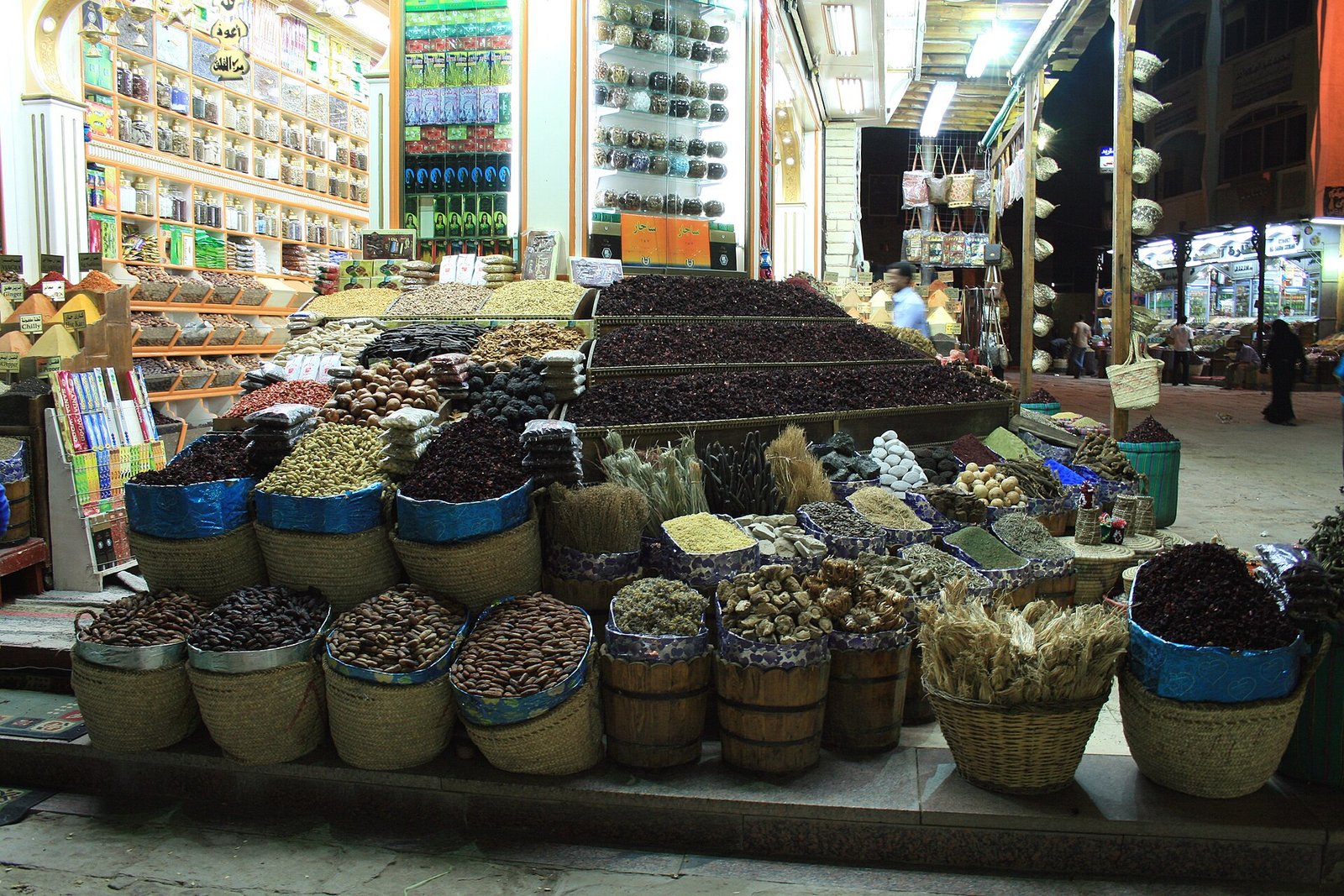
Food is the easiest place to save and you lose nothing by doing it, because Egyptian street food is filling, fresh and everywhere. Koshari, the national plate of rice, lentils, pasta, chickpeas, tomato sauce and crisp onions, is served in shops that make nothing else. Ful, the slow-cooked fava bean stew, is breakfast for the whole country. Taamiya is the Egyptian falafel, made from fava beans, folded into fresh pita with salad and tahini.
Eat at lunchtime where the line is longest, because a packed local place means the food has just come out. Sealed bottled water, fruit you peel, cooked over raw for the first days: that is the whole precaution list.
The other food decision is the hotel meal plan. Half board in a city hotel is convenient and usually mediocre. Bed and breakfast, then dinner out, is better food for less. On the ship, full board is included. Our page on Egyptian food and what to eat has the dishes and the places worth walking to.
Fewer hotel changes and one good base
Every hotel change costs a morning: packing, checkout, a transfer, a room not ready yet. On a lean trip the ship is your hotel in Upper Egypt and one Cairo hotel bookends the trip. That removes a Luxor hotel and an Aswan hotel from the plan.
Choose the Cairo hotel for location and cleanliness rather than stars, because you leave early every morning. A well-kept four-star in Zamalek or Dokki, or on the Giza side if you want to wake up to the pyramids, does the job.
The same logic says: do not tack on Hurghada or Sharm el Sheikh for two nights just because they are nearby. A beach add-on means another flight or long transfer, another hotel, another checkout. If the Red Sea matters, make it a trip of its own.
Where not to save: the guide, the ship's safety and the airport transfer
Three things carry the whole trip and are the wrong place to trim. The first is the Egyptologist guide. Without one, Karnak is a very large field of columns and the Valley of the Kings is a series of hot corridors. With a good one, every wall tells a story. It is the thing travelers remember, never the thread count.
The second is the safety of the ship. The Nile fleet has a long tail of old vessels that stay in service by cutting costs on fire safety, crew training and maintenance. A surprisingly low quote from an unknown operator is often exactly that. We work only with ships we have walked through and whose paperwork we have seen.
The third is the airport transfer, above all on arrival. Landing in Cairo late at night and negotiating a taxi in the arrivals hall is where the worst first impressions of Egypt are made. A driver holding your name and a straight run to the hotel sets the tone for everything after.
Add travel insurance and a daily allowance for tips, which are not optional in practice. Neither is a place to economize.
A lean 7-day plan that keeps the pyramids, the Nile and Luxor
This is the shape we quote most often for Egypt on a budget. It applies every lever above at once: shoulder-season dates, a three-night standard ship, a small group departure, one flight and one train, general tickets only, a single Cairo hotel.
- Day 1, Cairo. Met at the airport, transfer to the hotel, rest. If you land early, an easy evening in Zamalek.
- Day 2, Giza and Saqqara. The pyramids and the Sphinx in the cool of the morning, then Saqqara. Afternoon at the Grand Egyptian Museum or the Tahrir museum, one or the other.
- Day 3, fly to Aswan, board. Early domestic flight. Philae by boat, the High Dam, then check-in on the ship and sunset from the deck.
- Day 4, sail. Kom Ombo in the morning, Edfu in the afternoon, sailing between the two. The best deck day of the trip.
- Day 5, Luxor east bank. Karnak in the morning, Luxor Temple in the late afternoon when the light turns gold. Last night aboard.
- Day 6, Luxor west bank, train north. Valley of the Kings on the general ticket, Hatshepsut's temple, the Colossi of Memnon. Evening sleeper train to Cairo.
- Day 7, Cairo and home. Arrive in the morning. Islamic Cairo and Khan el Khalili, or Coptic Cairo, depending on your flight time. Transfer to the airport.
With an eighth day, add Abu Simbel from Aswan before the ship. The hot air balloon slots into the dawn of day six. Choose one of the two on a lean trip, not both. The fuller version is our 7-day Egypt itinerary.
How Explora Egipto builds a lean quote
We are a local agency in Egypt with our own guides and vehicles, and a lean quote is a specific piece of work, not a standard trip with something knocked off. It starts with three questions: how flexible are your dates, how many of you are traveling, and which two or three things you would be sad to miss. Everything else is negotiable.
Then we build the trip choice by choice. We look for a shoulder or low-season week that matches a fixed ship departure. We pick a standard five-star vessel we know and the three-night direction. We check whether a small group departure lines up with your dates, and if not, we tell you what private adds rather than quietly switching it. One flight, one train, a single well-located Cairo hotel.
The quote is itemized so you see what each choice adds or removes, with transfers, guide and the ship's full board inside, and tips and the separately ticketed tombs shown as options. Tell us your dates and your must-sees, and we send you the quote.
Frequently asked questions
Can you do Egypt on a budget and still take a Nile cruise?
Yes, and the cruise is often the best value part of the trip, because it bundles three nights of accommodation, all meals, transport between five temple sites and the guiding into one item. The savings come from the three-night Aswan to Luxor sailing, a standard five-star ship and a shoulder or low-season week. Skipping the Nile usually means paying for Luxor and Aswan hotels, transfers and separate guiding instead, which is rarely leaner.
When is the least expensive time to visit Egypt?
Summer, June through August, is the low season, when the heat in Luxor and Aswan cuts demand and ships and hotels have space to fill. The shoulder months of April, May, September and October are close behind and have far better weather. The peaks to avoid are Christmas to New Year, Easter and winter school breaks.
Is a package cheaper than doing Egypt on your own?
Usually, once you count everything. A local package bundles the domestic flight, the ship, the guide, the transfers and the hotels at rates a single traveler cannot get by booking each piece online, and it removes the risk of overpaying on the ground. Independent travel wins on flexibility, not on the total, unless you have weeks to spare.
Which is the bigger saving, a small group or a standard ship?
For two people, the small group. Sharing the guide and the vehicle across a few travelers is the largest single reduction available on a private itinerary, because guiding is the most labor-intensive thing you pay for. The ship category is the second lever. Season beats both, because it changes every line of the quote at once.
Is the sleeper train safe and worth it on a budget trip?
Yes on both counts. The overnight train between Luxor and Cairo has private lockable cabins with bunks, a steward, a simple dinner and breakfast, and it arrives in Cairo the next morning, replacing a hotel night as well as a flight. It is not a luxury train, so light sleepers should bring earplugs. The day train is slower but shows you the whole valley.
What should I never cut from an Egypt trip to save money?
The Egyptologist guide, a properly licensed and maintained Nile ship, and a pre-arranged airport transfer on arrival. Add travel insurance and a daily allowance for tips. These carry the experience or protect you when something goes wrong. Cut season, ship category, group size, one flight, the extra tombs and hotel meal plans instead.
A lean Egypt trip is a well-planned one, not a stripped one
Tell us your dates, how many of you there are and the two or three things you refuse to miss. We come back with a week built on the choices above, a ship we have walked through, a guide who makes the temples talk, and a quote itemized so you see what each decision adds. No prices on this page, just the quote in your inbox.