
A small group Egypt tour gives you a private trip's calm at a shared trip's cost, if the group really is small


A small group Egypt tour gives you a private trip's calm at a shared trip's cost, if the group really is small
A small group Egypt tour is a set itinerary you share with a handful of other travelers, one Egyptologist guide and one minibus, instead of a coach with forty seats and a microphone. You share the guide and the vehicle, and keep most of the calm of a private trip: you can stop in front of a relief inside a tomb and actually hear the explanation, the group loads in two minutes rather than fifteen, and the guide knows everyone's name by the second breakfast. The Nile cruise portion is shared whatever format you choose, so the real difference is on land. Below is what small group means in practice, who it suits, and how Explora Egipto runs ours.
What small group actually means on an Egypt tour
Small group is a marketing phrase before it is a number, and in Egypt every operator uses it. The practical dividing line is the vehicle. A group that fits in one minibus with a spare seat for the bags behaves like a small group: it parks at the door of the site, walks through the ticket gate in one go, and the guide talks in a normal voice. A group that needs a coach behaves like a big group whatever the brochure says: it queues, counts heads and waits for the last person at every stop.
The second thing small group should mean is continuity: the same people, guide and driver from the first morning to the last airport transfer. Some tours sold as small group are assembled city by city, six in Cairo, folded into twenty for the cruise excursions, then a new guide in Luxor. Most complaints about small group tours are really about that.
Before you book with anyone, get four answers in writing:
- The maximum group size on this departure, not the average.
- Whether the group stays the same for the whole trip or is regrouped by city.
- Whether one guide travels with you throughout or changes at each destination.
- Whether the group is run in one language or every explanation is given twice.
Ours run in English, with one Egyptologist from the arrival hall to the departure hall, and the cap is in the same message as the quote. The guide on how to choose an Egypt tour operator covers the other questions worth asking first.
Small group, private or big bus: an honest comparison
Each format has a real case. The mistake is choosing on cost alone and discovering on day three what you gave up.
| What matters | Small group | Private tour | Large coach group |
|---|---|---|---|
| Guide attention | Questions answered on the spot, explanations adapted to who is listening | Everything is about you, at your level of interest | Microphone, fixed script, questions at the end if there is time |
| Flexibility | Order of sites within a day and optional extras can change | Route, days and hotels can all change | None once the coach leaves the hotel |
| Time lost per stop | A few minutes to load and count | Practically none | Fifteen to twenty minutes, several times a day |
| Inside the tombs | You can stand in front of a scene and listen | The chamber is yours until the next group arrives | Single file, keep moving |
| Best for | Solo travelers, couples, pairs of friends, first-timers | Families with young children, special interests, limited mobility | Travelers who want the lowest cost and do not mind the crowd |
The row that decides it for most people is the tombs. The Valley of the Kings and Saqqara are narrow, warm, one-way spaces. A small group stops, looks and listens. A large one shuffles. You paid the same entrance fee, but you did not see the same tomb. The private option is described on the custom Egypt tour page; go private when someone in your party needs the day shaped around them, small group when everyone is happy to share a good day with a few strangers.
Who a small group Egypt tour suits
Solo travelers
This is the format solo travelers ask us about most. You get company at meals and on the long drives without organizing any of it, and a guide responsible for you from door to door. Because the group is small you are a name rather than a seat number, and by the Aswan evening you have people to have dinner with. Single rooms and shared cabins are both possible; tell us which when you ask for the quote.
Couples
Couples choose small group when they want the sightseeing handled but not the bubble of a private car for eight days straight. You keep your own room, your evenings and your free afternoon, and the daytime is shared with a few people as curious as you are.
Friends
Two or three friends are the ideal core of a small group, and a party of five or six can often take over a departure outright. The Egypt trip with friends guide covers the split of rooms and the one friend who wants to skip every museum.
When private is the better answer
Families with children under about ten do better privately, because the day has to bend around naps and boredom. Anyone with limited mobility should think twice, because a group moves at its own pace. Photographers who need Karnak at opening and again at sunset want a private driver. Second-time visitors who want Abydos, Dendera or the Fayoum need a custom route.
How a day runs in a small group
What changes in a small group is how much of the day you spend actually looking at things. Take a Luxor west bank day as the example.
- Early call, early breakfast. Earlier than you would choose, because the tombs are cooler and emptier before the coaches arrive from the cruise dock.
- One pickup, one minibus. Everyone is aboard in a couple of minutes. No lobby headcount, no second hotel to collect from.
- Valley of the Kings. The guide buys the tickets while you walk in. Inside each tomb the explanation happens there, in the chamber, not outside in the sun beforehand.
- Hatshepsut and the Colossi. Time enough at each, and if the group cares more about the temple than the statues, the temple gets the extra half hour.
- Lunch where the group wants. A local place on the west bank, or back on the boat, decided on the day.
- Afternoon. Karnak or Luxor Temple, or the pool if the heat has won. The guide takes whoever wants to go.
- Evening free. Dinner together or apart. Nobody minds either way.
The difference with a coach group is in the loading, the counting, the ticket queue and the single-file walk through the tombs. Add those up and a small group finishes the same itinerary with close to an extra hour and a half in hand, the difference between three tombs and five.
The Nile cruise portion is shared anyway
Here is the part most comparison pages skip. On a standard Nile cruise boat, everyone is in a group. The boat carries dozens of cabins, meals are in one dining room, the sun deck is for everybody and the boat sails on a timetable set by the lock at Esna, not by you. A private traveler and a small group traveler eat the same buffet on the same evening. On the cruise days, the question of group size mostly dissolves.
What still differs is the excursions off the boat. Each morning the boat empties onto the quay and the temples of Edfu and Kom Ombo fill up. Large operators take their passengers through in blocks of thirty behind a paddle. Our group leaves with its own guide, walks Edfu at its own speed and is back on board before the crowd.
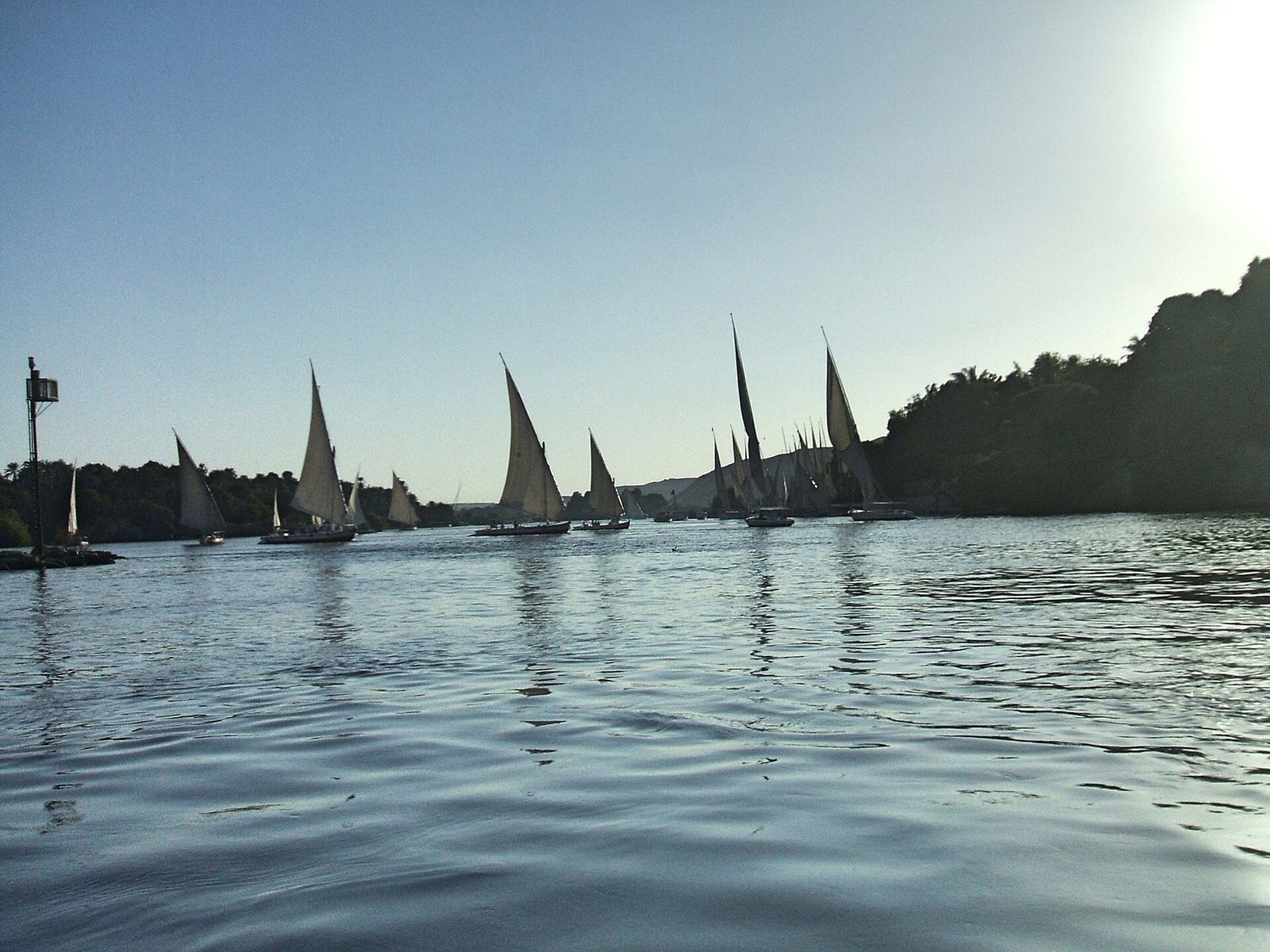
The one format where the cruise itself becomes small group is the dahabiya, a sailing boat with a handful of cabins that moors at islands the big boats cannot reach. All the boat types are compared in the guide to Nile cruise boats and how to choose one.
Pace, and what is fixed versus what is flexible
A small group tour is not a private tour. Some things are set weeks ahead and cannot move for one person. Others are decided on the morning, by the guide and the group together.
Fixed
- The route and the order of the cities, set when the departure is built.
- The hotel nights and the cruise sailing days. The boat leaves the dock whether the group is aboard or not.
- The domestic flight times between Cairo and Upper Egypt, booked for the whole group.
- The opening hours of the monuments and the sequence they impose.
Flexible
- How long you stay in any one tomb, temple or gallery. The guide reads the group and adjusts.
- The order of sites within a day, for example Saqqara before Giza to beat the heat.
- Lunch: where, how long, and whether at all on the long days.
- Optional extras such as the balloon over Luxor, the sound and light show at Giza or a day at Abu Simbel, added per person, so half the group can go and half can sleep.
- The free afternoon and every evening.
On pace, a small group can sustain a longer day. A coach group is exhausted by four in the afternoon, not by the sites but by the waiting. A small group that skipped the waiting still has energy for Luxor Temple at dusk. Heat overrides everything: from June to early September the afternoons in Luxor and Aswan sit around 104 F (40 C), and the guide front-loads the day and stops early whatever the group says.
How departures work
Small group departures run on set days through the season rather than on demand. A departure day is published, travelers from different places book onto it, and on the morning it starts everyone meets in Cairo. We do not list dates on this page because they are set per season and change. Tell us the month you are looking at and we send the current departure days for it.
- Departures are more frequent from October through April, when the weather is kindest, and thinner in the hot months.
- Every departure starts and ends in Cairo. You are met in the arrivals hall on day one and driven to the airport on the last day.
- A departure needs a minimum number of travelers to run as a group. If one is not gathering enough people we tell you early, not the week before, and offer the nearest date that is, or a private version of the same route.
- Extra Cairo nights, a Red Sea extension to Hurghada or a day trip to Alexandria attach to either end.
Holiday departures, around Christmas, New Year and spring break, fill first. Pick the month before you pick the route.
An 8-day small group sample
This is the classic loop that shows first-timers the essential Egypt without a wasted day. It is a sample, not a schedule: the order of the Cairo days and the cruise direction vary by departure.
- Day 1, Cairo. Met at the airport by your guide, transfer to the hotel, evening briefing over tea with the group.
- Day 2, Giza and Saqqara. The pyramids and the Sphinx early, the Step Pyramid and a painted tomb at Saqqara, the afternoon at the Grand Egyptian Museum.
- Day 3, fly to Aswan. Philae by boat, the High Dam and the Unfinished Obelisk. Board the cruise.
- Day 4, Abu Simbel optional, then sail. Pre-dawn drive to Abu Simbel for those who booked it, back by early afternoon, sail to Kom Ombo for the temple at sunset.
- Day 5, Edfu and on to Luxor. Horus temple in the morning, the Esna lock in the afternoon, Luxor in the evening.
- Day 6, Luxor west bank and Karnak. Valley of the Kings, Hatshepsut's temple and the Colossi of Memnon, then Karnak in the softer afternoon light. Evening flight to Cairo.
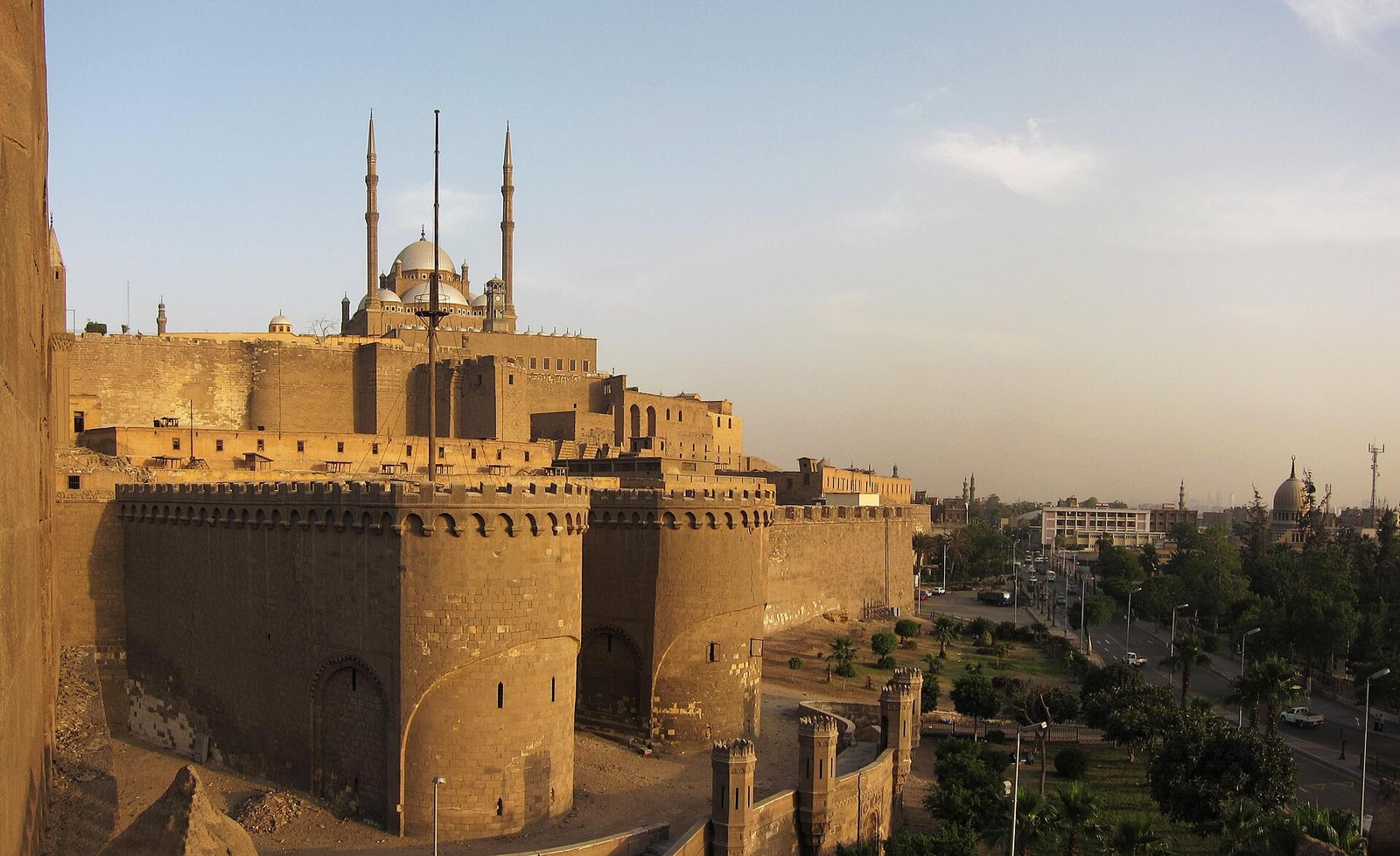
- Day 7, Islamic and Coptic Cairo. The Citadel, Al Muizz street, Khan el Khalili and the old churches, afternoon free.
- Day 8, departure. Breakfast, transfer to the airport.
The full day-by-day is on the Egypt classic tour, 8 days page, and the longer routes that add Abu Simbel as a fixed day, a second Luxor day or the Red Sea are under Egypt tour packages.
How Explora Egipto runs its small groups
We are a local agency in Egypt with our own guides and vehicles, which is why the promises above are ones we can keep. Nobody is subcontracting your Luxor day to whoever has a free bus.
- One guide, all the way. A licensed Egyptologist who speaks English, meets you at the airport and leaves you at the airport. The same person explains Giza and Karnak, so the story joins up.
- One minibus, one driver. A vehicle sized for the group, not a coach with empty rows.
- The same group throughout. No merging with other operators' passengers for the cruise excursions. If we leave the boat, we leave together.
- A cap stated in writing. The quote for a departure says the maximum number of travelers on it, and we do not run bigger and call it small.
- Tickets, transfers and domestic flights handled. The detail is on the what an Egypt tour includes page.
- Optional extras per person. Balloon, Abu Simbel, sound and light, a Nubian village visit. Nobody is dragged to one they did not want.
Booking is a conversation, not a form. Write to us on WhatsApp with the month, how many of you there are and whether you are traveling solo, as a couple or with friends. We come back with the departure days, the cap on each, the day-by-day and the quote.
Frequently asked questions
How many people are on a small group Egypt tour?
Enough to fill a minibus, never enough to need a coach. The exact cap depends on the departure and the boat, and it is written into the quote before you book. More important than the figure: the group stays the same for the whole trip, one guide travels with you throughout, and you are never merged into a larger group for the cruise excursions.
Is a small group tour a good idea for a solo traveler in Egypt?
It is the best format for most solo travelers. You have a guide responsible for you from arrival to departure, company at meals and on the long drives, and a group small enough that you actually get to know people. You keep your own room and your own evenings. Tell us whether you want a single room or would share a cabin, and we quote both ways.
Should I choose a small group or a private Egypt tour?
Choose private when someone in your party needs the day shaped around them: young children, limited mobility, a special interest such as photography, or a second trip that needs unusual sites. Choose small group when everyone is happy to share a well-run day with a few other curious travelers and would rather put the difference toward a better boat or an extra night. Ask us for both quotes and compare.
Do I stay with the same guide and the same group the whole trip?
With us, yes. One English-speaking Egyptologist meets you at Cairo airport and stays with the group through Cairo, the flight to Aswan, the cruise, Luxor and back to Cairo. The group that has breakfast together on day one is the group at the airport on the last day. Ask this of any operator; plenty of tours sold as small group regroup by city and change guides.
Is the Nile cruise private to our group?
No, and it is not private on a private tour either. A standard cruise boat carries many cabins and everyone shares the dining room, the deck and the sailing timetable. What is ours alone is the guide and the excursions: the group leaves the boat together for Edfu, Kom Ombo, Philae and Karnak with its own Egyptologist. If you want the boat itself to be small, ask about a dahabiya.
Can I skip a site or add Abu Simbel on a small group tour?
Yes to both. Optional extras such as Abu Simbel, the balloon over Luxor and the sound and light show are booked per person, so you can add them without the whole group joining. Skipping a site is always possible: stay on the boat and the guide takes the others. What cannot change for one person is the route, the hotel nights, the sailing days and the domestic flight times.
See Egypt with a few good people and one guide who knows your name
Tell us the month you have in mind, how many of you there are and whether you are coming solo, as a couple or with friends. We reply with the departure days for that month, the cap on each, the day-by-day and the quote, and if the dates do not line up we offer the private version of the same route.