Egyptian Food: What to Eat and How to Order It
Egyptian Food: What to Eat and How to Order It
Egyptian cooking runs on pulses, bread, slow-cooked greens and charcoal. It is filling, it is heavily seasoned rather than hot, and it is inexpensive enough that you can work through most of the classics in a week without keeping track. If you learn one word before you arrive, make it koshary. After that: ful and taameya at breakfast, molokhia and mahshi at the table, kofta off the grill, and om ali at the end of dinner.
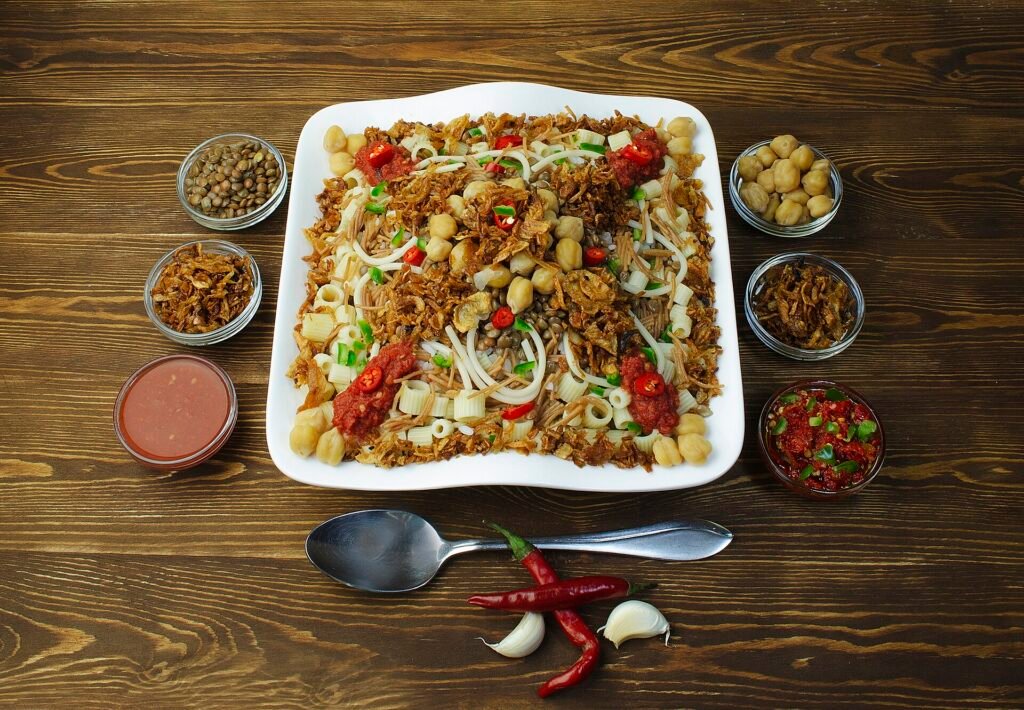
Koshary, the plate to eat first
Koshary is rice, short pasta, brown lentils and chickpeas layered into one bowl, buried under spiced tomato sauce and a thick handful of fried onion. It is the national dish.
Two bottles sit on the table and they are the point. One is dakka, a sharp garlic vinegar. The other is shatta, chili sauce. The bowl arrives lightly seasoned and you finish it at the table. Pour, stir the whole bowl from the bottom, taste, pour again.
Koshary shops usually sell koshary and nothing else, which is why they are good at it. Bowls come in sizes, and the middle size is already a large meal. As served it contains no meat, though it is worth asking whether the tomato sauce was built on meat stock, because some kitchens do that.
Breakfast is savory, and it starts early
The Egyptian breakfast is beans. Ful medames is fava beans cooked slowly overnight and mashed at the counter with oil, cumin and lemon, then topped with whatever the shop keeps in reach: tahini, chopped tomato, a boiled egg, green chili. It is served warm and it holds you until the middle of the afternoon, which is exactly what a morning at the temples requires.
Beside it is taameya, the Egyptian falafel. It is made from split fava beans rather than chickpeas, which leaves it green inside and lighter than the chickpea version sold elsewhere, and it is often rolled in sesame seeds before frying. Both go into bread with salad and tahini, and both are sold from carts and small shops from very early in the morning.
The bread is aish baladi, a wholewheat pocket flatbread baked so that it puffs and separates. It arrives with almost every meal and it is the utensil as much as the side dish. Add white cheese, pickles and a plate of eggs and you have the standard local breakfast. Hotels serve an international buffet, so if you want the local version, one morning outside the hotel is what it takes.
The stews people grow up on
Molokhia is the dish worth understanding before it lands in front of you. Jute mallow leaves are chopped to a fine green pulp and cooked in broth, then finished with garlic and coriander fried in ghee and poured in at the last second, which is the smell that fills the room. The texture is thick and slippery, closer to okra than to soup. It comes with rice and usually chicken or rabbit.
Mahshi is vegetables stuffed with spiced rice and herbs and simmered in tomato: vine leaves, peppers, zucchini, eggplant, cabbage. It is home cooking that restaurants also do well, and it is frequently made without meat, though that is worth confirming rather than assuming.
Fattah belongs to celebrations, above all Eid al-Adha, the feast that follows the annual pilgrimage to Mecca. Toasted bread goes in the bottom of the dish, then rice, then meat, then a garlic and vinegar tomato sauce poured over the lot. It is rich, and a portion is larger than it looks.
You will also see tagen on menus, spelled various ways. In Egypt this means a stew of meat or vegetables baked and served in its own deep clay pot, which is a different dish from the cone-lidded Moroccan tagine that shares the name.
The charcoal grill
Kofta is spiced ground meat pressed onto skewers; kebab is chunks of lamb or beef done the same way. Grill houses often sell by weight rather than by portion, so you order a quantity, choose the mix of kofta and kebab, and it arrives with bread, tahini, salads and pickles that nobody asked for and everybody eats.
Shawarma is carved off the vertical spit into bread and is the reliable answer to a late arrival back at the hotel. Hamam mahshi, pigeon stuffed with rice or green cracked wheat, is a festive dish and a genuine local specialty; it is small-boned and fiddly to eat, which is part of the ritual rather than a flaw.
Fish is a separate world. On the Mediterranean and Red Sea coasts, and at Nile-side fish restaurants inland, you pick from the ice display, it is weighed in front of you, and it comes back grilled or fried with bread and salads.
Sweets, and where they are actually eaten
Om ali is the one to try first: layers of pastry soaked in hot milk with nuts, coconut and raisins, baked until the top browns, served scalding. It appears on restaurant dessert menus rather than at the pastry counter.
The rest are usually bought rather than ordered. Basbousa is a dense semolina cake soaked in syrup. Konafa is shredded pastry baked over cream or nuts. Baklava arrives in the layered Ottoman style. Pastry shops sell these by weight from a glass counter, you point at what you want, and you eat them with tea rather than at the end of a meal. During Ramadan the counters fill with qatayef, stuffed pancakes folded and either fried or served with cream.
What to drink
Shai, black tea, is constant. It comes very sweet unless you say otherwise, often with fresh mint, and it is offered in shops and workshops as hospitality rather than as a sale. Karkadeh is hibiscus, deep red, served hot in winter and cold in summer. Asab is sugarcane juice, pressed to order at juice shops and drunk on the spot.
Coffee is ordered by sweetness rather than by size: sada for none, mazbout for medium, ziyada for sweet. Saying the word at the counter saves a conversation, and a few more of them are worth carrying, which is why learning a handful of Arabic words pays off at the counter.
Alcohol exists but sits outside daily life. It is sold in hotels, in licensed restaurants and bars, and in dedicated shops rather than in ordinary cafes or on the street. Tap water is not what anyone drinks, and the practical detail worth reading before you travel covers bottled water, ice and raw salad rather than the tap alone.
When Egyptians eat
The clock is the part that catches arriving visitors out. Breakfast is early and savory. The main meal of the day lands in the middle of the afternoon, roughly between two and five, and it is the big one. Dinner starts around nine and runs late, later still in summer when the heat finally drops.
So a local restaurant that is empty at seven in the evening is not a bad restaurant. It is early. If you want a full room and the noise that comes with it, go after ten. Plan the day around that, especially if an excursion has you out until dusk.
Ramadan changes the pattern for a month. Many places close during daylight, then open at sunset when the streets fill and stay busy until very late. It does not make travel difficult, but it does change where and when you eat, so it is worth checking against the calendar when choosing which month to travel.
Planning this trip yourself takes hours. We build it for you, and we answer every question before you commit to anything.
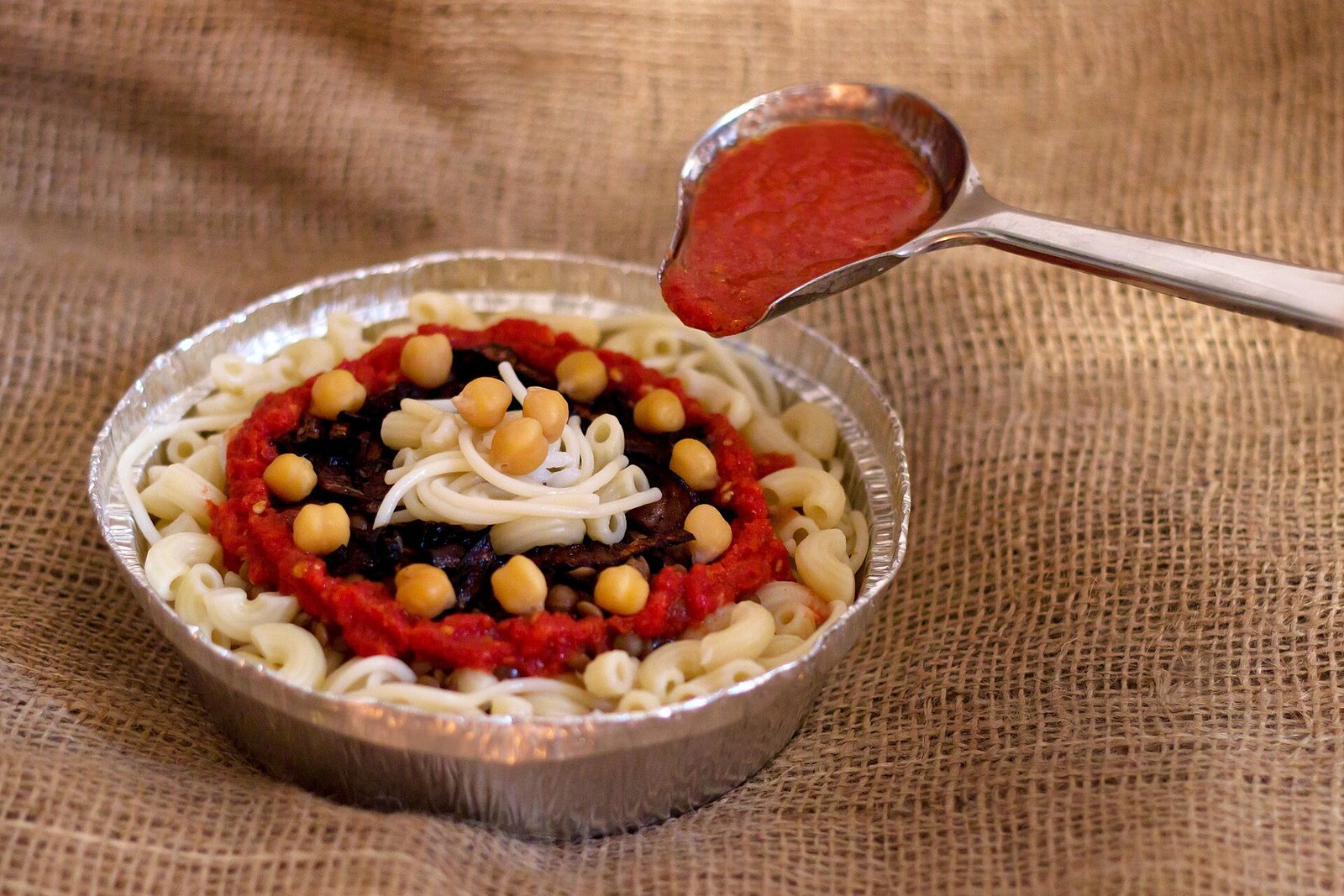
Table customs that are worth knowing
- Food arrives in the middle and everyone eats from it. Ordering one dish each and guarding it is the foreign habit; ordering several and reaching across is the local one.
- Eat with your right hand and use torn bread as the scoop. The left hand is not used for eating.
- Refusing food outright reads as a snub. Taking a small amount is the polite exit if you are full or unsure.
- Tea offered to you in a shop is hospitality. Accepting it does not commit you to buying anything.
- A service charge on the bill is not the tip. Cash still changes hands at the end, and the going rate for restaurants and drivers is a separate question worth settling before your first meal.
Eating with a dietary restriction
Vegetarian and vegan. Egypt is straightforward. Koshary, ful, taameya, mahshi, fried eggplant, baba ghanoug, salads and endless bread cover most meals without hunting for a special menu. The question to ask is whether the rice, the lentils or the tomato sauce were cooked with meat stock, because that is common and it is the one thing that quietly disqualifies an otherwise meat-free plate.
Gluten. Harder. Bread is at every meal and several dishes are built on it. Grilled meat, fish, rice and eggs are the reliable ground, but small kitchens cannot promise separation, so if the restriction is medical, carry a card written in Arabic and show it rather than explaining it.
Nut allergies. Worth the same card. Nuts appear across the dessert counter and in some rice and stuffing preparations, and they are not always visible on the plate.
Halal and pork. Meat is halal by default across the country. Pork appears only in some international hotels and in shops serving Egypt's Christian communities, so it is opt-in rather than something to avoid.
If you are traveling with us, tell us at booking and we pass it on to the hotels, the boat and the restaurants on the itinerary. You can send it to us on WhatsApp at 201032295513.
On a cruise, on a tour, and on your own
How much of this you meet depends on how the trip is built. A Nile cruise with full board feeds you three times a day from a buffet that leans international, with Egyptian dishes appearing as one section rather than as the whole table. Cruises start from US$755 per person, double occupancy, and on those nights your food spending is close to zero, though every drink including bottled water goes on a cabin tab.
That is comfortable, and it is also the argument for getting off the boat. A koshary shop in Luxor or a fish grill in Aswan costs very little against a buffet you have already paid for. The same applies on a city day: a guided day out around Cairo can end at the food stalls of Khan el Khalili and the coffee houses behind it in the early evening, which is where an hour is well spent once the museums are done.
What any of it costs day to day is a separate matter, and what meals actually cost across the three restaurant tiers answers it properly, including which circuit you are standing in and which extras land on the bill. If you would rather have the eating built into the itinerary than hunt for it, our guided packages covering Cairo, Luxor and Aswan can include stops chosen for the food as well as for the monuments.
A short menu glossary
| Dish | What it is | Where you meet it |
| Koshary | Rice, pasta, lentils, chickpeas, tomato sauce, fried onion | Single-dish shops, any city, all day |
| Ful medames | Slow-cooked fava beans with oil, cumin and lemon | Carts and small shops, mornings |
| Taameya | Fava bean falafel, green inside | Alongside ful, and in sandwiches |
| Aish baladi | Wholewheat pocket bread | With almost every meal |
| Molokhia | Thick jute mallow greens with garlic and coriander | Local restaurants, with rice and chicken |
| Mahshi | Vegetables stuffed with spiced rice | Home-style restaurants |
| Kofta and kebab | Ground and cubed meat over charcoal, often sold by weight | Grill houses, evenings |
| Om ali | Hot pastry and milk pudding with nuts | Restaurant dessert menus |
| Karkadeh | Hibiscus infusion, hot or cold | Cafes, hotels, street juice shops |
One habit that makes the food better
Order less than you think you need, in more places than you planned. Portions are large, bread and salads arrive uninvited, and the enjoyable version of eating in Egypt is a bowl of koshary at two, tea and something sweet at six, and a grill at ten, rather than one enormous sit-down meal that ends the day early. It also works with children, who tend to take to bread, grilled meat and fresh juice immediately, as the guide to traveling in Egypt with children goes into.
And when a shopkeeper puts a glass of tea in front of you, take it. That exchange, repeated across a two-week trip, is a fair share of what people remember about eating here.
Common questions about Egyptian food
What is the national dish of Egypt?
What do Egyptians eat for breakfast?
Which Egyptian desserts should you try?
What do people drink in Egypt?
Is the food safe in Egypt?
Where do you find the best Egyptian food?
What did the ancient Egyptians eat?
Bread and beer were the base of every meal, both made from emmer wheat and barley. Most people added onions, garlic, lentils, beans, cucumbers, leeks and fish from the Nile, with dates and figs for sweetness and honey for those who could afford it. Meat, mostly beef, goose and duck, was for feasts and the wealthy. Some of it survives today: ful, lentil soup and flatbread are dishes an ancient Egyptian would still recognize.
What is Egyptian cuisine known for?
Egyptian cuisine is built on pulses, bread, slow-cooked greens and charcoal grilling rather than on spice heat. Its signature dishes are koshari, the national dish of rice, lentils, pasta and chickpeas under a spiced tomato sauce; ful medames, stewed fava beans eaten at breakfast; ta'ameya, the Egyptian falafel made with fava beans instead of chickpeas; and molokhia, a green soup of jute leaves. Meals come with baladi flatbread and small plates like tahini and baba ganoush, and end with sweets such as basbousa or kunafa. It is filling, inexpensive and eaten at every level, from street stalls to family restaurants.
Let us put the trip together
We are a local agency in Egypt. Tell us your dates and what you want to see, and we will come back with a plan, the practical details sorted and someone to ask when you are here.
Part of our guide to
Experiences and Activities 2 guides
This article is part of that pillar. The rest of it:
Keep exploring
To finish planning your trip to Egypt
- ▸Belly Dance in Egypt: Where to See a Real Show in Cairo
- ▸Camel Ride at the Pyramids of Giza: Is It Worth It?
- ▸Hot Air Balloon Over Luxor
- ▸Fishing in the Red Sea, Egypt: Boats, Species and Seasons
- ▸Cairo at Night: Things to Do After Dark, Planned by Locals
- ▸Cairo Nile Dinner Cruise: Show, Buffet and Is It Worth It
- ▸Traveling to Egypt with a Baby: Heat, Cruise, Cribs, Formula
- ▸See all our Egypt tours