
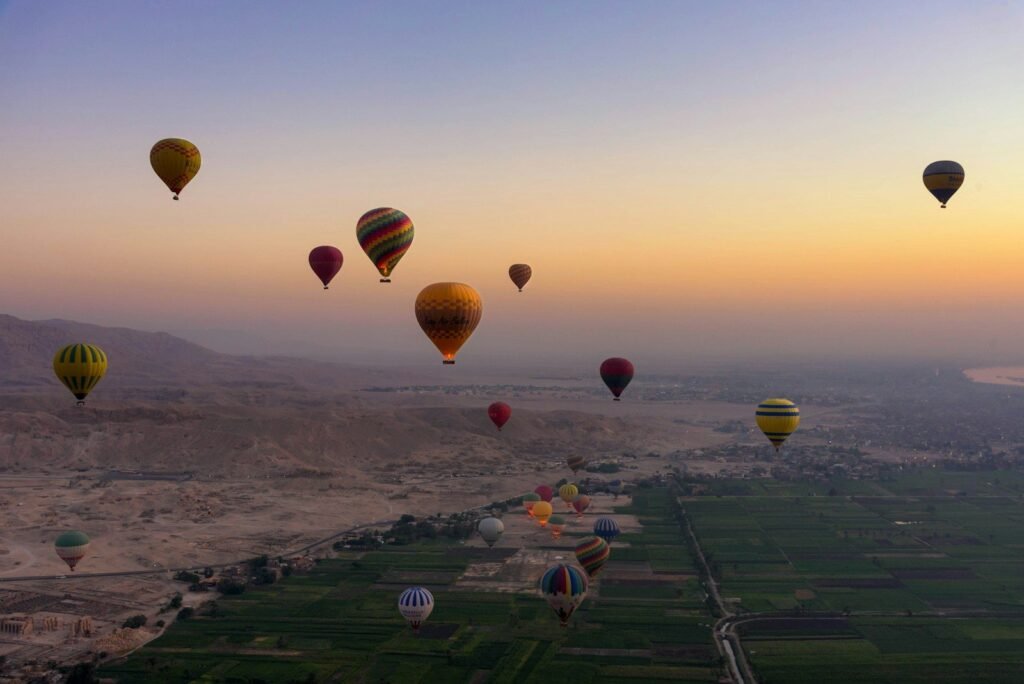
That split is the most useful thing to understand before you book anything here. Ancient Thebes put the living on the east side of the Nile, where the sun rises, and the dead on the west side, where it sets. Four thousand years later the geography still dictates your schedule: mornings on the West Bank before the heat builds, late afternoons on the East Bank when the temple stone turns gold.
This page covers every Luxor excursion we run, what you actually see at each one, how long it takes, and whether the entrance fee is prepaid by us or paid at the gate. All ticket figures are 2026 rates from the official ministry platform, converted at 1 USD = 49.79 EGP. Every excursion is private: your own licensed Egyptologist, your own air-conditioned vehicle, your own pace. For the short version, the 2-day Luxor tour starts from US$288 per person on double occupancy and covers the five sites described in the five sections below.
Luxor at a glance: how the two banks work
Luxor is a small city wrapped around an enormous archaeological site. The drive from the airport to the Karnak gate takes about twenty minutes. The bridge across the Nile sits a short drive south of town, so crossing between banks by road runs thirty to forty minutes each way. That drive time is why we do not bounce back and forth: one bank per half-day, always.
West Bank is the necropolis. Valley of the Kings, Temple of Hatshepsut and the Colossi of Memnon as the standard trio, with the Valley of the Queens, Medinet Habu and the Ramesseum as optional extras. It is desert. There is very little shade, the ground is dust and loose limestone, and closed shoes matter more than they sound like they do.
East Bank is the city of the living: Karnak, Luxor Temple and the restored Avenue of Sphinxes running between them. It is walkable, greener and far more forgiving in the afternoon.
With one day, we do the West Bank from around 6:30am and the East Bank after a mid-afternoon break. With two, everything below fits comfortably and you have room for the sunrise balloon.
Valley of the Kings
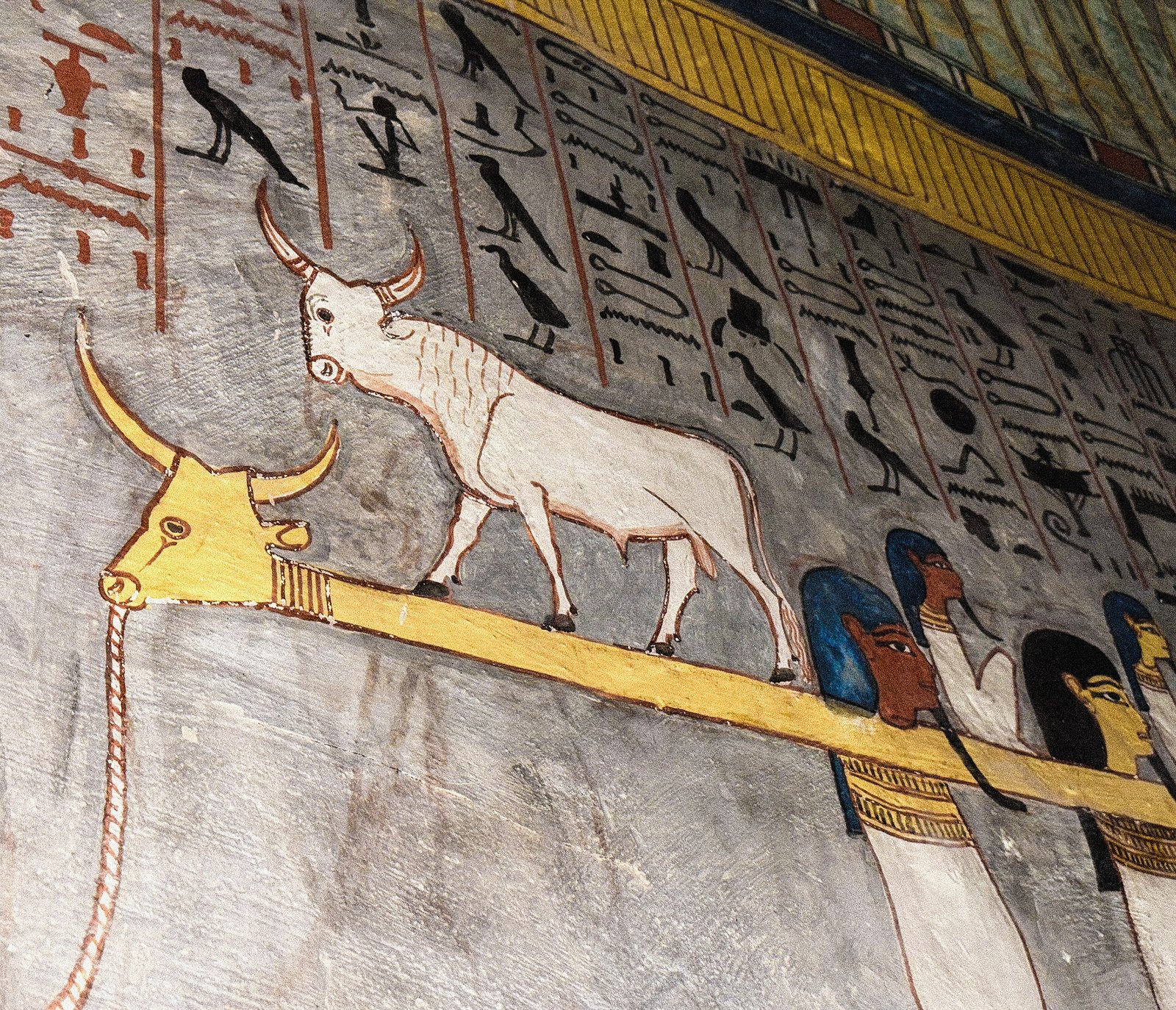
What you see: a dry limestone wadi with more than sixty known royal tombs cut into its walls, of which roughly ten are open on any given day on a rotation the ministry manages. Your general admission ticket admits you to three tombs from that open rotation. Ramesses III, Ramesses IV, Ramesses IX and Merenptah are frequent openers, and the first three are excellent, with painted ceilings and long descending corridors still carrying color.
The rotation is the part travelers do not expect. Tombs close for conservation and reopen without notice, so nobody can promise you a specific one in advance, and any operator who does is guessing. What your guide can do is read the board at the visitor center and steer you to the best three open that morning rather than the three nearest the entrance, which is where most of the crowd goes.
What surprises most first-time visitors is the depth. The larger tombs run a long way downhill into the rock on a steady grade, and the climb back out in July is a genuine effort. The paint is the reason people come: ochres, Egyptian blue and a yellow that has not faded in three thousand years, on ceilings you can almost reach.
How long: two to two and a half hours, including the shuttle from the visitor center and three tombs at an unhurried pace.
Entrance: 750 EGP, about US$15, for the general ticket covering three tombs. Prepaid by us on every program that includes the West Bank, so you never queue and never need Egyptian cash for it.
Worth knowing: photography inside the tombs needs a separate permit bought at the gate. Tutankhamun, Seti I and a few other tombs sit outside the general ticket and cost extra, paid at the ticket office on the day. Guides are not permitted to lecture inside the tombs themselves, so your Egyptologist briefs you fully outside, then you go in and take your time without being talked at.
Temple of Hatshepsut at Deir el-Bahari
What you see: three colonnaded terraces built straight into a semicircle of cliff, the most architecturally modern-looking building in ancient Egypt. Hatshepsut ruled as pharaoh in her own right in the fifteenth century BC, and her successor Thutmose III spent years chiseling her name and image off the walls. Your guide will show you the erasures, which become the most interesting thing on the site once you know to look for them.
The best reliefs are on the middle terrace: the Punt colonnade, showing the trading expedition down the Red Sea with its loaded ships, and the birth colonnade opposite, which is Hatshepsut's argument for her own legitimacy carved in stone.
How long: about an hour, plus the short electric shuttle from the parking area to the base of the ramp.
Entrance: 440 EGP, about US$9. Prepaid by us. There is almost no shade on those terraces. Go early or go late; midday here in summer is punishing.
Colossi of Memnon
What you see: two seated quartzite statues of Amenhotep III standing alone in a field beside the road. They are what stayed visible of the largest mortuary temple on the West Bank, and excavation behind them keeps uncovering more of it. Greek and Roman tourists came here because the northern colossus once made a singing sound at dawn after an earthquake cracked it, and their graffiti is still readable on the legs.
How long: fifteen to twenty minutes, as a roadside stop on the way in or out of the West Bank.
Entrance: there is no gate and no ticket. You pull over, walk across, and your guide points out the Roman inscriptions. It is the easiest photograph of the day and the only West Bank stop with nothing to pay.
Karnak Temple Complex
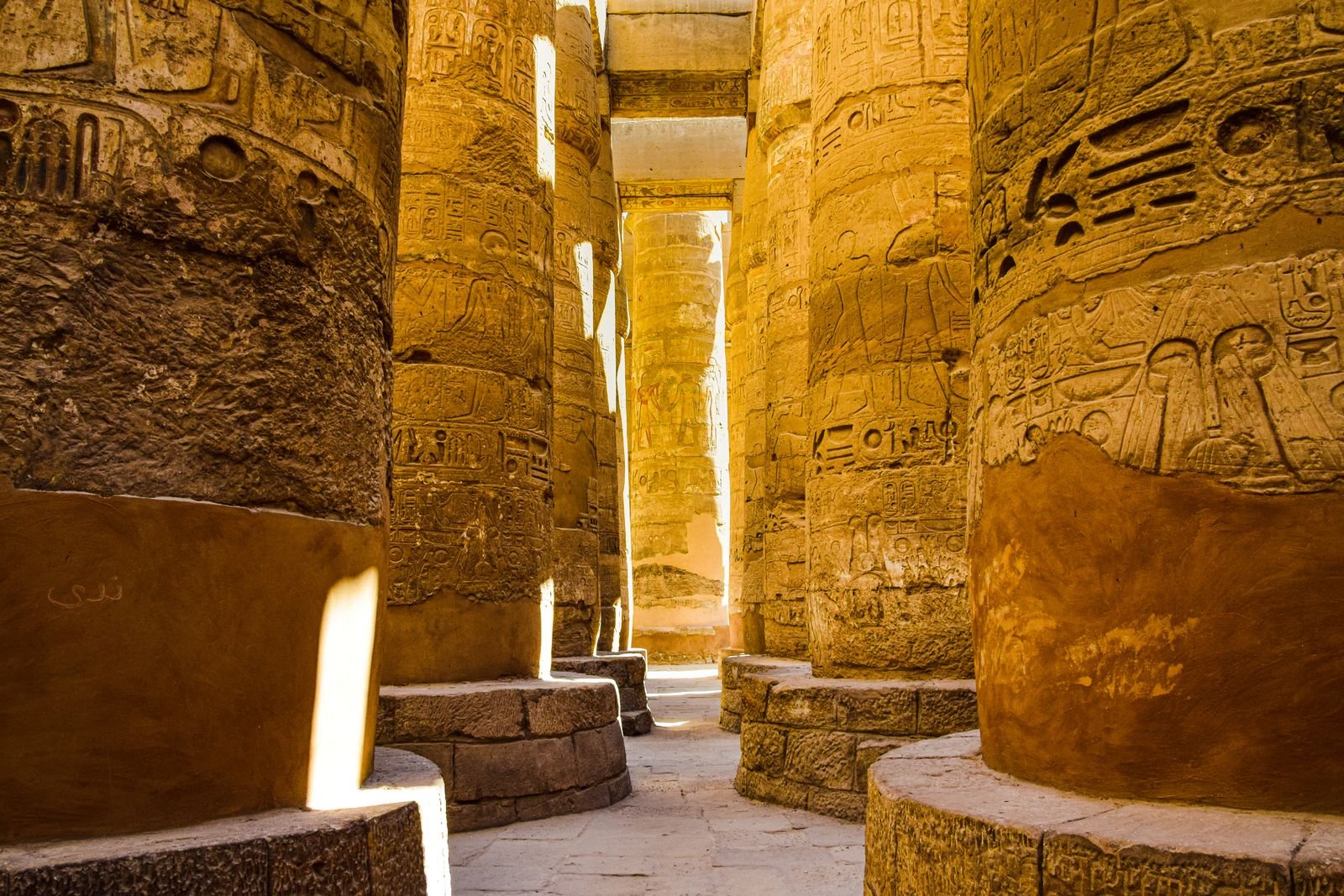
What you see: the largest religious building ever constructed, added to by successive pharaohs across roughly fifteen hundred years. You enter along the ram-headed sphinxes, pass the unfinished first pylon, then arrive in the Great Hypostyle Hall, which is the moment most people remember from their whole trip to Egypt. It holds 134 columns, the tallest around 70 feet, or 21 meters, packed so densely that you lose the sky.
Beyond the hall are Hatshepsut's standing obelisk, the sacred lake and the Festival Hall of Thutmose III. Karnak is big enough that the crowds concentrate on one axis and leave the rest of it nearly empty, and a good guide gets you into the quiet parts. Ask to be taken to the Temple of Ptah and the open-air museum at the north end; both sit inside the same ticket and most visitors walk straight past them.
How long: ninety minutes to two hours. You could spend a day here and not exhaust it.
Entrance: 600 EGP, about US$12. Prepaid by us.
Worth knowing: Karnak runs an evening sound and light show in several languages on a fixed rotation. It is an optional add-on at extra cost, paid separately, and the language schedule shifts, so it needs requesting a few days ahead rather than deciding on the night.
Luxor Temple and the Avenue of Sphinxes
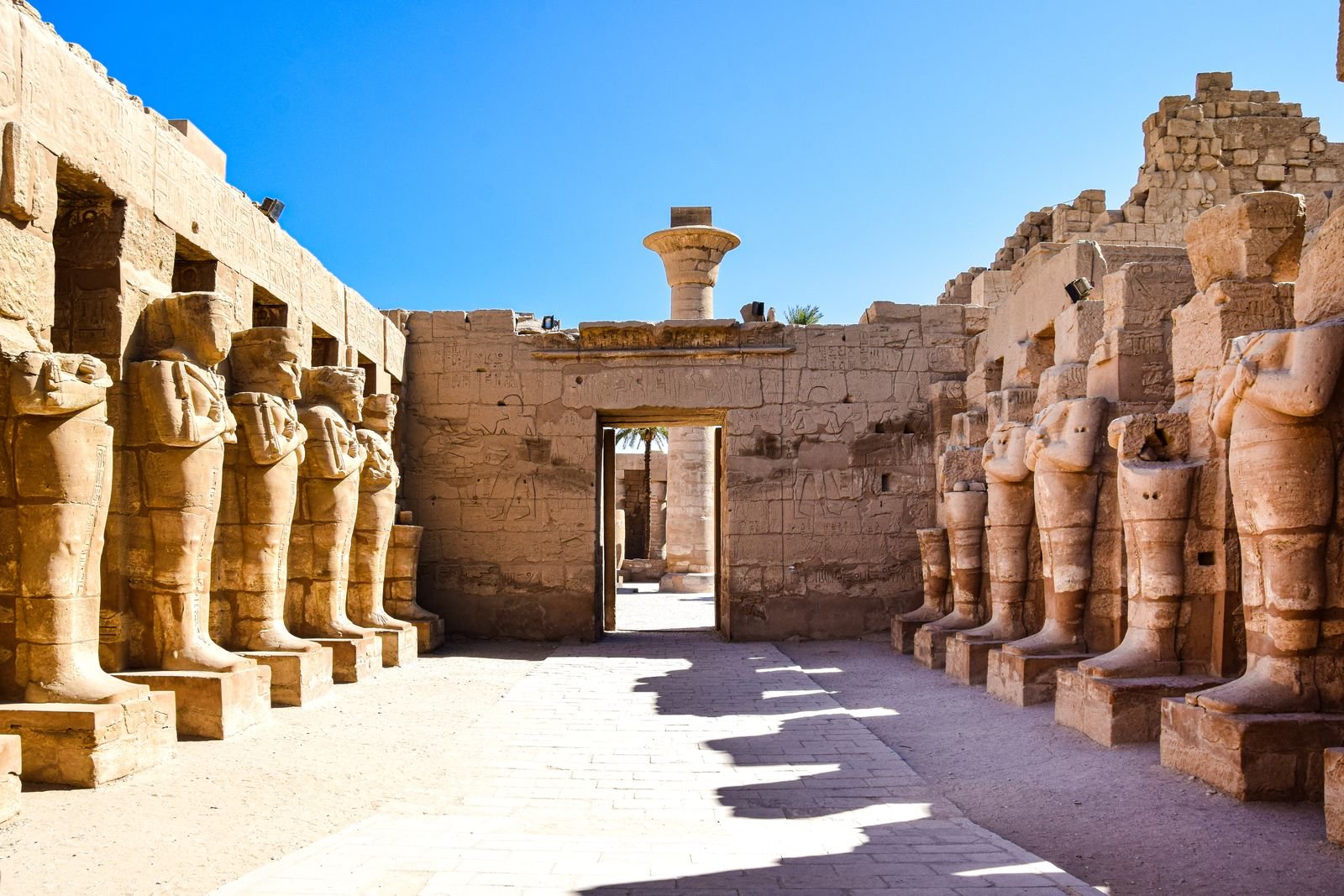
What you see: a compact, superbly preserved temple sitting in the middle of the modern town, built mainly by Amenhotep III and Ramesses II. One of Ramesses' obelisks still stands at the entrance; its twin has been in the Place de la Concorde in Paris since 1836. Inside, a Roman-era chapel carries faded Christian frescoes painted over pharaonic reliefs, and above the courtyard sits a working thirteenth-century mosque built on top of the temple when the site was still buried to that level. Very few places let you read three religions stacked in one wall.
The Avenue of Sphinxes reopened in 2021 after decades of excavation. It runs nearly two miles, or three kilometers, from Luxor Temple to Karnak, lined on both sides with sphinxes, and you can walk a section of it if you want the approach the ancient processions used. Walking the whole length is pleasant in winter and a bad idea in summer, so we usually drop you at one end, walk twenty minutes of it, and collect you at a gate further along.
How long: forty-five minutes to an hour.
Entrance: 500 EGP, about US$10. Prepaid by us. We schedule this one last, close to sunset, because the floodlighting comes on and the temple is at its best in the hour after dark.
Optional West Bank add-ons
Several of the most-requested West Bank sites sit outside the standard ticket. We can build any of them into your day and your guide takes you in, but the ticket is an extra cost, paid at the ticket office. These rates move through the year, so we confirm the current price with you before the day rather than printing one here.
- Tomb of Tutankhamun (KV62). Small and plain by the standards of the valley, and still holds his mummy.
- Tomb of Seti I (KV17). The longest and finest tomb in the valley, and the one visitors most often call worth the supplement.
- Tomb of Nefertari, Valley of the Queens. The best-preserved painted tomb in Egypt, with a strict time limit inside and the highest special ticket on the West Bank.
- Medinet Habu. Ramesses III's mortuary temple, with deeply cut battle reliefs and surviving ceiling color. Quiet, and a favorite of repeat visitors.
- The Ramesseum. The collapsed colossus of Ramesses II that gave Shelley his poem.
- Tombs of the Nobles and Deir el-Medina. Everyday life rather than royal ritual, and much more human for it.
If you are adding only one, most travelers pick Seti I for the carving or Nefertari for the color. If you are adding two, take one royal tomb and one temple rather than two tombs, because after the third painted corridor the differences stop registering. Tell us which way you lean when you enquire and we will build the morning around it, since the special-ticket sites keep their own opening windows and the order matters.
The sunrise hot air balloon
The balloon is the optional extra almost everybody ends up glad they booked. Pickup falls between 4:00am and 5:00am depending on season, you cross the Nile by motorboat, and you lift off from the West Bank just before dawn. The flight runs about 45 minutes, over the Valley of the Kings, Hatshepsut's terraces, Medinet Habu and the sugarcane fields, and you are back for breakfast.
Two practical points. It is weather-dependent: if the wind is up, flights do not go, and the operator moves you to another morning or cancels under its own terms, so put the balloon on your first free morning rather than your last and keep a spare day to retry. And it is run by licensed balloon operators and ticketed separately from your tour, so it is priced and confirmed with them at the time of booking rather than bundled into the program price.
Baskets are shared and hold a dozen or more people, which is the one part of a Luxor day that is not private. Wear layers, because it is genuinely cold before dawn in December and January, and closed shoes again, because the landing is a firm bump in a field.
Dendera and Abydos: the full day out
If you have already seen the Luxor headliners, or you simply prefer temples without crowds, this is the best day trip in Upper Egypt. Dendera lies about ninety minutes north of Luxor, Abydos about an hour beyond that.
Dendera is the Temple of Hathor, famous above all for its ceilings. Years of soot cleaning brought back the original paint, so you are looking at Ptolemaic and Roman astronomical ceilings in near-original color, including the celebrated circular zodiac. Abydos is the Temple of Seti I, holding the finest low relief carving in Egypt and the Abydos King List, a wall of cartouches running back to the first dynasty. Behind it sits the Osireion, a sunken, waterlogged structure nobody fully agrees on.
Budget a full ten hours door to door including the driving. Both entrance fees are extra cost, paid at the ticket office. This is arranged on request as an add-on rather than being part of a standard Luxor program, so mention it when you enquire. If ten hours is too much, Dendera alone is a half-day and pairs well with a late afternoon at Karnak.
2026 Luxor entrance fees, and what we prepay
These are the current published gate rates, converted at 1 USD = 49.79 EGP. Every fee marked prepaid is already inside the program price, so you never handle it.
| Site | 2026 gate fee | Approx. USD | On our programs |
|---|---|---|---|
| Valley of the Kings (general ticket, 3 tombs) | 750 EGP | US$15 | Prepaid |
| Karnak Temple complex | 600 EGP | US$12 | Prepaid |
| Luxor Temple | 500 EGP | US$10 | Prepaid |
| Temple of Hatshepsut | 440 EGP | US$9 | Prepaid |
| Colossi of Memnon | No ticket | No charge | Included as a roadside stop |
| Tutankhamun, Seti I, Nefertari, Medinet Habu, the Ramesseum | Varies | Not published | Extra cost, paid at the ticket office |
| Dendera and Abydos | Varies | Not published | Extra cost, paid at the ticket office |
| Tomb photography permit | Varies | Not published | Extra cost, paid at the ticket office |
| Karnak sound and light show | Varies | Not published | Extra cost, booked in advance |
Major ticket offices now take cards, but the system is not universally reliable and small vendors and drivers are cash-only, so carry some Egyptian pounds regardless. If you continue south, the same prepaid arrangement covers Edfu at 550 EGP, Kom Ombo at 450 EGP, Philae at 550 EGP and Abu Simbel at 822 EGP. In Cairo it covers the Giza plateau at 700 EGP, the Egyptian Museum in Tahrir at 550 EGP and Saqqara at 600 EGP on the programs that include them. The one Cairo ticket we never prepay is the interior of the Great Pyramid at 1,000 EGP, which stays an excluded add-on you buy on the day if you want it.
Which Luxor program fits your trip
Luxor is rarely a standalone trip for most travelers. It is normally two days inside a longer Egypt itinerary, or the start or end point of a Nile cruise.
| Program | Length | From (per person, double occupancy) | Domestic flights | Best for |
|---|---|---|---|---|
| 2-Day Luxor Tour | 2 days, 1 night | From US$288 | Not included | Both banks at a calm pace, with room for the balloon |
| Aswan and Luxor Overland | See the program page | From US$520 | Not included | Both southern cities from hotels rather than a ship |
| Nile Cruise, Luxor to Aswan | 5 days, 4 nights | From US$755 | Not included | Unpacking once and sailing upstream to Aswan |
| Nile Cruise, Aswan to Luxor | 5 days, 4 nights | From US$755 | Not included | The same route downstream, finishing in Luxor |
| Egypt Classic, 7 Days | 7 days, 6 nights | From US$1,348 | Included | Cairo, the Nile and Luxor on a first trip |
| Egypt Classic with Abu Simbel, 8 Days | 8 days, 7 nights | From US$1,451 | Included | The 7-day route plus Abu Simbel |
| Egypt Tour, 10 Days | 10 days, 9 nights | From US$1,897 | Included | Cairo, Luxor and Aswan without a rushed morning |
| Grand Egypt Tour, 12 Days | 12 days, 11 nights | From US$2,196 | Included | Everything above plus Red Sea time in Hurghada |
The pattern is simple. The four programs of seven days and longer include your domestic Egyptian flights. The shorter Luxor-focused programs and both cruises do not, because travelers on those are usually already in Upper Egypt or want to pick their own sector. We can quote a domestic flight or the sleeper train on any of them as a separate line. Two Abu Simbel options run independently from the Aswan end: the Abu Simbel day trip from Aswan and the 2-day Abu Simbel program with hotel. Neither includes internal air.
One thing worth saying plainly, because it is the question we get asked most: your international flights are not part of any of this. We do not sell, book, coordinate or quote the flights into and out of Egypt on any program. You buy your own tickets, send us the arrival details, and we meet you at the airport.
What is included
- Private, licensed English-speaking Egyptologist guide for every site visit
- Private air-conditioned vehicle with a professional driver throughout
- All standard monument entrance fees listed as prepaid above
- Hotel or cruise ship accommodation as specified on each program page
- Meals as listed per program, including breakfast daily on overnight programs
- All ground transfers, including airport and cruise ship pickups
- Bottled water in the vehicle on every touring day
- Domestic Egyptian flights on the 7, 8, 10 and 12-day programs only
- Direct WhatsApp contact with our Egypt office for the duration of your trip
What is NOT included
- International flights to and from Egypt. We do not sell, book, coordinate or quote them. You arrange your own tickets into Cairo, Luxor or Hurghada, and we meet you on arrival.
- Domestic Egyptian flights on the Luxor-focused programs. The 2-day Luxor tour, both Nile cruises, the Aswan and Luxor overland route and both Abu Simbel programs exclude internal air. We can quote it as a separate line.
- The Egypt e-Visa. US$30 single entry, US$65 multiple entry, applied for yourself before travel.
- Special-ticket tombs and sites: Tutankhamun, Seti I, Nefertari, Medinet Habu, the Ramesseum, Dendera and Abydos. Extra cost, paid at the ticket office.
- The sunrise hot air balloon and the Karnak sound and light show, both ticketed separately
- Photography permits inside the tombs
- Lunches and dinners where a program lists breakfast only
- Drinks, laundry and anything personal
- Travel insurance, which we strongly recommend you carry
- Tips for guides, drivers and cruise crew
How two days in Luxor actually run
Day one, afternoon into evening. Pickup around 2:00pm. Karnak first, working from the ram-headed sphinxes through the Hypostyle Hall out to the sacred lake, roughly two hours. A break, then Luxor Temple at dusk with the floodlights on. Both East Bank sites improve as the light drops, and this leaves the whole of the next morning free.
Day two, early morning. Pickup at 6:00am to 6:30am, cross the bridge, and reach the Valley of the Kings gate close to opening. Three tombs before the tour buses land, which is the entire trick to enjoying the valley. Hatshepsut next while the terraces are still in shadow, then the Colossi of Memnon on the way back. Done by lunchtime with the heat still climbing.
If you have added the balloon, it goes on the morning of day two ahead of the Valley of the Kings, and pickup moves to around 4:30am. It makes for a long day and it is worth it.
If you only have one day
Plenty of people reach Luxor with a single day: a cruise docked overnight, a tight two-week route, a flight out in the evening. It works, but something has to give, and it is better to choose in advance than to run out of daylight.
The one-day plan we build starts at 6:00am on the West Bank for the Valley of the Kings and Hatshepsut, breaks from roughly noon to 3:00pm at your hotel or on your ship, then takes Karnak and Luxor Temple from mid-afternoon to sunset. That break is not padding. From June to September the middle of the day on the West Bank is unusable, and travelers who insist on pushing through it usually cut the evening short anyway.
What comes off a one-day plan: the Colossi shrink to a five-minute photo stop, the special-ticket tombs go unless you name one, and the Avenue of Sphinxes walk is dropped. If you have a half-day only, take the West Bank and skip the East Bank entirely rather than sampling both. The Valley of the Kings is the reason you came to Upper Egypt.
Ground conditions, heat and mobility
The West Bank sites are open desert with real surfaces underfoot. The Valley of the Kings runs on a wide, gently rising path from the shuttle drop-off to the tomb entrances, and then each tomb is a ramp or a staircase going down, sometimes both, with handrails but no elevators. Hatshepsut has a long processional ramp between terraces. None of it is technical, and all of it is exposed.
If someone in your party has limited mobility, say so when you enquire and we will plan around it rather than improvise on the day. The electric shuttles at both sites shorten the walking considerably, some tombs are far shallower than others, and Karnak and Luxor Temple are broadly flat, which makes the East Bank the easier half by a wide margin. Wheelchair access at the tombs themselves is limited by those ramps, so we tell you which ones will and will not work before you pay for anything.
For heat: from May through September, treat water as equipment rather than a nicety. We keep the vehicle stocked and would rather you drink more of it than we planned for. An electrolyte sachet in your bag is worth more than most of what people pack. Children handle Luxor well in winter and struggle in summer afternoons, so families traveling in July and August get the same early start and the same protected midday break as everyone else.
Photography at the Luxor sites
Phones and cameras are fine at the open-air temples: Karnak, Luxor Temple, Hatshepsut, the Colossi. Inside the royal tombs a photography permit is required and is bought at the Valley of the Kings gate, separately from your entrance ticket. Guards do enforce it, and being fined is an unpleasant way to start a morning, so either buy the permit or leave the camera in the bag.
Tripods generally need advance permission and are treated as commercial equipment. Drones are not permitted at the sites and are routinely held at customs on arrival, so leave yours at home. Flash is banned inside every tomb, which matters less than you would think, because the modern lighting is better than it used to be and a steady hand at a high ISO gets a usable frame.
Getting to Luxor, and when to go
Luxor International Airport sits about four miles, or six kilometers, east of town and takes domestic flights from Cairo through the day, roughly 75 minutes in the air. The alternative is the overnight sleeper train from Cairo, about ten hours, which some travelers enjoy and others do not. Neither is included on the Luxor-focused programs, but both can be added to your quote. On the 7, 8, 10 and 12-day programs the domestic sectors are already ticketed for you. Your international flights into and out of Egypt remain yours to arrange on every program we sell.
The comfortable season runs October through April, with December to February the coolest and busiest. From June through August, afternoon temperatures in the Valley of the Kings routinely pass 105F, which is why every summer itinerary we build starts before 7:00am and holds the afternoon free. Summer travel is entirely doable and noticeably cheaper; it just has to be scheduled around the heat rather than through it. Ramadan shifts opening hours and the rhythm of the city, and the two Eid holidays fill domestic flights and hotels fast, so tell us your dates early.
The shoulder weeks are the value. Late September and early October still run hot but the crowds have not arrived, and the first half of May is warm rather than brutal with the winter rates gone. If your dates are flexible by a week either way, say so and we will tell you which week is better.
Frequently asked questions
How many days do I need in Luxor?
How much are Valley of the Kings tickets?
Are entrance fees included in your Luxor excursions?
Is Tutankhamun's tomb worth the extra ticket?
Do your Luxor tours include the flight from Cairo?
How much is the Egypt e-Visa?
What is the difference between the East Bank and the West Bank?
Can I add the sunrise balloon flight?
Are the tours private or shared?
What should I wear and bring on the West Bank?
Do I need Egyptian pounds in Luxor?
Is the Karnak sound and light show worth it?
Is Luxor safe for American travelers?
Can I combine Luxor with a Nile cruise?
How far ahead should I book?
Plan your Luxor excursions with us
Tell us your dates, how many of you are traveling, and whether Luxor is a stop inside a longer trip or the trip itself. We come back with an itinerary built around your arrival time rather than a template, including which optional tombs are worth your money for the days you are actually here.
The fastest way to reach us is WhatsApp on +20 103 229 5513. We are an Egypt-based operator, so we answer on Cairo time and usually within the hour during the working day. You can also use the enquiry form on this page and we will reply by email. You get a written itinerary and a per-person price with inclusions and exclusions spelled out, and we rework it whenever the shape is not right yet.
Our published reviews average 5.0 across 12 ratings, and they are about the agency and the guiding rather than any one itinerary.
Still weighing up the shape of the trip? The 12-day grand tour with Hurghada adds Red Sea days at the end, the 10-day Cairo, Luxor and Aswan tour gives Luxor a full unhurried day, and every program on this page puts you in the Valley of the Kings before the crowds.
Keep exploring
To finish planning your trip to Egypt
- ▸Minya and Middle Egypt Tour: Amarna and Beni Hasan
- ▸What to Wear in Egypt
- ▸Night in the Desert Egypt: Camping, Stars and Bedouin Camps
- ▸Bibliotheca Alexandrina: How to Visit the Library
- ▸Ramesseum, Luxor: Ramesses II Temple and Ozymandias
- ▸Eye of Horus Meaning: Myth, Amulet and Where to See It
- ▸Traveling to Egypt with a Baby: Heat, Cruise, Cribs, Formula
- ▸See all our Egypt tours