A night in the desert in Egypt is the one thing you will still talk about years later
A night in the desert in Egypt is the one thing you will still talk about years later
A night in the desert in Egypt means a mattress and heavy blankets beside a fire, a Bedouin crew cooking over the coals, and nothing above you but stars. The classic version is a two day trip from Cairo to the White Desert, camping among chalk rocks that glow under the moon. The alternatives are a Bedouin camp in the Sinai mountains near St Catherine or Dahab, the Great Sand Sea outside Siwa, or a desert dinner an hour from Hurghada if you only want the evening. There is no shower, it gets cold after midnight even in summer, and you never go without a local driver who knows the ground.
Why one night in the desert changes the whole trip
Most people come to Egypt for the pyramids, the Nile and the tombs. But more than nine tenths of the country is desert, and almost no visitor sleeps in it. The ones who do come home talking about that night more than about Karnak. It is the only part of an Egypt itinerary with no ticket booth, no crowd and no schedule beyond sunset and sunrise.
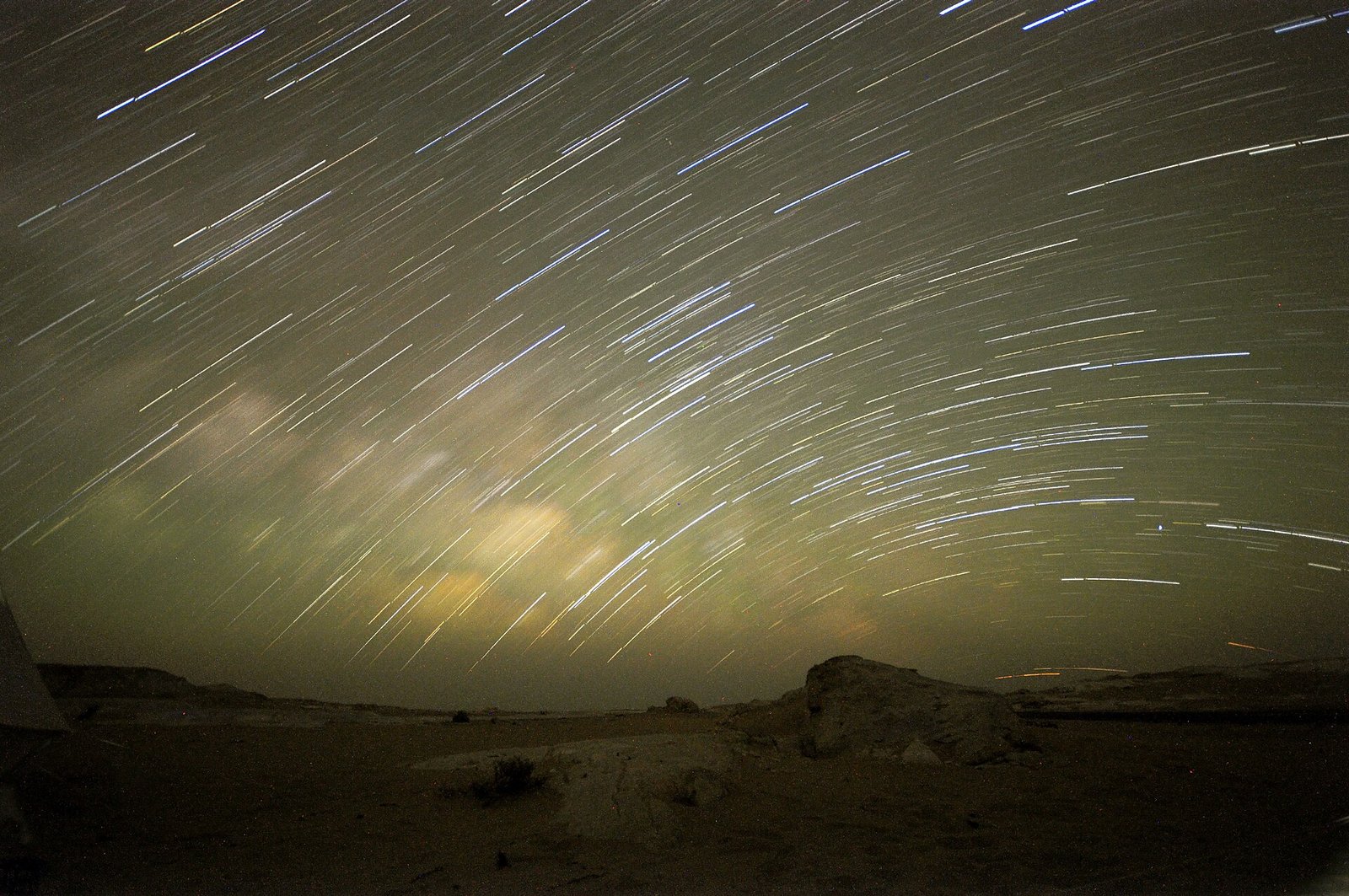
Two things do it. The first is silence: when the last town is hours behind you and the wind drops, the quiet is total in a way most Americans have never heard. The second is the sky. There is no humidity to blur the stars, and the nearest streetlight can be a hundred miles away.
After four or five days of temples, a night with no history lesson resets everyone. Of all the experiences that only Egypt offers, it is the one travelers most often say they underestimated.
The four ways to spend a night in the Egyptian desert
Egypt has several deserts, not one. Pick by how far you will drive and by what landscape you want to wake up in.
The White Desert with a Bedouin camp
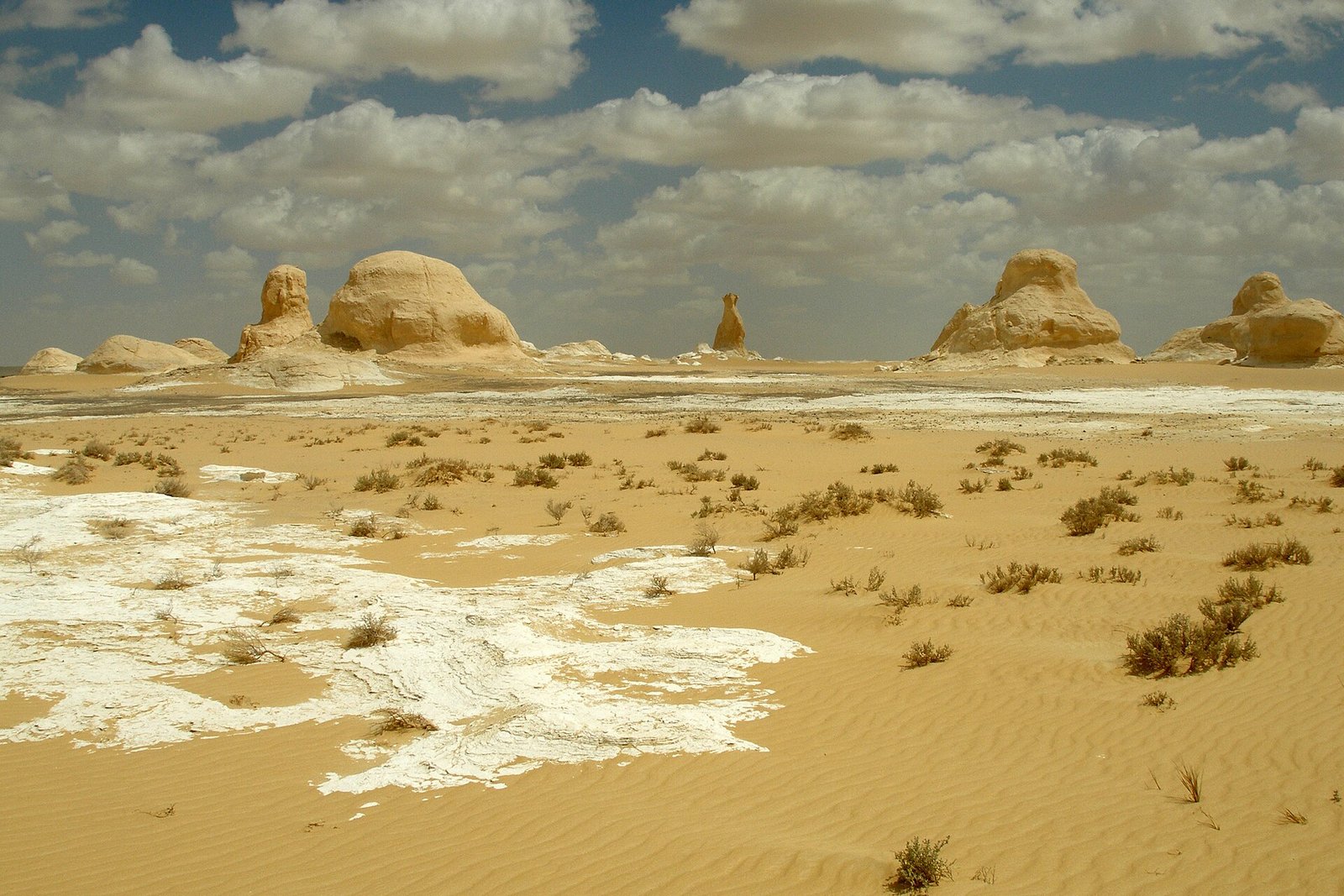
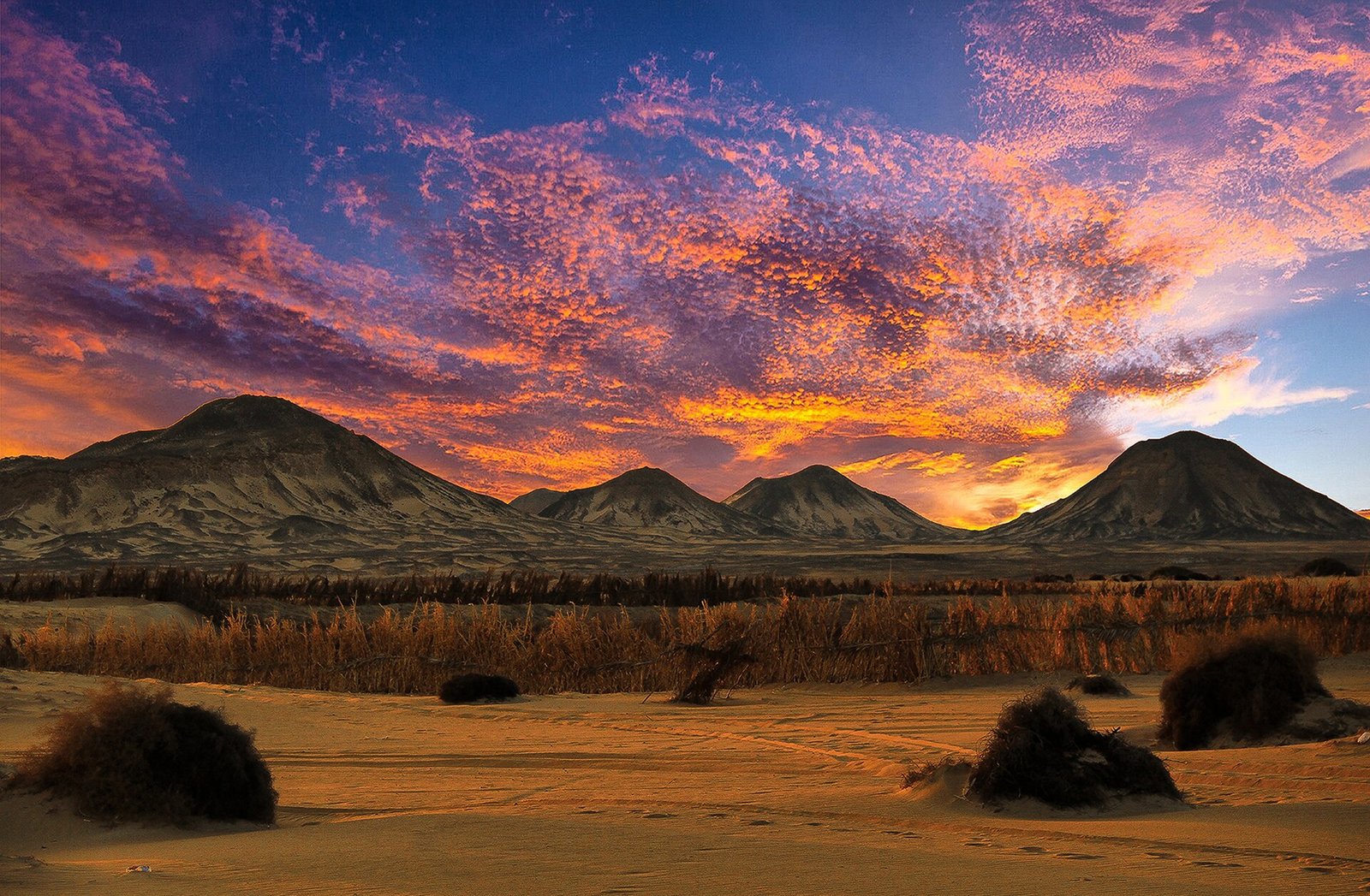
The one everybody pictures. You drive from Cairo to Bahariya oasis, four to five hours on a paved highway, switch to a Bedouin 4x4 and head south past the Black Desert and Crystal Mountain into the White Desert and its chalk formations. Under a full moon the plain looks like snow. It is the most photogenic desert night in the country and the one we recommend first.
A Sinai Bedouin night near St Catherine or Dahab
A different desert: granite mountains, dry wadis and walled Bedouin gardens instead of dunes. The Jebeliya tribe around St Catherine and the Muzeina around Dahab and Nuweiba run camps in the wadis, some with palm frond huts, some open air. It pairs naturally with the sunrise climb of Mount Sinai and the Red Sea.
Siwa and the Great Sand Sea
The farthest and the most extreme. Siwa sits near the Libyan border, eight to ten hours by road from Cairo, and behind it begins the Great Sand Sea: dunes with no rock, no plants and no track. Siwan drivers take you dune driving, to a cold spring at the dune edge and to a camp in the sand. You need at least three nights in Siwa to make the drive worth it.
A Red Sea desert dinner from Hurghada
Not a full night, but the version most resort guests take. A jeep ride into the Eastern Desert forty minutes from Hurghada, a Bedouin village of the Ababda tribe, a camel ride, dinner and a telescope, then back at the hotel by ten. Good for families with small children and for anyone who wants the sky without giving up the bathroom.
| Option | Drive from base | Landscape | Time needed | Comfort |
|---|---|---|---|---|
| White Desert | Cairo, 6 to 7 hours | Chalk formations, black hills | 2 days, 1 night | Open air camp, no facilities |
| Sinai wadis | Sharm 3 hours, Dahab 1.5 | Granite mountains, wadis | 1 night | Camp or hut, simple toilet |
| Siwa, Great Sand Sea | Cairo 8 to 10 hours | Pure dunes, cold springs | 3 nights minimum | Camp, or eco lodge in town |
| Hurghada desert dinner | Hurghada 40 minutes | Rocky Eastern Desert | Evening only | Bedouin village, toilets |
What a camp night is really like, hour by hour
Here is the plain version from the White Desert, which the other camps broadly follow.
- Late afternoon. The driver picks a spot in the lee of a chalk formation. A windbreak of woven Bedouin cloth goes up, open on the side facing the view, with rugs on the sand inside.
- Sunset. You walk while the crew cooks; it is the best light of the day on the white rock. Tea comes first, sweet and black.
- Dinner. Chicken and vegetables over the coals, rice, salad, bread warmed on the fire, fruit. In Sinai the bread is often baked in the ash. Vegetarians are easy if we know in advance.
- The fire. The crew brings the wood; nothing is cut on site. Some drivers sing or play a drum, most just talk.
- Sleep. Foam mattresses on the rugs, a pillow, a sleeping bag and two or three heavy blankets each, head toward the open side, looking at the sky. Closed tents exist if you ask ahead.
- Sunrise. Cold and worth it. Tea, bread, cheese, eggs, jam. Camp is packed in twenty minutes and you drive out past formations you could not see in the dark.
The bathroom question, answered honestly
There is no shower and no toilet in the White Desert or the Sand Sea. Some crews carry a small toilet tent on request; most do not. You walk behind a rock and carry your paper out in a zip bag. Wet wipes and hand sanitizer cover the rest. It is one night, and nearly everyone finds it a non issue. If you know it will bother you, the lodge option below is the answer, not a reason to skip the desert.
How cold it gets
Sand gives up its heat within an hour of sunset. In the White Desert a December or January night can sit near 32 to 40 F (0 to 5 C) before dawn; October and March nights run about 45 to 55 F (7 to 13 C); even in June, after a day of 100 F (38 C), the small hours drop to around 65 F (18 C) with a wind. Sinai camps near St Catherine are colder still and can see frost in winter. The blankets are enough, but you want your own layers under them.
The stars, the moon and how to time your night
The sky is the reason to do this, and a little planning separates a good night from an unforgettable one.
The moon matters more than the month. Around full moon the White Desert is bright enough to walk without a flashlight and the chalk glows, but it washes out all but the brightest stars. Around new moon the Milky Way runs from horizon to horizon and you can see your shadow by starlight. If the stars are what you came for, aim for the week either side of new moon. If the moonlit rocks are the goal, aim for full moon and accept a thinner sky.
The second factor is dust. After a windy spell the air loses transparency for a day or two. Winter nights are usually the clearest; late spring can bring the khamsin wind and hazy skies.
What you will see without any equipment
- The Milky Way, brightest from late spring to early fall when the galactic center rises in the south.
- Satellites crossing in the first hour after dark.
- Shooting stars on any clear night, and many more during the August Perseids and the December Geminids.
- Jupiter, Saturn, Mars and Venus as steady bright points, depending on the season.
One habit changes everything: give your eyes twenty minutes of real darkness without looking at a phone. A single white screen resets the adaptation of the whole group. If you need light, use a headlamp with a red mode.
Wildlife you may meet at the camp
The desert is not empty, it is nocturnal. The star of the White Desert is the small pale fox that has learned camps mean scraps, usually Rüppell's fox, with huge ears and a bushy tail. It will trot to the edge of the firelight and stare at you. It is not dangerous and should not be fed. The shyer fennec fox lives here too.
Around the mattresses you will hear gerbils and jerboas, the hopping rodents that leave tracks like miniature kangaroos in the morning sand. In Sinai you may spot a rock hyrax on the cliffs at dawn and, rarely, a Nubian ibex high on the granite.
Snakes and scorpions exist but are almost never seen in the cool months, and the crews shake out blankets and boots by habit. Do the same with your shoes and keep your bag zipped.
Safety, permits and who actually runs the camps
A desert night in Egypt is safe when it is organized and genuinely dangerous when it is improvised. The difference is the driver.
In the White Desert the camps are run by Bedouin families from Bahariya oasis, mainly from the town of Bawiti. They hold the national park permits, drive the 4x4s, cook and sleep at the camp with you. A good one has done the route hundreds of times, drives in convoy when going deep, carries water, spare fuel and a shovel, and can read sand that will swallow a wheel. Cell signal disappears an hour past Bahariya.
In Sinai the camps belong to the local tribes, and interior routes require a Bedouin guide; some areas need permits arranged in advance. In Siwa the drivers are Siwan, an Amazigh community with its own language, and the Great Sand Sea is entered only with a registered guide and a permit. Around Hurghada the desert evenings run from established Bedouin villages.
Egypt keeps checkpoints on desert roads, and organized vehicles pass with the paperwork ready. A rental car with no permit is turned back. Tell your family you will be off grid for about thirty hours, give us your passport details for the permits, and let the people who live there do the driving. We never use a driver we have not traveled with ourselves.
What to pack for one night in the desert
Mattresses, blankets, food and water come with the camp; the rest fits in a small backpack. Our Egypt packing list covers the whole trip, this is the desert supplement.
- Layers. A fleece, a light insulated jacket, a beanie and thick socks for the night, even in summer. Long pants; shorts on sand at 3 a.m. is a mistake you make once.
- A scarf or buff for sun, wind and sand.
- Headlamp with a red mode and spare batteries.
- Wet wipes, hand sanitizer, toilet paper and zip bags. The whole bathroom kit.
- A power bank. Cold drains phones fast, and there is no outlet.
- Your medications plus blister tape and a painkiller.
- Small bills for tipping the crew. Your guide will advise on the amount.
Contact lens wearers should bring glasses; sand and lenses are not friends. If the stars are the point, bring a camera with a manual mode and a small tripod, because a phone alone will disappoint you.
Who this suits, and who should pick a lodge instead
We recommend the camp night to more people than you would guess, and steer some away from it on purpose.
It suits you if
- You have camped before, or always wanted to and never got around to it.
- You are a couple, a group of friends, or a family with children of about eight and up.
- You care about photography or the night sky.
Choose a lodge if
- You have back or hip problems, or mobility that makes ground level sleeping hard.
- You are traveling with a toddler or a baby.
- You need a bathroom within reach at night, for any reason.
- You simply do not want to, which is a complete reason.
The lodge version is not a consolation prize. In Bahariya there are simple hotels with hot springs, and you still do the full White Desert day by 4x4 before driving back to a bed and a shower. In Siwa the mud brick eco lodges have candlelit rooms and rooftops built for exactly this sky. In Fayoum, two hours from Cairo, the lodges by Lake Qarun sit at the foot of the Wadi el Rayan dunes. Around St Catherine, Bedouin camps offer stone rooms with real beds and a shared toilet, which is the sweet spot for many people.
How Explora Egipto runs the White Desert night
We are a local agency in Egypt with our own guides and vehicles, and we run the desert trip ourselves rather than resell it. Here is the standard two day version from Cairo.
- Day 1, early morning. Our driver collects you from your Cairo hotel and takes the paved highway to Bahariya oasis, with a tea stop on the way.
- Late morning. In Bawiti you meet the Bedouin driver and switch to the 4x4. Lunch in the oasis, a hot spring swim if the timing works.
- Afternoon. Black Desert, Crystal Mountain, the Agabat valley, then into the White Desert proper as the light goes gold.
- Sunset and night. Camp, dinner, fire, stars, as described above. Your Explora guide stays with the group.
- Day 2. Sunrise, breakfast, a slow drive out through the formations you missed, and the highway back to Cairo by late afternoon. Most travelers fly to Luxor or Aswan the next morning.
Prefer Sinai? We build the camp night around the Mount Sinai climb and St Catherine's Monastery, then drop you in Dahab for the Red Sea. Prefer Siwa? That is a four day extension for travelers with three weeks. Tell us your dates and how much desert you want, and we send you the quote with the night already in the right spot.
Frequently asked questions
Where is the best place to spend a night in the desert in Egypt?
The White Desert, reached through Bahariya oasis from Cairo, is the best first choice: the chalk formations are unlike anywhere else and the camp night is well established. Sinai is the pick if you are already going to the Red Sea and want the Mount Sinai climb. Siwa is the most remote and needs three extra nights. A Hurghada desert dinner covers the evening only.
Is camping in the Egyptian desert safe?
Yes, when it is run by an experienced local crew with the permits, the right vehicle and a driver who knows the terrain. The real risks are getting lost, getting stuck and the cold, and all three are handled by going with Bedouin drivers who live there and by traveling in convoy when deep in. Never attempt it in a rental car.
How cold does it get at night in the desert?
Colder than the daytime suggests. Winter nights in the White Desert can approach freezing before dawn, around 32 to 40 F (0 to 5 C), spring and fall nights sit around 45 to 55 F (7 to 13 C), and even summer nights drop to the mid 60s F (about 18 C). The camp provides blankets and sleeping bags; bring a fleece, a beanie and thick socks.
Is there a bathroom or shower at a desert camp?
No shower anywhere in the deep desert, and usually no toilet beyond a rock, though some crews bring a small toilet tent on request. Bring wet wipes, sanitizer, paper and a zip bag to carry it out. If that is a real problem, sleep in a lodge in Bahariya, Siwa or Fayoum and still do the full desert day by 4x4, or choose a Sinai camp with stone rooms.
When is the best time of year for a desert night in Egypt?
October through April for comfortable days and clear nights, with December to February the clearest skies and the coldest camps. For stars, choose dates near the new moon; for the glowing white rocks, near the full moon. Summer camping is possible but the White Desert day heat is severe, so we plan it with a late start and more water.
Can I do a night in the desert as part of a normal Egypt tour?
Yes, and that is how most of our travelers do it. The White Desert takes two days and one night from Cairo, so it slots in after the pyramids and museum days and before the domestic flight to Luxor or Aswan. A Sinai camp fits a Red Sea extension, and Siwa suits a three week trip. Tell us your dates and we place it where it does the most good.
Sleep under the clearest sky in Egypt
Send us your dates, who is traveling and whether you want the White Desert, Sinai or Siwa, and we come back with an itinerary that has the desert night in the right place and the 4x4 and Bedouin crew arranged. One message on WhatsApp and we send you the quote.