Ramadan in Egypt for tourists is a different trip, and often a better one
Ramadan in Egypt for tourists is a different trip, and often a better one
You can visit Egypt during Ramadan, and many travelers end up preferring it. In daylight the country runs on a slower clock: most Egyptians fast, neighborhood cafes stay shut until sunset, sites tend to close earlier and the afternoon goes quiet. Hotels, tourist restaurants and Nile cruise boats serve every meal as normal, so you never go hungry. Then the sun sets, the fast breaks with iftar, the lanterns come on and Cairo stays awake until the small hours. Plan visits for the morning, keep transfers away from the sunset rush, eat discreetly on the street, and Ramadan gives you fewer crowds and a side of Egypt most visitors never see.
What Ramadan is, and why the dates move every year
Ramadan is the ninth month of the Islamic calendar and the holiest of the year for Muslims. From first light until sunset, adults who are able to fast take no food, no water, no coffee and no cigarettes. In Egypt, where most of the population is Muslim, the fast is taken seriously. It is also the most social month of the year once the sun goes down.
The detail that matters for planning is the calendar. The Islamic year is lunar and about eleven days shorter than the solar year, so Ramadan starts roughly eleven days earlier each year and rotates slowly through all four seasons. There is no fixed date, and because the start is confirmed by sighting the new moon, even the announced date can shift by a day.
So check the Islamic calendar for the year you are traveling before you lock anything in. Ramadan in a cool month is gentle on everyone; in high summer the afternoons are very quiet. Our guide to the best time to visit Egypt matches months to weather; this page covers what the fasting month itself changes.
What actually changes for a visitor during the day
Egypt does not shut down during Ramadan, but it runs on a different rhythm, and you plan around the rhythm rather than fight it.
- Working hours shrink. Offices, banks and neighborhood shops open later and close in the mid afternoon, then many reopen after iftar and trade late into the night.
- Sites close earlier than usual. Temples, tombs, museums and the pyramids stay open, but shorter days are normal. Treat any published schedule as a guess and confirm on the day.
- Neighborhood food disappears until sunset. Koshari counters, juice stands and street cafes stay closed or serve takeout only.
- Energy dips after lunch. Guides, drivers and ticket clerks have had no water since dawn. By mid afternoon everyone is slower and quieter.
- Traffic goes strange. The hour before sunset is the worst traffic of the year; the half hour after it is the emptiest you will ever see Cairo.
The answer is to front-load the day. Start early, do the big sites in the morning when they are open and half empty, rest through the dead afternoon, and come back out after dark, which is when Ramadan Egypt actually happens.
Eating during the day: hotels, tourist restaurants and the cruise
Nobody expects a non-Muslim visitor to fast, and eating is easy. What changes is where you eat, not whether.
| Where you are | Daytime meals during Ramadan |
|---|---|
| Hotel | Breakfast, lunch and dinner as usual, often in a more discreet room. Room service works. |
| Nile cruise | Nothing changes. Three meals a day, the bar open, tea on the sun deck. |
| Tourist restaurants in Cairo, Luxor, Aswan | Restaurants beside the main sites and inside hotels serve lunch. Menus may be shorter. |
| Red Sea resorts | Hurghada, El Gouna, Sharm and Marsa Alam barely notice the month. |
| Neighborhood cafes and street food | Closed or takeout only until sunset. This is where you feel Ramadan. |
The one adjustment is the street. Walking a Cairo sidewalk with an iced coffee at two in the afternoon, past a shopkeeper who has had no water since dawn, is not illegal and nobody will confront you, but it is graceless and everyone notices. Carry water and drink it in the vehicle, the hotel or a restaurant. It is the most appreciated gesture a visitor can make this month. For what to order once you sit down, our guide to Egyptian food and what to eat covers the classics.
Alcohol during Ramadan
This is the change that catches visitors off guard. Alcohol becomes hard to find outside places built for foreign tourists. Most stand-alone bars and many restaurants that normally pour wine or beer go dry for the month, and public alcohol shops close or restrict sales to foreign passport holders.
You can still get a drink in international hotel bars, on Nile cruise boats and in Red Sea resort hotels. Do not expect one in local restaurants, cafes, the Khan el Khalili area, or most of Luxor and Aswan town outside the hotels. If it does not matter to you, the Ramadan drinks are the real treat: tamarind, hibiscus, carob, licorice and the thick apricot juice called qamar el din that only shows up this month.
The hour before sunset, iftar and the empty streets
About ninety minutes before sunset, every city in Egypt starts moving at once. Everyone who has fasted since dawn is trying to reach a table before the call to prayer, and the traffic becomes the worst of the year. A transfer booked in that window can take three times as long as it should.
Then the sunset call sounds, and for roughly half an hour the streets empty as if a switch had been thrown. Cairo, a city that is never quiet, falls silent. Drivers pull over and eat a date. It is one of the most beautiful things to witness in Egypt, and the fastest half hour of the day to cross the city.
Iftar, the meal that breaks the fast, is the emotional center of Ramadan: dates and water first, then soup, then the main dishes, then sweets and endless tea. In Cairo you will see long charity tables set out in the street where anyone can sit and eat for free. There are three ways to experience iftar as a visitor:
- A hotel iftar buffet. Elaborate spreads and a Ramadan tent with music. Easy and comfortable.
- A restaurant iftar in the old city. A table near Al Hussein or on Al Muizz street, breaking the fast with the neighborhood. This is the one we build into our Cairo days.
- An invitation. Egyptians invite guests to iftar far more readily than you expect. If your guide, driver or a shopkeeper asks, say yes, bring a box of pastries and arrive on time.
Suhoor and the late nights
Ramadan nights do not end after iftar; they move to a second act. Families walk, shop, visit relatives and sit in cafes, and around midnight the city eats again at suhoor, the pre-dawn meal that carries people through the next fast. Restaurants that were dark at noon are full at one in the morning.
For a visitor this is a gift on two conditions. Accept a late schedule for a night or two: sightseeing in the morning, rest in the afternoon, iftar at sunset, a walk and a shisha cafe until late, then a suhoor of ful, eggs, cheese and bread before bed. And leave the next morning free, because nobody enjoys Karnak on four hours of sleep.
Listen for the mesaharati, the drummer who walks the old neighborhoods before dawn calling residents by name to wake them for suhoor. Our guide to Cairo at night covers the year-round options; in Ramadan, most of them run later and busier.
Fanous lanterns and Al Muizz street after dark
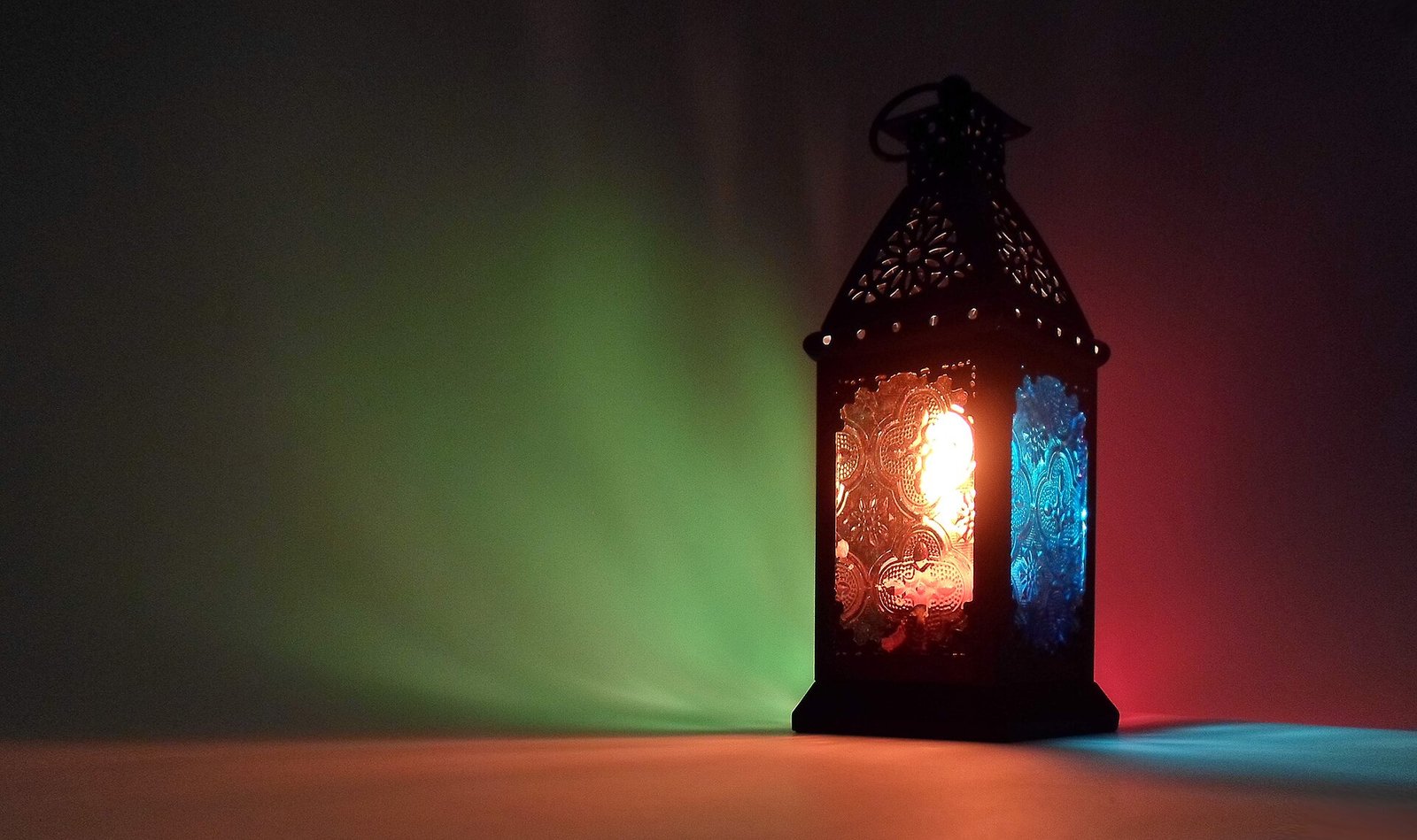
The fanous is the symbol of Egyptian Ramadan: a lantern of colored glass and pierced tin, or today just as often plastic and LEDs, hung from balconies, strung across alleys and stacked outside every shop from weeks before the month begins. The custom is Cairene and centuries old, and no other country does it on this scale.
The place to see it is Al Muizz street, the medieval spine of Islamic Cairo. During Ramadan the mosques and madrasas along it are lit from below, lanterns run from one end to the other, cafes spill into the street and there are Sufi and traditional concerts in the restored houses. A sensible evening there:
- Arrive an hour before sunset and walk the quiet street while everyone is at home preparing iftar. The light on the stone is at its best.
- Break the fast at a restaurant near Al Hussein with dates, then the full meal.
- Walk Al Muizz from Bab al Futuh toward Bab Zuwayla with the lanterns lit and the crowds out, stopping for tea and konafa.
- Finish at a cafe in the Khan el Khalili or, if there is a concert, in one of the old houses.
This is the most photogenic Cairo gets. For the wider calendar of celebrations, see Egypt festivals and holidays.
Etiquette: how to behave without trying too hard
What Egyptians notice, and remember, is basic consideration. The list is short.
- Eat, drink and smoke out of sight in daylight. Inside the hotel, restaurant, vehicle or boat is fine. On the sidewalk or at a temple gate in front of fasting staff is not.
- Dress a little more conservatively than usual. Shoulders and knees covered, nothing tight or sheer, a scarf for mosques. Our guide on what to wear in Egypt has the full rundown.
- Be patient in the late afternoon. The clerk who is slow at four has been fasting for twelve hours.
- Schedule nothing for the sunset hour. No transfer, no visit. Let everyone eat.
- Learn two phrases. Ramadan kareem, generous Ramadan, is the greeting; the reply is Allahu akram, God is more generous.
- Accept hospitality. A date offered at sunset, an invitation to iftar: take it. Refusing is far ruder than any mistake at the table.
That is all. Egyptians are proud of Ramadan and delighted when visitors take an interest, and they forgive every mistake you make while trying.
The cruise is unaffected, and the upside is real
If you are nervous about the whole thing, put the middle of your trip on the river. A Nile cruise between Luxor and Aswan runs exactly the same in Ramadan as in any other month: three meals, the bar open, and the excursions to Karnak, the Valley of the Kings, Edfu, Kom Ombo and Philae on the same morning schedule they always follow. The crew break their fast together at sunset, and if you are on deck someone will hand you a date.
Here is the upside of the month, without spin:
- Fewer tourists at the big sites. International bookings dip and Egyptians stay home in the day, so you get the Valley of the Kings and the pyramids with more space than in peak weeks.
- Cairo at its most beautiful. Lanterns, lit mosques, tables in the street, music in the old houses. No other month looks like this.
- Food you cannot get any other time. Qatayef, the stuffed pancakes; konafa with cream; the apricot and tamarind drinks; the great iftar spreads.
- A look at the living country. Most tourism shows you ancient Egypt. Ramadan shows you the one people live in.
And the honest cost: shorter site hours, a slower afternoon, no street food until sunset, limited alcohol, and a schedule built around the sun. If you are coming only for the monuments, another month may serve you better. If you are coming to see Egypt, this is arguably its best month.
Eid al Fitr: the holiday at the end
Ramadan ends with Eid al Fitr, the feast of breaking the fast, and it is a different animal. Eid is a national holiday of several days. Offices and many shops close, families travel across the country to be together, and the mood flips from the quiet daytime of Ramadan to full-volume celebration from the morning prayer onward.
For a traveler that means two things. Transport fills up: trains, domestic flights and buses around Eid are booked out well ahead by Egyptians heading home, so anything you need in that window has to be reserved early. And the sites fill with Egyptian families on their annual outing, picnics on the pyramids plateau and the Luxor corniche packed until midnight.
If your dates straddle the end of the month, read our guide to Egypt during Eid alongside this one. The advice is almost opposite: Ramadan asks you to go out at night and rest in the day; Eid asks you to book early and expect crowds.
How Explora Egipto plans a trip around Ramadan
We are a local agency with our own guides and vehicles in Cairo, Luxor, Aswan and the Red Sea, and most of our team fasts. We have run trips through cool Ramadans and summer ones, and the method is settled.
- We check the calendar for your year first, and tell you plainly where the month and Eid fall against your dates.
- Mornings for monuments. Every major site goes in the first half of the day with the earliest possible start, so early closures never cost you a visit.
- Transfers outside the sunset window, either well before the pre-iftar rush or in the empty half hour after it.
- Lunch always solved, with a named restaurant or hotel on each sightseeing day, and the cruise in the middle where the itinerary allows.
- One real Ramadan night in Cairo. Iftar in the old city, the lantern walk on Al Muizz street, tea in the Khan el Khalili, and a late start the next morning.
- Eid handled separately. If the feast falls inside your trip, the domestic flights and trains around it are locked in before anything else.
Your guide is the difference. Someone who knows which restaurant near Luxor Temple serves at noon and which cafe on Al Muizz has the best seat for the evening turns the month from an obstacle into the best part of the trip. Tell us your dates and we tell you whether Ramadan touches them. No prices on this page; ask us for the quote.
Frequently asked questions
Can tourists visit Egypt during Ramadan?
Yes, and many travelers prefer it. Every site, hotel, cruise and airport operates through the month. The daytime is slower, sites close earlier and local cafes are shut until sunset, but hotels and tourist restaurants serve all meals and the Nile cruise is unaffected. The lantern-lit nights are the reward.
Can I eat and drink during the day in Egypt during Ramadan?
Yes. Non-Muslim visitors are not expected to fast, and hotels, cruise boats, tourist restaurants and Red Sea resorts serve breakfast, lunch and dinner as normal. The only courtesy is to eat, drink and smoke out of public view, inside the hotel, restaurant or vehicle rather than on the sidewalk in front of people who are fasting.
Are the pyramids, temples and museums open during Ramadan?
They are open, but usually with shorter hours, closing in the afternoon rather than the early evening. Published schedules are unreliable this month, so plan every major visit for the morning and let your guide confirm the closing time on the day. The upside is that the sites are quieter than usual during the fasting hours.
Is alcohol available in Egypt during Ramadan?
Only in places aimed at foreign visitors. International hotel bars, Nile cruise boats and Red Sea resort hotels serve alcohol to guests as usual. Most stand-alone bars, local restaurants and public alcohol shops stop selling for the month or restrict sales to foreign passport holders. If a drink with dinner matters, choose hotels with a bar.
When is Ramadan in Egypt?
It has no fixed date. The Islamic calendar is lunar, so Ramadan begins about eleven days earlier each year and moves slowly through all the seasons. The start depends on the sighting of the new moon and can shift by a day at the last minute. Check the Islamic calendar for the year you are traveling before you book, and let us plan the days around it.
What Ramadan traditions can a visitor actually see?
The fanous lanterns strung across streets and balconies, the charity tables in the street at sunset, the iftar meal itself, the lit mosques and concerts on Al Muizz street, cafes full until the pre-dawn suhoor, and the mesaharati drummer waking the old neighborhoods. You may also be invited to break the fast with a family; say yes.
See Egypt the way Egyptians see it once a year
Tell us your dates and who is traveling. We check where Ramadan and Eid fall for your year, build the visits into the mornings, keep your transfers out of the sunset rush, put the cruise in the middle and hold a table for an iftar under the lanterns of Al Muizz street. You get a day-by-day plan and a quote, nothing to figure out on the ground.