The National Museum of Egyptian Civilization and Its Royal Mummies
The National Museum of Egyptian Civilization and Its Royal Mummies
Twenty-two kings and queens of ancient Egypt lie in a cooled, deliberately dark room below street level in the Fustat district of Old Cairo. Ramesses II is one of them. So are Seti I, Thutmose III and Hatshepsut. They were carried there in 2021, and the building that received them, the National Museum of Egyptian Civilization, is the easiest of Cairo's three major museums to leave off an itinerary by accident.
What the museum actually is
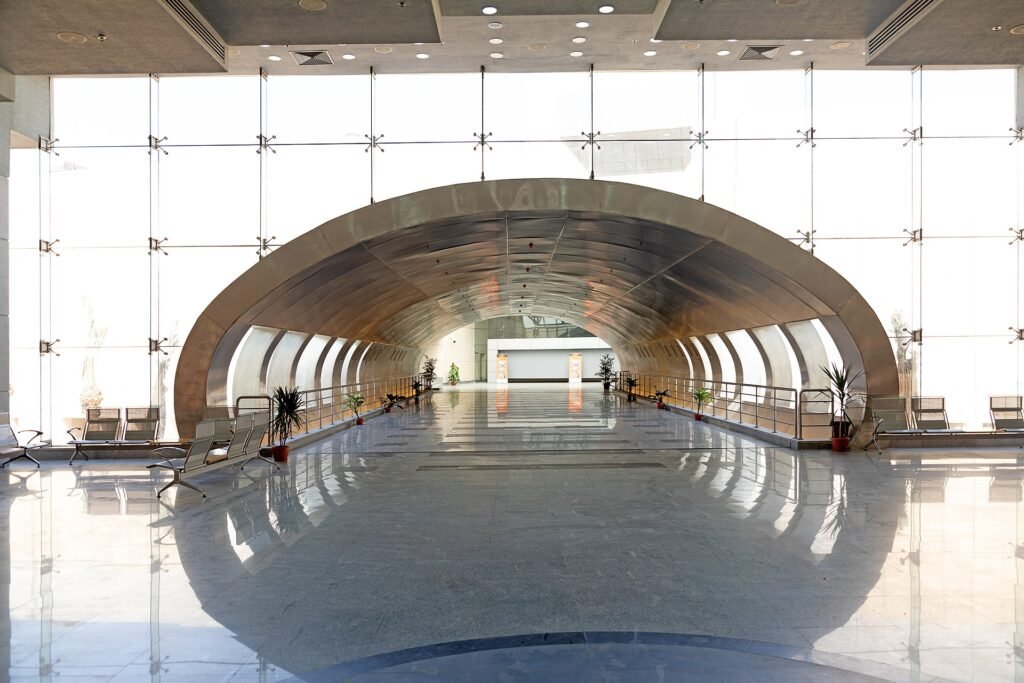
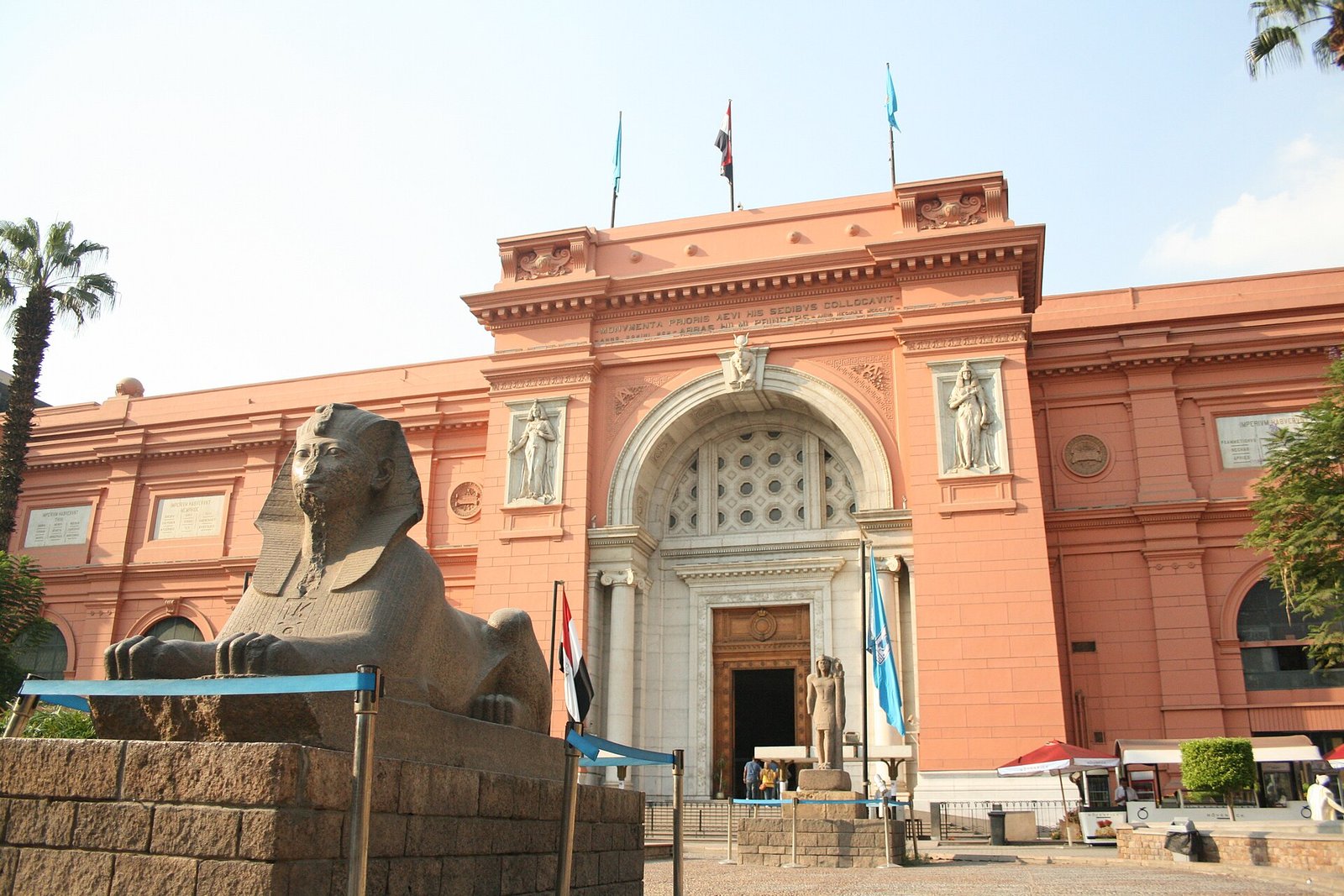
The National Museum of Egyptian Civilization, known almost everywhere by its initials NMEC, stands in Fustat, in the southern part of Old Cairo, beside the small lake of Ain el-Sira. A temporary exhibition hall opened years before the rest of the building, but the full museum, royal mummies included, opened in April 2021.
Its organizing idea separates it from the other two. Cairo's other great collections stop, more or less, where the pharaohs stop. This one runs the whole span of the country in a single sequence: prehistory, the dynastic period, Greco-Roman Egypt, Coptic Christian Egypt, Islamic Egypt and the modern state. Predynastic pottery, a Coptic tunic, a piece of Mamluk metalwork and a twentieth-century object sit inside one argument rather than in four separate departments. It is the museum that explains the country instead of the dynasty.
The Royal Mummies Hall
This is the museum's best known room, and it deserves the reputation. You descend into it. The lighting is very low, the temperature and humidity are held steady, and the noise level drops the moment people are inside. Each body has its own niche, separated from the others, with a name, a set of dates and a card summarizing what modern imaging has established: estimated age at death, height, diseases, probable cause of death.
There are twenty-two of them, eighteen kings and four queens. Ramesses II, Seti I, Thutmose III, Amenhotep III and Ramesses III are among the kings. Hatshepsut, Queen Tiye and Ahmose-Nefertari are among the queens. Standing at the same eye level as a face that stopped moving more than three thousand years ago is not the same experience as looking at a gold mask, and people who expect a mildly grim curiosity can be unprepared for how quiet the room makes them.
Why these bodies are here and not in their tombs
Almost none of these kings were found where they were buried. Their tombs were robbed in antiquity, sometimes within a generation or two, and priests of a later dynasty collected the surviving bodies, rewrapped them, relabeled them and hid them together. Two of those hiding places were found in the nineteenth century: a shaft near Deir el-Bahari, discovered in 1881, and the tomb of Amenhotep II, one of the tombs of the Valley of the Kings, opened in 1898. That history is why a label sometimes notes that a king was found in another king's coffin, and why the identification of one or two of them is still argued over.
What the scans added
Much of the wall text comes from CT scanning and DNA work carried out over the past two decades, and it is the reason the hall takes longer to walk than its size suggests. Ramesses II lived to an unusual age and his spine and teeth show it. The face of Seti I survived better than almost any other. Seqenenre Tao's skull carries a set of wounds consistent with dying in combat rather than in bed. Ramesses III has an injury at the throat that matches the assassination described in an ancient court record. Hatshepsut was identified in 2007 by matching a tooth kept in a labeled box to a gap in a jaw.
Read three or four of those cards and the gallery changes character. It stops being a display of objects and becomes a set of individual deaths, each with a medical file.
No photography, and the reason for it
Cameras and phones are not permitted in the mummies hall, and the staff enforce it rather than posting a sign and hoping. Conservation is part of the reason. The larger part is a deliberate decision to present these people as people, after decades in which the same bodies stood in bright open cases downtown. Put your phone away before you go down the ramp and you will not have to be reminded. Photography is generally fine elsewhere in the building, and the wider camera rules at Egyptian sites are worth knowing before you travel, since they vary from one site to the next.
The Golden Parade of 2021
The mummies arrived in April 2021 in a public event that is worth knowing about, because it is the reason this museum has a name outside Egypt. Each body was sealed in a nitrogen-filled capsule and mounted on its own shock-absorbing vehicle, decorated for the occasion, and the convoy crossed Cairo from the old museum downtown to Fustat in chronological order, with the oldest king leading. Roads were closed, the route was lit, and the whole thing was broadcast live. The mummies hall opened to the public shortly afterward.
Which Cairo museum holds what
Cairo now has three big museums with overlapping names, and sorting them out is the single most useful thing to do before booking anything.
| Museum | Where it is | What it holds |
| National Museum of Egyptian Civilization (NMEC) | Fustat, Old Cairo, south of downtown | The royal mummies, and one continuous gallery covering every era of Egypt |
| Grand Egyptian Museum (GEM) | Giza, a short drive from the pyramids | The complete Tutankhamun burial, the colossus of Ramesses II, the monumental pharaonic material |
| Egyptian Museum, Tahrir Square | Downtown Cairo | Old and Middle Kingdom statuary, the Amarna room, and the atmosphere of a nineteenth-century museum |
The mistake to avoid is geographic. GEM sits on the western edge of the metropolitan area next to the pyramids; NMEC sits in the old city to the south. In afternoon traffic they are well over an hour apart, so pairing them in one half day produces a day mostly spent in a vehicle. Read the Grand Egyptian Museum tickets and opening hours alongside this page and give each museum its own block of time.
If you only have room for one, the honest answer depends on what you want. GEM is the greater spectacle and the fuller collection. NMEC is the more affecting hour.
Planning this trip yourself takes hours. We build it for you, and we answer every question before you commit to anything.
The half of the museum that gets walked past
It is easy to come in, go straight down to the mummies, and leave. Doing that skips the part the other Cairo museums do not cover.
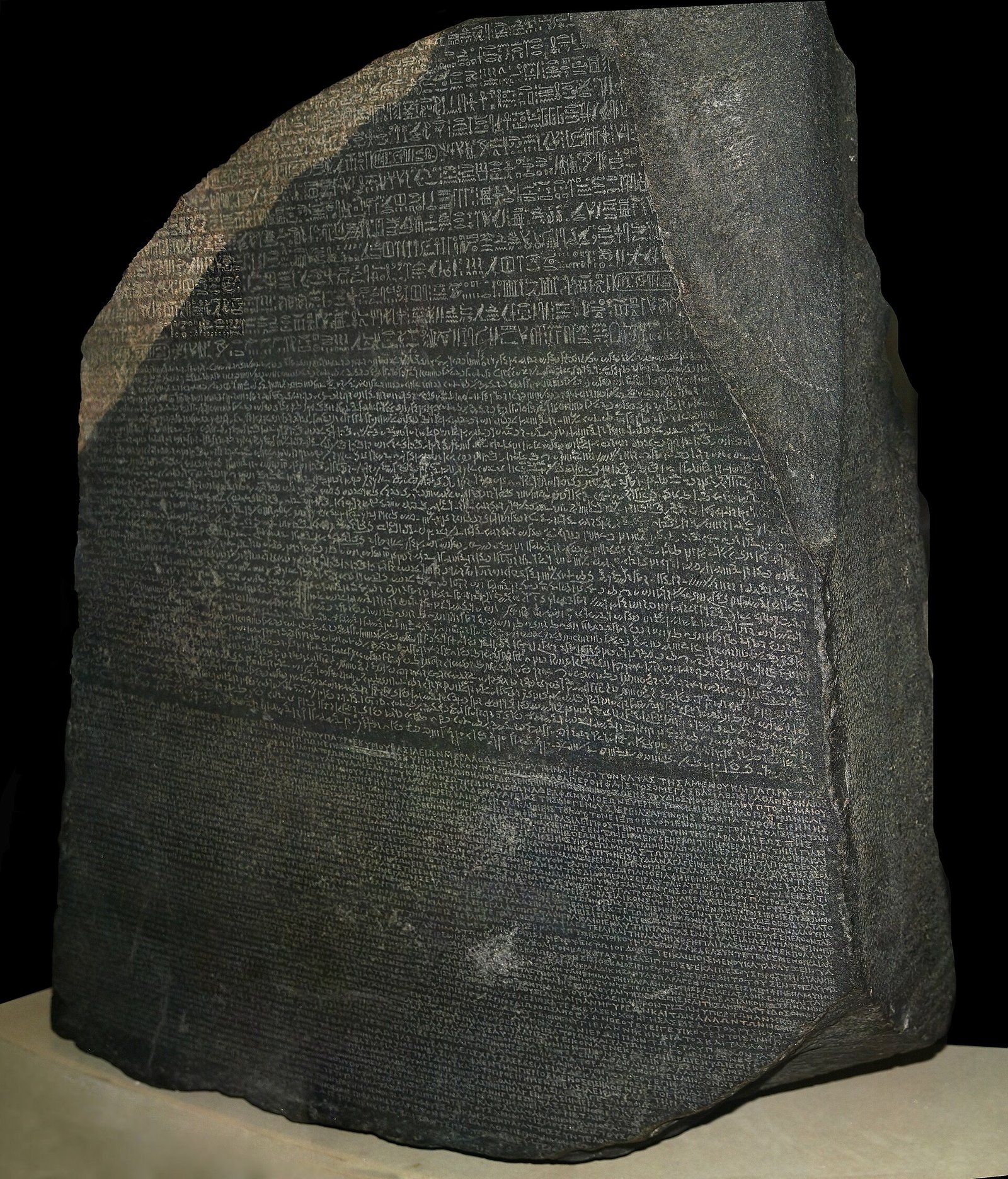
The main hall is the chronological sweep, and around it sit thematic galleries built on ideas rather than dates: the dawn of civilization, the Nile itself, writing, state and society, material culture, and belief. The objects here are rarely the famous ones, and they are explained considerably better than the famous ones are. The gallery on writing does more for a traveler than any amount of staring at a cartouche will, and the same is true of the belief gallery, which pairs well with a quick read of how to recognize the Egyptian gods before you go anywhere near a temple wall.
There is also a textile collection and a body of Coptic and Islamic material that most itineraries skip entirely. It covers the fifteen hundred years of Egypt that visitors tend to treat as a gap between the pharaohs and the airport.
Fustat, and why the location is part of the visit
The museum was not put here for the space. Fustat is the oldest urban core of Islamic Cairo, founded in 641 by the Arab commander Amr ibn al-As, more than three centuries before the city of Cairo itself was laid out to the north. The building stands on ground that has been settled for close to fourteen hundred years.
Beside it, the lake and park belong to the museum grounds, and the building reflects in the water in the late afternoon. It is one of very few quiet green spaces in this part of the city and it works well as a pause between visits. The potters' quarter is close by, with workshops still throwing clay on wheels, and Coptic Cairo, with the Hanging Church and the Ben Ezra Synagogue, is minutes away. Museum first, then Coptic Cairo, then the potters if there is light left, is a strong day.
Planning the visit
How long to allow
Two to three hours covers the mummies hall and the main chronological gallery without rushing. Add the thematic galleries and it becomes a half day. Budget more than you think for the mummies themselves, since the cards are what slow people down.
Tickets
Entry to the Royal Mummies Hall is included in the museum's general admission ticket. Sort both out in the same transaction at the ticket window or online, because the alternative is walking back across the building to buy the second one. Egyptian gate prices are set by the Ministry of Tourism and Antiquities, sold in Egyptian pounds and revised periodically, and the official ticketing platform is egymonuments.com. The current entrance fees for Egyptian monuments are listed separately. Ask us before you travel and we will tell you what this one is at the time.
Getting there
The museum is south of downtown, in Old Cairo, and no metro station sits at its door. Ride-hailing is the simplest approach, and how Uber and Careem work in Cairo is worth reading before your first ride, since fares are fixed in the app and the argument about the meter never happens. The nearest Line 1 metro stations, Mar Girgis and El Malek El Saleh, leave you a short taxi ride away and are the practical option if you are combining the museum with Coptic Cairo.
One naming point that saves confusion. Drivers, maps and signage use the English acronym NMEC, or simply Fustat. Translations of the full name vary and are not what a driver is looking for. Say NMEC, and check that the driver has it and not the Grand Egyptian Museum, which is at the opposite end of the city.
Inside the building
There is a security screening at the entrance, as at every museum in Egypt. The mummies hall is held cool, which is a relief when it is 38C (100F) outside and a reason to have a light layer with you in winter. Voices stay low in there without anyone asking. Displays across all three Cairo museums have been reorganized repeatedly over the past few years, so if you are traveling to see one specific object, confirm where it currently is before you go rather than after.
Where it belongs in an Egypt itinerary
Save it for late. If you are seeing more than one museum on the trip, this is the one that works best at the end, because it puts into sequence everything you have been collecting in fragments around the country. Coming to it first is not wrong, but coming to it last is better.
Half a day covers the museum and Coptic Cairo together with almost no driving between them, which makes it one of the least strenuous days in Cairo and one of the most rewarding. It fits naturally into a first visit of a week or more, and if you are still deciding on length, how many days you need in Egypt is the place to settle that before fixing dates. The ready-built days are listed under guided day trips in Cairo, and the museum appears inside the longer Egypt tour packages with an Egyptologist guide as well.
Tell us your dates and what you want to see and we will build the day around this museum instead of bolting it onto the end of another one. Message us on WhatsApp at 201032295513 and we will answer in Egyptian working hours. International flights to Egypt are arranged by the traveler. Everything on the ground is ours to organize.
Common questions about the National Museum of Egyptian Civilization
What is the NMEC in Cairo?
Which mummies are in the NMEC?
What was the Pharaohs' Golden Parade?
What is the difference between the NMEC and the Grand Egyptian Museum?
How long does the NMEC take to visit?
How do you visit the NMEC?
Let us put the trip together
We are a local agency in Egypt. Tell us your dates and what you want to see, and we will come back with a plan, the practical details sorted and someone to ask when you are here.
Part of our guide to
Destinations and Monuments 6 guides
This article is part of that pillar. The rest of it:
- ▸Abu Simbel Sun Festival: 22 October and 22 February
- ▸Abu Simbel: Tickets, Timing and Getting There
- ▸Grand Egyptian Museum: Tickets, Opening Hours and a Complete Visiting Guide for 2026
- ▸Climbing Mount Sinai at Sunrise: the Night Ascent, the Summit and St Catherine's Monastery
- ▸The Sinai Peninsula: Where Egypt Crosses Into Asia
- ▸Valley of the Kings: Tickets, Tombs and How to Visit in 2026
Keep exploring
To finish planning your trip to Egypt
- ▸Hurghada or Sharm El Sheikh, which Red Sea resort should you choose
- ▸Luxor east bank and west bank: what is on each side and how to see both
- ▸Dahab, Egypt: things to do, the Blue Hole and freediving
- ▸The Sinai Peninsula: Where Egypt Crosses Into Asia
- ▸Hurghada All Inclusive Resorts: What Is Included and Where
- ▸Fayoum, Egypt: Day Trip from Cairo to Whale Valley
- ▸Egypt Temperature by Month: Cairo, Luxor and Hurghada
- ▸See all our Egypt tours