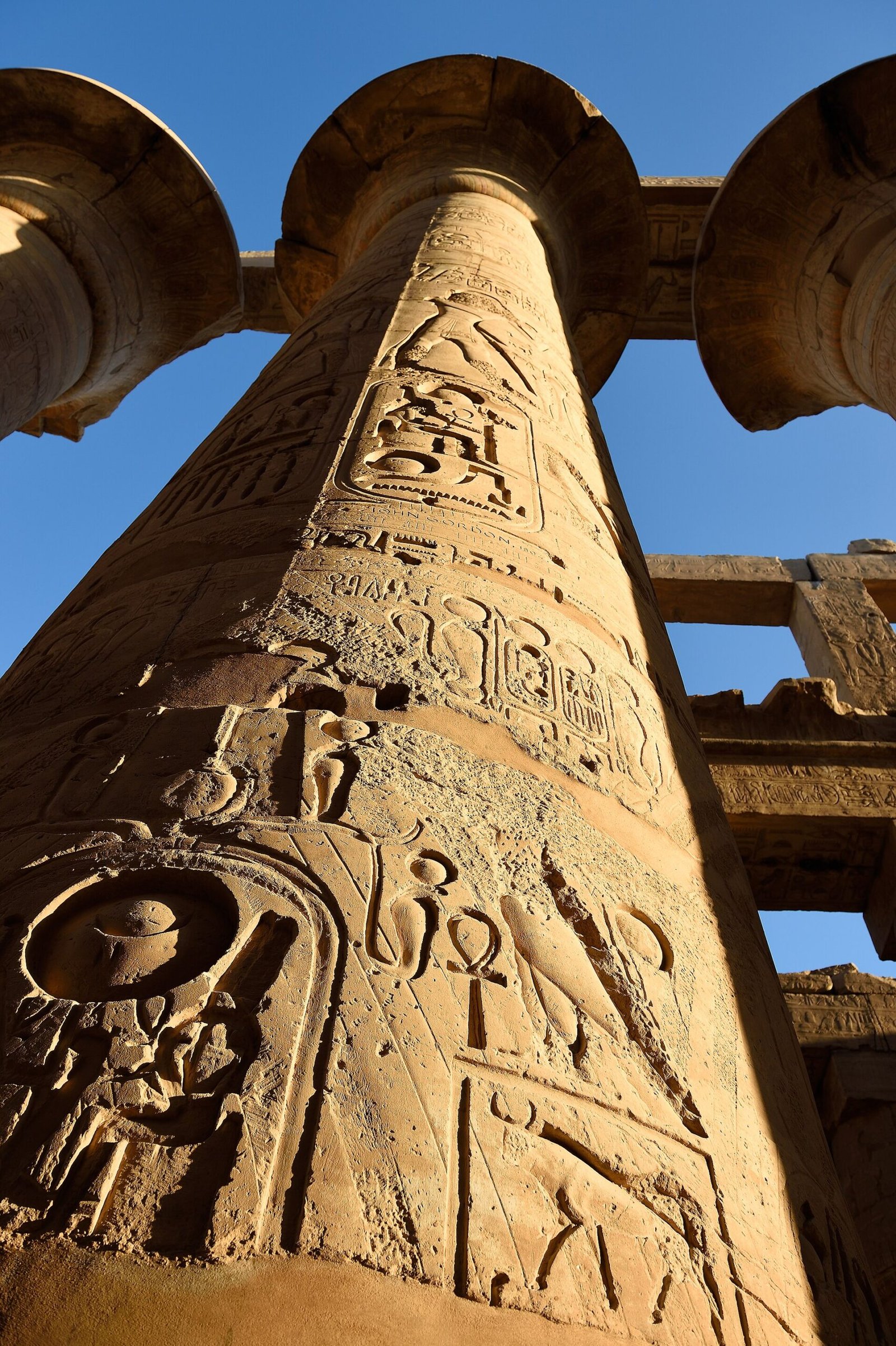
The ankh is the ancient Egyptian hieroglyph for life. Shaped like a cross with a loop at the top, it is the sign the gods carry in their hands and hold to the pharaoh's nose to give him the breath of life. You will see it carved in nearly every temple from Karnak to Philae, and Egypt's early Christians later adopted it as a cross of their own.
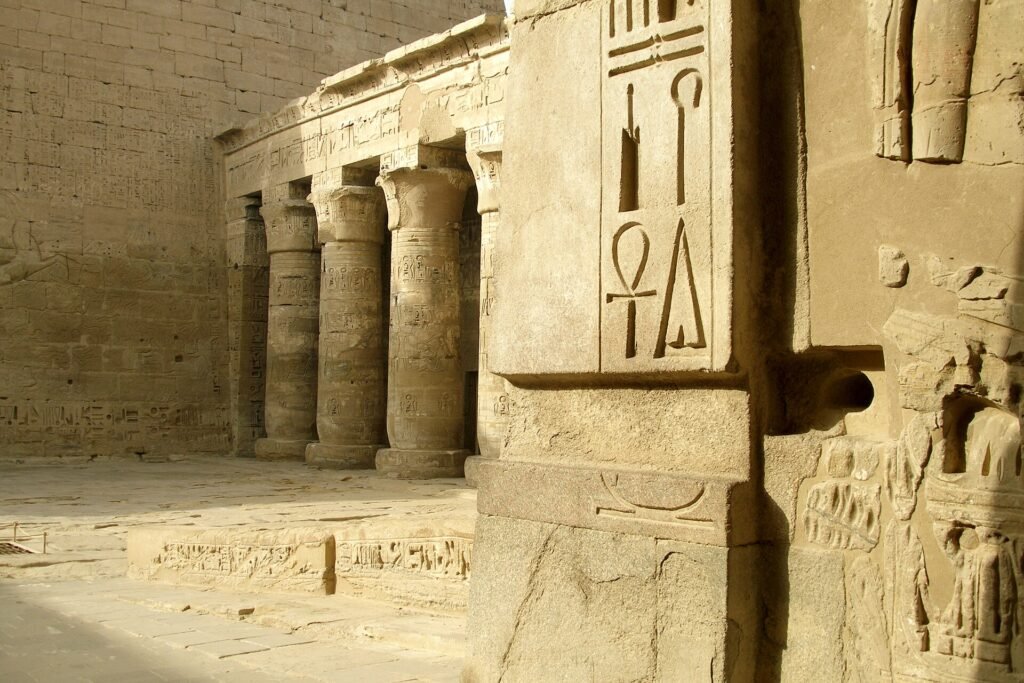
Few ancient symbols have made it to the present day in such good shape. The ankh hangs on silver chains in Cairo's bazaars, shows up in tattoos, on album covers and in crystal shops across America, usually with a different explanation each time. On the walls of an Egyptian temple, though, it says one very specific thing: life, the life the gods hand out and the life the pharaoh was expected to protect for his people.
This guide covers what the ankh actually meant to the Egyptians, what we know (and do not know) about where it came from, how to read it in temple reliefs, why it became a Coptic Christian cross and where you can see it on a trip. We also answer the questions people ask most often today, including what the arms-crossed-over-the-chest pose on so many statues means.
The ankh is a sign in the hieroglyphic script. It looks like a letter T topped by an oval loop, which is why it is also called the crux ansata, Latin for "cross with a handle", or simply the Egyptian cross. The popular names "key of life" and "cross of life" come from its meaning and from the way the gods hold it by the loop, a little like a key.
It was not a decorative motif or just another charm. It was a written word, transliterated ʿnḫ and pronounced something like "ankh", meaning life and to live. It appears from the very beginning of Egyptian writing, around 3000 BC, and stayed in use until the end of pharaonic civilization more than three thousand years later. For how it fits into the rest of the script, see hieroglyphs: what they mean and how to read them.
Its core meaning is life in the widest sense: physical life, the breath that keeps a person alive and eternal life after death. For an Egyptian these were not separate ideas, which is why the same sign turns up in an offering scene on a temple wall and in a tomb, where it promises the dead person that life goes on in the next world.
The ankh is built into many words and names. The best known is Tutankhamun, Tut-ankh-Amun, "the living image of Amun"; his wife was Ankhesenamun, "she lives through Amun". After a pharaoh's name, scribes almost always added the same three-word blessing, ankh, wedja, seneb: life, prosperity, health. It was the formal way of wishing the king well every time he was mentioned.
In reliefs the ankh often appears with two other signs: the djed pillar, meaning stability, and the was scepter, meaning power. When you see a god handing the pharaoh all three, read the scene as a complete blessing: life, stability and the power to rule.
Nobody knows for certain what object the Egyptians were drawing when they wrote the ankh. Their own texts never explain it, because to them it was obvious. There are several theories, and it helps to separate the ones with evidence behind them from the ones without:
Once you learn to spot it, the ankh is everywhere, and nearly always in the same few situations. Knowing them turns a wall full of figures into a story you can follow:
All of this fits the way the Egyptians saw the world, explained in ancient Egyptian religion and, with the full historical background, in our guide to ancient Egypt.
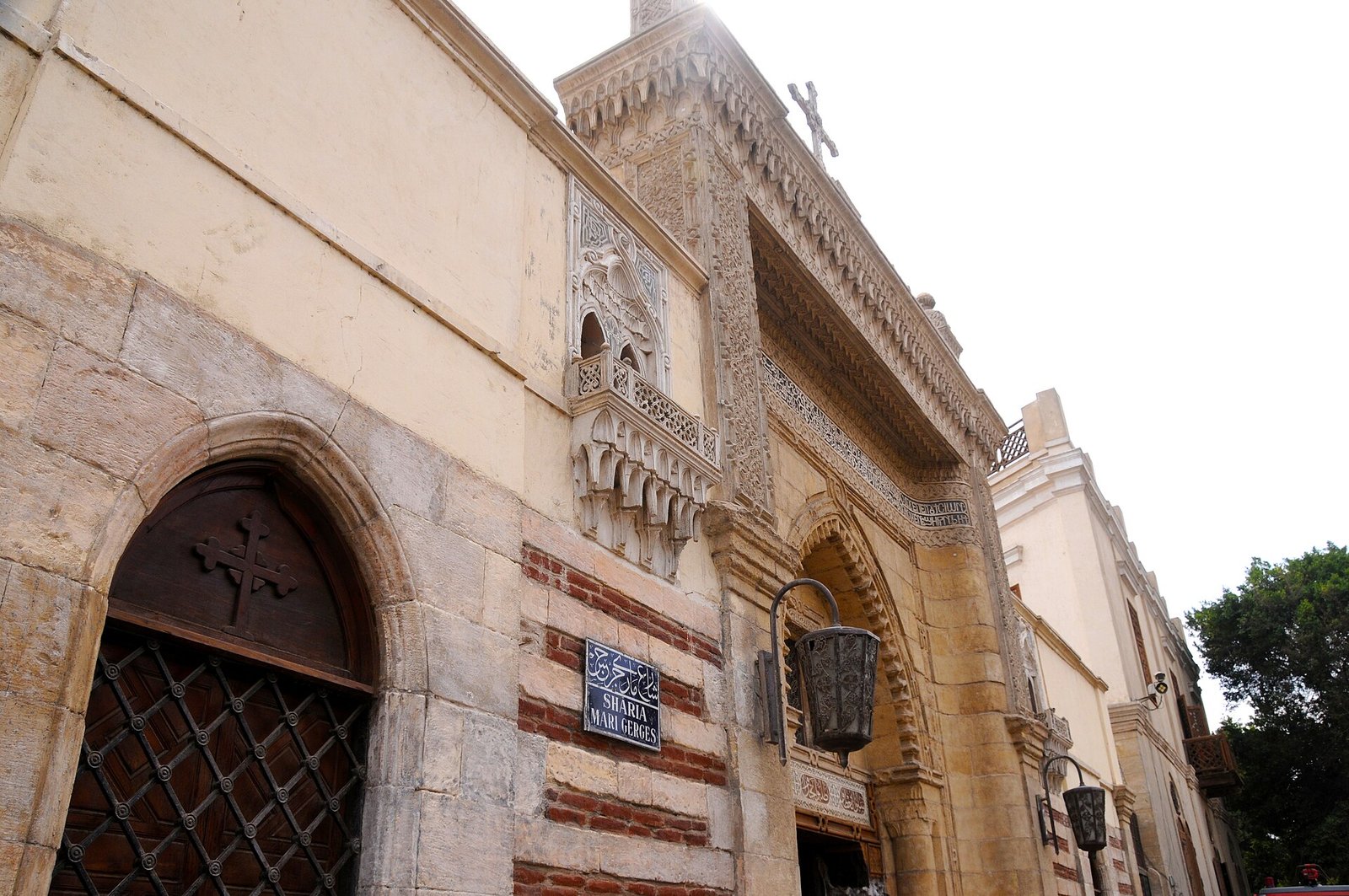
When Christianity spread through Egypt in the first centuries AD, Egyptian converts found in the ankh a symbol they already knew, one that spoke of eternal life. They adopted it as one of the earliest forms of the Christian cross, the crux ansata, and it appears on Coptic textiles, grave stelae and manuscripts from that period.
You can still see that continuity in pharaonic temples that were later used as churches, where Christian crosses were carved next to the ancient reliefs. Philae Temple in Aswan is one of the best examples. If Coptic history interests you, the place to understand it is Coptic Cairo, with its old churches and museum.
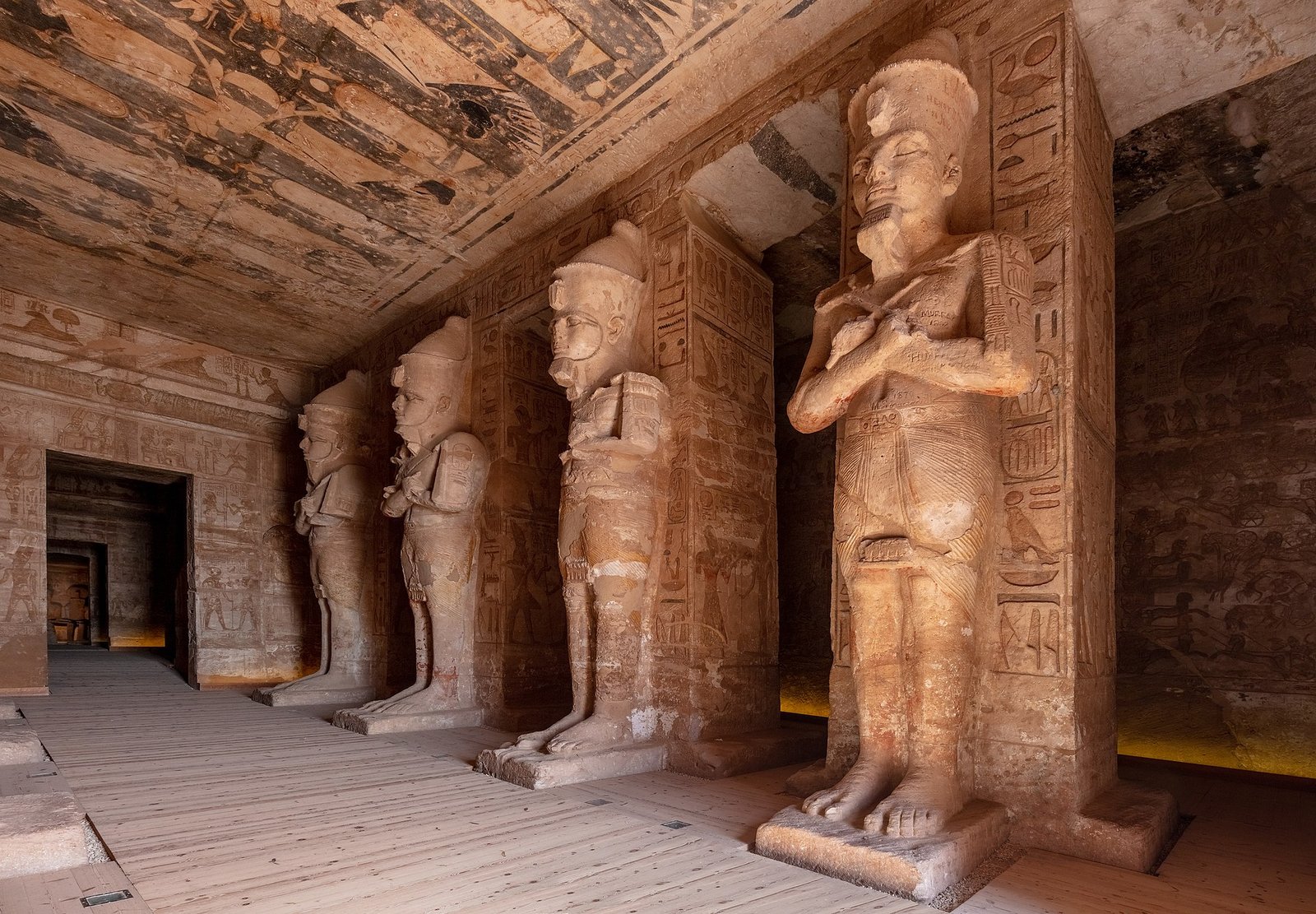
It is a different question from the ankh, but one that comes up on almost every visit. Statues with their arms crossed over the chest, often holding a crook and a flail, show the pharaoh in the pose of Osiris, the god of the dead who came back to life. That is why they are called Osiride statues or Osiride pillars.
The pose meant that the king, at death, would merge with Osiris and be reborn like him. The crook, a shepherd's staff, stood for the pharaoh guiding his people; the flail stood for his authority and for the fertility of the land. Royal coffins and mummies were laid out in the same position.
The most impressive rows of Osiride statues are in the Great Temple of Abu Simbel, where eight figures of Ramesses II, each about 33 feet tall, line the main hall; at Hatshepsut's temple at Deir el-Bahari; and in the courtyard of Medinet Habu in Luxor.
Since the 1960s the ankh has become hugely popular outside Egypt. People wear it as a pendant or ring, get it tattooed and use it in spiritual and esoteric traditions that give it new meanings such as energy, protection or balance. Those are modern readings: they can mean something real to the person who uses them, but they are not part of what the sign meant in ancient Egypt.
People sometimes ask whether the ankh is a bad or negative symbol. Originally it was the opposite: the most positive sign in the whole hieroglyphic script, and Egypt's own early Christians made it their cross. Its use in some modern circles has given it other associations for some people, and everyone reads it through their own beliefs, but to an ancient Egyptian it was simply a wish for life.
Most of these sites fit into a classic eight to ten day trip between Cairo, Luxor and Aswan, with a Nile cruise in the middle. Every itinerary we run, with an Egyptologist guide who reads the reliefs with you, is on our Egypt tour packages page.
The ankh is one of the most popular things to bring home, and in Khan el-Khalili bazaar and the shops of Luxor and Aswan you will find it in silver, gold, stone and gilded metal. For a good piece, check the weight, the finish of the loop and the solder joints, and ask for it to be weighed if it is sold as silver or gold, since the price usually goes by the gram. Many jewelers will engrave your name in hieroglyphs on the cross or on a small cartouche that hangs beside it, ready in a day or two.
Haggling is part of the purchase, so take your time. What to buy in Egypt covers the souvenirs worth your money and how to tell real craftsmanship from mass-produced copies.
Life. The ankh is the hieroglyph Egyptians used to write the word for life and to live, covering both life on earth and eternal life after death. That is why the gods carry it and hold it to the pharaoh's nose.
Its Egyptian name is ankh. It is also called the crux ansata, the key of life or the cross of life. Egypt's Coptic Christians adopted it under the Latin name crux ansata.
No one knows for sure. The most widely accepted theory is that the sign shows a sandal strap, whose name sounded like the word for life. Others link it to a knot or to a mirror, which was also called ankh. The idea that it joins male and female is modern and has no basis in Egyptian texts.
Not in ancient Egypt, where it was the sign of life, and Egypt's early Christians used it as a cross. Some modern esoteric uses have given it other associations for certain people, but its original meaning is a wish for life.
It is the pose of Osiris, the god who rose from the dead. Statues of the king with crossed arms, often holding the crook and flail, show him joined with Osiris and reborn after death. The most famous are at Abu Simbel, Karnak and Hatshepsut's temple.
In nearly every temple and tomb. The best places are Karnak and Medinet Habu in Luxor, the painted tombs of the Valley of the Kings, Philae Temple in Aswan and Cairo's museums, which hold amulets, jewelry and mirrors in its shape.
All our itineraries are on Egypt tour packages.
Keep exploring