Backpacking Egypt on the classic route is cheap, safe and far easier than the forums make it sound
Backpacking Egypt on the classic route is cheap, safe and far easier than the forums make it sound
Backpacking Egypt works well once you accept two things. The country is built along one line, the Nile, so the route plans itself: Cairo, a train south to Aswan and Luxor, then a bus or domestic flight to Dahab on the Red Sea. And the hassle is real, but it is a script, and two words of polite refusal make it stop mattering. Hostels and family guesthouses cover every stop, day trains and the sleeper connect them, street food is excellent, and a felucca overnight gives you the Nile without a cruise. A few pieces are hard alone, the Luxor west bank and Abu Simbel above all, and those are worth handing to a local agency for a day.
Is Egypt a good backpacking destination? The honest answer
Yes, and a better one than its reputation. Egypt has the two things every backpacker wants: a low cost of daily life and a density of world-class sights almost no other country matches. You can sleep in a hostel bunk downtown, eat koshary standing up and be inside the Great Pyramid the same afternoon.
What Egypt also has is friction. Vendors are persistent, taxi drivers negotiate, and a first-timer can spend two days feeling like a walking wallet. That phase passes; by day three most travelers have found their rhythm.
So the real question is whether you will travel it the Egyptian way: trains, guesthouses and local food instead of tourist buses, resorts and buffets. If yes, it is one of the most rewarding trips anywhere and one of the cheapest per sight. The money side is in our guide to Egypt on a budget.
The classic backpacker route: Cairo, the train south, Luxor, Aswan, Dahab
Egypt is geographically simple: the Nile valley is a north to south line with the capital at the top and the temple cities at the bottom, and Sinai sits off to the east. Nearly every independent traveler ends up on the same loop, because the map allows nothing else.
- Cairo, 3 nights. Pyramids, Saqqara, the museums, Islamic Cairo. Base yourself downtown near Tahrir Square, where the hostels cluster and the metro runs.
- The train south. The overnight sleeper straight to Aswan, or a day train.
- Aswan, 2 to 3 nights. The slowest, friendliest city on the Nile, and the departure point for Abu Simbel and the felucca.
- The felucca north to Luxor. Two nights on a sailboat to Kom Ombo, then a van via Edfu. Or a three-hour local train.
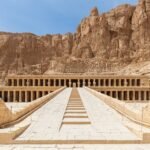
- Luxor, 3 nights. Karnak on the east bank, the Valley of the Kings and Hatshepsut on the west.
- Dahab, 4 nights or more. Back to Cairo, then the long bus to Sinai or a domestic flight to Sharm el Sheikh. Reef, mountains and nothing to do, in the best sense.
That loop at a backpacker pace is two weeks; with a desert night or Alexandria, three. The transport between each stop is in our guide to getting around Egypt.
Where you sleep: hostels, guesthouses and what to check first
Egypt has three categories of budget bed, and knowing where each one lives saves an afternoon of walking with a pack on.
Downtown hostels in Cairo
The backpacker scene lives in the old apartment blocks between Tahrir Square and Ramses station: dorms and cheap private rooms on the upper floors, with high ceilings, cage elevators that sometimes work and rooftop terraces. Noisy, central, and right for the metro and the trains.
Family guesthouses in Luxor and Aswan
In the south the budget beds are family-run. In Luxor they sit near the station or, better, among the sugar cane on the west bank, with a roof terrace facing the Theban hills. In Aswan look at the Nubian guesthouses on Elephantine Island, painted in bright colors, run by families who cook for you. The best-value beds in the country.
Camps in Dahab
Dahab keeps the old Sinai camp tradition: simple rooms or huts around a courtyard, a shared kitchen, hammocks, and the reef a two-minute walk away.
Four checks before you pay: does the hot water work in the evening, does the fan or air conditioning run, what floor is the room on if there is no elevator, and how close is the nearest mosque loudspeaker.
Trains: the day services, the sleeper, and how to get a ticket
The railway is the spine of independent travel in Egypt, and it comes in two products.
| Option | What it is | Best for |
|---|---|---|
| Day train, air-conditioned classes | Seated coaches from Cairo down the valley, roughly ten hours to Luxor and thirteen to Aswan. Big windows, real Egypt outside them. | The cheapest ride, if you can lose a day to the view. |
| Sleeper train | A separately run overnight service with two-berth cabins and meals, leaving Cairo in the evening and arriving in the south in the morning. | Saving a hotel night and waking up in Aswan. |
| Local train, Luxor to Aswan | Frequent, slow, cheap, three hours through farmland past Edfu and Kom Ombo. | Hopping between the two southern cities without the felucca. |
Ticketing is where foreigners get confused. Online booking for non-Egyptians has worked on and off over the years, and the reliable method is still the old one: go to the station a day ahead and buy with your passport in hand. Most hostels will send someone to buy it for a small tip.
Two warnings. Trains sell out around public holidays and the two Eid festivals, so buy several days ahead then. And keep your passport accessible on board; conductors and police checks ask for it.
The felucca overnight: the backpacker's Nile cruise
A felucca is the traditional wooden sailboat of the Nile, and in Aswan the captains run a version of the cruise built for backpackers. You sail north for one or two nights, sleeping on a mattress-covered deck under blankets, eating what the crew cooks on a gas ring, stopping at sandbanks to swim. No cabin, and no toilet beyond the reeds or a support boat.
What you get is the Nile at water level and a night of silence and stars no cabin can give you. What you give up is comfort, so it is a cool-season plan: from late October to March the days are warm and the nights need every blanket, and in summer the deck is an oven by mid-morning.
The two-night trip ends near Kom Ombo, where a minibus collects the passengers, stops at Kom Ombo and Edfu, and drops you in Luxor by late afternoon. Book through your guesthouse and look at the boat before saying yes. Our page on the felucca ride on the Nile covers the sunset version too.
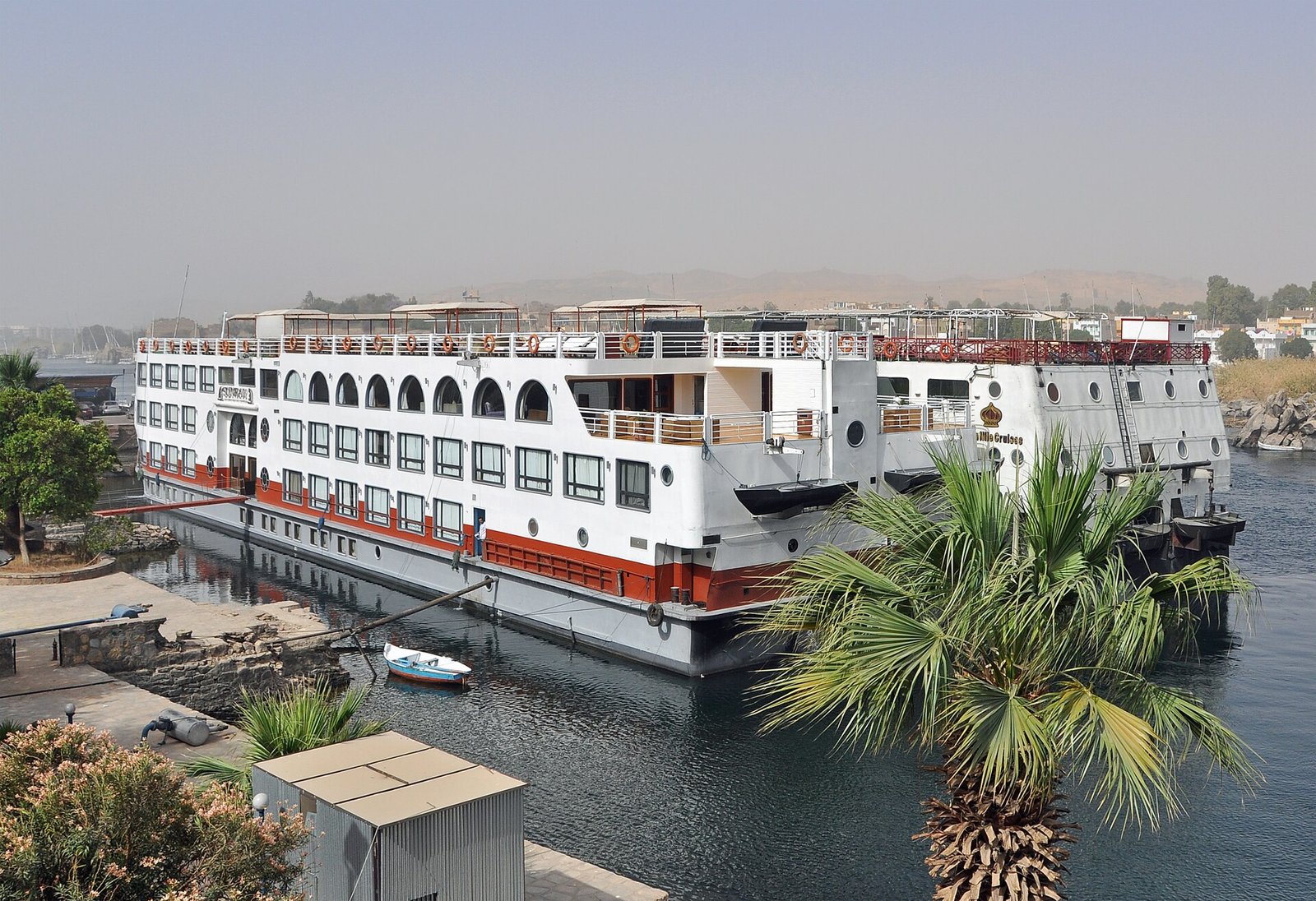
If you want the temples without the deck, the middle path is a short three-night cruise on a simple boat, the one splurge many backpackers make. We can quote it on its own.
Dahab: the backpacker base on the Red Sea
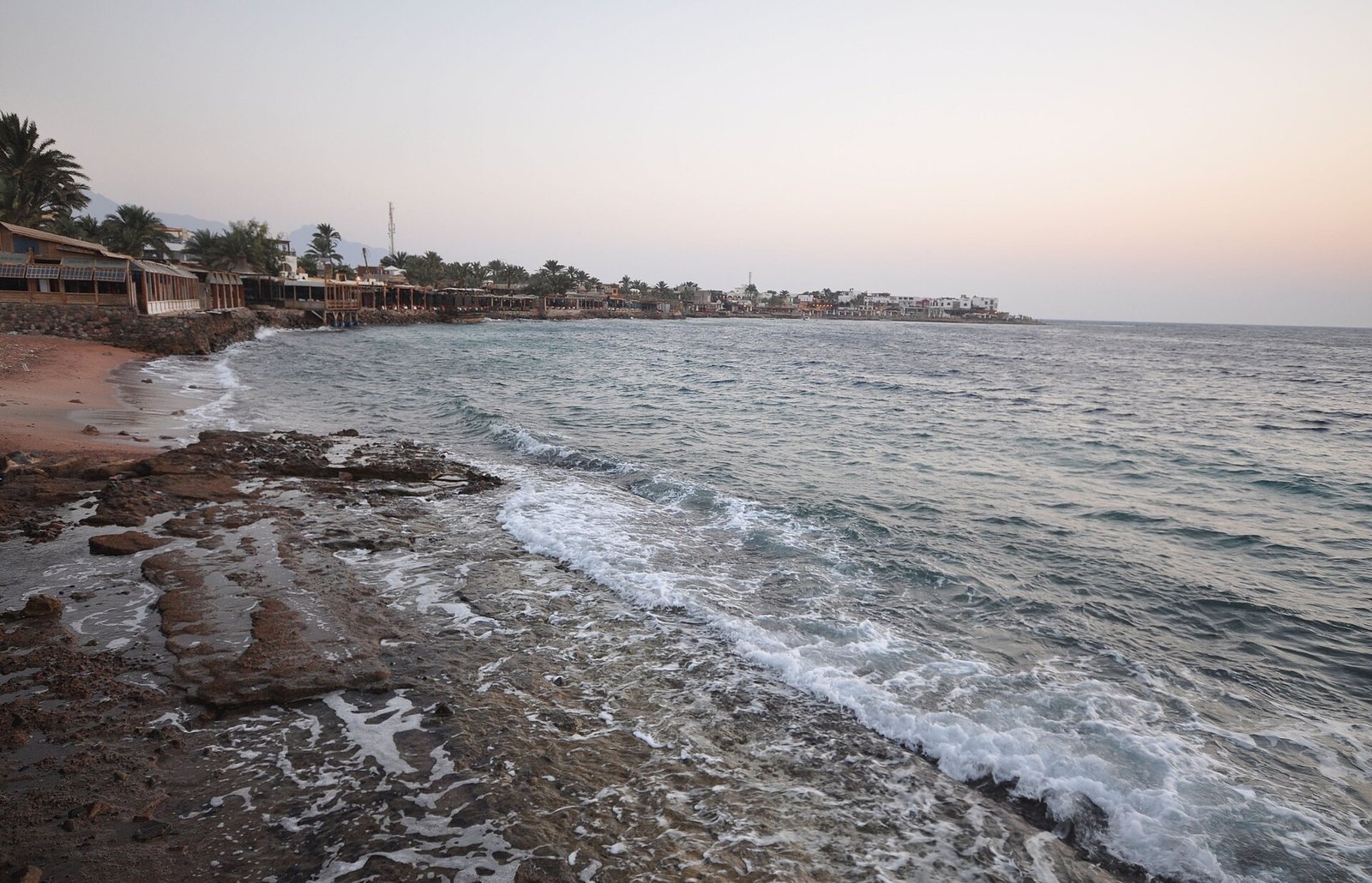
Every backpacker trail has a place where people arrive for three nights and leave three weeks later. In Egypt it is Dahab, a former Bedouin fishing village on the Gulf of Aqaba: one street along the bay, cafes with cushions on the sand, no traffic, and a coral reef you walk into from the shore.
The reasons to stay are practical. Diving and freediving courses are among the most affordable anywhere, with the Blue Hole a short pickup ride north. The Lighthouse reef in town is a snorkel before breakfast. Mount Sinai and Saint Catherine's Monastery are a night trip away, climbing for sunrise, and the Bedouin camps in the wadis run desert dinners.
Getting there is the only chore: most of a day by bus from Cairo, with police checkpoints, or a domestic flight to Sharm el Sheikh and a shared taxi an hour and a half up the coast. Most backpackers bus down and fly back. Everything about the town is in our Dahab guide.
Eating local: the food that keeps a backpacker budget alive
Egypt is one of the great cheap-eating countries, and the food that costs least is the food Egyptians actually eat. Skip the restaurants with laminated photos and go where the line is.
- Koshary. The national dish: rice, lentils, macaroni, chickpeas, fried onions and tomato sauce. A bowl is a full meal.
- Ful and taameya. Slow-cooked fava beans and the Egyptian falafel, served in pita from carts and hole-in-the-wall shops from early morning. This is breakfast.
- Shawarma and kofta. Meat sandwiches for the evening, at the busy grill places.
- Fresh juice. Sugarcane, mango, guava and pomegranate from the stands with fruit hanging in the window.
- Bakeries. Fiteer, the layered Egyptian pastry, sweet or savory.
Eat where it is busy, eat what is hot, go easy on raw salad in the first days, and buy bottled water at kiosks. Guesthouse dinners on the Luxor west bank and in the Nubian villages of Aswan are home cooking and often the best meal of the trip.
The hassle reality, and the "no thanks" script
This is the part of backpacking Egypt people write about most and understand least. At the pyramids, in Khan el Khalili, on the Luxor corniche, someone will attach himself to you every few minutes offering a camel, a carriage, a boat, or a chat that turns into a shop. It is not dangerous. It is a sales technique, and it is beaten by a technique.
The script is two words: la, shukran, no thank you. Say it once, with a small smile, without stopping, and keep walking. Do not explain, do not say maybe later, do not take the free gift, and do not answer where you are from, which is the opener. Egyptians use exactly this and it is not rude.
- "The temple is closed today, come to my shop while you wait." It is not closed. Walk to the ticket office.
- "The meter is broken." Get out, or use a ride-hailing app in Cairo, where fares are fixed.
Learn the local price of the things you buy daily so you know when to negotiate and when to laugh, and accept that a little overpaying is a tax on being new. The full catalog, with counters, is in our guide to common scams in Egypt.
Where a guide is still worth it, even on a backpacker trip
You can see every monument in Egypt without hiring anyone. But there are places where doing it alone costs more in time, money and understanding than a guide for a day would.
| Place | Alone | With a guide and car for the day |
|---|---|---|
| Luxor west bank | You need a car anyway; the sites are miles apart with no public transport, and you pick tombs at random. | The guide knows which three tombs to choose, and Hatshepsut and Medinet Habu fit into the same morning before the heat. |
| Abu Simbel | Over three hours each way from Aswan on a desert road, leaving before dawn. The transfer is the whole logistics; there is no train. | A minibus seat at dawn, arrival as the light hits the facade, back for lunch. |
| Saqqara and Dahshur | No useful public link between the Step Pyramid, the Bent Pyramid and Memphis. | A half-day loop covering all three. |
The backpacker solution for the west bank is to share a car and guide with three others from the guesthouse; someone is always going. Our page on the two banks of Luxor explains how the day fits together, and the road and timing for Abu Simbel are in how to visit Abu Simbel.
Safety, money and cards, in plain terms
Backpacking Egypt is safe in the sense that matters: violent crime against travelers is rare, the tourist cities are heavily policed, and solo travelers cross the country every week without incident. The real risks are smaller and more boring.
- Traffic. Crossing a Cairo street is the most dangerous thing you will do. Walk beside a local and keep a steady pace.
- Heat. From May to September the south passes 100 degrees Fahrenheit (about 38 Celsius) by midday. Sightsee early and rest at noon.
- Solo women. Verbal attention is common in Cairo, rarer in the south and in Dahab. Dress to local norms and use the women-only metro cars.
Money is a cash-first affair. ATMs are everywhere in the cities; cards work in hotels, bigger restaurants and some ticket offices, and almost nowhere else. Take out cash before heading to a west bank guesthouse or a village in Sinai, keep a reserve for the day the machine is empty, and keep a pocket of small bills for tips, which are expected for every small service.
A two-week backpacker plan you can copy
The loop we would give a friend with fourteen days and a pack. It follows the current of the Nile and ends with nothing to do.
| Days | Where | What |
|---|---|---|
| 1 to 3 | Cairo | Pyramids on day two, Saqqara if you share a car. Day three: a museum, Islamic Cairo at dusk, then the evening sleeper south. |
| 4 to 6 | Aswan | Philae and the Nubian village by motorboat. Abu Simbel at dawn on day five with a shared transfer. Day six: rest and book the felucca. |
| 7 to 8 | Felucca | Two nights sailing north, then the van to Kom Ombo, Edfu and Luxor. |
| 9 to 11 | Luxor | West bank with a shared car and guide on day nine. Karnak and Luxor Temple on day ten. Day eleven: train or domestic flight to Cairo. |
| 12 to 14 | Dahab | Overnight bus or a flight to Sharm. Snorkel the Lighthouse, dive the Blue Hole, a Bedouin dinner in the wadi. |
With a third week, add a White Desert night from Cairo and the Mount Sinai sunrise from Dahab. The one fixed rule is to go with the river: Aswan before Luxor means the felucca works.
How Explora Egipto helps independent travelers, without taking over
We are a local agency in Egypt with our own guides and vehicles. Most of our clients book a full tour, but a growing number are backpackers who keep the trip their own and hand us only the pieces that are genuinely hard alone.
- A guide for a day. An Egyptologist and a car for the Luxor west bank, or for Saqqara and Dahshur from Cairo, picked up at your hostel.
- Abu Simbel transfers. A dawn seat from your Aswan guesthouse to the temples and back, tickets handled.
- A short cruise. Three nights between Aswan and Luxor on a boat we know, temple stops guided.
- Airport pickup on night one. Arriving in Cairo after midnight is the one moment a name on a sign is worth it.
Everything else, the hostels, the trains, the felucca, Dahab, you book yourself. Tell us which pieces you want and your dates, and we send you the quote for exactly those. The trade-offs are laid out in Egypt on your own or with an agency.
Frequently asked questions
Is Egypt cheap for backpackers?
Day to day, yes, among the cheapest destinations you can reach. Hostel dorms, day trains, street food and the Cairo metro cost very little, and a modest daily budget stretches for weeks. What pushes the average up is monument tickets and the Nile cruise if you take one. Swap the cruise for a felucca and the trip stays in backpacker territory.
Can you backpack Egypt without a tour?
Completely. Egypt has the infrastructure independent travelers need: hostels in every city, a railway down the Nile valley, buses to the coast, a metro in Cairo and ride-hailing apps. Tickets for every monument are sold at the gate. It takes more patience and a firmer no than some countries, but thousands of backpackers do it every year.
Is backpacking Egypt safe for a solo woman?
Yes, with the usual adjustments. The main issue is verbal attention in Cairo, which fades in Luxor and Aswan and is almost absent in Dahab. Dress conservatively away from the coast, use the women-only cars on the Cairo metro and sit beside other women on buses. A firm no thanks ends most situations.
Should a backpacker take the sleeper train or the day train?
Take the sleeper south if you value a hotel night saved and waking up in Aswan; take the day train if you value the view and the lowest fare. Many do one of each: the sleeper down, then a cheap seat from Luxor back to Cairo. Buy either at the station a day or two ahead with your passport.
Is the felucca overnight worth it, or should I take a cruise?
They are different trips. The felucca is a night under the stars on a sailboat, no cabin and simple food. A short cruise is a floating hotel with guided temple stops. In the cool months the felucca is unforgettable; in summer, or if you want a bed and a shower, a three-night cruise is the better splurge.
How do I get from Luxor to Dahab as a backpacker?
There is no direct route, so you go through Cairo. Take the train or a domestic flight from Luxor to Cairo, then either the overnight bus across Sinai to Dahab, or a domestic flight to Sharm el Sheikh and a shared taxi up the coast. The bus is cheap and eats a night; the flight is fast. Keep your passport handy for the Sinai checkpoints.
Keep the trip yours, hand us the hard bits
Tell us your dates, your route and which pieces you want covered, a west bank guide, a dawn transfer to Abu Simbel, a short cruise or a name at the airport, and we come back with a quote for exactly those. No full package unless you ask for one, just a local agency filling the gaps in a backpacker's plan.