Common scams in Egypt follow the same few scripts, and every one of them has a simple counter
Common scams in Egypt follow the same few scripts, and every one of them has a simple counter
The common scams in Egypt are not dangerous. They are small, rehearsed scripts aimed at your wallet: the stranger who says the site is closed today, the fake ticket seller, the camel ride whose price changes halfway through, the "free" gift, the tomb guard who wants a photo tip, the taxi with no meter, the papyrus showroom, the wrong change, the felucca that adds a fee, the airport helper and the fake guide. Each one collapses against three habits: agree everything before you start, accept nothing you did not ask for, and travel with a licensed guide who has seen every script a thousand times.
Why Egypt has tourist scams, and why they are a nuisance rather than a danger
Egypt has tens of millions of people living around a handful of sites that every visitor on earth wants to see. Wherever that happens, from Rome to Bangkok, a small economy grows up around separating tourists from a few extra bills. A tourist scam in Egypt is an economic trick, not a threat to your safety. Violent crime against visitors is rare, and whether Egypt is safe to visit is a different question from this one.
Almost every script has the same three beats. First, friendly contact: a greeting, a warning, a favor. No money is mentioned, so your guard drops. Second, an obligation: something is placed in your hand, a photo is taken with your phone, a stranger walks you somewhere. Third, the bill, presented so that saying no feels rude.
You break the script at beat one, not beat three. Once you have accepted the favor, the conversation is lost. Declining a gift, a photo or an escort from a stranger is not rude in Egypt.
"The site is closed today" and the helpful stranger who knows a better place
This is the most common scam in Egypt, and it works because it sounds plausible. You are walking toward the Pyramids, the Egyptian Museum or Khan el Khalili. A well dressed man falls into step beside you and tells you it is closed: for prayers, for a holiday, for a government visit, until three o'clock. Luckily he knows what is open, and it is on the way.
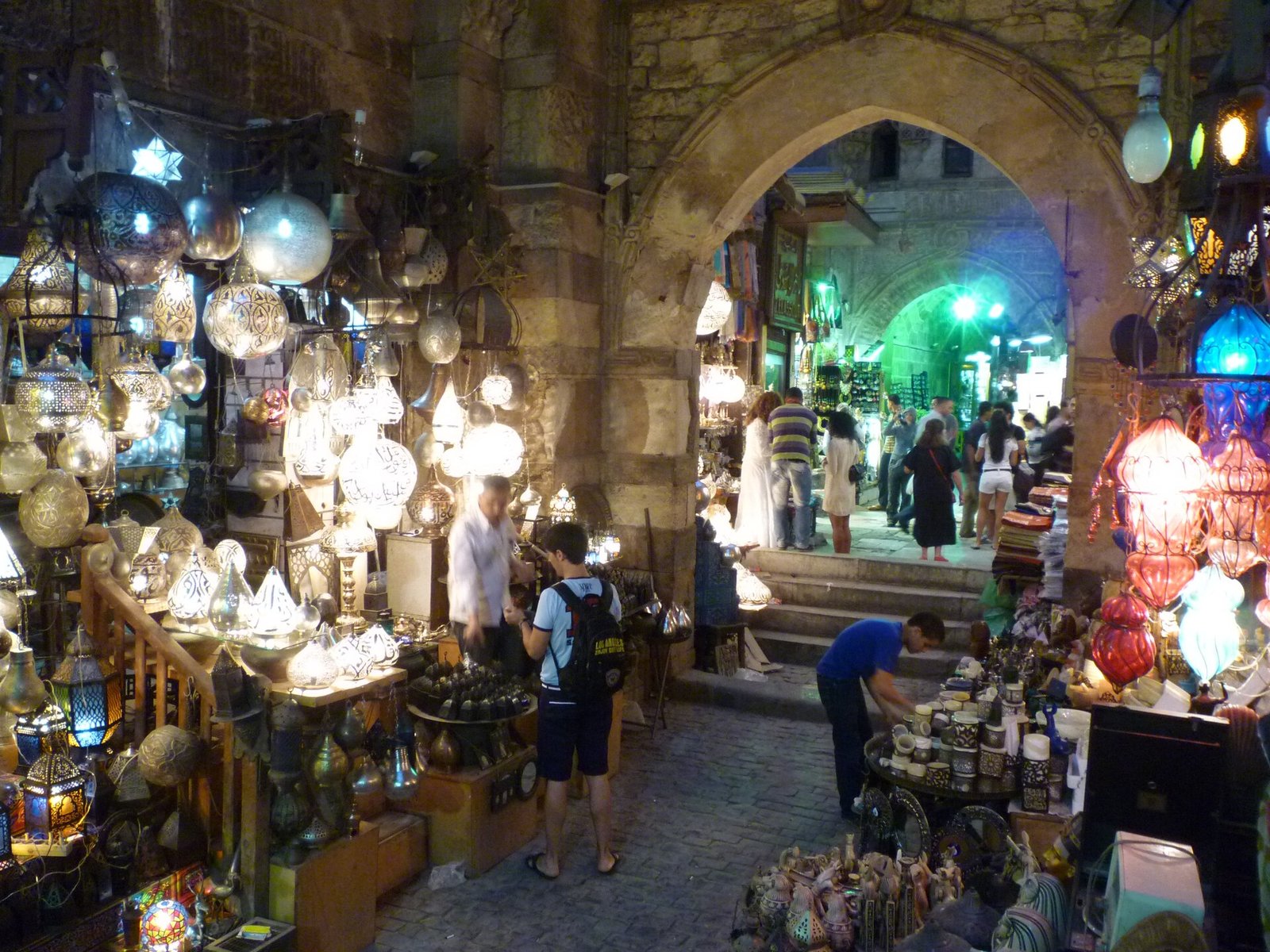
What is open is a shop. A perfume shop, a papyrus gallery, a "government cotton store", a cafe where his cousin works. The commission on whatever you buy is the point of the performance. Variations include "the entrance is on the other side, follow me" and "you need a special ticket that I can arrange".
The counter is short. Egyptian monuments do not close for prayers and the main gates do not move. Keep walking and confirm at the gate. "Where are you from?" is the opening line of the script, not a friendly question; a smile and a wave is enough. With a guide beside you this does not happen at all, because touts recognize a licensed guide and go looking for someone alone.
The fake ticket seller and the tomb guard who wants a photo tip
At Giza, Saqqara and the big Luxor sites, men stand between the parking lot and the ticket window offering "VIP tickets" or tickets that skip the line. Some sell a used stub, some a marked-up genuine ticket, some nothing at all. Official tickets come from the office inside the fenced entrance or from the government's online portal. There is no other channel.
Inside the tombs a gentler script runs. A guard, or a man dressed like one, beckons you past a rope, points out a "secret" carving, or takes your phone and poses you in front of the best painted wall. Then he holds out his hand.
This one is a gray area. A small tip for a guard who really showed you something is normal, and our guide to tipping in Egypt explains where the custom sits. The scam version is when he keeps your phone until he is paid, or leads you somewhere photography is forbidden so a second man can appear and fine you. Keep your phone in your hand, decline the pose, and let your guide decide which guards are worth a coin.
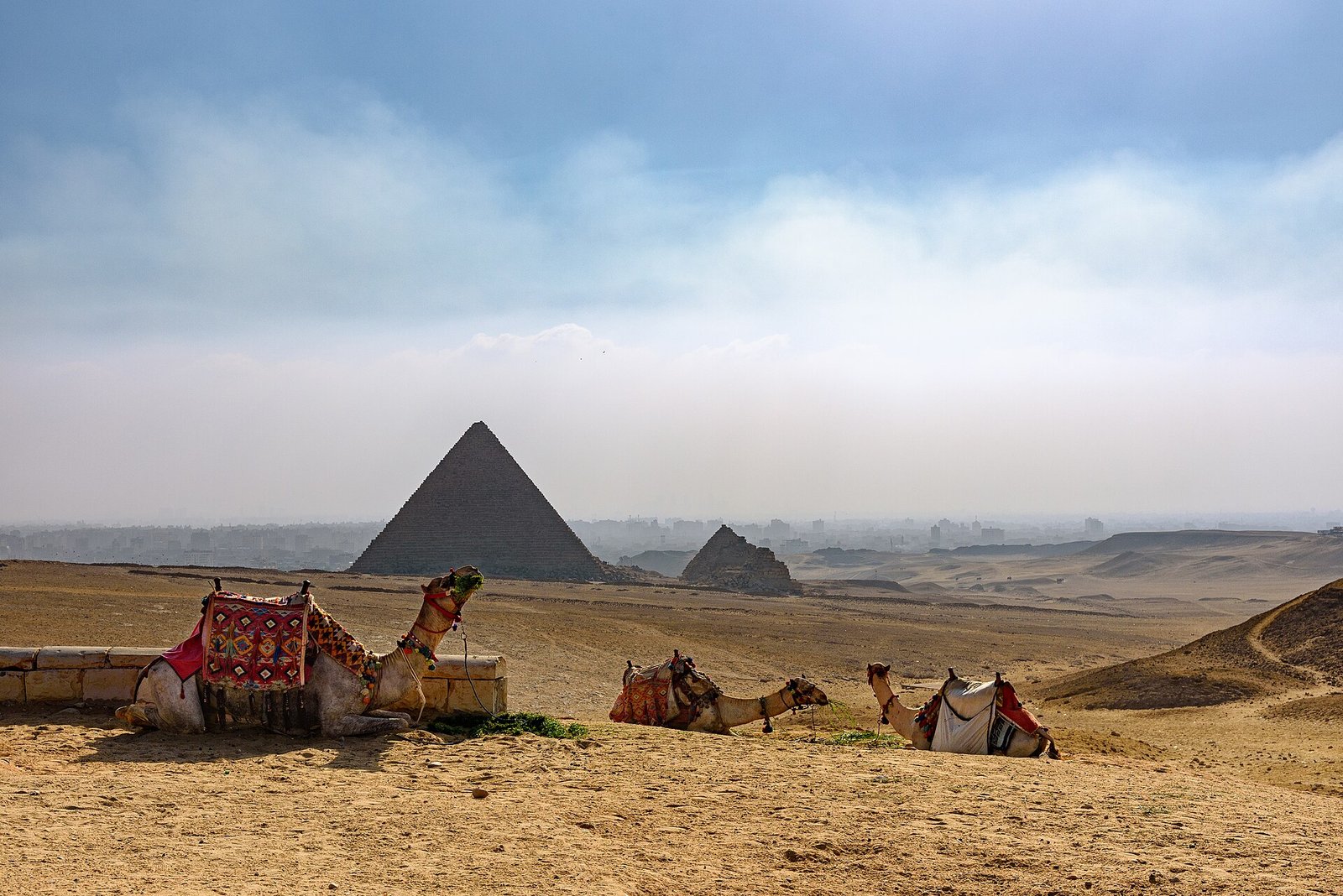
The camel ride that changes price in the middle of the desert
This is the one Americans write home about. You agree a price to ride a camel at the Pyramids, you are helped up, and the handler leads you out onto the plateau. Then the price changes. The figure you agreed was for getting on, he explains, and there is a separate figure for getting off, or for the return leg, or for the photos he took. You are ten feet up on an animal that kneels only when he says so.
The counter is not to avoid the camel. Done right, it is one of the best half hours of the trip, and our page on the camel ride at the Pyramids covers the good stables. The counter is structure:
- Book the ride through your guide or agency, from a stable paid in advance for a fixed route and time.
- Going alone, agree the total for everyone for the whole loop including dismounting, out loud, before you touch the animal.
- Pay nothing until your feet are back on the ground.
- Do not hand your phone to the handler. Your companion or your guide takes the photos.
Taxis, the meter that "does not work", and the fare that grows at the end
Cairo's white taxis have meters and many drivers will not use them for a foreigner. The meter is "broken", so a fare is agreed and then doubled at the destination "because of traffic". Or the meter runs and the driver takes the long way around the ring road. Or no fare is agreed at all, and at the hotel door a number appears that has no relation to the distance. Outside Cairo the same thing happens with horse carriages in Luxor and Aswan, where the agreed figure quietly becomes per person or per hour.
The counter in Cairo is an app. Uber and Careem both work and the fare is fixed before you get in, as our guide to Uber and Careem in Cairo explains. Elsewhere, agree the total for the whole car and the whole group before the door closes. Better still, a private driver booked for the day takes the whole subject off the table.
The "free" gift, the felucca that adds a fee, and the friendly helper at the airport
The gift that is not a gift
A scarf is draped around your neck, a scarab pressed into your palm, a bracelet tied onto your wrist "as a welcome, no money". Thirty seconds later the price is announced, and refusing now means handing back a gift in front of onlookers, which is the discomfort the script relies on. Counter: keep your hands by your sides and say "la, shukran" (no, thank you) before the object arrives. If it arrives anyway, put it down and walk on. You owe nothing.
The felucca that grows a fee
A felucca sail at Aswan or Luxor is a genuine highlight. The scam is the arithmetic. You agree a figure for an hour, and at the end the captain explains that it was per person, or that the wind made it take longer, or that the boy on the sail is extra. Counter: agree the total for the whole boat, the whole time and everyone on board before you step on, and pay when you step off.
The airport helper
At Cairo airport a man with a lanyard and an official manner takes your luggage cart, guides you through the visa counter and passport control, and walks you out to "his" car. He then expects a fee for each step, and the car is a private taxi at several times the going rate. Counter: the visa stamp is sold at the bank counters and needs no helper, nobody should handle your passport unless they are behind a desk, and your pre-booked driver is waiting with your name on a sign. Our Cairo airport arrival guide walks through the sequence.
The papyrus and perfume showroom, and the fake guide
The showroom scam is often built into the tour itself. A "papyrus institute", a "perfume museum", an alabaster workshop in Luxor: it is billed as a cultural visit, there is a short demonstration, and then the doors close and the selling begins for forty minutes. The person who brought you earns a commission on everything you buy, which is why cheap day tours are cheap. The papyrus is sometimes banana leaf, the perfume oils are sometimes diluted, and the "antiques" are always reproductions, because exporting a real antiquity is a crime.
The counter is to ask, before you book, whether the itinerary includes shopping stops, and to get the answer in writing. Our guide to how to choose an Egypt tour operator lists the other questions worth asking.
The fake guide is the freelance version. At Karnak or Giza a man attaches himself to you, starts explaining the columns, and an hour later asks for a large tip and steers you into a shop. Every real guide in Egypt holds a tourism ministry license and carries the card. Ask to see it. Better, arrive with your own guide and the freelancers do not try.
Money scams: wrong change, the switched bill and paying in dollars
These are the least dramatic and the most frequent, because they happen inside ordinary purchases.
- Short change. You are handed back less than you are owed, on the assumption that you do not yet know the notes. Count it in front of the seller.
- The switched bill. You hand over a large note, the seller lowers it below the counter and comes back up with a smaller one. Say the value of the note out loud as you hand it over.
- "No change." The total is rounded up because there is supposedly no small money in the shop. Carry small notes.
- Paying in your own currency. A card terminal or ATM offers to charge you in US dollars. Always choose Egyptian pounds; the conversion is set to favor the machine.
Our guide to exchanging money in Egypt covers the notes and the ATMs.
What is not a scam: tipping, haggling and the cup of tea
Baksheesh is not a scam. The small tip to the man who watches your shoes at a mosque, the restroom attendant, the porter, the guide at the end of the day: this is how service is paid for where wages are low. Carry small notes for it.
Haggling is not a scam. In the bazaar the first price is an opening offer, not a lie. The seller expects a lower number and a glass of tea, and is not offended when you walk away. Our guide to haggling in Egypt explains how it goes.
The tea is usually just tea. A shopkeeper who offers you tea is being hospitable. You can drink it and buy nothing, and refusing it is fine too.
Persistence is not a scam. Vendors at Giza and in Luxor are relentless in a way that surprises Americans. Relentless is not dishonest. A calm "la, shukran" is understood by everyone.
How a licensed guide and pre-booked services remove almost every scam
Nearly every script needs three conditions: you are alone, you are undecided about what happens next, and money has not been agreed. A licensed Egyptologist guide and a pre-booked day take away all three. Touts recognize the guide's card and move on. The camel, the felucca, the carriage and the driver are operators the agency uses every week, paid on account, with nothing to renegotiate.
| Scam | On your own | With a licensed guide and pre-booked services |
|---|---|---|
| "The site is closed" | Depends on you knowing better | Never attempted; the guide walks you in |
| Fake ticket seller | You find the real window yourself | Tickets bought by the guide at the office |
| Camel price changes mid-ride | Agree total, pay on dismount | Stable paid in advance for a fixed route |
| Taxi with no meter | Use Uber or Careem | Private driver for the day |
| Free gift, tomb guard photo | Hands closed, phone in pocket | The guide fields it before it reaches you |
| Felucca adds a fee | Agree total for the boat | Captain we work with weekly |
| Showroom stops | Ask before booking | None on the itinerary, in writing |
| Fake guide | Ask to see the license | You already have the real one |
| Wrong change, dollar pricing | Count, say the note, pay in pounds | Same habits, yours to keep |
What a guide cannot do is count your change for you. The money habits stay yours.
What to do if it has already happened
Most losses here are small enough that the right move is to shrug and get on with the day. For the rest:
- At a monument, go to the ticket office or the Tourist Police post that every major site has. A mention of them usually resolves things on the spot.
- In a taxi, felucca or carriage dispute, do not argue in the street. Pay the amount you agreed, walk into your hotel lobby, and let the front desk handle the rest.
- If a card is involved, freeze it in your banking app and call the bank before anything else.
- If you need a police report for travel insurance, file it while you are still in Egypt. The Tourist Police, on the 126 hotline, has English-speaking staff.
- Tell your agency. If it happened on a service we arranged, we want to know the same day.
Keep the proportion in mind: most Egyptians you meet are not trying to fool you, and many will go out of their way to help a lost visitor for nothing.
How Explora Egipto protects you from all of this
We are a local agency in Egypt with our own guides and vehicles, and the way we run a trip is the list of counters above turned into a service.
- A licensed Egyptologist guide at every site, who buys the tickets and answers the touts in Arabic before they reach you.
- A private driver for every transfer, including the airport, so you never negotiate a fare.
- Camel rides, feluccas and carriages booked with operators we use every week, paid in advance for a fixed route and time.
- No shopping stops. If you want papyrus or perfume oils, your guide takes you to a fixed-price shop on your time, with no commission.
- A WhatsApp line to our office the whole time you are in Egypt.
Tell us your dates and who is traveling, and we send you the quote.
Frequently asked questions
What are the most common scams in Egypt?
The stranger who says a site is closed and walks you to a shop, the camel ride whose price changes once you are on the animal, the "free" gift billed a minute later, the taxi with no meter, the papyrus showroom, the fake guide, the felucca that adds a fee, and the wrong change. None is dangerous, and every one has a simple counter.
Are tourist scams in Egypt dangerous?
No. They are tricks aimed at your money, not at your safety, and violent crime against visitors is rare. The worst outcome of most of them is an overpriced camel ride or a scarf you did not want. A firm no is enough.
How do I avoid being scammed in Egypt?
Three habits cover almost everything. Agree the total for any service before it starts, for everyone, and pay at the end. Accept nothing you did not ask for, including gifts, photos and escorts. Confirm surprising information at the source. Then remove the rest by traveling with a licensed guide and pre-booked drivers.
Is the camel ride at the Pyramids a scam?
Not in itself. The scam is the renegotiation once you are up on the camel and cannot get down. Book it through your guide or agency from a stable paid in advance, or, on your own, agree the full loop including dismounting out loud and pay only when your feet touch the ground.
Is tipping in Egypt a scam?
No. Baksheesh, the small tip for a porter, a restroom attendant or a guard who showed you something, is how service is paid for in Egypt. The scam version is a guard who keeps your phone until he is paid, or a stranger who invents a service and demands a tip for it.
Does a licensed guide really stop the scams?
Almost all of them. Touts recognize a licensed guide and move on to travelers who are alone. The guide buys the tickets, handles the guards and keeps the itinerary free of showrooms. What stays with you is the money hygiene: counting change and paying in Egyptian pounds.
See Egypt without ever having the conversation
Tell us your dates, who is traveling and what you most want to see. We come back with an itinerary with a licensed guide at every site, a private driver at every transfer, and no shop stops.