What Men Should Wear in Egypt
What Men Should Wear in Egypt
Light clothes that cover your shoulders, and legs covered to somewhere around the knee anywhere outside a beach resort. That is the whole dress code for men in Egypt. Everything after that is comfort rather than culture, and comfort in this climate turns out to be more demanding than the culture is.
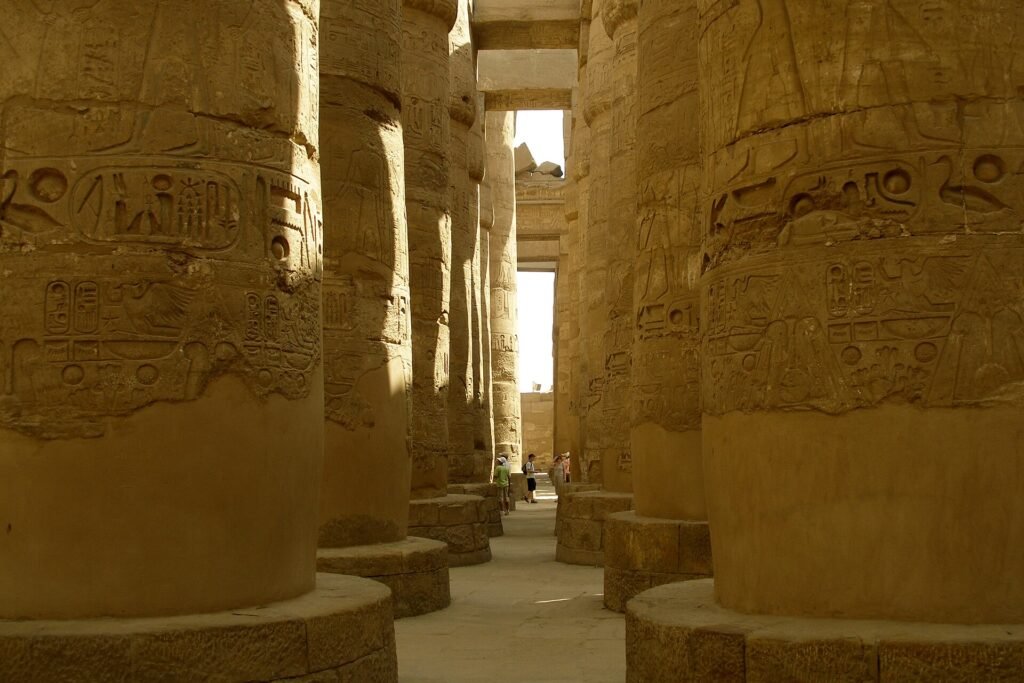
No guard is going to stop you at a temple gate for wearing shorts, and shorts are a common sight on the Giza plateau. What changes as you move around the country is how much attention you draw and how much sun lands on bare skin over an eight-hour day. Those two things push in the same direction.
Where the line moves, and where it does not
Egypt is a majority-Muslim country, and outside the Red Sea resorts local men dress more covered than most visitors expect. You notice it quickly. In Cairo, in Luxor town, in a village market along the Nile, adult men wear long trousers or a full-length galabeya even at the hottest hour of the hottest month. Very few wear shorts.
None of that is a rule aimed at you. It does mean the same outfit reads differently depending on where you are standing.
| Hotel grounds, pool, resort beach | Swimwear at the water. Shorts and a t-shirt anywhere else inside the gate. Nothing to think about. |
| A Nile cruise boat during the day | Same as a hotel. Shorts, t-shirt, swimwear at the pool on the sun deck. |
| Temples, tombs and archaeological sites | Shoulders covered. Shorts are accepted, and long light trousers are more comfortable in open sun. |
| City streets, markets, smaller towns | Long trousers and a shirt or t-shirt. Shorts here read as beachwear that wandered off the beach. |
| Inside a mosque | Long trousers, covered shoulders, shoes off. This one is enforced at the door. |
| Inside a church or a monastery | Long trousers and covered shoulders. Shoes usually stay on. |
The general guide to what to wear in Egypt covers the same ground for everyone traveling together.
Long sleeves in 40C (104F) heat are not the mistake they look like
It runs against instinct. In dry heat under direct sun, a loose long-sleeved shirt in thin cotton or linen is more comfortable than a t-shirt, not less.
The fabric blocks the sun before it reaches your skin while air keeps moving underneath it. You stop burning, you stop reapplying sunscreen to your forearms and the back of your neck every ninety minutes, and you sweat into cloth that then cools you as it dries. A t-shirt gives you all of the heat and none of the shade on two-thirds of your arms. In Luxor and Aswan, where summer afternoons climb above 40C (104F) and there is no shade at all on the open ground at Karnak, the difference across a full morning is not subtle.
Look at what men working outdoors in Egypt wear. It is long, loose and pale, and it has been for a very long time.
Three conditions make it work. The fabric has to be natural, cotton or linen rather than synthetic. The cut has to be loose enough that the shirt is not sitting against your skin. And the color has to be light or mid-toned. A fitted polyester shirt in black does the exact opposite and will make you miserable.
The full kit for a day of sites is a thin long-sleeved shirt, light long trousers, a wide-brimmed hat rather than a cap because a cap leaves your ears and neck exposed, and sunglasses that filter rather than just tint. A cotton scarf around the neck is the cheap addition that punches above its weight. Damp, it drops the felt temperature noticeably. Dry, it keeps dust out of your collar.
Shorts, and the places they genuinely do not work
Knee-length shorts are fine at hotels, at pools, on Red Sea beaches and on a cruise boat during the day. At archaeological sites they are accepted and common, and nobody will comment.
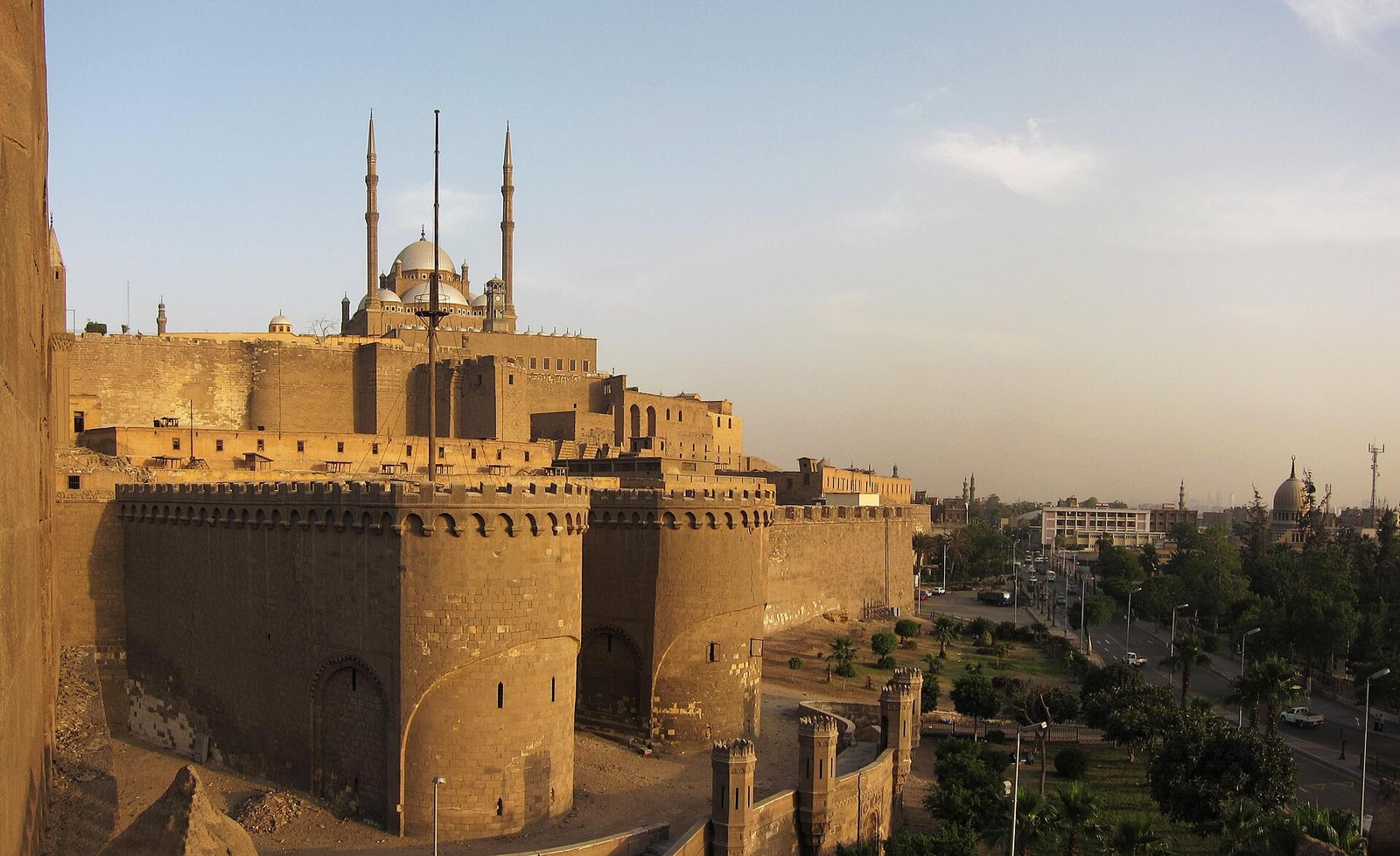
Where they stop working is in city neighborhoods away from the tourist route, in local markets, and at any place of worship, where long trousers are a condition of entry rather than a preference. Short athletic shorts are the version that stands out most in a street, considerably more than knee-length ones.
Keeping a pair of thin trousers rolled in your daypack solves this permanently. You can leave the hotel in shorts because the forecast said 38C (100F) and still walk into a mosque that afternoon without a detour back to your room.
What actually happens at the door of a mosque
Cairo's historic mosques open to visitors outside prayer times, and none of the well-known ones are complicated to enter. Ibn Tulun, which is the oldest mosque in Cairo still standing in its original form, Sultan Hassan, and the mosques along Al-Muizz Street in Islamic Cairo all take visitors.
For men the requirements are long trousers, a top with sleeves, and shoes off at the entrance. Sleeveless tops and shorts are refused. Your shoes go into a rack or into a bag you carry round with you, so anything you can step out of without sitting down saves you a minute at every door. Socks matter more than they sound. Stone floors and carpet in a busy mosque are not where you want to be barefoot. A few mosques keep robes by the entrance and will hand you one rather than turn you away, though arriving dressed for it beats relying on that.
Coptic churches and the desert monasteries expect the same modesty and usually keep shoes on. Before photographing anything inside either, it is worth reading the camera rules at Egyptian sites, because rules vary by building: since 2019 phones and cameras without flash are covered by the normal ticket, and only tripods and professional filming need a separate permit.
Shoes are the item men get wrong
You will walk further than you think, on ground that punishes thin soles. Worn stone polished smooth by thousands of years of feet, loose sand, ramps into tombs that are dusty and slippery in the same step, and staircases cut for other people's legs.
Bring closed walking shoes you have already broken in. Buying new shoes for the trip is how men end up nursing a blister from day two onward. A pair of sandals or flip-flops for the pool, the boat deck and the evening covers everything else, but sandals are a poor choice for a morning among the tombs in the Valley of the Kings, where fine dust gets between your foot and the sole and stays there.
Dust settles on everything you carry. It brushes off, and it is not worth planning around beyond choosing shoes you do not mind scuffing.
The cold nobody packs for
The temperature swing is easy to underpack for, and it shows up at three specific points in a trip.
Desert nights are the big one. An afternoon in the Western Desert or in Sinai can be genuinely hot, and three hours after sunset you want a jacket and a hat. In winter it can approach freezing out there. That needs real layers, not one thin extra shirt.
The second is the deck of a cruise boat after dinner. The boat is moving, the river throws off cool air, and it is colder than the same evening on land. Anyone who has read a packing list for a Nile cruise and skipped the jacket line has stood on that deck regretting it.
The third is pre-dawn starts. The drive to Abu Simbel, the balloon flight over Luxor and the sunrise climb up Mount Sinai all begin in the dark at the coldest hour. The summit of Sinai before dawn is cold enough for a hat and an extra layer even in summer, and cold enough for gloves in winter. The mountain does not care that you were sweating at noon.
A light windbreaker plus one warm mid-layer handles all three. You do not need a heavy coat unless your itinerary includes several winter nights in the desert. How much of it you use depends on your dates, which the best time to visit Egypt guide breaks down month by month.
Two extra pairs of socks are worth the space. On southern nights and in the desert, feet go cold first.
Dinner on a cruise and in city hotels
Evenings on board are relaxed. There is no dress code in any meaningful sense, no jacket, no tie, and plenty of people eat in what they wore all day. A collared shirt and long trousers instead of the dusty t-shirt and shorts is a small change that makes the dining room feel like an evening rather than an extension of the afternoon, and it costs almost nothing in luggage space.
Some boats hold an Egyptian-themed night where guests are invited to wear a galabeya, the long local tunic. You do not need to bring one. They are sold in every bazaar and in most cruise gift shops, they are extremely comfortable in the heat, and buying one on the spot is part of the fun. City hotel restaurants work the same way. Smart-casual is more than enough, and nowhere expects formal clothing.
Planning this trip yourself takes hours. We build it for you, and we answer every question before you commit to anything.
Swimwear, and exactly where it stops
At Hurghada, Sharm el-Sheikh, Marsa Alam and the Red Sea resorts generally, ordinary swim shorts are completely normal at the beach and by the pool. Nobody looks twice. The same goes for the sun deck of a cruise boat.
Swimwear stops at the resort gate. Heading into town, for dinner or to walk a market, means pulling a t-shirt and shorts or trousers on over it first. It takes thirty seconds and it is the one piece of etiquette worth being consistent about.
If you plan to snorkel, pack a rash guard or a light technical t-shirt to swim in. A burned back is easy to pick up here, because the water feels cool while you float face-down over a reef for an hour with the sun directly overhead. A shirt in the water does not wash off the way sunscreen does, and aloe or after-sun is worth a place in your travel first aid kit either way.
Fabric, color and how little you actually need
Cotton and linen handle Egyptian heat better than any synthetic. Mid-tones hide dust better than either black or white, and light colors reflect more heat than dark ones. No color is culturally off-limits.
Pack less than you plan to. Hotels and cruise boats have a laundry service, so you can pack for fewer days than the trip lasts. Check the turnaround at reception before you rely on it. What you save in weight goes into the thing that is hardest to replace locally, which is decent walking shoes in your size.
The questions the dress code does not answer
Tattoos. There is no rule about them and no reason to hide them. Visible tattoos may attract curiosity in a village, particularly large ones, but curiosity is all it is. Covering up in a mosque is about sleeves, not ink.
Beards. A beard is entirely normal on Egyptian men and carries no signal you need to think about.
Ramadan. Your clothing does not need to change during the fasting month, though the more covered end of the range is a courtesy. What matters more is not eating, drinking or smoking in the street during daylight. Visitors are not required to observe it, and it is noticed when they do.
Clothing with slogans. Anything overtly political is better left at home, the same as it would be in most countries you do not live in.
A packing list for a man, one week in Egypt
- Two pairs of thin long trousers in cotton or linen, one of which can be the pair that lives in your daypack
- One pair of knee-length shorts for the hotel, the pool and the boat
- Two or three t-shirts and two thin long-sleeved shirts, one of them with a collar for evenings
- Closed walking shoes, already broken in, plus sandals or flip-flops
- More socks than you think, including a clean pair kept for mosque visits
- A wide-brimmed hat, real sunglasses and high-factor sunscreen
- A light windbreaker and one warm mid-layer, which stop being optional between November and March
- Swim shorts, and a rash guard if snorkeling is on the itinerary
- A cotton scarf, which shades your neck, filters dust and covers your shoulders in a pinch
- A small daypack for water, those spare trousers and the layer you took off at eleven in the morning
Pack for the trip you are actually taking
A week of Cairo and a Nile cruise in October needs a different bag from a desert night in Sinai in January, and the difference is layers rather than volume. Send us your route and your dates and we will tell you what the bag needs to hold. Our Egypt tour packages are built to order by a local agency inside Egypt, and you can reach us on WhatsApp at 201032295513. Travelers arrange their own international flights to Egypt.
Common questions about what men should wear in Egypt
How should men dress in Egypt?
Can you wear shorts in Egypt?
How should men dress to visit a mosque in Egypt?
What clothing suits the Egyptian climate?
What footwear should you take to Egypt?
Which accessories are essential in Egypt?
Let us put the trip together
We are a local agency in Egypt. Tell us your dates and what you want to see, and we will come back with a plan, the practical details sorted and someone to ask when you are here.
Part of our guide to
Practical Guide 11 guides
This article is part of that pillar. The rest of it:
- ▸Arabic Phrases for Travel in Egypt
- ▸Cairo Airport: What Happens When You Land, and How to Leave
- ▸Can You Drink the Water in Egypt?
- ▸Exchanging Money in Egypt: Where to Change Cash and How Much at a Time
- ▸Haggling in Egypt: How to Bargain Without Overpaying
- ▸High Season, Low Season and Shoulder Season in Egypt
- ▸How Much Does a Trip to Egypt Cost? A Real 2026 Breakdown
- ▸Food Prices in Egypt: What Meals Really Cost
- ▸How Much Money to Bring to Egypt: The Cash You Actually Need
- ▸Is Cairo Safe? The Real Risks and How to Get Around
- ▸Photography in Egypt: The Rules, the Tickets and the Light
Keep exploring
To finish planning your trip to Egypt
- ▸How Much Money to Bring to Egypt: The Cash You Actually Need
- ▸Accessible Egypt: Wheelchair Travel Guide by a Local Agency
- ▸How Much Does a Trip to Egypt Cost? A Real 2026 Breakdown
- ▸Can You Drink the Water in Egypt?
- ▸What to Buy in Egypt: Best Souvenirs and What to Avoid
- ▸Exchanging Money in Egypt: Where to Change Cash and How Much at a Time
- ▸Solar Eclipse Egypt 2027: Luxor, the Path and How to See It
- ▸See all our Egypt tours