
How Much Money to Bring to Egypt: The Cash You Actually Need
How Much Money to Bring to Egypt: The Cash You Actually Need
Almost everything expensive about a trip to Egypt is paid for before you arrive. What is left is a small, constant layer that runs on cash: tips, the ticket for a tomb your group is not entering, a bottle of water, a taxi you flagged down in the street. On a package or a Nile cruise that layer stays small, because the heavy items are already paid for, and it runs almost entirely on Egyptian pounds handed over in person, plus a separate fund for any optional extras you decide to add. If you are putting the trip together yourself, the number works differently, and the rest of this guide builds it.
What your number actually depends on
Three things move it. The first is how you are traveling. A package or a cruise has already paid for the heavy items, so your cash is pocket money. Organizing it yourself means every ticket, every meal and every ride between cities passes through your hands during the trip.
The second is how many of your days are genuinely free. A day with a guide, a vehicle and lunch included costs you a few tips. A day where you wake up with no plan costs you a full day of spending. Counting those two kinds of day separately is the single change that makes a budget accurate.
The third is you: how much you shop, how generously you tip, whether you are the person who says yes to the camel and the balloon or the person who politely does not. Your international flight sits outside all of this. You arrange and pay for it at home, so it never enters your daily cash plan. Domestic hops inside the country, Cairo to Luxor or Aswan back to Cairo, are normally part of the package price rather than something you settle on the ground.
Tipping is the expense that catches people out
In Egypt the tip has its own name, baksheesh, and it is not the afterthought it is in much of the world. It is woven into how the day works. Hotel staff, drivers, guides, cruise crew, the man who carries your bag up three steps, the person who points you towards the better angle for a photograph: all of them expect something small, and small is the operative word.
There is no fixed rate, which is exactly what makes travelers anxious. The workable approach is to stop thinking in percentages and start thinking in people. A cruise day where you deal with a guide, a driver and a crew of a dozen is nothing like a museum day where you deal with nobody. Budget by the number of hands you will pass through, keep a thick stack of 10, 20 and 50 pound notes, and the whole thing stops being stressful. We set out how much to tip by role and situation in its own guide.
The other things you pay for in cash
Tickets you did not know were separate
Egyptian sites sell access in layers. The Giza ticket gets you onto the plateau; going inside the Great Pyramid is a second ticket bought at the gate. The Valley of the Kings ticket covers a set number of tombs from a rotating list, and the famous ones, Seti I and Tutankhamun among them, are sold on their own. A few sites charge separately for photography permits. None of these are large sums on their own, but they are precisely the ones a package will not have covered, and they are usually paid in cash at a window. Look at the current ticket prices before you fix your extras fund, because they are revised more often than most guides admit.
Optional excursions
These are the decisions that genuinely move a budget, because each one is a real sum rather than a handful of notes. The Luxor balloon flight at sunrise, the long run down to Abu Simbel, a sound and light show at Karnak or Philae. Guided day excursions with transport and entry included start from US$120 per person, so two or three of them is a line in your plan rather than loose change. Decide before you travel which ones you actually want and set that money aside separately, instead of trying to squeeze it out of your daily cash.
Markets, drinks and the small stuff
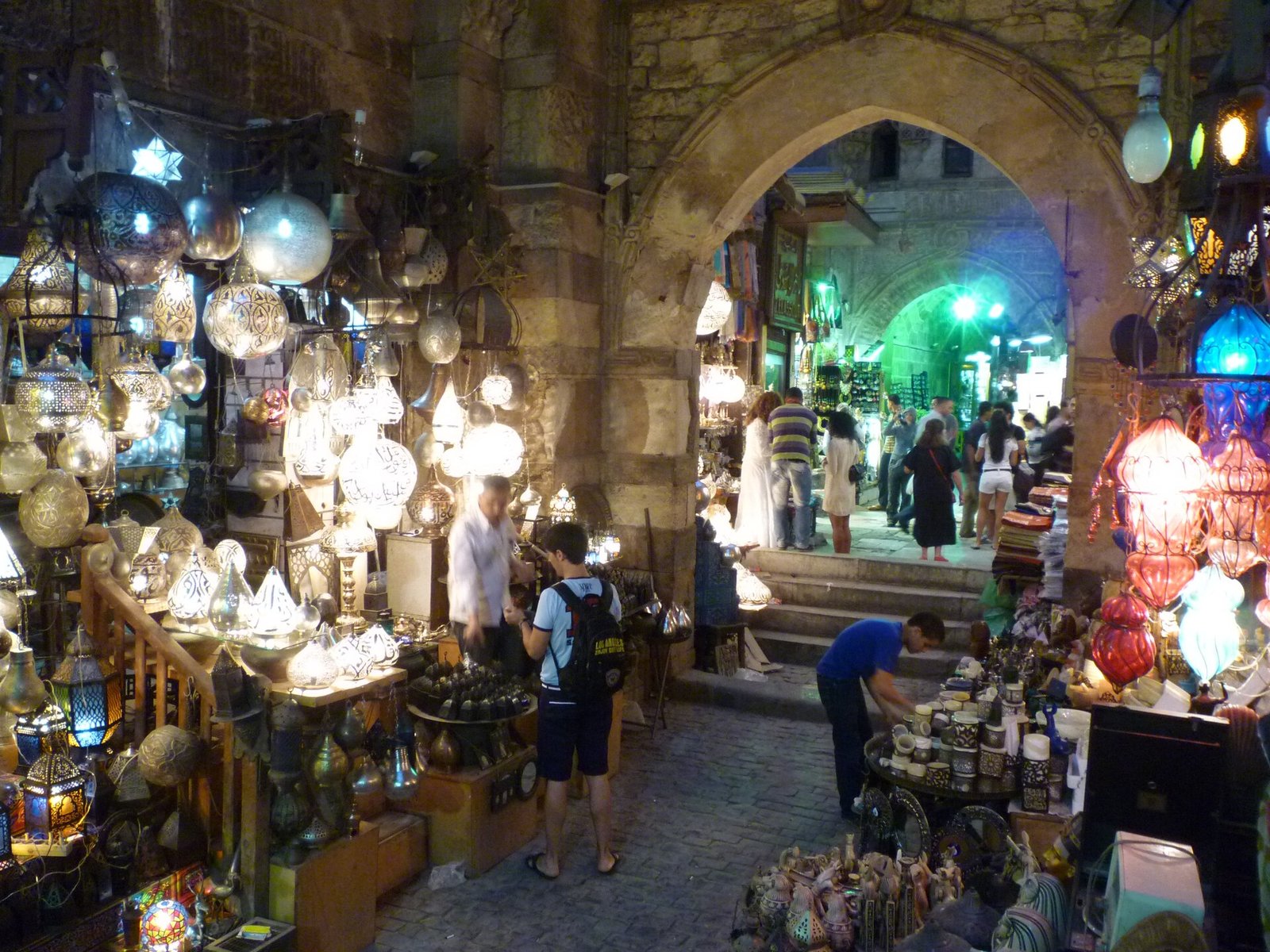
Souvenirs in the bazaar, tea on a terrace, cold water before you walk into a site in July. Haggling is the norm in the markets and small notes are what you haggle with; producing a 200 pound note at the end of a negotiation quietly undoes it. This is also where a card is least useful. Stalls, small shops and street taxis deal in cash, and some of the places that do take cards add a surcharge for the privilege.
How much cash per day, by the way you travel
On a package or a cruise
Hold your daily cash in Egyptian pounds, because pounds are what tips and small purchases are actually paid in. There is no allowance that fits everyone: what you need on a given day is set by how many people do something for you and how much you buy for yourself, so build it from your own itinerary rather than from somebody else's number. On a Nile cruise it runs higher than on a land tour, simply because more people are doing things for you: cabin staff, waiters, the guide who meets the boat at each stop. Keep the extras fund separate from your daily cash, so that a balloon flight on day two does not eat the tipping money for the rest of the week.
Traveling independently
Here the daily figure is not one number, and anyone who hands you one is guessing. You are now paying intercity transport, every entrance ticket, every meal and all the small logistics of the day, and entrance fees are the item that moves the total most. Those fees are set in Egyptian pounds and are revised from time to time, so the only figure worth planning against is the one you build yourself. Price your own itinerary against the fees that are current when you travel, add what the legs between cities will cost you, and then use the four-step method below to turn that into a daily number that belongs to your trip rather than to an average.
What is already covered, and what never is
On an organized trip the transfers, the accommodation, most meals, the guide and the itinerary tickets are paid for in advance. What falls outside is always from the same family: tips, drinks, meals you eat off the plan, optional interior tickets and anything you buy for yourself. The quickest way to settle the question for a specific trip is to read its inclusions list, which is where what a package covers is set out item by item.
| Item | Package or cruise | Independent |
|---|---|---|
| Hotels and cruise cabin | Included | You pay for each night |
| Domestic flights inside Egypt | Usually included | You book and pay |
| Airport transfers and driver | Included | Taxi or app, every time |
| Guide at the sites | Included | You hire one or go without |
| Main site tickets | Usually included | Every ticket is yours |
| Meals | Most of them | All of them |
| Tips | Cash, on you | Cash, on you |
| Drinks, snacks, shopping | Cash, on you | Cash, on you |
| Optional extras and interiors | Cash or card, on you | Cash or card, on you |
| International flight | You arrange it yourself | You arrange it yourself |
Planning this trip yourself takes hours. We build it for you, and we answer every question before you commit to anything.
How you carry it matters as much as how much
A kit that works looks like this.
- Egyptian pounds in small notes for daily spending, topped up little and often rather than in one large change at the start. The biggest note in circulation is 200 pounds, and it is the least useful one you will own.
- A reserve in US dollars or euros, in clean, unmarked, untorn notes. Exchange offices refuse damaged bills, and those two currencies are the easiest to change anywhere in the country. Other currencies can be changed in Cairo but get awkward once you leave it.
- Two cards from different banks, kept in different places. One in your wallet, one in the room. Visa and Mastercard are the ones that work reliably; other networks are patchy outside large hotels.
- The cash physically split. Some in the hotel safe, some on you, never all of it in one bag. Egypt is a comfortable country to move around in, and ordinary care is most of what safety on the ground comes down to.
Draw money as you go instead of arriving with the whole trip in your pocket. ATMs are common in cities and at cruise stops, they dispense pounds, and the charge that usually hurts is your own bank's foreign transaction fee rather than the local one, so it is worth checking that before you leave and telling your bank you will be abroad.
There is one figure we will not put in writing here, and the reason matters: the official fees payable on arrival. Whether you need to arrange entry in advance or can complete it at the airport depends on your nationality, and that kind of fee is often taken in foreign currency in cash rather than by card. The conditions change, so keep some untouched dollars or euros aside for it and confirm the entry and visa requirements that apply to your passport shortly before you fly.
Five decisions that cost people money
- Changing everything at the airport. The rate there is worse than at any exchange office in the city. Change what you need for the first day and no more.
- Letting the card machine bill you in your home currency. When a terminal offers to charge you in dollars, euros or sterling instead of Egyptian pounds, it is applying its own exchange rate and it is not doing you a favor. Always choose the local currency.
- Carrying only large notes. Without small change you round up on every tip and every taxi. Over a week the difference is real money.
- Buying optional trips on the spot. Arranged in the moment they cost more than the same thing booked in advance, and they tend to knock the rest of the itinerary out of shape.
- Not asking the price first. This covers the taxi, the horse carriage, the camel and the photograph with the falcon. Agreeing the figure before you get on, not after you get off, prevents almost every story people tell when they get home.
Four steps to your own figure
Instead of hunting for a universal number that does not exist, build yours from your own itinerary.
- Count the days and split them: the ones with meals and transport included, and the ones that are free. Only the free days generate a full day of spending.
- Give each day a tipping amount based on how many people you will actually deal with. Cruise days and guided days are heavy, a day on your own is close to nothing.
- List the optional extras you genuinely intend to do, price them, and hold that total as a separate fund. Extras paid out of daily cash are what causes the mid-trip scramble for an ATM.
- Add roughly 20% on top for the unplanned, then decide how much of the total you carry as notes and how much you leave on the card. Leftover Egyptian pounds are difficult to change once you have left the country, so that margin belongs on the card rather than in your wallet.
Run those four steps and you will end up with a figure that fits your trip instead of somebody else's. For most people it lands lower than they feared, and the part they underestimated was tipping, which is smaller per person and larger in total than almost anyone expects.
Working it out with us
If you would rather not do this arithmetic at all, that is more or less the point of booking the ground arrangements as one program. We are a local agency based in Egypt, you book with us directly, your guide speaks English, and the price is agreed before you travel, so the only money you handle here is tips and whatever you choose to buy for yourself. Send us your dates on WhatsApp at +201032295513 and we will tell you what your cash week realistically looks like.
Common questions about how much money to bring
How much money should you bring to Egypt?
How much should you tip in Egypt?
Is it better to bring cash or a card to Egypt?
Do you need much cash on a package or a cruise?
Can you pay by card for most things in Egypt?
How much money should you take for a week in Egypt?
Let us put the trip together
We are a local agency in Egypt. Tell us your dates and what you want to see, and we will come back with a plan, the practical details sorted and someone to ask when you are here.
Part of our guide to
Practical Guide 11 guides
This article is part of that pillar. The rest of it:
- ▸Arabic Phrases for Travel in Egypt
- ▸Cairo Airport: What Happens When You Land, and How to Leave
- ▸Can You Drink the Water in Egypt?
- ▸Exchanging Money in Egypt: Where to Change Cash and How Much at a Time
- ▸Haggling in Egypt: How to Bargain Without Overpaying
- ▸High Season, Low Season and Shoulder Season in Egypt
- ▸How Much Does a Trip to Egypt Cost? A Real 2026 Breakdown
- ▸Food Prices in Egypt: What Meals Really Cost
- ▸Is Cairo Safe? The Real Risks and How to Get Around
- ▸Photography in Egypt: The Rules, the Tickets and the Light
- ▸Internet and SIM Cards in Egypt: A Traveler's Guide to Staying Connected
Keep exploring
To finish planning your trip to Egypt
- ▸Uber and Careem in Cairo: How Ride Apps Really Work
- ▸Is Cairo Safe? The Real Risks and How to Get Around
- ▸Egypt in December: Weather, Crowds and the Festive Season
- ▸Cairo Airport: What Happens When You Land, and How to Leave
- ▸Arabic Phrases for Travel in Egypt
- ▸Accessible Egypt: Wheelchair Travel Guide by a Local Agency
- ▸Traveling to Egypt with a Baby: Heat, Cruise, Cribs, Formula
- ▸See all our Egypt tours