What to Wear in Egypt as a Woman
What to Wear in Egypt as a Woman
For women, dressing in Egypt comes down to loose clothing that covers the shoulders and reaches the knee, in fabric that lets air through. That works for cities, temples, markets and the Nile. Your hair stays uncovered everywhere except inside a working mosque. Red Sea resorts run by their own rules, where swimwear is ordinary.
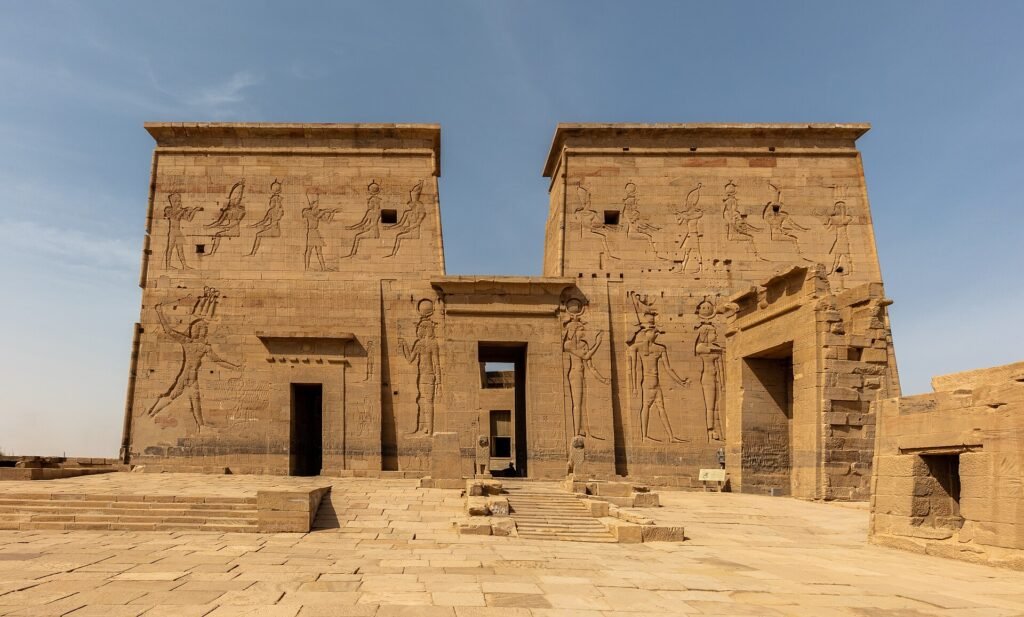
Loose and covered is also the cooler choice
Egypt is a majority-Muslim country and dress outside the beach resorts is more conservative than many visitors are used to at home. Following that norm is a courtesy rather than a legal requirement, and no temple or archaeological site will turn you away for bare shoulders. A mosque is the one place where clothing is a condition of entry, and there most will lend you a robe rather than refuse you.
The part that surprises people is that covering up is physically more comfortable. In dry heat, sun landing directly on skin is what wears you down, and a layer of thin cloth with air moving underneath it keeps you cooler than exposed skin does. A loose long-sleeved cotton shirt on the Giza plateau at noon beats a sleeveless one. Tight clothing is the genuinely bad option, because it traps heat against you and gives the sun the same skin anyway.
The general dress code in Egypt for all visitors covers the shared ground for everyone in your group.
Fabric decides your comfort more than cut does
Cotton and linen do the job. They breathe, they dry after you sweat through them, and they hang away from the body instead of clinging. Light viscose and rayon blends behave well too, and a thin merino wool layer is worth one slot in the bag for cold evenings.
Polyester and non-technical synthetics hold heat and moisture against your skin, and by the end of a long temple morning you will know it. Denim is the other common mistake: heavy, slow to dry, and hot in a way that no amount of styling makes up for. Leggings alone read as tight; with a tunic or a shirt that covers the hips they are fine and comfortable.
Color is a heat question, not an etiquette one. Pale colors reflect heat and dark colors absorb it, and on an open site with no shade that difference is real. Mid tones hide the fine limestone dust that gets onto everything better than either black or white does.
A week of clothes, in one bag
Egyptian itineraries move a lot, and you will lift your own case on and off boats, in and out of vehicles and through hotel lobbies. Hotels and almost every cruise boat handle laundry, so packing for ten days is really packing for four or five and washing once.
| Item | How many | Why |
| Loose cotton or linen trousers | 2 to 3 | The workhorse for sites, cities and the boat |
| Long or midi skirt, or a loose dress | 1 to 2 | Cooler than trousers and mosque-ready |
| Short-sleeved tops covering the shoulder | 3 | Everyday wear at temples and in town |
| Thin long-sleeved shirt | 2 | Sun cover by day, layer against air conditioning |
| Large light scarf | 1 to 2 | Mosques, sun, dust, cold vehicles |
| Light jacket or thin sweater | 1 | Desert nights, deck evenings, dawn starts |
| Swimwear plus a cover-up | 1 set | Pool, boat deck, Red Sea |
| One slightly smarter outfit | 1 | Cruise dinners and city hotel restaurants |
The scarf earns its place
Take a big one, roughly a meter and a half (5 feet) square or a long rectangle, in cotton or a light blend. Over a week it covers your hair for a mosque, your shoulders when the sun turns brutal, your face when wind lifts dust off the west bank, and your arms when the bus air conditioning runs at refrigerator temperature. It doubles as a seat cover on dusty stone and as a wrap at dawn.
Bringing one from home is easy, and buying one or two in a market on your first day is easier still. They fold down to nothing and they come out of the bag every day.
Mosques and churches, and what is actually asked
Egypt has extraordinary mosque architecture, and most historic mosques welcome visitors outside prayer times. Four things are expected: shoes off at the door, hair covered with a scarf, shoulders covered, and legs covered to the knee or below. Slip-on shoes and a pair of thin socks in your bag make the shoe rule painless, because courtyard stone gets hot underfoot.
Some mosques lend a robe at the door, though your own scarf is more comfortable than a shared robe in July. Coptic churches expect covered shoulders and knees but do not ask you to cover your hair. Inside tombs and certain interiors there are separate rules about lenses, flash and tripods, which the guide to camera rules inside the tombs sets out.
Shoes, chosen by where you are standing
Ancient sites
Closed shoes with a sole that grips. The ground is loose sand, uneven stone worn slick by a century of visitors, ramps and steps cut for other feet than yours. Open sandals fill with sand within minutes and slide on polished thresholds. This matters most when you are visiting the Valley of the Kings, where several tombs run steeply downhill on dusty ramps.
Cities and mosques
Something you can walk in all day and still slip off in one motion. You will take your shoes off more often than you expect, and unpicking laces at a mosque door with a queue forming behind you gets old fast.
The boat and the hotel
Sandals or flip-flops for the deck, the pool and the cabin. Nothing more is needed on board.
The Red Sea
Water shoes. Much of that coastline is entered over coral rubble and rock rather than soft sand, and bare feet are a poor idea both for you and for the reef.
Three pairs cover an itinerary without a beach stay, and the Red Sea adds the water shoes as a fourth. Do not travel in shoes bought for the trip and never worn, because the first morning at Karnak is a bad moment to find out where they rub.
What changes with the season
| Months | What to expect | What to add |
| November to February | Pleasant days, genuinely cold nights and dawns, especially in the desert and on the water | A real jacket, thin long sleeves, closed shoes, socks |
| March to May | Heat building fast, and the season for the dusty khamsin winds | A scarf you can pull across your face, close-fitting sunglasses |
| June to August | Very hot, with Luxor and Aswan regularly passing 40C (104F) | Loose long thin layers, a wide-brimmed hat, a refillable bottle |
| September to October | Still hot, easing through October | Summer clothing plus one warm layer for evenings |
Winter catches people out more than summer does. The afternoon can have you in short sleeves and the same evening on an open deck can have you cold, and a sunrise balloon ride over Luxor in January means standing in a dark field before the sun comes up. If your dates are flexible, the month-by-month weather in Egypt is worth reading before you buy anything, and there is a separate note on traveling to Egypt in December, which is both busy and cold at dawn.
Red Sea resorts are a different country
At Hurghada, Sharm el-Sheikh, Marsa Alam and the resorts around them, a bikini on the beach or by the pool is entirely unremarkable and nobody looks twice. That is what those places are built for.
The line is the resort gate. Walking into a local town for a market or a meal, cover up the way you would anywhere else in Egypt, and throw a cover-up or a sarong on for crossing the resort grounds. On a public beach used by Egyptian families rather than a hotel beach, you will see local women swimming fully dressed, and dressing more modestly there is simply the comfortable choice.
Planning this trip yourself takes hours. We build it for you, and we answer every question before you commit to anything.
On the boat, and at dinner
Days on a Nile cruise are dressed exactly like the sites you are visiting, because that is where you spend them. Evenings on board are relaxed rather than formal. A simple dress, a nice top with loose trousers, anything you would wear to a decent restaurant at home is plenty, and nobody dresses up beyond that. Many boats hold one Egyptian night, where guests who feel like it wear a galabeya bought that week in a market.
The deck after dark is windier and colder than the same spot at four in the afternoon, in every month of the year. That single fact accounts for most of the shivering on the top deck, and the fuller list for packing for a Nile cruise goes through the rest of it.
Buying clothes once you are there
Two purchases solve a lot. A big scarf, sold in every market in cotton and in light blends, and a galabeya, the long loose traditional tunic, which is far more comfortable in heat than it looks and works for a boat dinner.
Egyptian cotton has a real reputation behind it, and a well-made cotton shirt or tunic from a local shop will outlast the trip. Check it with your hands before you commit: rub a corner between your fingers, and if it has a plastic sheen or sheds fuzz, it is a synthetic blend whatever the label says. Sizing does not follow any chart you already know, so hold things against yourself, and expect market prices to be negotiable while fixed-price shops are not.
Traveling on your own
Women do travel Egypt on their own. Attention in the form of comments, stares and persistent sellers is common, and handling it all day is tiring.
Dressing to the local norm reduces it noticeably. So do sunglasses, walking with obvious purpose rather than drifting, and a flat "la, shukran" delivered without slowing down. You are not obliged to be polite to somebody who will not leave you alone. Being with a guide removes most of it outright, because the approach never starts. The wider picture of is Egypt safe for solo travelers is worth reading alongside this.
Small things that decide the day
Sunscreen goes on the backs of your hands, your ears and the parting in your hair, which are the places people burn without noticing. Reapply during a morning at an open site, not at the end of it.
Dust works into loose hair within an hour on the west bank, so tied back under a hat is the version you will not regret. Interiors are the opposite problem, since air conditioning in vehicles and hotels often runs cold enough to make a long-sleeved layer a daily item rather than an evening one.
Carry a bag that closes properly and sits across your body, leaving your hands free for stairs, ramps and cameras. Bring your own supply of anything personal you are particular about, period products included, because familiar brands are not reliably on the shelf outside big city pharmacies. And leave room in the case, since the scarf, the tunic and the cotton have a way of coming home with you.
Tell us your route and we will tell you what it needs
A January itinerary with a desert night and a balloon flight needs a different bag from an October cruise with a beach stay on the end of it. Send us your plan on WhatsApp at 201032295513 and we will tell you what it actually calls for, or start from our tailor-made Egypt tour packages and work backwards from the itinerary. If you are packing for two, our guide to what men should wear in Egypt covers the other half of the suitcase.
Common questions about what women should wear in Egypt
How should women dress in Egypt?
Do women have to cover their hair in Egypt?
What should women wear to visit a mosque?
Can you wear a bikini in Egypt?
Is Egypt safe for women travelers?
Which accessories should women take to Egypt?
Let us put the trip together
We are a local agency in Egypt. Tell us your dates and what you want to see, and we will come back with a plan, the practical details sorted and someone to ask when you are here.
Part of our guide to
Practical Guide 11 guides
This article is part of that pillar. The rest of it:
- ▸Arabic Phrases for Travel in Egypt
- ▸Cairo Airport: What Happens When You Land, and How to Leave
- ▸Can You Drink the Water in Egypt?
- ▸Exchanging Money in Egypt: Where to Change Cash and How Much at a Time
- ▸Haggling in Egypt: How to Bargain Without Overpaying
- ▸High Season, Low Season and Shoulder Season in Egypt
- ▸How Much Does a Trip to Egypt Cost? A Real 2026 Breakdown
- ▸Food Prices in Egypt: What Meals Really Cost
- ▸How Much Money to Bring to Egypt: The Cash You Actually Need
- ▸Is Cairo Safe? The Real Risks and How to Get Around
- ▸Photography in Egypt: The Rules, the Tickets and the Light
Keep exploring
To finish planning your trip to Egypt
- ▸Renting a Car in Egypt: Drive Yourself or Hire a Driver?
- ▸Is Cairo Safe? The Real Risks and How to Get Around
- ▸Arabic Phrases for Travel in Egypt
- ▸What Language Is Spoken in Egypt and How to Communicate
- ▸How Much Does a Trip to Egypt Cost? A Real 2026 Breakdown
- ▸How Much Money to Bring to Egypt: The Cash You Actually Need
- ▸Real vs Fake Papyrus: How to Tell Real Papyrus in Egypt
- ▸See all our Egypt tours