
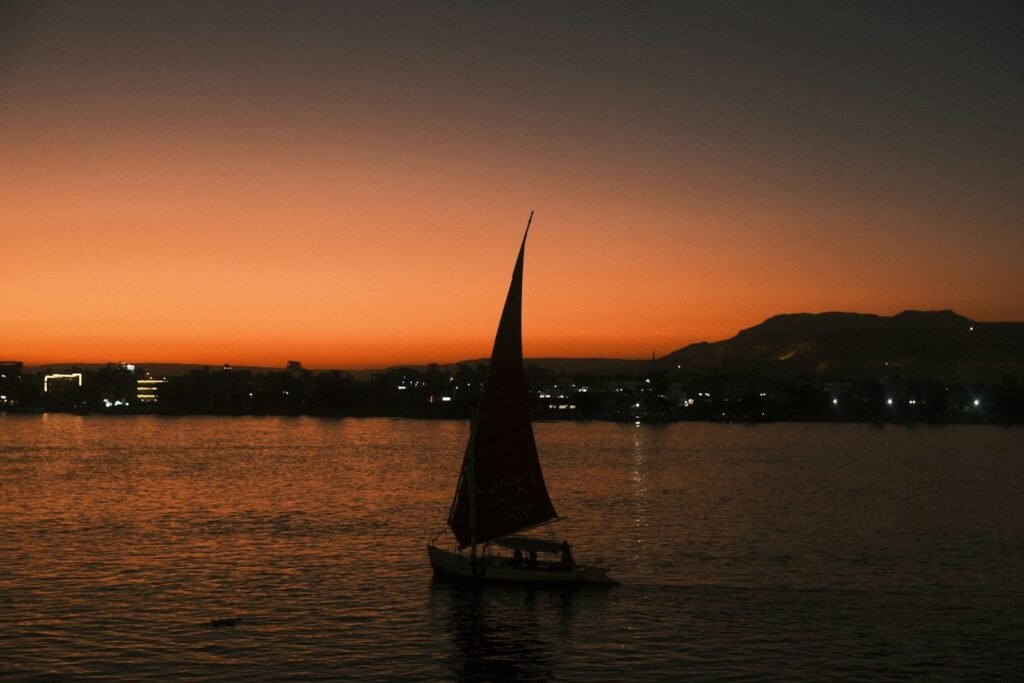
Egypt's excursions cluster in four bases. Cairo covers the Giza pyramids and the museums, Luxor covers the Valley of the Kings and Karnak, Aswan covers Abu Simbel and Philae, and the Red Sea coast covers the reefs. Day trips start From $129 per person, double occupancy. The 5-day Nile cruise starts From $755 per person, double occupancy.
This page is the map of every excursion we operate, grouped by city, with real durations, honest travel times and a clear line on which entrance tickets sit inside the price and which you pay at the gate yourself. We are based in Egypt, so the team that quotes your trip is the team that meets you at the airport.
Almost nobody flies to Egypt to see one thing. People come to cross a country that runs from the pyramids in the north to the temples more than 400 miles, or 640 kilometers, south, and that is exactly where the planning gets hard. How many excursions actually fit into ten days? Which ones are worth a 4:00 a.m. alarm? How do you string them together without burning a whole day in a van? Those are the three questions we answer on WhatsApp every day, wherever our travelers are flying from.
What follows is not a scraped list. These are the excursions we run ourselves, with the practical detail travelers keep asking us for: how long each one really takes, whether the entrance ticket is in the price, and what the 2026 gate fee is when it is not. If you would rather not assemble anything yourself, all of this is already solved inside our multi-day Egypt tour packages, which bundle the guiding, the hotels and the domestic Egyptian flights into one program. One thing we never sell, quote or arrange is your international airfare, and you will find that stated plainly everywhere on this page.
Jump to a section
Before going city by city, here is the whole country in one table. Each base has a signature excursion, a realistic time cost and a starting price where we sell a fixed product for it. Use it to decide where your days go, then read the section below for the detail.
| Base | Signature excursion | Typical duration | From (USD, per person) | Program that covers it |
|---|---|---|---|---|
| Cairo and Giza | Giza pyramids, the Sphinx and the Grand Egyptian Museum | 1 full day | Quoted on request | 10-day Cairo, Luxor and Aswan tour |
| Luxor | Valley of the Kings, Karnak and Luxor Temple | 1 to 2 days | From $288 | 2-day Luxor tour |
| Aswan | Abu Simbel and the Temple of Philae | 1 to 2 days | From $129 | Abu Simbel day trip |
| Red Sea (Hurghada) | Reef and island boat day on the coast | 1 day | Quoted on request | 12-day grand tour |
| The river itself | Nile cruise between Luxor and Aswan | 5 days, 4 nights | From $755 | 5-day Nile cruise |
Prices are per person based on two people sharing a double room, in US dollars, and are always prefixed From because the final figure depends on your dates, your hotel category and your group size. Monument entrance tickets are paid in Egyptian pounds at the ticket office unless a specific excursion states otherwise, and the ministry can revise them. We confirm the exact figures in your written quote.
Cairo is where nearly every Egypt trip starts, and it deserves at least two days rather than the single rushed one most people budget for. In one morning you can stand in front of the Giza pyramids, the only one of the seven wonders of the ancient world still standing, and by the afternoon be inside the Grand Egyptian Museum a short drive away. That pairing is the most requested excursion we run, and it is the one we push for day one, because it calibrates everything that comes after it.
If Cairo is only your first stop, both the 7-day classic tour and the 10-day Cairo, Luxor and Aswan program open with these same excursions and then move you south by domestic flight, which is included on both.
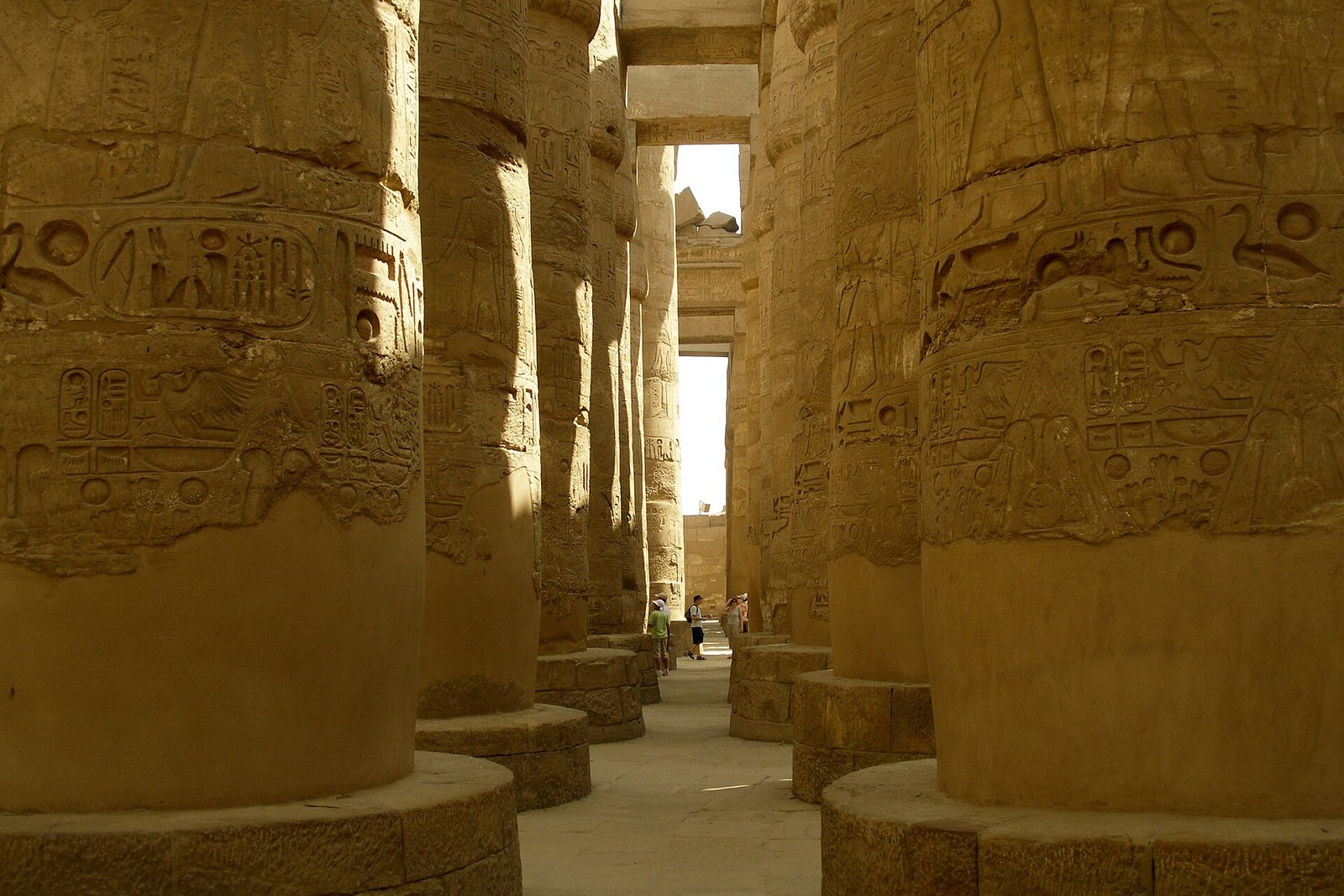
Luxor gets called the world's largest open-air museum and for once the cliche holds up. The Nile splits the city into two halves that do completely different jobs. The east bank holds the temples of the living, Karnak and Luxor Temple. The west bank is the city of the dead, with the Valley of the Kings, the terraces of Hatshepsut and the Colossi of Memnon. No other stop in Egypt packs this much history into so small a patch of ground, which is why we argue hard against giving it a single day.
Mobility note: the valley is a hot, treeless bowl and the tombs are entered down sloping ramps and short flights of steps. It is manageable at a slow pace and there is a shuttle from the gate to the tomb cluster, but it is not a flat walk.
Luxor can be squeezed into one brutal day, but two is the right answer. Our 2-day Luxor tour covers Karnak, Luxor Temple, the Valley of the Kings and Hatshepsut with a licensed Egyptologist, From $288 per person, double occupancy. Domestic Egyptian flights are not part of that product, so it suits travelers who are already in Upper Egypt or who are arranging their own internal transport. If you would rather have the internal flights handled inside one program, look at the 8-day classic tour instead.
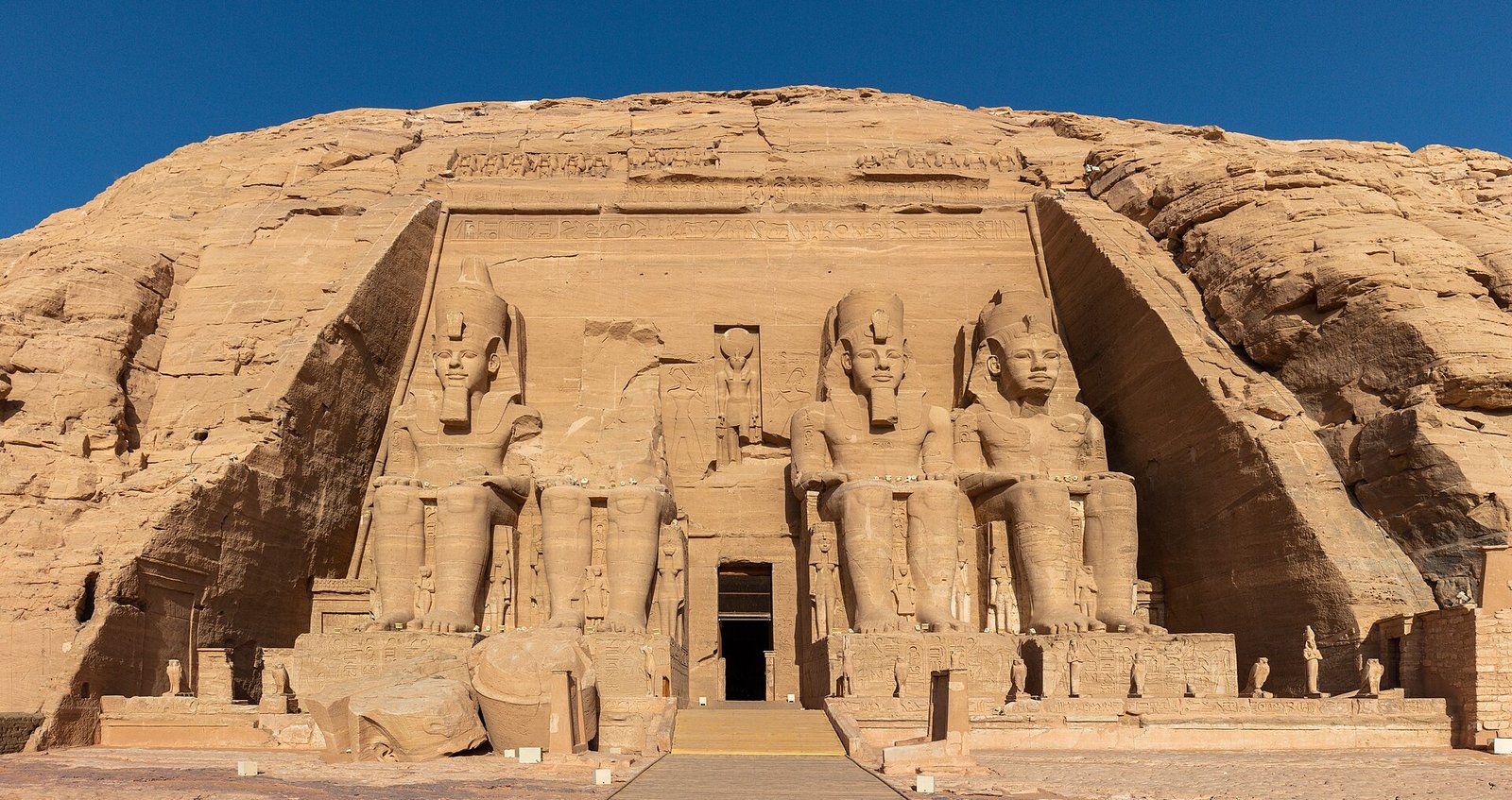
Aswan is the calmest place on the Egyptian Nile, where the river widens out between granite boulders and palm islands and the pace drops by half. It is also the base for the single most staggering excursion in the country. Abu Simbel is the pair of temples Ramesses II had carved into a cliff face, which UNESCO cut into blocks and lifted to higher ground in the 1960s to save them from the water rising behind the dam. Standing under four seated statues that top 20 meters, or 66 feet, after crossing the desert at dawn, justifies the trip on its own.
Aswan is also where the Nile cruises start or finish, so these excursions chain naturally onto the boat. If you would rather do the southern temples on the road, the Aswan and Luxor overland tour links Abu Simbel, Philae, Kom Ombo and Edfu with the Luxor west bank, From $499 per person, double occupancy, and again without domestic flights.
The Red Sea is the other Egypt: coral walls, water the color of a swimming pool and beach hotels that exist to slow you down after a week of temples. Hurghada is the easiest base, and a small number of excursions account for most of what our travelers book there.
The first is the island and reef boat day. You leave the marina in the morning, anchor over the reef for snorkeling stops, and spend hours on white sand out in the gulf before coming back in the late afternoon. It is the day that turns an Egypt trip into a proper break, and it works especially well with kids and teenagers who have hit their limit on hieroglyphs. Bring reef-safe sunscreen and a rash guard, because there is no shade out there at all.
The second is more ambitious: the day trip to Luxor from Hurghada. That is roughly four hours of road in each direction to see the Valley of the Kings and Karnak in one very long push. We will be straight with you about it. It starts in the dark and it ends in the dark, and it is tiring. But if your hotel is on the coast and you do not want to move rooms, it is the only way to see pharaonic Egypt without restructuring the whole trip. If Luxor genuinely matters to you, sleep there instead and give it two days.
Hurghada also runs quad safaris into the desert, buggy rides and Bedouin dinner nights, which are the right call when there are teenagers in the group, plus submarine and glass-bottom boat trips for anyone who does not want to get in the water. And because the coast works year round, it is the useful joker for July and August, when Luxor and Aswan turn brutal. If you want the beach built into the itinerary rather than bolted onto it, the 12-day grand tour already ends in Hurghada, with the domestic Egyptian flights included.
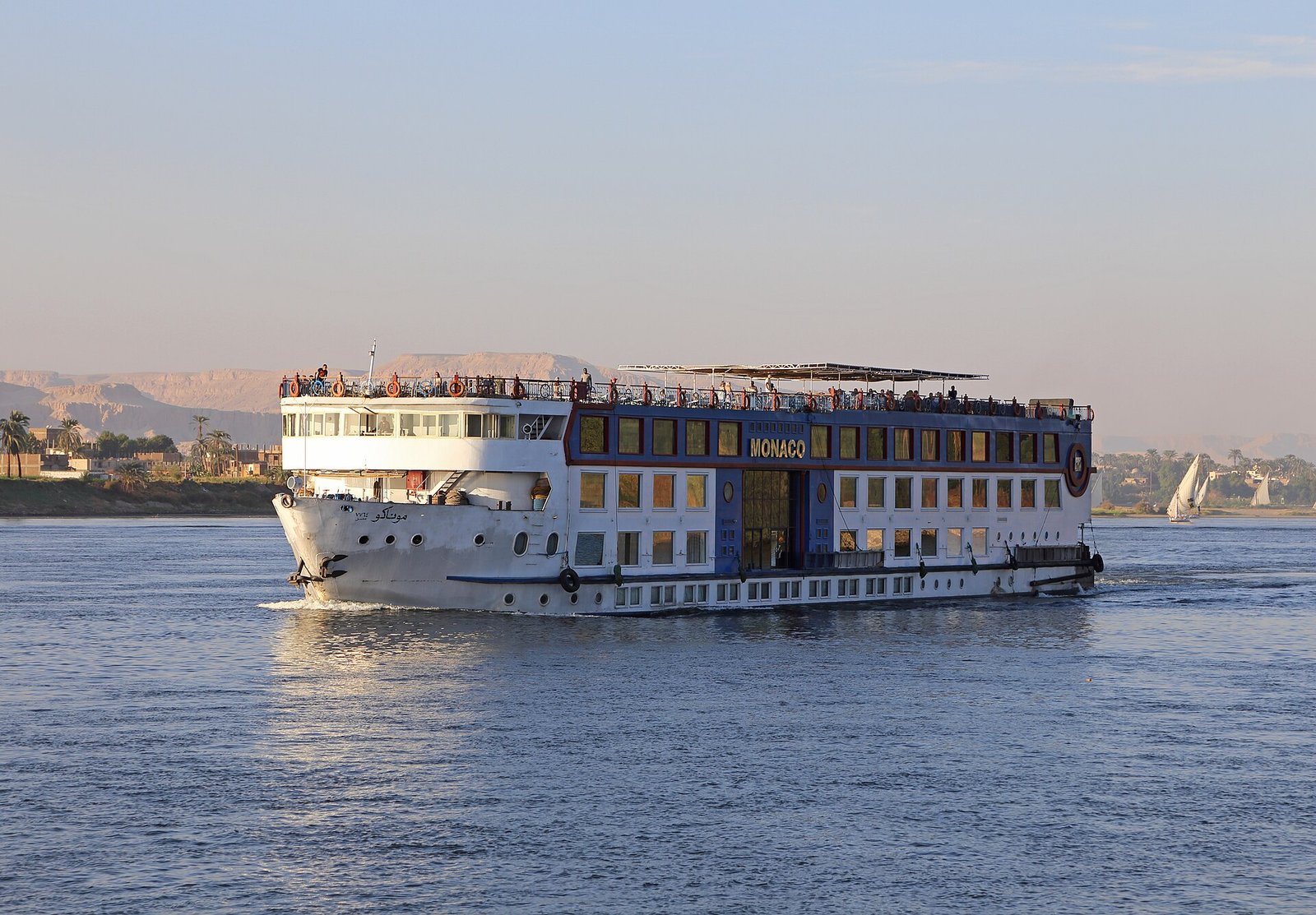
If you take one thing from this page, take this. The best excursion in Egypt is not a day trip at all. It is the stretch of river between Luxor and Aswan, done by boat. You sleep on board while the ship moves, you never repack, and you step off each morning in front of a different temple. More of our travelers come home talking about the cruise than about the pyramids.
The standard cruise runs 5 days and 4 nights on a full board basis, with guided visits included at Karnak and the Valley of the Kings at the Luxor end, the temple of Horus at Edfu, the double temple of Kom Ombo shared between Sobek and Horus, and Philae and the High Dam at Aswan. Between Luxor and Edfu the boat passes through the lock at Esna, which is worth being on deck for. Edfu is the best preserved pharaonic sanctuary in the country and Kom Ombo sits directly on the water, which is exactly why a boat reaches both so comfortably and a road trip does not. We sail it in both directions.
Note on flights: the two Nile cruises are sold as standalone products and do not include domestic Egyptian flights. The multi-day programs of 7, 8, 10 and 12 days do include them. No product we sell includes an international flight of any kind.
Torn between booking separate excursions and buying one closed program? For a first trip to Egypt the answer is almost always the program with the cruise inside it, because it removes travel days, internal transfers and about six separate decisions you would otherwise have to make yourself. Cabins on the better boats also go early for the December to February window, so the cruise is the piece to lock down first and the day trips are the pieces you can still add later.
Most visitors typically have between one and two weeks, and the honest constraint is not money, it is days. This table maps the trip lengths we actually sell onto what you get to see, and tells you whether the internal Egyptian flights sit inside the price.
| Trip length | What it covers | Domestic flights | From (USD, per person) | Product |
|---|---|---|---|---|
| 1 day | Abu Simbel from Aswan, both temples, back the same afternoon | Not included | From $129 | Abu Simbel day trip |
| 2 days | Luxor only: Karnak, Luxor Temple, Valley of the Kings, Hatshepsut | Not included | From $288 | 2-day Luxor tour |
| 2 days | Abu Simbel with an overnight and the evening show nearby | Not included | Quoted on request | Abu Simbel over 2 days |
| Overland | Abu Simbel, Philae, Kom Ombo, Edfu and the Luxor west bank by road | Not included | From $499 | Aswan and Luxor tour |
| 5 days | Nile cruise, full board, guided visits between Luxor and Aswan | Not included | From $755 | 5-day Nile cruise |
| 7 days | Cairo and Giza plus the Nile cruise. The efficient first Egypt. | Included | Quoted on request | 7-day classic tour |
| 8 days | The 7-day route with Abu Simbel added | Included | Quoted on request | 8-day classic tour |
| 10 days | Cairo, Luxor and Aswan at a slower pace, more time per site | Included | Quoted on request | 10-day Egypt tour |
| 12 days | Everything above plus the Red Sea at Hurghada | Included | Quoted on request | 12-day grand tour |
Under 5 days on the ground realistically means Cairo and Giza only. With 7 days you cover Cairo and the cruise. From 8 to 10 days you add Abu Simbel and some breathing room, and at 12 days the Red Sea fits in too. Prices are per person, double occupancy.
Your own flight into and out of Egypt is yours to book. We do not sell it, quote it or coordinate it, and we do not tie your program to a specific airline or arrival time. Once you have your dates, send them over and we build the internal schedule around them.
Inclusions vary by product, and the exact list is printed on every quote before you pay anything. Across our excursions and multi-day programs, this is what the price normally covers.
This list matters more than the one above, because it is where the surprises come from. Read it before you compare our quote against anybody else's, because a cheaper number usually means one of these lines has quietly moved into the small print.
These are the published fees on the official ministry platform, converted at 1 USD to 49.79 EGP. Bring Egyptian pounds. Card machines at the gates exist but they are not dependable, and the dollar figures below are for your budgeting only. Where a site is not listed with a figure, the ticket is an extra cost paid at the ticket office and we confirm it in your quote rather than printing a number we cannot stand behind.
| Site | City | Fee (EGP) | Approx. USD |
|---|---|---|---|
| Giza plateau (pyramids and Sphinx) | Cairo | 700 | about $14 |
| Great Pyramid interior (optional add-on) | Cairo | 1,500 | about $30 |
| Egyptian Museum, Tahrir Square | Cairo | 550 | about $11 |
| Saqqara | Cairo | 600 | about $12 |
| Grand Egyptian Museum | Cairo | Extra cost, paid at the ticket office | Confirmed in your quote |
| Valley of the Kings (3 tombs) | Luxor | 750 | about $15 |
| Karnak Temple | Luxor | 600 | about $12 |
| Luxor Temple | Luxor | 500 | about $10 |
| Temple of Hatshepsut | Luxor | 440 | about $9 |
| Temple of Horus, Edfu | Between Luxor and Aswan | 550 | about $11 |
| Kom Ombo | Between Luxor and Aswan | 450 | about $9 |
| Abu Simbel | Aswan governorate | 822 | about $16.50 |
| Philae Temple | Aswan | 550 | about $11 |
| High Dam, Nubian Museum, unfinished obelisk | Aswan | Extra cost, paid at the ticket office | Confirmed in your quote |
| Citadel of Saladin, Memphis, Coptic Cairo museum | Cairo | Extra cost, paid at the ticket office | Confirmed in your quote |
Fees are set by the ministry and can be revised without notice, so treat these as budgeting figures rather than a promise. Add the gate fees for the sites on your route to the tour price and you have your real all-in number, which is the calculation most operators would rather you did not do.
Send us how many days you have on the ground, who is traveling and what you most want to see. You get back a written day-by-day plan, a per person price based on two people sharing, and a straight answer on which entrance tickets you buy at the gate. No obligation, and we will tell you honestly when an itinerary is too tight to enjoy.
WhatsApp is the fastest way to reach us, on 201032295513. If you prefer to write, use the form below and it lands in the same office.
Keep exploring