Diving in the Red Sea in Egypt is the easiest world-class diving you will ever plan
Diving in the Red Sea in Egypt is the easiest world-class diving you will ever plan
Diving in the Red Sea in Egypt means warm, clear water all year, coral walls that drop straight into blue, and some of the best wrecks on the planet, all a short boat ride from a resort. The four bases are Sharm el Sheikh for Ras Mohammed and the Thistlegorm, Dahab for the Blue Hole and the Canyon, Hurghada for easy reefs and the Abu Nuhas wrecks, and Marsa Alam for Elphinstone and the liveaboards to the Brothers and Daedalus. Arrive certified or learn there in three to four days. The one planning rule is the no-fly interval after your last dive, which is why the coast goes at the end of the trip, after the Nile.
Why the Red Sea earns its reputation
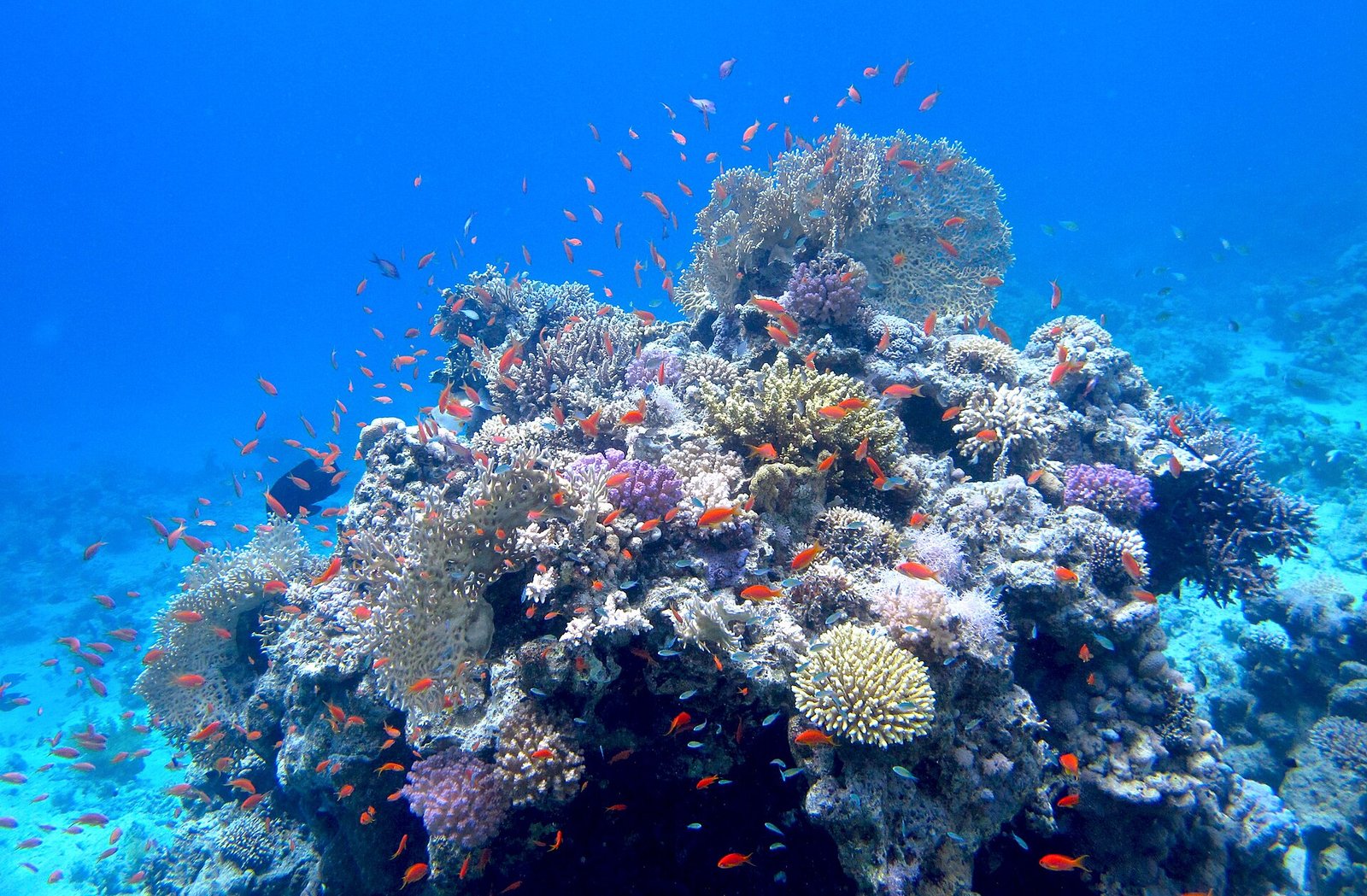
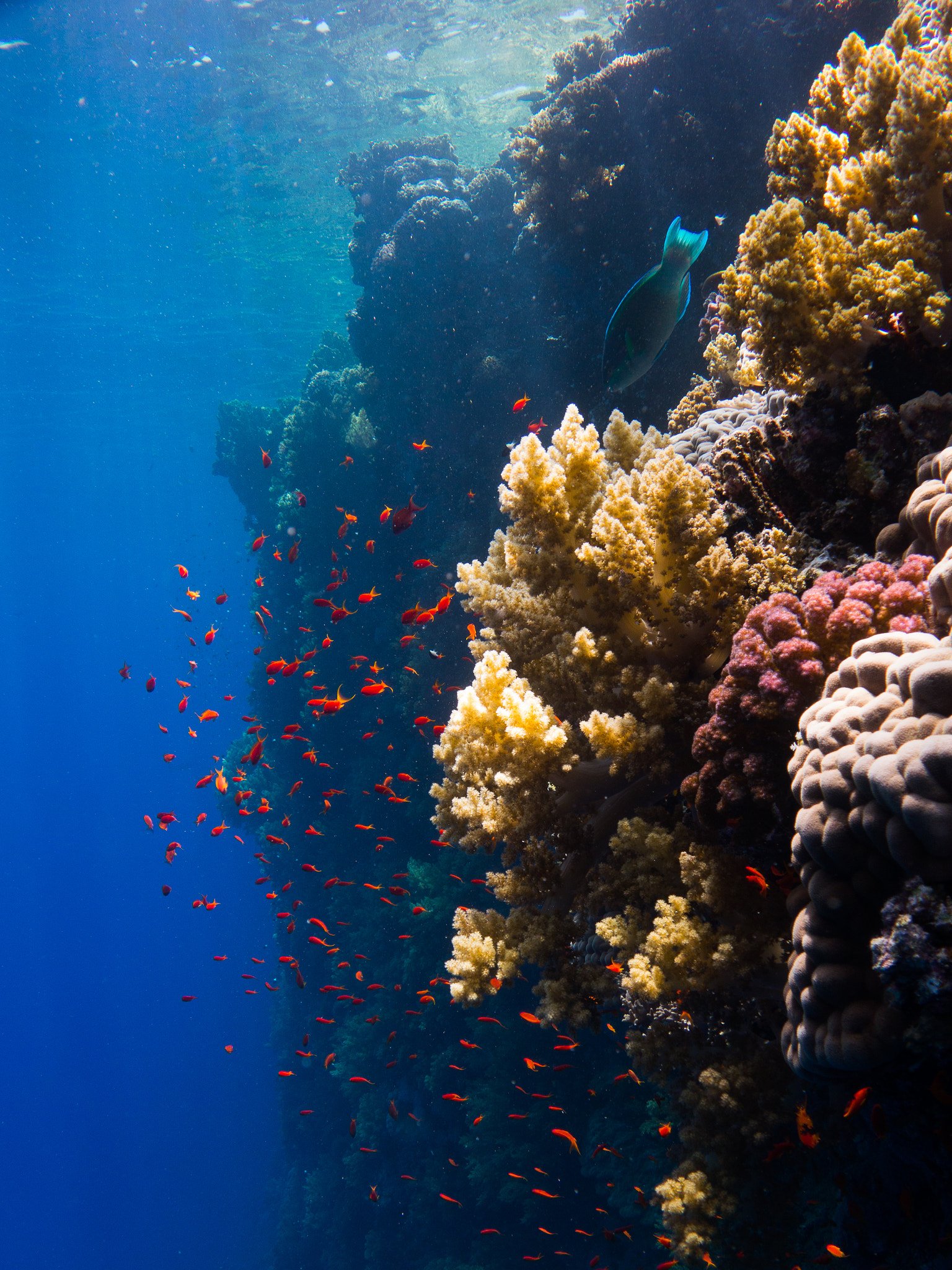
The Red Sea is a long, narrow trench between two deserts with almost no rivers feeding it, and that explains most of what makes it special. No river silt means visibility of 65 to 100 feet (20 to 30 meters) on an ordinary day. No rain runoff means coral grows right up to the shoreline, so many reefs start a few steps from the beach and then fall away as a vertical wall.
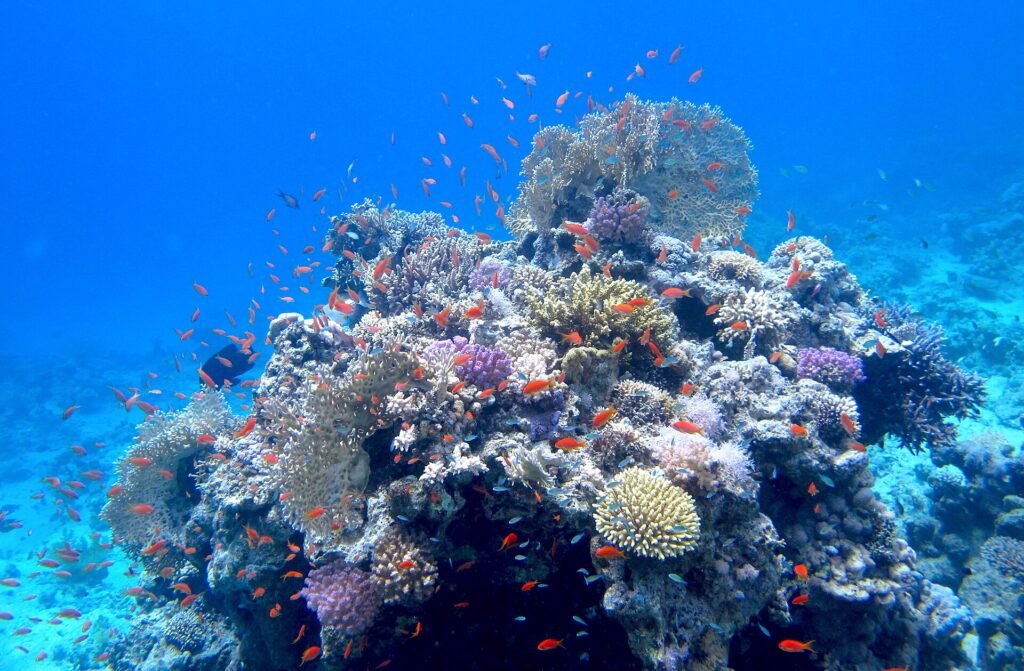
The water suits a 3 mm or 5 mm wetsuit most of the year. Fish life is dense in a way that surprises divers coming from the Caribbean: clouds of anthias over every coral head, napoleon wrasse the size of a coffee table, turtles, morays, blue-spotted rays, and in the south a real chance of oceanic whitetip or hammerhead sharks.
Then the wrecks. For centuries this was the shipping lane between Europe and the Indian Ocean, with reefs just below the surface in the middle of the channel. Ships hit them, and the warm water preserved the results. Nowhere else puts coral, big animals and wreck diving within a two-hour drive of a good hotel.
Sharm el Sheikh and Ras Mohammed
Sharm el Sheikh sits at the southern tip of the Sinai, and its great asset is Ras Mohammed National Park, the headland where the Gulf of Suez meets the Gulf of Aqaba. The signature dive is Shark Reef and Yolanda Reef, done as one drift along a sheer wall with open sea on your shoulder. In summer the wall is thick with barracuda, batfish and snapper.
North of town, the Straits of Tiran hold four reefs named after nineteenth-century cartographers, and Jackson Reef is the classic: a coral garden on top, a deep drop outside, and many divers' first hammerhead at dawn.
Sharm is the most developed base, with big resorts in Naama Bay, day boats leaving the marina every morning and the most experienced operators in Egypt. If you want a hotel pool and a nightlife strip with your diving, this is it. Our Sharm el Sheikh travel guide covers the neighborhoods.
The Thistlegorm, the wreck everyone comes for
The SS Thistlegorm was a British armed merchant ship carrying supplies for the North Africa campaign when German bombers sank her in October 1941 in the Strait of Gubal. She lies upright at about 100 feet (30 meters), deck at 50 to 65 feet (15 to 20 meters), with her cargo still stowed: rows of motorcycles, Bedford trucks, rifles, boots, aircraft parts, and two locomotives blown off the deck onto the seabed.
It is dived as two dives from a Sharm day boat, a long day with an early departure, or from a northern liveaboard. The first dive covers the outside and the stern gun; the second goes into the holds. Current can be strong and the depth makes Advanced Open Water, or the equivalent, the sensible minimum. Good operators will not take a brand-new diver inside.
One honest note: on a busy day several boats moor over her, so ask for an early start. It is a war grave as well as a dive site, and the operators who say so out loud usually look after their gear too.
Dahab, the Blue Hole and the Canyon
An hour north of Sharm, Dahab is the opposite kind of town: low-rise, laid back, dive centers in flip-flops and most diving done from the shore. You walk in from a beach cafe and the reef starts right there. Our guide to Dahab explains the town and how to get there.
The Blue Hole is a sinkhole in the reef, over 300 feet (100 meters) deep, a few miles north of town. Dived properly it is relaxed and beautiful: in at the Bells, a chimney in the reef, a drift along the outer wall at 65 to 90 feet (20 to 27 meters), and out through the shallow saddle into the hole. The Canyon, closer to town, is a crack in the reef you swim along inside.
Now the honest part. The Blue Hole is called one of the world's most dangerous dive sites because of the Arch, a tunnel through the wall at around 180 feet (55 meters) leading out to open sea. It is far beyond recreational limits and has killed many divers who tried it on a single tank. The wall dive is not the problem. The Arch is. Be suspicious of any center that treats it casually.
Hurghada, easy reefs and the Abu Nuhas wrecks
Across the water, Hurghada is the biggest resort on the mainland coast and the easiest to combine with the rest of Egypt: Luxor is four hours by road, Cairo under an hour by domestic flight. The diving is gentler than Sharm: the Giftun islands are shallow coral gardens, ideal for courses and for non-divers, who snorkel the same reef from the same boat. Our snorkeling in Hurghada guide covers what they will see.
The wrecks pull in the experienced divers. Sha'ab Abu Nuhas, a reef at the mouth of the Gulf of Suez, has sunk four ships from different decades, and you can dive two in a day: the Carnatic, a nineteenth-century steamer draped in soft coral, and the Giannis D, a freighter on its side with a swim-through engine room.
South of Hurghada, near Safaga, lies the Salem Express, a passenger ferry that sank in 1991 with a large loss of life. It is an advanced dive because of the depth and the weight of the place, and it is a grave. Some serious centers do not offer it; those that do stay outside the hull. Ask before you book.
Marsa Alam, Elphinstone and the liveaboard reefs
Marsa Alam, three hours south of Hurghada, is where the reef gets wilder and the boats fewer. Resorts are spread along the coast, many with a house reef off the jetty, and Abu Dabbab bay is known for its green turtles and an occasional dugong. Our Marsa Alam guide covers the bays and where to stay.
Elphinstone Reef is the headline: a long finger of reef in open water, 20 minutes by speedboat, with sheer walls and a plateau at each end. From late summer into fall the oceanic whitetips arrive, and a drift with one circling below the boat is the dive people talk about for years. It is an advanced site: current, depth and blue water.
Further out are the Brothers, two tiny islands with a lighthouse and two wrecks, and Daedalus Reef, alone in the middle of the sea with a hammerhead school on its northern point. These marine parks are reached only by liveaboard on a week-long route sold as BDE. Operators require an advanced card and a logbook with dozens of dives, commonly fifty, and they mean it.
Learning to dive in the Red Sea
You do not need to arrive certified. More people do their first course here than almost anywhere: warm water, high visibility, no current in the training bays, and instructors who teach in English every day. Three ways in.
- A try dive. A short briefing, a pool session, then one real dive with an instructor beside you at 20 to 40 feet (6 to 12 meters). No card, no commitment, and you know within an hour whether you want more.
- The full Open Water course. Three to four days: theory, confined-water skills, then four open-water dives. You finish with an internationally recognized certification to 60 feet (18 meters). Do the theory online at home first and classroom time drops to almost nothing.
- The referral. Theory and pool at home, then only the four sea dives in Egypt. It saves two vacation days.
Choose the center on three things: whether the gear looks cared for, how many students each instructor takes into the water, and whether the theory is taught in a language you think in. Get certified on the first day of the coast, not the last. You will also fill in a medical questionnaire; asthma, ear trouble, heart conditions and pregnancy need a doctor's sign-off.
Day boat or liveaboard
Most first-time Red Sea divers use day boats: hotel pickup around eight, two dives with lunch on board, back by four. Liveaboards leave the coast for a week and dive three or four times a day, reaching reefs no day boat can.
| Question | Day boats | Liveaboard |
|---|---|---|
| Where you sleep | A hotel in Sharm, Hurghada or Marsa Alam | A cabin on the boat, out at sea |
| Dives per day | Two, sometimes three | Three or four, one at night |
| Sites reached | Ras Mohammed, Tiran, Giftun, Abu Nuhas, Elphinstone, the Thistlegorm | Brothers, Daedalus, the deep south, the northern wreck route |
| Certification | Open Water, Advanced for the wrecks | Advanced plus a logbook, often fifty dives |
| Non-divers | Snorkel the same reef, happy | Bored by day three |
| Fits a Nile cruise | Easily, three or four dive days at the end | Only as a separate week |
For a first Egypt trip: day boats. You get the Nile, the pyramids and four or five days of diving in the same two weeks. Our Egypt and Red Sea itinerary shows how the days fall.
When to go, and how warm the water really is
You can dive the Red Sea in every month. What changes is the water temperature, the heat on deck, and which animals are around. The south runs a couple of degrees warmer than Sharm and Dahab in winter.
| Season | Water | What it feels like |
|---|---|---|
| December to February | 70 to 73 F (21 to 23 C) | A 5 mm suit and a hood, sunny days, cool evenings, hammerheads at Daedalus |
| March to May | 73 to 79 F (23 to 26 C) | A 5 mm early, a 3 mm by May, plankton blooms bring mantas and whale sharks some years |
| June to September | 82 to 86 F (28 to 30 C) | A 3 mm or a shorty, very hot on deck, calm seas, thick schools at Ras Mohammed |
| October to November | 77 to 82 F (25 to 28 C) | The sweet spot: warm water, pleasant air, oceanic whitetips at Elphinstone and the Brothers |
For a trip that also includes Luxor and the pyramids, October through April is the comfortable window on land, and the water in October and November is still summer-warm.
The no-fly rule and how it shapes your itinerary
After diving you must wait before you fly, because the nitrogen absorbed at depth needs time to leave your body before you sit in a pressurized cabin. The diving medical bodies advise a minimum of 12 hours after a single dive and 18 hours after several dives or several days of diving, and most centers and dive computers say a full 24. That includes the domestic hop from Hurghada or Sharm to Cairo.
The most common mistake in self-planned itineraries is two dives in the morning and a flight the same afternoon. No dive center will put you in the water if they know your flight time. So the coast ends with a full rest day: the hammam, a desert quad bike, the pool.
The same logic applies to altitude on land. The Mount Sinai sunrise climb takes you above 7,000 feet (2,200 meters), so do it before your dive days, never the night after. This is why we build every trip as Nile first, coast second: a block of consecutive dive days, a rest day, and only then the transfer back to Cairo.
Reef etiquette that actually matters
Egyptian reefs carry a lot of divers, and the difference between a healthy reef and a tired one is small habits repeated by thousands of people. The short version:
- Touch nothing, not even a finger on dead-looking rock to steady yourself. Coral has a living mucus layer and contact is where infection gets in.
- No gloves unless there is a technical reason. Gloves invite you to hold on.
- Sort your buoyancy in the first minutes and watch your fins. Fin tips break more coral than hands do, and the diver never notices.
- Do not chase, corner or ride anything. Turtles and dugongs abandon a feeding ground when surrounded.
- Never feed fish. It changes behavior and in some species makes them aggressive toward swimmers.
- Wear a long-sleeve rash guard instead of sunscreen in the water, and a reef-safe formula on your face.
- Leave the wrecks as you found them. A brass valve in a suitcase is theft.
Centers that enforce this unprompted usually have the best-kept gear too.
How Explora Egipto pairs diving with a Nile cruise
We are a local agency with our own guides and vehicles, and we build the diving into a full Egypt trip rather than sell it alone. The pattern is simple. Two or three days in Cairo. A domestic flight to Luxor or Aswan and the Nile cruise between them. Then the four-hour drive from Luxor to Hurghada across the Eastern Desert, or the flight to Sharm if the Sinai is your choice.
On the coast we book the hotel that matches the dive center, not the other way round, and hand you to an operator we have used ourselves, with pickup, gear and boat arranged. If you are learning, the course goes in the first days. If you are certified, we ask your logbook level and build the sites around it. The last day is a rest day by design.
Our excursions from Hurghada page lists what the non-divers do meanwhile. Tell us your dates and certification level and we send a day-by-day plan.
Frequently asked questions
Which Red Sea base is best for a first-time diver?
Hurghada or Dahab. Hurghada has shallow, sheltered reefs and boats that carry snorkelers too, so a mixed family works. Dahab has shore diving, a relaxed town and the lowest-stress courses in Egypt. Sharm is excellent but its signature sites are wall drifts, better with a few dives logged. Marsa Alam is for divers who know what an advanced site feels like.
Do I need to be an advanced diver for the Thistlegorm?
In practice, yes. The deck sits at 50 to 65 feet, the holds go to about 100 feet, there can be current on the line, and the second dive is inside the ship. If you only hold Open Water, do the Advanced course at the start of your coast days; it takes two days and unlocks the wreck.
Is the Blue Hole in Dahab safe to dive?
The recreational dive is safe and lovely: in at the Bells, along the outer wall within normal limits, out through the shallow saddle into the hole. What is not safe is the Arch, a tunnel at around 180 feet that has claimed many lives among divers who went far beyond their training. Keep to your limits and it is a highlight.
How long after diving can I fly home from Egypt?
Wait at least 18 hours after multiple dives or several days of diving, and most centers and dive computers ask for 24. That covers the domestic flight to Cairo as well as the flight home, so your last dive day must be followed by a full rest day. We build that day into every itinerary that includes the coast.
Does my regular travel insurance cover scuba diving?
Often not, or only to a shallow limit. Read the policy for a scuba clause and, if diving is a big part of the trip, take a dedicated dive policy that covers hyperbaric chamber treatment and evacuation. Chambers exist in Sharm, Hurghada and Marsa Alam. Our guide to travel insurance for Egypt explains what to look for.
Can my partner who does not dive come on the dive boat?
On day boats, yes, almost always. The boats moor over reefs that are shallow on top, so a snorkeler sees the same coral garden while the divers work the wall below. Tell us when you book so the operator counts them in. On liveaboards the answer is usually no, because the days are built entirely around diving.
Finish your Egypt trip under the water, not just beside it
Tell us your dates, your certification level or whether you want to learn, and who is coming along. We come back with the base that fits, the dive center we trust there, the Nile and Cairo days in front of it, and the rest day in the right place before you fly. No prices on this page, just a quote in your inbox.