Saint Catherine's Monastery in Sinai is the oldest working monastery on earth, and this is how you visit it well
Saint Catherine's Monastery in Sinai is the oldest working monastery on earth, and this is how you visit it well
Saint Catherine's Monastery sits at the foot of Mount Sinai, in the granite heart of the Sinai Peninsula, and monks have lived inside its walls without a break since the emperor Justinian built them in the sixth century, which makes it the oldest continuously inhabited Christian monastery in the world. Inside you find the bush venerated as the Burning Bush of Moses, a basilica with a sixth century mosaic of the Transfiguration, the finest collection of early icons anywhere, a manuscript library second only to the Vatican, and a small mosque. Most visitors pair it with the night climb of Mount Sinai for sunrise, from a base in Sharm el Sheikh or Dahab. Here is how to do it properly.
What Saint Catherine's Monastery is, and why it never closed
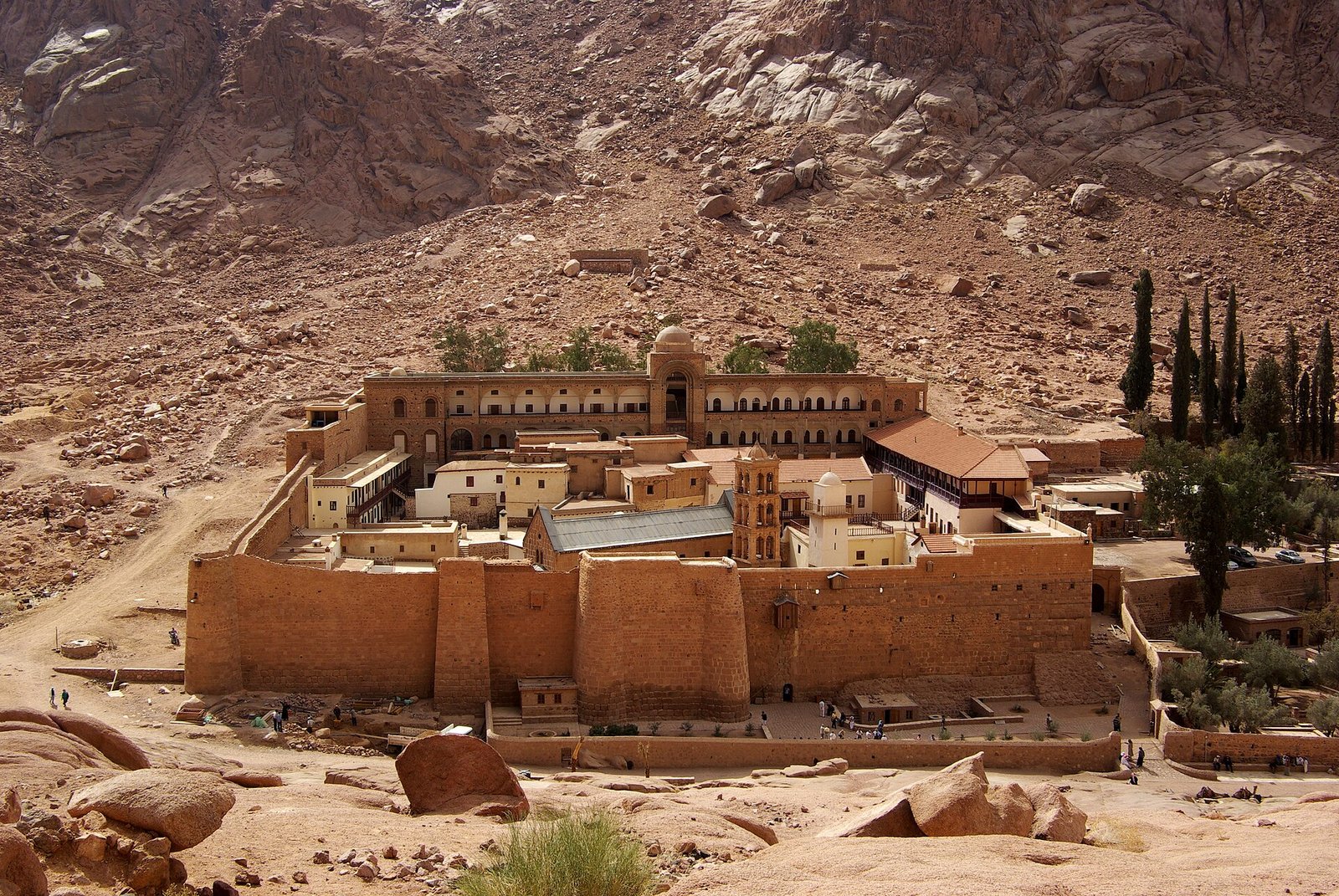
Saint Catherine's is a Greek Orthodox monastery built between 548 and 565 on the orders of the Byzantine emperor Justinian, around a chapel the empress Helena had put up two centuries earlier on the spot of the Burning Bush. Justinian did not build a quiet retreat. He built a fortress, with granite walls higher than a three story house, because the monks were living at the far edge of the empire with nobody to call for help.
Those walls are why the place still exists. The monastery was never sacked, never burned and never abandoned. It passed into the Islamic world within a century of its founding and simply kept going, protected by a letter of safe conduct, by its own diplomacy, and by the Jebeliya Bedouin who were settled here to serve it and still guide climbers up the mountain.
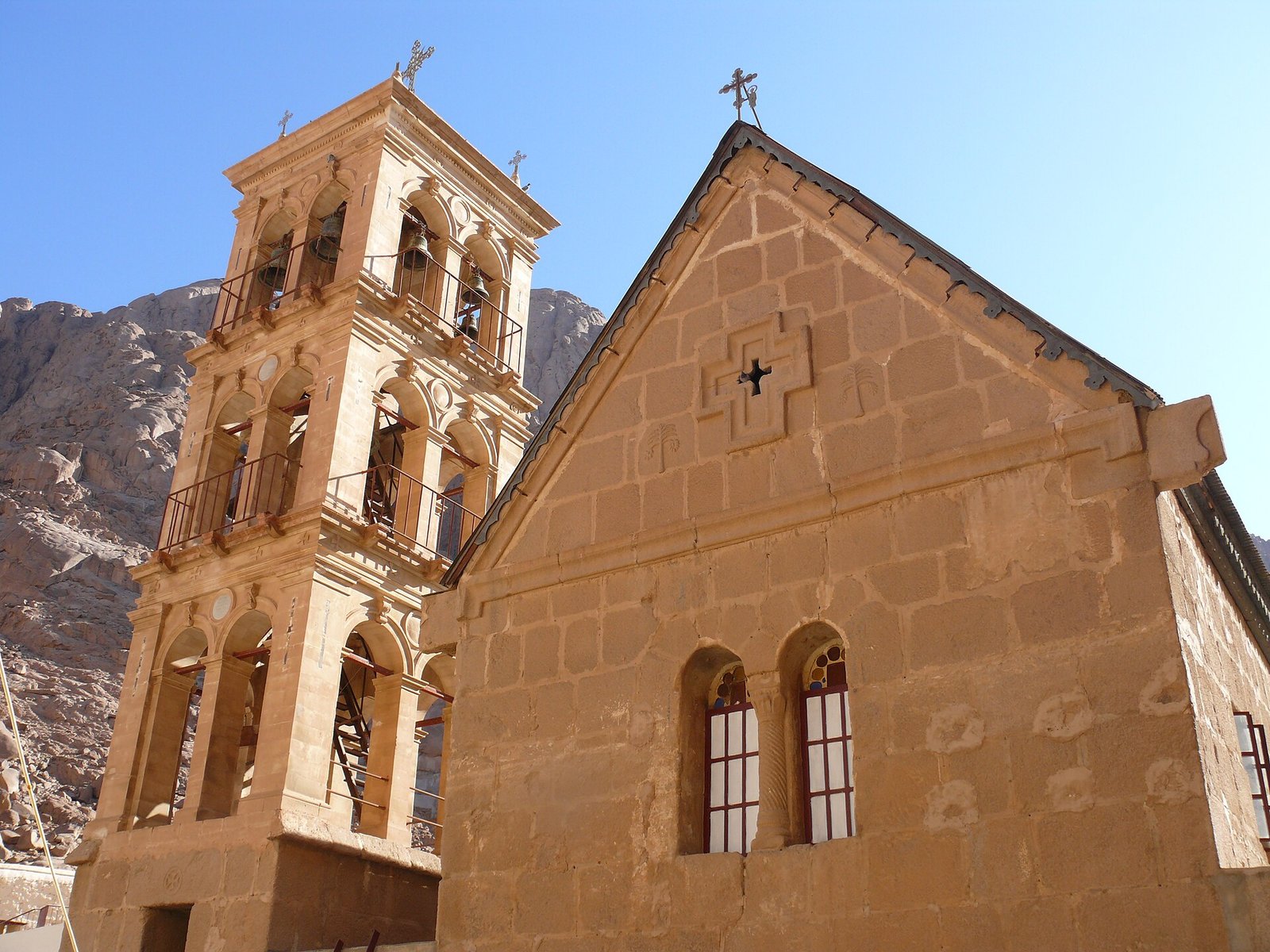
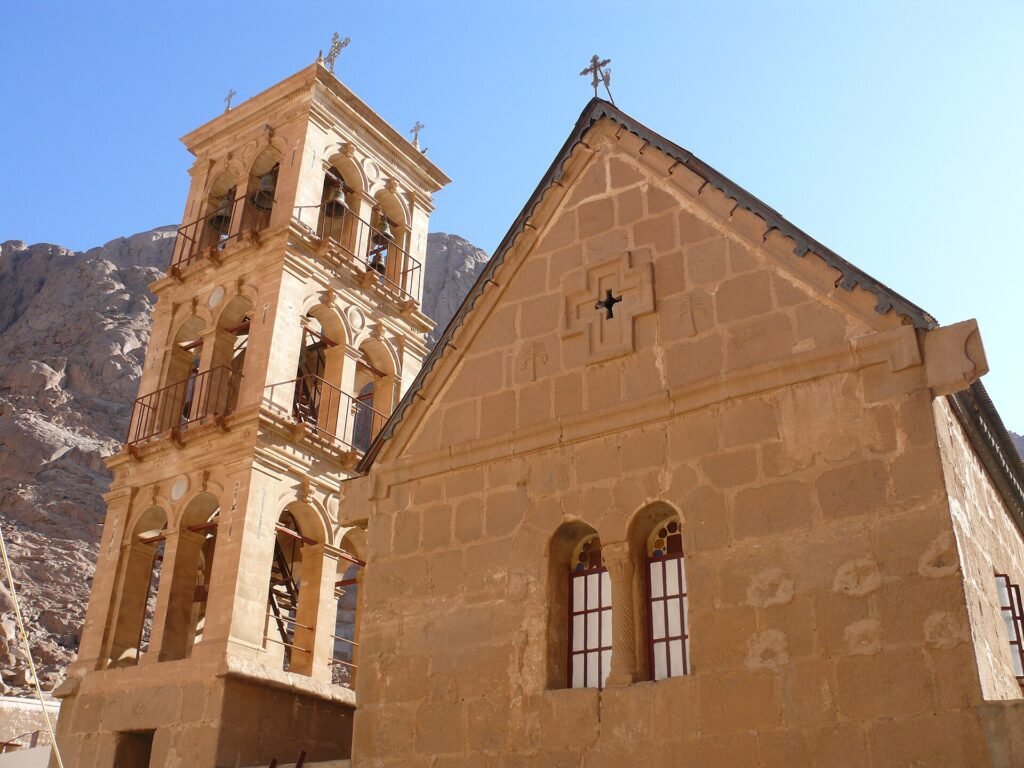
The result is a compound where a fourth century chapel, a sixth century church, a Fatimid mosque and a modern bell tower stand within yards of each other, and where the same community has chanted the same liturgy for close to fifteen centuries. UNESCO listed it as a World Heritage Site for that reason. It is the anchor of any trip into the interior of the Sinai Peninsula.
The Burning Bush, and the chapel built behind the altar
The reason a monastery stands in this valley is the book of Exodus. Tradition places the bush that burned without being consumed, where Moses heard the voice of God and was told to remove his sandals, at this exact spot at the foot of the mountain. Helena's chapel was built over the roots, and Justinian's basilica was laid out so that the chapel sits directly behind the main altar.
What you see today is a large, sprawling bramble growing out of a raised stone bed in a small courtyard beside the church. The monks say it descends from the original, and botanists identify it as a rare bramble found almost nowhere else in Sinai. Pilgrims of all three faiths stop here. Bring a longer lens, because the bush is trained over a wall and heavily fenced.
The Chapel of the Burning Bush itself, the tiny room behind the altar, is usually closed to general visitors, and when it is open you remove your shoes as Moses did. A few steps away is the Well of Moses, where tradition says he met the daughters of Jethro. It still gives water, which is the practical reason a community could survive here at all.
The basilica and the Transfiguration mosaic
The church is the part most people underestimate before they walk in. It is Justinian's original building, a three aisled basilica with its sixth century cedar doors still on their hinges, a carved wooden ceiling from the time of construction, and a row of granite columns each dedicated to a month of the church calendar, with the saints of that month painted beside it.
The treasure is in the apse above the altar. The mosaic of the Transfiguration shows Christ in a mandorla of light with Moses and Elijah beside him and the apostles thrown to the ground below, and it was set within a few years of the church being finished. It is one of the very few large Byzantine mosaics of that age to survive intact anywhere, because nobody ever had the chance to destroy it. Standing under it with the oil lamps lit is the moment most visitors remember.
The basilica is a working church, so it closes during services and the visiting window is the part of the morning after the liturgy. Photography inside is not allowed and the monk at the door enforces it. The sanctuary is off limits, so your guide points out the mosaic from the nave, and a small pair of binoculars earns its place in your bag. Off the south side is the ossuary, where centuries of monks' bones are kept, worth a few minutes when it is open.
The icons that survived, and the library that kept the Codex
Two things make Saint Catherine's a world class museum as well as a monastery, and both come down to one accident. In the eighth and ninth centuries the Byzantine emperors ordered religious images destroyed across the empire. Saint Catherine's was by then inside the Islamic world, out of reach of the decree, so its icons were never touched.
That is why the monastery holds the largest collection of early icons in existence, including a handful painted in the sixth and seventh centuries in encaustic, with pigment mixed into hot wax, a technique that survives in almost no other Christian image. The Christ Pantocrator, with its deliberately asymmetrical face, is the most famous and probably the most reproduced icon in Byzantine art. A selection hangs in the small museum inside the walls, and it is where you should slow down and let the guide talk.
The library and the Codex Sinaiticus
The library is the second most important collection of ancient manuscripts in the world after the Vatican, with thousands of codices in Greek, Arabic, Syriac, Georgian, Armenian, Coptic and Church Slavonic. Its most famous holding was the Codex Sinaiticus, a fourth century Greek Bible and one of the two oldest complete New Testaments in existence.
In the nineteenth century the German scholar Constantin von Tischendorf removed most of it in stages, and its leaves are now split between London, Leipzig, Saint Petersburg and the monastery, which kept the pages that turned up in a forgotten storeroom in 1975. The monks still call it a loan never returned. The library itself is open only to scholars. Visitors see a selection of manuscripts displayed beside the icons, which is enough to understand why the place matters.
A mosque inside the walls, and the letter that protected the monks
The detail that surprises almost every American visitor is the minaret rising next to the bell tower. Inside the walls of a Christian monastery stands a small Fatimid mosque, built in the early twelfth century for the Muslim families who worked for the monks and for the Bedouin of the valley. It is still occasionally used, and the monks are proud of it.
The story behind it is the Ashtiname, a letter of protection the monastery attributes to the Prophet Muhammad himself, promising the monks safety, freedom of worship and exemption from taxes. The original went to Istanbul under the Ottoman sultan Selim in the sixteenth century, and a copy hangs in the monastery today. Whether every word is that old is a matter for historians. What is not in doubt is that successive Muslim rulers honored it, and that a church and a mosque have shared this courtyard for nine hundred years without incident.
Climbing Mount Sinai: camel path or Steps of Repentance
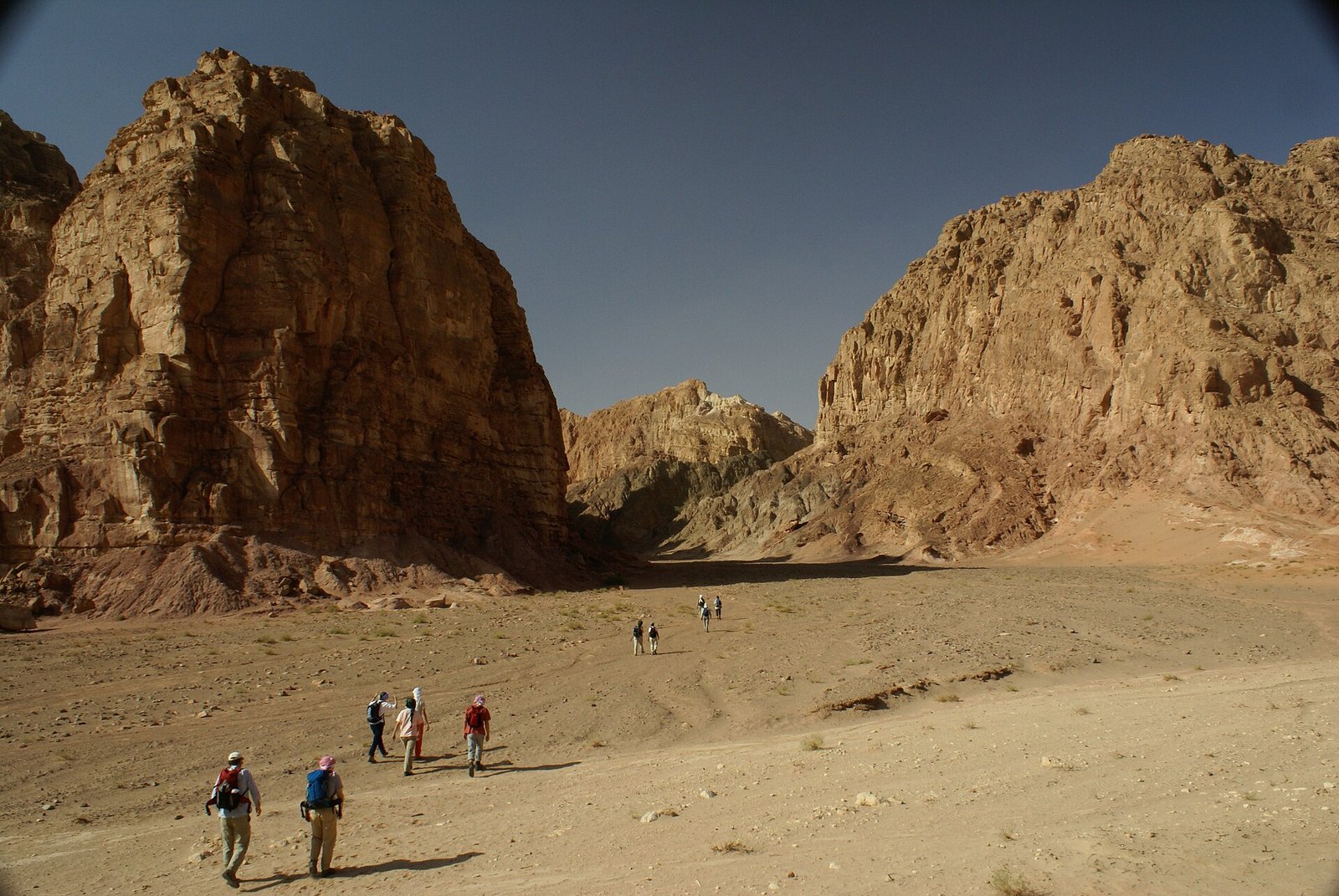
The mountain behind the monastery is Jebel Musa, the Mountain of Moses, at 7,497 feet (2,285 meters), the peak tradition identifies as the biblical Mount Sinai. Nearly everyone who comes this far climbs it, at night, to reach the summit for sunrise. We have a full page on the Mount Sinai sunrise climb, so here is the short version.
Two routes leave the monastery gate and meet at Elijah's Basin, a high hollow with a cypress tree and a chapel, before a final flight of roughly 750 rock steps to the top.
| Route | Character | Who it suits |
|---|---|---|
| Camel path | Long, winding, gradual. A wide trail with tea huts, about two to three hours of walking. A camel can carry you most of the way to Elijah's Basin. | Almost everyone, and anyone climbing in the dark. |
| Steps of Repentance | About 3,750 irregular stone steps cut by a monk as a penance. Shorter but far steeper, through a dramatic gorge. | Fit walkers with good knees, in daylight the first time. |
Our advice is up the camel path in the dark and down the Steps of Repentance in daylight, when you can see the gorge. A Jebeliya Bedouin guide is required and arranged at the gate, and the descent lands you at the monastery door as it opens.
What nobody tells you about the summit
It is cold, even in summer. Sunrise on the summit in winter is often well below 40 F (5 C) with a hard wind, and even in July it is rarely above 55 F (13 C) before the sun clears the horizon. Bring a warm layer, a hat, gloves and a headlamp, and check what to pack for Egypt for the rest. The Bedouin rent blankets on top.
Visiting days, dress code and what you cannot photograph
This is where most self planned trips go wrong. The monastery opens to visitors for a few hours in the morning only. It is closed on Sundays and on the major feasts of the Greek Orthodox calendar, which do not fall where a Western calendar would put them, and the monks can close it at short notice. A three hour drive to a locked gate is the most common disappointment in Sinai, and it is avoidable. We confirm the visiting window for your date before we build the day.
The rules at the door are simple and not negotiable. Shoulders and knees covered for everyone, men included, with no exceptions for the heat. Women do not need to cover their hair. No photography inside the basilica or the museum, though the courtyards and the Burning Bush are fine. Voices down inside the church.
Be realistic about how much you see: the courtyards, the basilica nave, the Burning Bush, the Well of Moses, the museum, the mosque exterior and, when open, the ossuary. The library, the chapel behind the altar and the monks' quarters are closed. Ninety minutes inside is a thorough visit.
Getting there from Sharm el Sheikh, Dahab or Cairo
The monastery sits in the mountainous interior of the peninsula at the end of a long road through granite and sand, and the drive dictates the plan. There is no train and no useful bus, so you go by car with a driver.
| Starting point | Drive each way | How it works best |
|---|---|---|
| Sharm el Sheikh | Roughly three hours | Leave late evening, climb at night, visit the monastery at opening, back at the hotel for a late lunch. |
| Dahab | Roughly two to two and a half hours | The easiest base. Same overnight pattern with less road, or a daytime visit without the climb. |
| Cairo | Most of a day, through the Suez tunnel | Only with a night in the village of Saint Catherine or on the way to the coast. Not a day trip. |
Two administrative points matter more than the distances. There are checkpoints on the Sinai roads and you must carry your actual passport, not a photocopy. And if you entered Egypt at Sharm on the free Sinai-only stamp that covers the coast resorts, that stamp does not cover the interior. You need the full Egyptian visa. Our page on Egypt visa requirements explains the difference, and we check it before we confirm any Sinai day.
With the climb, count on a full night out. Without it, it is still a full day from the coast.
Combining the monastery with a Red Sea stay
For an American traveler the monastery rarely stands alone. It is the one day of history inside a beach week, or the Sinai chapter at the end of a Cairo and Nile trip.
If you are based in Sharm el Sheikh, the classic pattern is the overnight climb on your third or fourth day, once you have slept off the journey, with a rest day after it. If you are staying in Dahab, the shorter road makes a daytime visit realistic, which suits families with younger kids who should not be climbing at three in the morning.
If the monastery is the tail end of a longer Egypt itinerary, take the domestic flight from Cairo to Sharm, do the Sinai night on your first full day, then recover by the water. Divers should leave a comfortable gap between the last dive and the climb, since the summit is high enough to matter.
Still choosing your base? Read Hurghada or Sharm el Sheikh first. Hurghada is on the wrong side of the Gulf of Suez, and a Sinai day from there means a ferry or a very long drive.
What a guide adds, and how Explora Egipto runs the day
Without a guide you see an old church and a bush. With one who knows the place you learn why the columns are painted with saints, which icon is the sixth century one, and where Helena's chapel hides behind the altar. The building explains nothing about itself. A good guide is the difference between a photo stop and one of the great mornings of your trip.
Here is how we run it, as a local agency in Egypt with our own drivers and guides.
- We confirm the monastery's visiting window for your date before we lock the plan, and move the day if it falls on a closure.
- We check your visa status so the Sinai-only stamp does not stop you at the first checkpoint.
- A private vehicle from your hotel, a licensed English speaking guide for the monastery and the Bedouin guide for the mountain, all arranged in advance.
- Blankets, water and a warm drink at the summit, and breakfast on the way down.
- The option to skip the climb and visit in daylight, which we recommend for families.
The day can be a single excursion from your Red Sea hotel or a chapter of a longer custom Egypt tour that starts in Cairo and ends on the beach. Tell us your dates and we send you the quote.
Frequently asked questions
Is Saint Catherine's Monastery really the oldest in the world?
It is the oldest Christian monastery that has been continuously inhabited, which is the claim that matters. Older monastic sites exist in Egypt and Syria, but they were abandoned or refounded. Saint Catherine's has had monks inside the same walls since Justinian finished the fortress in the sixth century, and it was never sacked, burned or emptied.
Can you visit the monastery without climbing Mount Sinai?
Yes, and for many people it is the better plan. A daytime drive from Dahab or Sharm el Sheikh, a guided visit of about ninety minutes, and back on the coast by mid afternoon. You give up the sunrise but gain a full night's sleep and an easier day for children, older travelers or anyone with knee trouble.
Is there really a mosque inside the monastery?
There is. A small Fatimid mosque with its own minaret was built inside the walls in the early twelfth century for the Muslim families and Bedouin who served the monks, and it still stands beside the bell tower. The monastery links it to the Ashtiname, the letter of protection attributed to the Prophet Muhammad.
Can you see the Burning Bush?
You can. It is a large bramble growing out of a raised stone bed in a courtyard beside the basilica, fenced off but easy to see and photograph. The monks venerate it as the descendant of the bush Moses saw. The small chapel behind the altar, built over the roots, is usually closed to visitors.
Can you visit the library and see the Codex Sinaiticus?
The library is open only to accredited scholars, and most of the Codex Sinaiticus is in London and other European collections. Visitors see a selection of manuscripts and the finest icons in the museum inside the walls, which is enough to understand the collection. The Codex pages that stayed here are shown only occasionally.
What should I wear to Saint Catherine's Monastery?
Shoulders and knees covered, for men as well as women, whatever the temperature. Long light trousers and a shirt with sleeves are ideal, and women do not need a head covering. If you are climbing the mountain first, carry a light long layer to pull on at the gate. Closed shoes are sensible on the stone floors.
See the monastery that has never closed its doors
Tell us your dates, your Red Sea hotel or wider Egypt plan and whether you want the sunrise climb, and we come back with the day built around the monastery's visiting window, the visa checked and the guides arranged. No prices on this page, just a quote in your inbox.