What to see in Luxor, monument by monument, and how much of it fits in one, two or three days
What to see in Luxor, monument by monument, and how much of it fits in one, two or three days
Luxor has more ancient monuments open to visitors than any other place on earth, and the honest list is longer than one day allows. On the east bank: Karnak, Luxor Temple and two small museums. On the west bank: the Valley of the Kings, the temple of Hatshepsut, the Colossi of Memnon, Medinet Habu, the Ramesseum, the Tombs of the Nobles, Deir el Medina and the Valley of the Queens with the tomb of Nefertari. Add a dawn balloon flight, a felucca at sunset and, with a third day, Dendera and Abydos. Below, every site, how long it takes, and what to skip.
How Luxor is laid out, and why the river matters
Luxor is the modern town on top of ancient Thebes, and the Nile cuts it in two on purpose. The east bank, where the sun rises, was the city of the living: temples, palaces, houses. The west bank, where the sun sets, was the city of the dead: royal tombs, funerary temples and the village of the men who carved them.
That split still runs your schedule. Your hotel and the cruise dock are almost always on the east bank. The west bank sites are spread over several miles of desert edge with no shade, so you need a vehicle and a plan. We go deeper in our guide to the east bank and west bank of Luxor, but the rule is simple: west bank in the morning while it is cool, east bank in the afternoon and evening when the temples are lit. From May to September the west bank passes 100 F (38 C) by late morning, so start early in every season.
The east bank: Karnak, Luxor Temple and two small museums
Karnak
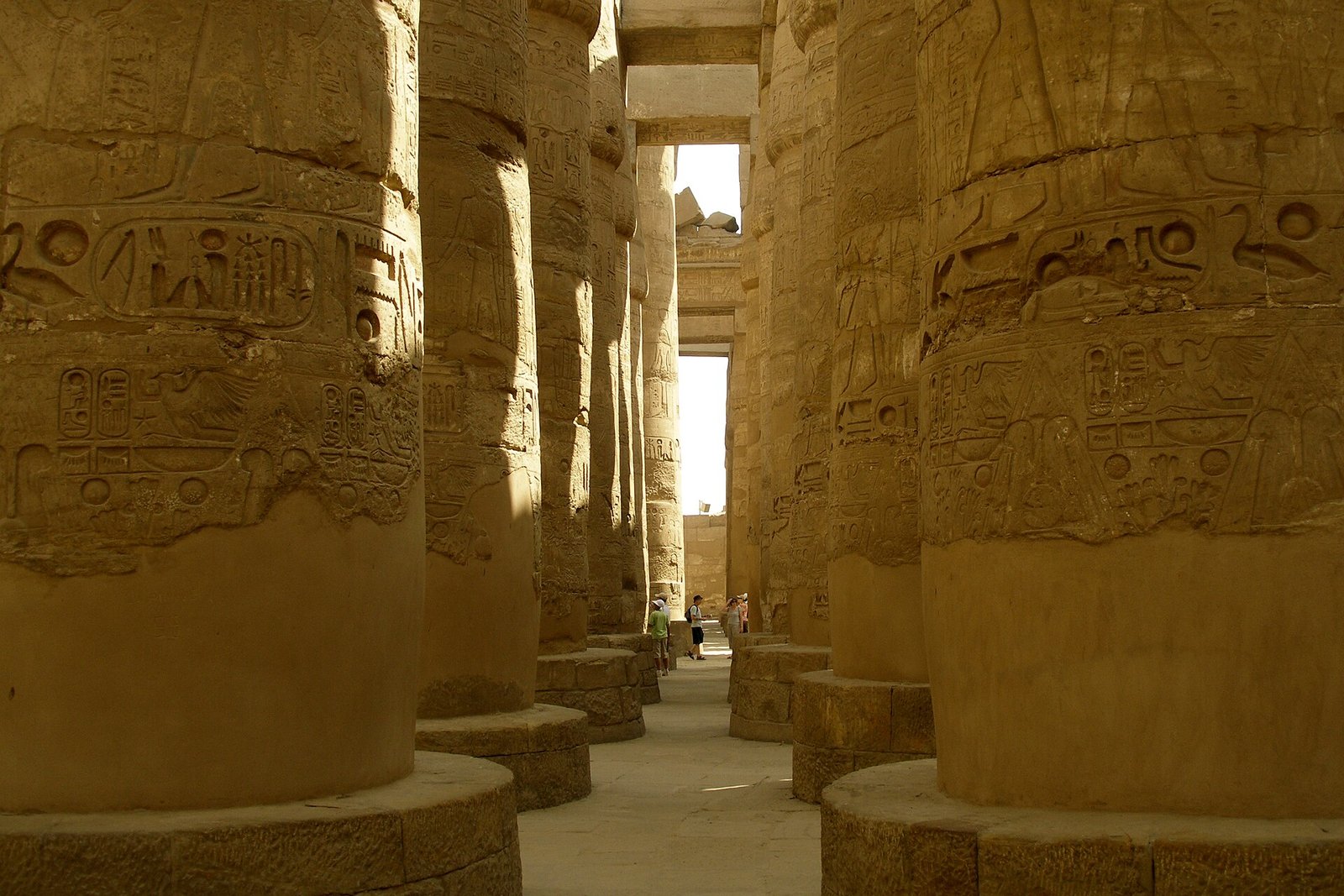
Karnak is not a temple but a walled religious city that thirty dynasties kept adding to for around two thousand years. The main precinct belongs to Amun and holds the Great Hypostyle Hall, a forest of 134 columns so thick you cannot see across it, plus obelisks, a sacred lake and an open-air museum of rebuilt chapels. Two and a half to three hours with a guide; in one hour you see the hypostyle hall and little else. Our Karnak Temple guide explains who built what.
Luxor Temple
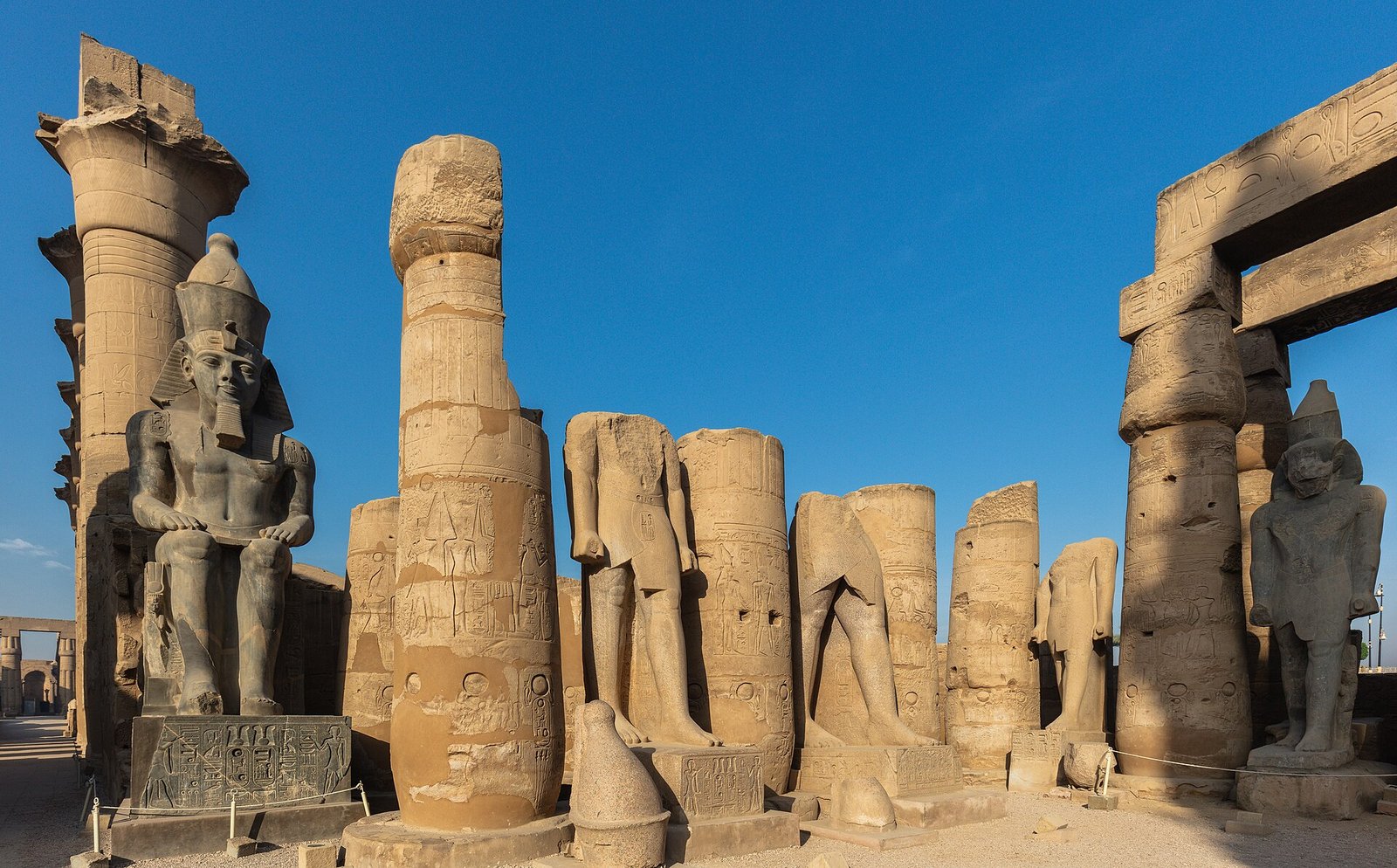
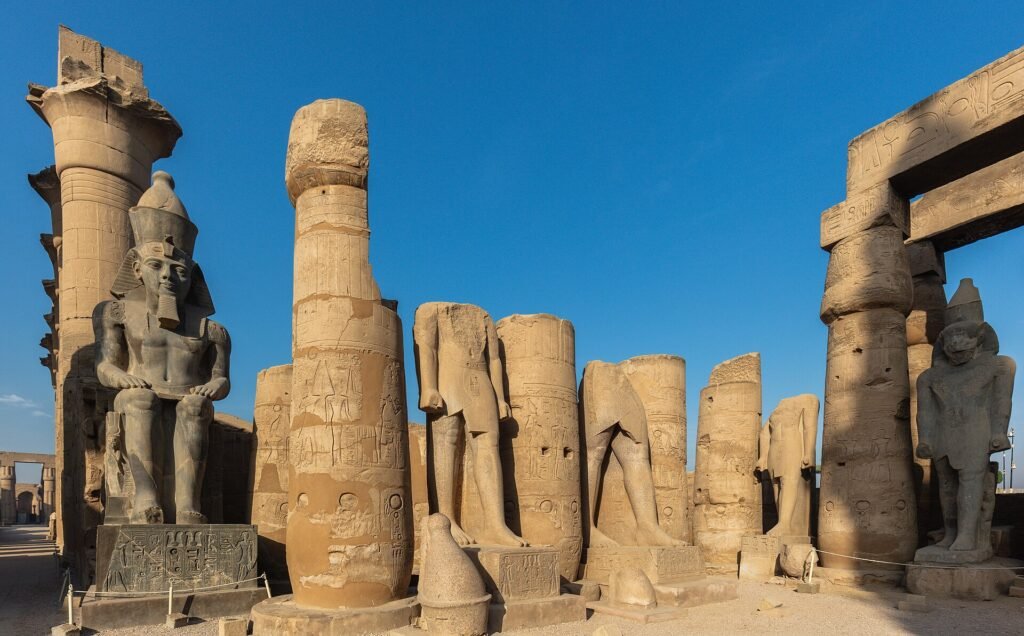
Luxor Temple stands in the middle of town on the river, a compact temple of Amenhotep III and Ramesses II with a mosque built into one court and a Roman chapel with painted frescoes at the back. The restored Avenue of Sphinxes links it to Karnak. It is best at dusk and after dark, when the columns are lit and the crowds thin. Allow one to one and a half hours; our Luxor Temple guide covers the evening visit.
The Luxor Museum
Small, well lit and, for many visitors, the best museum in Egypt: a few dozen superb pieces with space around them, including the statues found buried under a Karnak courtyard, a rebuilt wall of Akhenaten's painted blocks and two royal mummies. A little over an hour, and the ideal refuge for the hottest part of the day.
The Mummification Museum
A single hall on how a body was prepared for eternity, with the tools, the jars and a few mummified animals. Forty minutes if the subject interests you. With one afternoon only, choose the Luxor Museum instead.
The west bank: the Valley of the Kings and which tombs to choose
The Valley of the Kings is the one site nobody skips. It is a dry canyon behind the cliffs where the pharaohs of the New Kingdom cut their tombs into the rock; more than sixty are known and a rotating handful are open on any given day. The standard ticket admits you to three tombs from the open list, and a few of the best carry their own separate ticket.
Which three is the question we hear most. Our picks, if they are open when you visit:
- Ramesses IV (KV2): wide, bright, close to the entrance, with a painted astronomical ceiling. The easiest first tomb.
- Ramesses IX (KV6): long corridors with clear scenes from the funerary books and vivid color.
- Merenptah (KV8): a steep descent to a huge burial chamber with the outer sarcophagus lid still in place.
- Ramesses III (KV11): side chambers with harpists and everyday objects, a change from the usual gods.
Among the separate-ticket tombs, Seti I is the finest in the valley and worth the extra, Ramesses V and VI has an extraordinary ceiling, and Tutankhamun is small and mostly bare but holds the king himself. Tickets, extra tombs and photo rules are in our Valley of the Kings tickets and tombs guide. Plan two to three hours.
The west bank: Hatshepsut, the Colossi of Memnon and Medinet Habu
The temple of Hatshepsut
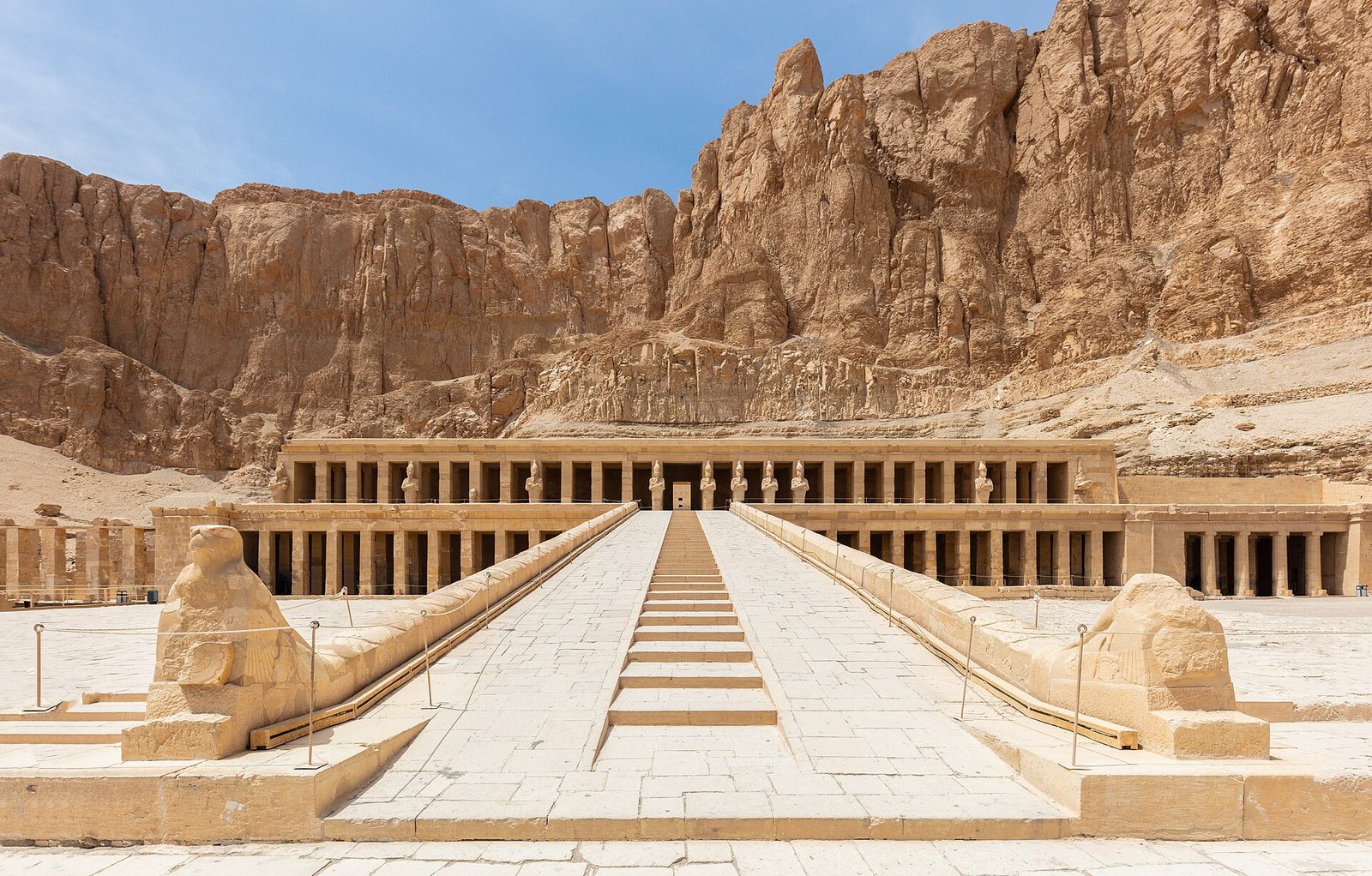
Ten minutes from the Valley of the Kings, the mortuary temple of the female pharaoh rises in three terraces against a sheer cliff at Deir el Bahari. It is the most photographed building in Luxor and photographs best before nine, while the cliff behind it is still in shadow. Look for the reliefs of the expedition to Punt, the chapel of Hathor with its cow-headed columns, and the queen's faces chiseled out by her successor. One hour.
The Colossi of Memnon
Two seated statues of Amenhotep III, about 60 feet (18 meters) tall, sit in a field beside the main road, all that stands of what was once the largest temple in Egypt. A fifteen-minute stop on your way in or out. Our page on the Colossi of Memnon tells why the Greeks and Romans came to hear one of them sing at dawn.
Medinet Habu
The mortuary temple of Ramesses III, and the site experienced visitors put at the top of the west bank list. Large, quiet, and the color on its reliefs is the best preserved of any temple in Luxor. The outer walls record the wars against the Sea Peoples, complete with a grim tally of severed hands, and the gate is a fortified tower in the Syrian style. One to one and a half hours.
The west bank: the Ramesseum, the Tombs of the Nobles, Deir el Medina and Nefertari
The Ramesseum
The funerary temple of Ramesses II, famous for a failure: the colossal granite statue of the king lies shattered on its back where it fell, the ruin behind the poem Ozymandias. Around it, a hypostyle hall and rows of vaulted mud-brick storerooms. Forty-five minutes to an hour. More in our Ramesseum guide.
The Tombs of the Nobles
Hundreds of tombs of officials and priests cut into the hillside of Sheikh Abd el Qurna, and the opposite of the royal tombs: instead of gods and underworld books they show life, harvests, banquets, fishing, a wife with a cat under her chair. Rekhmire, Sennefer, Ramose, Menna and Nakht are the classic set. An hour to an hour and a half, with steps.
Deir el Medina
The village where the artists who decorated the royal tombs lived, and the one west bank site about ordinary people. You see the house foundations, a small Ptolemaic temple, and two or three exquisite workmen's tombs, Sennedjem's above all, painted with the skill they used for the kings. An hour, best right after the Valley of the Kings. Our guide to the Deir el Medina workers' village covers the tombs and the papyri about strikes, pay and gossip.
The Valley of the Queens and Nefertari
The tombs of royal wives and princes, most of them modest. The reason to come is Nefertari, great wife of Ramesses II, whose painted walls are by general agreement the most beautiful in Egypt. Separate ticket, a short time limit inside, worth every minute. Without Nefertari, leave the valley for a second visit.
Beyond the monuments: the balloon, a felucca at sunset and the souk
The hot-air balloon. You lift off from the west bank fields as the sun clears the eastern hills. For about forty-five minutes you float over the Ramesseum, Hatshepsut's temple, the green strip and the desert, and the layout of Thebes becomes obvious. It flies at dawn only and is grounded by wind, so book your first Luxor morning and keep the second as a fallback.
A felucca at sunset. A felucca is a wooden sailboat with a single lateen sail, and an hour on the river as the light turns orange behind the Theban hills is the calmest hour you will spend in Egypt. It is the right way to end a west bank day.
The souk. The market street runs behind Luxor Temple, a covered lane of spices, scarves, alabaster and galabeyas. Go in the evening, walk to the end, and treat the first block as theater. An hour is plenty.
Day trips from Luxor: Dendera and Abydos
With a third day, two temples north of Luxor turn a good visit into a complete one. Both fit a single long day with a private car.
Dendera is the temple of Hathor, about an hour and a half north near Qena. It is Ptolemaic and Roman, which means almost intact: the roof is on, the ceiling has been cleaned back to its original blues and golds, the crypts are open, and you climb to the roof where the famous zodiac was carved before the original went to Paris.
Abydos is another hour and a half beyond. It was the holiest place in Egypt, the burial ground of Osiris, and the temple of Seti I has the finest carved reliefs in the Nile valley, still colored, plus the king list that fixed the order of the dynasties.
Both together is roughly ten to eleven hours out. With only a half day spare, Dendera alone is the easier choice.
How much time each site needs
The durations we use when we build a day, assuming a guide and a private vehicle.
| Site | Bank | Time on site | First visit? |
|---|---|---|---|
| Karnak | East | 2.5 to 3 hours | Essential |
| Luxor Temple | East | 1 to 1.5 hours, at dusk | Essential |
| Luxor Museum | East | 1 to 1.5 hours | Recommended |
| Mummification Museum | East | 30 to 45 minutes | Optional |
| Valley of the Kings | West | 2 to 3 hours, 3 to 5 tombs | Essential |
| Temple of Hatshepsut | West | 1 hour | Essential |
| Colossi of Memnon | West | 15 minutes | Roadside stop |
| Medinet Habu | West | 1 to 1.5 hours | Recommended |
| Ramesseum | West | 45 minutes to 1 hour | If time allows |
| Tombs of the Nobles | West | 1 to 1.5 hours | Second day |
| Deir el Medina | West | 1 hour | Second day |
| Valley of the Queens, Nefertari | West | 1 hour | For Nefertari, yes |
| Hot-air balloon | West | 3 hours door to door, dawn | Yes if you can |
| Felucca at sunset | River | 1 to 2 hours | Yes |
| Souk | East | 1 hour, evening | Optional |
| Dendera and Abydos | North | Full day, 10 to 11 hours | Third day |
How to fit Luxor into one, two or three days
One day
This is what most Nile cruises give you, and it is a sprint. Leave at seven for the west bank: Valley of the Kings with three tombs, Hatshepsut, a photo stop at the Colossi. Lunch on the east bank, Karnak mid-afternoon, Luxor Temple as the sun goes down. Four headline sites, nothing else.
Two days
Two days is the minimum we recommend: one full west bank morning and one calm east bank day.
- Day one, west bank: balloon at dawn if you want it, then the Valley of the Kings with four tombs including Seti I or Ramesses V and VI, Hatshepsut, Deir el Medina, Medinet Habu, and the Colossi on the way back. Felucca at sunset.
- Day two, east bank: Karnak first thing before the buses, the Luxor Museum during the heat, a rest, then Luxor Temple at dusk and the souk after.
Three days
Day three is either a second west bank morning for the Tombs of the Nobles, the Ramesseum and Nefertari's tomb, with the Mummification Museum in the afternoon, or the long drive north to Dendera and Abydos. Temples if you loved Medinet Habu, tombs if you want more painted walls.
What to skip the first time
Nobody sees all of Luxor on a first visit. In order of what we would drop first:
- The Mummification Museum. Good and small, but the Luxor Museum covers more in the same hour.
- The Valley of the Queens without Nefertari. The other tombs there do not justify the drive.
- The Ramesseum. Fine ruin, famous statue, but Medinet Habu does the same job with more color and fewer people.
- A fifth tomb in the Valley of the Kings. Three well-chosen tombs plus one extra-ticket tomb is the sweet spot. After that they blur.
- The Karnak sound and light show. Luxor Temple after dark is the stronger evening.
What we would not skip in any plan: Karnak with a guide, the Valley of the Kings with tombs chosen for you, Hatshepsut early, Medinet Habu, Luxor Temple at dusk. That set is Luxor.
How Explora Egipto runs Luxor
We are a local agency in Egypt with our own Egyptologist guides and vehicles, and Luxor is the city we spend the most days in. Your guide meets you at the hotel or the cruise dock and stays with you all day. On the west bank we keep the car for the whole morning. Tickets, including the extra tombs you chose, are bought before you reach the gate, so there is no line when the buses roll in.
Every program starts on the west bank at first light and ends at Luxor Temple as it lights up, because that order works in July and in January. If the balloon is on your list, we hold the first morning and keep the second as a weather fallback.
The ready-made days are on our Luxor excursions page, or send us your dates and what matters most, tombs, temples or the river, and we shape the days around it. No prices on this page; ask us for the quote.
Frequently asked questions
What are the must-see sights in Luxor?
On the east bank, Karnak and Luxor Temple. On the west bank, the Valley of the Kings, the temple of Hatshepsut, Medinet Habu and a stop at the Colossi of Memnon. Those six are the core of a first visit. With more time, add the Luxor Museum, Deir el Medina, Nefertari's tomb and the dawn balloon.
How many days do you need in Luxor?
Two full days for a first visit: one morning on the west bank for the tombs and funerary temples, one day on the east bank for Karnak, the museum and Luxor Temple at dusk. One day covers the four headline sites in a rush. A third day adds the smaller west bank sites or Dendera and Abydos.
Which tombs should I see in the Valley of the Kings?
From the standard ticket, Ramesses IV, Ramesses IX and Merenptah are a strong trio when open, with Ramesses III and Tausert and Setnakht as alternates. Of the separate-ticket tombs, Seti I is the finest, Ramesses V and VI has the best ceiling, and Tutankhamun is small but holds the king himself. Your guide checks the open list on the day.
Is the hot-air balloon in Luxor worth it?
Yes, and for many travelers it is the single memory they keep from Egypt. You lift off at sunrise from the west bank and drift over Hatshepsut's temple, the Ramesseum and the green fields for around forty-five minutes. It flies only at dawn and depends on the wind, so schedule your first Luxor morning and keep the second as a backup.
Can you see Dendera and Abydos in one day from Luxor?
Yes. With a private car leaving early you reach Dendera in about an hour and a half, spend two hours there, continue to Abydos for another two, and return to Luxor for dinner, roughly ten to eleven hours in all. A long day, but the two temples are the best preserved and most finely carved in Egypt, and you share them with very few people.
Is Luxor covered on a Nile cruise, or should I add nights?
A Nile cruise stops in Luxor at the start or the end and usually gives you one day: the Valley of the Kings, Hatshepsut, the Colossi, then Karnak and Luxor Temple. That is the essentials only. Adding one or two hotel nights in Luxor before or after the boat is the change that improves a classic itinerary most; it buys you Medinet Habu, Deir el Medina, the Luxor Museum and the balloon.
See the whole of Luxor, both banks, with someone who knows the order
Tell us how many days you have, whether you arrive by cruise, train or domestic flight, and which of the sites above you most want to see. We come back with a day-by-day plan, tombs chosen, guide and car included, and a quote for it, from a local agency in Egypt that walks these sites every week.