The Valley of the Queens is where Nefertari lies, and it is the quietest great site in Luxor
The Valley of the Queens is where Nefertari lies, and it is the quietest great site in Luxor
The Valley of the Queens is the necropolis on the west bank of Luxor where the wives and children of the New Kingdom pharaohs were buried, a few minutes by car from the Valley of the Kings and far quieter. Its one world-famous tomb is QV66, the tomb of Nefertari, Great Royal Wife of Ramesses II, painted so finely that Egyptologists call it the Sistine Chapel of ancient Egypt. It needs a separate ticket, entry is limited to a few visitors at a time for a few minutes, and it is worth every one of them. Around it, the painted tombs of two sons of Ramesses III and Queen Titi open on the standard ticket. Plan ninety minutes and pair it with Medinet Habu and Deir el Medina.
What the Valley of the Queens is, and who is buried there
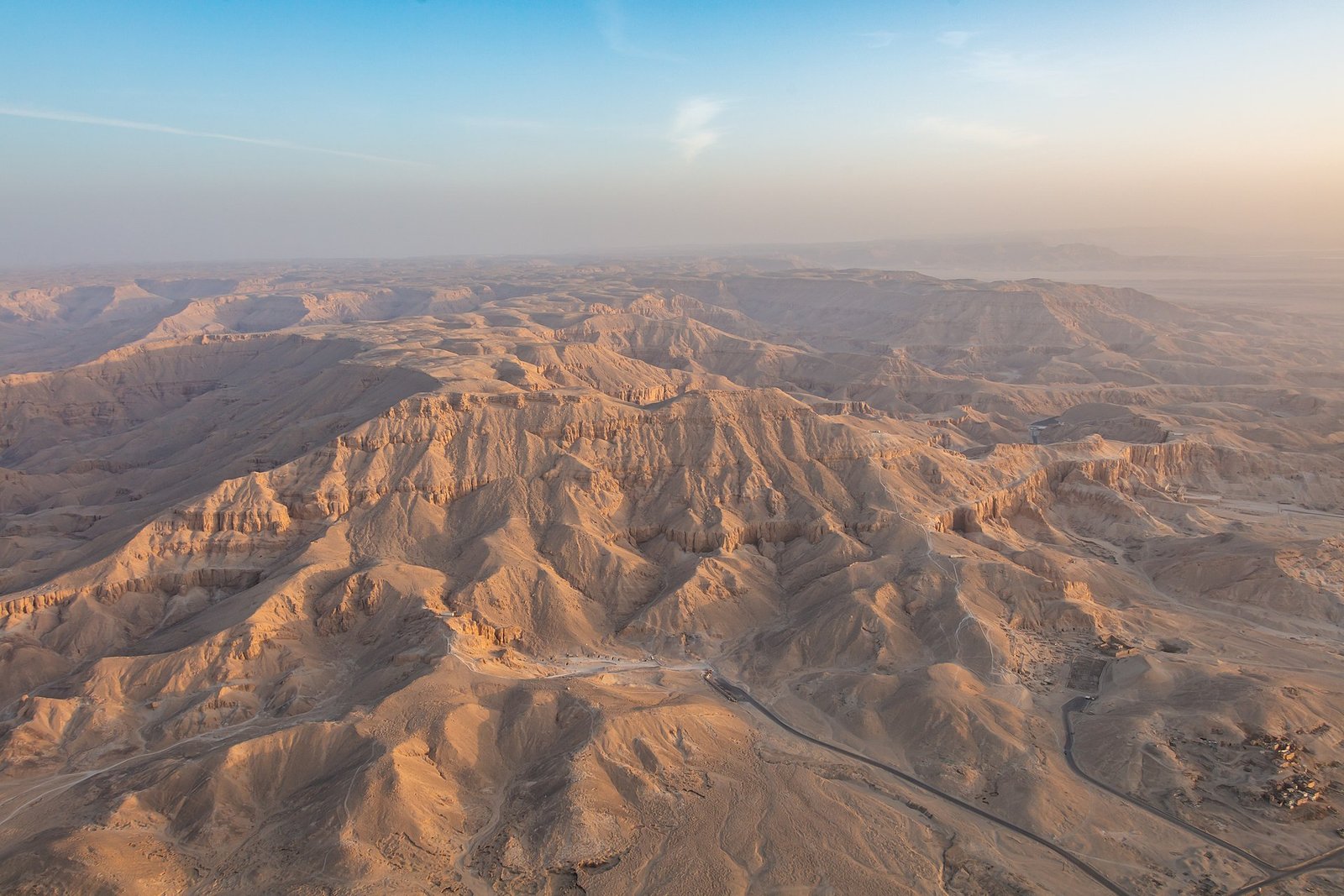
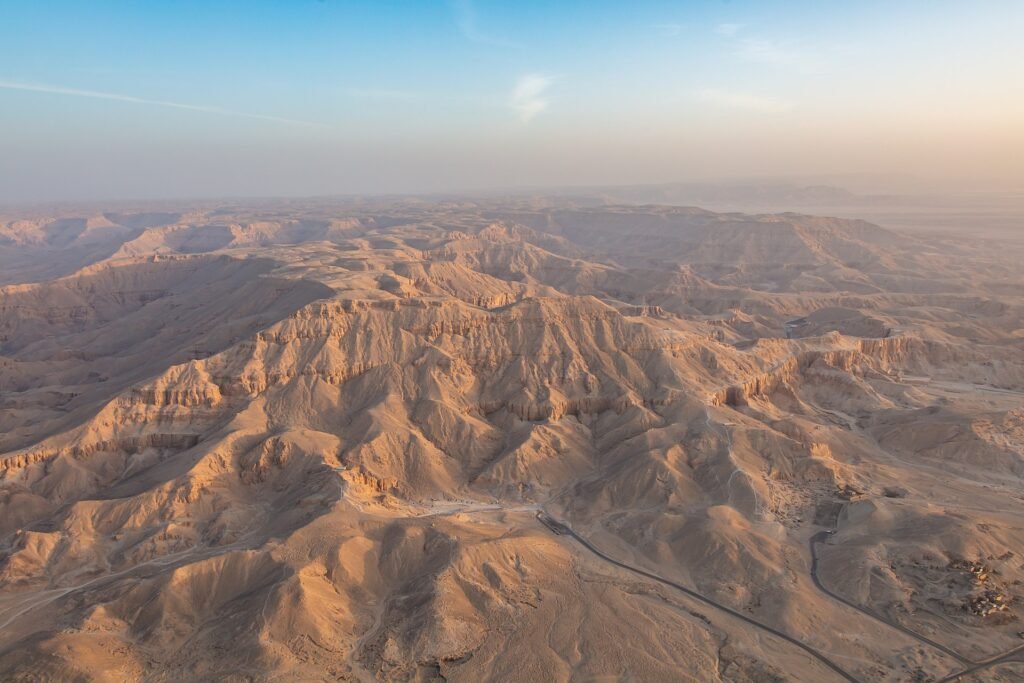
The Valley of the Queens is a dry side valley, a wadi, at the southern end of the Theban necropolis, tucked into the cliffs just northwest of the temple of Medinet Habu. The ancient Egyptians called it Ta Set Neferu, the place of beauty or the place of the royal children, and both fit. Roughly ninety tombs have been numbered here, QV1 upward.
The valley was first used in the 18th Dynasty for members of the royal household, in plain shaft tombs mostly never decorated. From the 19th Dynasty, the age of Ramesses II, it became the burial ground of the great royal wives, and in the 20th Dynasty, under Ramesses III, it took in a generation of princes who died before their father.
Only a handful of tombs are open at any one time, rotating for conservation as at the Valley of the Kings. The best three or four hold more color and finer drawing than most of what you will queue for elsewhere, and you share them with a few dozen people rather than a few thousand.
Why this wadi was chosen: Hathor, the grotto and the rain
The site was not picked at random. At the head of the valley the cliff closes into a narrow gorge with a natural grotto at the top. In the rare years when a real storm hits the Theban hills, water pours through it as a short-lived waterfall. The western mountain belonged to Hathor, the goddess who receives the dead into the hillside, and a cleft that occasionally ran with water looked like the womb of the earth itself.
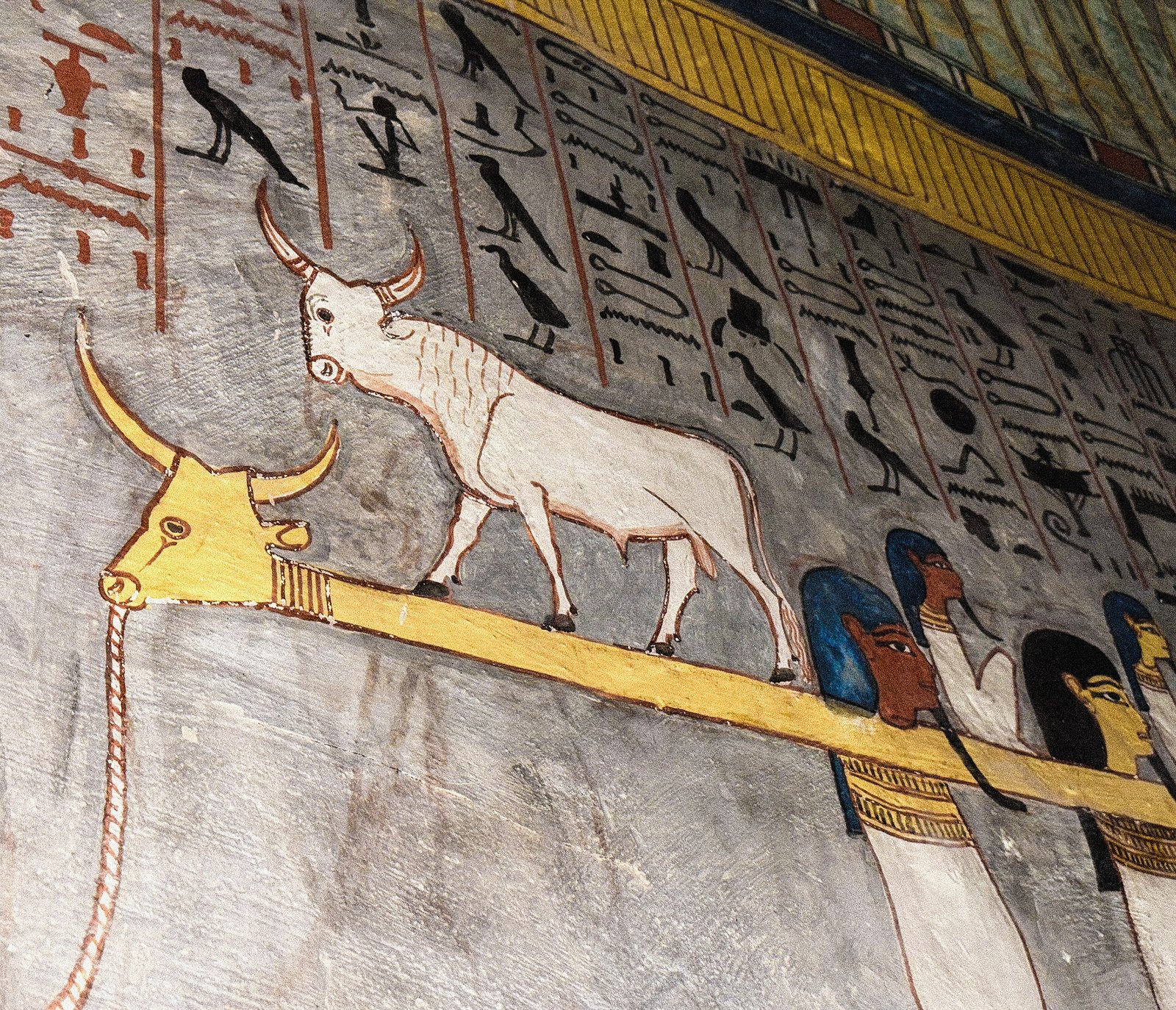
To be buried in this wadi was to be buried inside that symbol. It explains why Hathor greets Nefertari at the entrance to her tomb, and why the cow of Hathor steps out of the mountain in the tomb of Queen Titi.
Centuries later Coptic monks built the small monastery of Deir er Rumi near the gorge and reused several tombs as cells; your guide can point out its ruined walls on the walk in.
The tomb of Nefertari (QV66), the finest painted tomb in Egypt
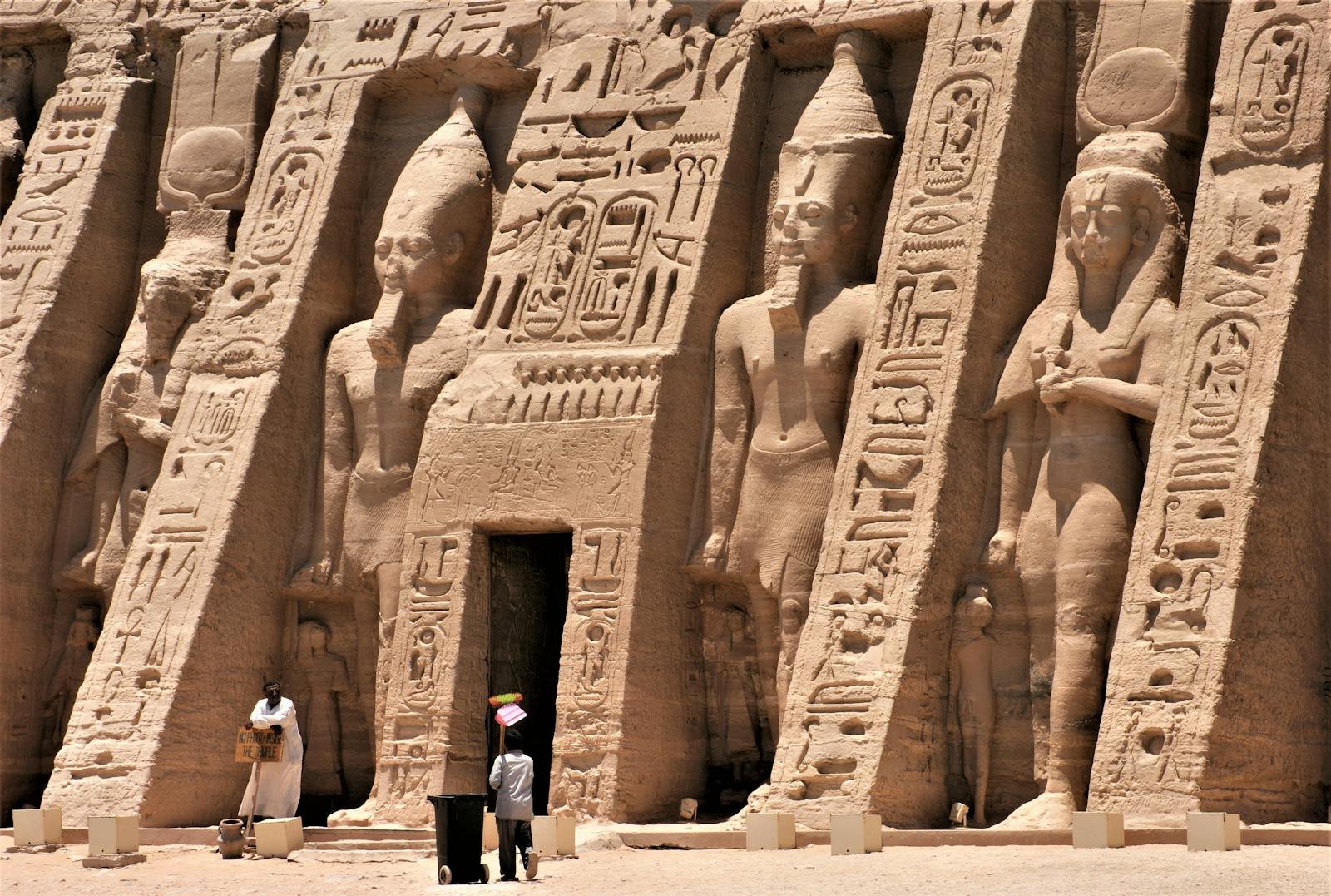
Nefertari was the first and favorite Great Royal Wife of Ramesses II, the queen he honored with her own temple at Abu Simbel and the inscription that calls her the one for whom the sun shines. The tomb he gave her is the one every Egyptologist names when asked for the most beautiful painted room in the country.
One clarification, because the names trip up almost everyone: Nefertari is not Nefertiti. Nefertiti was the wife of Akhenaten a century earlier, the queen of the Berlin bust, and her tomb has never been identified. Nefertari is the queen of Ramesses II, and hers is the tomb you can walk into.
What you see inside
A staircase drops into an antechamber with a side vestibule, then a second stairway descends to the burial chamber, where four pillars hold up a ceiling of gold stars on deep blue. The walls follow the queen's journey through the night: led by Isis and Horus, welcomed by Hathor, presented to Osiris, playing senet alone against her own fate. The winged Maat spreads her arms over the stairs, and the seven celestial cows fill a wall of the vestibule. The texts are chapters of the Book of the Dead, including the gate spells in which the queen names each guardian.
Why it beats every other tomb
Three things set QV66 apart. The figures were cut in shallow relief into the plaster before painting, so raking light gives every face and hand real volume. The drawing is of a quality the royal tombs rarely reach, with modeled cheeks, a wash of pink on the queen's face, and linen so thin you see the limbs through it. And the color has survived almost complete. People weary of tombs by their third day in Luxor come out of this one quiet.
The separate ticket, the limited entry, and why the tomb is guarded so hard
QV66 is not included in the general Valley of the Queens ticket. It has its own ticket, sold separately and noticeably more expensive, which admits a limited number of visitors at a time for a short, timed visit. You do not lean on the walls or linger past your slot, and photography inside follows conditions that change by season. We handle the ticket for our guests.
The reason is the rock. Nefertari's painters worked on stucco spread over limestone of poor quality, shot through with salt. Whenever humidity enters, from the air or from visitors' breath, the salt migrates, crystallizes beneath the plaster and pushes it off the wall in flakes. By the second half of the twentieth century whole passages had been lost, and the tomb was closed for decades.
Between 1986 and 1992 the Getty Conservation Institute, with the Egyptian Antiquities Organization, ran the campaign that saved it. Conservators cleaned the paintings and reattached loose plaster point by point, and reconstructed nothing: where a figure was gone, it stayed gone. The tomb reopened on limited terms, closed again, and reopened on the strict regime you meet today, which is the only reason it still exists.
Decide in advance whether you are going in, go early because the daily allocation can run out, and once inside spend the minutes looking rather than photographing.
The tombs of the princes: Amunherkhepshef, Khaemwaset and Queen Titi
When Nefertari's tomb is closed, or the separate ticket is not for you, the valley still earns its place because of the tombs of the sons of Ramesses III: short, shallow, richly colored, and most days yours alone.
What makes them unusual is the program on the walls. Instead of the dead prince facing the gods alone, the pharaoh himself walks in front, takes his son by the hand and introduces him to each divinity in turn, a father showing a boy to society. There is nothing like it in the Valley of the Kings. The princes wear the side lock of youth, the convention that marks a child in Egyptian art.
- QV55, Amunherkhepshef. The best preserved and most often open. Ramesses III leads his son past the keepers of the gates, knives and animal heads in bold color on a white ground. In a case at the back is a small mummified fetus found in the tomb, which surprises many visitors; your guide explains it before you reach it.
- QV44, Khaemwaset. A longer corridor with a similar program and a fine sequence of gate guardians from the Book of the Dead, each named and armed. The colors have kept their depth because the tomb is shallow and lightly visited.
- QV52, Titi. A queen of the 20th Dynasty, probably a wife of Ramesses III, in a cross-shaped tomb. The paint is paler, but the Hathor cow stepping out of the western mountain is worth the few minutes it takes.
Other tombs, including two more sons of Ramesses III, open in some years and not in others; your guide checks the rotation before you leave the hotel.
Schiaparelli and the discovery of 1904
The modern history of the valley belongs to an Italian. Ernesto Schiaparelli, director of the Egyptian Museum in Turin, led the Italian Archaeological Mission on the Theban west bank from 1903, and in 1904 his workers cleared the entrance to QV66. The tomb had been robbed in antiquity and the queen's body was gone, but the lid of her pink granite sarcophagus, fragments of her mummified knees, a pair of woven sandals and her shabti figures remained. All of it went to Turin, where it is still displayed.
In the same seasons Schiaparelli opened the tombs of the princes, and in 1906 he moved north to the workers' village and found the intact tomb of the architect Kha and his wife Merit. Visit Deir el Medina after the valley and you follow his footsteps in the right order: the people who lived there painted these walls.
A second Getty project in the early 2000s produced the valley-wide conservation and management plan behind today's paths, shelters and rotation policy.
Valley of the Queens or Valley of the Kings: how they compare
Is the Valley of the Queens worth adding when the Kings is already on the list? Yes, and the two do not compete for the same hour.
| Feature | Valley of the Queens | Valley of the Kings |
|---|---|---|
| Who is buried there | Royal wives, princes and princesses | The pharaohs themselves |
| Tombs numbered | Around ninety, most small and undecorated | More than sixty, many long and fully decorated |
| Open on the day | Three or four | Around eight to ten, rotating |
| Star tomb | Nefertari (QV66), separate timed ticket | Seti I and Tutankhamun, each on a separate ticket |
| Scale | Short and shallow, a few rooms | Corridors that run deep into the mountain |
| Crowds | Light nearly all year | Heavy from mid morning in season |
| Time needed | Sixty to ninety minutes | Two to three hours |
| Best for | Painting quality, quiet, the princes' scenes | Scale, the royal underworld books, the big names |
If you can only do one, do the Kings; our guide to Valley of the Kings tickets and tombs shows how to get the most from it. But between a fourth tomb in the Kings and Nefertari, choose Nefertari. As a single room only Seti I competes with it, as the walk-through of the best tombs in the Valley of the Kings explains.
How long it takes, and the best hour to be there
The valley is compact and the open tombs are a few minutes apart on level paths, so the visit is measured by what you go into. Allow forty-five minutes for the princes and Titi, and about ninety if Nefertari is included, with the wait for your slot.
The wadi faces the sun and there is almost no shade between the tombs. In summer the air can pass 40 C (104 F) by late morning. Bring water and a hat, and take the sunglasses off inside.
Timing is where local knowledge pays. Coach groups do the Valley of the Kings first and reach the Queens, if at all, around noon. Arrive when the gate opens, or at the end of the morning after the groups have gone to lunch, and you have the princes' tombs alone. Flash is forbidden in every tomb.
Combining it with Medinet Habu and Deir el Medina
The three sites sit within a few minutes of one another at the southern end of the west bank, and together they make the most coherent half day in Luxor. Ramesses III built Medinet Habu, his sons lie in the valley behind it, and the craftsmen of Deir el Medina cut and painted all of it, then went home to their own painted tombs across the hill.
- Medinet Habu at opening. The mortuary temple of Ramesses III, with its fortified gate and battle reliefs, is at its best in low light and empty at that hour.
- The Valley of the Queens. Five minutes by car. The princes first, then Nefertari at your allotted time.
- Deir el Medina. The village of the tomb builders, with the tombs of Sennedjem and Pashedu, whose painting rivals the princes' tombs.
- Lunch on the west bank with a view of the fields.
That is the quiet half of the west bank. The famous half, the Valley of the Kings, the temple of Hatshepsut and the Colossi of Memnon, takes the other half of the day or, better, the next morning. Two mornings beat one long day, especially in the heat.
What a guide adds in a valley this small
You can buy the tickets and walk in without help. What you would miss is the reading. The scenes are a script, and a guide who knows it turns painted figures into a story: which gate the prince is passing, why the queen plays senet, what the cow in the mountain has to do with the waterfall. The explanation happens at the entrance, in the shade, and you go in knowing where to look.
The practical side counts too. A guide knows which tombs are open this month, fixes the Nefertari ticket so the slot is certain, reorders the morning if a group arrives ahead of you, and keeps the car close. In a site you can cross in ten minutes, that judgment is most of the value.
How Explora Egipto slots it into your trip
We are a local agency in Egypt with our own guides and vehicles, and the Valley of the Queens is a fixed stop in the way we build Luxor. On a private west bank day it comes between Medinet Habu and Deir el Medina, as above. On our two-day Luxor programs the quiet southern sites take one morning and the Kings and Hatshepsut the other. On a Nile cruise the standard west bank excursion skips this valley; if you want Nefertari, say so when you book and we add it with a private car.
Tell us your dates, whether Nefertari is on your list and how many mornings you have in Luxor, and we come back with the day laid out. Our Luxor excursions page shows the combinations we run most often. No prices here; ask us for the quote.
Frequently asked questions
Is the tomb of Nefertari open to visitors?
Yes, on a limited basis. After the Getty conservation campaign and a long closure, QV66 reopened with a separate ticket, a small number of visitors at a time and a short timed visit, all designed to keep humidity off the plaster. The arrangement changes by season, so we confirm it before you travel and secure the ticket as part of your west bank day.
Do I need a separate ticket for Nefertari's tomb?
You do. The general Valley of the Queens ticket covers the princes' tombs and Queen Titi, and QV66 has its own ticket, sold separately and considerably more expensive. Decide before the morning starts, because the daily allocation can run out. Ask us for the quote and we include the tomb with the entry already arranged.
Is the Valley of the Queens worth visiting if Nefertari's tomb is closed?
It is. The tombs of the sons of Ramesses III, Amunherkhepshef (QV55) and Khaemwaset (QV44), show the pharaoh leading his young sons by the hand to meet the gods, a scene found nowhere in the Valley of the Kings, with color that has survived remarkably well. Add Queen Titi's tomb and the quiet of the wadi, and the visit justifies its forty-five minutes.
How long do you need at the Valley of the Queens?
Forty-five minutes covers the open tombs on the general ticket at a relaxed pace. With Nefertari's tomb, allow about ninety minutes including the wait for your slot. The site is small, so the time goes into looking rather than walking. Pair it with Medinet Habu and Deir el Medina for a satisfying half day.
Can you take photos inside the tombs?
Flash is forbidden everywhere on the west bank, and phone photography without flash is generally allowed in the princes' tombs under the rules in force that season. Nefertari's tomb has its own conditions, so ask your guide on the day. Our advice for QV66 is to leave the phone in your pocket: the visit is short and the faces are the whole point.
Is Nefertari the same person as Nefertiti?
No. Nefertiti was the wife of Akhenaten in the 18th Dynasty, the queen of the painted limestone bust in Berlin, and her tomb has never been found. Nefertari was the Great Royal Wife of Ramesses II in the 19th Dynasty, roughly a century later, and her tomb is QV66 in the Valley of the Queens. Similar names, different eras, one tomb you can enter.
See the most beautiful painted room in Egypt without the crowd
Tell us your dates and how many mornings you have in Luxor, and we build the west bank day around the Valley of the Queens, with the Nefertari ticket arranged and a guide who reads the walls for you. Write to us and we send you the quote.