Deir el Medina is the village where the men who painted the royal tombs lived, and their own tombs are better
Deir el Medina is the village where the men who painted the royal tombs lived, and their own tombs are better
Deir el Medina is the walled village on the Luxor west bank where the crew that cut and painted the tombs of the Valley of the Kings lived for about four centuries. You see the foundations of their narrow houses, the small Ptolemaic temple of Hathor, and the tombs the workers built for themselves, which hold the freshest color in Egypt: Sennedjem, Inherkhau and Pashedu. The village also produced tens of thousands of notes on flakes of limestone, including the record of the first strike in history, laundry lists and love songs. Plan sixty to ninety minutes, go early, and pair it with the Valley of the Queens or the hill walk to the Valley of the Kings.
What Deir el Medina is, and why it matters more than its size suggests
The ancient name was Set Maat, the Place of Truth, and the people who lived there called themselves servants in the Place of Truth. They were the stonecutters, plasterers, draftsmen, painters and scribes who dug and decorated the royal tombs from roughly the reign of Thutmose I to the end of the Twentieth Dynasty, housed in a purpose-built village in a desert valley behind the hill, close enough to walk to work and far enough to keep the tomb locations quiet.
Everything else on the west bank was built for kings and gods. This is the one site built for the people who did the work, and it is why we know their names, wages, court cases and jokes. The modern name means the monastery of the town, after the Coptic monks who later took over the temple.
The village itself is walls knee to waist high, a grid of foundations you look down on from the path. The color is inside the tombs and the stories are in what your guide tells you in the street. Go in cold and it is mud brick. Go in knowing what came out of it and it is the most human place in Luxor.
The village: narrow houses, one street and a crew of about sixty men
The settlement sits inside an enclosure wall with a single main street running north to south and a few side alleys. The houses share party walls and open straight onto the street; in the final phase there were around seventy inside the wall. A typical house ran front to back: a front room with a small brick shrine, a raised main room with a column, one or two small rooms behind, and a kitchen open to the sky with stairs to the roof. Many had a cellar cut into the rock, and the better doorframes carried the owner's name in red paint.
The crew was split into a right side and a left side, each under a foreman, with a scribe keeping the records. The men worked eight days out of ten, sleeping in stone huts on the pass above the Valley of the Kings, and came home for the two-day weekend and the festival days. Their families stayed in the village, along with state-paid water carriers, since there was no well, plus woodcutters, fishermen, washermen and potters.
Walk the main street slowly and have your guide point out the cellars and the larger house of the scribe Ramose. That is when the site turns from a map into a neighborhood.
The ostraca: the first strike, the laundry lists and the love songs
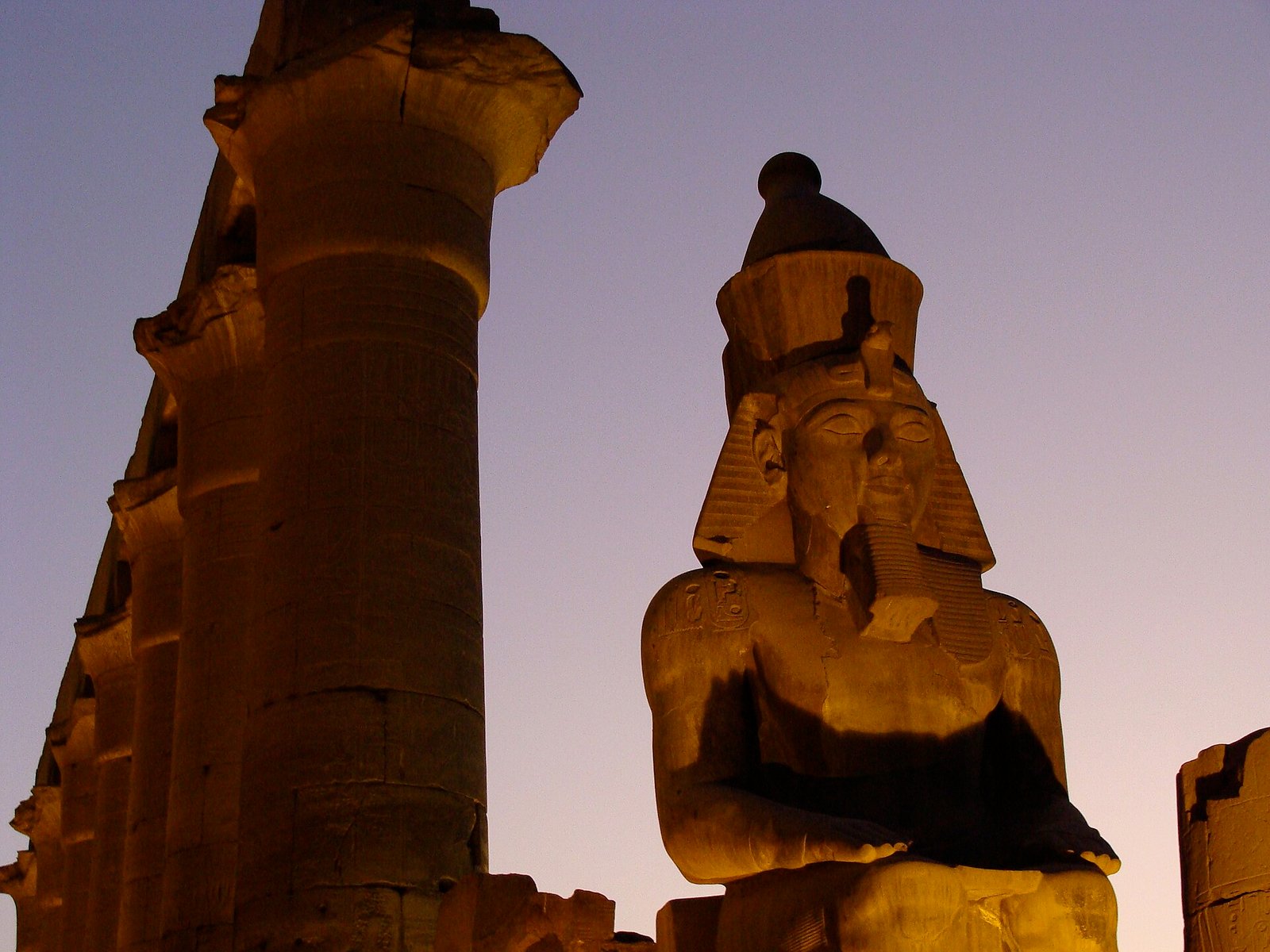
Papyrus was expensive. Flakes of white limestone were free, and the village was full of literate men, so the crew wrote on stone chips, called ostraca, and threw them away when done. Tens of thousands survive, and they make Deir el Medina the best documented working community of the ancient world.
The first recorded strike
In year 29 of Ramesses III the grain rations that served as wages stopped arriving on time. After weeks of delay the men put down their tools, marched out of the valley and sat down behind the mortuary temples on the plain, refusing to move until they were paid. They argued with the officials at the Ramesseum and Medinet Habu, took a partial ration and walked out again when the next delivery failed. The scribe Amennakht wrote it all down, day by day, on what is now called the Turin Strike Papyrus. It is the earliest labor action with a written record, and the men who did it were not slaves but skilled state employees who knew what they were owed.
Attendance, laundry and lawsuits
One famous ostracon in the British Museum is an attendance register listing which man missed work on which day and why: brewing beer, building his house, a scorpion sting, embalming a relative, and one man simply recorded as being with his wife. Other chips are laundry lists handed to the washermen, counting kilts and sheets to be returned, receipts for hired donkeys, medical recipes, school exercises corrected in red, and court transcripts from the great tomb robberies.
Love songs and dream books
The village also gave us literature. A family library that belonged to the scribe Qenherkhepeshef held a manual for interpreting dreams and a collection of love songs in which a young woman calls her lover her brother and complains that her mother knows nothing. Women appear by name too, owning houses, lending grain, suing neighbors and divorcing on their own terms. If you want to pick out a name on a doorframe yourself, our guide to how hieroglyphs work and how to read the basics is a good evening's reading before Luxor.
The painted tombs: Sennedjem, Inherkhau and Pashedu
The men who painted the royal tombs painted their own on their days off, in a cemetery on the slope west of the houses. Each had a small chapel with a little mud-brick pyramid and a shaft down to a vaulted chamber. The chambers are tiny, the stairs steep, and the color is the best you will see in Egypt, because they stayed sealed and dry and because these were the finest painters alive.
Sennedjem, tomb TT1
Found intact in 1886 with twenty burials and the household goods still inside, this is the tomb most people come for. The vaulted chamber is painted on a warm yellow ground. On the end wall Sennedjem and his wife Iyneferti plow, sow and reap in the Field of Reeds, the afterlife imagined as a perfectly irrigated farm. Nearby the great cat of Ra cuts the serpent Apophis in half, and Anubis leans over the mummy. The burial goods are now in the Egyptian Museum in Cairo, so what you see here is the walls, and the walls are enough.
Inherkhau, tomb TT359
Inherkhau was a foreman of the crew under Ramesses III and Ramesses IV. His chamber is also on yellow, with a darker palette. Look for the cat again under the sacred tree, the bennu bird of rebirth, Inherkhau playing senet against an invisible opponent, and a scene of him with his wife Wab and their grandchildren.
Pashedu, tomb TT3
Pashedu was a servant in the Place of Truth in the Nineteenth Dynasty. His tomb is smaller still, down a steep flight of stairs, and holds one of the most reproduced images in Egyptian art: Pashedu kneeling under a palm tree, drinking from a stream. Two large jackals of Anubis guard the passage and Osiris fills the rear wall in green. It has usually needed a separate ticket, and it is worth it.
Other tombs on the slope open by rotation, and your guide checks on the day. If you enjoy these, the larger tombs of the nobles at Sheikh Abd el Qurna are five minutes away and show what the same painters did for wealthier clients.
The Ptolemaic temple of Hathor and the Great Pit
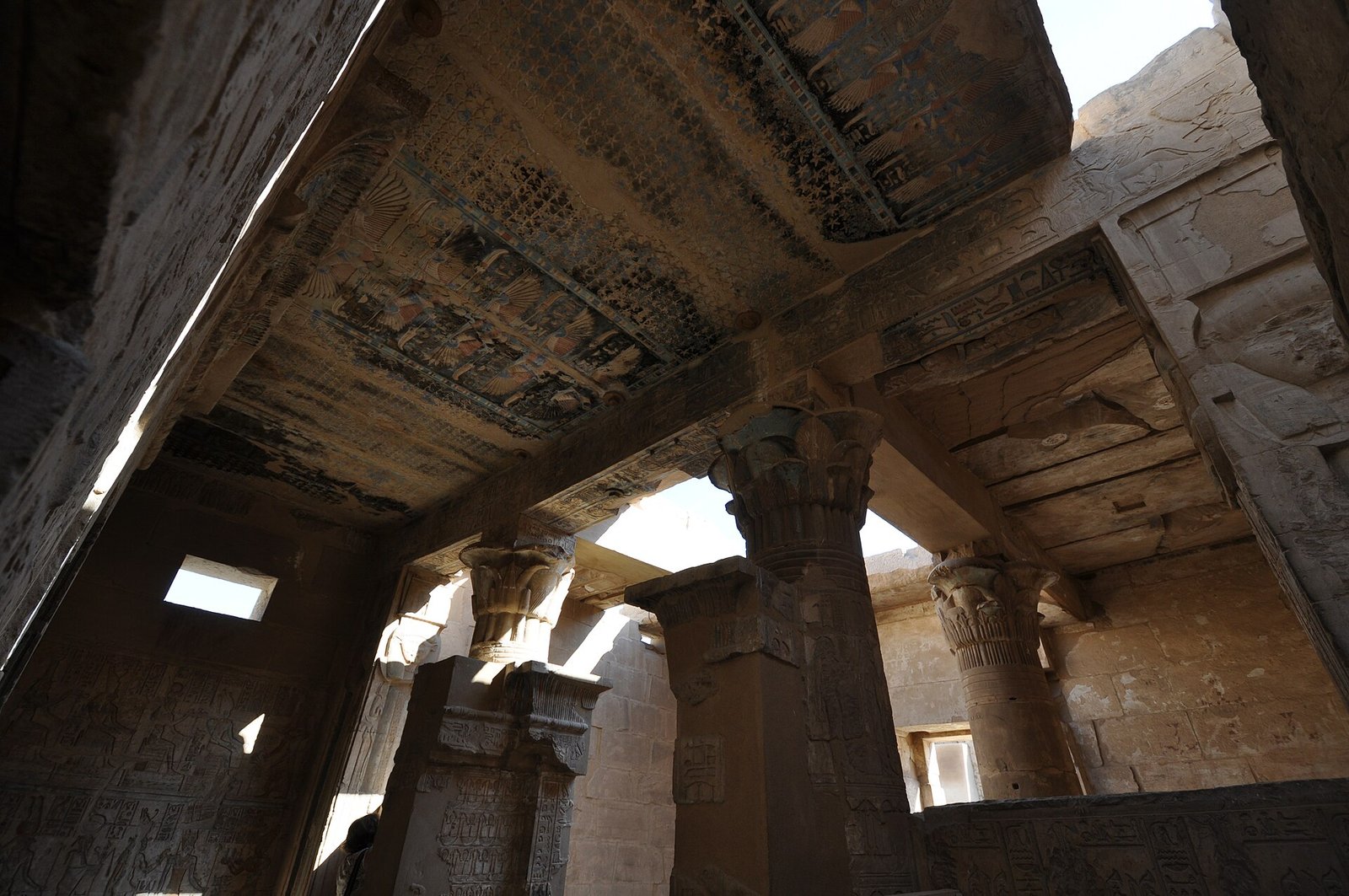
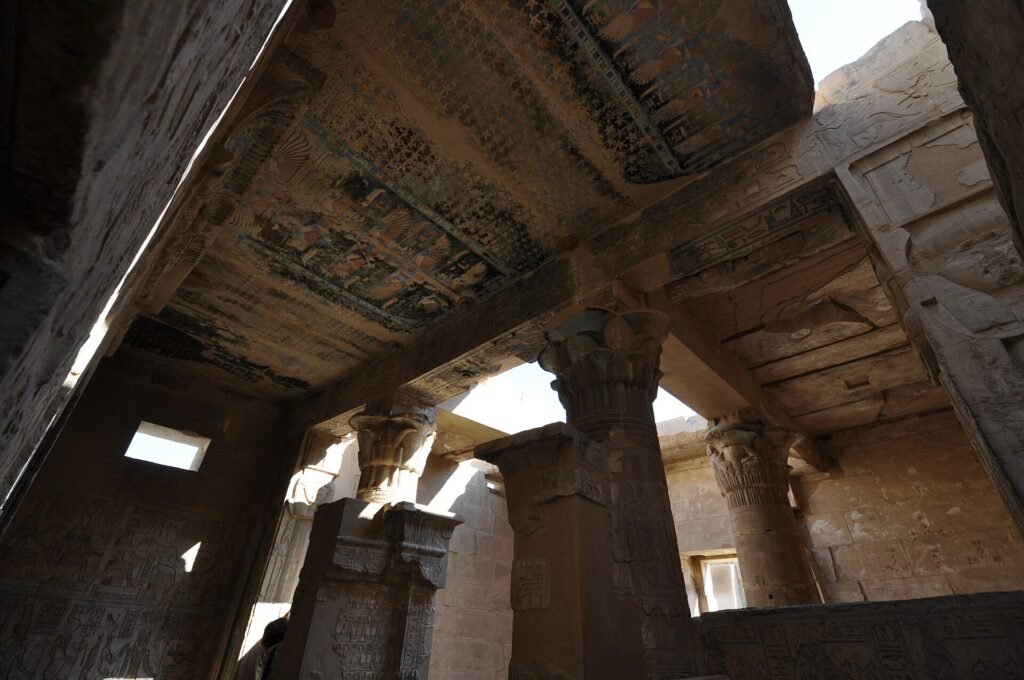
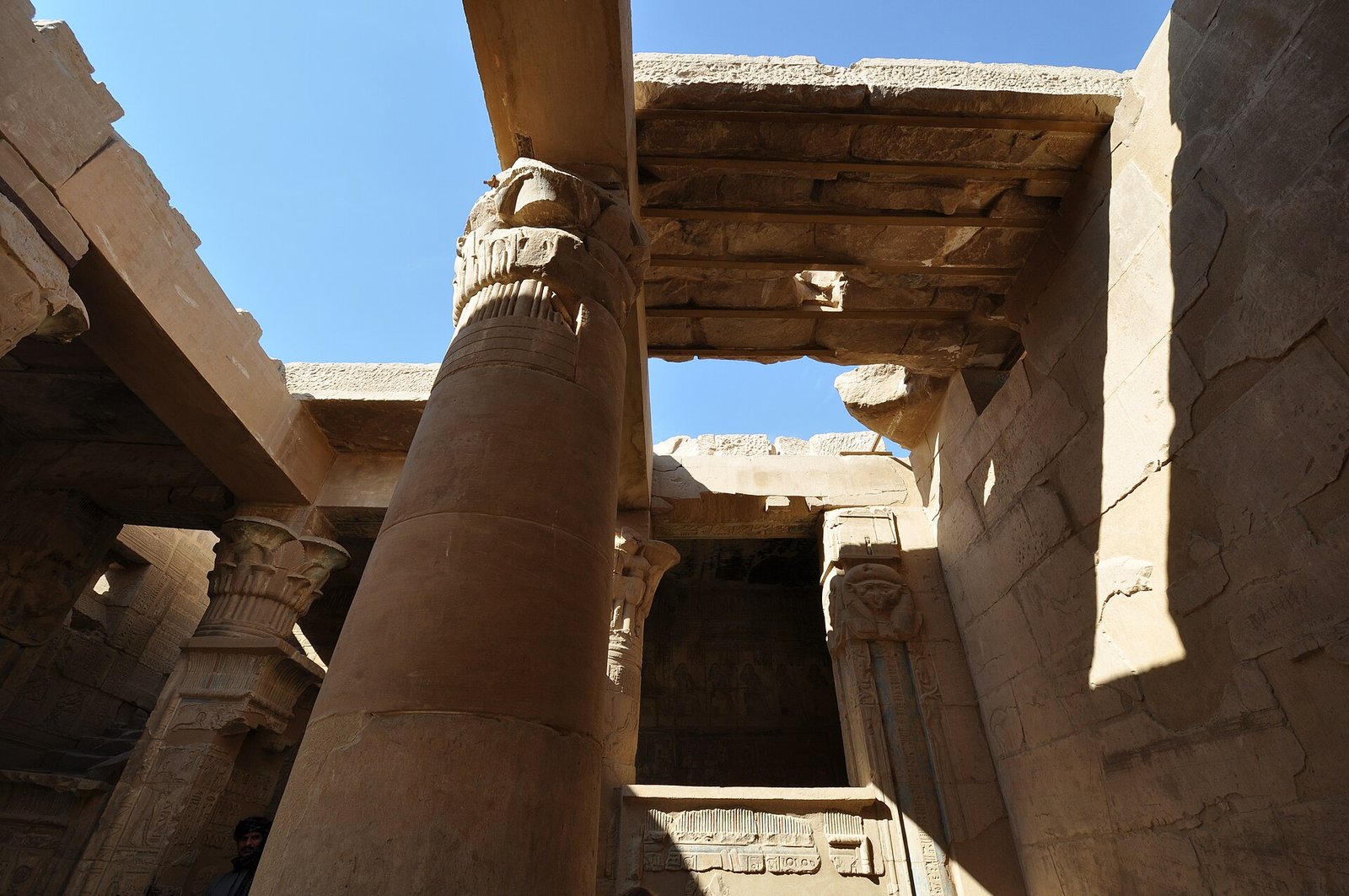
At the north end of the site, inside its own mud-brick wall, stands a small sandstone temple begun under Ptolemy IV, a thousand years after the village was abandoned. It is dedicated to Hathor and Maat, and it survives so well because Coptic monks moved in and lived in it. Of its three chapels, the left one is the reason to go in: a painted judgment scene with the heart weighed against the feather of Maat, Thoth writing down the result and the devourer waiting below, in color at eye level and without glass.
Just south of the temple wall is a huge square hole with a spiral stair cut into its sides, the Great Pit. The crew dug it in the Twentieth Dynasty trying to reach water, gave up at roughly fifty meters, about a hundred and sixty feet, and used it as the village dump. French excavators emptied it and pulled out thousands of the ostraca described above. It looks like nothing. It is the most important hole in Luxor.
The walk over the hill to the Valley of the Kings or the Valley of the Queens
The crew commuted on foot, and their path is still there. It leaves from behind the village, climbs the ridge and drops into the Valley of the Kings from above, passing the huts where the men slept on work nights.
- To the Valley of the Kings: forty five minutes to an hour, roughly two hundred meters of climb, about six hundred and fifty feet, on loose rock with no shade. From the crest you see the whole Theban necropolis at once: the Ramesseum, Medinet Habu, the Colossi of Memnon, Hatshepsut's temple and the Nile.
- To the Valley of the Queens: a gentle ten to twenty minute walk south around the hill, past the rock-cut shrine of Ptah and Meretseger, the cobra goddess of the peak.
Do the Valley of the Kings walk from October to April only, early, with a hat, more water than you think and closed shoes. The path is closed from time to time, so we check the day before, and your driver drops you at the village and collects you at the Valley of the Kings parking lot. Read our guide to the Valley of the Kings ticket system and which tombs to pick before you decide how to split the morning.
How long it takes and how to combine it on a west bank morning
Plan sixty to ninety minutes: twenty for the village street, ten for the temple and the pit, and ten to fifteen per tomb including the queue, which forms at Sennedjem because only a handful of people fit in the chamber at a time. Add the hill walk and it becomes a three hour block. Start at seven, because by eleven in winter and nine thirty in summer the light is flat, the heat is real, and the village has no shade.
| Plan | Order | Time on site | Best for |
|---|---|---|---|
| Classic morning | Valley of the Kings, Hatshepsut, Deir el Medina, Colossi of Memnon | About five hours | First visit to Luxor, one day on the west bank |
| Craftsmen's morning | Deir el Medina, Valley of the Queens, Medinet Habu, Ramesseum | About five hours | Second visit, or a second day in Luxor |
| The commute | Deir el Medina, walk over the hill, Valley of the Kings, Hatshepsut | About six hours | Fit travelers, October to April, photographers |
The Craftsmen's morning is the one we push on people with a second day in Luxor. Medinet Habu and the Valley of the Queens are each five minutes from the village, and the three together tell a story the crowds at the Valley of the Kings never hear. If you are joining or leaving a Nile cruise between Luxor and Aswan, tell us which day you dock and we shape the morning around the boat.
No flash inside the tombs, and photo rules change, so our note on camera rules at Egyptian sites is worth a read. Check which tombs the standard ticket covers at the office on the day.
What a guide adds at Deir el Medina
At Karnak you can be impressed without a guide. Here you cannot, because nine tenths of what makes the place extraordinary is invisible. The walls do not tell you that this doorway belonged to the scribe whose family kept the love songs. A guide who has read the ostraca turns a low grid of mud brick into a village with gossip.
Inside the tombs an Egyptologist reads the scenes in the right order, points out the cat and the serpent before you walk past them, and gets you into Sennedjem in the gap between two groups. Outside, they know which tombs opened this month and whether the hill path is closed. Our Luxor guides are Egyptian and licensed. If you are weighing Luxor alone against a guided day, read our piece on how the east and west banks of Luxor work and how to split your time. For this site the answer is not close.
How Explora Egipto slots Deir el Medina into your trip
We are a local agency based in Egypt, with our own Egyptologist guides and vehicles in Luxor. Deir el Medina is not on the default west bank circuit most operators run, because the big-bus schedule leaves no room for it. We add it in three ways.
- Inside a full Egypt itinerary. On our Cairo, Luxor and Aswan trips the west bank morning is private, so adding the village is a one-line change to the plan.
- On a dedicated Luxor stay. Our two-day Luxor program spends the first morning at the Valley of the Kings and Hatshepsut and leaves the second for the craftsmen's side: Deir el Medina, the Valley of the Queens, Medinet Habu.
- As a single private excursion. If you are on a cruise, in a Luxor hotel, or coming from Hurghada, we run it as a private half day with guide, driver and tickets handled. See the list of private Luxor excursions for what pairs with it.
Whatever the shape, you get a fixed guide, a vehicle at each gate, tickets bought in advance, and a start time we set the evening before. Tell us your dates and we send you the quote.
Frequently asked questions
Is Deir el Medina worth visiting if I only have one day in Luxor?
Yes, if you are willing to trade one stop for it. On a single west bank morning we usually drop the Ramesseum to fit Deir el Medina, because the tomb of Sennedjem is more vivid than any royal tomb on the standard ticket and the village gives the day a human scale. With two days in Luxor it anchors the second morning.
Which tombs are open at Deir el Medina?
Sennedjem and Inherkhau are the two normally open on the main ticket, and Pashedu has usually been available on a separate ticket. Other tombs on the slope open by rotation while their neighbors are conserved. The list changes without notice, so we confirm the day before your visit and tell you what to expect.
Can I walk from Deir el Medina to the Valley of the Kings?
Usually, from October to April in the early morning. It is a forty five minute to one hour climb over the ridge on loose rock with no shade, past the workmen's huts, with the best view of the west bank at the top. Wear closed shoes and carry water. We check that the path is open before you commit and have the driver meet you on the other side.
How much time do I need at Deir el Medina?
Sixty to ninety minutes covers the village street, the temple of Hathor, the Great Pit and three tombs, including the wait at Sennedjem, where only a few people fit at once. Add two hours if you walk over the hill to the Valley of the Kings, and go early because the village has no shade.
Were the workers of Deir el Medina slaves?
No. They were salaried state craftsmen, paid in grain, oil, fish and vegetables, with housing provided, eight days of work followed by two off, and enough free time to decorate their own tombs. They could read and write, owned property, went to court and, under Ramesses III, went on strike when their rations were late.
Is Deir el Medina suitable for children or people with limited mobility?
The village and the temple are flat and easy. The tombs are the issue: each is reached down a steep, narrow stair into a small chamber with a low ceiling. Children love them, and the cat killing the snake in Sennedjem's tomb is a reliable hit. Anyone who struggles with stairs or enclosed spaces should do Sennedjem if they can and skip Pashedu.
See the Egypt of the people who built it
Tell us your dates, whether you are in a hotel or on a boat, and how much walking you want to do. We come back with a west bank morning built around Deir el Medina, an Egyptologist guide who knows the ostraca, and the rest of your Egypt plan around it. Ask us for the quote.