Nile cruise vs land tour: which one is better between Luxor and Aswan
Nile cruise vs land tour: which one is better between Luxor and Aswan
For the stretch between Luxor and Aswan, a Nile cruise is the better choice for most first-time visitors. Your room, transport, meals and guide travel together, and the riverside temples of Edfu and Kom Ombo are visited on the way with no extra logistics. A land tour, with hotels in Luxor and Aswan and a private car between them, wins on time at the sites and on flexibility. It is the right call if you want two full days on the Luxor west bank, dislike fixed schedules, or are sensitive to engine noise at night. Many of our travelers end up with a hybrid: hotel nights in Luxor plus a short cruise.
What the two options actually mean
When Americans ask whether a Nile cruise is better than hotels, they mean one stretch: the roughly 130 miles of river between Luxor and Aswan, where the densest concentration of pharaonic monuments in Egypt sits a short drive from the water. Cairo is a separate question; you sleep in a hotel there either way.
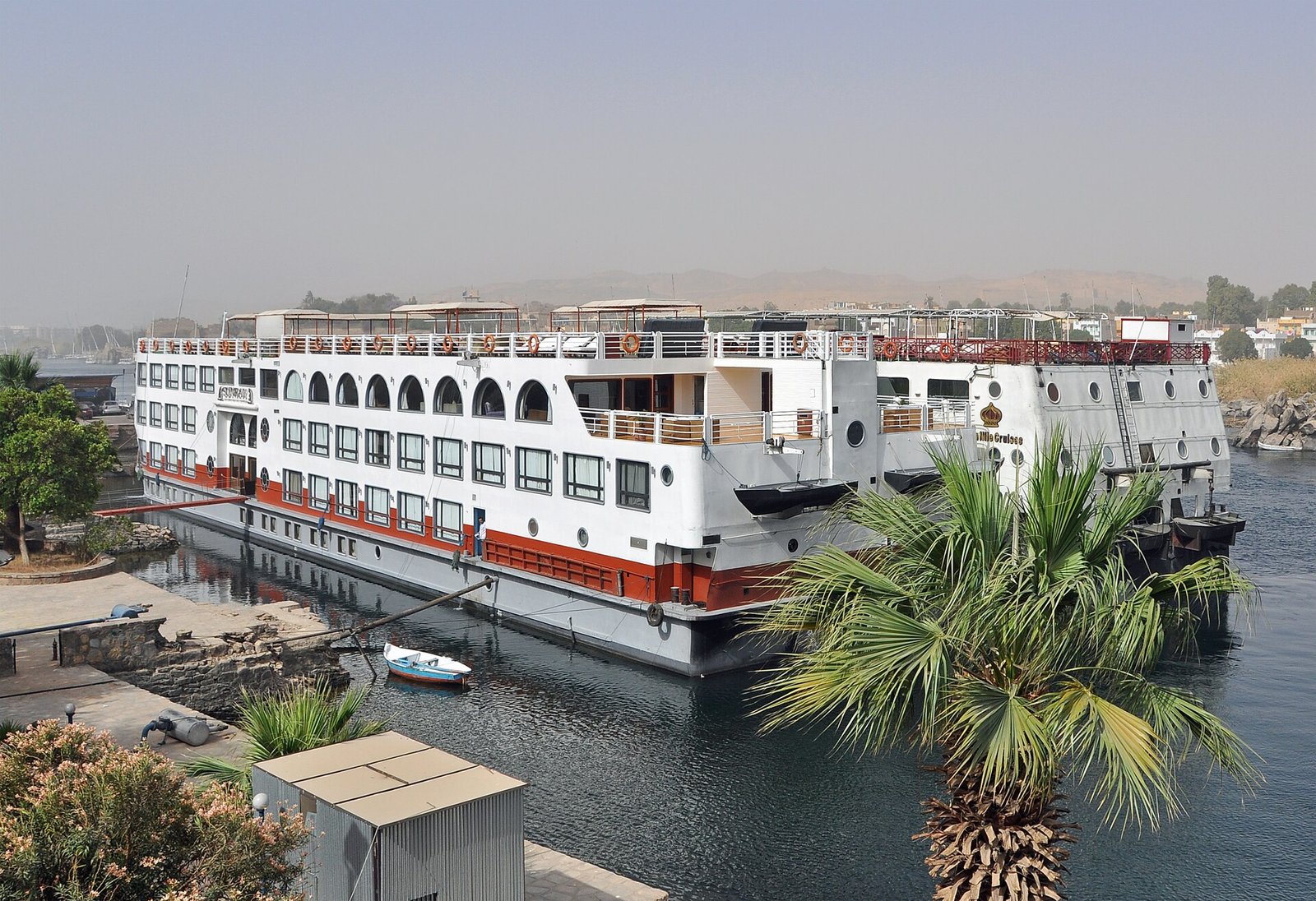
The cruise means boarding a floating hotel in Luxor or Aswan and sleeping in a cabin for three or four nights while the boat moves between the cities. It ties up at Edfu and Kom Ombo, and a guide takes you to the big sites in both cities.
The land tour means a hotel in Luxor, a hotel in Aswan, and a private car between them that stops at the same two temples on the road along the river. Your guide rides with you.
Both see the same headline monuments; the difference is comfort, pace and depth. For the boat version in full, start with our Nile cruise guide.
What a Nile cruise covers, and what it quietly leaves out
The classic itinerary runs four nights from Luxor to Aswan or three nights from Aswan to Luxor. Luxor gets one full day: Karnak and Luxor Temple on the east bank, then the Valley of the Kings, Hatshepsut and the Colossi of Memnon on the west bank. The boat passes the Esna lock, moors at Edfu and Kom Ombo, and reaches Aswan for the High Dam, the Unfinished Obelisk and Philae. Direction is its own decision, covered in our page on Luxor to Aswan versus Aswan to Luxor.
The boat handles everything in between: you unpack once, eat three meals a day on board, and after every site return to an air-conditioned cabin and a pool on the sundeck.
What it leaves out matters just as much. The Luxor day is a single day in a city that would fill three. The Tombs of the Nobles, Medinet Habu, the Luxor Museum and Luxor Temple lit at night are usually not on the program; Dendera and Abydos never are. Sailing times set your day, not your curiosity.
What a land tour covers, and where it costs you time
On a land tour you fly from Cairo to Luxor in the morning and spend two nights there. That buys two full days: one for the east bank temples and the museum, one for a west bank morning that goes beyond the Valley of the Kings into the Tombs of the Nobles and Medinet Habu. You can walk into Luxor Temple after dark, when the columns are lit and the crowds are gone, and that alone changes how people remember the city.
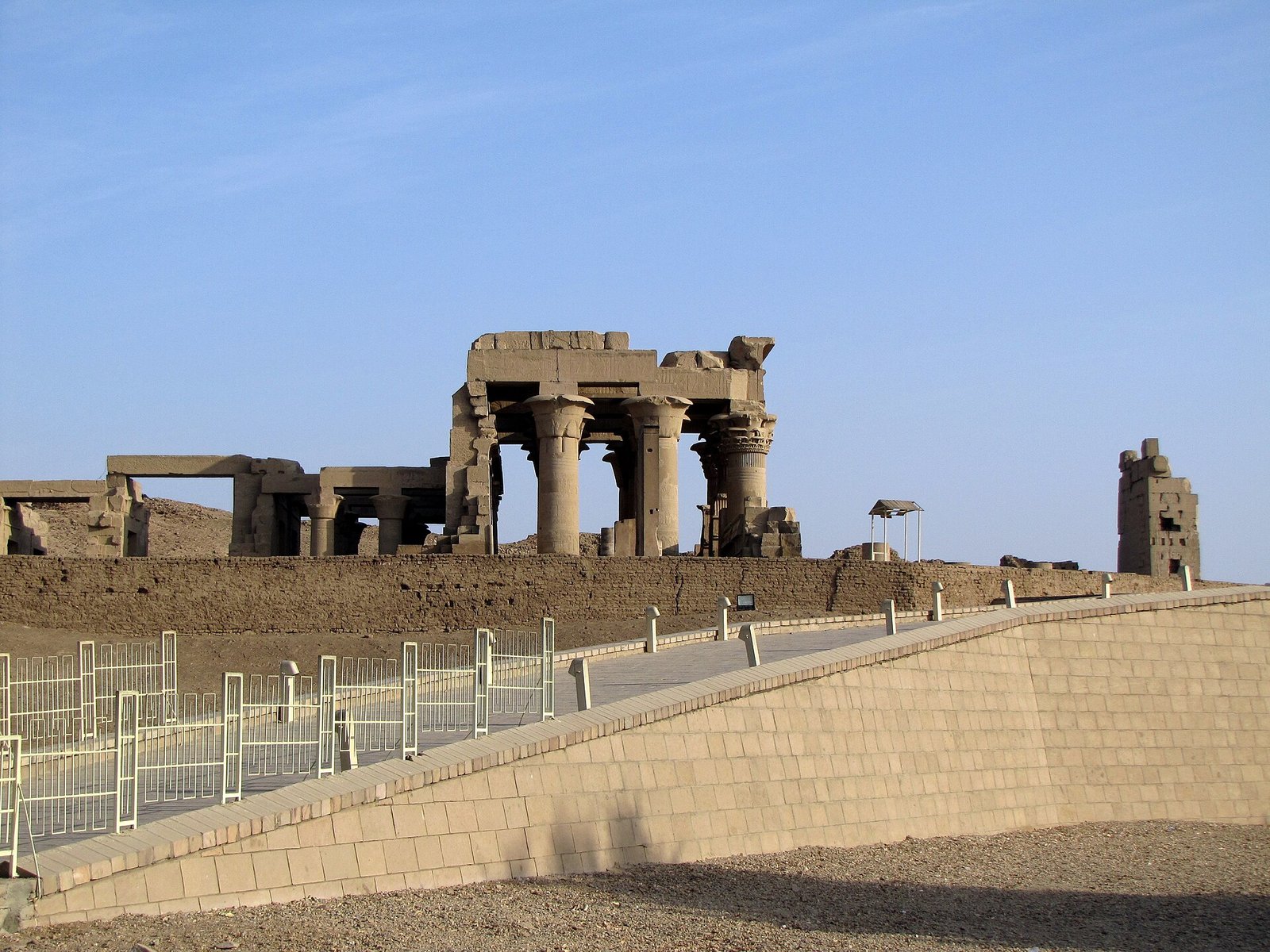
On day three you drive south along the river. Edfu and Kom Ombo are stops on the way, and you are inside Edfu at the hour you choose rather than when six boats unload at once. The drive is about three and a half to four hours plus stops, ending at a hotel in Aswan for one or two nights: Philae, the High Dam, a felucca at sunset, Abu Simbel by road or a short domestic flight.
Where the land tour costs you is logistics: two check-ins, a long day in a car, meals you go out and find, and being driven rather than gliding past palm groves. Some feel that as freedom, some as work.
Time on site and flexibility: the difference that matters most
The boat decides how long you spend at each place; on land, you decide. A cruise gives Edfu and Kom Ombo an hour or two each, which is right. Luxor is the problem.
The Valley of the Kings alone deserves a morning. Add Hatshepsut, a couple of noble tombs and Medinet Habu, and you have a full day on the west bank before you set foot in Karnak, the largest religious complex ever built. A cruise squeezes both banks into one day and sails. You will not feel shortchanged in the moment, but you will look at the map later and see how much was next door.
On land you can go back. Loved Karnak at 8 a.m.? Return at 5 for the light. Tired? Sleep in and swim. You also choose your hotel, add a night without renegotiating a boat schedule, and thread the two cities into a longer route through the Red Sea or the desert.
Be honest about who uses that freedom, though. Travelers who read about ancient Egypt use every hour; first-timers who want the greatest hits often do not, and for them the fixed rhythm is a relief.
Comfort, families and limited mobility
Comfort on a cruise means the same bed for four nights, a rooftop pool, afternoon tea while the riverbank slides by, and never carrying a suitcase in the heat. Cabins are compact, but on a good boat they are quiet and cold. Kids love the sundeck and a hotel that moves; details on our page about a Nile cruise with kids.
Comfort on land means bigger rooms, connecting rooms for families, dinner at 6 if that is when your children eat, and a car that leaves when your toddler wakes up.
Mobility is where the formats separate sharply. Boats moor side by side at the docks, often four or five deep, so reaching yours can mean crossing three other lobbies on narrow gangways. Decks are linked by stairs and many boats have no elevator. For a traveler with a walker, a wheelchair or a bad knee, a hotel with an elevator and a private van is simply easier; see our guide to Egypt with limited mobility.
Heat, and why summer tilts the answer toward the boat
The answer is not the same in January and July. From June through September, Luxor and Aswan regularly reach 104 to 113 F (40 to 45 C) in the afternoon, and the sites are open stone with almost no shade.
A cruise is built for that. Your hotel moves with you, you are back in air conditioning minutes after each site, and the hottest hours are spent sailing with a breeze and a pool a few steps away. A land tour in summer means more time in a car, more waits in the open and two hotel changes in the heat. Our page on a Nile cruise in summer goes deeper; in short, the hotter it is, the more the boat wins.
From November through February, daytime highs sit around 70 to 77 F (21 to 25 C), walking is a pleasure, and the land tour's extra time on site becomes a real gain rather than a theoretical one.
Seasickness on the Nile is a myth, but motion and noise are real
You will not get seasick on the Nile. It is a flat, slow river with no swell, and a cruise boat moves at walking pace; the sensation is closer to a train than a ship. If motion sickness is your only reason for choosing land, drop it from the list.
What is real is a different kind of motion and noise. Engines run while sailing and generators run at the dock, so a lower-deck cabin carries a low hum through the floor. Boats bump when they moor, the Esna lock can mean an idling engine in the small hours, and when boats raft up your window may face another cabin a few feet away.
These are reasons to choose the right boat. An upper-deck cabin on a well-run boat, chosen with our guide to Nile cruise boat types and how to choose, solves most of it. Light sleepers who still hesitate are exactly who the hybrid below was invented for.
Food on board versus food in town
Cruise food is buffet food, three times a day, Egyptian dishes next to international standards. On a good boat it is fresh and generous; on a tired boat it is beige. You eat when the dining room opens and rarely leave the boat for a meal, which is a plus if you want zero decisions.
On land, breakfast is at the hotel and the rest is yours. Luxor and Aswan have real restaurants: grilled pigeon and molokhia on the east bank, Nubian dishes in Aswan, a rooftop over Luxor Temple after dark. You will spend more on meals and eat better, and severe allergies are easier to manage where you can speak to a kitchen.
Cost, in general words only
People assume land is cheaper because hotel nights look cheaper than cabin nights. That is not how it adds up. A cruise bundles the cabin, three meals, the transfer, the temple stops and the guide into one figure, and that bundle is often more competitive than it looks once you price the land version piece by piece: two hotels, a day of private car, meals out and a guide for three or four days.
Land can come out ahead in the low season, when hotel rates drop hard, and for larger families sharing rooms and one van. The cruise usually wins in the five-star category in mid and high season, which is what most first-time visitors book. We do not print prices because they move with the season and the boat. Ask us for the quote for both versions side by side.
Nile cruise vs land tour at a glance
Read the row that matters most to you.
| Question | Nile cruise | Land tour |
|---|---|---|
| Unpacking | Once, for three or four nights | Twice, Luxor and Aswan |
| Edfu and Kom Ombo | Included, the boat stops at both | Included as stops on the drive |
| Time in Luxor | One full day, both banks | Two days or more, at your pace |
| Luxor at night, museum, Dendera | Rarely on the program | Easy to add |
| Flexibility | Fixed sailing times and lock queues | You set the hours and the hotels |
| Summer heat | Best option, air conditioning moves with you | More time in cars and in the open |
| Motion and noise | No seasickness; engine and dock noise possible | None |
| Limited mobility | Gangways, stairs, rafted boats | Elevators, private van, ground floor rooms |
| Food | Buffets on board, no decisions | Restaurants in town, better and more varied |
| Cost logic | One bundled figure, strong in mid and high season | Piece by piece, can win in low season |
| The experience | Sailing the Nile is part of the trip | Depth in each city is the trip |
The hybrid option: a hotel in Luxor plus a short cruise
In practice the combination satisfies the most people. The boat adds real value between Esna and Aswan, where the temples sit on the bank, and very little in Luxor, where the city has more to see than any other in Egypt and the cruise gives it a day.
So do this. Fly to Luxor and sleep two nights in a hotel. Spend the first day on the east bank with the museum and the temple after dark, the second on the west bank at your own pace. Then board a three-night cruise to Aswan, or drive down and sail back north. You keep the lock, Edfu and Kom Ombo from the water and the sunsets from the deck, and you fix the one thing the cruise gets wrong. The shape of that sailing is on our page about a 3-night Nile cruise.
A second hybrid is for people who will not sleep on a boat at all: a hotel in Luxor, a drive to Aswan via Edfu and Kom Ombo, one or two nights there, and a felucca so you still get an afternoon on the river.
Who should pick which
Pick the cruise if this is your first time in Egypt, you want the classic circuit without homework, you travel in summer, your kids will live on the sundeck, or you like waking up somewhere new without touching a suitcase. It is the format most of our travelers choose.
Pick the land tour if you have read about the sites and want real time in them, if you are a light sleeper who will not forgive a generator, if anyone in your group has limited mobility, if you travel in winter and want to be outside all day, or if Luxor and Aswan are one leg of a longer route. Second-time visitors go this way, and our Aswan and Luxor tour is the land version in its cleanest form.
Pick the hybrid if you cannot decide, or if the only thing holding you back from a cruise is the single day in Luxor.
How Explora Egipto builds each one
We are a local agency in Egypt with our own guides and vehicles, and we run both formats every week, so we have no reason to push you toward one.
For a cruise, we choose the boat before the itinerary, because the boat is what you will remember. We match you to a category and a deck, book a private Egyptologist who meets you at every stop rather than a shared bus group, and handle the domestic flight from Cairo and the car to the mooring.
For a land tour, we pick the two hotels with you, put you in a private car with a driver and a guide who stays with you from Luxor to Aswan, and time the Edfu and Kom Ombo stops so you miss the boat crowds. For the hybrid, we do both. Send us your dates, who is traveling and how you sleep, and we come back with the version that fits, quote attached.
Frequently asked questions
Is a Nile cruise better than staying in hotels?
For the Luxor to Aswan stretch, yes for most first-time visitors. The cruise bundles your room, meals, transport and guide, includes Edfu and Kom Ombo on the way, and keeps you in air conditioning between sites. Hotels win on time in Luxor, flexibility, food and mobility. Hotel nights in Luxor plus a short cruise gives you both.
Do you see the same temples on a land tour as on a cruise?
Yes. Karnak, Luxor Temple, the Valley of the Kings, Hatshepsut, Philae and the High Dam are on both. Edfu and Kom Ombo become stops on the drive between the cities, so you do not lose them. What the land tour adds is time: a second west bank day, the Luxor Museum, Luxor Temple at night and, if you want, Dendera and Abydos.
Will I get seasick on a Nile cruise?
No. The Nile is a flat, slow river with no waves, and the boat moves at walking pace; travelers who are sick on ocean cruises are fine here. What some people notice is engine vibration on lower decks and generator hum at the dock. An upper-deck cabin on a well-run boat solves most of it, and a land tour removes it entirely.
Is a land tour cheaper than a Nile cruise?
Not automatically. The cruise bundles the cabin, three meals, transfers, the temple stops and the guide, and it is often competitive with two hotels plus a private car, meals out and a guide for the same days. Land can come out ahead in the low season or for larger families sharing rooms and one van. Send us your dates and we quote both side by side.
Which is better for a family with young children?
Most families choose the cruise. Children love the pool and the sundeck, the buffet takes the guesswork out of meals, and nobody carries luggage in the heat. Land is better if your children need connecting rooms and early dinners, or if a family member has mobility limits. Two nights in a Luxor hotel before a three-night cruise gives you both.
Can I combine a cruise and hotel nights in one trip?
Yes, and it is the version we recommend most. Sleep two nights in Luxor first, see both banks at your own pace, then sail three nights to Aswan. You keep Edfu and Kom Ombo from the water and the sunsets from the deck, and you fix the cruise's one weakness, a single day in Luxor. Ask us and we sequence it for your dates.
Tell us how you travel and we pick the format with you
Send us your dates, who is coming, how you sleep and how much heat you can stand, and we come back with the cruise version, the land version or the hybrid, sequenced for your trip, with the boat or the hotels named and the quote attached.