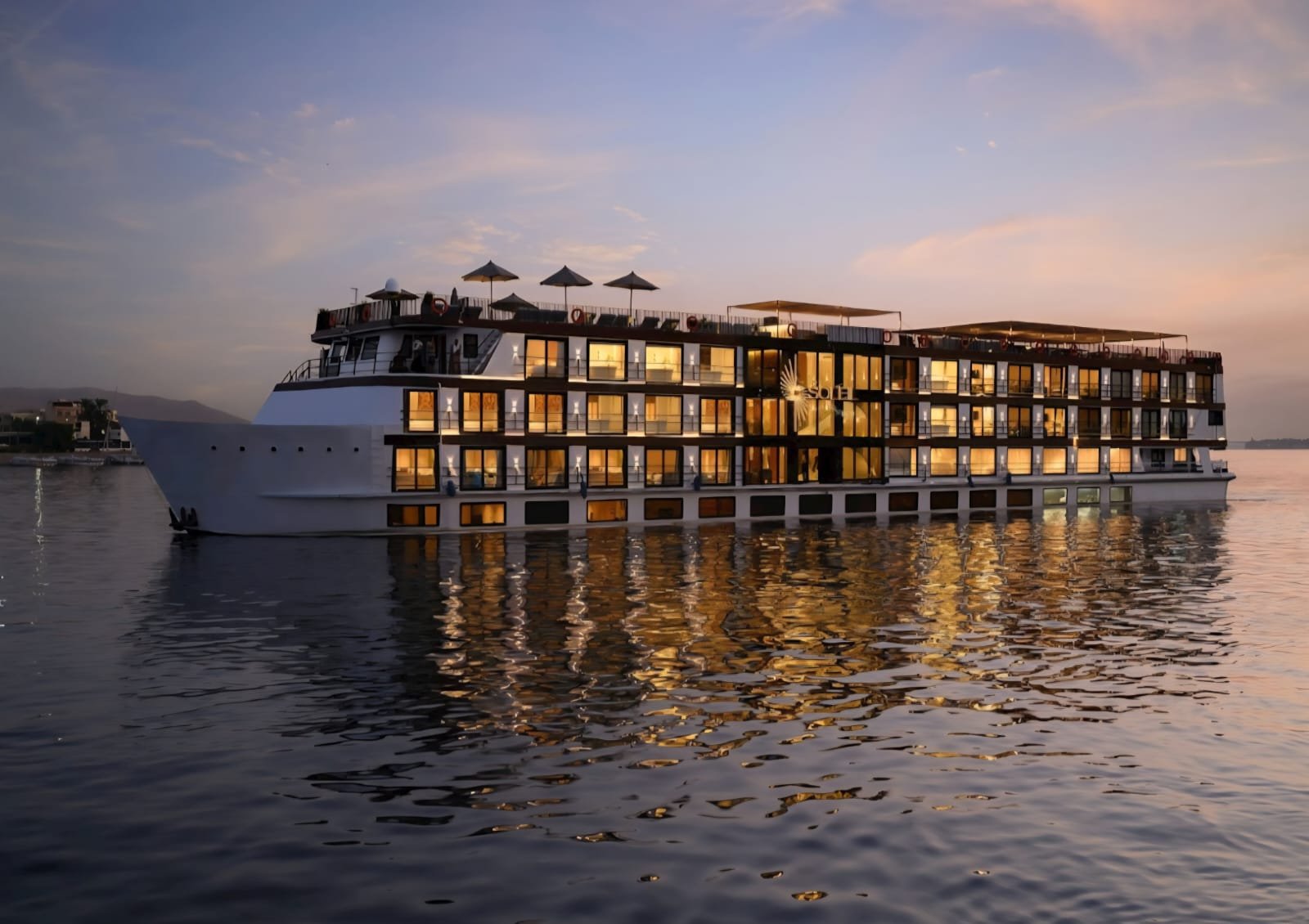
A 7 day Nile cruise is the unhurried version of the classic Luxor to Aswan route. Most ships sail it as a round trip and bring you back to Luxor, so the extra nights buy whole days on the water, longer visits and, on some itineraries, the northern temples of Dendera and Abydos that a four night cruise never reaches.
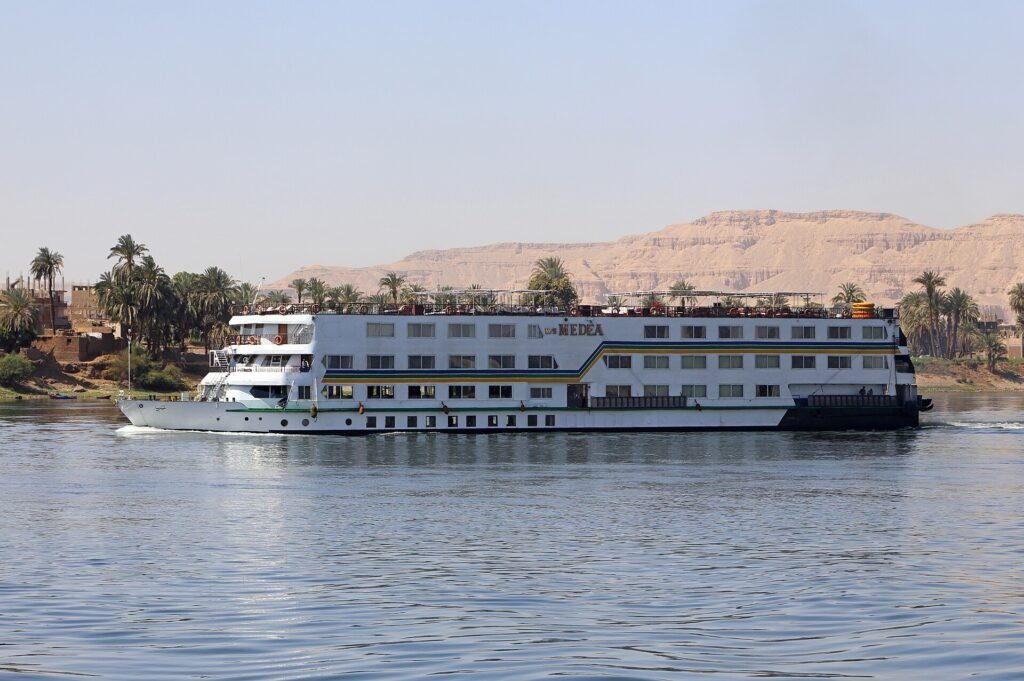
The standard Nile cruise is four nights and runs one way, Luxor to Aswan or the reverse, calling at Edfu and Kom Ombo. The seven day version covers the same stretch of river without the hurry. Depending on the vessel it is six or seven nights on board, and it is normally sailed as a round trip, so you join and leave the ship in the same city.
That shape matters. You arrive at and leave from one airport instead of two, and because the ship works its way back anyway the itinerary carries real slack: whole mornings under way, visits not timed to the minute, room to return to something you liked.
Still deciding the length of the whole trip? Start with how many days you need in Egypt, then the guide to Nile cruise boats.
Nobody counts a river cruise the same way twice, and this causes more confusion than anything else about booking one. Sales material counts days, including the day you board and the day you get off. Operations counts nights, which is what you are paying for. A cruise sold as seven days is very often six nights on board.
The two ends of the trip are where the difference lives. Boarding is usually early afternoon and disembarkation is after breakfast on the final morning. So ignore the headline number, count the nights, and ask what happens on the first afternoon and the last morning. Two cruises advertised as the same length can differ by a full day of sightseeing.
There is no single fixed itinerary, but nearly every long cruise follows the same skeleton.
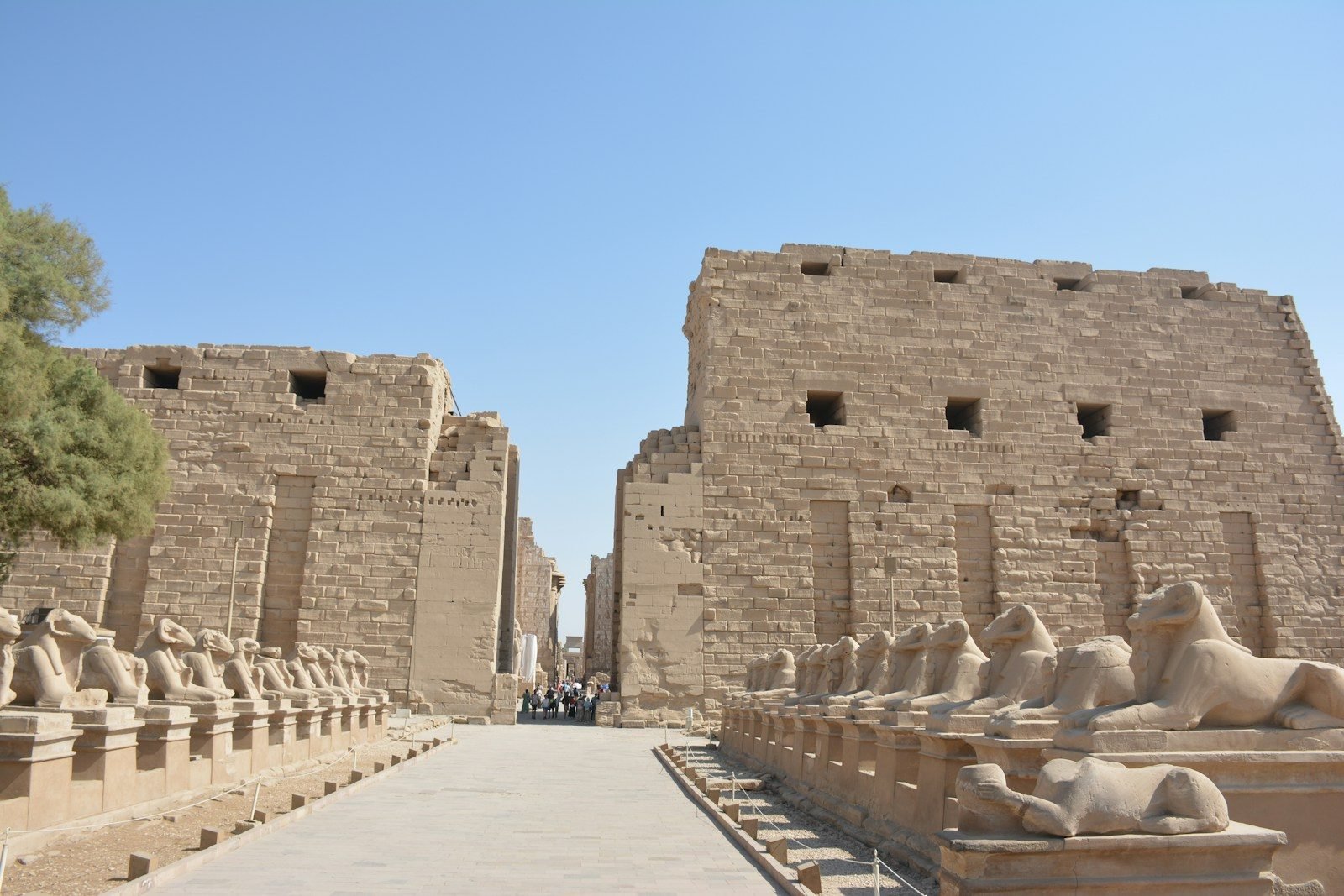
Boarding at Luxor, then the heavyweight sites on both banks: Karnak, Luxor Temple, the Valley of the Kings, Hatshepsut and the Colossi of Memnon. A second morning is also the only realistic way to fit in the balloon flight at dawn.
The ship works upstream with stops at Edfu, the best preserved temple in Egypt, and at Kom Ombo, which stands directly on the bank. In between there are long stretches on deck and the passage of the lock at Esna.
Philae, the High Dam, the unfinished obelisk in the granite quarries and an afternoon among the islands under sail. Abu Simbel is offered here as a separate excursion.
The return leg towards Luxor and, on the itineraries that include them, the temples north of the city that short cruises never reach: Dendera and Abydos. Disembarkation at Luxor.
The shorter four and five night versions are on our main Nile cruise guide.
Luxor holds the densest concentration of standing monuments anywhere in Egypt, and a four night cruise gives it about a day and a half, enough for the famous things and little else. With two days you can split the banks properly, east on one day and the Theban necropolis on the other, each with a real break when the heat is worst.
On the west bank the extra time goes into the tombs. Which ones are open rotates and the ticketing arrangements are revised from time to time, so treat any list you read online as a starting point, not a promise.
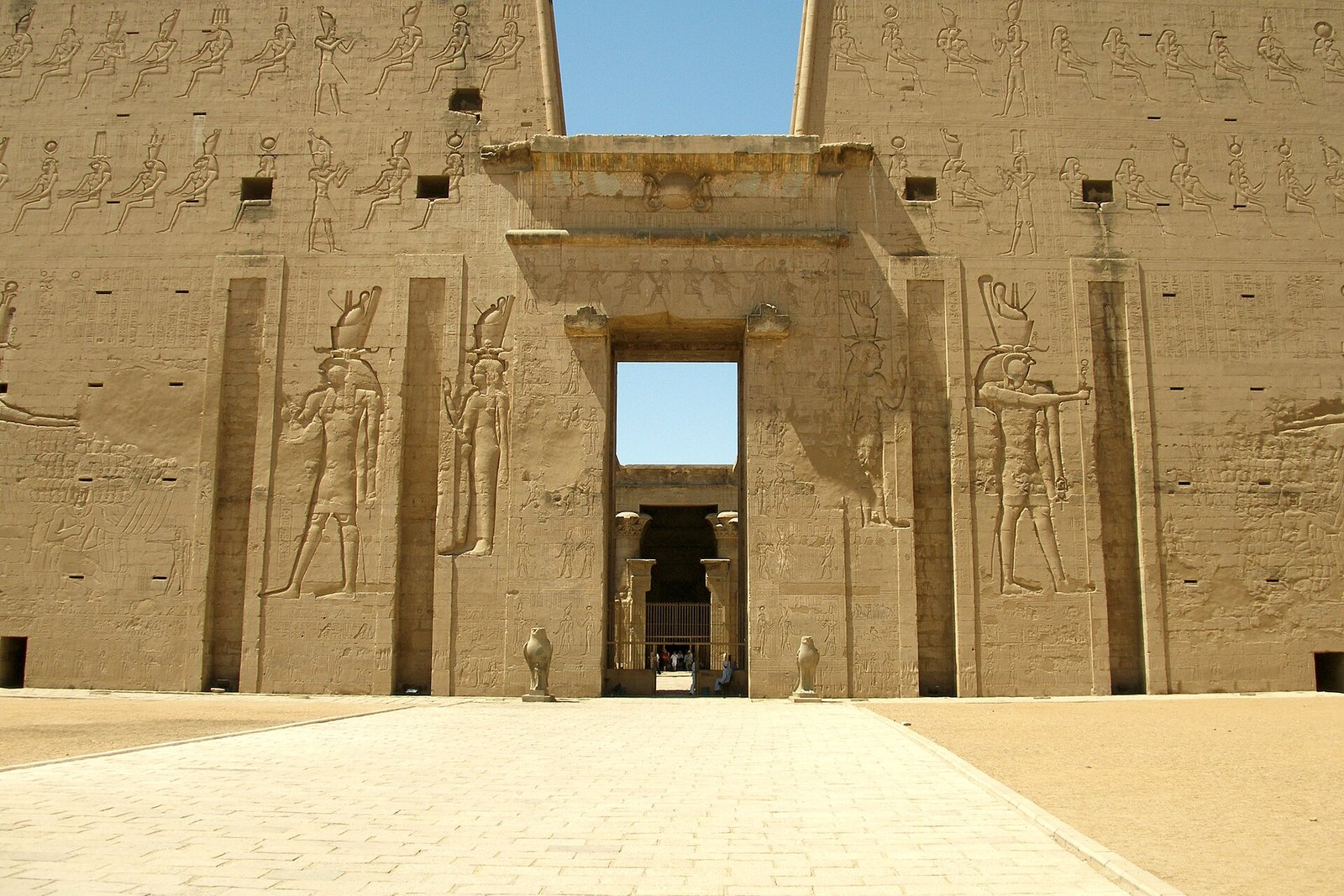
Edfu is the temple of Horus and the most complete pharaonic temple in the country. Because it lay buried in sand for centuries the roof is still on, the courtyard is intact, and you can walk the dark inner corridors much as a priest would have. Two black granite falcons stand at the gateway, a short transfer from the mooring, traditionally by horse and carriage.
Kom Ombo is smaller and stranger: a double temple split down the middle for two gods at once, Sobek the crocodile and Haroeris the elder Horus, with mirrored doorways and sanctuaries on each side. It stands on a terrace right above the river, and many ships time the visit for late afternoon or after dark, when it is lit and much cooler.
Ask people who have done both lengths what the difference was and almost nobody answers with a temple. They answer with the deck.
On a four night cruise the ship mostly repositions overnight, so you sleep through the sailing and wake somewhere new. On a seven day round trip there are hours, sometimes whole mornings, when the boat is moving in daylight and nothing at all is scheduled. The bank slides past at walking pace: sugar cane and clover, water buffalo, children shouting from a sandbank. That is the part people describe afterwards, and there is no room for it on a short itinerary.
Slack also absorbs problems. A tomb closed for conservation or a late start breaks something later in the day on a compressed schedule, and on a long one it simply moves.
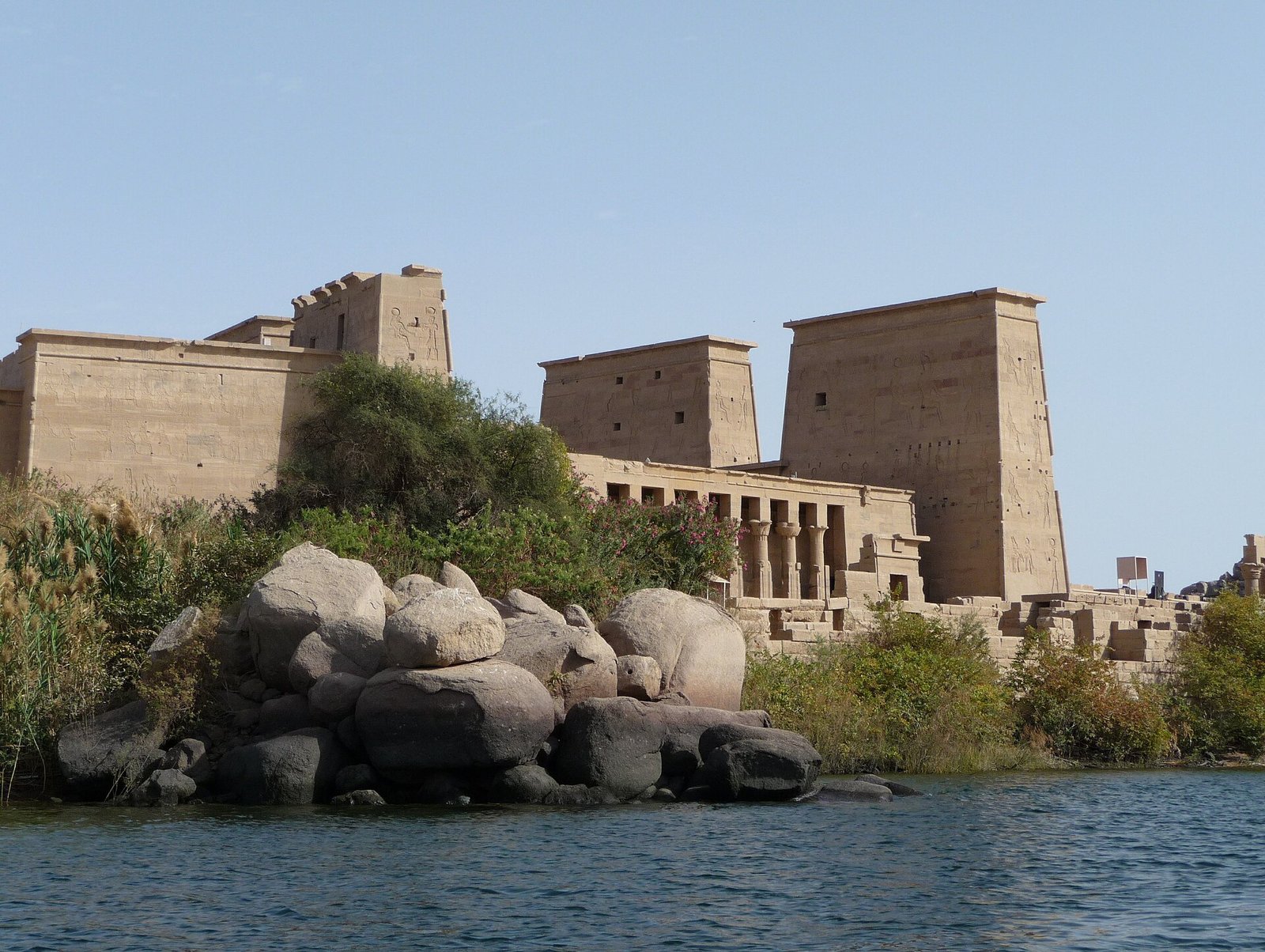
The river narrows at Aswan and breaks into channels around black granite islands, the desert comes down to the water, and the culture is Nubian, with its own language, music and building style. The set pieces are the temple of Isis at Philae, reached by motorboat because the island sits in the reservoir, the High Dam, and the unfinished obelisk still lying in the quarry where it cracked.
The best part of an Aswan day is not a monument. It is a couple of hours in a felucca among the islands in the late afternoon. Our Aswan excursions guide covers what else is in reach on a free half day, including how Abu Simbel is added, by road or by a short domestic flight.
Both temples lie north of Luxor, in the opposite direction to the classic route, so a four night cruise cannot reach them. Only the long itineraries, or a road excursion from Luxor, take them in, and they are two of the finest temples in the country.
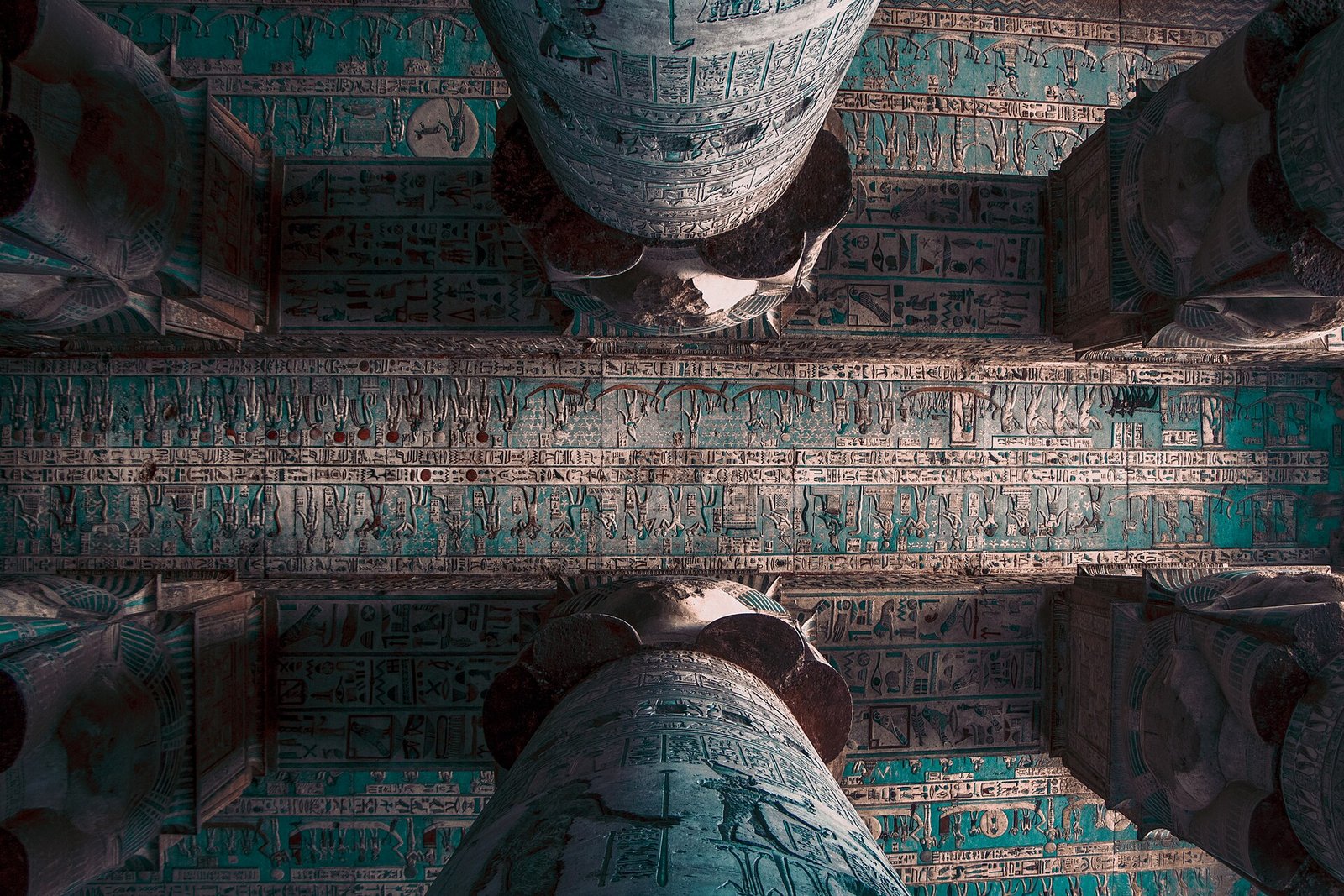
Dendera is the temple of Hathor, and the reason to go is the ceiling. Decades of soot were cleaned off and the original paint survived underneath: deep blue skies, the goddess Nut swallowing and giving birth to the sun, registers of stars in turquoise and gold. The famous circular zodiac was cut out of that ceiling in the nineteenth century and taken to Paris, so what you see in place is a cast.
Abydos is older and stranger. It was the cult center of Osiris and one of the great pilgrimage destinations of the ancient world, and the temple of Seti I holds raised relief carving of a quality that is hard to describe until you stand in front of it. The king list on one wall is one of the documents Egyptology was built on.
Neither length is better in the abstract. This is what actually changes between them.
| What changes | Four night cruise | Seven day cruise |
|---|---|---|
| Nights on board | Four | Six or seven, depending on the ship |
| Direction | One way, Luxor to Aswan or the reverse | Usually a round trip, most often out of Luxor |
| Where you finish | A different city from the one you joined | Back where you started, so one transfer fewer |
| Time in Luxor | Around a day and a half, tightly packed | Two days, split across the east and west banks |
| Edfu and Kom Ombo | One visit each, on a fixed schedule | The same two, with more time and less rushing |
| Dendera and Abydos | Out of range in this direction | Included on some itineraries, never on all of them |
| Daylight hours under way | Few, the ship mostly moves overnight | Long stretches, sometimes a full morning |
| Choice of ships | Wide, most vessels run this route | Narrower, fewer ships sail the long itinerary |
| Fits a trip that also includes | Cairo, the Red Sea or the Western Desert | Cairo and little else, the river is the trip |
For the comparison against covering the same sites by road, see how to choose a Nile cruise.
If your time in Egypt is short and you also want Cairo, the desert and the Red Sea, the four night cruise leaves far more room. The long one earns its place when the river is the spine of the holiday. It suits four kinds of traveler:
It is a poor fit if you need a town to walk into in the evening, or if this is a one week trip and you have never seen the Pyramids. Traveling as a family? Start with our guide to a Nile cruise with children.
A seven day cruise includes the same things as a short one, spread over more days: the cabin, full board on the ship, guided visits with an Egyptologist working in English, transfers and the sailing itself. What is normally excluded is more consistent than people expect:
For the suitcase itself, see what to pack for a Nile cruise.
The comfortable window for a Nile cruise of any length runs from roughly October to April, when Upper Egypt is warm rather than punishing and the deck is usable at any hour. That is also when the ships are busiest and the long itineraries fill first.
Summer is not impossible: the vessels are air conditioned and sailing is pleasant because there is always moving air. What suffers is the sightseeing, so summer itineraries push visits to early morning and evening. Winter has the opposite catch, with perfect days and nights on deck that are colder than most people pack for. Month by month detail is in our guide to the best time to visit Egypt, and the trade off between crowds and weather is under high and low season.
Fewer ships sail the long route than the classic one, so the choice is narrower and the good cabins go earlier. Book ahead, and inside a complete itinerary rather than as a loose cabin. Before you agree to anything, get clear answers on these:
We are a local agency in Egypt running these trips ourselves, so we can confirm what a ship really includes before you commit. To see the cruise inside a full itinerary, start from our Egypt tour packages.
A cruise sold as seven days is usually six or seven nights on board, and most sail the round trip between Luxor and Aswan and back, against the four nights and single direction of the standard cruise.
Mostly more time at the same southern temples, and two days in Luxor instead of a day and a half. On the itineraries that include them it also reaches the temples north of Luxor: Dendera, dedicated to Hathor, and Abydos, the sanctuary of Osiris with the temple of Seti I.
If you want the Nile to be the center of the holiday and to see Dendera and Abydos, the seven day cruise earns its extra nights. If your time is limited and you also want Cairo or the Red Sea, four nights leaves far more room.
Not usually. Abu Simbel sits well south of Aswan and no cruise ship reaches it, so it is offered as a separate excursion from Aswan, by road or by domestic flight. Check whether your itinerary includes it or whether you are adding it yourself.
No. Far fewer vessels run the long itinerary with the northern temples, so availability is tighter. Book earlier than you would for a four night cruise, and use an operator who will confirm in writing that those stops are genuinely on your ship's program.
October to April is the comfortable window, with warm days that suit long visits. Summer sailing is possible thanks to air conditioning, but midday at the temples is hard going, so summer itineraries move sightseeing to early morning and evening.
Usually yes, if you are starting in Cairo. Most travelers take a short domestic flight to Luxor to board, and because the cruise is a round trip they return from the same airport. Reaching Luxor by train is also possible and takes most of a day.
It is one of the gentler ways to see Upper Egypt. You unpack once and the long format removes most of the consecutive early starts. The limits are the sites themselves: uneven ground, steps at the moorings and the descent into the tombs.
Drinks are normally charged separately, as are tips for the crew and guide and optional excursions such as the Luxor balloon and Abu Simbel. On some itineraries Dendera and Abydos are an extra even on the long route.
Yes, and the pool and the sailing days help a great deal. The honest caveat is that a week of temples asks a lot of younger children, and the long format has more sightseeing in it, not less.
Take the Nile slowly
We will build the trip around the long cruise, with Dendera and Abydos if you want them, the domestic flights sorted and a named ship confirmed before you commit. If this is your first trip with us, say so and we will give you our best first trip conditions.
Keep exploring